Today in pulp... a tale of an unintentionally radical publisher. It only produced 42 books between 1968-9, but it caught the hedonistic, solipsistic, free love mood of the West Coast freakout scene like no other.
This is the story of Essex House.
This is the story of Essex House.

Essex House was an offshoot of Parliament Press, a California publishing company set up by pulp artist Milton Luros after the market for pulp magazines began to decline. It specialised in stag magazines sold through liquor stores, to skirt around US obscenity publishing laws.


By the 1960s Parliament Press was already selling pornographic novels through its Brandon House imprint, though these were mostly reprints or translations of existing work. Luros was interested in publishing new erotic authors, and set up Essex House to do just that.

Brian Kirby was a jazz drummer working in an LA bookshop when Milton Luros invited him to join Parliament Press. Impressed by his knowledge of literature and his connections with underground writers Luros wanted Kirby to become editor of his new Essex House imprint.
It was both an inspired and reckless choice: Kirby's literary tastes were expansive and wild. He would recruit many counterculture poets and writers to work on what could best be described as erotic dystopian science fiction for this new publishing label.

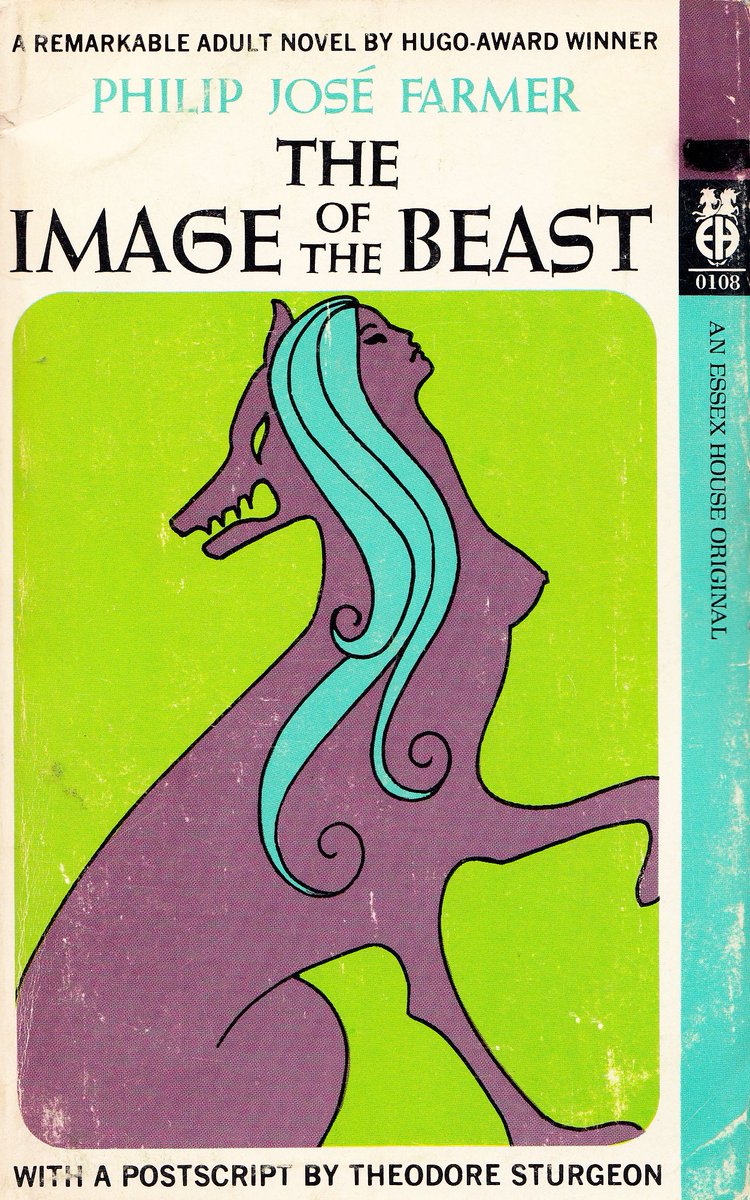
First Kirby published a number of books by Philip José Farmer, one of the few novelists at that time to explicitly write about alien sex. In 1968 Essex House released The Image Of The Beast, a supernatural sex detective novel. A sequel, Blown, was published the following year.

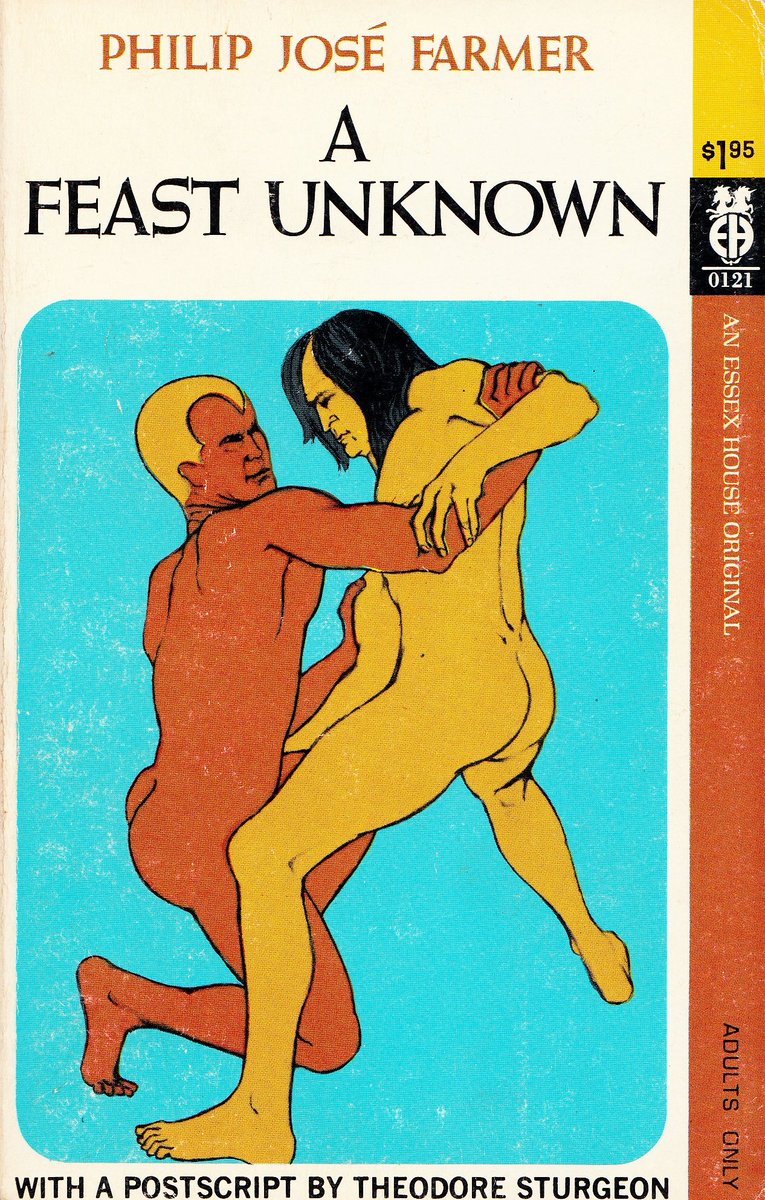
A Feast Unknown, also published in 1969, saw Farmer mash together horror, erotica and pulp pastiche: Doc Savage and Tarzan (renamed Doc Caliban and Grandrith) are near-immortal half brothers and bastard sons of Jack the Ripper who only become erect when they battle each other.
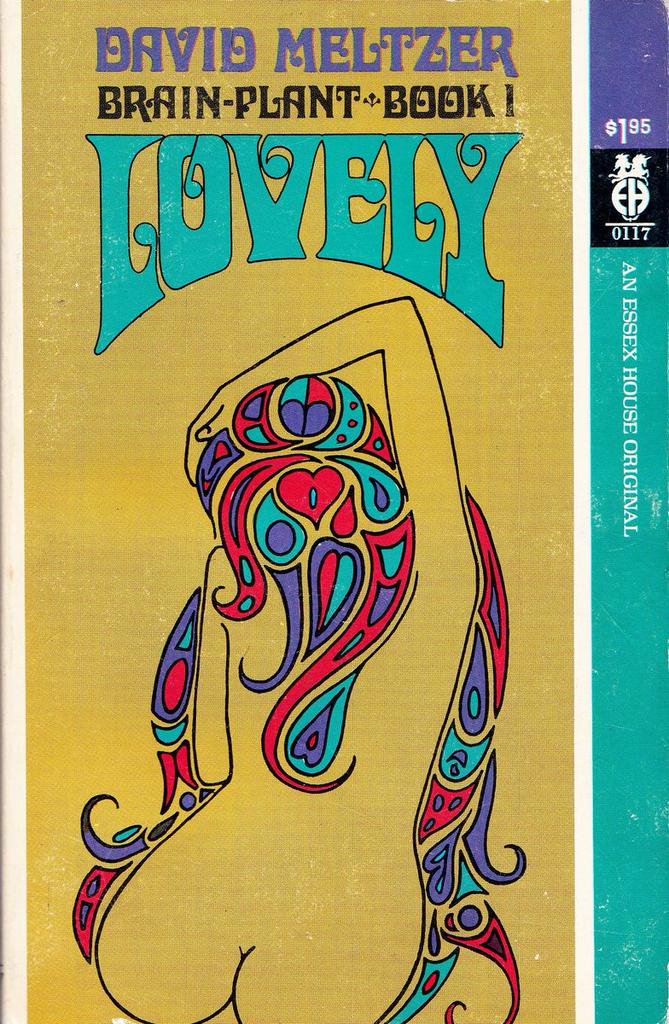
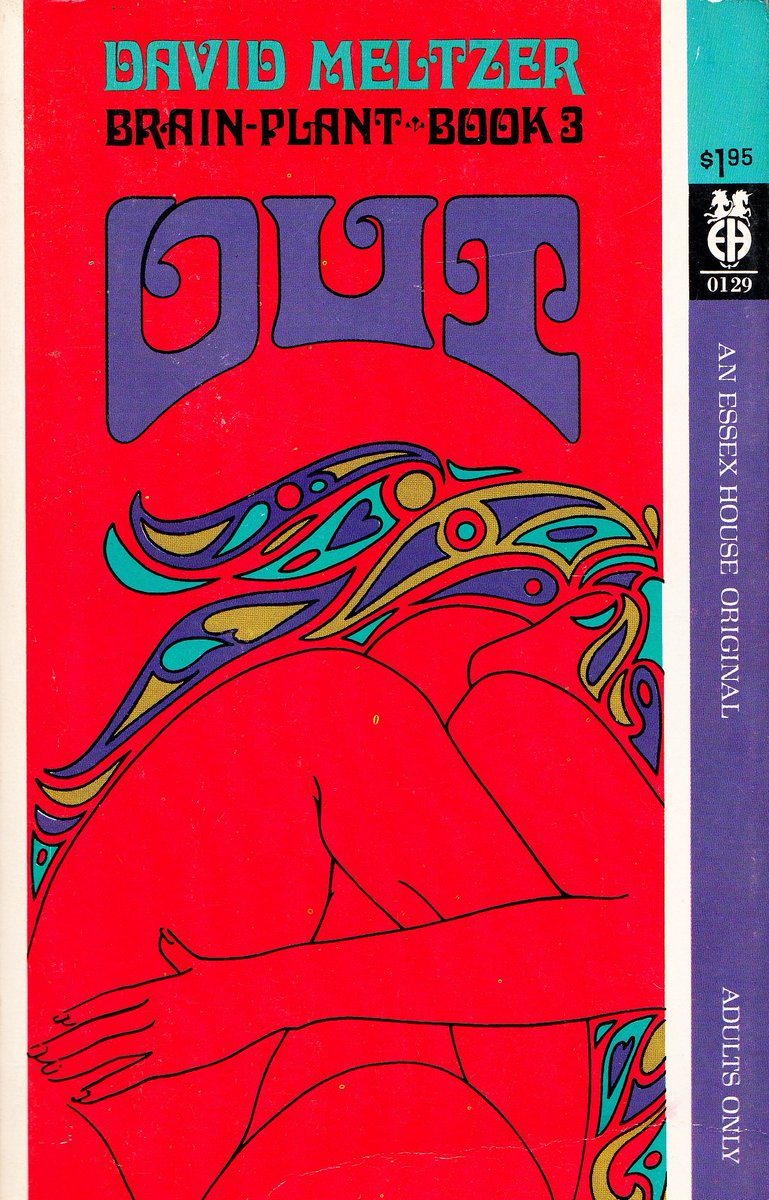
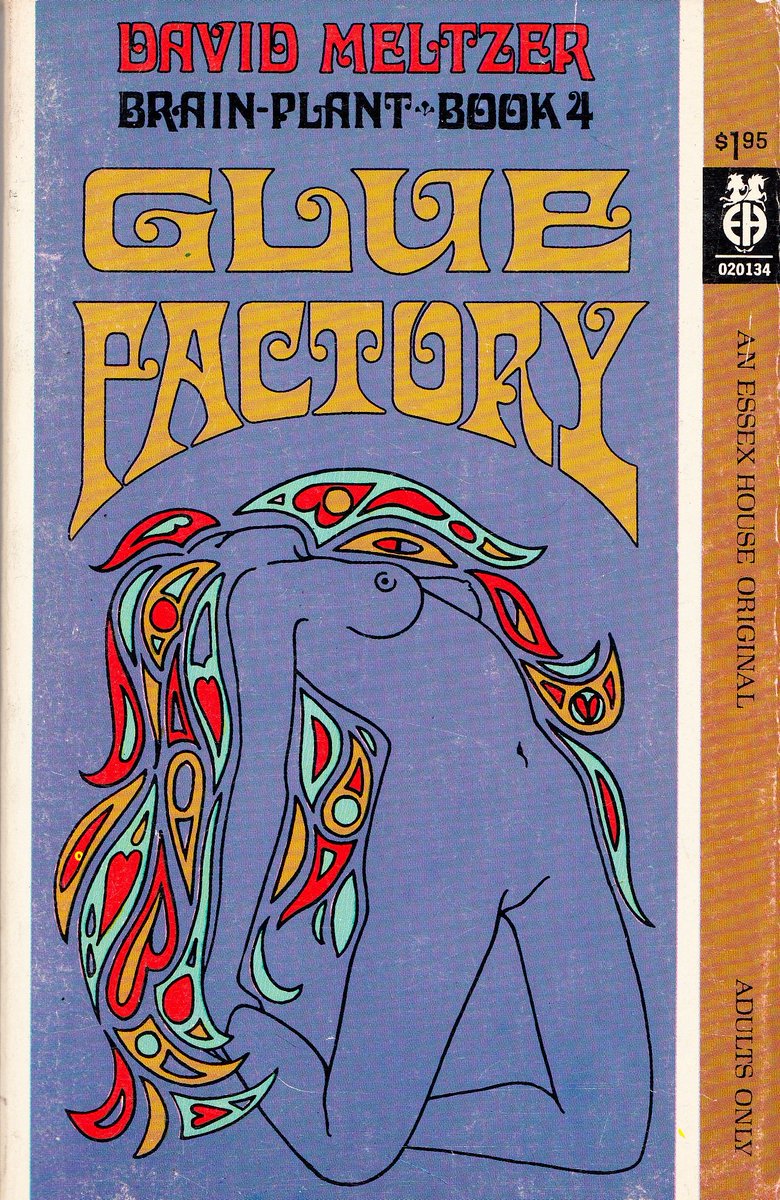
Another Essex House writer was poet David Meltzer, whose Brain Plant tetralogy was published in 1969. Predicting a dystopian world of virtual sex, mind control, scams, drugs and orgies of self-abuse Brain Plant is a bizarre mix of Naked Lunch, A Clockwork Orange and Videodrome.

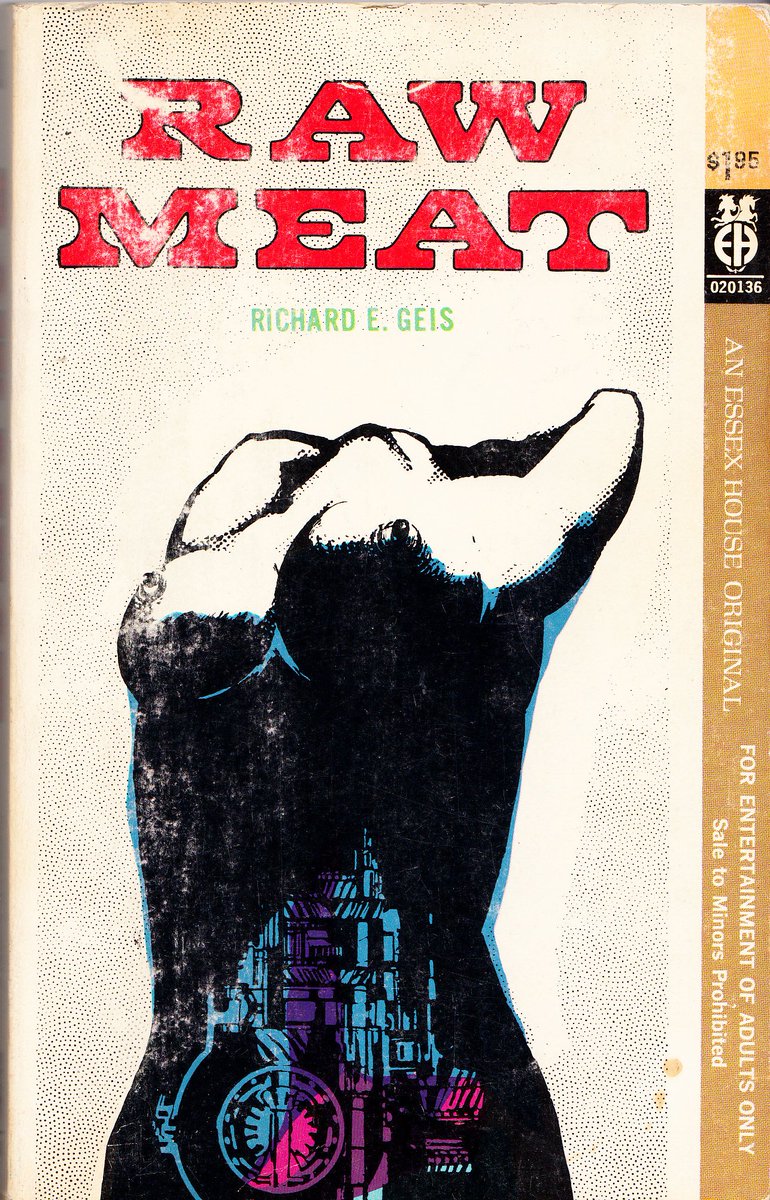
Raw Meat, by Richard E Geis, was also published in 1969. A proto-cyberpunk novel it describes a dystopia where the Great Mother Computer outlaws sex in favour of Virtual Reality.
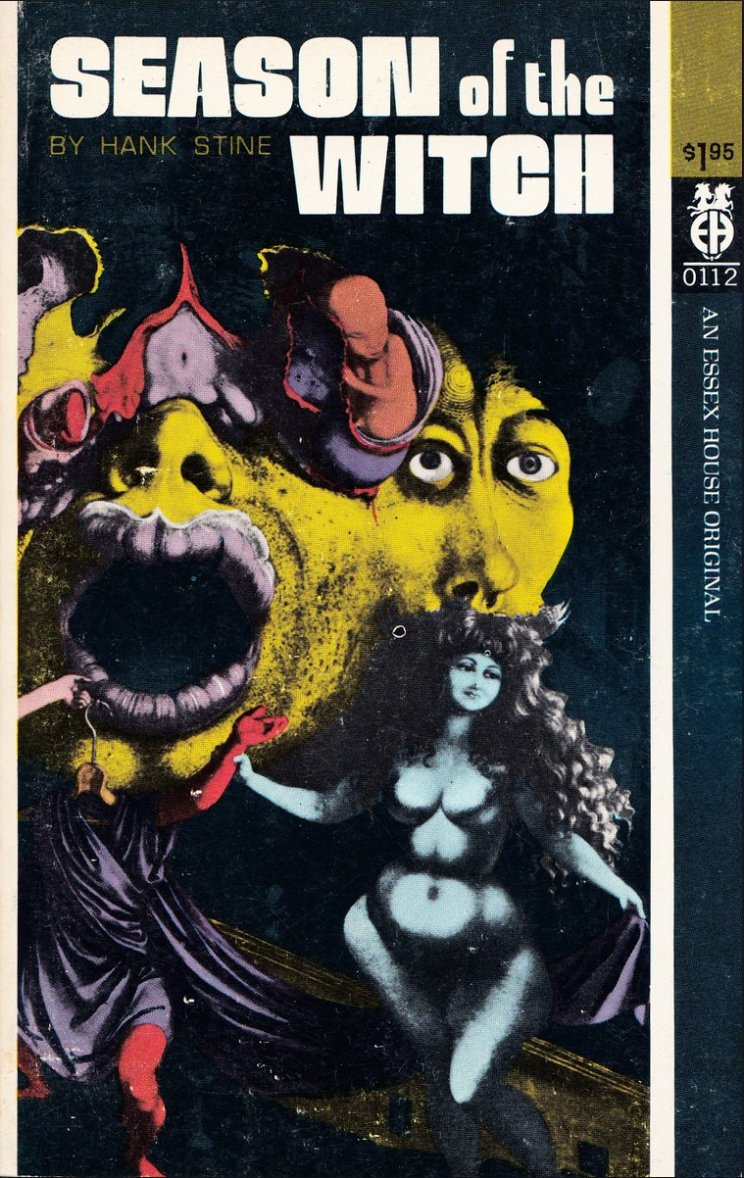
Season Of The Witch by Jean Marie Stine (writing as Hank Stine) was another proto-cyberpunk story, where a sex criminal has his mind implanted into the reanimated woman he murdered, forcing him to understand life from her point of view. It was filmed in 1995 as Synapse.
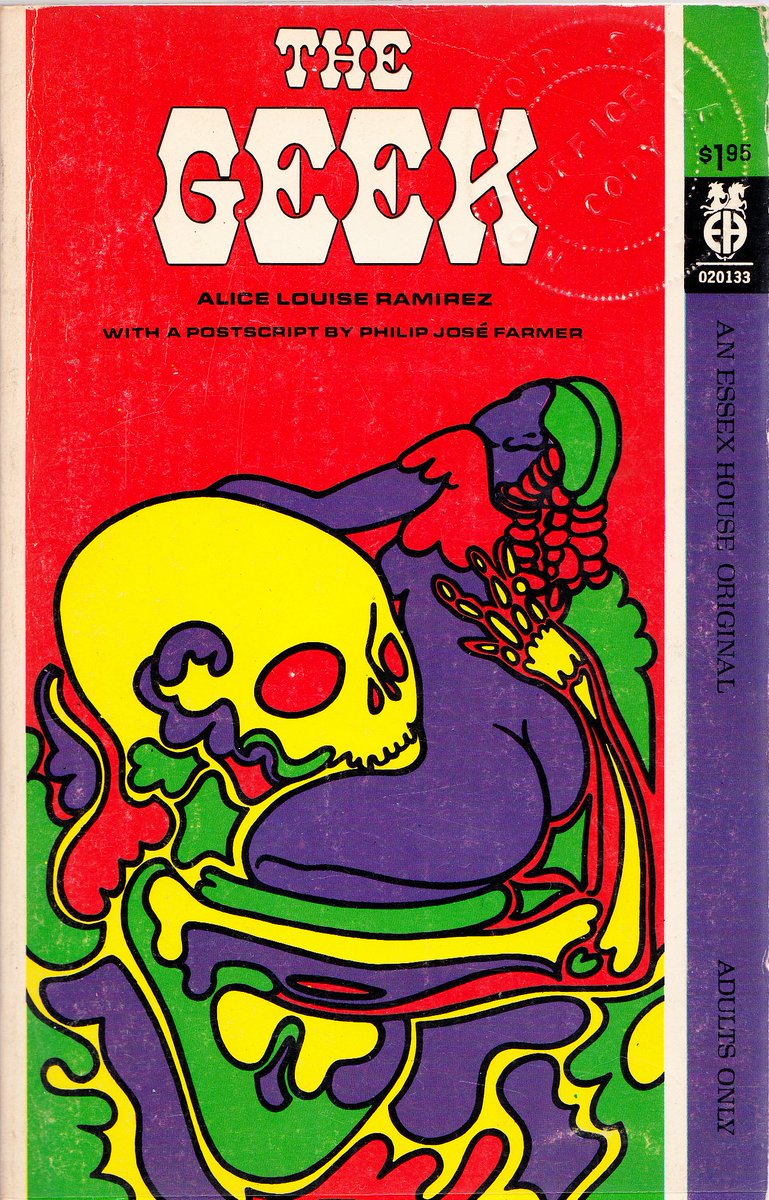
The Geek was published by Essex House in 1969. Set on a Pacific island of S&M lesbian nudists it's the story of a pink chicken endlessly swallowed live and regurgitated in a carnival. Alice Louise Ramirez later wrote satanic gothic romances under the name of Candace Arkham.
Not everything was erotic speculative fiction: Essex Books also published Charles Bukowski's Notes Of A Dirty Old Man in 1969, a compilation of his articles for the Open City Underground Newspaper.

Poet Kirby Doyle had his first novel - Happiness Bastard - published by Essex House. Initially written in 1960 on a continuous roll of paper it was a "romantic fallacy" of beatnik living and drug abuse, though Doyle apparently thought the subsequent editing butchered the story.

It's not clear if Milton Luros knew what Brian Kirby was publishing through Essex House, but in 1970 he knew whatever it was it certainly wasn't selling! Customers were expecting porn novels, not speculative dystopian sex meditations.
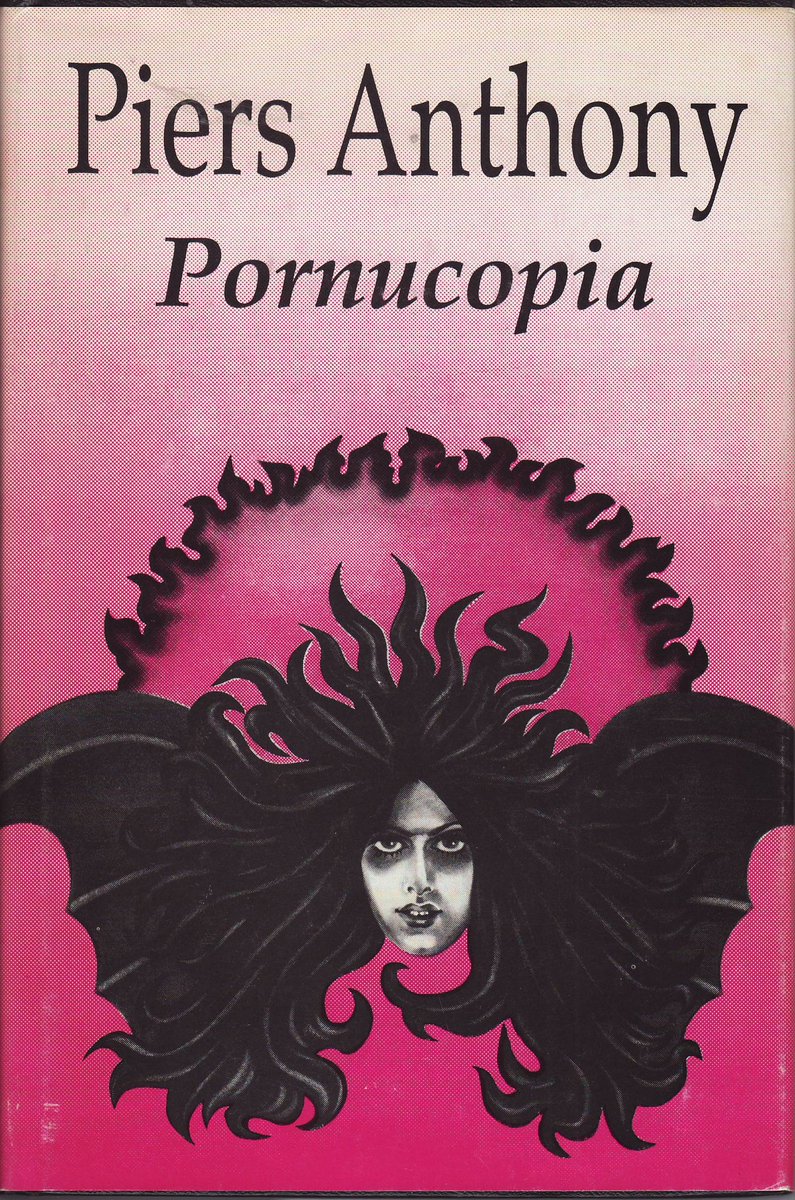
After reviewing the finances Luros closed Essex House books down in 1970. Unpublished manuscripts were returned, including Piers Anthony's book 3.97 Erect about a man with a small penis seduced by a succubus. It was eventually published in 1989 as Pornucopia.
Brian Kirby went on to become editor of the Los Angeles Free Press, while Milton Luros sold his companies and went into semi-retirement. It was certainly the end of an era.

Paris Olympia Press has more details about Essex House and is history on their blog. Do check it out if you're interested in learning more: parisolympiapress.com/2015/10/26/boo…
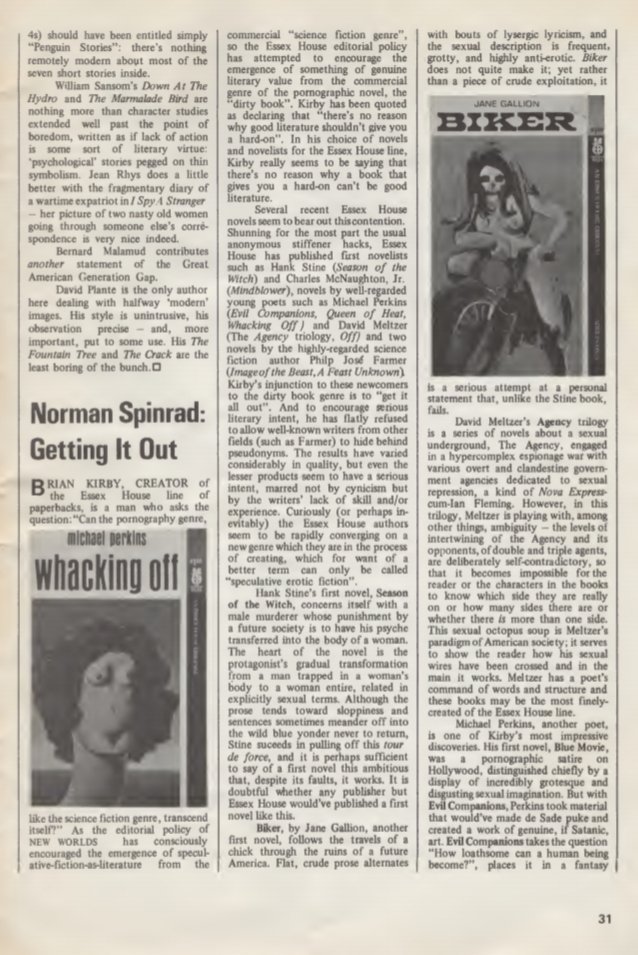
New Worlds magazine also reviewed a number of Essex House publications in its September 1969 edition, which you can read online: archive.org/details/New_Wo…

Essex House books are now collectors items, though you may not always enjoy reading them: the counterculture could be crude, bitter and unrepentant. But there are some diamonds in the mine which give an unfiltered insight into the radical '60s world.
More stories another time...
More stories another time...

• • •
Missing some Tweet in this thread? You can try to
force a refresh