
Temple rituals have interesting origins.
Here is the story of how the 1982 Asian Games started a temple ritual that continues to this day.
A thread 🧵
Here is the story of how the 1982 Asian Games started a temple ritual that continues to this day.
A thread 🧵

Little bit of context - Thrissur is considered the cultural capital of Kerala and has hosted the Thrissur Pooram - at the Vadakkunathan Temple every year when the moon rises with the Pooram star in the Malayalam Calendar month of Medam.
In other words, around May every year.
In other words, around May every year.


The pooram event sees a good collection of elephants (more than 50) decorated with nettipattam (decorative golden headdress), strikingly crafted Kolam, decorative bells, and ornaments.


In 1976, India had been awarded the games and due to various reasons (ahem Emergency) it started its preparations for building stadium and other infrastructure only in 1979.
The mascot for the games was chosen to be Appu, an elephant.
The mascot for the games was chosen to be Appu, an elephant.

It was decided that during the opening ceremony, elephants would be paraded along with other cultural forms from all over India to showcase the diversity of India.
Some of Thrissur's famous elephants were chosen for the task.
Some of Thrissur's famous elephants were chosen for the task.

Transporting over 30 elephants from Kerala to Delhi is no easy task.
*Checks google maps* Only a matter of 2600+km
*Checks google maps* Only a matter of 2600+km

34 elephants were finally chosen.
9 belonging to the Sri Krishna Temple in Guruvayur.
Some of the elephants belonged to the Thrissur temple as well.
9 belonging to the Sri Krishna Temple in Guruvayur.
Some of the elephants belonged to the Thrissur temple as well.

To test the transportation, 1 trial run was conducted between Thrissur and Ernakulum.
Only 2 elephants had taken part in that. It was considered a success and the Kerala govt decided to transport 34 elephants to Delhi.
Only 2 elephants had taken part in that. It was considered a success and the Kerala govt decided to transport 34 elephants to Delhi.

Kerala's CM K. Karunakaran flagged off the 28-wagon train on its 3011 km journey to the capital from Thrissur on Nov 1, 1982.
Apart from the 34 elephants, also aboard were 112 mahouts, 80 standard-bearers, six vets and 21 policemen.
Apart from the 34 elephants, also aboard were 112 mahouts, 80 standard-bearers, six vets and 21 policemen.
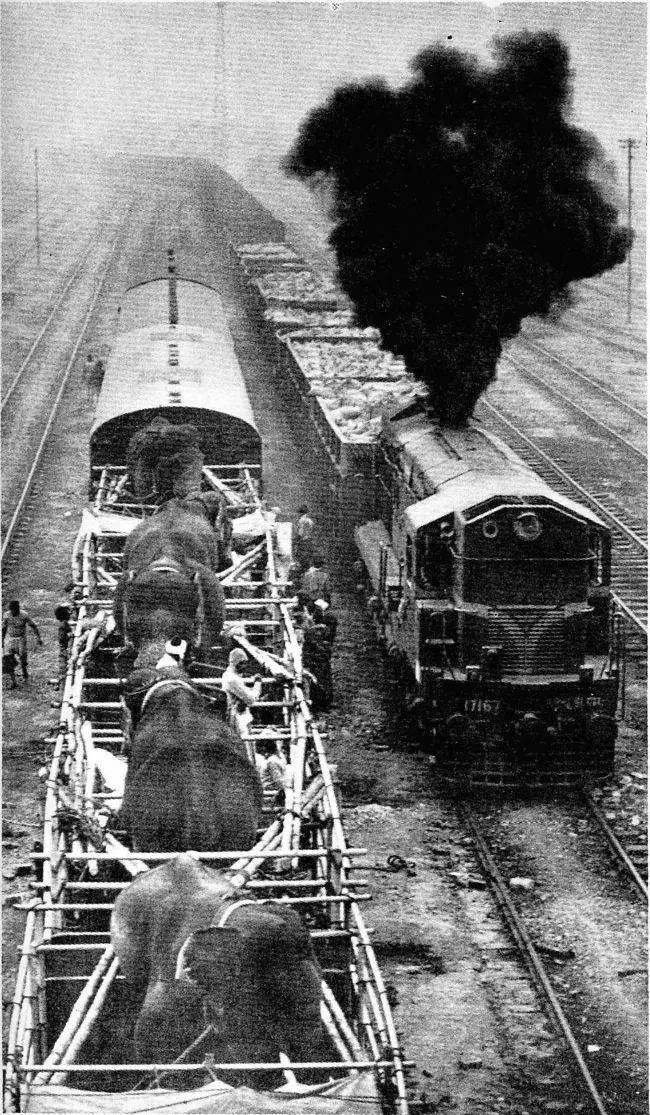
The journey ended on November 8 at Tughlakabad station, exactly 164 hours later.
Given the nature of the "cargo" involved, the train had clocked an incredibly fast speed of 18 km an hour.
Given the nature of the "cargo" involved, the train had clocked an incredibly fast speed of 18 km an hour.

It was an ordeal for animals, normally used to walking several km a day.
There was no shortage of food though: 4 wagons full of water barrels and another 3 wagons stacked with palm leaves. In the process each elephant ate 250 palm leaves & drank about 100 litres of water a day.
There was no shortage of food though: 4 wagons full of water barrels and another 3 wagons stacked with palm leaves. In the process each elephant ate 250 palm leaves & drank about 100 litres of water a day.
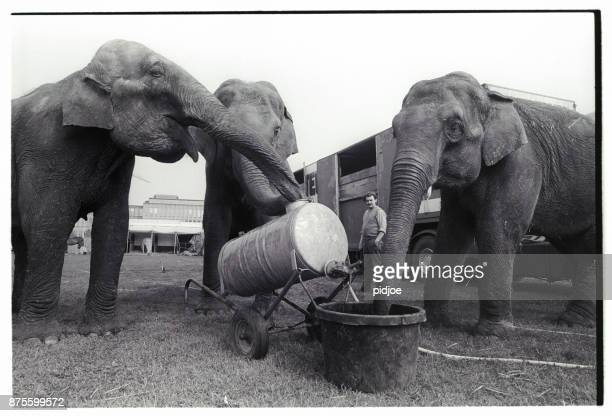
Only four elephants managed to sleep on the journey and eight were so terrified by the travel that they had to be given sedatives to soothe their nerves.
The Kerala Government spent Rs 38 lakh on the rail journey, and Rs 15 lakh on other expenses.
The price of each elephant was ~ Rs 1,00,000. They were insured. For the Delhi trip the elephants had been insured for Rs 30 lakh and the mahouts and jewellery for another Rs 40 lakh.
The price of each elephant was ~ Rs 1,00,000. They were insured. For the Delhi trip the elephants had been insured for Rs 30 lakh and the mahouts and jewellery for another Rs 40 lakh.

After participating successfully in the parade at the opening ceremony of the Asian Games, the elephants returned. A similar circuitous route was taken, which was incredibly slow.
You can watch the opening ceremony from Asiad 1982 here.
You can watch the opening ceremony from Asiad 1982 here.

But the long journey made many of the elephants sick and weak.
To help them regain health, Anayoottu was organized at the Sree Vadakkunnathan temple, where special nutritious food was fed to the elephants.
To help them regain health, Anayoottu was organized at the Sree Vadakkunnathan temple, where special nutritious food was fed to the elephants.

And this is how the Anayoottu festival started in Thrissur.
The festival falls on the first day of the month of Karkkidakam (timed against the Malayalam calendar), which coincides with the month of July.
The festival falls on the first day of the month of Karkkidakam (timed against the Malayalam calendar), which coincides with the month of July.


• • •
Missing some Tweet in this thread? You can try to
force a refresh






