Dr. Alexander S. Burns Profile picture
Feb 10, 2023 17 tweets 5 min read Read on X
A firepower Friday thread. 18th century buckshot: who used it? TL;DR-first reaction may be to associate this type of round with the American army, but most European militaries of the time used it, and the Russians stood out as the other military who employed it as standard. 1/17
I'll start by thanking Prof. Dr Hab. Grzegorz Podruczny for his advice with source material. His archeological work at Kunersdorf is one of the great scholarly projects in my field, and he was kind to show an annoying American PhD candidate around his site in 2018 and 2019. 2/17
Buckshot consists of smaller projectiles, which spread out after leaving the barrel of the weapon. it was utilized by American, Austrian, British, French and Russian regular troops as well. By firing more projectiles at the target, troops generated a larger wall of lead. 3/17
Most troops discussed in this post were not firing only buckshot, but rather both buckshot and musket ball ammunition. In English, this is called "buck and ball", (sometimes, "buck 'n' ball") ammunition.[1] This consisted of a regular ball with 2-3 buckshot attached. 4/17
This would provide the best of both worlds: the larger ball could be effective at long ranges, while at 100 yards or less, the buckshot would begin to wound and mangle enemy soldiers. In the French and Indian War British officers said that their enemies used this ammunition. 5/17
A British officer recalled, "The enemy never fire a single ball, for they always load with six or seven smaller ones (which are called buck-shot) besides their usual musket-ball." The same officer referred to being under buckshot fire as, "a dreadful shower." 6/17
By 1760, both the British and their provincial allies had followed suit. John Knox reported that New England provincials, "advanced, very spiritedly, to the enemy, who were endeavoring to steal upon them; gave them a regular discharge of a brace of balls, besides buckshot." 7/17
In his 2008 book, Kiril Tatarnikov shows the Russian military issued buckshot cartridges to soldiers as standard relatively early. In 1715, Russian troops were issued 50 cartridges total, 30 with ball ammunition, and 20 with buckshot ammunition. 8/17
The Russian army of the Seven Years' War used buckshot to terrible effect. Indeed, the use of buckshot may help explain the incredible high casualties at battles like Zorndorf. A Prussian recalled the battle of Zorndorf: 9/17
"On our side, therefore, there were...a great number of wounded. However, most of the wounded were able to convalesce with their regiments...every Russian infantryman loads a musket ball and...pack of buckshot. There are between 7-9 of these in a linen packet[.] 10/17
As a result of this, the Russians load quite slowly, as a Jäger loads his rifle. In the time it takes the Russians to load their weapons, the Prussians have fired three times. We have found signs of this buckshot in many of the wounded, because they bled...almost to death." 11/17
It is interesting that the Prussian soldier compares the additional time loading this ammunition to that of a Jägers' rifled weapon. After the Seven Years' War, Russian army would continue to use buckshot ammunition until the end of the Napoleonic Wars. 12/17
This ammunition was used by militiamen in the American War of Independence. When not using rifled weapons, militia troops increased their firepower through buck and ball ammunition. Both Continental and militia troops used buck and ball ammunition at the Battle of Camden. 13/17
George Washington was a proponent of buck and ball ammunition. On October 6th, 1777, Washington's general orders mandated, "Buckshot are to be put into all the cartridges that shall hereafter be made."[11] This decision came directly after the Battle of Germantown. 14/17
American sources report suffering buckshot wounds when engaged with British regulars, particularly in the Southern Campaign of 1781. At the Battle of Guilford Courthouse, it is possible that the Brigade of Guards and the 33rd Regiment were using this type of ammunition. 15/17
Rather than being a distinct practice unique to American backwoodsmen, many armies used this ammunition. The Continental army and the Russians stood out in employing it as their standard load. 16/17
For footnotes and more (the Austrians used it too, for example) check out the piece here: kabinettskriege.blogspot.com/2018/05/milita… 17/17

• • •

Missing some Tweet in this thread? You can try to force a refresh

 

Keep Current with Dr. Alexander S. Burns

Dr. Alexander S. Burns Profile picture

Stay in touch and get notified when new unrolls are available from this author!

Read all threads

This Thread may be Removed Anytime!

PDF

Twitter may remove this content at anytime! Save it as PDF for later use!

Try unrolling a thread yourself!

how to unroll video
  1. Follow @ThreadReaderApp to mention us!

  2. From a Twitter thread mention us with a keyword "unroll"
@threadreaderapp unroll

Practice here first or read more on our help page!

More from @KKriegeBlog

Dec 11
I missed the 250th of this in July, enjoy it now before 1775/2025 rolls on.

John Adams, July 6th, 1775:

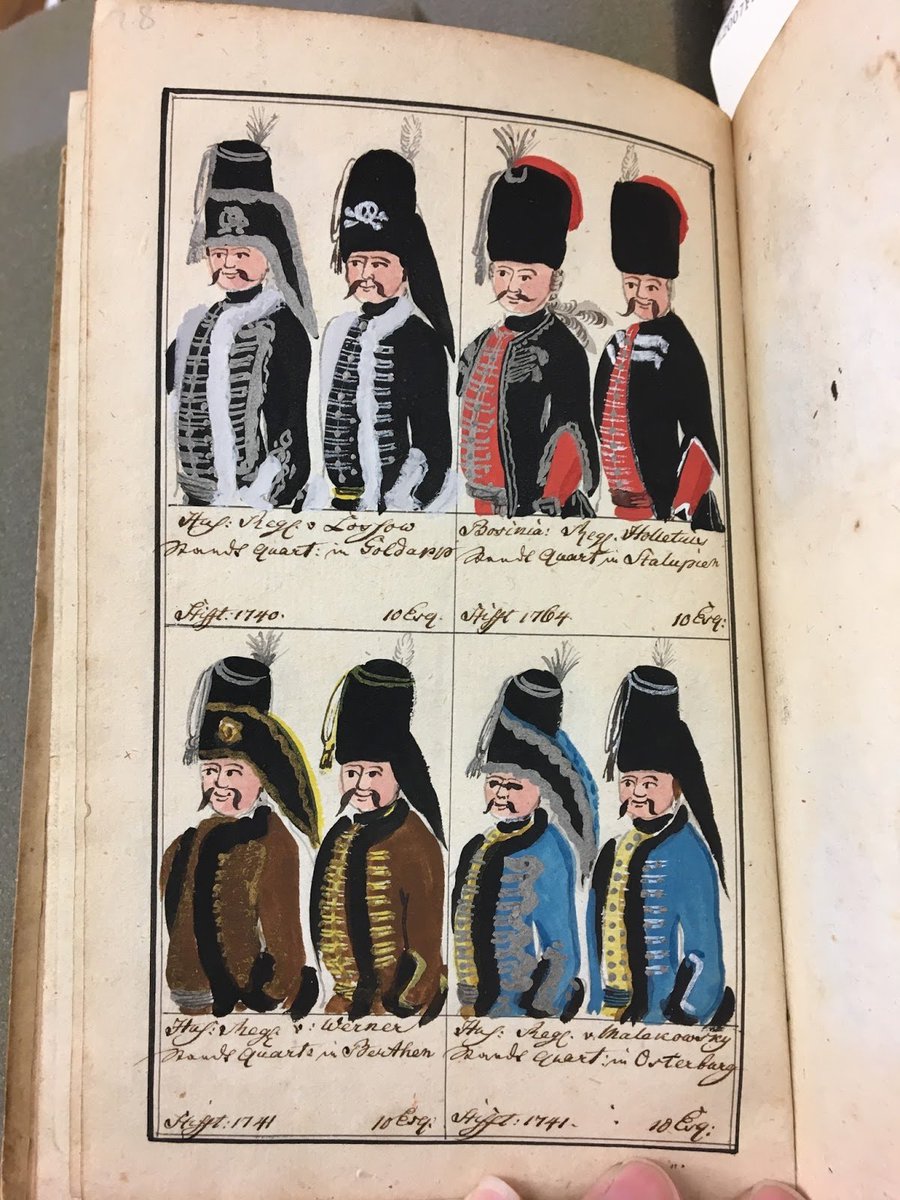
"A few Minutes past, a curious Phenomenon appeared at the Door of our Congress: A german Hussar, a veteran in the Wars in Germany, in his Uniform, and on Horse back."
1/5 Image
A forlorn Cap upon his Head, with a Streamer waiving from it half down to his Waistband, with a Deaths Head painted in Front a beautifull Hussar Cloak ornamented with Lace and Fringe and Cord of Gold, a scarlet Waist coat under it, with shining yellow metal Buttons
2/5 Image
Image
a Light Gun strung over his shoulder—and a Turkish Sabre, much Superiour to an high Land broad sword, very large and excellently fortifyed by his side—Holsters and Pistols upon his Horse. In short the most warlike and formidable Figure, I ever saw.
3/5 Image
Read 7 tweets
Dec 10
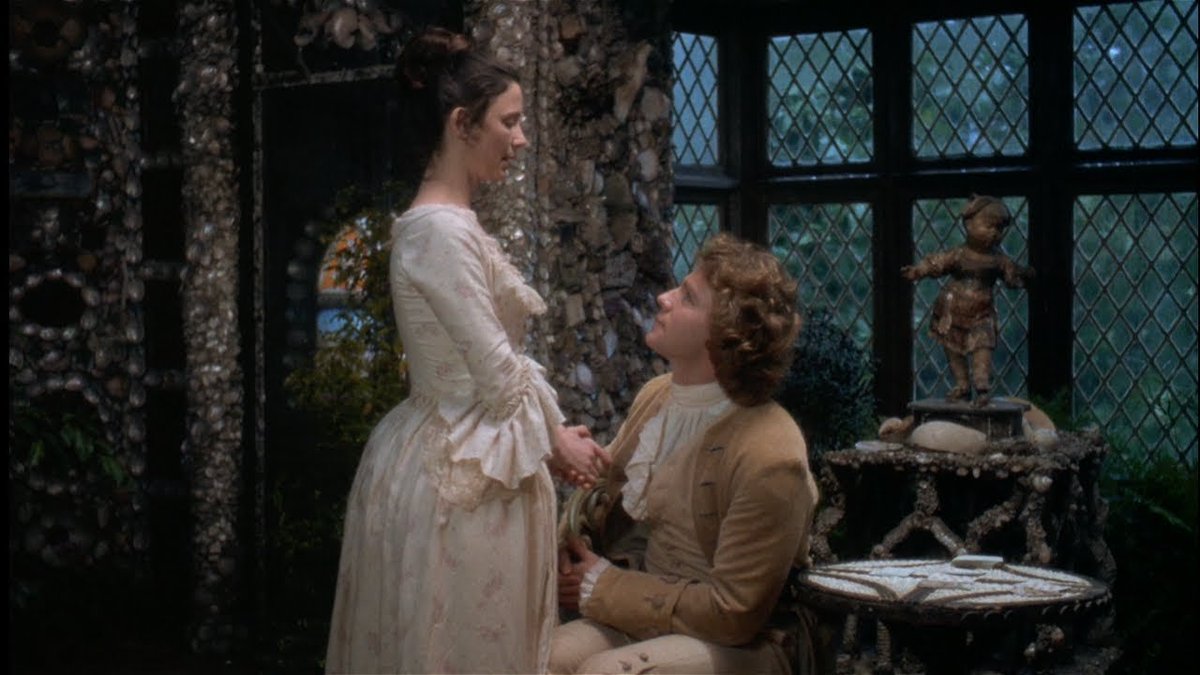
Barry Lyndon, Stanley Kubrick's eighteenth-century epic, premiered fifty years ago this week (December 11).

In celebration, I am doing a watchthrough thread on the film. I'll link my previous threads on Barry Lyndon below.

Here we go.

1/many Image
People complain that this movie is slow but six minutes in Redmond Barry's (Ryan O'Neal) dad has been killed a gunfight and he has been seduced by his cousin (stay classy, eighteenth-century Ireland). 2/ Image
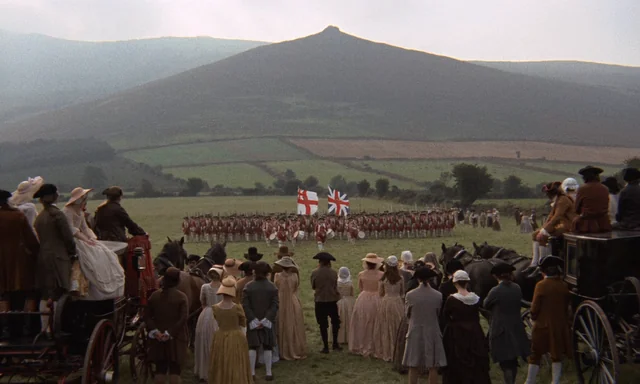
Alright and we are already onto the first military scene, which let's be honest, is why you are reading this thread.

I have lingering questions about the maneuvering going on here: supposedly it is a company, but they have two colours. 3/ Image
Read 41 tweets
Nov 19
Tonight on Ken Burns's American Revolution, Rick Atkinson is going is going to tell you:

"Muskets are mostly inaccurate beyond 80 yards...so a lot of the killing is done with the bayonet... this is really eyeball to eyeball."

The trouble is, this just isn't true. 🧵1/16 Image
First of all, I don't really want to talk about accurate musket range.

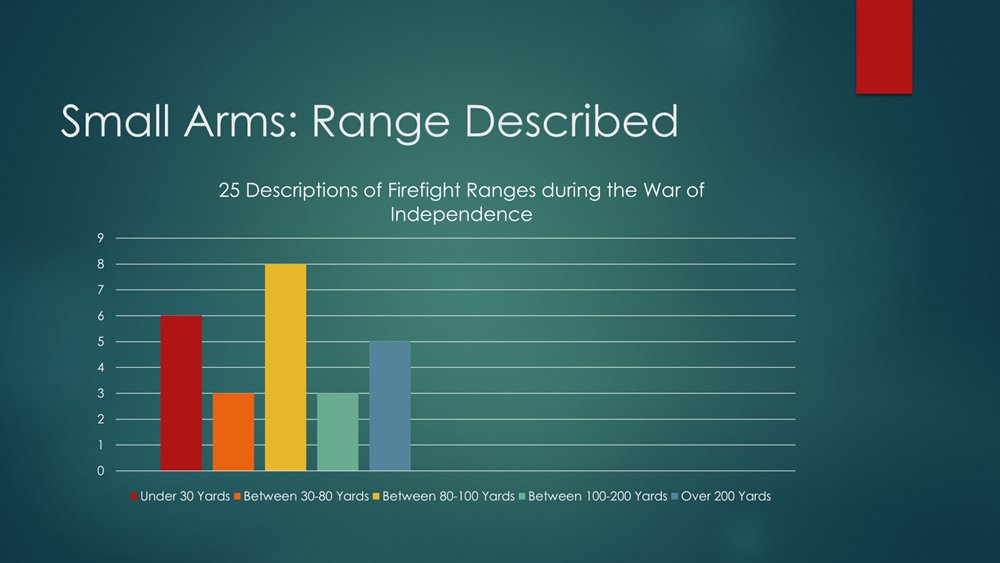
Firefights actually occurred over 120 yards, but that isn't the point of the thread. You can see a chart below of descriptions of 25 firefight ranges in the Revolutionary War.

2/16 Image
I want to talk about Atkinson's claim that fighting "a lot of the killing is done with a bayonet" and that the fighting was "eyeball to eyeball...it's very intimate." 3/16 Image
Read 17 tweets
Oct 30
With Halloween upon us, did you know: Vampires turn 300 this year?

This year, 2025, marks the 300th anniversary of vampires haunting public imagination in Europe.

Read on for the origins of Orloc, Dracula, and of course, Nandor.
1/25 Image
Image
Image
In the 1720s folktales of supernatural events combined with the tensions of a military borderland to create a new type of spook: The Vampire.

Vampires, and the responses of locals and governments to the threat of their presence, would in the imagination like wildfire.
2/25 Image
Our story begins in the aftermath of Prinz Eugene of Savoy's victory at Belgrade in 1717. After this victory and the resulting Treaty of Passarowitz, the Austrian government now ruled part of Serbia and northern Bosnia: it had to control a porous borderland with refugees. 3/25 Image
Read 26 tweets
Oct 7
The usual narrative of the early American War of Independence is that the British, with their superior army and navy, went ham on the Americans, who only started winning when they gained foreign support and became better soldiers after 1777.

It's actually the opposite. 🧵
1/11 Image
In the first year of the war, it was the British who struggled to gain ground as American forces scored victory after victory.

Just look at the record:
2/11 Image
April 19th, 1775: Lexington and Concord
American Victory
May 10th, 1775: Capture of Fort Ticonderoga
American Victory
June 17th, 1775: Bunker Hill:
Costly British Victory
Sept-Nov, 1775: Fort St. Jean:
American Victory
Dec. 9th, 1775: Great Bridge
American Victory
3/11 Image
Read 11 tweets
Jun 19
It's a funny video, but did you know the British actually won most of the battles of the Revolutionary War?

How could this be? Weren't they idiots who lined up in red and took turns firing like the video says?

So why did Washington have such a hard time winning?
🧵
1/14
What were battles in the Revolutionary War really like? It's a subject that, as a history professor, I have spent my life studying. I teach (among other things) the military history of the Revolutionary War at a small college in Ohio.
2/14 Image
Soldiers in this period wore colored uniforms, not so that they could be picked off by their opponents, but so they could be identified when massive clouds of smoke obscured the battlefield, making it hard to see anything but enemy muzzle flashes.
3/14
Read 14 tweets

Did Thread Reader help you today?

Support us! We are indie developers!


This site is made by just two indie developers on a laptop doing marketing, support and development! Read more about the story.

Become a Premium Member ($3/month or $30/year) and get exclusive features!

Become Premium

Don't want to be a Premium member but still want to support us?

Make a small donation by buying us coffee ($5) or help with server cost ($10)

Donate via Paypal

Or Donate anonymously using crypto!

Ethereum

0xfe58350B80634f60Fa6Dc149a72b4DFbc17D341E copy

Bitcoin

3ATGMxNzCUFzxpMCHL5sWSt4DVtS8UqXpi copy

Thank you for your support!

Follow Us!

:(