

Learn how to 𝗰𝗿𝗲𝗮𝘁𝗲, 𝗱𝗲𝗽𝗹𝗼𝘆 & 𝗺𝗼𝗻𝗶𝘁𝗼𝗿 your AWS Lambda functions from your local terminal via the AWS CLI 🧵 ↓ 

𝗢𝘃𝗲𝗿𝘃𝗶𝗲𝘄 🧵
• Installing & setting up the AWS CLI
• Setting up an Execution Role
• Packaging your Function's Code
• Creating a Function
• Invoking Functions
• Deploying Code Updates
• Monitoring Executions
• Updating Configurations
• Deleting Functions
• Installing & setting up the AWS CLI
• Setting up an Execution Role
• Packaging your Function's Code
• Creating a Function
• Invoking Functions
• Deploying Code Updates
• Monitoring Executions
• Updating Configurations
• Deleting Functions
𝗜𝗻𝘁𝗿𝗼𝗱𝘂𝗰𝘁𝗶𝗼𝗻
At AWS, everything is an API. Even if you're using the console interface, the browser only translates your clicks to calls to the AWS API.
That's why you can easily automate everything around Lambda from your local terminal.
At AWS, everything is an API. Even if you're using the console interface, the browser only translates your clicks to calls to the AWS API.
That's why you can easily automate everything around Lambda from your local terminal.
This includes the 𝗰𝗿𝗲𝗮𝘁𝗶𝗼𝗻 𝗼𝗳 𝗮 𝗳𝘂𝗻𝗰𝘁𝗶𝗼𝗻, attaching necessary 𝗽𝗲𝗿𝗺𝗶𝘀𝘀𝗶𝗼𝗻𝘀 𝘃𝗶𝗮 𝗮𝗻 𝗲𝘅𝗲𝗰𝘂𝘁𝗶𝗼𝗻 𝗿𝗼𝗹𝗲, 𝗽𝗮𝗰𝗸𝗮𝗴𝗶𝗻𝗴 and 𝗱𝗲𝗽𝗹𝗼𝘆𝗶𝗻𝗴, as well as monitoring and debugging. There's no reason to leave your terminal at all.
𝗜𝗻𝘀𝘁𝗮𝗹𝗹𝗶𝗻𝗴 & 𝘀𝗲𝘁𝘁𝗶𝗻𝗴 𝘂𝗽 𝘁𝗵𝗲 𝗔𝗪𝗦 𝗖𝗟𝗜
When using macOS, you can use 𝗵𝗼𝗺𝗲𝗯𝗿𝗲𝘄 via 𝗯𝗿𝗲𝘄 𝗶𝗻𝘀𝘁𝗮𝗹𝗹 𝗮𝘄𝘀𝗰𝗹𝗶 to get the latest version.
For Linux and Windows, there's a similar process.
docs.aws.amazon.com/cli/latest/use…
When using macOS, you can use 𝗵𝗼𝗺𝗲𝗯𝗿𝗲𝘄 via 𝗯𝗿𝗲𝘄 𝗶𝗻𝘀𝘁𝗮𝗹𝗹 𝗮𝘄𝘀𝗰𝗹𝗶 to get the latest version.
For Linux and Windows, there's a similar process.
docs.aws.amazon.com/cli/latest/use…
You need to be authenticated and authorized to access your account via the AWS CLI.
This requires you to have an Access Key ID and Secret Access Key.
Let's head over to your user's security credentials settings so we can create a pair of those.
us-east-1.console.aws.amazon.com/iam/home?regio…
This requires you to have an Access Key ID and Secret Access Key.
Let's head over to your user's security credentials settings so we can create a pair of those.
us-east-1.console.aws.amazon.com/iam/home?regio…
You can now run 𝗮𝘄𝘀 𝗰𝗼𝗻𝗳𝗶𝗴𝘂𝗿𝗲 to set up your key pair locally.
If you've done everything correctly, you should be able to get a few details of your account and user by running 𝗮𝘄𝘀 𝘀𝘁𝘀 𝗴𝗲𝘁-𝗰𝗮𝗹𝗹𝗲𝗿-𝗶𝗱𝗲𝗻𝘁𝗶𝘁𝘆.
If you've done everything correctly, you should be able to get a few details of your account and user by running 𝗮𝘄𝘀 𝘀𝘁𝘀 𝗴𝗲𝘁-𝗰𝗮𝗹𝗹𝗲𝗿-𝗶𝗱𝗲𝗻𝘁𝗶𝘁𝘆.
The AWS-CLI is great, but it's often also not very intuitive as it's packed with a lot of commands. Wouldn't it be great to have auto-completion and a lot more documentation right in the terminal?
That's exactly what aws-shell does.
github.com/awslabs/aws-sh…
That's exactly what aws-shell does.
github.com/awslabs/aws-sh…
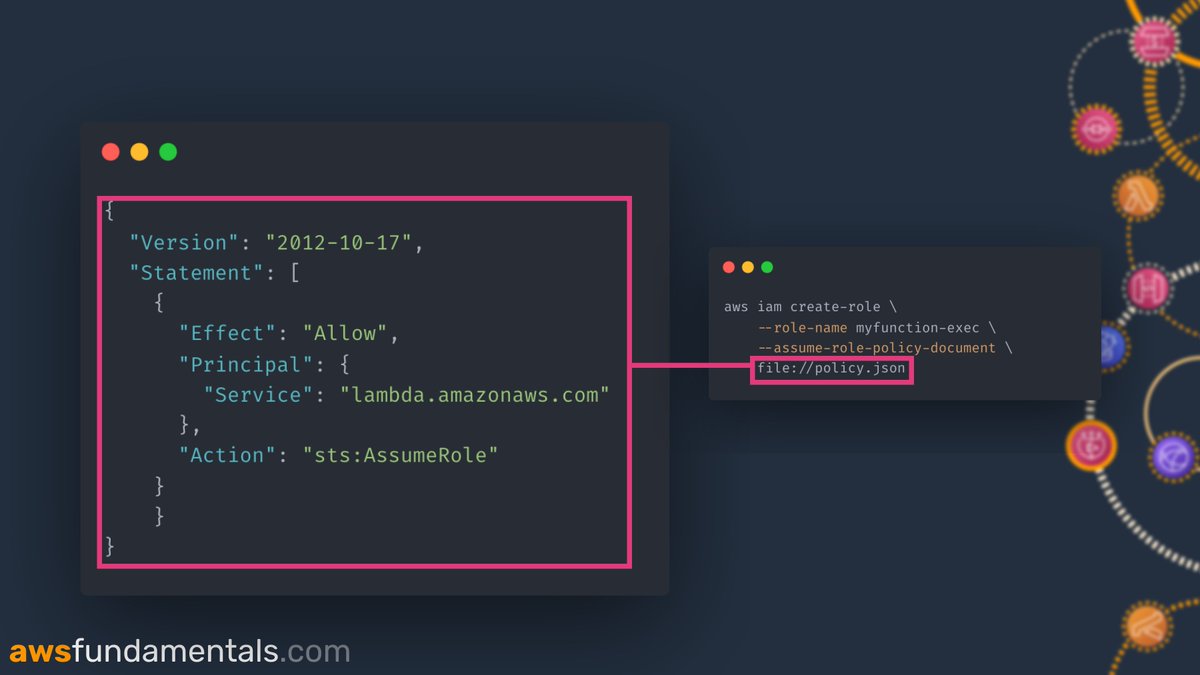
𝗦𝗲𝘁𝘁𝗶𝗻𝗴 𝘂𝗽 𝗮𝗻 𝗘𝘅𝗲𝗰𝘂𝘁𝗶𝗼𝗻 𝗥𝗼𝗹𝗲
Each Lambda function needs an attached role at AWS Identity and Access Management (IAM).
This role is automatically assumed by the function when its executed.
Each Lambda function needs an attached role at AWS Identity and Access Management (IAM).
This role is automatically assumed by the function when its executed.
𝗣𝗮𝗰𝗸𝗮𝗴𝗶𝗻𝗴 𝗼𝘂𝗿 𝗖𝗼𝗱𝗲 & 𝗖𝗿𝗲𝗮𝘁𝗲 𝗮 𝗙𝘂𝗻𝗰𝘁𝗶𝗼𝗻
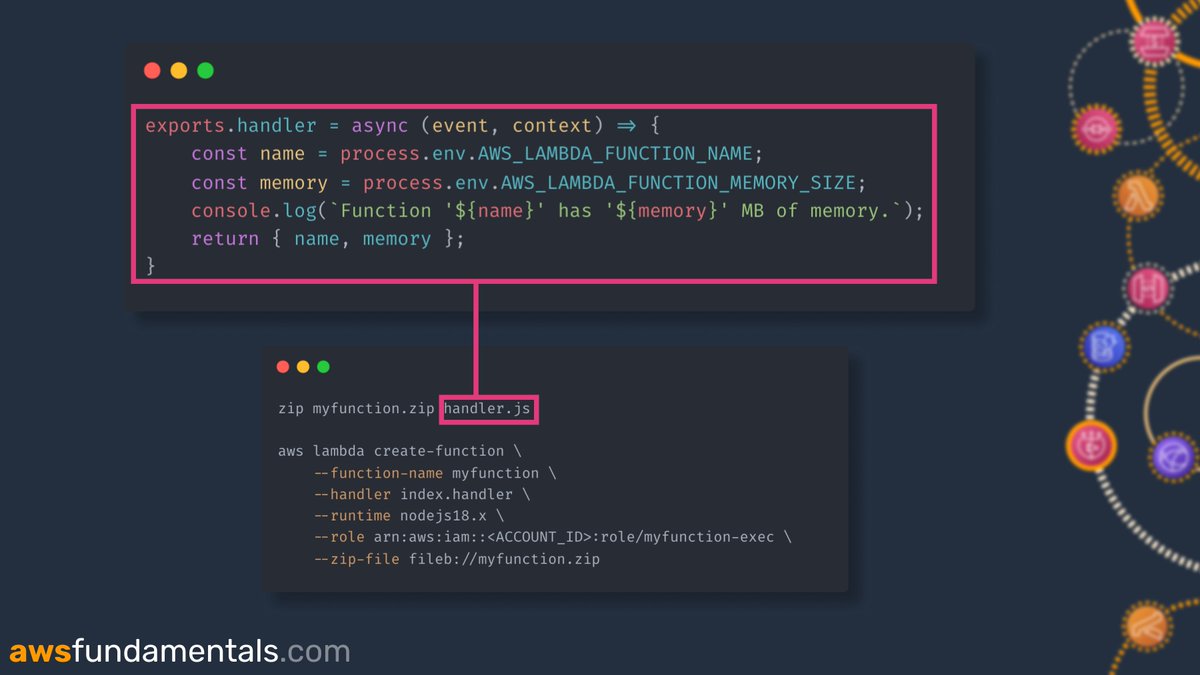
Let's create a minimal Node.js function handler. It will only return the function's name and the memory configuration.
Afterward, we can use the Lambda CLI for the first time via aws lambda create-function.
Let's create a minimal Node.js function handler. It will only return the function's name and the memory configuration.
Afterward, we can use the Lambda CLI for the first time via aws lambda create-function.
𝗜𝗻𝘃𝗼𝗸𝗶𝗻𝗴 𝗙𝘂𝗻𝗰𝘁𝗶𝗼𝗻𝘀
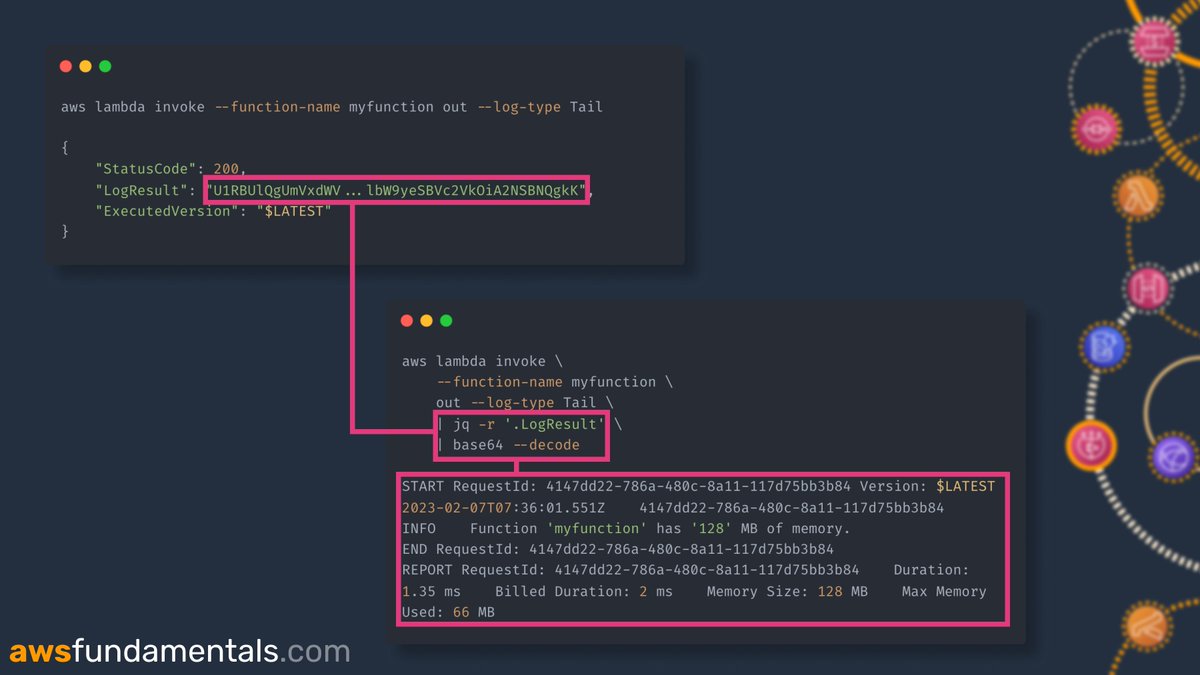
Now that we've created our function, let's see if we can invoke it via the CLI.
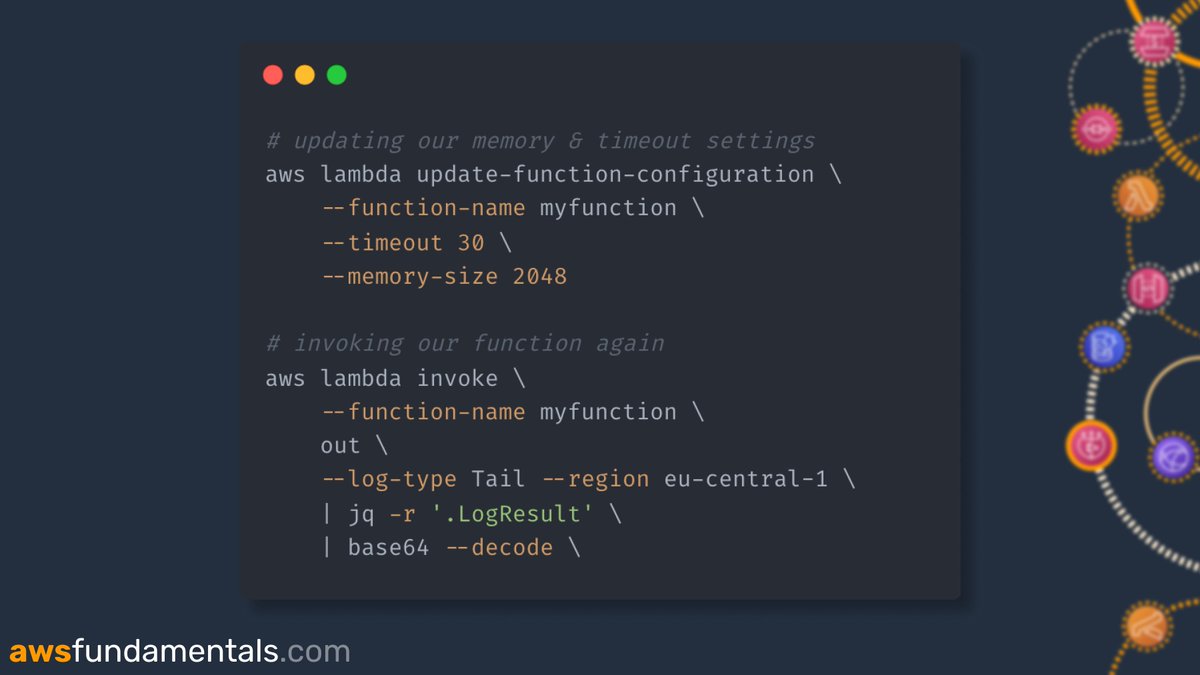
The log results are Base64 encoded, but we can decode them on-the-fly via 𝗷𝗾.
Now that we've created our function, let's see if we can invoke it via the CLI.
The log results are Base64 encoded, but we can decode them on-the-fly via 𝗷𝗾.
𝗗𝗲𝗽𝗹𝗼𝘆𝗶𝗻𝗴 𝗖𝗼𝗱𝗲 𝗨𝗽𝗱𝗮𝘁𝗲𝘀
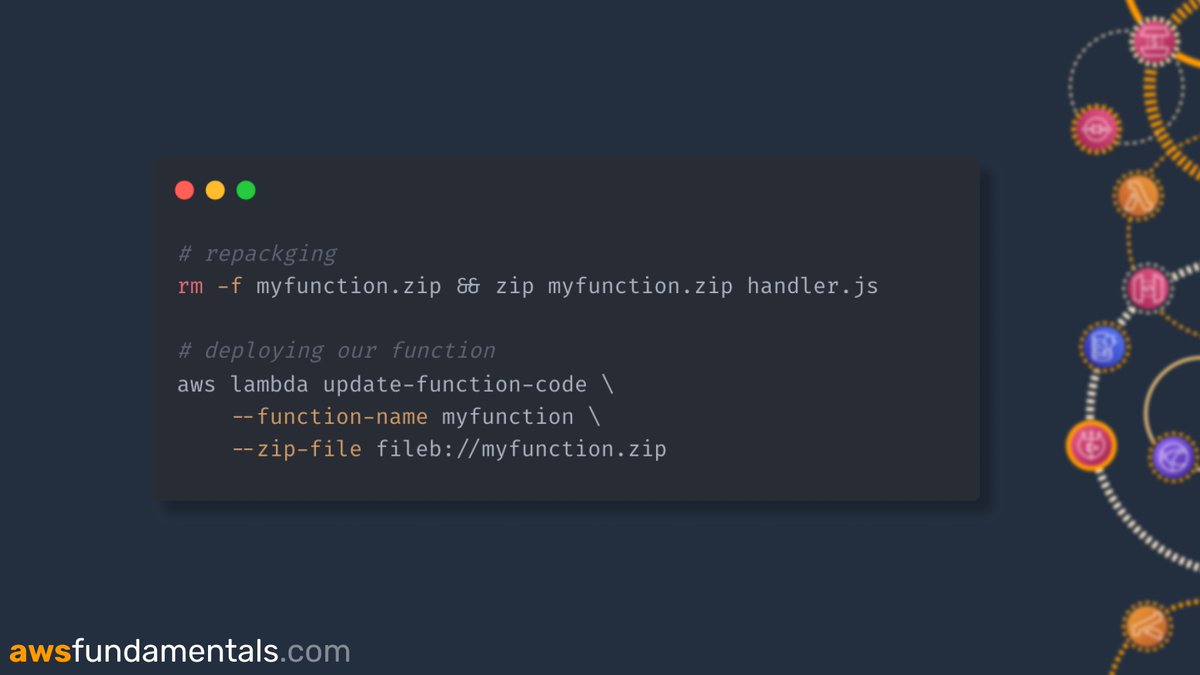
Let's adapt our function a little bit and repackage it
Then we'll deploy it via 𝘂𝗽𝗱𝗮𝘁𝗲-𝗳𝘂𝗻𝗰𝘁𝗶𝗼𝗻-𝗰𝗼𝗱𝗲.
Let's adapt our function a little bit and repackage it
Then we'll deploy it via 𝘂𝗽𝗱𝗮𝘁𝗲-𝗳𝘂𝗻𝗰𝘁𝗶𝗼𝗻-𝗰𝗼𝗱𝗲.
𝗠𝗼𝗻𝗶𝘁𝗼𝗿𝗶𝗻𝗴 𝗘𝘅𝗲𝗰𝘂𝘁𝗶𝗼𝗻𝘀
We can also access the logs via our terminal via CloudWatch Logs for Humans.
It's simple to install either via pip (𝗽𝗶𝗽 𝗶𝗻𝘀𝘁𝗮𝗹𝗹 𝗮𝘄𝘀𝗹𝗼𝗴𝘀) or homebrew (𝗯𝗿𝗲𝘄 𝗶𝗻𝘀𝘁𝗮𝗹𝗹 𝗮𝘄𝘀𝗹𝗼𝗴𝘀)
github.com/jorgebastida/a…
We can also access the logs via our terminal via CloudWatch Logs for Humans.
It's simple to install either via pip (𝗽𝗶𝗽 𝗶𝗻𝘀𝘁𝗮𝗹𝗹 𝗮𝘄𝘀𝗹𝗼𝗴𝘀) or homebrew (𝗯𝗿𝗲𝘄 𝗶𝗻𝘀𝘁𝗮𝗹𝗹 𝗮𝘄𝘀𝗹𝗼𝗴𝘀)
github.com/jorgebastida/a…
When we run 𝗮𝘄𝘀𝗹𝗼𝗴𝘀 𝗴𝗿𝗼𝘂𝗽𝘀 --𝗮𝘄𝘀-𝗿𝗲𝗴𝗶𝗼𝗻 𝘂𝘀-𝗲𝗮𝘀𝘁-𝟭 there are no logs yet for our function
Because our execution role doesn't include the necessary CloudWatch permissions
Let's fix this by attaching the AWS-managed AWSLambdaBasicExecutionRole policy
Because our execution role doesn't include the necessary CloudWatch permissions
Let's fix this by attaching the AWS-managed AWSLambdaBasicExecutionRole policy
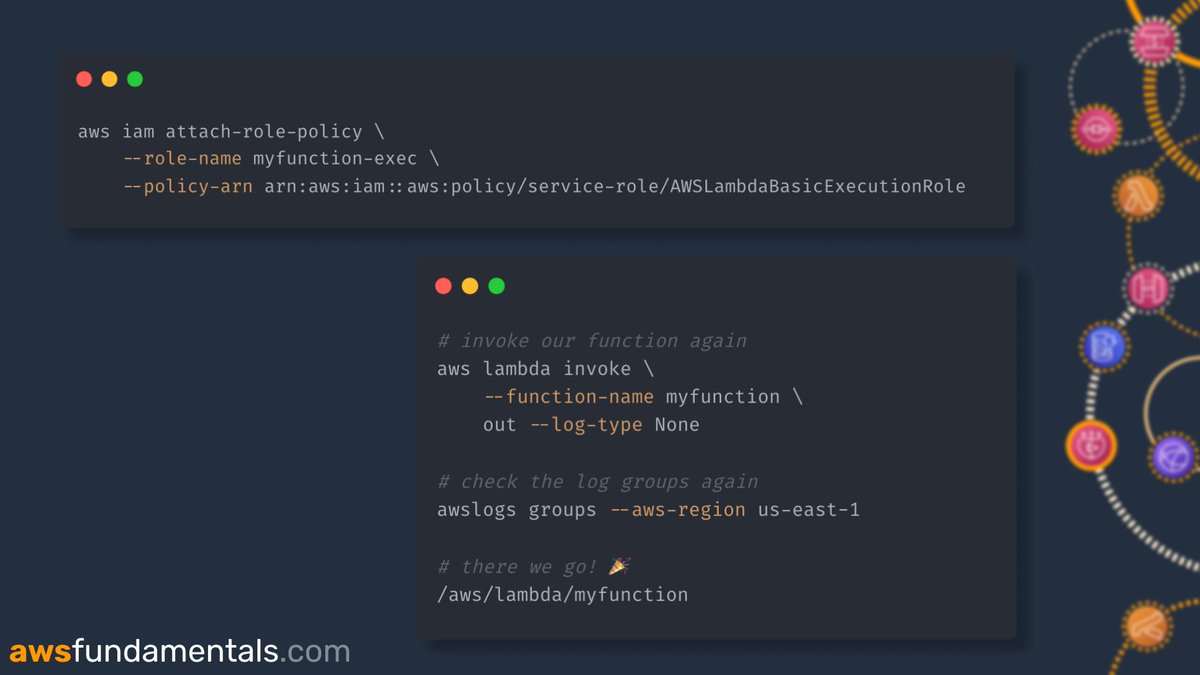
Let's check the logs via 𝗮𝘄𝘀𝗹𝗼𝗴𝘀 𝗴𝗲𝘁 /𝗮𝘄𝘀/𝗹𝗮𝗺𝗯𝗱𝗮/𝗺𝘆𝗳𝘂𝗻𝗰𝘁𝗶𝗼𝗻 --𝘄𝗮𝘁𝗰𝗵 --𝗮𝘄𝘀-𝗿𝗲𝗴𝗶𝗼𝗻 𝘂𝘀-𝗲𝗮𝘀𝘁-𝟭
As we've used --𝘄𝗮𝘁𝗰𝗵 the log stream will stay open.
Every output from the following invocations will be streamed to your terminal.
As we've used --𝘄𝗮𝘁𝗰𝗵 the log stream will stay open.
Every output from the following invocations will be streamed to your terminal.
𝗨𝗽𝗱𝗮𝘁𝗶𝗻𝗴 𝗖𝗼𝗻𝗳𝗶𝗴𝘂𝗿𝗮𝘁𝗶𝗼𝗻𝘀
Lastly, let's adapt our function's configuration. Maybe we want to have more memory and a longer timeout.
Lastly, let's adapt our function's configuration. Maybe we want to have more memory and a longer timeout.
𝗗𝗲𝗹𝗲𝘁𝗶𝗻𝗴 𝗙𝘂𝗻𝗰𝘁𝗶𝗼𝗻𝘀
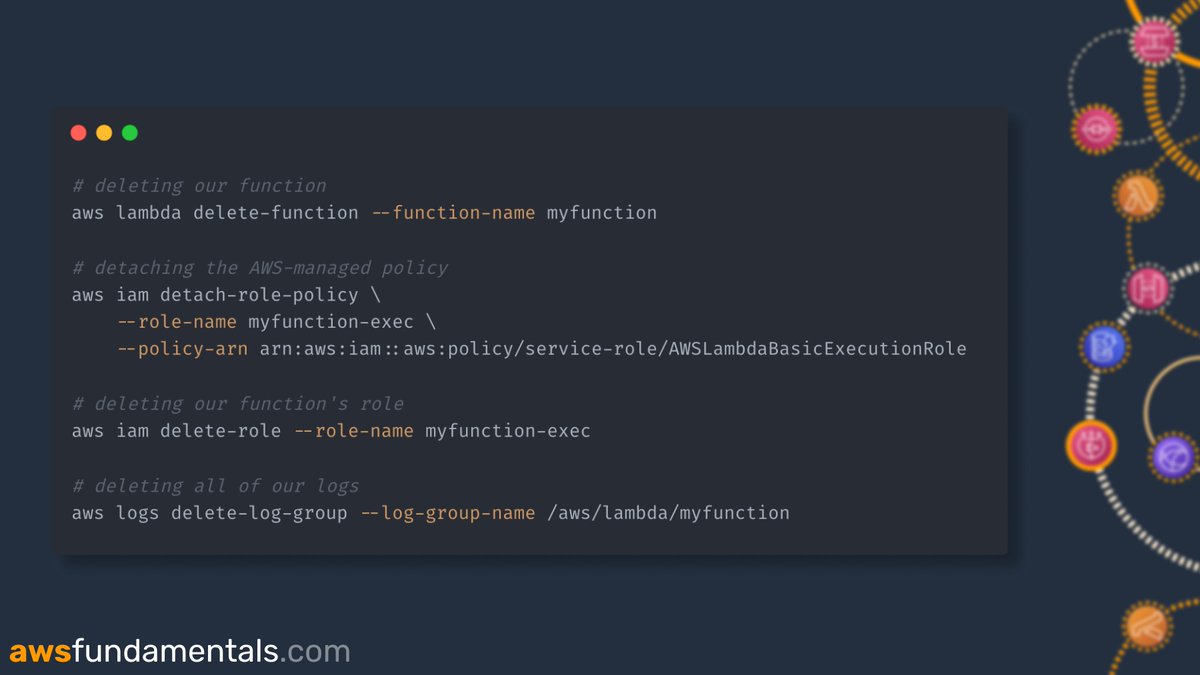
Let's finish our journey with the Lambda CLI by cleaning up our function and execution role.
That's it. We've gone through the full cycle and we've cleaned up our resources afterward.
Let's finish our journey with the Lambda CLI by cleaning up our function and execution role.
That's it. We've gone through the full cycle and we've cleaned up our resources afterward.
If you've enjoyed this thread, we're happy about a ♻️ or ♥️ of the initial post so others can see it too!
If you're interested in more, sign up for our newsletter and get a 𝗳𝗿𝗲𝗲 𝘀𝗮𝗺𝗽𝗹𝗲 𝗰𝗵𝗮𝗽𝘁𝗲𝗿 of our book straight into your inbox 📨 ↓
awsfundamentals.com
If you're interested in more, sign up for our newsletter and get a 𝗳𝗿𝗲𝗲 𝘀𝗮𝗺𝗽𝗹𝗲 𝗰𝗵𝗮𝗽𝘁𝗲𝗿 of our book straight into your inbox 📨 ↓
awsfundamentals.com
• • •
Missing some Tweet in this thread? You can try to
force a refresh






