0️⃣BlackBetty ⚓️ Profile picture
Feb 17, 2023 11 tweets 4 min read Read on X
Have You Heard of MKOften? Project MKOFTEN was a covert Department of Defense program developed in conjunction with the CIA. A partner program to MKSEARCH, the goal of MKOFTEN was to "test the behavioral and toxicological effects of certain drugs on animals and humans". THREAD 👇🏼
According to author Gordon Thomas' 2007 book, Secrets and Lies, the CIA's Operation Often was also initiated by the chief of the CIA's Technical Services Branch, Dr. Sidney Gottlieb, to "explore the world of black magic" and "harness the forces of darkness and challenge the
concept that the inner reaches of the mind are beyond reach".
As part of Operation Often, Dr. Gottlieb and other CIA employees visited with and recruited fortune-tellers, palm-readers, clairvoyants, astrologers, mediums, psychics, specialists in demonology, witches and wizards, Satanists, other occult practitioners, and more.
#MKOften
Project MKOFTEN was an attempt by the CIA to "explore the world of black magic" and "harness the forces of darkness and challenge the concept that the inner reaches of the mind are beyond reach". vimeo.com/22766863
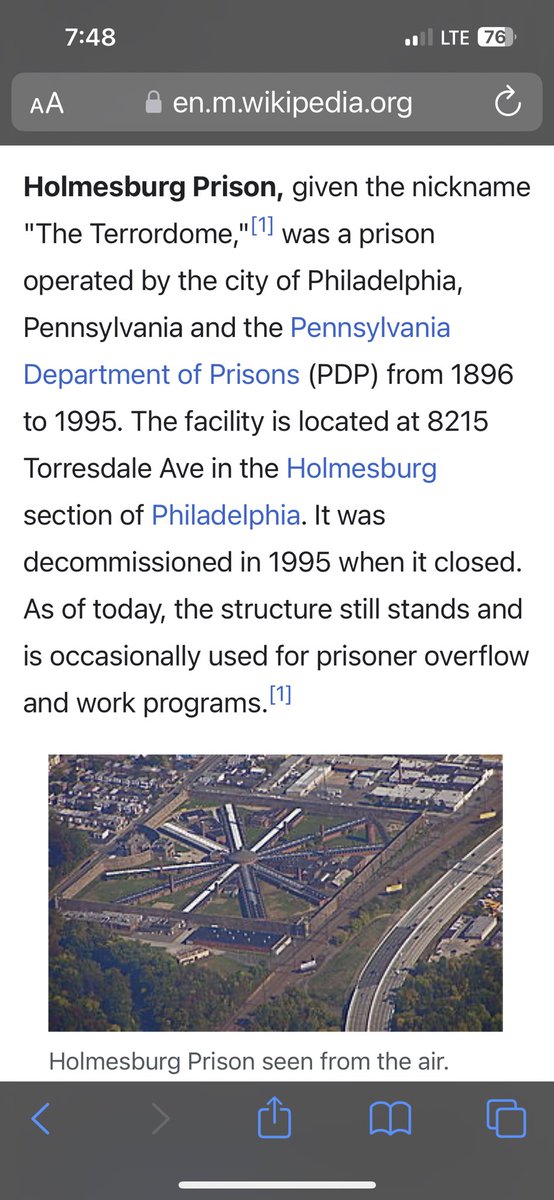
It was the site of controversial decades-long dermatological, pharmaceutical, and biochemical weapons research projects involving testing on inmates. en.wikipedia.org/wiki/Holmesbur…
From 1955 to 1975, the U.S. Army Chemical Corps conducted classified medical studies at Edgewood Arsenal, Maryland.
en.wikipedia.org/wiki/Aberdeen_…
Effects of Lysergic Acid Diethylamide (LSD) on Troops Marching' - 16mm film produced by the United States military circa 1958.

• • •

Missing some Tweet in this thread? You can try to force a refresh

 

Keep Current with 0️⃣BlackBetty ⚓️

0️⃣BlackBetty ⚓️ Profile picture

Stay in touch and get notified when new unrolls are available from this author!

Read all threads

This Thread may be Removed Anytime!

PDF

Twitter may remove this content at anytime! Save it as PDF for later use!

Try unrolling a thread yourself!

how to unroll video
  1. Follow @ThreadReaderApp to mention us!

  2. From a Twitter thread mention us with a keyword "unroll"
@threadreaderapp unroll

Practice here first or read more on our help page!

More from @BabyD1111229

Feb 24
The Secret Storage Network Jeffrey Epstein Built — And the Evidence the FBI Never Found.

THE HOUSE WAS ALREADY CLEAN

August 23, 2009. 9:14 a.m.

It’s a Sunday morning in Palm Beach, Florida.

Jeffrey Epstein is free.

Just one month out of jail — released after serving thirteen months of an eighteen-month sentence — he’s already back in his world. The phones are ringing. The emails are flowing. The lawyers are on standby. The machine is running again like it never stopped.

And then one email arrives. From a man named Bill Riley.
Riley is a former cop turned private detective. He works for Epstein. Has for years. He is, in the polite language of legal documents, a “private investigator retained by counsel.” In plain English, he’s the man Epstein calls when things need to disappear.

The email is short. Business-like. But buried inside those few paragraphs is a sentence that should have changed everything.

“Over the weekend I learned that plaintiff’s counsel are looking to get from me the computers and paperwork I took from Jeff’s house prior to the Search Warrant.”
Read that again.

Prior to the Search Warrant.

Before the police came. Before the badge was flashed at the front door. Before a single officer stepped across the threshold of Epstein’s fourteen-thousand-square-foot Palm Beach mansion — Bill Riley was already there. Already packing. Already walking out the door with computers and paperwork that investigators would spend the next two decades looking for.

Riley continues: “I have them locked in storage and would like to know what to do with them.”

Locked in storage.

Not destroyed. Not handed over. Not shredded, burned, dumped in the Intracoastal Waterway. Locked in a self-storage unit somewhere in Palm Beach County, still intact, still holding whatever they held the day they were carried out the back door of the most notorious address in Florida.

The email also mentions, almost as an afterthought, that the hard drives have been cloned. Copied. Duplicated.

The originals are in storage.

The copies — nobody knows where the copies went.

Epstein reads the email. He does not panic. He does not call 911. He does not do what an innocent man might do — which is immediately contact law enforcement and say, “I believe my private investigator has evidence related to an ongoing civil lawsuit and you should probably know about it.”

What Epstein does, we don’t know exactly. His response, if he wrote one, hasn’t surfaced.

What we know is this: the computers stayed in storage. The cloned drives stayed wherever they were. And for the next sixteen years, nobody — not the Palm Beach Police Department, not the FBI, not the Department of Justice — ever obtained a search warrant for any of Jeffrey Epstein’s storage units.

Not one.

This is the story of six padlocked rooms scattered across the United States. Of hard drives that vanished before police ever arrived. Of a private island where computers were shipped off with instructions to wipe them clean before throwing them out. Of a detective agency run by former cops who kept everything locked up tight, and who are still, to this day, legally protected from saying a word about what they know.

And it’s the story of the most important question nobody in Washington seems to want to answer:

If the FBI never searched those storage units — what’s still inside them?

Thread 🪡 ⬇️ catch up on the Sauce!! Link 2 🔗 source last tweet.Image
The Man Who Built an Empire Out of Nothing

To understand what might be in those units, you need to understand what Jeffrey Epstein was — not the tabloid caricature, not the conspiracy-theory boogeyman, but the real man, the one who walked into rooms and immediately understood exactly what every single person in that room wanted.
He was born in 1953 in Coney Island, Brooklyn. Son of a parks department groundskeeper and a homemaker. No silver spoon. No family connections. No Harvard degree — he never even finished college. What he had was a mind that processed numbers like a machine and read people like a book he’d already memorized.

By his thirties, he was managing money for some of the wealthiest individuals on the planet. How he got there — how a man with no formal financial credentials and no institutional backing became a trusted advisor to billionaires — is one of the questions that serious investigators and journalists have been trying to answer for twenty years. The answers have never been fully satisfying.
What we know is that by the early 2000s, Jeffrey Epstein had assembled a physical footprint that would have impressed a head of state.

The Palm Beach mansion on El Brillo Way: fourteen thousand square feet, marble floors, multiple outbuildings, a pool, and a massage room that would become the center of a criminal investigation.

The Manhattan townhouse: a nine-story limestone building on East 71st Street in the Upper East Side, reportedly the largest single-family private residence in New York City. A building with a seven-screen media tower in one room and — in the basement — two bins full of computer hard drives that arrived at the scene already tagged with evidence tape.
Zorro Ranch in Stanley, New Mexico: nearly eight thousand acres of high desert, complete with its own airstrip, multiple outbuildings, and a guest lodge where a rotating roster of scientists, academics, and celebrities came to discuss Epstein’s ideas about the future of the human race.

A Paris apartment near the Arc de Triomphe.

And Little Saint James — a seventy-five-acre private island in the U.S. Virgin Islands, connected to the outside world only by boat or helicopter, featuring a blue-and-white-striped temple-like structure whose purpose has never been officially explained, and a main house where FBI agents, when they finally arrived in August 2019, found a dentist’s chair, walls hung with gold-painted masks, and a blackboard with the words “power and deception” written in chalk.

This is the world Epstein built. And in every single one of those properties, when authorities finally arrived, the most important things had already been moved.Image
The Girls Nobody Believed

In 2005, a woman in Palm Beach made a phone call that she hoped would change everything.

Her daughter — fourteen years old — had been to a large house in the wealthy part of town. A man there had done things to her. The mother didn’t know exactly how to describe what had happened. She just knew it was wrong.

The Palm Beach Police Department took the call seriously. More than they might have, had it been a single incident. But the detective who interviewed the first girl came back to the station with something in his eyes that his colleagues recognized.

This is real. This is big. And there are more.

There were more. One name led to another. One address led to a phone number led to a pattern that was unmistakable to anyone trained to see it. Girls — some as young as thirteen — were being recruited, often by women who approached them in public places, brought to the El Brillo Way mansion, and told they were there to give massages. What happened in that massage room was not massage.

The Palm Beach PD built their case carefully. They identified victims. They documented their accounts. They planned their move.

And someone told Epstein they were coming.

Michael Reiter — the Palm Beach police chief, a twenty-year veteran who would later describe this case as “the worst failure of the criminal justice system” he ever witnessed — has long suspected Epstein was tipped off before the 2005 raid. He never had proof. He just knew what he saw when he walked through that front door.

“The place had been cleaned up,” Reiter said years later. “And some of the computer material appeared to be missing.”
October 2005: The House on El Brillo Way

The search warrant is executed on a bright October morning in Palm Beach.

Reiter’s detectives spread through the house. They document what they find. In the massage room, there is equipment consistent with what the girls described. In the main living areas, there are details that align with their accounts. The investigators photograph everything, log everything, preserve the chain of custody on everything they can collect.

But the computers — the computers that might have shown the full scope of what was happening here, the computers that might have contained schedules, names, photographs, video — are not where they should be.

An audio recording of a Florida detective briefing the FBI, recently declassified and included in the latest document release, captures the moment:

“Two computers were seized. One was the covert cameras, and the other one was Mr. Banasiak’s personal computer.”

That’s it. Two. In a fourteen-thousand-square-foot mansion operated by a man who owned multiple properties across four states and the Caribbean — two computers.

The detective is asked: Was there any evidence of sexual activity on the devices seized?

“No.”

No.

Because by the time those investigators walked through the door, the hard drives that might have shown them exactly what they needed to see were already in a storage unit on the outskirts of Palm Beach, boxed up by a former cop turned private detective named Bill Riley, who was being paid by Epstein’s lawyers to make sure that nothing that mattered was ever found in the right place at the right time.

The Deal That Broke Everything

What happened next remains one of the most controversial episodes in the history of American prosecutorial discretion.

Despite having multiple victims, documented evidence of criminal activity, and a clear pattern of predatory behavior, the federal prosecution of Jeffrey Epstein was quietly transformed into something almost unrecognizable.

In 2007, after negotiations conducted largely in secret, Epstein entered into what’s known as a “non-prosecution agreement” with the U.S. Attorney’s Office for the Southern District of Florida. The agreement was negotiated under Alexander Acosta — who would later become Secretary of Labor under President Trump before resigning under pressure when the details of the deal became public in 2019.

Under the NPA, Epstein agreed to plead guilty at the state level to a single count of soliciting a minor for prostitution. Not federal sex trafficking. Not organized sexual abuse of children. Not the charges that reflected what two dozen victims said had happened to them.

Soliciting a minor.

The sentence: eighteen months in the Palm Beach County Jail.

With a remarkable provision: he would be permitted to leave the facility for up to twelve hours per day to conduct business at a rented office.

He served thirteen months. Then walked out.

The victims were not informed about the deal before it was finalized. That aspect alone was later ruled a federal crime — a violation of the Crime Victims’ Rights Act — by a federal judge. The damage, however, had been done.

Michael Reiter, who had handed his files to the FBI with the expectation of a full federal prosecution, was left staring at a plea deal that his detectives considered an insult to everyone who had come forward.

“The criminal justice system,” Reiter later said, “failed these kids.”

What he didn’t know then — what nobody knew then — was that even if the prosecution had gone the distance, the most incriminating evidence may have already been locked behind rolling steel doors in a nondescript self-storage facility off a Palm Beach industrial road.Image
Read 6 tweets
Feb 22
The Man With No Face: How Daniel Siad Hunted Girls Across Three Continents for Jeffrey Epstein — And Still Walks Free.

A 56-year-old Swedish woman named Ebba Karlsson walks into the Paris prosecutor’s office alone. No press cameras outside. No lawyer holding her elbow. Just a woman who has carried something very heavy for thirty-six years, finally deciding she has carried it long enough.

She sits down. She tells a story that begins in Stockholm in 1990, when she was twenty years old and a man approached her on the street.

He said he was looking for girls for a swimwear contract in Monaco.

She believed him. She traveled with him. She never took a single photo in Monaco. Instead, he drove her to a friend’s house in Cannes, to a pool house on the French Riviera. And there, she says, he raped her.​

The man’s name is Daniel Amar Siad.

Ebba Karlsson did not know his full name when it happened. She did not know who he really was until she opened her phone in early February 2026 and saw a photograph circulating in the news — a photo released as part of 3.5 million pages of newly declassified American government documents about Jeffrey Epstein.​

She recognized his face immediately.

What she did not know — what almost no one in the world knew until that moment — is that this same man’s name appears nearly two thousand times in the United States Department of Justice’s files on Jeffrey Epstein. More than almost any other name. More than many of the famous politicians, billionaires, and royals whose names the whole world was searching for.​

And yet, until February 2026, Daniel Siad was essentially unknown to the public.

No Wikipedia page. No news articles. No criminal record. No face attached to the name.

Just two thousand appearances in the private emails of the most prolific sex trafficker in modern American history.

The Files Nobody Was Looking For

When the U.S. Department of Justice released 3.5 million pages of Epstein documents on January 31, 2026, the internet erupted.​

Everyone was searching for the same thing: the famous names. The politicians. The royals. The billionaires. The celebrities. Within hours, names were being pulled out of context and shared millions of times. News anchors read them aloud on television. Social media lit up with accusations, theories, and outrage.

It was understandable. The famous names were the story everyone already knew they wanted.

But buried inside those millions of pages — in Skype transcripts, in email chains with subject lines like “Hello from Ibiza” and “I have a girl arriving tonight from London” — was a different kind of story.​

Not about a famous man. About an invisible one.

The story of how Epstein’s network actually worked. Not at the top, but in the machinery underneath. The gears that kept the whole operation running for over a decade, across dozens of countries, without ever attracting the attention of law enforcement.

That machinery had a name.

And for almost a decade, it signed its emails: Daniel Siad.​

A Man of Many Countries, Many Names, Many Faces

To understand Daniel Siad, you first have to understand how difficult it is to understand Daniel Siad.

He appears in official records as a citizen of both Sweden and Algeria. In some documents he is listed as having been born in France. He describes himself as Kabyle — a member of the Berber indigenous people of North Africa — and Jewish Berber by religious heritage.​

Over the years, depending on which country you asked and which decade you were asking about, he was described as:

A fashion photographer

An international model scout

A cultural activist for Amazigh (Berber) heritage

A diplomatic representative for the Movement for Self-Determination of Kabylia (MAK) in Saudi Arabia, the United Arab Emirates, and Bahrain

A financial consultant

A project manager for the World Fashion Channel, a Russian television network​

Between 2017 and 2020, he held formal diplomatic status representing the MAK organization in three Gulf states. That status came with travel documents and a level of diplomatic protection not available to ordinary citizens.​

His banking records, when investigators finally found them, showed his account was held in Palm Jumeirah — the famous artificial island in Dubai. Not in Stockholm, where he was officially registered. Not in Paris, where he spent significant time. Dubai. A financial system famously difficult for European and American law enforcement to penetrate.​

In his professional life, he moved through Stockholm, Paris, Barcelona, Ibiza, Marrakesh, Casablanca, Havana, Cape Town, Hong Kong, and the South of France.​

Every city was temporary. Every address was a stopover. Every identity was partial.

He was a ghost — not despite living in plain sight at fashion events, cocktail parties, and model agency offices, but precisely because of it.

The First Connection: How Epstein Created the Link

Here is a fact that investigators confirmed in 2026 from the declassified files, and that almost no one has reported clearly:

It was Jeffrey Epstein himself who first introduced Daniel Siad to Jean-Luc Brunel in 2009.​

Epstein organized the initial meeting.

This matters enormously. It means Siad did not enter Epstein’s world through the back door, introduced by an intermediary who later lost control of the relationship. Epstein chose Siad. Epstein brought him in. Epstein was the architect of this particular connection from the very beginning.

Jean-Luc Brunel, for those who need a reminder, was one of the most powerful men in European fashion for decades. He ran Karin Models and later MC2 Model Management, an agency that Epstein secretly financed. Brunel used his position to traffic dozens of young women and girls to Epstein over many years. He was arrested in France in December 2020. In February 2022, he was found dead in his cell at La Santé prison in Paris, before his trial could begin. Authorities ruled it a suicide.​

In a 2016 email to a New York district prosecutor, attorney Stan Pottinger — who represented several Epstein victims — wrote that he had spoken with Brunel directly. Brunel told him that Daniel Siad was, in Pottinger’s words, “a scout or recruiter of girls and/or women for J. Epstein.”​

This account was submitted as sealed evidence — Exhibit O — in the federal case against Ghislaine Maxwell in the Southern District of New York. Of the only eight exhibits submitted in that filing, Siad’s name appeared in one. The material remains under court seal to this day.​

The formal professional relationship began almost immediately. In correspondence from 2009, Brunel wrote to Epstein: “We will pay him 3,000 euros per month for six months to scout models.”​

Three thousand euros a month. Paid by Epstein, through Brunel, to a man who would spend the next decade traveling across three continents looking for young women and girls to send to a convicted sex offender.

Continue Reading ⬇️ and find link 🔗 of source.

Thread 🪡Image
The Emails: A Decade of “Fisherman” Work

The earliest emails between Siad and Epstein in the DOJ files are dated 2009. The last ones appear just before Epstein’s arrest in the summer of 2019. That is almost exactly ten years of documented correspondence.​

The language in those emails is worth reading carefully, because it reveals not just what Siad was doing, but how he thought about what he was doing.

In one of the very first documented exchanges, from June 2009, Siad wrote to Epstein with seven photographs attached:
I just found an amazing one; she is 20 years old but looks younger, from Latvia.”​

Read that sentence slowly.

She is 20 years old. But she looks younger.

That is not the language of a legitimate talent scout describing a client’s commercial potential. That is a sales pitch to a man who had already been convicted in 2008 of procuring a minor for prostitution. The emphasis on appearing younger than the actual age is a signal — a coded communication between two people who both understand the real purpose of the transaction.​

In July 2014, Siad’s email to Epstein mentioned “at least five potential” recruits “aged 16 and 17” — and then mentioned “a 15-year-old French girl.”​

Fifteen. Years. Old.

The year before, in 2013, according to a woman who was later interviewed by French investigators, Siad had approached her on the street in Paris, presented himself as a modeling agent, and then introduced her directly to Epstein as a candidate to become his “assistant.” She was hired after an interview at Epstein’s apartment on Avenue Foch in the 16th arrondissement.

“He wanted me to be at his disposal. Sexually, I was his thing. He always told me I was his slave,” she told police in 2022.​

Siad had recruited her. He had made the introduction. And he was never questioned during the original French investigation that ran from 2019 to 2023.​

From Paris to the Villages: The Eastern European Operation

By mid-2009, Siad was not just working the fashion capitals of Paris and Milan. He was going further.

In an email to Epstein, he outlined a scouting plan for the coming summer months: he intended to travel to “small villages in Poland, Czech Republic, Slovakia, and Hungary” specifically to find young women.​

Not the modeling agencies in Warsaw or Prague. Not the established fashion networks of Budapest or Bratislava.

The small villages.

The places where girls grew up with big dreams and limited options. Where the idea of a European modeling contract was enough to make a family encourage their daughter to meet a charming stranger who claimed to know people in Paris and New York. Where no one had the connections or the experience to know the difference between a legitimate scout and a predator wearing the same face.

In 2010, Siad was in Sofia, Bulgaria, working through local agencies — specifically Next One Agency — forwarding photographs of young women to Epstein while arranging meetings.​

In each case, the structure was identical: Siad identifies a young woman. He takes or obtains photographs. He forwards them to Epstein with notes about physical appearance, age, and sometimes the telling observation that the woman “looks younger” than she is. Epstein responds with comments about ethnicity, physical features, and youthfulness.​

A booking. A payment. A next target.

“In this business, I feel like a fisherman,” Siad wrote to Epstein in 2014. “Sometimes I catch quickly, and sometimes there are no fish.”​

Girls are fish.

That is how he described them. In writing. In an email that was stored in servers that were later obtained by the United States Department of Justice.

The Barcelona Chapter: Girls Staying in His Apartment

By 2016, Siad had settled — at least for a period — in Barcelona.

And he was not just forwarding photographs from a distance. He was housing the women he scouted.

According to the DOJ documents, Siad sent Epstein a message in September 2017 that read:

“I am here in Barcelona. I have girls staying with me, of Australian and Croatian origin. You can speak with her, very sweet.”

He added: “I am looking to place her here and in Paris. Also her dream is NY, of course.”

He then sent photographs, noting the woman was 23 years old. He hastily added — as if remembering a selling point — that she had a 20-year-old sister.​

Epstein’s interest apparently warranted a Skype call. According to the documents, following that Skype call with Siad and the woman, Siad was then invited by Epstein to organize a meeting between the woman and Woody Allen, who appeared to also be in Barcelona at the time.​

The women living in Siad’s apartment believed they were being helped with their modeling careers. They likely did not know that their photographs were being sent to a convicted sex offender. They almost certainly did not know that his comments about their age and appearance were being forwarded to a man whose private pilot would later testify about the parade of young women flown to private islands and private estates.

Siad provided the housing. He covered the travel costs. He organized the meetings. And he received payment — transferred by Epstein’s accountant, Richard Kahn, to that account in Dubai’s Palm Jumeirah.​

In 2018, Epstein had relayed Siad’s banking information to Kahn with the note: “5-year loan for $25,000.”​

A loan. On paper. Twenty-five thousand dollars.

This is how the money moved without leaving obvious fingerprints. Not a direct payment for “recruiting girls.” A loan. A consulting fee. A modeling advance. Legitimate-sounding labels attached to transactions that served a very different purpose.
The New Zealand Girls: “Too Old”

In 2015, somewhere in Paris — likely near a fashion week event — two teenage girls from New Zealand were approached by a man.​

They were 16 years old. Both had recently signed their first modeling contracts. Paris was supposed to be the beginning of everything for them.

The man who approached them was charming. He spoke about parties in New York. He mentioned important names in the fashion world. He said he could make introductions.

After the meeting, he sent photographs to Jeffrey Epstein.

Epstein’s response was two words.

“Too old.”​

Sixteen-year-old girls. Too old.

This was not an isolated incident. This was Epstein’s documented pattern — a preference so extreme that even teenage girls did not meet his standard of youth. And it was Siad’s job, year after year, to keep searching for whoever might meet that standard.

The two New Zealand girls went back to their Paris apartment not knowing that their faces had been transmitted to a man who had already been convicted of sex crimes against children. They went back to their careers, their dreams, their ordinary teenage lives.

Somewhere in Dubai, a payment cleared into an account registered on an artificial island.

The Woman in the Pool House: Ebba Karlsson’s Story

The story of Ebba Karlsson is not, technically, part of the Epstein files. The events she describes happened in 1990 — nineteen years before the earliest Siad-Epstein email in the DOJ documents, and nine years before Epstein began to become a household name in America.

But it is the story that makes everything else comprehensible.

Because it shows that what Daniel Siad was doing for Epstein between 2009 and 2019 was not a new behavior. It was not something he learned from Epstein. It was something he had apparently been doing — in some form — for a very long time before Epstein came along.​

Ebba Karlsson was 20 years old in 1990. She was walking down the street in Stockholm when a man approached her. He told her she was beautiful. He said he was looking for girls for a swimwear contract with a brand based in Monaco.​

She agreed to meet him. She traveled with him to Monaco.

No photographs were taken in Monaco.

Instead, he drove her to the South of France — to a house in Cannes, to a pool house. She says he raped her there. They stayed for several days. She did not know this man’s full name. She filed no report. She told almost no one.

Thirty-six years passed.

Then, in early February 2026, photographs of Daniel Siad began circulating in French media as journalists and researchers dug through the newly released Epstein files.​

Ebba Karlsson was scrolling through her phone when she saw one of those photographs.

And she knew exactly who she was looking at.

She went to Paris. She filed a formal complaint for rape and human trafficking. Her lawyer stood beside her and described what had happened at the pool house in Cannes in 1990.

And then — because the story was not finished — Ebba Karlsson told reporters something else:

After she had been identified as someone who recognized Siad, she began receiving death threats.​

Text messages. Someone who knew she had spoken. Someone who wanted her to stop.

She did not stop.
Read 5 tweets
Feb 11
It’s May 1996. New Albany, Ohio.

Maria Farmer is 26 years old. An artist. She’s been working at a billionaire’s estate for three weeks. Today she needs to leave the guesthouse to buy art supplies.

She calls the billionaire’s wife. Asks permission.

The wife says she’ll think about it.

Maria is a grown woman. But armed guards patrol this property. She can’t leave without approval. She’s starting to understand: this isn’t an artist residency.

It’s a prison.

That night, Jeffrey Epstein walks into her room. By morning, she’s been assaulted. She escapes the estate. She reports him to the FBI.

Nothing happens.

Thirty years later—February 10, 2026—Congressman Ro Khanna stands on the House floor. He’s holding FBI documents. Documents the Department of Justice tried to keep secret.

He reads a list of six names. Men the FBI suspected of helping Jeffrey Epstein traffic children.

The first name: Leslie Wexner.
Owner of Victoria’s Secret. One of the richest men in America. The man who gave Epstein power of attorney over billions of dollars. The man who transferred a $56 million Manhattan mansion to Epstein with no record of payment.

The FBI called him a suspected co-conspirator.

This is the story of how it happened.

The Genius Who Built an Empire

Columbus, Ohio.

Les Wexner is 26 years old. His parents own a small clothing store in Dayton. Les has an idea: what if you only sold one thing? Women’s sportswear. Young professionals. Simple, focused, fast.​
He borrows $5,000 from his aunt. Opens one store. Calls it The Limited.

Within a year, he opens a second store. Then a third. Then ten.​

By 1969, The Limited is a chain. By 1980, Wexner has 187 stores across America. He’s a retail genius. He understands what women want before they know it themselves.

In 1982, he’s in San Francisco. He walks into a struggling lingerie store called Victoria’s Secret. Six locations. Losing money. Victorian-themed, frilly, old-fashioned.​
Wexner sees potential.

He buys the company for $1 million. Then he transforms it. Out go the Victorians. In come supermodels. Fashion shows. Fantasy. Glamour.​

By 1990, Victoria’s Secret isn’t just a store. It’s a cultural phenomenon. The fashion show becomes appointment television. Angels become celebrities. Sales exceed $1 billion.​

Les Wexner becomes one of the richest men in America.
He builds a private town in Ohio called New Albany. He designs every building himself. He donates hundreds of millions to charity. Ohio State University. Medical research. Jewish causes.

But by the mid-1980s, Wexner wants more. Retail is good. But he wants sophisticated wealth management. Offshore investments. Tax strategies. Complex financial structures.

He needs someone brilliant with money.
In 1986, a friend offers to introduce him to just such a person.​

That introduction will destroy everything.

The Warning: “I Smell a Rat”

Robert Meister is sitting on a plane. Mid-1980s. Flying to Palm Beach.

The man next to him is charming. Well-dressed. Says his name is Jeffrey Epstein. Says he works in finance. High-net-worth clients. Offshore accounts. Complex tax structures.
They talk. Meister mentions he’s an insurance executive. His firm handles policies for The Limited. He knows Les Wexner personally.​

Epstein becomes very interested.

Later, Epstein calls Meister. He has a story. He says he’s discovered that Wexner’s current money manager—Harold Levin—is stealing from him. Epstein describes himself as a financial “bounty hunter.” He can recover the stolen money.​
It sounds convincing.

Meister arranges a meeting. Wexner’s house in Aspen. Epstein makes his pitch.​

But Meister has a colleague who wants to meet Epstein first. Harold Levin himself. The man Epstein is accusing.

They meet. One meeting.

Levin walks out. Finds Meister. Says: “I smell a rat. I don’t trust him”.

He tells Wexner the same thing. Stay away from this man.​

Wexner ignores him.

By 1987, Jeffrey Epstein is Wexner’s financial adviser. Soon, he’s the only adviser. Levin is pushed aside. Eventually, Levin quits rather than work under Epstein.

Before he leaves, Levin learns something disturbing: Epstein had told Wexner that Levin was stealing. It was a lie. But Wexner believed Epstein, not Levin.​

The man who warned “I smell a rat” is gone.

Epstein is in.

Friends of Wexner are confused. Who is this Jeffrey Epstein? Where did he come from? What are his credentials?

No one can find answers. Epstein has no other clients. No verifiable track record. He’d worked at Bear Stearns in the late 1970s, but left in 1981 under unclear circumstances.​

Some people ask questions. Wexner doesn’t answer them.

By the early 1990s, Epstein isn’t just Wexner’s financial adviser. He’s part of the family. He attends dinners. Vacations. Celebrations.

But Robert Meister—the man who introduced them—is worried.

September 1997. Wexner’s 60th birthday party. His estate in New Albany. Hundreds of guests. Senator Joe Lieberman. Prominent developers. Ohio’s elite.​

Meister is there with his wife.

During the party, Meister pulls Wexner aside. In front of other guests, he begs Wexner to cut ties with Epstein. “My wife and I told him and Abigail hundreds of times to stay away from Epstein,” Meister says later.​

Wexner won’t listen.

It’s the last time Meister visits Wexner’s house.​

What Meister doesn’t know—what no one knows—is that by 1997, it’s already too late.

Six years earlier, Wexner had signed something. Three pages. A document that gave Jeffrey Epstein total control.​

And by 1997, Epstein is already using that control to build an empire of abuse.

Thread 🪡 continue reading 📖 next Tweet.

usnews.mstfootball.com/lam1/the-billi…Image
July 1991: Signing Away Everything

Three pages. That’s all it takes.​

Power of attorney. Signed July 1991.

Les Wexner grants Jeffrey Epstein the legal right to sign Wexner’s name. On anything. Any document. Any contract. Any check.​

Epstein can buy properties. Sell them. Borrow money. Access accounts. Hire employees. Fire them. Make investments. All in Wexner’s name.​

It’s not limited. It’s not temporary. It’s total authority.

Lawyers who later review the document are stunned. One tells New York Magazine: “I’ve never seen anyone give power of attorney that broad to someone who wasn’t a family member”.​

Most people don’t even give their spouses this kind of power.

Why would a billionaire give it to a man he’d known for five years? A man with no verifiable credentials? A man his best advisers called “a rat”?

In 2019, Wexner offers an explanation. He says Epstein came “highly recommended” by friends. He says he trusted those recommendations.​

But the warnings were explicit. Multiple advisers had urged caution. Harold Levin didn’t trust him. Robert Meister begged him to walk away.

Wexner gave Epstein everything anyway.

For 16 years—1991 to 2007—Epstein operates with complete legal authority. He manages billions. He moves assets across borders. He represents Wexner in business deals.​

Friends are mystified. One tells Vanity Fair: “We couldn’t understand it. Les is a brilliant businessman. How could he be so blind?”.​
The assets under Epstein’s control aren’t small. By the mid-1990s, Wexner’s net worth exceeds $5 billion. Properties include estates in Ohio, New Albany, vacation homes, private jets.

And one particular property.

A seven-story mansion at 9 East 71st Street in Manhattan. The largest private residence in New York City.​

In 1989, Wexner bought it for $13.2 million.​

By 1996, Jeffrey Epstein is living there.​

By 1998, it’s transferred to Epstein’s name.

Public records show no payment.

That mansion becomes the center of Jeffrey Epstein’s criminal empire.

But before it became his headquarters, it became his trap.

And Maria Farmer walked right into it.

May 1996: The Guesthouse

Maria Farmer is packing her rental truck. Art supplies. Canvases. Brushes. Paint.

She’s 26 years old. She studied at the New York Academy of Art. She’s talented. She has a future.

A professor introduced her to Jeffrey Epstein. Said he was an art collector. A patron. Someone who helped young artists.​

Epstein seemed legitimate. He attended gallery shows. He bought pieces. He introduced Maria to Ghislaine Maxwell. Maxwell seemed cultured. Connected. She talked about art, travel, high society.

Then Epstein made an offer.

He’d arranged for Maria to work as artist-in-residence on a property in Ohio. She’d paint backdrops for a Hollywood movie—”As Good As It Gets.” She’d have space. Time. Materials. It was the opportunity she’d been dreaming of.

Maria says yes.

She packs everything. Drives from New York to New Albany, Ohio.​

The property belongs to Les Wexner.

Maria arrives. The estate is massive. Sprawling. Isolated. But she’s not staying in the main house. She’s in a guesthouse.​

The first day, she tries to leave. To buy supplies in town.

A guard stops her.

He says she needs permission.

Maria calls the main house. Speaks to Abigail Wexner—Les Wexner’s wife. Asks if she can go into town.
Abigail says she’ll think about it.​

Maria is 26 years old. An adult. But she can’t leave without asking permission.

She realizes something is very wrong.

Days pass. Maria works on the paintings. But the guards are always watching. She can’t leave the property. Every trip into town requires a phone call. Approval. Supervision.​

Then Epstein and Maxwell visit.

One night, they assault her.

Maria is terrified. She finishes the work as quickly as possible. She leaves the estate. She drives back to New York.

And she does something almost no one had done before.

She reports Jeffrey Epstein to the police.​

She files a criminal complaint with the FBI. Then the NYPD. She gives details. The assault. The Ohio estate. Ghislaine Maxwell’s involvement. Les Wexner’s property.​

The FBI takes her statement.

Nothing happens.

No investigation. No charges. No follow-up.​

Maria doesn’t understand. She reported a crime. She gave names, locations, dates. Why isn’t anyone doing anything?

Years later, she’ll learn the truth. Epstein has connections. Powerful connections. Complaints against him have a way of disappearing.​

In 1996, Maria is one of the first to report him.

She won’t be the last.

One year later. May 1997. Santa Monica, California. Another woman gets a phone call. The man on the line says he’s a Victoria’s Secret talent scout.

His name is Jeffrey Epstein.

May 1997: “Let Me Manhandle You”

Alicia Arden is 27. An actress. A model. She’d appeared on “Baywatch” a few years ago. Now she’s trying to break into high fashion.

The phone rings.

A man. Says his name is Jeffrey Epstein. Says he’s a talent scout for Victoria’s Secret. Says he’s in Los Angeles looking for models for the catalog.​​

Alicia can’t believe it. Victoria’s Secret. The dream. Every model wants that job.

They arrange to meet. Shutters on the Beach. A luxury hotel in Santa Monica. Epstein books a room. Says it’s easier to review her portfolio there, away from distractions.

Alicia arrives. Professional photos. Comp cards. Measurements. She’s nervous. Excited.

Epstein opens the door. Invites her in. At first, everything seems normal. He looks through her photos. Asks about her experience. Seems professional.​

Then he asks her to sit closer.​

She does. She wants this job.

He starts touching her. Shoulder. Back. Thigh.​

Alicia tenses. This doesn’t feel right.

Epstein says: “Let me manhandle you”.

He grabs her. Pulls her shirt over her head. Yanks her skirt down. Gropes her.

Alicia realizes what’s happening. This isn’t an audition. This is assault.

She fights. Pushes him away. Grabs her clothes. Runs.

Outside the hotel, she’s shaking. Crying. She calls the police.​​

Santa Monica Police Department. She files a sexual battery report. Gives them everything. Epstein’s name. The hotel room number. What he did.

A detective takes her statement. He seems to believe her.

But nothing happens.

No arrest. No charges. No investigation.​

Alicia doesn’t understand. She reported it immediately. She had evidence. She gave them his name.

Why isn’t anyone doing anything?

She’ll learn later: Epstein used the Victoria’s Secret connection repeatedly. He approached models. Aspiring actresses. Young women desperate for a break. Promised them catalog work. Runway shows. Exposure.

Then he assaulted them.

And he got away with it.

Because the Victoria’s Secret connection wasn’t fake. It was real. He had Les Wexner.

In fact, two executives at Victoria’s Secret eventually warned Wexner. They told him Epstein was using the company’s name to approach women. They said it was damaging the brand. Creating liability.​

Wexner told them: “I’ll take care of it”.​

He didn’t.

The relationship between Wexner and Epstein continued.

And Epstein’s abuse escalated.

But here’s what’s strange. Epstein wasn’t just using Wexner’s company name. He was using Wexner’s money. In 2004, he gave a man named Jean-Luc Brunel up to $1 million.​

That money launched one of the most notorious modeling agencies in history.

An agency that, according to victims, supplied Epstein with dozens of underage girlsImage
2004: The Model Pipeline

Jean-Luc Brunel is a French modeling scout. In the 1980s, models accused him of drugging and sexually assaulting them. In 1988, a “60 Minutes” segment featured models describing his predatory behavior.​

But Brunel is connected. He works with major agencies. He scouts across Eastern Europe.​

And he knows Jeffrey Epstein.

In 2004, Epstein gives Brunel up to $1 million. The purpose: launch a modeling agency called MC2 Model Management.

Brunel opens offices in New York. Miami. He recruits young women from Eastern Europe. Poor countries. Promises them modeling careers in America. Visas. Housing. Work.​

But according to court testimony, MC2 wasn’t just a modeling agency.

Virginia Roberts Giuffre—one of Epstein’s most vocal accusers—states in a 2015 deposition that Brunel “supplied Epstein with dozens of underage girls”. She says Brunel recruited girls as young as 12. Brought them to America. Delivered them to Epstein’s mansions.​

In 2020, French authorities arrest Brunel. Charges: rape and sex trafficking of minors.​

In February 2022, he’s found dead in his Paris jail cell. Apparent suicide.​

But here’s the disturbing part.

Victoria’s Secret continued working with MC2 Model Management even after Wexner claimed to have cut ties with Epstein in 2007.​

Models represented by MC2 walked in Victoria’s Secret fashion shows. Appeared in catalogs. Were part of brand campaigns.​

Victoria’s Secret finally ended the relationship in 2015. The same year Virginia Giuffre publicly accused Brunel of trafficking.​

For eight years after Wexner supposedly severed ties with Epstein, the company Wexner built kept working with an agency Epstein had funded.​

An agency accused of supplying Epstein with victims.

When reporters asked Victoria’s Secret about this, a spokesperson said the company “took allegations seriously”.​

No explanation for the eight-year relationship.

And just this month—February 2026—new evidence emerged.

Videos. The FBI obtained them during their investigation. They show Epstein conducting fake “catwalk auditions” with young girls.​

The girls walk back and forth. Epstein films them. Former models who saw the videos said it looked exactly like legitimate talent scouts audition models.​

Except these weren’t legitimate auditions.

They were grooming.​

And they were happening while Epstein still had access to Les Wexner’s fortune. Still had power of attorney. Still lived in the Manhattan mansion Wexner had given him.

That mansion—9 East 71st Street—is worth examining closely.

Because the way it transferred from Wexner to Epstein raises a question no one has been able to answer.

How do you give away $56 million and leave no trace?

The $56 Million Mystery: A Mansion for $0

Les Wexner buys a mansion at 9 East 71st Street in Manhattan. Purchase price: $13.2 million.​

It’s one of the largest private homes in New York City. Seven stories. 21,000 square feet. Built in 1930 for Herbert Straus, founder of Macy’s department store.​

Wexner says he’ll use it for business trips to New York.

But he rarely stays there. In 1996, Epstein tells The New York Times: “Les never spent more than two months there”.​

Instead, Epstein moves in.​

He decorates it. A life-size female doll hanging from a chandelier. Taxidermied animals. A painting of Bill Clinton in a dress. Security cameras in every room.​

Visitors notice the cameras. Some say they felt watched. Uncomfortable.

Epstein dismisses concerns. Says he needs security.​

Then, in 1998, something happens.

The mansion transfers from Les Wexner’s name to a corporation: Nine East 71st Street Corporation.

Public records don’t show how much Epstein paid.​

One source claims $20 million. But no documents confirm this.​

Then, in 2011, another transfer. From Nine East 71st Street Corporation—which Epstein controls—to another Epstein company: Maple Inc., registered in the Virgin Islands.

The deed is dated December 25, 2011. Christmas Day.​

It’s signed by Jeffrey E. Epstein, President.​

The consideration—the amount paid—is listed on the official document.​

$10.

Ten dollars.​

A mansion worth tens of millions. Transferred for the price of lunch.

By 2019, the property is valued at $77 million.​

Real estate lawyers say such transfers can be legal. They happen in family trusts. Corporate restructuring. But they’re unusual.​

And they raise questions.

How did Jeffrey Epstein—a man with no money in 1987—acquire a $13.2 million mansion from Les Wexner?

Why are there no public records showing payment?

Why would Wexner, a brilliant businessman, give away one of Manhattan’s most valuable properties?

Wexner has never fully explained it. In his 2019 letter, he acknowledged that Epstein had “misappropriated vast sums of money” from him.

He said he was “deeply embarrassed” by his relationship with Epstein.​

But he didn’t explain the mansion.

And he never sued to get it back.​

In fact, when Wexner discovered in 2007 that Epstein had stolen $46 million, he did something that baffled legal experts.

He did nothing.

The $46 Million Question: Why No Lawsuit?

Les Wexner makes a discovery.

Jeffrey Epstein—his trusted financial adviser for 16 years—has “misappropriated vast sums of money” from him.

The amount: over $46 million.

This isn’t a minor accounting error. This is massive theft.

Most people, when they discover someone has stolen $46 million, do two things. They call the police. They file a lawsuit.

Les Wexner does neither.Image
Read 8 tweets
Feb 11
PROLOGUE: The Yacht

On August 1, 2010, 400 guests gathered in Rhinebeck, New York, for the wedding of Chelsea Clinton.

The bride wore a Vera Wang gown. The ceremony took place at Astor Courts, a 50-acre estate overlooking the Hudson River. Former presidents attended. Senators. Billionaires. Hollywood stars.

Among the guests, mingling near the champagne table, was a woman most Americans had never heard of.

She was 48 years old. British accent. Designer dress. Oxford-educated. She smiled easily, laughed at jokes, and seemed to know everyone in the room.

Her date was a billionaire from Iowa—a tech entrepreneur who’d co-founded Gateway computers and was now worth $1.4 billion.

His name was Ted Waitt.

Her name was Ghislaine Maxwell.

Six weeks later, Waitt purchased a 240-foot mega-yacht. It had five decks. A helipad. Quarters for seventeen crew members.

And underneath, hidden beneath the waterline: a docking bay for a submarine.

They named the yacht Plan B.

Nine years later, Ghislaine Maxwell would be arrested for sex trafficking. The FBI would reveal that she’d spent decades recruiting underage girls for Jeffrey Epstein. She’d facilitated abuse. She’d participated in it. She’d built a network that spanned continents.

But what most people still don’t understand is this: The network didn’t just operate on land.

It operated underwater.

In international waters, where no country has jurisdiction. Where no coast guard patrols. Where submarines don’t need flight logs.

Where people can disappear.

And Plan B was the blueprint.

✨November 5, 1991 / 5:15 AM / Atlantic Ocean

Before there was Plan B, there was another yacht.

The Spanish Coast Guard helicopter circles in the predawn darkness, its spotlight sweeping across the calm Atlantic waters twenty miles off Tenerife.

Below, floating face-up in the water, is a naked body.

The man is large—over 300 pounds. His skin is bloated, pale. His arms are spread wide. He’s been dead for hours.

At 5:15 AM, the Coast Guard pulls him from the ocean.

His name is Robert Maxwell.

He is—or was—one of the most powerful media moguls in Britain. Owner of tabloids. Publisher of textbooks. A man who’d met presidents, prime ministers, and according to whispers, Israeli intelligence officers.

The yacht he’d fallen from—or been pushed from—sits silent in the distance.

Its name, painted in white letters on the hull: Lady Ghislaine.

Named after his youngest daughter.

The Scene in the Cabin

When Spanish authorities board the Lady Ghislaine, they find Robert Maxwell’s stateroom exactly as he’d left it.

The bed is unmade but hasn’t been slept in. A book sits on the nightstand—The New World Order by Pat Robertson. A glass of water, half-empty. Reading glasses folded beside it.

The cabin door is locked from the inside. But Maxwell isn’t there.

His pajamas are folded on a chair. He always wore pajamas. The crew confirms this. Every night, without fail, Maxwell put on silk pajamas before bed.

So why was his body naked?

The head of security—a former British military officer—tells investigators that he’d checked on Maxwell at 11:00 PM the previous night. Maxwell had been in the cabin. Alive. Reading.

At 4:00 AM, another crew member had knocked on the door. No answer. He’d assumed Maxwell was asleep.

By 4:45 AM, they’d realized he was missing.

Three Autopsies, Three Answers

Dr. Carlos Lopez de Lamela (Spanish government pathologist): Heart attack followed by accidental drowning. Natural causes.

Dr. Iain West (hired by the Maxwell family): Blunt force trauma to the left shoulder and torso, suggesting Maxwell was struck or pushed before entering the water. Cause of death: Possibly homicide.

Dr. Maria Hernandez (independent review): Inconsistencies in stomach contents and body position in water. Cause of death: Undetermined.

Three doctors. Three different conclusions.

The official Spanish ruling: Accident.

But the Maxwell family never believed it.

The Debts

In the weeks after Robert Maxwell’s death, investigators discovered the truth.

He owed £3 billion. His companies were on the verge of collapse. And to keep the empire afloat, he’d been stealing from his own employees—raiding pension funds to the tune of £350 million.

Thousands of workers who’d spent decades at Maxwell’s newspapers would never see their retirement savings.

On November 4, 1991—the day before his body was found—Maxwell had received a phone call. The content was never disclosed, but sources said it was from creditors or investigators.

The message: We know what you’ve done.

That night, Maxwell told his crew he needed to clear his head. He went to his cabin.

By morning, he was in the ocean.

The Daughter’s Flight

When Ghislaine Maxwell learned of her father’s death, she was in New York.

She was 29 years old. She’d spent the previous decade as a socialite in London—attending parties, dating aristocrats, living off her father’s money.

Now the money was gone. Seized by creditors. Frozen by courts. The British tabloids—many of which her father had once owned—turned on her viciously.

“Daddy’s Girl in Scandal,” the headlines read. “Did She Know?”

Ghislaine couldn’t stay in England. Everywhere she went, people recognized her. Some spat at her. Others confronted her about the stolen pensions.

So she fled to New York.

She arrived with almost nothing. No income. No career. No prospects.

But she had her father’s Rolodex. She knew how to charm powerful men. She knew how to make herself indispensable.

And within a year, she’d met someone who would change her life.

A financier with a mansion on the Upper East Side. A man with secrets as dark as her father’s.

His name was Jeffrey Epstein.

The Billionaire

2008 / The Problem

By 2008, Jeffrey Epstein was a pariah.

He’d just pleaded guilty to soliciting prostitution from a minor in Florida. He’d served 13 months in Palm Beach County jail—though with a work-release arrangement that let him leave for 12 hours a day, six days a week.

The case had been national news. Everyone knew his name. Everyone knew what he’d done.

For Ghislaine Maxwell—who’d been Epstein’s partner, recruiter, and facilitator for nearly two decades—this was a crisis.

She needed distance from Epstein. She needed a new public identity. She needed money. She needed access to the circles of power she’d once moved through so easily.

She needed a plan.

In late 2008, Maxwell was introduced to a tech billionaire from Iowa.

Ted Waitt: The Gateway King

Theodore Waitt grew up in Sioux City, Iowa, where his father sold cattle.

In 1985, at age 22, Waitt co-founded Gateway Computers from his father’s farmhouse. The company sold PCs by mail order. Their boxes—covered in black-and-white cow spots—became iconic.

By the late 1990s, Gateway was worth over $10 billion. Waitt stepped down as CEO in 1998 but remained on the board. When he met Maxwell in 2008, he was worth approximately $1.4 billion.

He was also recently divorced and looking for meaning.

Waitt had become interested in ocean conservation. He’d started a foundation. He’d donated millions to marine biology research.

And when Ghislaine Maxwell walked into his life—Oxford-educated, multilingual, sophisticated, and passionate about the ocean—Waitt was captivated.

The Courtship (2008–2010)

Maxwell pursued Waitt methodically.

She studied his interests. She read about oceanography. She attended conferences on marine conservation. She positioned herself as someone who shared his values.

By 2009, they were dating.

Waitt introduced Maxwell to his world—tech entrepreneurs, philanthropists, environmentalists. Maxwell introduced Waitt to hers—British aristocrats, Manhattan socialites, and, crucially, the Clintons.

In 2010, Waitt made two major decisions.

First, he donated over $10 million to the Clinton Foundation.

Second, he purchased a yacht.

Plan B: The Specifications

The yacht was originally built in 2001 and named Sussurro (Italian for “whisper”). Waitt purchased it in 2010 for an undisclosed sum and renamed it Plan B.

Specifications:

Length: 240 feet (73 meters)

Five decks

Helipad on the upper deck

Guest suites for 12 passengers

Crew quarters for 17 staff

Submarine docking bay on the lower deck

The submarine bay is not unusual for mega-yachts. Wealthy owners use submarines to explore coral reefs, visit underwater caves, and travel discreetly between locations.

But submarines have one critical advantage over helicopters or jets:

There are no required flight logs.

Maxwell’s Training

Between 2009 and 2011, Ghislaine Maxwell obtained the following certifications:

Submarine pilot license

Helicopter pilot license

ROV (Remotely Operated Vehicle) operator certification

Deepworker submersible certification (a specific submarine model)

Emergency medical technician (EMT) training

These aren’t casual hobbies. Each certification requires months of intensive training and testing.

Maxwell told people she was passionate about ocean exploration and marine biology. She posted photos on social media of herself diving, operating underwater cameras, and “cleaning trash from the ocean floor.”

But here’s the question: Why would a 48-year-old socialite with no prior interest in oceanography suddenly spend years obtaining professional-grade underwater certifications?

Unless she had a specific purpose.

August 1, 2010 / The Wedding

Chelsea Clinton’s wedding is held at Astor Courts, a historic estate in Rhinebeck, New York.

The guest list reads like a directory of American power: President Bill Clinton. Secretary of State Hillary Clinton. Senators. Congresspeople. Tech billionaires. Hollywood stars.

Ghislaine Maxwell and Ted Waitt attend together.

Photos from the event show Maxwell smiling, well-dressed, standing near some of the most powerful people in the country.

This is not an accident. This is strategy.

Waitt’s $10 million donation to the Clinton Foundation has bought them access. Maxwell uses it to position herself as a legitimate philanthropist—someone who cares about important causes, someone who deserves to be in these rooms.

Within weeks, Maxwell receives an invitation to speak at the Clinton Global Initiative—an annual gathering of world leaders and philanthropists.

She’s back.

The Breakup (2011)

In 2011, Maxwell and Waitt quietly end their romantic relationship.

There are no tabloid stories. No public drama. Just a private separation.

But here’s what’s odd: Even after the breakup, Maxwell retains access to Plan B. She’s photographed on the yacht in 2012, 2013, and 2014. She continues to use Waitt’s foundation connections. She speaks at events funded by his money.

It’s as if the relationship had never really been romantic.

It had been transactional.

Waitt gave Maxwell money, access, and a yacht equipped with a submarine.

Maxwell gave Waitt… what?

That’s the question no one has answered.

TerraMar

July 26, 2012 / The Launch

Ghislaine Maxwell stands on a stage at the Blue Ocean Film Festival in Monterey, California.

She’s wearing a navy blazer. Her hair is pulled back. She speaks confidently.

“I’m thrilled to announce the launch of The TerraMar Project,” she says. “A nonprofit dedicated to protecting the world’s oceans—particularly the sixty-four percent that exists beyond any nation’s jurisdiction.”

The audience applauds.

Maxwell explains that international waters—also called the High Seas—are being destroyed by pollution, illegal fishing, and climate change. But because they belong to no country, no one is protecting them.

TerraMar, she says, will be the voice for this forgotten wilderness.

Over the next seven years, Maxwell takes this message everywhere:

The United Nations

TED conferences

Clinton Global Initiative events

Features in The New York Times, The Guardian, and Vanity Fair

She’s introduced as “ocean advocate Ghislaine Maxwell” or “philanthropist Ghislaine Maxwell.”

Never as “Jeffrey Epstein’s associate.”

The rebranding is complete.

The Financials

But here’s what TerraMar actually accomplished:

Tax returns (2012–2017):

Total grants awarded to other organizations: $0

Total program expenses: $874

Salary paid to Ghislaine Maxwell: $0

Amount TerraMar claimed it owed Maxwell: $560,650

TerraMar held no fundraising events. It funded no research. It cleaned up no beaches. It saved no oceans.

So what was it for?

The High Seas Loophole

International waters begin 200 nautical miles from any coastline.

In this zone:

No single country has jurisdiction

No coast guard patrols regularly

No customs inspections are required for private vessels

No flight logs or sailing logs are mandatory

It’s the perfect place to move people without documentation.

Thread 🪡 Continue reading if you dare 🤭

⬇️⬇️⬇️⬇️⬇️⬇️⬇️⬇️⬇️⬇️⬇️

usnews.mstfootball.com/lam1/plan-b-ho…Image
And Ghislaine Maxwell—who had submarine licenses, helicopter licenses, and access to a yacht with a submarine bay—was uniquely positioned to operate there.

TerraMar gave her a cover story. She could say she was doing ocean research. She could travel to international waters. She could host events on yachts.

And no one would ask what she was really doing.

The Island’s Secret

In July 2019, after Jeffrey Epstein’s arrest, drone operators flew over Little St. James—Epstein’s private island in the U.S. Virgin Islands.

The footage revealed something shocking: an underground entrance on the island’s rocky coastline.

The entrance appeared to lead to a tunnel system beneath the island. Structural engineers who analyzed the images said it was consistent with a submarine docking facility.

If true, this means people could arrive at Epstein’s island underwater—without appearing on any boat manifests, flight logs, or customs records.

They could board a submarine in international waters. Travel underwater. Dock beneath the island. Enter through the tunnel.

And disappear.

Who had the skills to operate such a system?

Ghislaine Maxwell.

Stephen Hawking’s Submarine (2006)

In March 2006, Jeffrey Epstein hosted a scientific conference on gravity and cosmology in St. Thomas, U.S. Virgin Islands.

Among the attendees: Stephen Hawking, the world-renowned physicist.

Hawking—who was paralyzed by ALS and used a motorized wheelchair—was photographed on Little St. James. There are also reports that Epstein arranged for Hawking to take a submarine ride during his visit.

Hawking reportedly wanted to see a coral reef.

But where did the submarine come from?

Some researchers believe it was connected to Plan B—the yacht owned by Ted Waitt and frequently used by Ghislaine Maxwell.

If true, it means Maxwell was facilitating high-profile visits to Epstein’s island using underwater transport as early as 2006—years before TerraMar officially launched.

The submarine wasn’t just for show. It was operational.

The Shutdown

July 6, 2019 / Teterboro Airport

Jeffrey Epstein’s private jet lands at Teterboro Airport in New Jersey.

He’s returning from Paris. As the plane taxis to the private terminal, FBI agents and NYPD detectives surround it.

Epstein is arrested on the tarmac.

Charges: Sex trafficking of minors. Conspiracy.

Within hours, the story is everywhere. Cable news. Front pages. Social media.

Investigators raid Epstein’s Manhattan mansion. They find a safe containing cash, diamonds, and a fake passport.

They raid his Palm Beach estate. They find photographs. Hard drives. Files.

And then they turn their attention to his associates.

One name comes up repeatedly: Ghislaine Maxwell.

July 12, 2019 / The Announcement

Six days after Epstein’s arrest, The TerraMar Project posts a brief statement on its website:

“It is with deep regret that we announce The TerraMar Project will cease all operations effective immediately. We have been unable to achieve our mission and will be closing down.”
The website goes dark. Social media accounts are deleted. The phone number is disconnected.

No explanation. No transition plan. No forwarding address.

Just… gone.

Why would an ocean conservation nonprofit need to shut down the moment Jeffrey Epstein was arrested?

Unless it had never really been about the ocean.

The Manhunt (2019–2020)

For nearly a year, Ghislaine Maxwell vanished.

The FBI couldn’t find her. Reporters tracked her to Brazil, then France, then Massachusetts.

She was using aliases. Burner phones. Moving every few weeks.

Finally, on July 2, 2020, FBI agents raided a remote estate in Bradford, New Hampshire.

They found Maxwell hiding in a small cottage on the property. She’d been living there under the name “G. Max.” She’d wrapped her cell phone in aluminum foil to block tracking signals. She’d been moving from room to room to avoid detection.

She was arrested at 8:30 AM.Image
The Trial (December 2021)

Maxwell’s trial began on November 29, 2021, in Manhattan federal court.

Four women testified that Maxwell had recruited them as teenagers, groomed them, and delivered them to Epstein for abuse.

One victim—”Jane”—said Maxwell had approached her when she was 14 at a summer camp. Maxwell had seemed nice. Motherly. She’d invited Jane to Epstein’s mansion. She’d normalized the abuse.

Another victim—”Carolyn”—testified that Maxwell had touched her naked body when she was 14 and told her she “had a great body for Mr. Epstein.”

On December 29, 2021, the jury found Maxwell guilty on five of six counts.

She was sentenced to 20 years in federal prison.

The Questions

What Happened to Ted Waitt?

After his relationship with Maxwell ended in 2011, Ted Waitt largely disappeared from public life.

He sold Plan B in 2014. He stepped down from most of his philanthropic roles. He gave occasional interviews about ocean conservation but said nothing about Maxwell.

In 2020, after Maxwell’s arrest, reporters tried to reach him. He declined to comment.

Waitt has never publicly discussed:

What he knew about Maxwell’s activities

Why he gave her access to Plan B for years after their breakup

Whether he knew about her connection to Epstein

Was Waitt complicit? Was he used? Or did he simply not ask questions?

We don’t know. And he’s not talking.

The Dental Chair

In September 2025, the House Oversight Committee released files from Epstein’s Palm Beach mansion.

One detail stunned investigators: In a bathroom on the second floor, there was a fully equipped dental chair.

Not in a clinic. In a bathroom.

Dental drills. Anesthetic supplies. Surgical tools.

Why would a financier have dental equipment in his home?

Some victims reported being given pills or injections before encounters with Epstein. Was the dental chair used to administer sedatives?

Ghislaine Maxwell had EMT training. Did she assist?

This remains unexplained.Image
Read 8 tweets
Feb 5
We told ya’ll long ago…

#ThrowbackThursday Image
No child should be around people like this. Image
Image
Image
Read 5 tweets
Jan 29
TOP 10 BOOKS LINKING PARASITES AND WORMS WITH HUMAN DISEASES

Little Thread 🪡 ⬇️

What’s in your library 📚

1. The Cure for All Diseases With Many Case Histories by Hulda Regehr Clark “The Cure for All Diseases” by Hulda Regehr Clark is a controversial book that claims to offer simple explanations and cures for a wide range of diseases. Clark asserts that parasites and pollutants cause all diseases. She believes that by eliminating these factors, one can cure any disease. The book includes numerous case histories of individuals who cured themselves of various ailments, ranging from curing cancer to alleviating chronic pain. Clark claims that a combination of parasites and pollutants causes cancer and HIV/AIDS. She provides detailed instructions on how to use her Zapper and specific herbal treatments to cure cancer. Clark extends her theories to include common ailments from cold to chronic conditions like diabetes. “The Cure for All Diseases” is a provocative book that challenges conventional medical wisdom. While some readers find hope and inspiration in Clark’s theories, others view it as a dangerous promotion of pseudoscience.Image
2. Worms Are Killing You! Parasites Drain Your Life Force Leading to Disease and Premature Death by Wayne Rowland Rowland argues that parasites are a hidden cause of many chronic illnesses and premature deaths. The book educates readers on how these parasites invade the body, the health issues they cause, and how to kill them before they kill you via parasite cleanse and deworming. He explains how these organisms can enter the body through everyday activities and foods. The book provides detailed descriptions of the symptoms associated with parasitic infections, ranging from diabetes and digestive issues to mental health problems. Rowland advocates for natural treatments to eliminate parasites, highlighting historical deworming practices and modern natural remedies, including Silver Water Colloidal. One of the more controversial claims in the book is that modern medicine often overlooks parasites as a cause of illness. Rowland suggests that conventional treatments may sometimes perpetuate the problem rather than solve it, advocating for a more holistic approach to health. “Worms Are Killing You!” is a provocative read that challenges readers to reconsider the role of parasites in their health. While some may find Rowland’s theories compelling and worth exploring, others may view them skeptically.Image
3. How to Get Your Life Back From Chronic Lyme, Morgellons, and Other Skin Parasites by Richard L. Kuhns Kuhns provides an in-depth look at Morgellons, a controversial condition characterized by skin lesions and the sensation of crawling insects. He discusses various theories about its causes, including Lyme disease, fungal organisms, and other pathogens. Central to Kuhns’ approach is the “King Diet,” designed to starve parasites and parasitic worms while nourishing the body. The diet eliminates foods that feed parasites, such as certain oils, carbohydrates, fruits, and vegetables. The book outlines various natural remedies and supplements to help build immune function and combat parasites. Kuhns recommends specific products for deep cleaning the skin and boosting overall health. Testimonials include dramatic recoveries from chronic Lyme disease and Morgellons, highlighting the potential effectiveness of his approach. The book addresses the “Invisible Bug Biting Syndrome” phenomenon and offers strategies for identifying and treating infections caused by the parasitic worm Strongyloides stercoralis. “How to Get Your Life Back From Chronic Lyme, Morgellons, and Other Skin Parasites” is a thorough and thought-provoking guide for those struggling with these challenging conditions. Kuhns’ holistic approach, combining diet, hygiene, and natural remedies, offers hope to many who feel abandoned by conventional medicine.Image
Read 10 tweets

Did Thread Reader help you today?

Support us! We are indie developers!


This site is made by just two indie developers on a laptop doing marketing, support and development! Read more about the story.

Become a Premium Member ($3/month or $30/year) and get exclusive features!

Become Premium

Don't want to be a Premium member but still want to support us?

Make a small donation by buying us coffee ($5) or help with server cost ($10)

Donate via Paypal

Or Donate anonymously using crypto!

Ethereum

0xfe58350B80634f60Fa6Dc149a72b4DFbc17D341E copy

Bitcoin

3ATGMxNzCUFzxpMCHL5sWSt4DVtS8UqXpi copy

Thank you for your support!

Follow Us!

:(