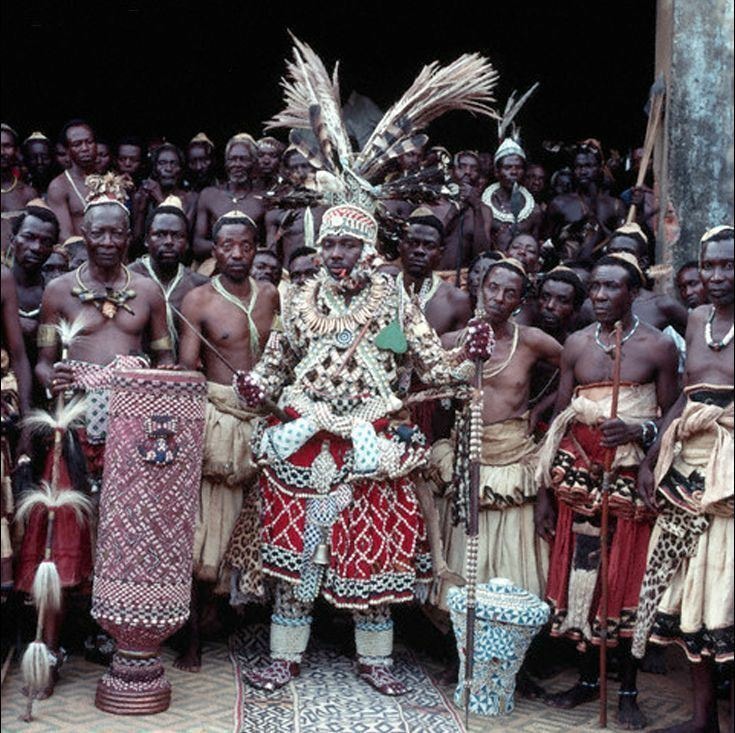
These native Africans were the original inhabitants of the Philippines.
The indigenous black-skinned Aeta or Agta people live in the isolated and hilly areas of Luzon, Philippines. The Austronesians, who are people from Southeast Asia, Oceania, and East Africa who speak
The indigenous black-skinned Aeta or Agta people live in the isolated and hilly areas of Luzon, Philippines. The Austronesians, who are people from Southeast Asia, Oceania, and East Africa who speak

languages related to the Austronesian language family, include the Aeta. South Africa, Suriname, Mauritius, and some of the Andaman Islands are also home to Austronesians. The term “Negritos,” which Spanish conquerors gave to the Aeta, is also used to describe them.
Their dark brown to extremely dark brown skin, kinky, curly hair that ranges from dark brown to blond, small noses, dark brown eyes, and diminutive stature are also characteristics of them. In Ilocano, they are also known as pugot or pugut, which means “goblin” or “forest ghost.”

History
Miguel López de Legazpi, a Spanish navigator and Governor-General, recorded that several Aeta were sold into slavery in Borneo and China during the 1500s as a result of internal warfare within the tribe, disarray, and a feeble strategy for repelling enemies.
Miguel López de Legazpi, a Spanish navigator and Governor-General, recorded that several Aeta were sold into slavery in Borneo and China during the 1500s as a result of internal warfare within the tribe, disarray, and a feeble strategy for repelling enemies.
Their current way of life
The population of Aetas has decreased to thousands as a result of deforestation, illegal logging, mining, and slash-and-burn farming. Many people have different theories on how they got to the area. The Aeta are thought to have used land bridges to
The population of Aetas has decreased to thousands as a result of deforestation, illegal logging, mining, and slash-and-burn farming. Many people have different theories on how they got to the area. The Aeta are thought to have used land bridges to

get from the Asian Continent to where they are now. Due to their continued presence in the mountains and their resistance to change, the Aeta were not much impacted by Spanish authority in the Philippines. They were swiftly removed from reservations when attempts to do so were
made. The Aeta are skilled with bows and arrows, just like other nomadic African tribes. They are known to be skilled fighters who can attack field workers or outsiders who intrude on their domain. To build a temporary shelter, they utilize sticks that have had the palm of
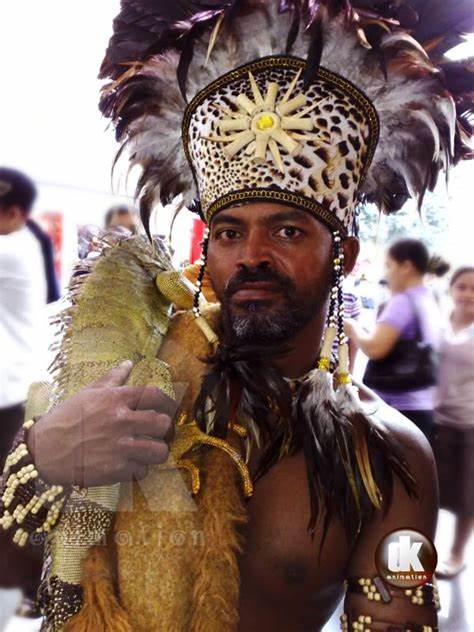
banana leaves placed over them. Aetas that have undergone modernization have left the mountainous terrain and migrated to villages and mountain-free regions like Pampanga and Tarlac. Members of the modern Aeta tribe construct their dwellings out of bamboo and cogon grass.
The Aeta speak Mariveleo, Mag-indi, Mag-antsi, Abellen, and Ambala. They have a reputation for picking up their neighbors’ languages.
Body and appearance augmentation
The Aeta deliberately injured themselves to leave scars on their backs, arms, breasts, legs, hands, calves,
Body and appearance augmentation
The Aeta deliberately injured themselves to leave scars on their backs, arms, breasts, legs, hands, calves,
and abdomens. According to Trip Down Memory Lane, the wounds are then agitated with fire and lime to create noticeable scars. The Dumagat, an Aeta subtribe, also use a file to disfigure their teeth, which is followed by the addition of black dye.
Skills.
Because of their reputation as expert herbalists, Aeta women are sought out to create traditional medicines. The tribe’s women also engage in pack hunting with the aid of dogs. “Aeta women in the Philippines hunt, and they pursue the same prey as men. In comparison to
Because of their reputation as expert herbalists, Aeta women are sought out to create traditional medicines. The tribe’s women also engage in pack hunting with the aid of dogs. “Aeta women in the Philippines hunt, and they pursue the same prey as men. In comparison to
men, Aeta women had a success percentage of 31% when group hunting with dogs. When ladies work together with men, their success rates are much higher: among the Aeta, mixed hunting groups have a full 41 percent success rate, according to Frances Dahlberg, author of Woman
the Gatherer. Braided rattan and pig bristles are used by tribe members to create girdles, necklaces, and neckbands. Additionally, women weave mats and winnows, and they create loin skirts and other clothing from bark and palm leaves. Only men create armlets.
Music
The Aeta create melodies using “Agung’s,” a collection of knobbed gongs strung vertically.
Religion
The Aeta tribe practices both monotheism and polytheism. There are also animists who are active.
The Aeta create melodies using “Agung’s,” a collection of knobbed gongs strung vertically.
Religion
The Aeta tribe practices both monotheism and polytheism. There are also animists who are active.
Those who adhere to the concept of a single God worship Apo Na, a supreme god who rules over inferior spirits. Others think that natural objects like the river, sea, sky, mountain, hill, and valley are alive and contain spiritual components.
Some people who practice polytheism worship Gutugutumakkan, the supreme being who manifests as Tigbalog, Lueve, Amas, and Binangewan. Kedes, Pawi, and Sedsed are the gods of the hunt, the forest, and the sea, respectively.
Finally, there are others who have embraced Christianity and have joined the Jehovah’s Witnesses and Evangelical Protestant churches.
• • •
Missing some Tweet in this thread? You can try to
force a refresh