my article:
"The pyramids of ancient Nubia and Meroe: death on the Nile and the mortuary architecture of Kush"
a complete history of an African monument;
everything about the why, when and how the Nubian pyramids were built
isaacsamuel.substack.com/p/the-pyramids…
"The pyramids of ancient Nubia and Meroe: death on the Nile and the mortuary architecture of Kush"
a complete history of an African monument;
everything about the why, when and how the Nubian pyramids were built
isaacsamuel.substack.com/p/the-pyramids…
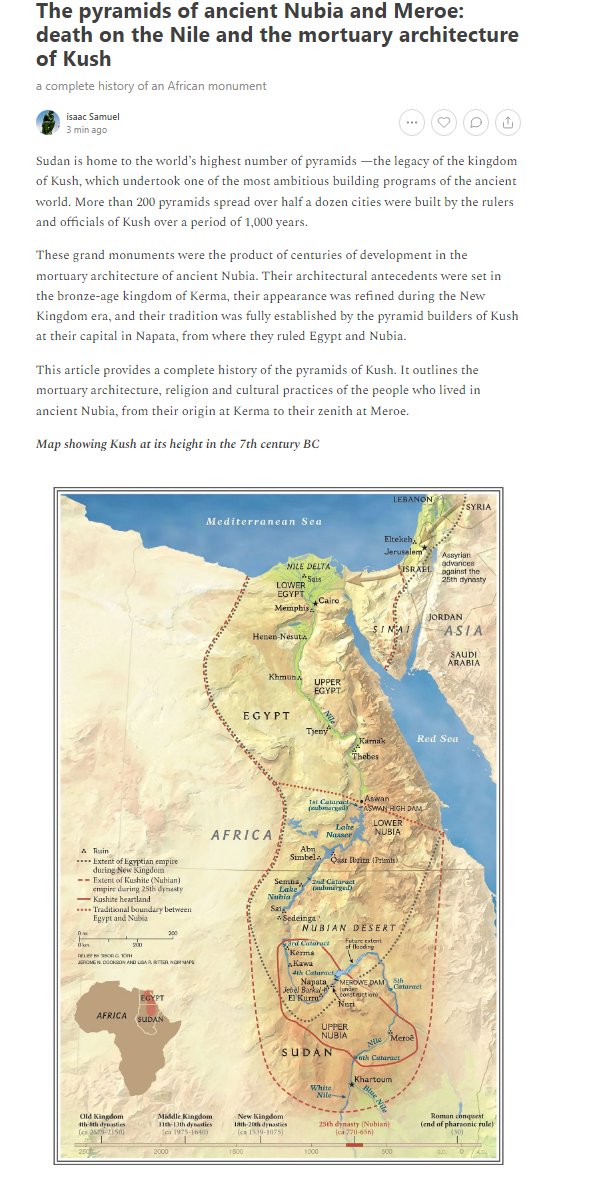
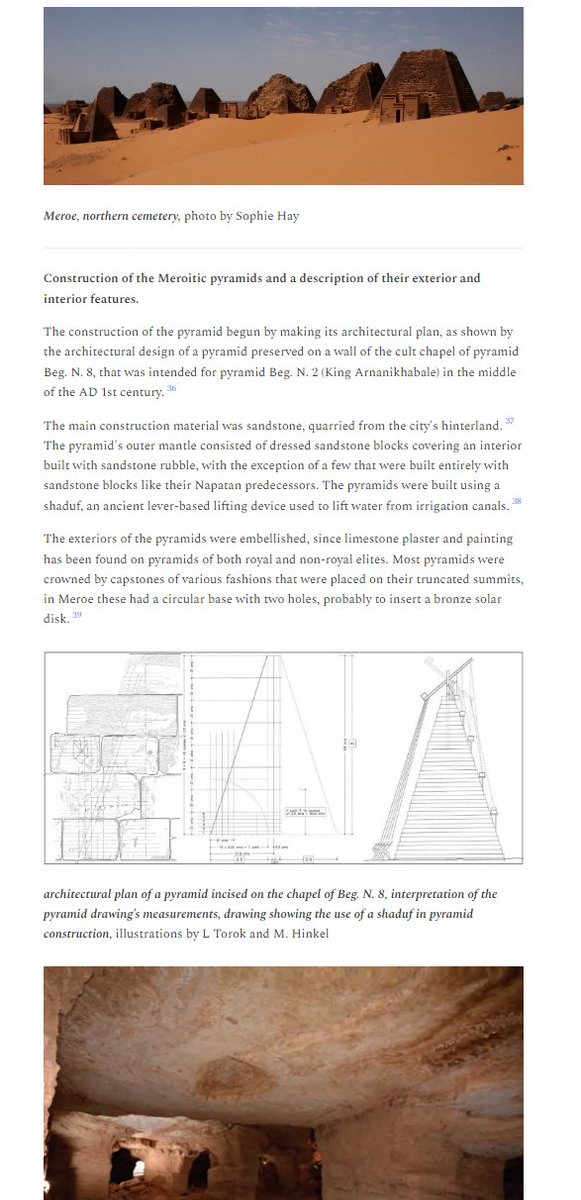
@PaulMMCooper @SudaneseCulture @GioB1974 @ICCROM_King @africaupdates @TheAncientWorld the kingdom of Kush undertook one of the most ambitious building programs of the ancient world.
More than 200 pyramids spread over half a dozen cities were built by the rulers and officials of Kush over a period of 1,000 years.
isaacsamuel.substack.com/p/the-pyramids…
More than 200 pyramids spread over half a dozen cities were built by the rulers and officials of Kush over a period of 1,000 years.
isaacsamuel.substack.com/p/the-pyramids…
The Nubian pyramids were the product of centuries of development in mortuary architecture.
Their architectural antecedents were set in the ancient kingdom of Kerma, refined in New Kingdom Egypt, and completed at Kush's capitals of el-Kurru and Napata
isaacsamuel.substack.com/p/the-pyramids…
Their architectural antecedents were set in the ancient kingdom of Kerma, refined in New Kingdom Egypt, and completed at Kush's capitals of el-Kurru and Napata
isaacsamuel.substack.com/p/the-pyramids…
The royal mortuary architecture of Kush begun with the bronze-age kingdom of Kerma around the 3rd millennium BC
the rulers of Kerma built monumental tombs with nearly all the features that would appear in the Nubian pyramids
isaacsamuel.substack.com/p/the-pyramids…
the rulers of Kerma built monumental tombs with nearly all the features that would appear in the Nubian pyramids
isaacsamuel.substack.com/p/the-pyramids…
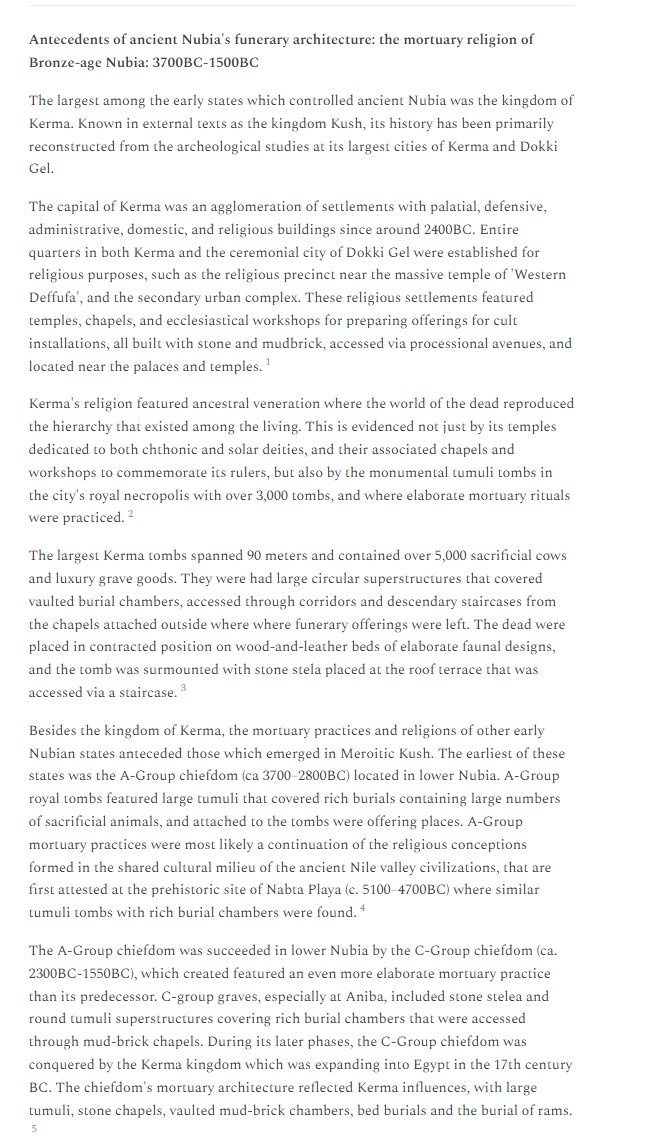
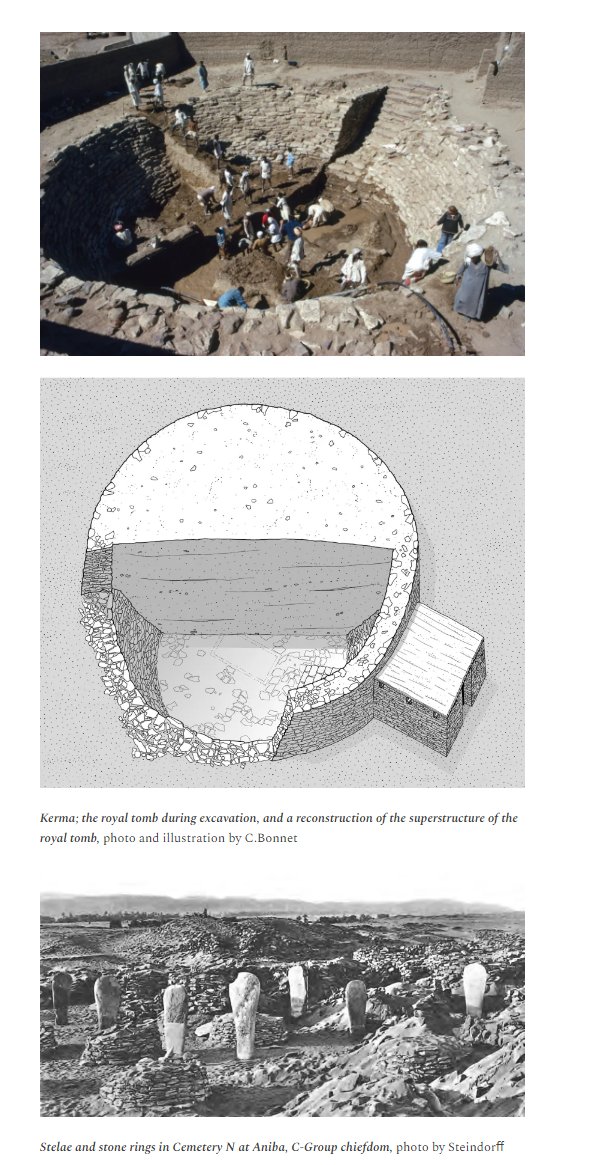
The largest Kerma tombs measured 90m in diameter. they had large circular superstructures covering multi-roomed burial chambers that were accessed via corridors and a stepped descendary from an outside chapel. their roofs were topped with steale
isaacsamuel.substack.com/p/the-pyramids…
isaacsamuel.substack.com/p/the-pyramids…
Kerma's mortuary architecture was similar to the preceding A-Group Nubian chiefdom, and it would later influence the contemporaneous C-group Nubian chiefdom.
For nearly a century, the bronze-age kingdom of Kerma was the largest state in the Nile valley
isaacsamuel.substack.com/p/the-pyramids…
For nearly a century, the bronze-age kingdom of Kerma was the largest state in the Nile valley
isaacsamuel.substack.com/p/the-pyramids…
after reversing Kerma's expansion, the rulers of 'New kingdom' Egypt subdued their southern neighbour in the 15th century BC
the Nubian and Egyptian officials active in the new kingdom administration gradually begun to build pyramid tombs
isaacsamuel.substack.com/p/the-pyramids…
the Nubian and Egyptian officials active in the new kingdom administration gradually begun to build pyramid tombs
isaacsamuel.substack.com/p/the-pyramids…
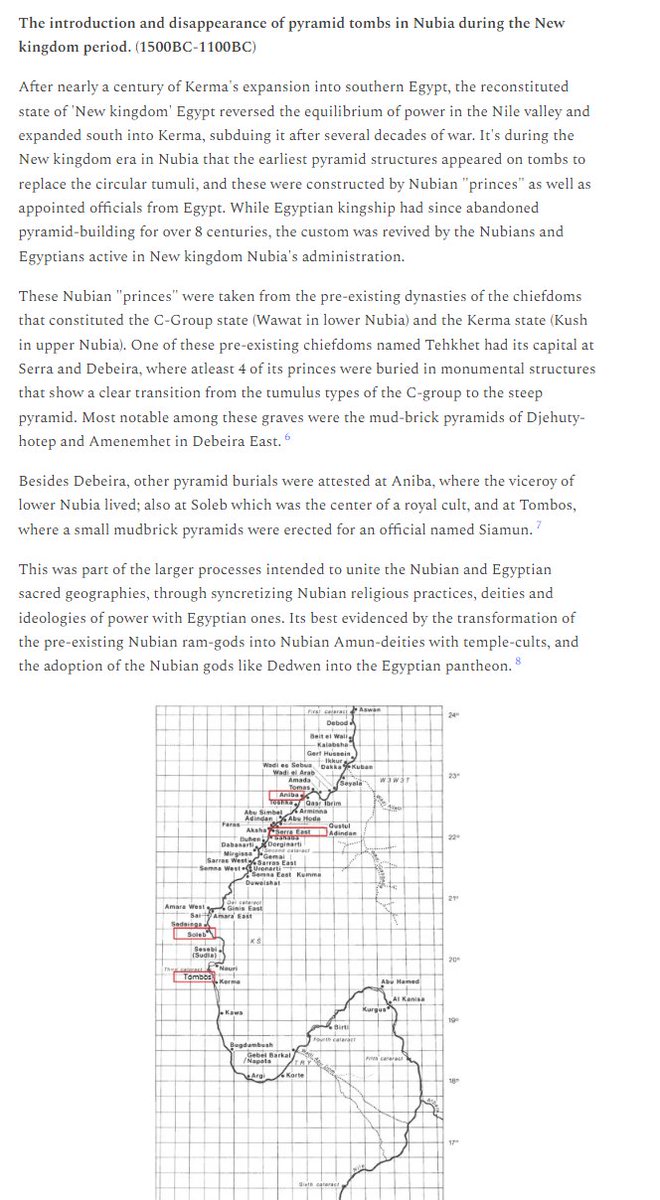

the Nubian officials in particular were taken from preexisting local dynasties, and their tombs show the gradual shift from the construction of round superstructures of the kerma era to the angled pyramids, especially at Debeira and Aniba
isaacsamuel.substack.com/p/the-pyramids…
isaacsamuel.substack.com/p/the-pyramids…
But the nascent pyramid tradition of new kingdom nubia was discontinued after the collapse and withdraw of the administration in the 11th century BC
over the succeeding centuries, a different mortuary tradition emerged under the Nubian rulers of el-kurru
isaacsamuel.substack.com/p/the-pyramids…
over the succeeding centuries, a different mortuary tradition emerged under the Nubian rulers of el-kurru
isaacsamuel.substack.com/p/the-pyramids…
from the 9th century BC, the rulers of Kush buried at el-Kurru in Sudan gradually begun to construct monumental tombs as a symbol of their expanding power
starting with a tumulus tomb, to a tumulus-on-mastaba, to a pyramid-on-mastaba, to a true pyramid
isaacsamuel.substack.com/p/the-pyramids…
starting with a tumulus tomb, to a tumulus-on-mastaba, to a pyramid-on-mastaba, to a true pyramid
isaacsamuel.substack.com/p/the-pyramids…

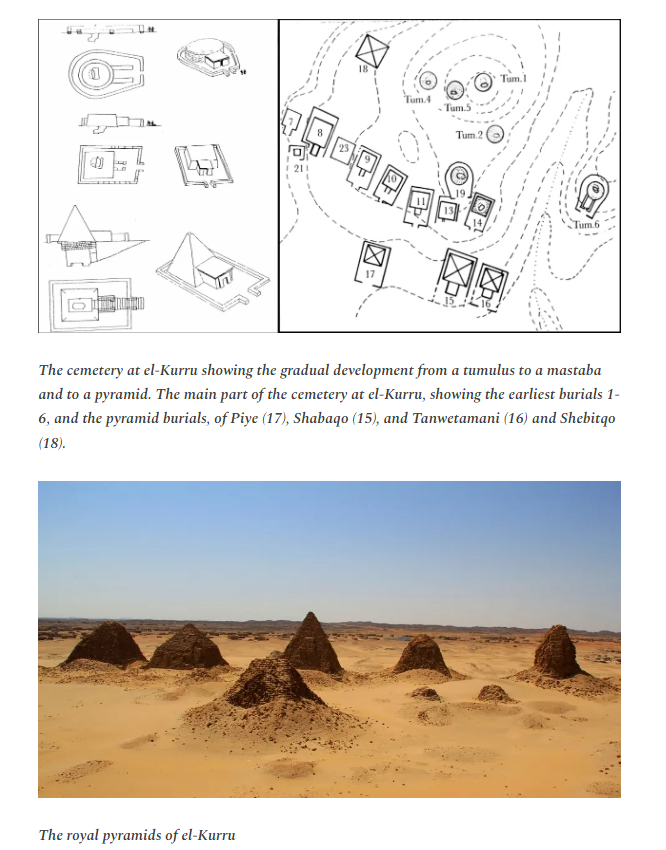
This transformation followed changes in the ideology of Kinship being created by the Nubian rulers of el-Kurru
and this ideology would legitimate their conquest of Egypt, ruling as the 25th dynasty, and syncretizing Nubian & Egyptian cultural practices
isaacsamuel.substack.com/p/the-pyramids…
and this ideology would legitimate their conquest of Egypt, ruling as the 25th dynasty, and syncretizing Nubian & Egyptian cultural practices
isaacsamuel.substack.com/p/the-pyramids…
The Nubian pyramid tradition developed at el-Kurru, would the be transferred to Napata where the capital shifted, and later to Meroe
initially the preserve of the royals, pyramids would later be constructed by non-royal elites across the kingdom of Kush
isaacsamuel.substack.com/p/the-pyramids…
initially the preserve of the royals, pyramids would later be constructed by non-royal elites across the kingdom of Kush
isaacsamuel.substack.com/p/the-pyramids…


It was therefore during the Napatan era of Kush that the pyramid tradition would be established and continuously practiced until then kingdom's fall
creating the standard steep-sided, 30 m high sandstone pyramid tombs of Meroe
isaacsamuel.substack.com/p/the-pyramids…
creating the standard steep-sided, 30 m high sandstone pyramid tombs of Meroe
isaacsamuel.substack.com/p/the-pyramids…
Studies of Meroe's pyramid-tombs reveal important aspects of Kush's history
including its mortuary religion, the function of the Meroitic writing system, the domestic industries of Kush, and the kingdom's scientific traditions
isaacsamuel.substack.com/p/the-pyramids…
including its mortuary religion, the function of the Meroitic writing system, the domestic industries of Kush, and the kingdom's scientific traditions
isaacsamuel.substack.com/p/the-pyramids…

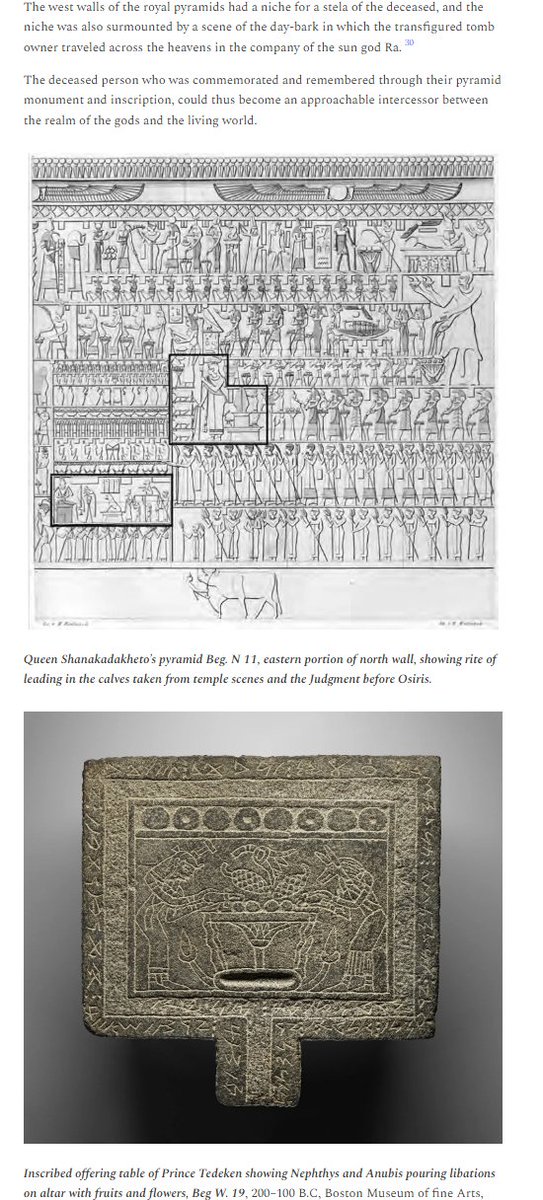
The pyramid was part of the Meroitic mortuary religion
a deceased person who was remembered through their pyramid monument and its accompanying inscription, could thus become an approachable intercessor between the realm of the gods and the living world.
isaacsamuel.substack.com/p/the-pyramids…
a deceased person who was remembered through their pyramid monument and its accompanying inscription, could thus become an approachable intercessor between the realm of the gods and the living world.
isaacsamuel.substack.com/p/the-pyramids…
There were three pyramid complexes at Meroe
the western and southern complex were the oldest, having been established in the 9th-8th century BC
it was the southern complex where the first ruler of the Meroitic dynasty built his pyramid around 275BC
isaacsamuel.substack.com/p/the-pyramids…
the western and southern complex were the oldest, having been established in the 9th-8th century BC
it was the southern complex where the first ruler of the Meroitic dynasty built his pyramid around 275BC
isaacsamuel.substack.com/p/the-pyramids…
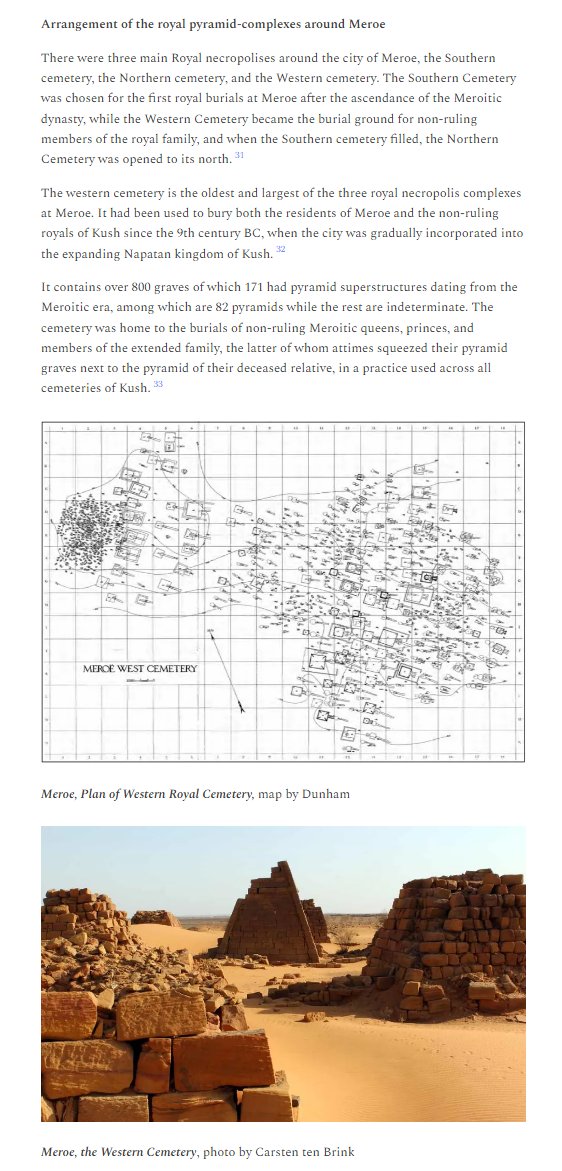
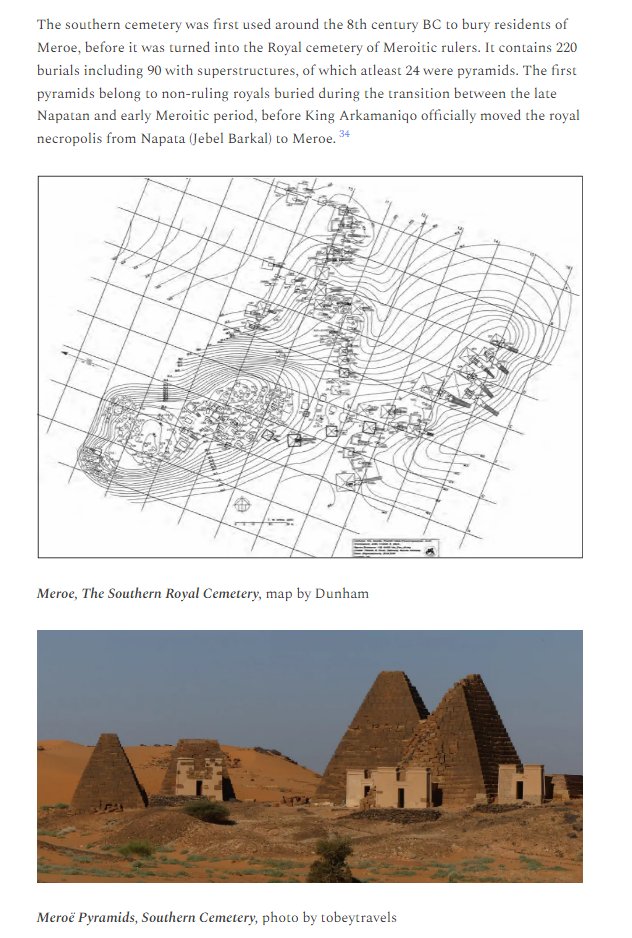

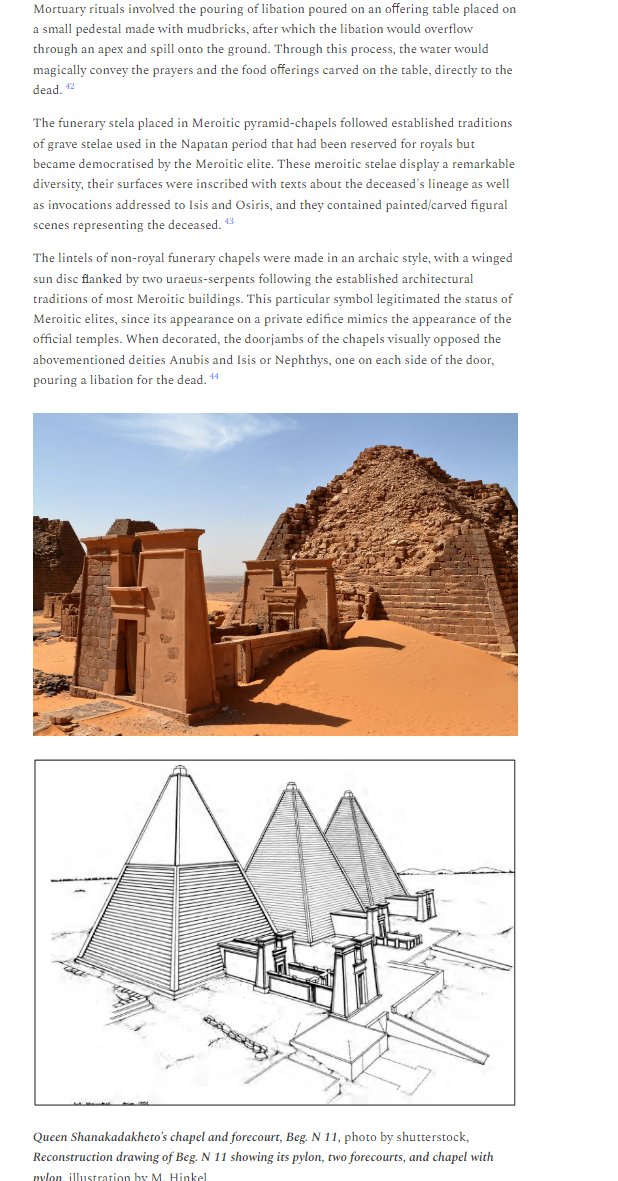
construction of pyramids was preceded by architectural planning and stone quarrying
the main building material was sandstone mined from the city's hinterland, and the main building device was a shaduf, often used in ancient irrigation
isaacsamuel.substack.com/p/the-pyramids…
the main building material was sandstone mined from the city's hinterland, and the main building device was a shaduf, often used in ancient irrigation
isaacsamuel.substack.com/p/the-pyramids…

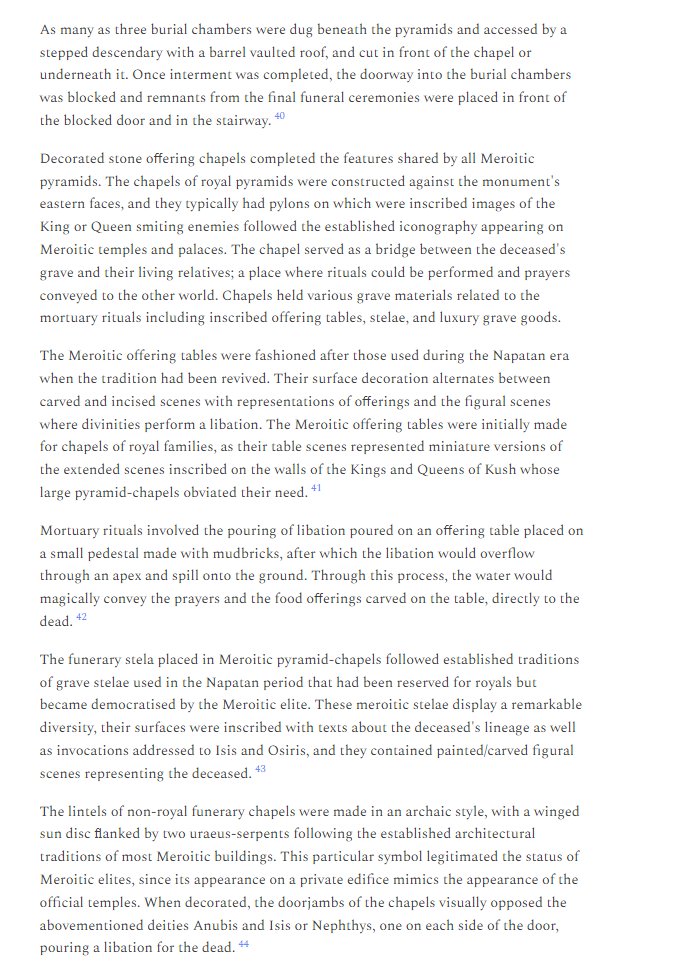
The pyramid's surfaces were embellished and a chapel was attached to the outside to access the interior
mortuary rituals were conducted in the chapel, which also contained grave material eg offering tables and inscribed stelae depicting the gods of death
isaacsamuel.substack.com/p/the-pyramids…
mortuary rituals were conducted in the chapel, which also contained grave material eg offering tables and inscribed stelae depicting the gods of death
isaacsamuel.substack.com/p/the-pyramids…
The pyramid interior often contained an assortment of grave goods that were placed inside the coffin and in boxes placed beside them
"The fine quality Gold and silver jewelry demonstrate the continuity of late Napatan and Meroitic goldsmith's art"
isaacsamuel.substack.com/p/the-pyramids…
"The fine quality Gold and silver jewelry demonstrate the continuity of late Napatan and Meroitic goldsmith's art"
isaacsamuel.substack.com/p/the-pyramids…
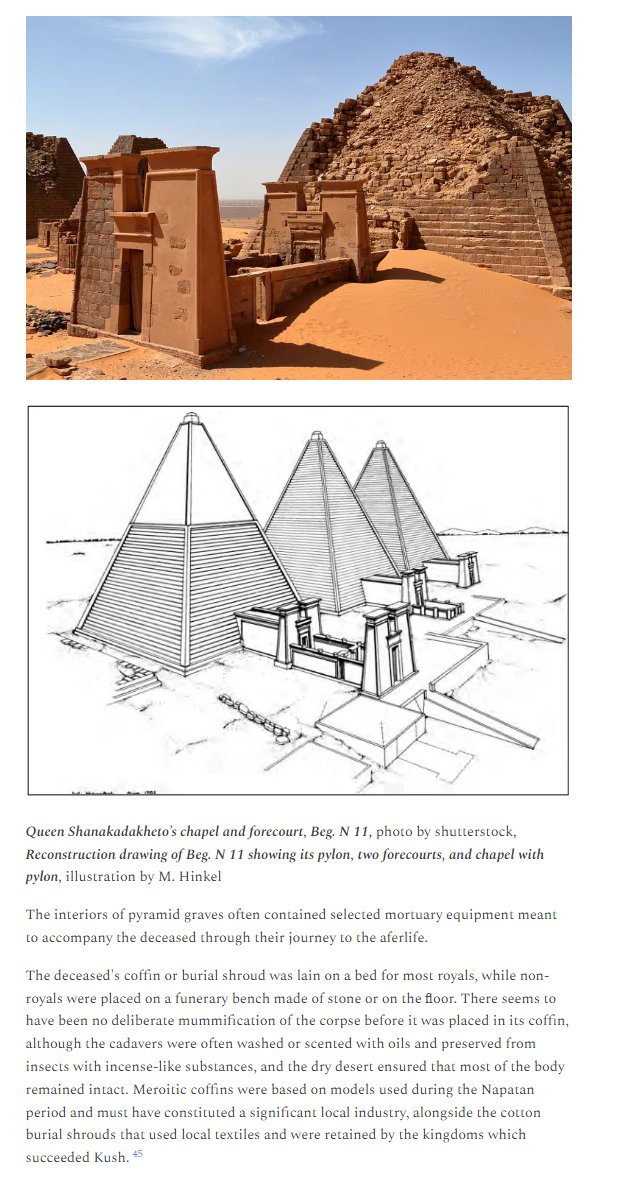
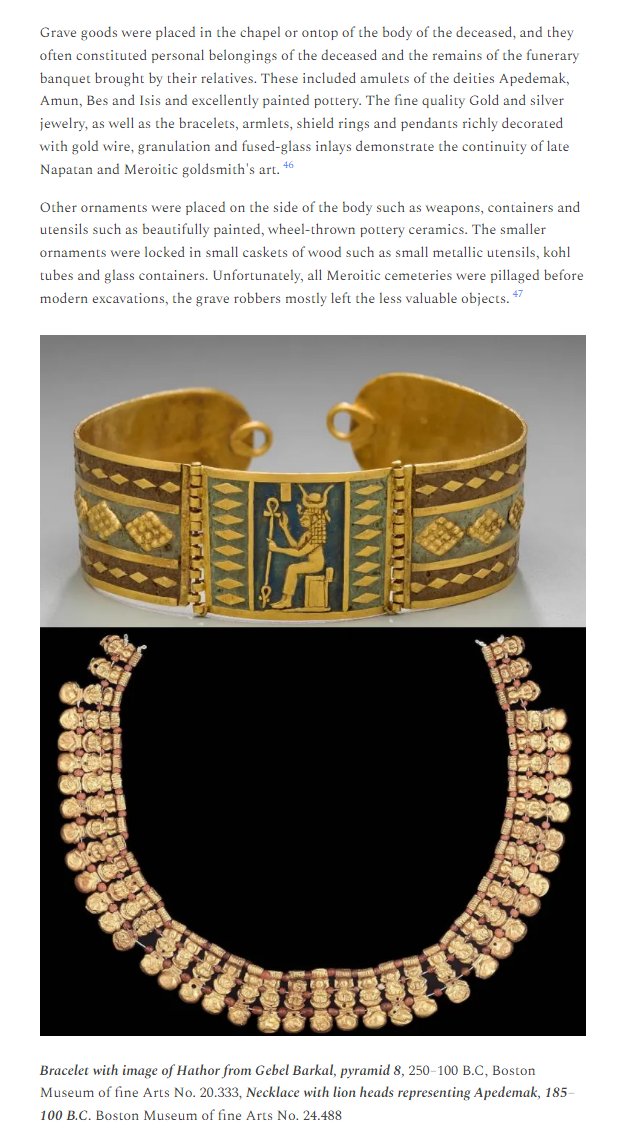
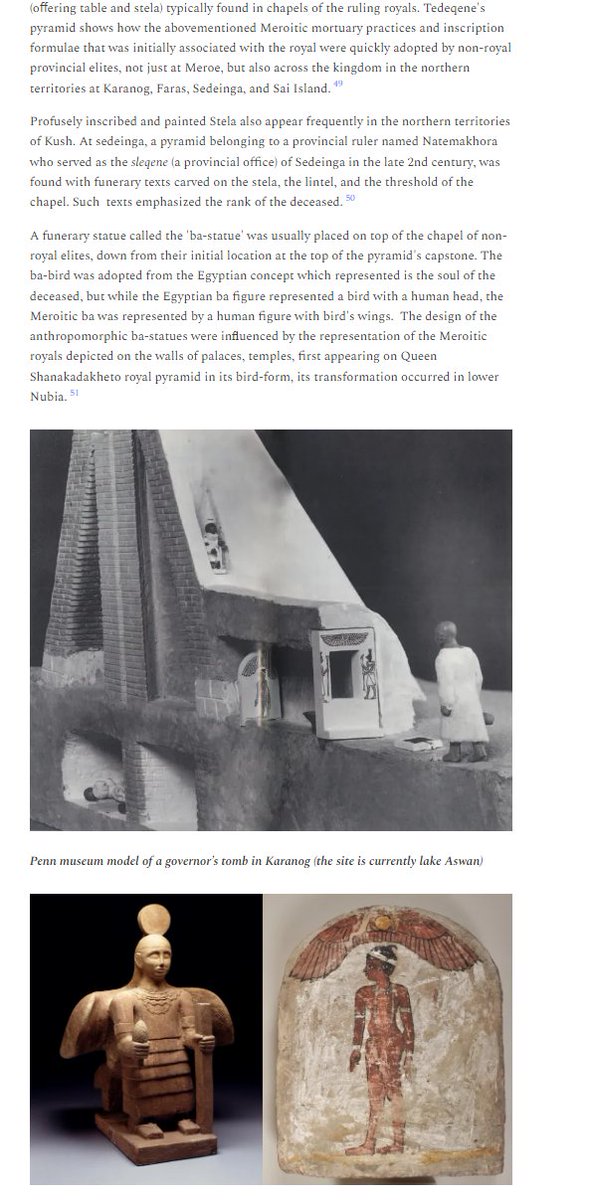
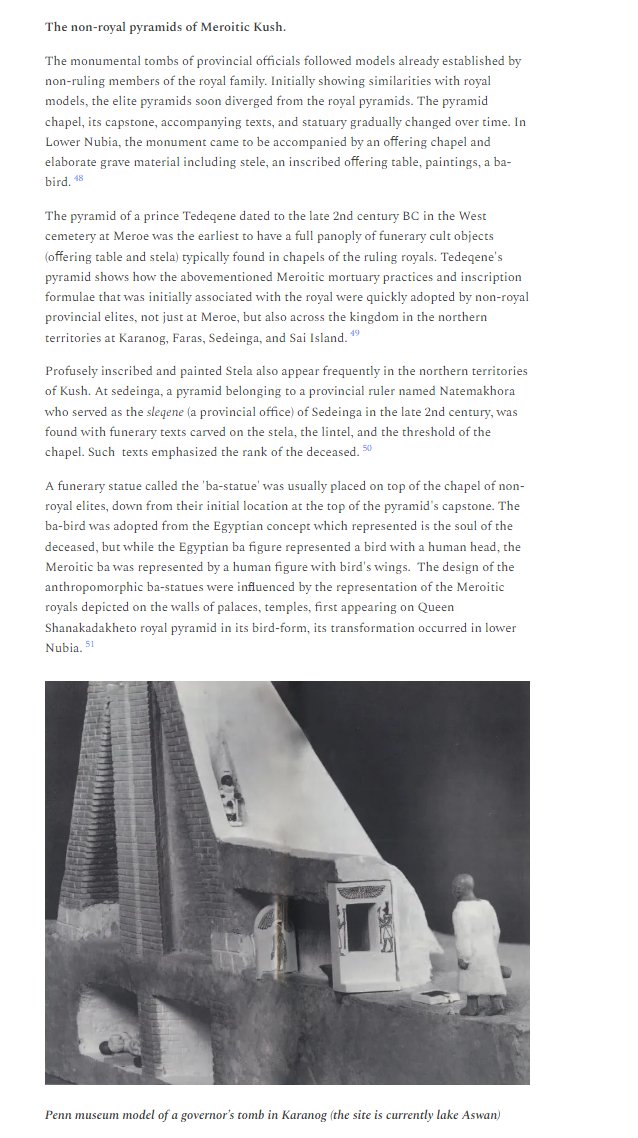
@ColorsAndStones @JAJafri pyramids for non-ruling royals and non-royal officials diverged from the established models
they were shorter, had different capstones, smaller chapels, painted stela and an anthropomorphic ba-statue
isaacsamuel.substack.com/p/the-pyramids…
they were shorter, had different capstones, smaller chapels, painted stela and an anthropomorphic ba-statue
isaacsamuel.substack.com/p/the-pyramids…

@ColorsAndStones @JAJafri The kingdom of Meroe went into decline around the 4th century, as its elite opened new cemeteries beyond the capital.
they built tumulus tombs, and eventually abandoned the 1,000-year old pyramid building tradition.
isaacsamuel.substack.com/p/the-pyramids…
they built tumulus tombs, and eventually abandoned the 1,000-year old pyramid building tradition.
isaacsamuel.substack.com/p/the-pyramids…
@ColorsAndStones @JAJafri icymi
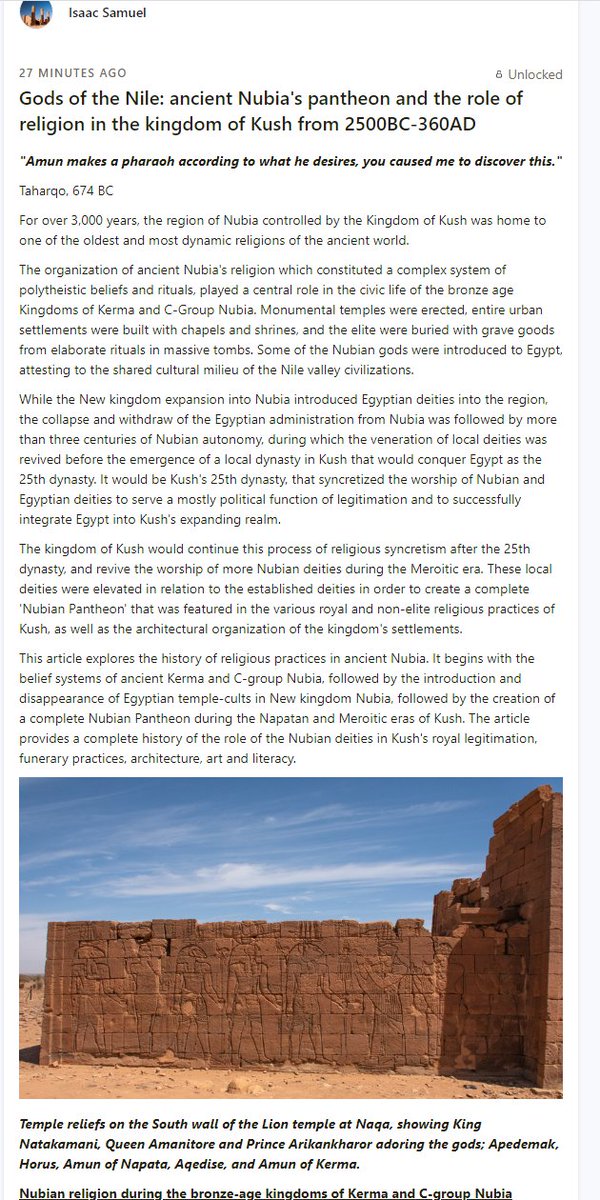
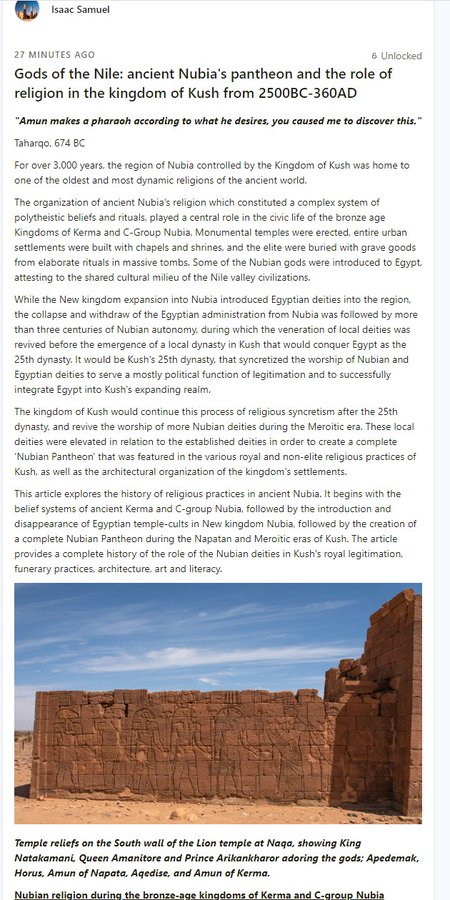
Gods of the Nile:
ancient Nubia's pantheon and the role of religion in the kingdom of Kush from 2500BC-360AD
patreon.com/posts/78797811
Gods of the Nile:
ancient Nubia's pantheon and the role of religion in the kingdom of Kush from 2500BC-360AD
patreon.com/posts/78797811
• • •
Missing some Tweet in this thread? You can try to
force a refresh