Baroque architecture is famous for its detail, grandeur, and extravagance.
But why does it look like that?
Well, back in the 17th century, it was supposed to stop you from reading too many books...
But why does it look like that?
Well, back in the 17th century, it was supposed to stop you from reading too many books...

In the early 16th century the Catholic Church was under attack.
A German priest called Martin Luther had published his 95 Theses - a systematic criticism of everything he believed was wrong with the Catholic Church.
That was in 1517, and it started a revolution.
A German priest called Martin Luther had published his 95 Theses - a systematic criticism of everything he believed was wrong with the Catholic Church.
That was in 1517, and it started a revolution.

And he wasn't alone. There was also the Frenchman John Calvin, fellow German Andreas Karlstadt, and the Swiss Ulrich Zwingli.
What united them was a belief that the Catholic Church had strayed too far from what the Bible actually said and what the teachings of Jesus really were.
What united them was a belief that the Catholic Church had strayed too far from what the Bible actually said and what the teachings of Jesus really were.


But this was nothing new.
An Englishman called John Wycliffe had said much the same thing in the 1300s, and a century after him came the Czech reformer Jan Hus.
Hus had many followers and they endured for a long time, but the movement he started never went beyond his homeland.
An Englishman called John Wycliffe had said much the same thing in the 1300s, and a century after him came the Czech reformer Jan Hus.
Hus had many followers and they endured for a long time, but the movement he started never went beyond his homeland.

So what changed? The moveable-type printing press.
It was first invented by Johannes Gutenberg in 1450 and within a few decades had become a fully established technology.
It allowed the ideas of Luther and the others to reach a huge number of people - and fast.
It was first invented by Johannes Gutenberg in 1450 and within a few decades had become a fully established technology.
It allowed the ideas of Luther and the others to reach a huge number of people - and fast.

And that's exactly what happened - the 95 Theses were published all over Europe.
Whereas previous reformers could be silenced by execution or the burning of the relatively few copies of their works, the thousands of leaflets produced by printing presses were unstoppable.
Whereas previous reformers could be silenced by execution or the burning of the relatively few copies of their works, the thousands of leaflets produced by printing presses were unstoppable.

These reformers - the Protestants - focussed on the written word above all.
They believed the Bible contained everything necessary for Christians, and that the Catholic Church had added too much to original scripture.
Their ideas caught on and thousands joined the Reformation.
They believed the Bible contained everything necessary for Christians, and that the Catholic Church had added too much to original scripture.
Their ideas caught on and thousands joined the Reformation.
A central part of the Reformation was translating the Bible - previously only in Latin - into common languages, whether German, French, English, or Spanish.
They wanted to bring religion to the people, thus circumventing the immense power of the Church.
They wanted to bring religion to the people, thus circumventing the immense power of the Church.

As for religious art, Luther didn't mind it. But his contemporaries took a much more hardline view.
John Calvin, Andreas Karlstadt, and Ulrich Zwingli believed all religious art was idolatrous and sought to prohibit it. And what already existed, they said, should be destroyed.
John Calvin, Andreas Karlstadt, and Ulrich Zwingli believed all religious art was idolatrous and sought to prohibit it. And what already existed, they said, should be destroyed.

And so, for those Protestants who thought the written word was enough, a big part of their revolution involved the removal of art from churches.
Spurred on by the ideas of Calvin and Karlstadt, they tore down religious art in popular uprisings.
Spurred on by the ideas of Calvin and Karlstadt, they tore down religious art in popular uprisings.

The evidence of this iconoclastic movement has survived - statues were defaced, windows smashed, and effigies burned.
Religious art was, many of these reformers believed, all part of the corruption of Christianity.
Religious art was, many of these reformers believed, all part of the corruption of Christianity.

The 17th century paintings of Pieter Jansz Saenredam show us what churches were like in the aftermath of this mass desctrution of religious art, with whitewashed walls and bare interiors.
They had become humble places where words alone would suffice.
They had become humble places where words alone would suffice.

The Catholic Church responded to Protestantism in several ways, not least with the creation of the Roman Inquisition in 1542, which was intended to root out and destroy heresy in Italy.
But they also started paying more attention to art as a religious and political force...
But they also started paying more attention to art as a religious and political force...

Art has always been used to serve such ends, of course, but it was because of Protestant disapproval of religious art that the Catholic Church became so deeply aware of the role it played.
And so they started to exert highly conscious control over it - more so than ever before.
And so they started to exert highly conscious control over it - more so than ever before.
It was in this environment that Baroque architecture appeared in the late 1500s and early 1600s - a deeply Catholic style which stood in perfect opposition to the bare churches of the Protestants.
Here we can see a theological and cultural war played out in architecture.
Here we can see a theological and cultural war played out in architecture.


Whereas the churches of Calvin and Zwingli were essentially functional places for gathering, Baroque churches became palaces of aesthetic delight.
The rise of Protestantism had made the Catholic Church more deeply aware of its own identity - and so they doubled down on it.
The rise of Protestantism had made the Catholic Church more deeply aware of its own identity - and so they doubled down on it.

A new religious order called the Society of Jesus - the Jesuits - was founded in 1540 as a direct response to the Reformation.
They were ardent supporters of the Pope and sought to reaffirm and defend Catholicism; Jesuit churches were the most Baroque of all:
They were ardent supporters of the Pope and sought to reaffirm and defend Catholicism; Jesuit churches were the most Baroque of all:

These were not churches of words, but of wonder.
Baroque architecture appealed to the emotions and senses, hence its abundance of art and detail.
All that gold and marble was supposed to convince believers with beauty rather than books.
Baroque architecture appealed to the emotions and senses, hence its abundance of art and detail.
All that gold and marble was supposed to convince believers with beauty rather than books.
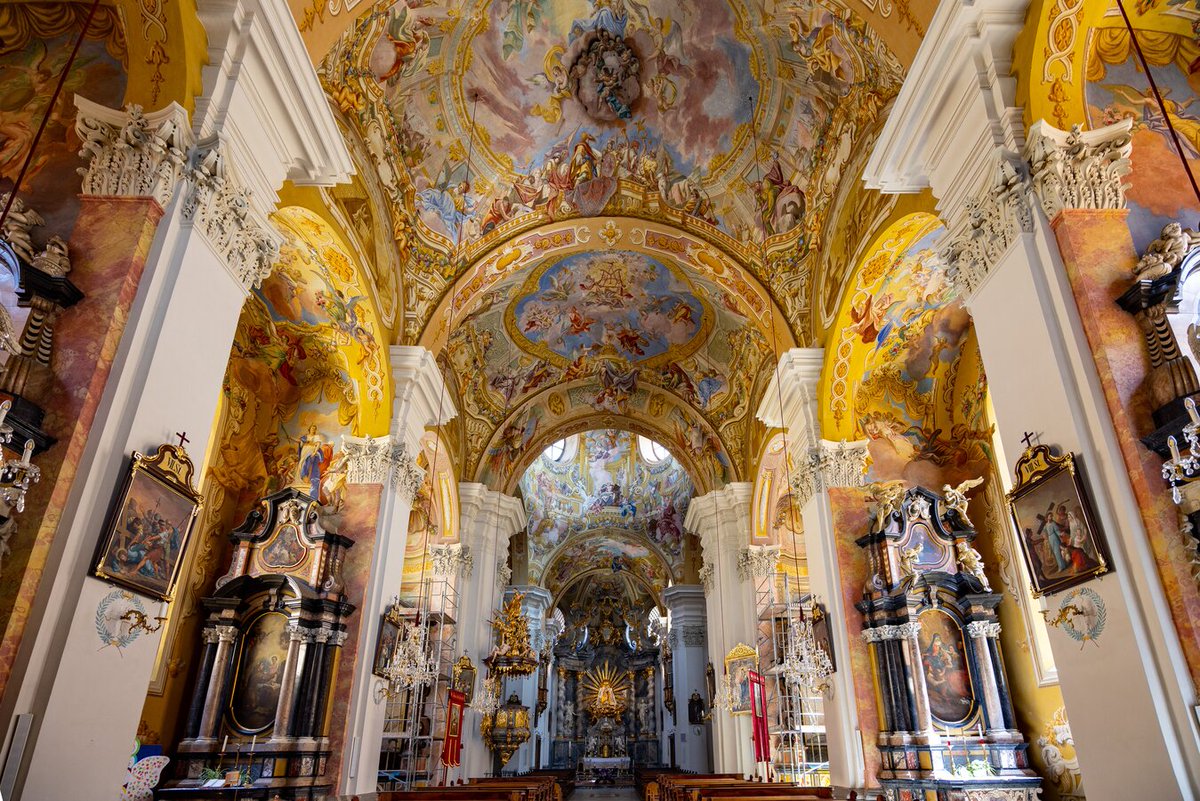
Baroque architecture was rooted in the neoclassical style of the Renaissance - it used rounded arches, classical orders, pediments, and all the other trappings of Roman and Greek architecture.
Only with a new dynamism, decadence, scale, and lavishness never before seen.
Only with a new dynamism, decadence, scale, and lavishness never before seen.

The works of the sculptor Gianlorenzo Bernini epitomise all this.
It's hard not to see the Ecstasy of Saint Teresa, created in 1652, as a response - even indirectly - to those many statues defaced by iconoclasts in the previous century.
It's hard not to see the Ecstasy of Saint Teresa, created in 1652, as a response - even indirectly - to those many statues defaced by iconoclasts in the previous century.


Bernini also created St Peter's Baldachin and the Chair of St Peter.
This style - with every surface covered in decadent ornamentation - couldn't be further removed from the plain interiors of Protestant churches. Proof, if needed, of architecture's power to send a message.
This style - with every surface covered in decadent ornamentation - couldn't be further removed from the plain interiors of Protestant churches. Proof, if needed, of architecture's power to send a message.


The Baroque was a total embrace of religious art, much more extravagant and opulent than anything which had existed before the Reformation.
All of which can be traced back to the revolutionary power of the printing press - Baroque architecture was a response to the written word.
All of which can be traced back to the revolutionary power of the printing press - Baroque architecture was a response to the written word.


• • •
Missing some Tweet in this thread? You can try to
force a refresh