A story about how the Telugu Nayakas came to power at Madurai in the 16th century. And how the dynasties of the Late Cholas & Imperial Pandyas were finally extinguished.
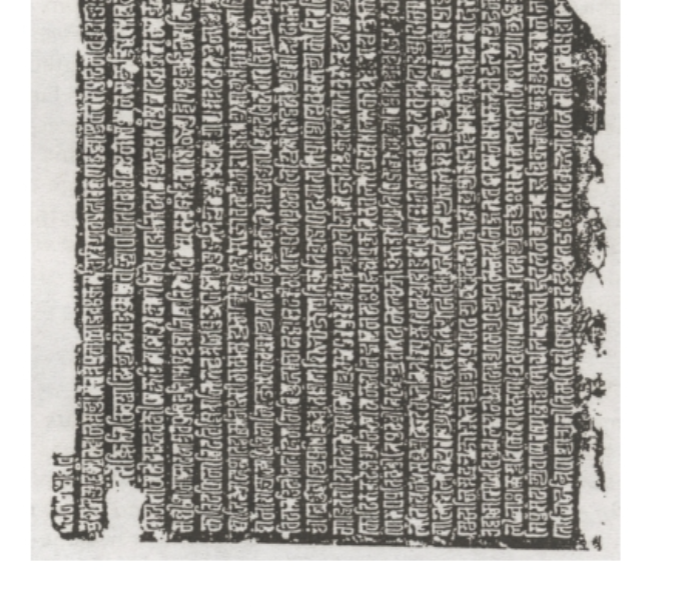
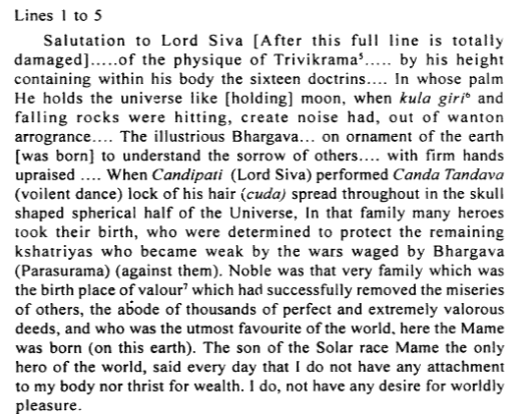
From the journal of Horace Hayman Wilson (HH Wilson) the first Boden Professor of Sanskrit at Oxford in 1832.
From the journal of Horace Hayman Wilson (HH Wilson) the first Boden Professor of Sanskrit at Oxford in 1832.
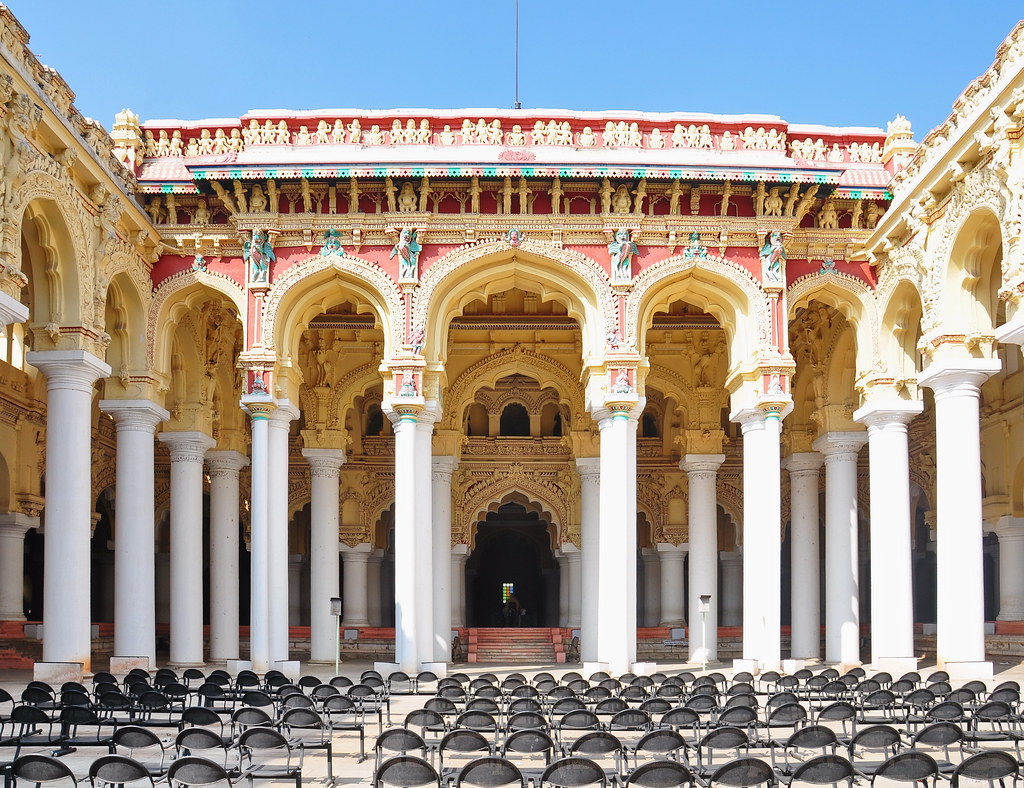
Krishnadevaraya had ascended the throne at the turn of the 15th century and formed a strong nucleus of power on the Tungabhadra-Krishna Doab.
He had subdued or quelled the Deccan Sultans, the Kalinga chieftains and the Portuguese colonies to the centre, east and west.
He had subdued or quelled the Deccan Sultans, the Kalinga chieftains and the Portuguese colonies to the centre, east and west.
In the South, the remnants of the historically prestigious Cholas and Pandyas quarreled for power. The seat of power was held at Thanjavur and Madurai respectively.
However both paid their allegiance to Krishnadevaraya in recognition of his preeminent prowess.
However both paid their allegiance to Krishnadevaraya in recognition of his preeminent prowess.
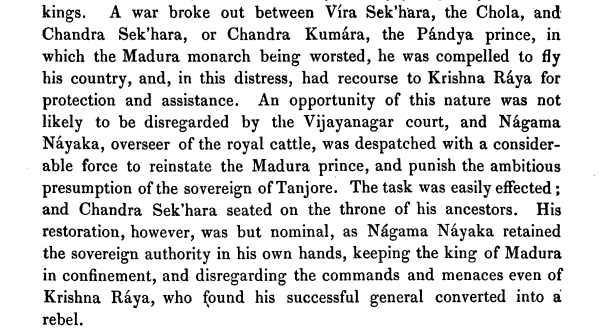
In one such quarrel, Virasekhara Chola ousted Chandrakumara Pandya and occupied Madurai.
The latter appealed to Krishnadevaraya for recourse.
The latter appealed to Krishnadevaraya for recourse.
Krishnadevaraya decided to send his trusted courtier, Nagama Nayaka, to restore the status quo.
Nagama Nayaka was the overseer of the royal cattle at the latter's court.
Nagama Nayaka was the overseer of the royal cattle at the latter's court.
Nagama Nayaka's campaign turned out to be successful in ousting Virasekara Chola and capturing Madurai.
.....in fact, a little too successful.
He decided to rebel against Krishnadevaraya and seize the vast revenues of the Madurai province for himself!
.....in fact, a little too successful.
He decided to rebel against Krishnadevaraya and seize the vast revenues of the Madurai province for himself!
Krishnadevaraya, at his wit's end, had an ace up his sleeve.
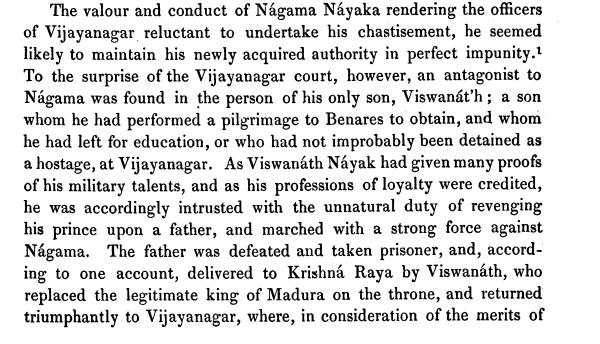
Nagama Nayaka's son, Viswanatha Nayaka, was also a very able leader. He still served at Vijayanagara. So Krishnadevaraya entrusted him with the task of bringing Nagama Nayaka to heel.
Son against father!
Nagama Nayaka's son, Viswanatha Nayaka, was also a very able leader. He still served at Vijayanagara. So Krishnadevaraya entrusted him with the task of bringing Nagama Nayaka to heel.
Son against father!
The son turned out to be a mercurial avenger for his master and brought his father to account!
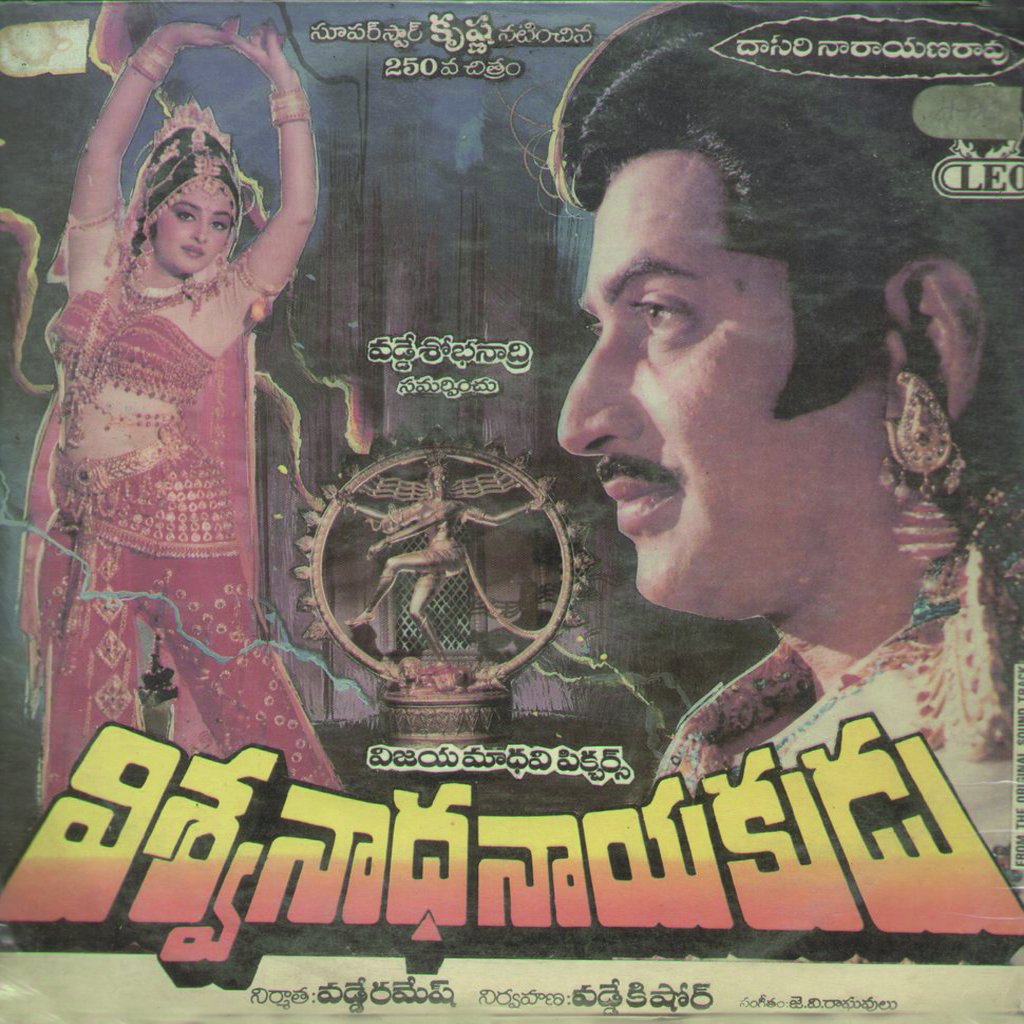
This historic encounter between Master, Son and Father was cinematized in 1987 by Dasari Narayana Rao with the actor Krishna as Viswanatha Nayakudu.
Viswanatha Nayaka, however extracted his pound of flesh from the Vijayanagar Court.
He received the title of a feudatory prince of Madurai after the Pandya primogeniture ended.
He received the title of a feudatory prince of Madurai after the Pandya primogeniture ended.
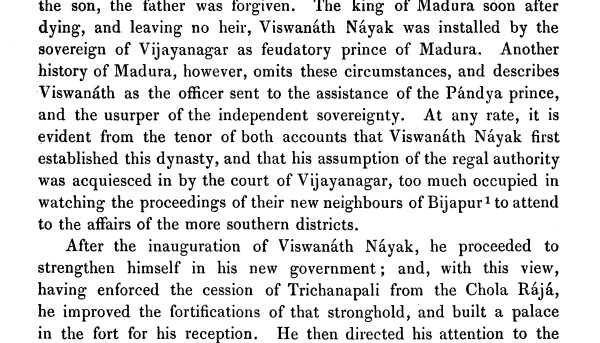
He then distributed the powers and landrights of the Madurai province to his followers from his region, who numbered 72.
These 72 chiefs are popularly known as Palayakkarars (British Polygars). Even today many towns & villages in Tamilnadu end in the suffix "pālayam".
These 72 chiefs are popularly known as Palayakkarars (British Polygars). Even today many towns & villages in Tamilnadu end in the suffix "pālayam".
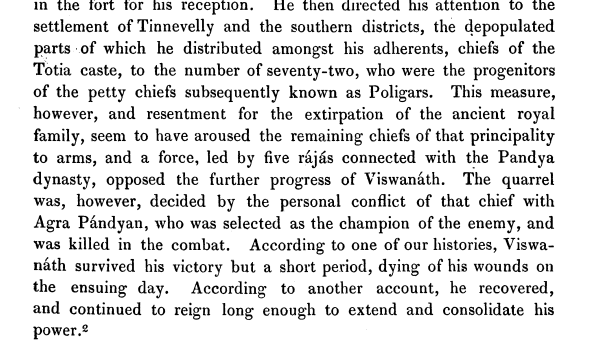
The remainder of the Pandya and Chola royal lines were destroyed in attritional battles by the Palayakkarars.
The Palayakkarars, helmed by the Nayakas at Madurai, were the pre-eminent power in the South until the arrival of the British.
The Palayakkarars, helmed by the Nayakas at Madurai, were the pre-eminent power in the South until the arrival of the British.
Veerapandiya Kattabomman, the subject of many historical writings and films, is a Palayakkarar.
The British domination of Madras was only complete after the end of the Polygar Wars. With this the British had a secure base on the Eastern seaboard of India.
The British domination of Madras was only complete after the end of the Polygar Wars. With this the British had a secure base on the Eastern seaboard of India.

Addendum:
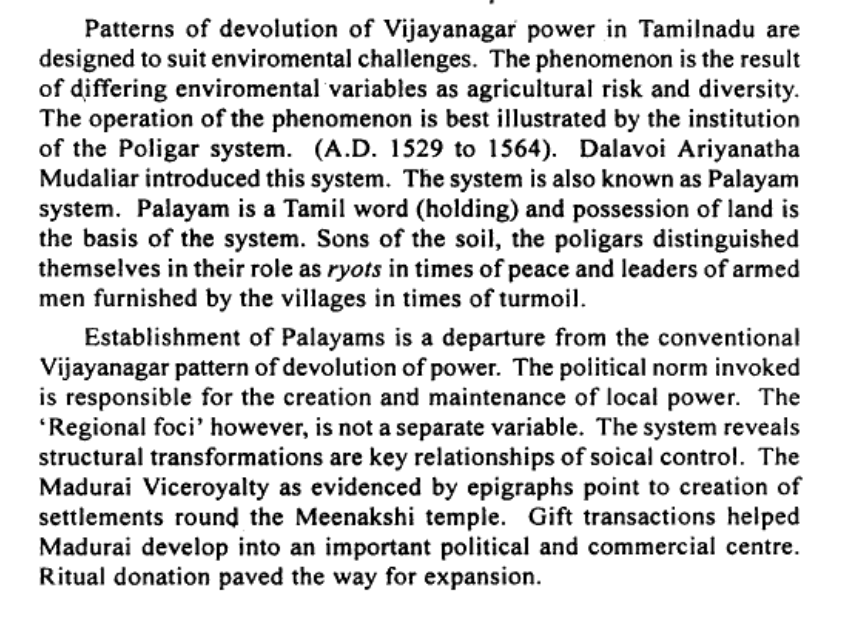
As pointed out by a follower @arcot_udayar, the Palayam system was initiated by the Dalavoi Ariyanatha Mudaliar of Kanchipuram, who was the Chief Advisor to Viswanatha Nayaka in Madurai.
Credit: TK Venkatasubramanian, 1999
As pointed out by a follower @arcot_udayar, the Palayam system was initiated by the Dalavoi Ariyanatha Mudaliar of Kanchipuram, who was the Chief Advisor to Viswanatha Nayaka in Madurai.
Credit: TK Venkatasubramanian, 1999
• • •
Missing some Tweet in this thread? You can try to
force a refresh