1/
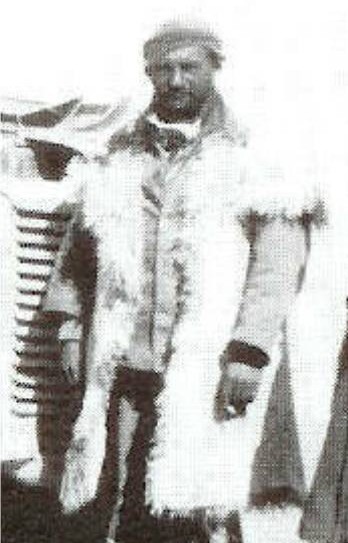
Continuing the story of SQMS Harry Cranford (pic, left, at Kabrit)
He spent autumn 1942 at Kufra Oasis, in charge of stores for A Sqn, led by Paddy Mayne, who were operating with great effectiveness along the Libyan coast.
On Dec 5 Capt Bill Fraser wrote Cranford a note:
Continuing the story of SQMS Harry Cranford (pic, left, at Kabrit)
He spent autumn 1942 at Kufra Oasis, in charge of stores for A Sqn, led by Paddy Mayne, who were operating with great effectiveness along the Libyan coast.
On Dec 5 Capt Bill Fraser wrote Cranford a note:

2/
“I'm unable to return to Kufra. 8 Army have given me a job. Will you carry on as planned. Send a party to Death Valley as soon as possible & return any salvage vehicles by road. When you're recalled come back via Tobruk
If you pass 8 Army HQ look in I'll probably be there...
“I'm unable to return to Kufra. 8 Army have given me a job. Will you carry on as planned. Send a party to Death Valley as soon as possible & return any salvage vehicles by road. When you're recalled come back via Tobruk
If you pass 8 Army HQ look in I'll probably be there...

3/
"...Captain Chambers died in hospital yesterday. Sgt Sharman and Wall died of wounds – mines.
Capt Fraser
PS. Honest Dave is agitating like hell to get to A squadron.”
(This is Dave Kershaw, known for his horse racing tips)
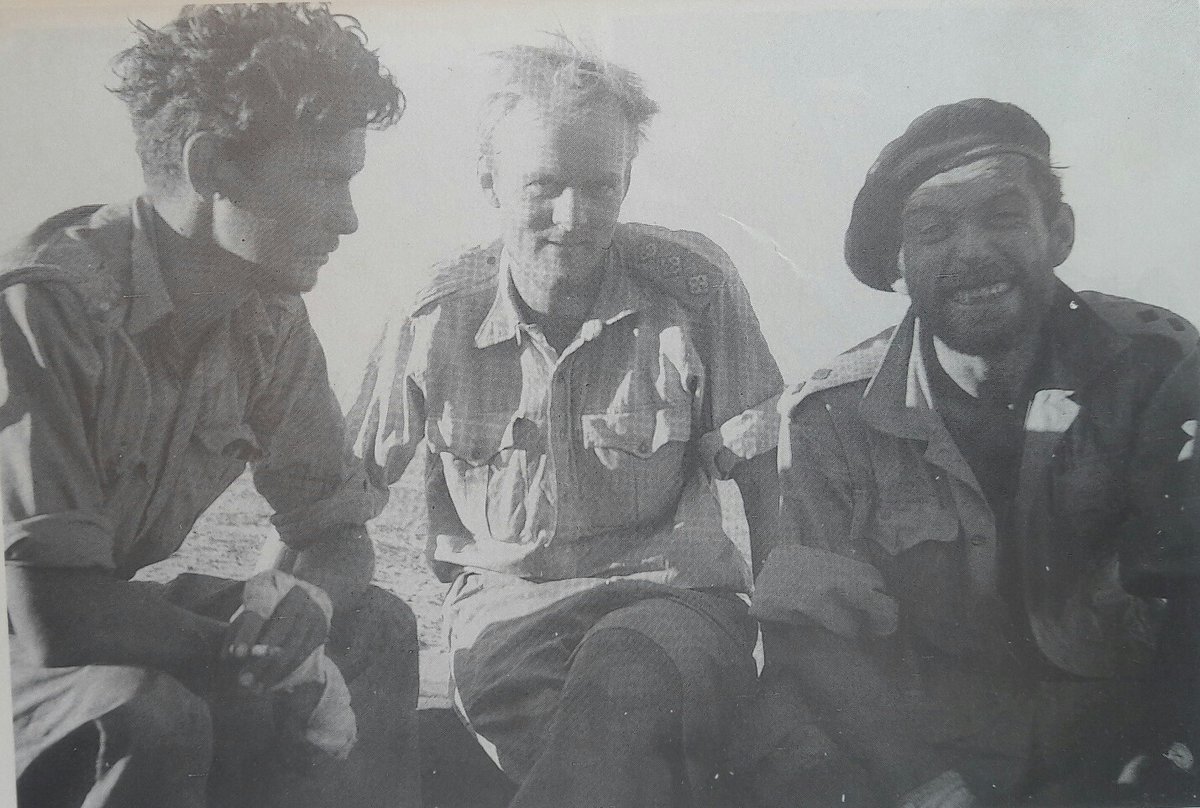
Pic: Fraser, Capt Malcolm Pleydell & Jim Chambers.
"...Captain Chambers died in hospital yesterday. Sgt Sharman and Wall died of wounds – mines.
Capt Fraser
PS. Honest Dave is agitating like hell to get to A squadron.”
(This is Dave Kershaw, known for his horse racing tips)
Pic: Fraser, Capt Malcolm Pleydell & Jim Chambers.
4/
Chambers of A Sqn, who suffered terribly from desert sores (as did Fraser, see bandaged hands), died in hospital on Dec 4 of diphtheritic infection. He is buried in Fayid War Cemetery in Egypt
Thomas Wall and Allan Sharman are buried at Knightsbridge War Cemetery in Libya
Chambers of A Sqn, who suffered terribly from desert sores (as did Fraser, see bandaged hands), died in hospital on Dec 4 of diphtheritic infection. He is buried in Fayid War Cemetery in Egypt
Thomas Wall and Allan Sharman are buried at Knightsbridge War Cemetery in Libya
5/
A Sqn Medical Officer Malcolm Pleydell had organised Chambers’ evacuation to Kufra from their remote desert base. “I wish I’d done something really good before going away,” Chambers told Pleydell on the eve of his departure. “Just to prove myself, you know”...
A Sqn Medical Officer Malcolm Pleydell had organised Chambers’ evacuation to Kufra from their remote desert base. “I wish I’d done something really good before going away,” Chambers told Pleydell on the eve of his departure. “Just to prove myself, you know”...
6/
“Not that I want gongs or anything like that, but just for the mental satisfaction of the thing.”
“Now don’t you be silly, Jim,” Pleydell replied to Chambers.
In his memoir, Born of the Desert, Pleydell recalled that as Chambers climbed into the truck, he turned & said:
“Not that I want gongs or anything like that, but just for the mental satisfaction of the thing.”
“Now don’t you be silly, Jim,” Pleydell replied to Chambers.
In his memoir, Born of the Desert, Pleydell recalled that as Chambers climbed into the truck, he turned & said:
7/
“'Well, so long, boys. Goodbye Paddy’. He put out his hand & then looked ruefully down at his bandages & shook his head.”
“'Well, so long, boys. Goodbye Paddy’. He put out his hand & then looked ruefully down at his bandages & shook his head.”
8/
Some 1943 entries in Harry’s diary:
“Jan 20: A Sqn met in Groppis (Cairo café) for a booze up.
Jan 23: Equipped A Sqn with winter clothes & paid everybody
Jan 24: Left Kabrit for Syria
Jan 29: Arrived Cedars (Ski school in Lebanon)
Jan 31: Went out on skis"
(Harry on skis)
Some 1943 entries in Harry’s diary:
“Jan 20: A Sqn met in Groppis (Cairo café) for a booze up.
Jan 23: Equipped A Sqn with winter clothes & paid everybody
Jan 24: Left Kabrit for Syria
Jan 29: Arrived Cedars (Ski school in Lebanon)
Jan 31: Went out on skis"
(Harry on skis)

9/
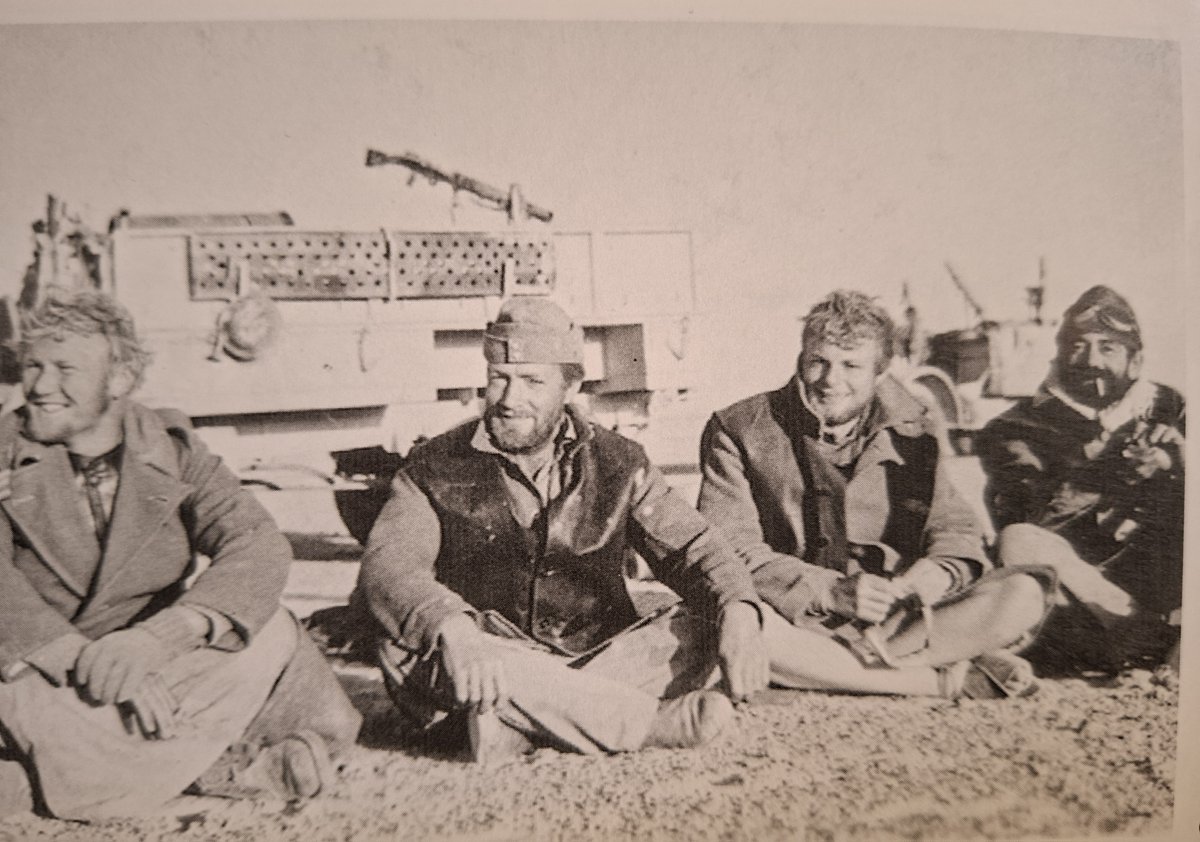
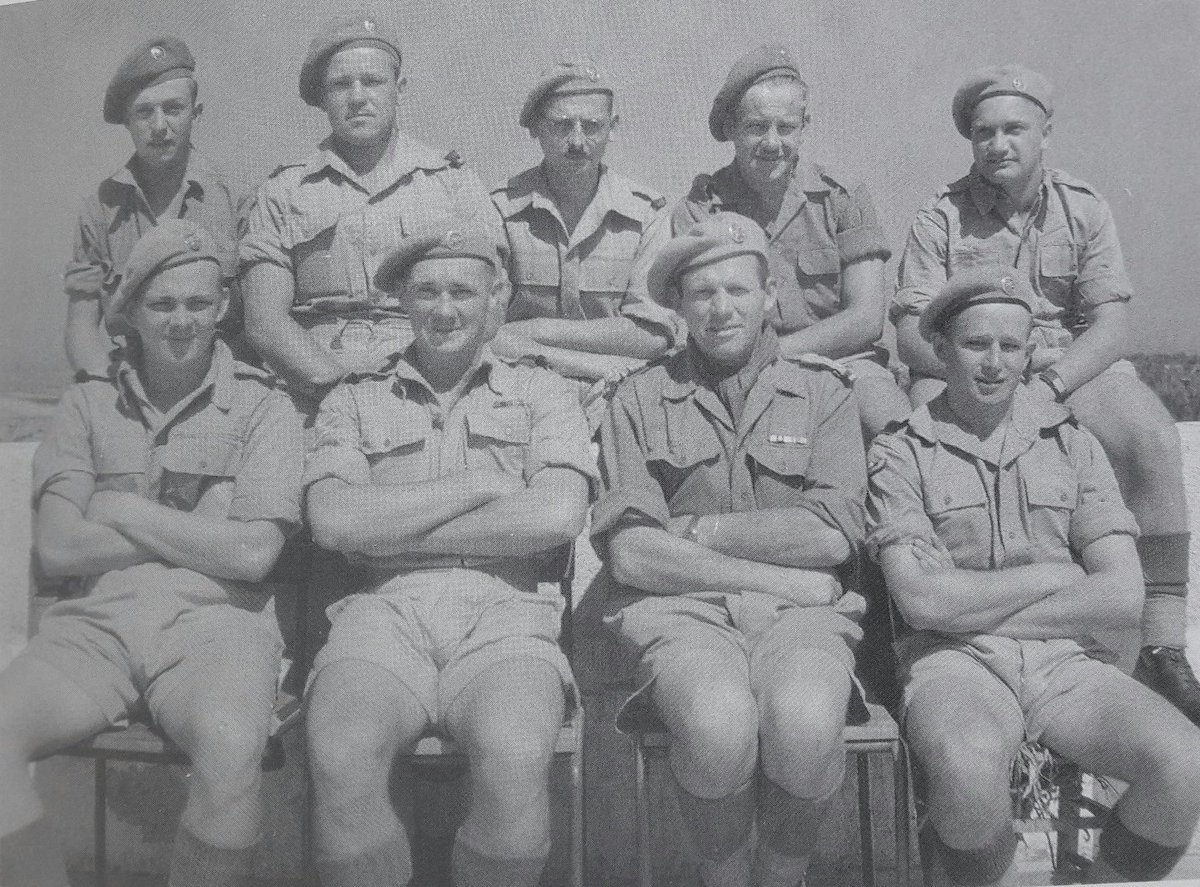
Harry spent 2 weeks at Cedars. This photo, captioned ‘Some of the Boys’, was taken on Feb 8.
On Feb 11, he wrote in his diary: “Major Mayne considered I should return to Kabrit to prepare A Sqn for next operation.”
Feb 12: “Left Cedars 14h30, took Major Mayne’s jeep on tow"
Harry spent 2 weeks at Cedars. This photo, captioned ‘Some of the Boys’, was taken on Feb 8.
On Feb 11, he wrote in his diary: “Major Mayne considered I should return to Kabrit to prepare A Sqn for next operation.”
Feb 12: “Left Cedars 14h30, took Major Mayne’s jeep on tow"

10/
Harry took part in all the operations in Sicily & Italy in 1943, during which their troopship was the Ulster Monarch (pic).
The battle for Termoli was particularly unpleasant
His entry for October 3 ran: “Being shelled all day”.
Harry took part in all the operations in Sicily & Italy in 1943, during which their troopship was the Ulster Monarch (pic).
The battle for Termoli was particularly unpleasant
His entry for October 3 ran: “Being shelled all day”.

11/
This is Harry, proudly wearing his desert beret, taken at Chelmsford, Jan '45.
On the disbandment of 1SAS in Oct 1945, Paddy Mayne wrote Harry a reference. It ran:
“I have known RQMS Cranford for four years. During this time he has held a position of trust in the regiment...
This is Harry, proudly wearing his desert beret, taken at Chelmsford, Jan '45.
On the disbandment of 1SAS in Oct 1945, Paddy Mayne wrote Harry a reference. It ran:
“I have known RQMS Cranford for four years. During this time he has held a position of trust in the regiment...

12/
…having been in charge of all stores, rations and equipment. He has carried out his duties most satisfactorily. He is dependable, most thorough and takes great pains over his duties…
(Harry, bottom left, parachute training at Ringway, Jan 1944)
…having been in charge of all stores, rations and equipment. He has carried out his duties most satisfactorily. He is dependable, most thorough and takes great pains over his duties…
(Harry, bottom left, parachute training at Ringway, Jan 1944)

13/13
"...I have absolutely no hesitation in recommending him for any position which requires a responsible man with opportunity to use his own initiative.”
(Pic: Paddy Mayne's reference)
In memory of RQMS Harold Henry Cranford, 1SAS, 1916-1979.
"...I have absolutely no hesitation in recommending him for any position which requires a responsible man with opportunity to use his own initiative.”
(Pic: Paddy Mayne's reference)
In memory of RQMS Harold Henry Cranford, 1SAS, 1916-1979.

@threadreaderapp unroll
• • •
Missing some Tweet in this thread? You can try to
force a refresh