US Casualty Care in WW2, a thread.
"The Surgical Management of the Wounded in the Mediterranean Theater at the Time of the Fall of Rome"
ncbi.nlm.nih.gov/pmc/articles/P…
Has a nice diagram showing US casualty care circa the summer of 1944.
But how did all this work?
/1
"The Surgical Management of the Wounded in the Mediterranean Theater at the Time of the Fall of Rome"
ncbi.nlm.nih.gov/pmc/articles/P…
Has a nice diagram showing US casualty care circa the summer of 1944.
But how did all this work?
/1

books.google.nl/books?id=lFIEA…
LIFE Magazine in their 29 January 1945 issue followed one specific casualty from his wounding to arriving in the US.
/2
LIFE Magazine in their 29 January 1945 issue followed one specific casualty from his wounding to arriving in the US.
/2
George Lott was a medic in the 37th Inf Div who was hit by German mortar fire in both arms at 11:30 AM on 22 Nov 1944. Lott was able to self-transport himself from where he was wounded to the battalion aid station located 500 yards away in a basement of a house.
3/
3/
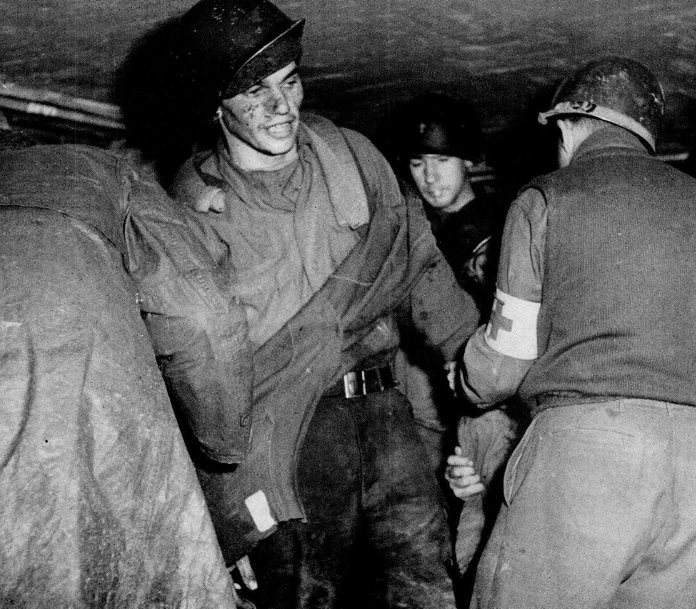
At the Battalion Aid Station, they gave him morphine, plasma, sulfa, and immobilized his arms in splints while the town was under shellfire.
4/
4/
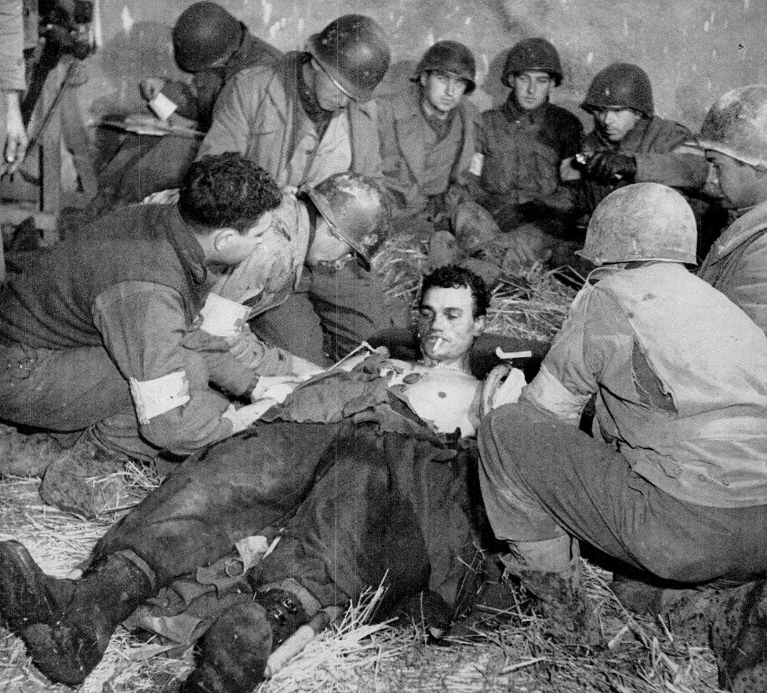
Lott had to wait until 1:55 PM (2.4 hours) before being evacuated further by ambulance due to the threat of shelling.
5/
5/
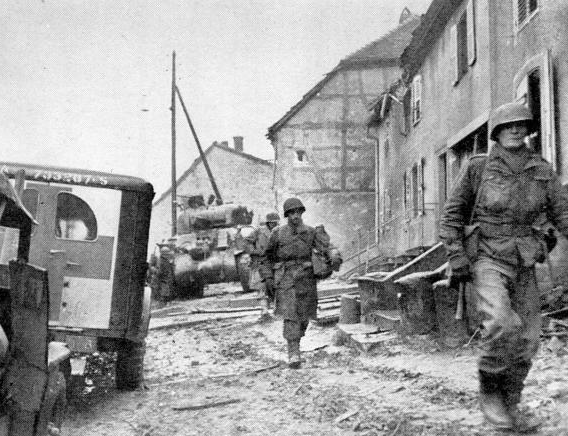
The ambulance drove him ten minutes (and about two miles) down the road to a Collecting Station, where men from a regiment's battalion aid stations are gathered for further evacuation. Another ambulance trip follows, a 14 mile 40 minute drive to the Clearing Station.
/6
/6
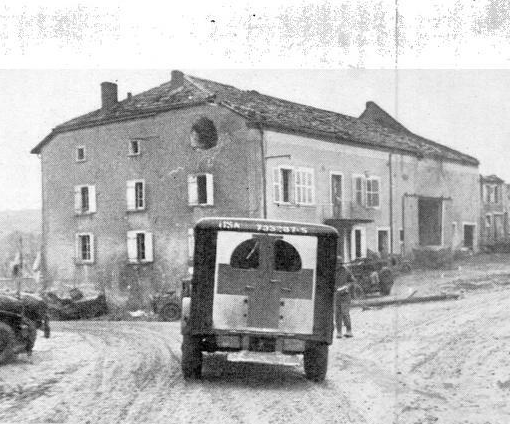
3.5 hours after his wounding; at 3 PM, Lott is carried into the Clearing Station, which has 20 doctors and can do emergency surgery.
/7
/7
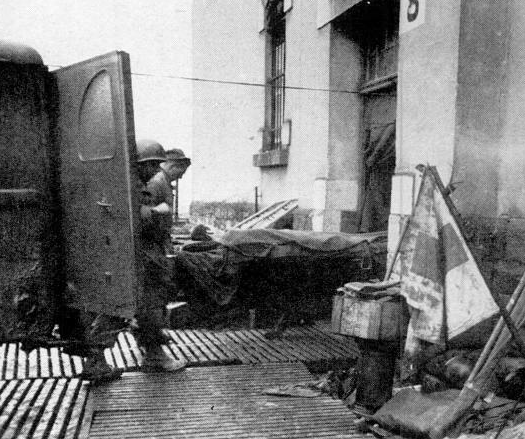
In an operating room, his wounds are redressed and he's given further treatment for shock (penicillin injections and blood plasma).
/8
/8
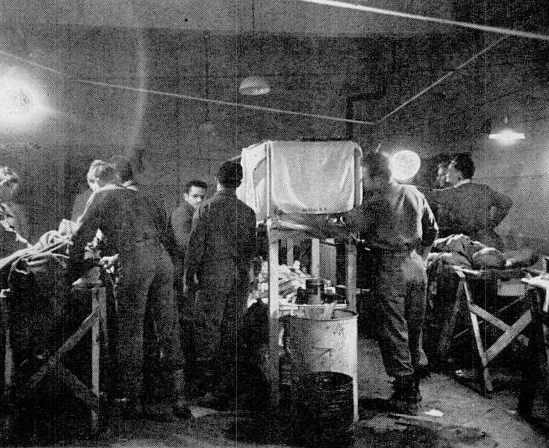
It is now 4.5 hours since he was wounded and he is moved onto a Third Army ambulance for a 50 mile trip to the Evacuation Hospital at Nancy, France.
/9
/9
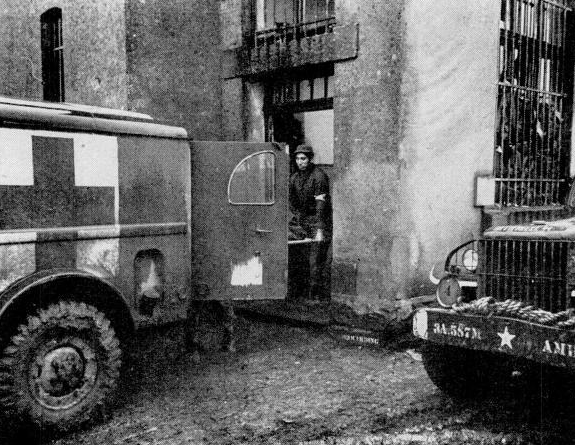
6.16 hours after his wounding, Lott arrived at the Evacuation Hospital in Nancy, France. After initial surgery, they decided Lott's needs were greater than they could provide and decided to send him further to the rear when his condition improved.
/10
/10
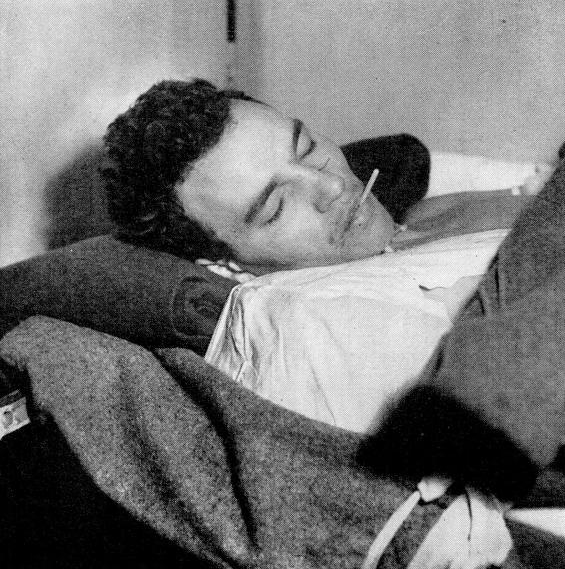
24 hours after his wounding, Lott was eating Thanksgiving Dinner in the Evacuation Hospital, while he underwent heat therapy to improve blood flow in his right arm. The therapy worked, and doctors changed their mind about amputating his right arm.
/11
/11
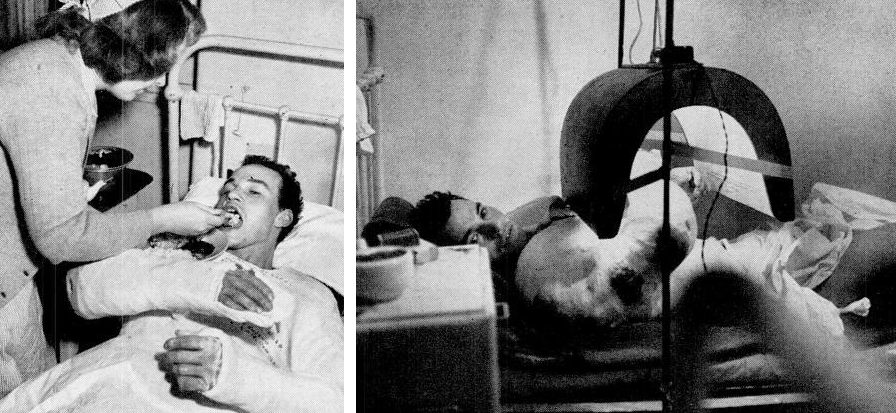
For three days, Lott was in the Evacuation Hospital. Following improvement of his health, it was decided to evacuate him by air to England for further treatment. It has been four days since he was wounded. This will be George's first flight in an airplane - ever.
/12
/12
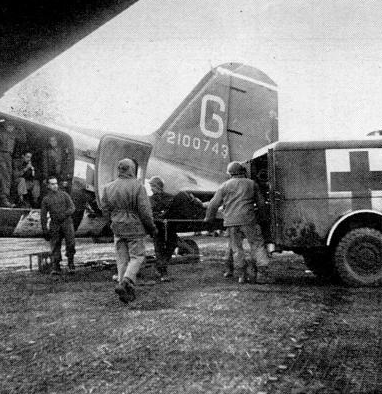
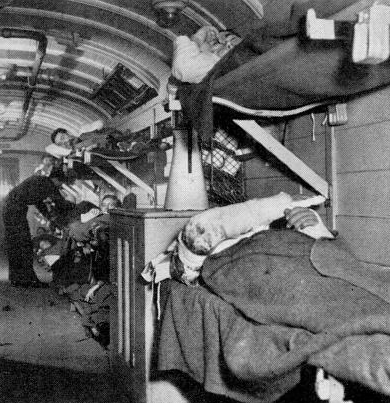
In England, he was kept in the airbase hospital for a day for monitoring, before being moved via Hospital Train on the night of Nov. 27th to the 7th General Hospital near London. It is now five days since his wounding.
(photo of train)
/13
(photo of train)
/13
At the 7th General Hospital, his casts were removed and it was found that his wounds had become infected. This was countered by penicillin. Dealing with the infection delayed his journey further.
/14
/14
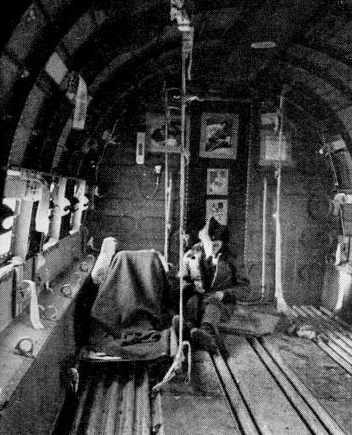
Finally, on 18 December 1944 -- 26 days since wounding -- George is going back to the US. First, he's flown from England to Paris.
/15
/15
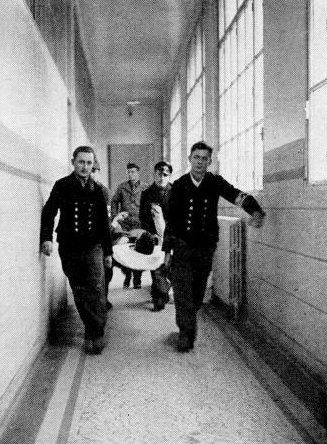
At Paris, he's carried to his room by German Medical Corps POWs; and he stays for three days as weather delays his flight home.
/16
/16
The weather clears on 21 Dec 1944 and he's loaded onto an ATC C-54 for the flight across the Atlantic, which takes 29 hours.
/17
/17
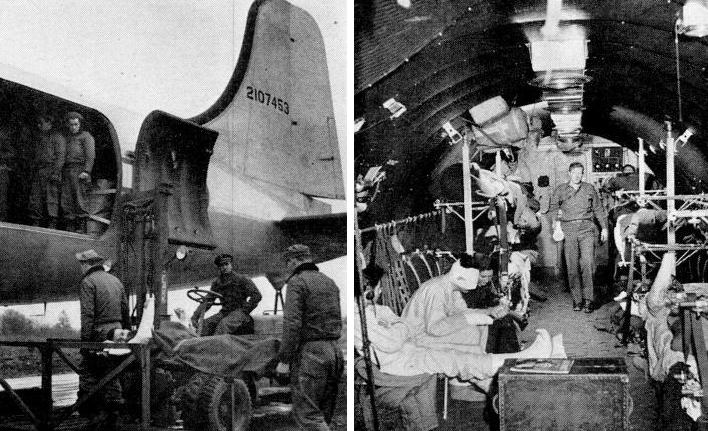
At Mitchel Field, New York; Lott is offloaded by forklift, approximately one month after being wounded. He then stays at the holding station until 6 January 1945 before being sent to Rhoads General Hospital in Utica, NY; arriving 45 days after wounding.
/18
/18
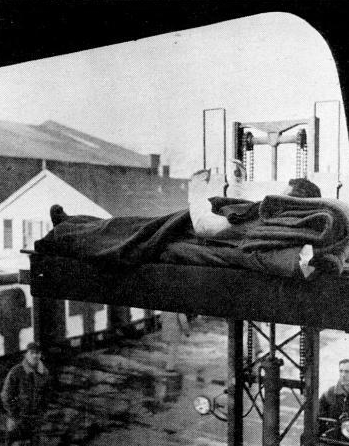
At this point, the LIFE story ends. Checking up on Fold3.com via his serial (32743184) reveals that he was discharged from the hospital in May 1946 and retired w/disability due to the loss of his right arm at the elbow.
/19
/19
After the LIFE story appeared in print, George got hundreds of offers from families to stay with them (his family had died years ago). He declined and ended up living in Albany, NY dying on 29 March 1995. He's buried in Grave C-0037A-1 at Graceland Cemetery in Albany.
/END
/END
• • •
Missing some Tweet in this thread? You can try to
force a refresh