Ryan C Profile picture
Mar 4 20 tweets 7 min read
US Casualty Care in WW2, a thread.

"The Surgical Management of the Wounded in the Mediterranean Theater at the Time of the Fall of Rome"

ncbi.nlm.nih.gov/pmc/articles/P…

Has a nice diagram showing US casualty care circa the summer of 1944.

But how did all this work?

/1 Image
books.google.nl/books?id=lFIEA…

LIFE Magazine in their 29 January 1945 issue followed one specific casualty from his wounding to arriving in the US.

/2
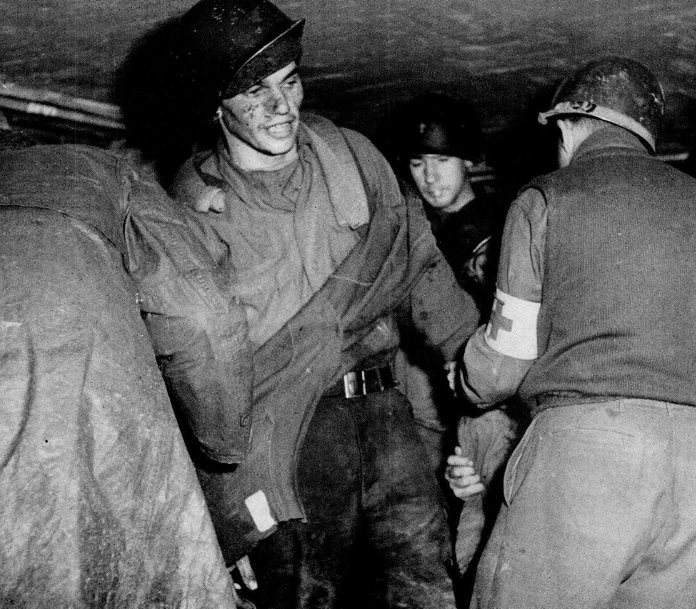
George Lott was a medic in the 37th Inf Div who was hit by German mortar fire in both arms at 11:30 AM on 22 Nov 1944. Lott was able to self-transport himself from where he was wounded to the battalion aid station located 500 yards away in a basement of a house.

3/ Image
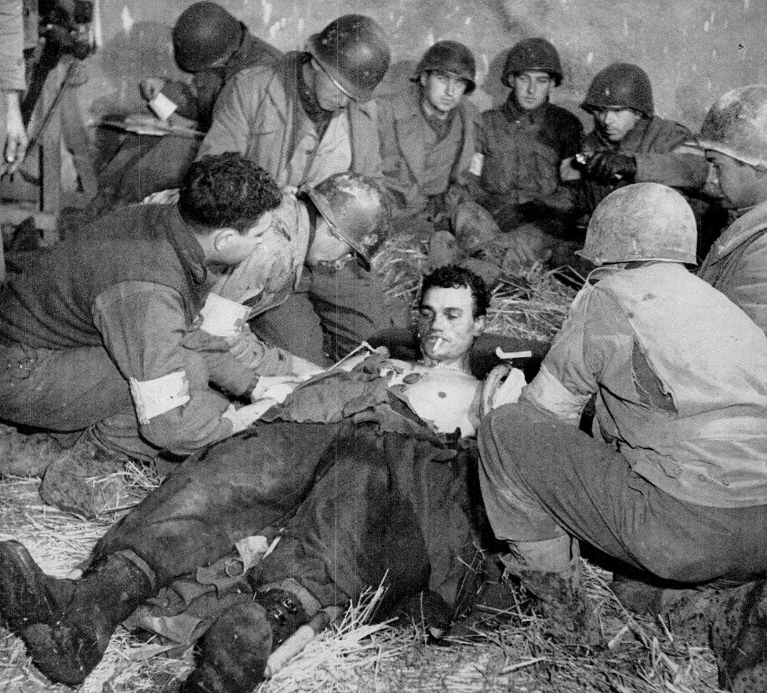
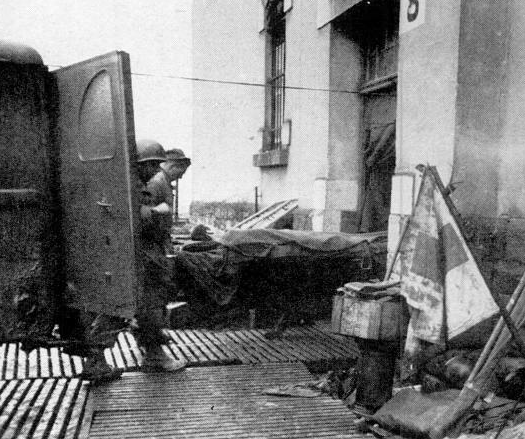
At the Battalion Aid Station, they gave him morphine, plasma, sulfa, and immobilized his arms in splints while the town was under shellfire.

4/ Image
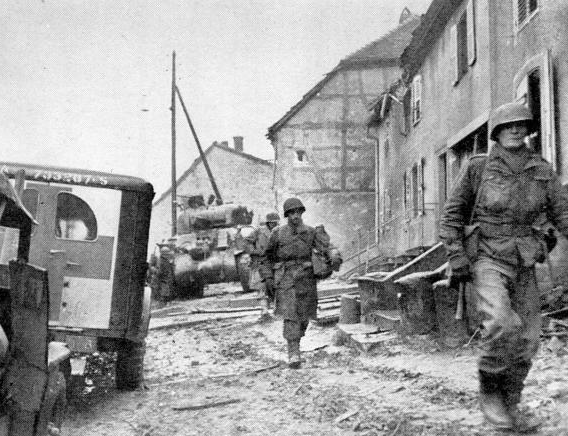
Lott had to wait until 1:55 PM (2.4 hours) before being evacuated further by ambulance due to the threat of shelling.

5/ Image
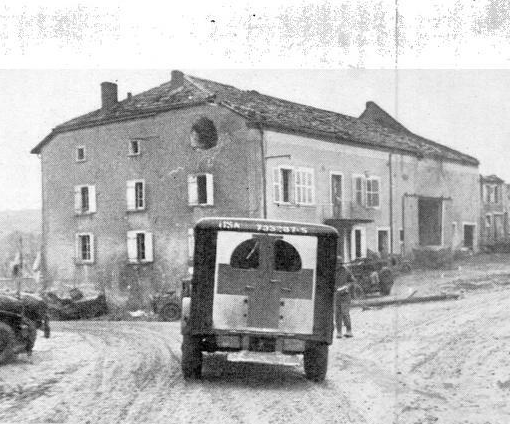
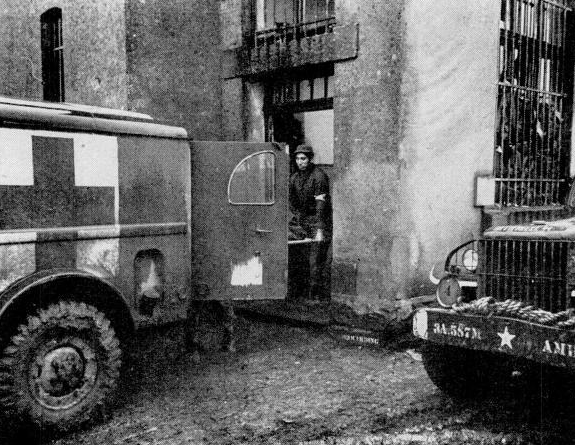
The ambulance drove him ten minutes (and about two miles) down the road to a Collecting Station, where men from a regiment's battalion aid stations are gathered for further evacuation. Another ambulance trip follows, a 14 mile 40 minute drive to the Clearing Station.

/6 Image
3.5 hours after his wounding; at 3 PM, Lott is carried into the Clearing Station, which has 20 doctors and can do emergency surgery.

/7 Image
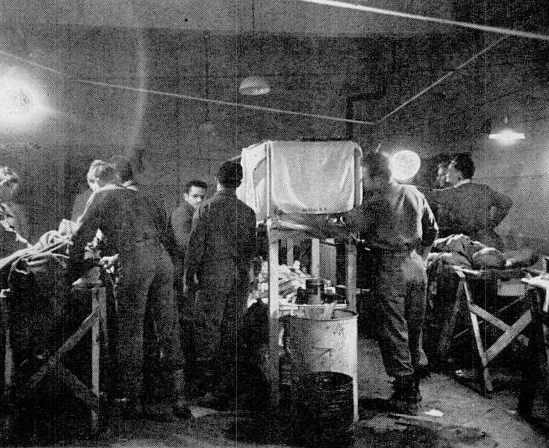
In an operating room, his wounds are redressed and he's given further treatment for shock (penicillin injections and blood plasma).

/8 Image
It is now 4.5 hours since he was wounded and he is moved onto a Third Army ambulance for a 50 mile trip to the Evacuation Hospital at Nancy, France.

/9 Image
6.16 hours after his wounding, Lott arrived at the Evacuation Hospital in Nancy, France. After initial surgery, they decided Lott's needs were greater than they could provide and decided to send him further to the rear when his condition improved.

/10 Image
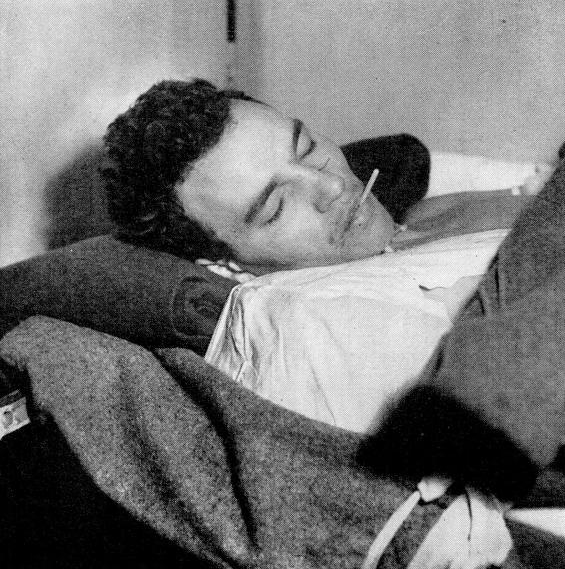
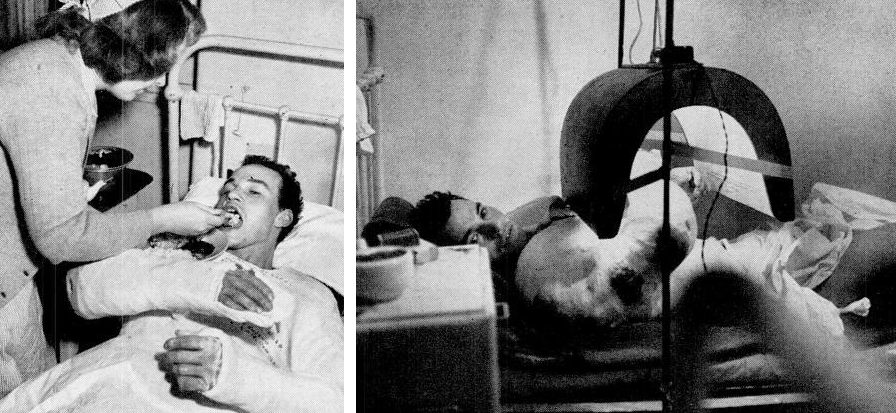
24 hours after his wounding, Lott was eating Thanksgiving Dinner in the Evacuation Hospital, while he underwent heat therapy to improve blood flow in his right arm. The therapy worked, and doctors changed their mind about amputating his right arm.

/11 Image
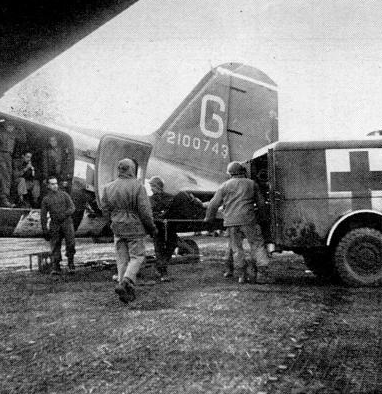
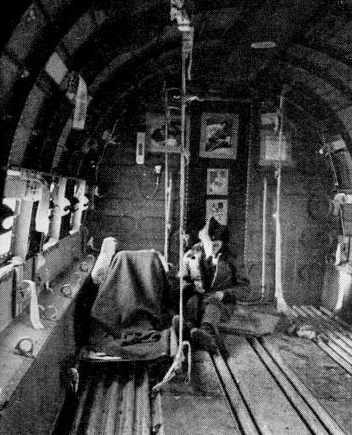
For three days, Lott was in the Evacuation Hospital. Following improvement of his health, it was decided to evacuate him by air to England for further treatment. It has been four days since he was wounded. This will be George's first flight in an airplane - ever.

/12 Image
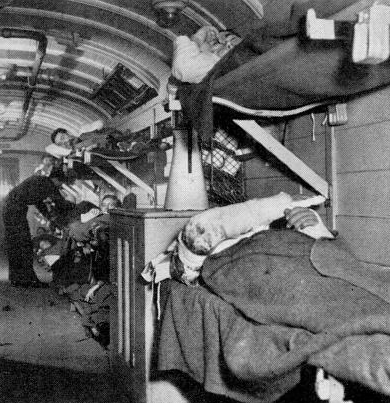
In England, he was kept in the airbase hospital for a day for monitoring, before being moved via Hospital Train on the night of Nov. 27th to the 7th General Hospital near London. It is now five days since his wounding.

(photo of train)

/13 Image
At the 7th General Hospital, his casts were removed and it was found that his wounds had become infected. This was countered by penicillin. Dealing with the infection delayed his journey further.

/14
Finally, on 18 December 1944 -- 26 days since wounding -- George is going back to the US. First, he's flown from England to Paris.

/15 Image
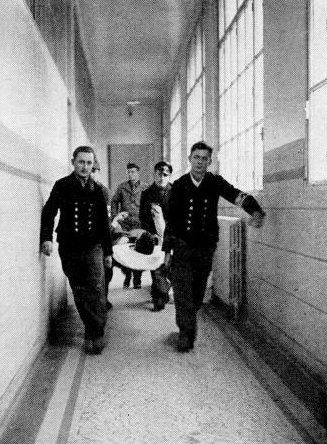
At Paris, he's carried to his room by German Medical Corps POWs; and he stays for three days as weather delays his flight home.

/16 Image
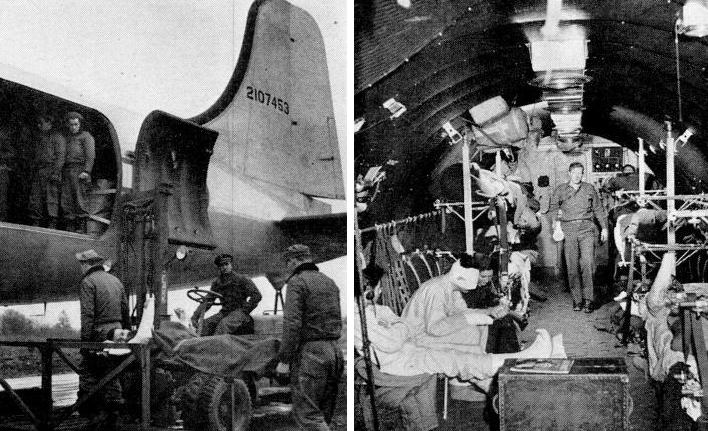
The weather clears on 21 Dec 1944 and he's loaded onto an ATC C-54 for the flight across the Atlantic, which takes 29 hours.

/17 Image
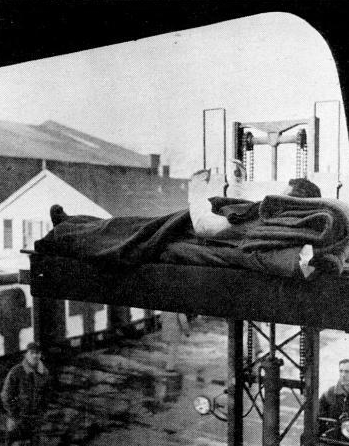
At Mitchel Field, New York; Lott is offloaded by forklift, approximately one month after being wounded. He then stays at the holding station until 6 January 1945 before being sent to Rhoads General Hospital in Utica, NY; arriving 45 days after wounding.

/18 Image
At this point, the LIFE story ends. Checking up on Fold3.com via his serial (32743184) reveals that he was discharged from the hospital in May 1946 and retired w/disability due to the loss of his right arm at the elbow.

/19
After the LIFE story appeared in print, George got hundreds of offers from families to stay with them (his family had died years ago). He declined and ended up living in Albany, NY dying on 29 March 1995. He's buried in Grave C-0037A-1 at Graceland Cemetery in Albany.

/END

• • •

Missing some Tweet in this thread? You can try to force a refresh

 

Keep Current with Ryan C

Ryan C Profile picture

Stay in touch and get notified when new unrolls are available from this author!

Read all threads

This Thread may be Removed Anytime!

PDF

Twitter may remove this content at anytime! Save it as PDF for later use!

Try unrolling a thread yourself!

how to unroll video
  1. Follow @ThreadReaderApp to mention us!

  2. From a Twitter thread mention us with a keyword "unroll"
@threadreaderapp unroll

Practice here first or read more on our help page!

More from @LIM49Spartan

Mar 2
I've seen the following casualty rates tossed out:

150K UA v. 220K RU = 1.46x (RU journos connected to RU .mil)
100K UA v. 180K RU = 1.8x
100K UA v. 200K RU = 2.0x (US/NATO estimates)

The spread between RU and NATO cas estimate ratios isn't that great; the avg is 1.77x

/1
Prior Ratios are:

1991 Gulf War: 100 to 114x (unclear)
2003 OIF: 20x (unclear)
1956 Suez : 10.34x
1967 Six Days: 3.7x
1993 Mogadishu: 3.42x
1945 Okinawa: 2.44x
1979 Soviet-Afghan War: 2.19x
1973 Yom Kippur War: 1.5x
1942/43 Stalingrad: 1.29x
1945 Iwo Jima: 1.25x

/2
The difference in this war is going to be Ukraine's capability of regenerating losses, both manpower and materiel wise.

If AFU was getting a 30-1 ratio against Wagner; at 30K Wagner casualties, that's 1K AFU troops removed from this year's campaigning.

/3
Read 13 tweets
Feb 28
@TrentTelenko, Shoigou may have inadvertently revealed🇷🇺casualty ratios back in Sep '22 when commenting on🇺🇦casualties.

armenpress.am/eng/news/10930…

That comes out 55.4% KIA, 44.6% WIA - and that's for the first portion of the war when conditions were more favorable to Russia.

/1
@TrentTelenko Socialist scientificism (for lack of a better term) required incredibly precise figures when stating things in the USSR. So when it came to analyzing 🇺🇦 casualty estimates; Shoigou's speechwriters used 🇷🇺 ratios to get those numbers. Oops.

/2 END
@TrentTelenko rt.com/russia/563213-…

Original RT post in case they try to nuke it. I'm going to get the internet archive to save it as well..
Read 4 tweets
Oct 8, 2022
A while back I saw a comment by someone (can't remember who, sorry) that the most common 🇷🇺 tank AP round was 3BM42 'Mango' APFSDS -- which is a pretty "old" round that entered service in...1986.

/1
I just realized now that the use of MANGO may be due to the Frankensteined status of the 🇷🇺 tank fleet -- you have a lot of older tanks from the 1980s still in service; albeit lightly modernized.

/2
These tanks may not have all been modernized to digital fire control, and may still be using older analog ballistic computers. With digital FCS, when you introduce a new round; all you need to do is punch in the new parameters for the round trajectory and drag.

/3
Read 5 tweets
Oct 8, 2022
@TrentTelenko, I am seeing some rumors that a boat was passing under the Kerch Strait bridge just before it exploded. 🤔If true, it means JAVAMAN rides again.

For those of you who don't know, JAVAMAN was part of the overall US effort to develop robot drones in WW2.

/1
@TrentTelenko The USN had it's own WW2 drone program, which was

PT Boats: 30 kts with 17 tons of TNT
Destroyer Escorts: 17 kts with 1,200 tons of TNT
Cargo Ship (AK): 13 kts with 8,000 tons of explosives

/2
@TrentTelenko As part of the prototyping process, USS Fomalhaut (AK-22), USS Stanton (DE-247), and PT-140 were all tested with the robot control system from a nearby plane utilizing television cameras, and several control sets were procured for combat use if needed.

/3
Read 21 tweets
Sep 9, 2022
This is an elaboration from an earlier tweet thread by me:

()

Now that I've had time to sit down and type things out on a real keyboard; I think the reasons for the Russian Collapse we're seeing go back several months.

/1
I think that since around May or so of this year, the majority of RU ground forces along the front have been skeletons -- i.e. only 50 or so men in a 700 man BTG; whether from pre-war corruption, or combat losses with no replacements.

/2
So how have these skeletal BTGs managed to hold off the Ukrainians for so long; and why are they collapsing so fast now?

I believe it may be due to RU adopting an "artillery spotter land-covering" doctrine to make up for losses.

/3
Read 18 tweets
Jul 12, 2022
@TrentTelenko , COD still has her WW2 era IFF destruction system installed! Image
From talking with a museum guy, these were known as "DARTER switches"
When DARTER ran aground, they used the on board scuttling system, several torpex charges already installed, ran wires through existing penetrations to connect them. Only for the system to seemingly fail because of a X factor.
Read 5 tweets

Did Thread Reader help you today?

Support us! We are indie developers!


This site is made by just two indie developers on a laptop doing marketing, support and development! Read more about the story.

Become a Premium Member ($3/month or $30/year) and get exclusive features!

Become Premium

Don't want to be a Premium member but still want to support us?

Make a small donation by buying us coffee ($5) or help with server cost ($10)

Donate via Paypal

Or Donate anonymously using crypto!

Ethereum

0xfe58350B80634f60Fa6Dc149a72b4DFbc17D341E copy

Bitcoin

3ATGMxNzCUFzxpMCHL5sWSt4DVtS8UqXpi copy

Thank you for your support!

Follow Us on Twitter!

:(