The Huaisheng Mosque 广州怀圣寺 in China is thought to be one of the oldest mosques in the world. An edifice of great religious & historic importance, it is traditionally said to have been originally built over 1,300 years ago in 627.
A thread on the Huaisheng Mosque in China…
A thread on the Huaisheng Mosque in China…

1/ In China, mosques are called Qīng Zhēn Sì (清真寺, Temples of the Pure Truth). Other names include Huí Huí Sì (回回寺 Hui people's temple), Lǐ Bài Sì (礼拜寺 Temple of worship), Zhēn Jiào Sì (真教寺 Temple of the True Teaching) or Qīng Jìng Sì (清净寺 "Pure and clean temple")

2/ Huaisheng Mosque was built during the Tang Dynasty (619-907) when Muslim traders came to China through the silk route. The earliest contacts of Islam with China occurred in this area, spreading to other regions. As such Guangzhou can be called the cradle of Chinese Islam.

3/ Huaisheng Mosque is traditionally said to have been built in 672 by Sa'd ibn Abi Waqqas, an uncle of the Prophet Muhammad ﷺ during the reign of Emperor Gaozong (649–683), the then Tang emperor.
Beautiful Arabic calligraphy inside Huaisheng Mosque
Beautiful Arabic calligraphy inside Huaisheng Mosque

4/ Huaisheng Mosque remains one of the oldest mosques in China, and also one of the oldest surviving mosques in the world

6/ The mosque was entirely rebuilt in 1350 during the Yuan dynasty under the rule of Zhizheng (1341-1368) & rebuilt again in 1695 under Emperor Kangzi of the Qing dynasty, after being destroyed in a fire. The Huaisheng Light Tower, the mosque's unique minaret, was built earlier
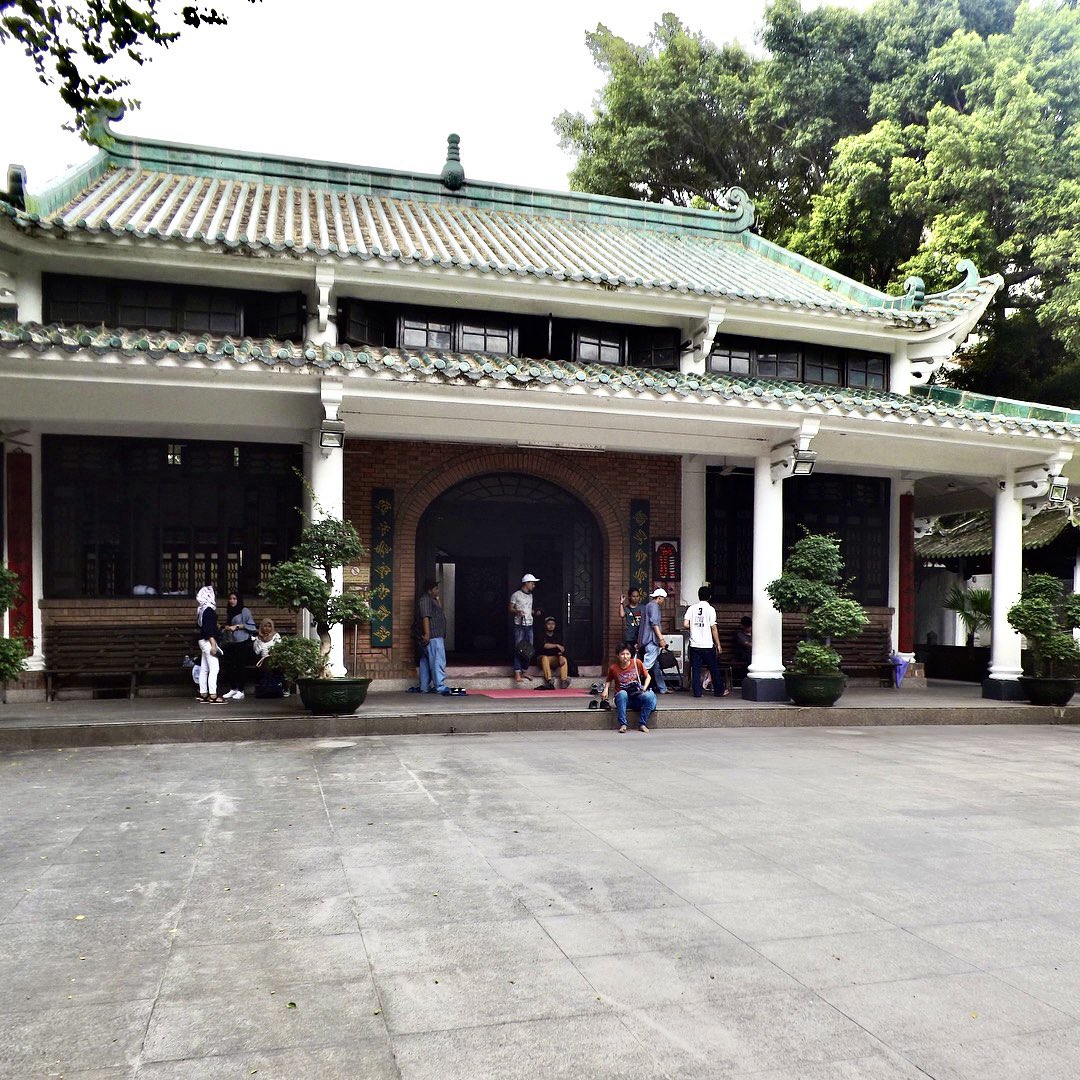
7/ Chinese Islamic architecture reflects the local architecture in its style. It is a combination of Chinese & Islamic styles.
A picture of the Huaisheng Mosque in Guangzhou, China from 1860.
A picture of the Huaisheng Mosque in Guangzhou, China from 1860.

8/ The Huaisheng Mosque is notable for its integration of local architecture with Islamic styles. There is a corridor at the entrance which opens into a courtyard with plants and trees. The main prayer hall is across the courtyard.


9/ The most unusual feature of the Huaisheng Mosque is its pointed 36 metre minaret, the Guangta or Kwangtah. Although this meant the "Plain Pagoda" in reference to its unadorned surface, it is also sometimes taken to mean ‘lighthouse’ & gave the mosque its alternate name

10/ The minaret once served as a lighthouse to guide boats to the Zhujiang river. Once boats reached here, they took it as a sign that they had reached the beginning of the maritime silk route.

11/ The tapering brick shaft of the minaret is set on a 10-meter base & has an internal staircase. It has a smooth surface like other minarets in Islamic architecture and unlike typical pagodas in Chinese architecture. The balcony was used for the Muslim call to prayer, or Azaan.

12/ A plaque with the words “Jiao Chong Xi Yu” was given to the mosque by Guangxu Emperor of the Qing Dynasty (1901). It is stamped by the emperor and the four words are thought to have been written by the Empress Dowager Cixi. The words mean " Islam comes from West Makkah".

13/ The mosque covers a total area of 3600 square meters. About 2000 Muslims come on Friday to say the congregational prayer. All five daily prayers are offered in congregation in the mosque.

14/ A look inside The Huaisheng Mosque, with a combination of both Chinese and Islamic interior styles

15/ The complex also includes quarters for the Imam, a tablet pavilion for the storage of scripture & an ablution area, all composed in the open pagoda style with traditionally sculpted & tiled roofs

16/Even with a history of 1000 years Huaisheng Mosque still plays an important role. The mosque attracts thousands of Muslims every year & is where the Guangzhou Islamic Association is seated. It is an architectural highlight in Guangzhou because of its history & distinct culture

Discover more about The Huaisheng Mosque 广州怀圣寺 one of the oldest Mosques in the world:
baytalfann.com/post/the-oldes…
baytalfann.com/post/the-oldes…
• • •
Missing some Tweet in this thread? You can try to
force a refresh