The Mississippian Cosmos
The Mississippians had many familiar things in their cosmos: a firmament above, a world tree or axis mundi, an underworld. But some aspects were also very distinctive.
The Mississippians had many familiar things in their cosmos: a firmament above, a world tree or axis mundi, an underworld. But some aspects were also very distinctive.


The Underworld was considered an underwater realm, associated with the night sky, and associated with the piasa. The piasa had several variants, one of which was the underwater panther.
(I have a completely unfounded theory that this partly refers to giant otters.)
(I have a completely unfounded theory that this partly refers to giant otters.)


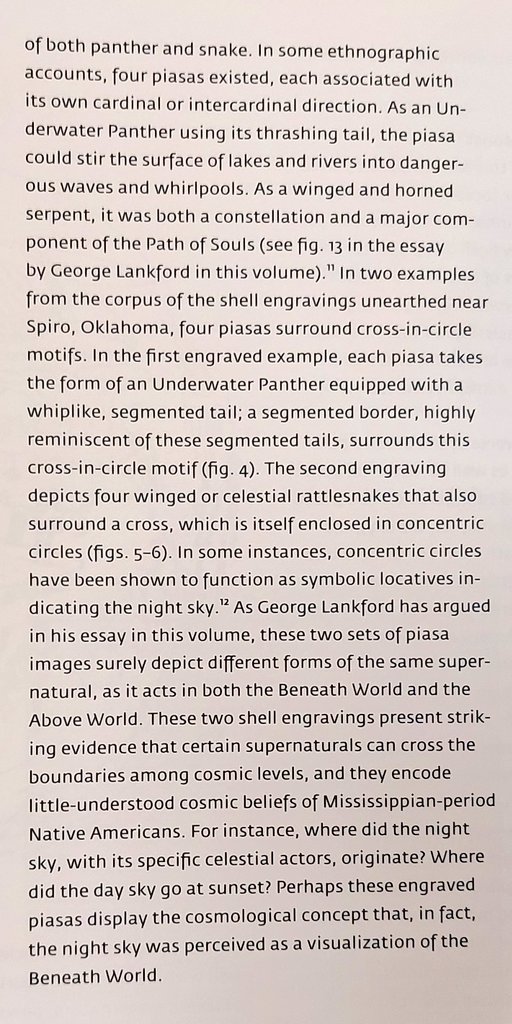

The winged, horned serpent variant may be distantly related to Quetzalcoatl.
Note, however, that it usually has a rattle.
Note, however, that it usually has a rattle.


Several symbols that appear on art let us pinpoint the scene as occurring in different parts of the cosmos. A, surrounded by feathers, represents the Above World. B is a solar image and associated with the Middle World. C swirls like a whirlpool, pointing to the Below World.
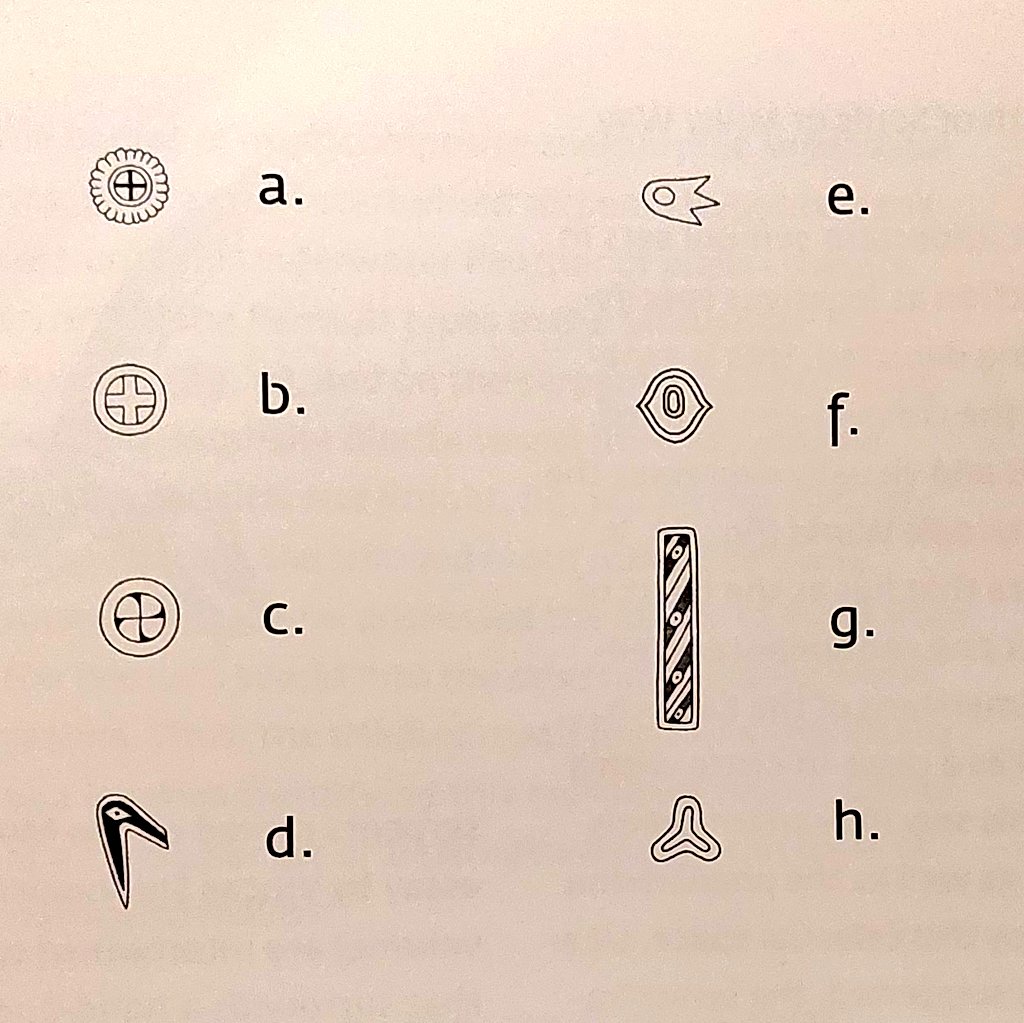
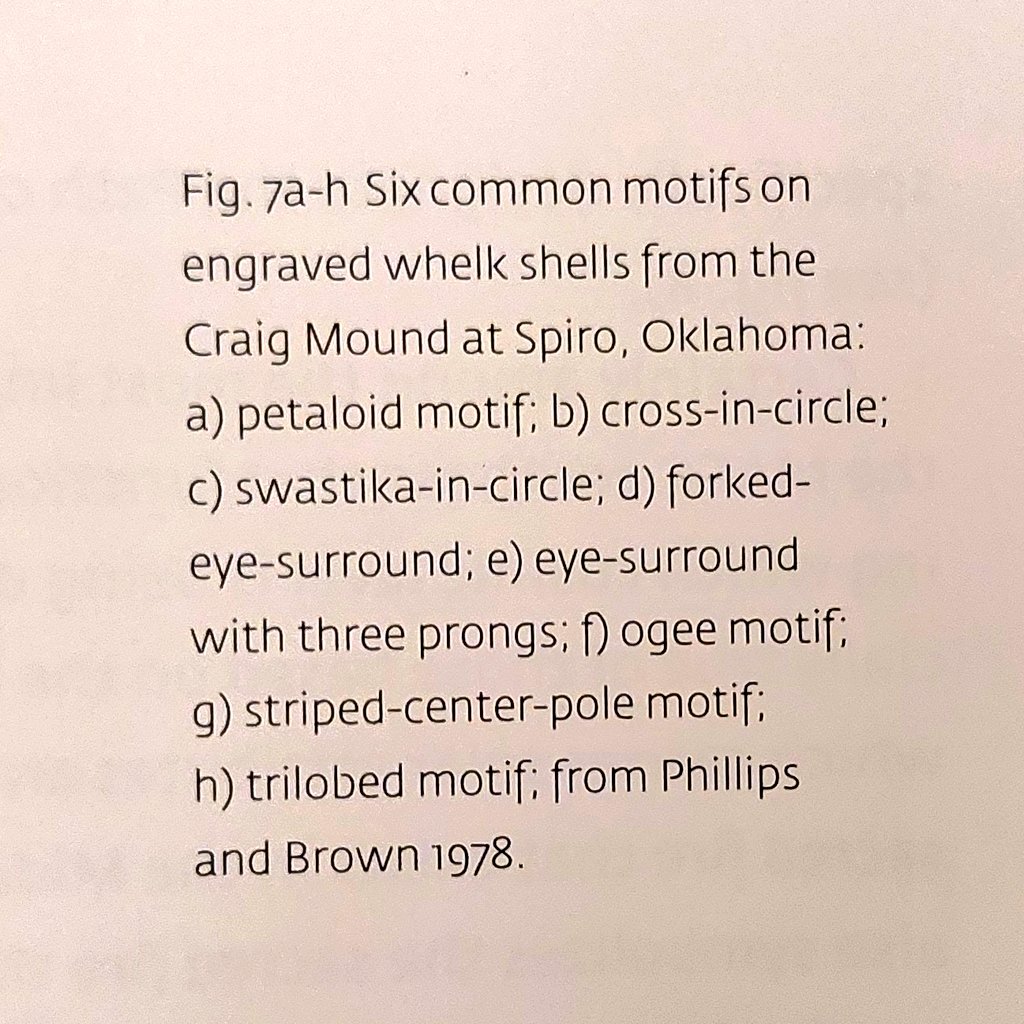
Different versions of the "eye-surround" motif, D and E above, also tell you whether a figure is from the Above or Below World.


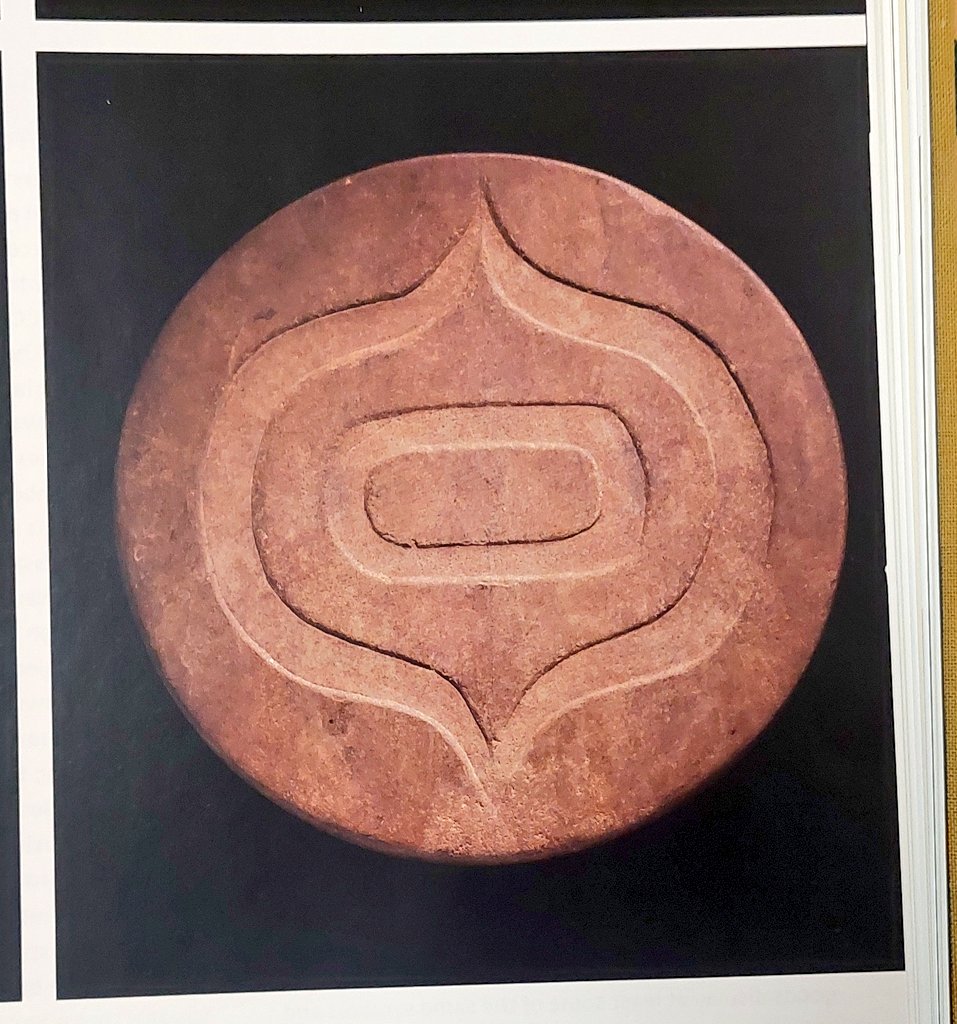
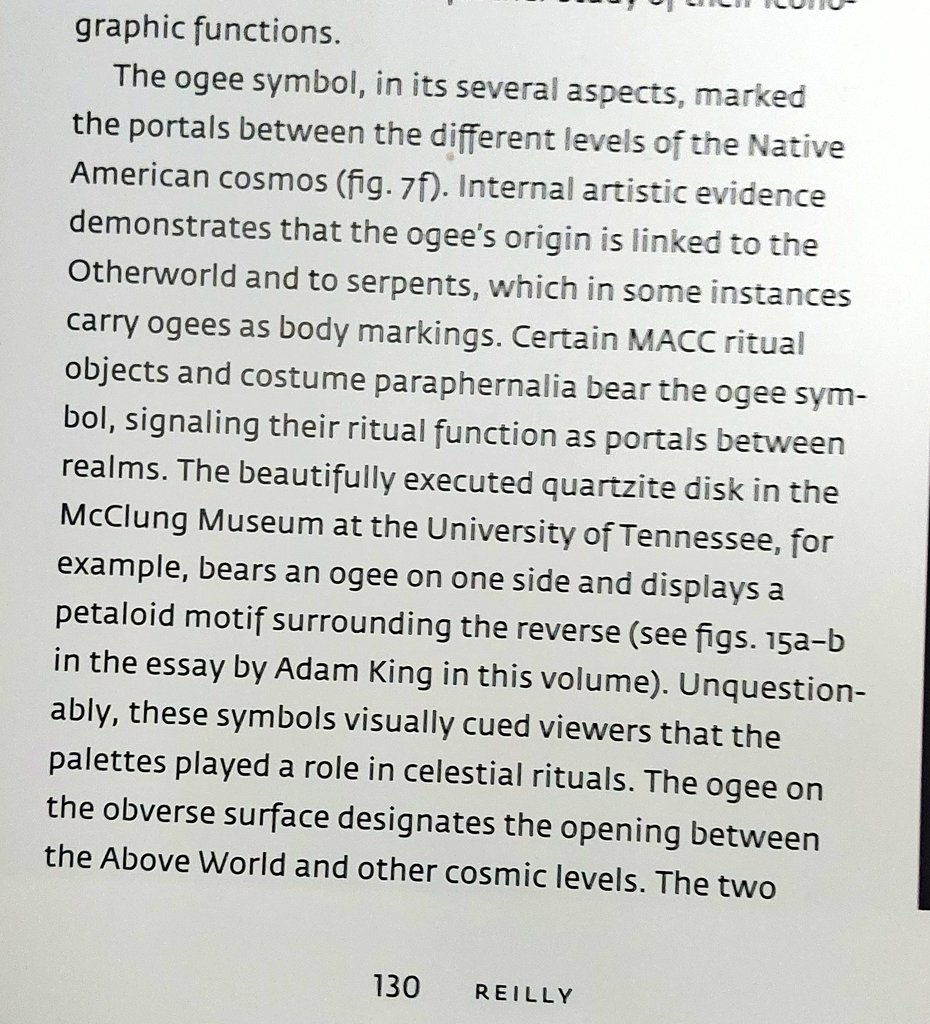
The ogee, 7f above, is a portal between worlds.

The striped pole, G above, is an axis mundi, just like the cedar tree.
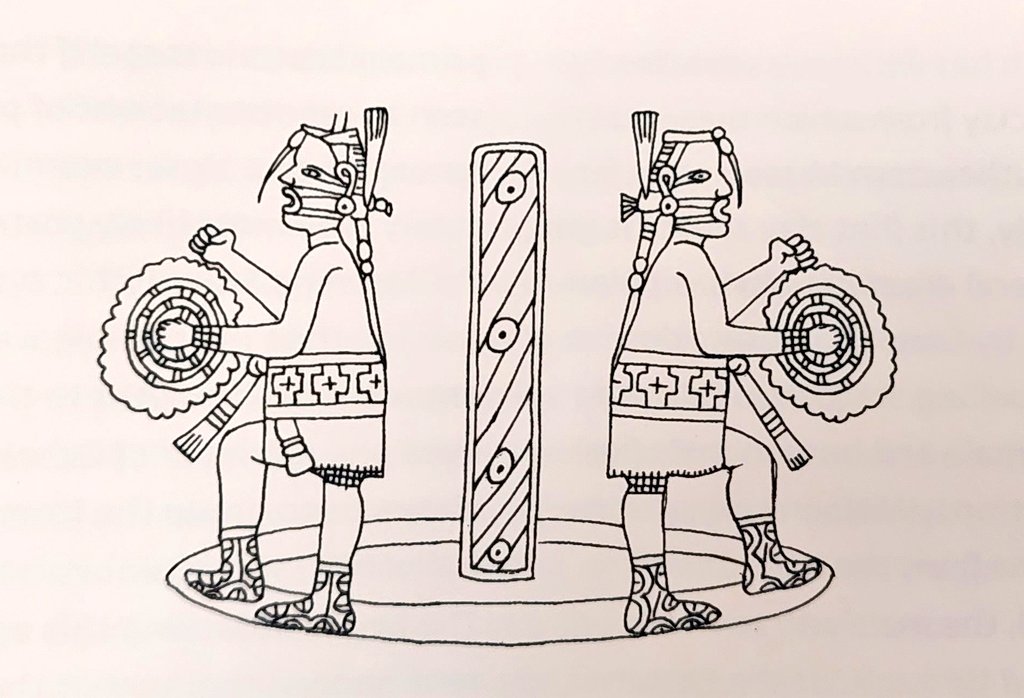

With all this in mind, we can return to the picture we started with, prepared to understand it much better.
We see the symbols for the three levels, creatures with appropriate eye markings, watery/starry Below world, and the axis mundi. There is also a path of souls.
We see the symbols for the three levels, creatures with appropriate eye markings, watery/starry Below world, and the axis mundi. There is also a path of souls.
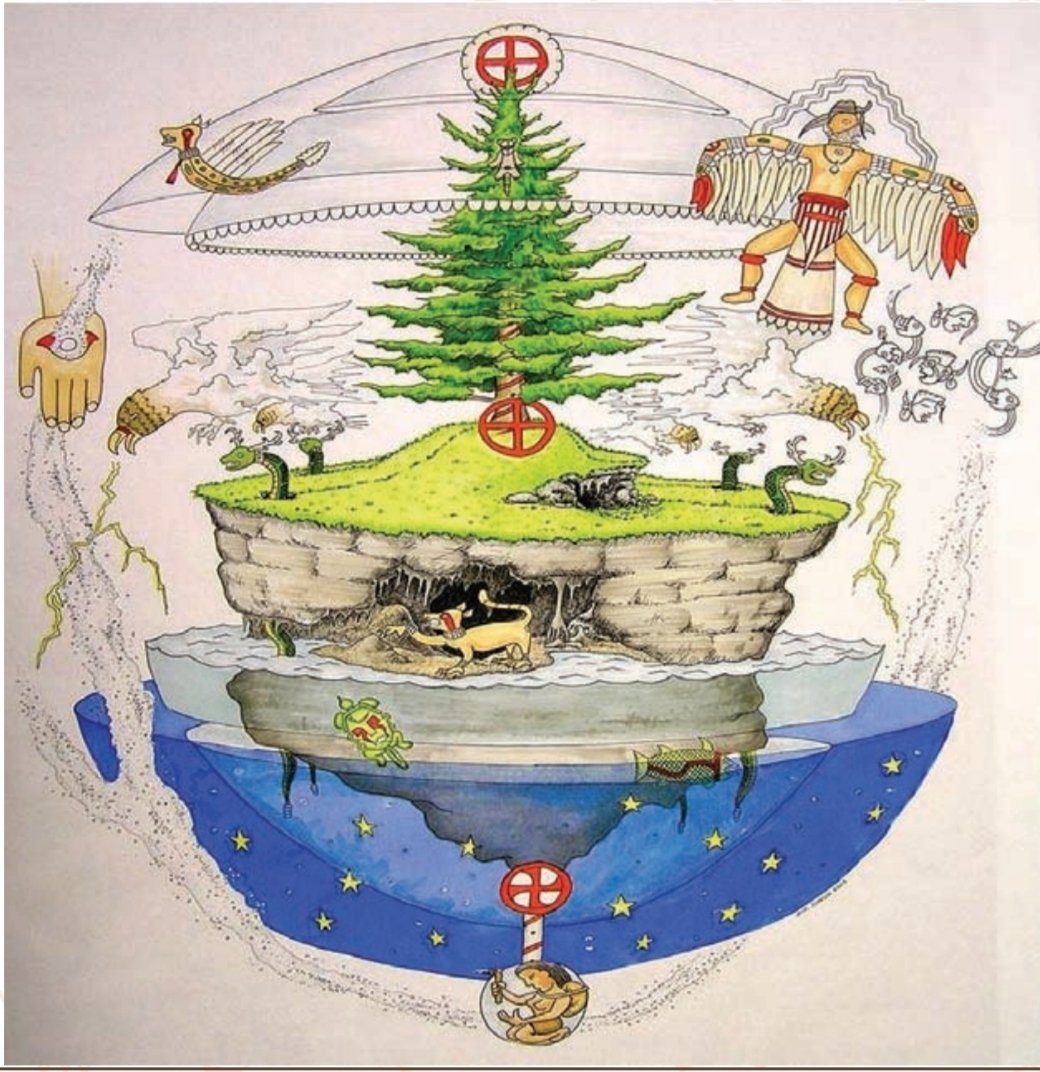
Once again, this comes from Hero, Hawk, and Open Hand. Specifically, this is from F. Kent Reilly III's essay.
Definitely worth owning.
Definitely worth owning.

• • •
Missing some Tweet in this thread? You can try to
force a refresh