Harvard University offers a ton of FREE online courses.
From Computer Science to Artificial Intelligence.
Here are 10 FREE courses you don't want to miss:
From Computer Science to Artificial Intelligence.
Here are 10 FREE courses you don't want to miss:
1. Introduction to Computer Science
An introduction to the intellectual enterprises of computer science and the art of programming.
Check here 👇
pll.harvard.edu/course/cs50-in…
An introduction to the intellectual enterprises of computer science and the art of programming.
Check here 👇
pll.harvard.edu/course/cs50-in…
2. Web Programming with Python and JavaScript
This course takes you deeply into the design and implementation of web apps with Python, JavaScript, and SQL using frameworks like Django, React, and Bootstrap.
Check here 👇
pll.harvard.edu/course/cs50s-w…
This course takes you deeply into the design and implementation of web apps with Python, JavaScript, and SQL using frameworks like Django, React, and Bootstrap.
Check here 👇
pll.harvard.edu/course/cs50s-w…
3. Introduction to Programming with Scratch
A gentle introduction to programming that prepares you for subsequent courses in coding.
Check here 👇
pll.harvard.edu/course/cs50s-i…
A gentle introduction to programming that prepares you for subsequent courses in coding.
Check here 👇
pll.harvard.edu/course/cs50s-i…
4. Introduction to Programming with Python
An introduction to programming using Python, a popular language for general-purpose programming, data science, web programming, and more.
Check here 👇
edx.org/course/cs50s-i…
An introduction to programming using Python, a popular language for general-purpose programming, data science, web programming, and more.
Check here 👇
edx.org/course/cs50s-i…
5. Understanding Technology
This is CS50’s introduction to technology for students who don’t (yet!) consider themselves computer persons.
Check here 👇
pll.harvard.edu/course/cs50s-u…
This is CS50’s introduction to technology for students who don’t (yet!) consider themselves computer persons.
Check here 👇
pll.harvard.edu/course/cs50s-u…
6. Introduction to Artificial Intelligence with Python
Learn to use machine learning in Python in this introductory course on artificial intelligence.
Check here 👇
pll.harvard.edu/course/cs50s-i…
Learn to use machine learning in Python in this introductory course on artificial intelligence.
Check here 👇
pll.harvard.edu/course/cs50s-i…
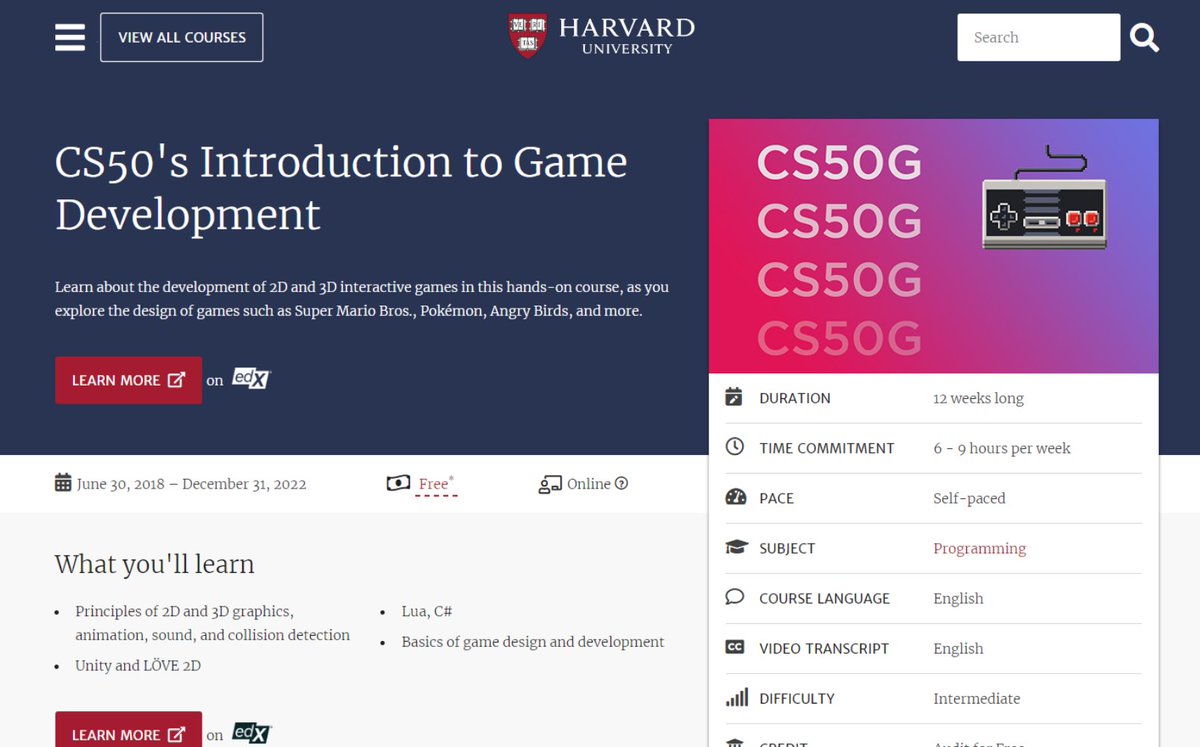
7. Introduction to Game Development
Learn about the development of 2D and 3D interactive games in this hands-on course, as you explore the design of games such as Super Mario Bros., Pokémon, Angry Birds, and more.
Check here 👇
pll.harvard.edu/course/cs50s-i…
Learn about the development of 2D and 3D interactive games in this hands-on course, as you explore the design of games such as Super Mario Bros., Pokémon, Angry Birds, and more.
Check here 👇
pll.harvard.edu/course/cs50s-i…
8. CS50's Computer Science for Business Professionals
This is CS50’s introduction to computer science for business professionals.
Check here 👇
pll.harvard.edu/course/cs50s-c…
This is CS50’s introduction to computer science for business professionals.
Check here 👇
pll.harvard.edu/course/cs50s-c…
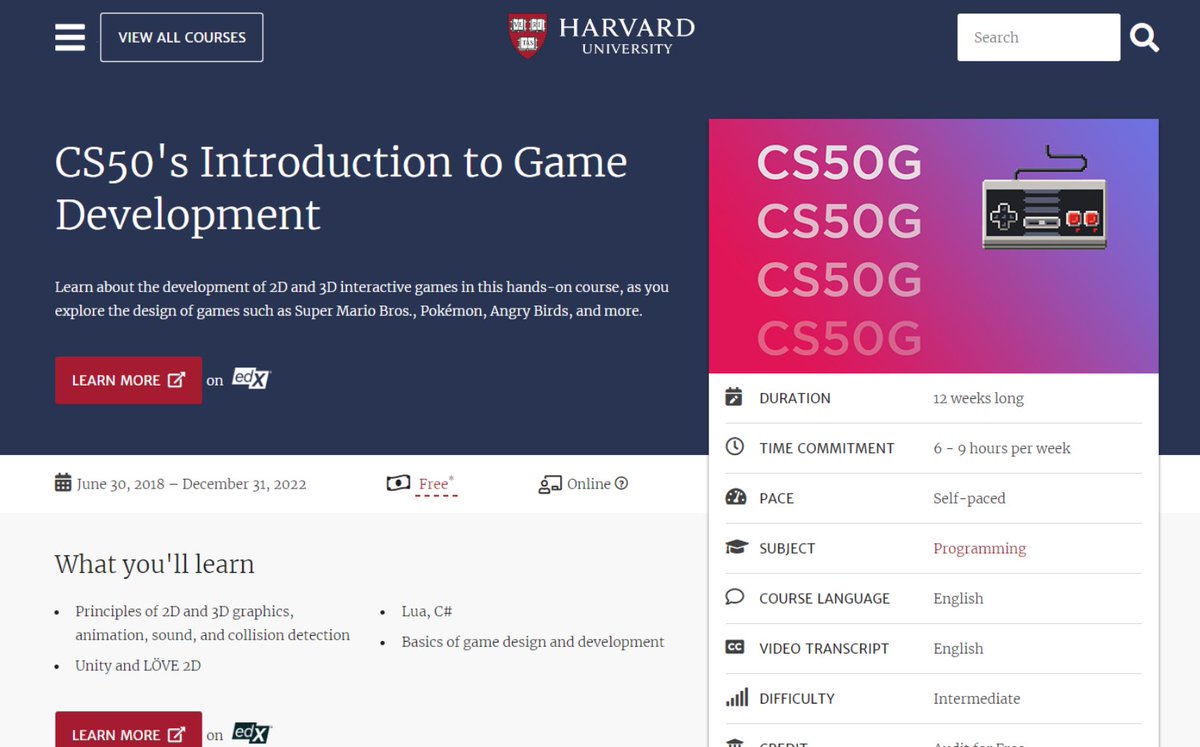
9. Mobile App Development with React Native
Learn about mobile app development with React Native, a popular framework maintained by Facebook that enables cross-platform native apps using JavaScript without Java or Swift.
Check here 👇
pll.harvard.edu/course/cs50s-m…
Learn about mobile app development with React Native, a popular framework maintained by Facebook that enables cross-platform native apps using JavaScript without Java or Swift.
Check here 👇
pll.harvard.edu/course/cs50s-m…
10. Introduction to Data Science with Python
Join Harvard University instructor Pavlos Protopapas in this online course to learn how to use Python to harness and analyze data.
Check here 👇
pll.harvard.edu/course/introdu…
Join Harvard University instructor Pavlos Protopapas in this online course to learn how to use Python to harness and analyze data.
Check here 👇
pll.harvard.edu/course/introdu…
Bonus:
If you are interested in learning about ChatGPT & GPT-4
Then I built this Ultimate GPT-4 Guide:
• 50+ Chapters
• 700+ No Code & AI Tools
• 1000+ GPT-4 Prompts
Here is the free link for everyone:
hasantoxr.gumroad.com/l/gpt4
If you are interested in learning about ChatGPT & GPT-4
Then I built this Ultimate GPT-4 Guide:
• 50+ Chapters
• 700+ No Code & AI Tools
• 1000+ GPT-4 Prompts
Here is the free link for everyone:
hasantoxr.gumroad.com/l/gpt4
That's a wrap!
If you enjoyed this thread:
1. Follow me @hasantoxr for more of these
2. If you enjoyed this thread, don't forget to like, comment, and retweet the first tweet.
If you enjoyed this thread:
1. Follow me @hasantoxr for more of these
2. If you enjoyed this thread, don't forget to like, comment, and retweet the first tweet.
https://twitter.com/1506055005992026115/status/1640255142480998400
• • •
Missing some Tweet in this thread? You can try to
force a refresh