Read on Twitter
👉👉 Out today in @Nature our new paper showing how meltwater increases around Antarctica are set to dramatically slowdown the Antarctic overturning circulation, with a potential collapse this century. nature.com/articles/s4158… A🧵on how this work came about and what we found... 

When I first looked at the Antarctic overturning circulation back in the 1990s, it was clear that models could not resolve dense shelf water formation around the Antarctic margin. journals.ametsoc.org/view/journals/…
Fast forward to today, and coupled climate models have improved considerably, but they still struggle to capture localised regions of Antarctic Bottom Water formation, with significant biases in T-S around the continental margin. @ariaanpurich @ClnHz agupubs.onlinelibrary.wiley.com/doi/full/10.10…

Thanks to an outstanding team of oceanographers and computational scientists at #COSIMA @ACCESS_NRI , alongside our long-standing partnership with @NOAA_GFDL scientists, we now have a model that successfully captures these dense shelf water flows. cosima.org.au
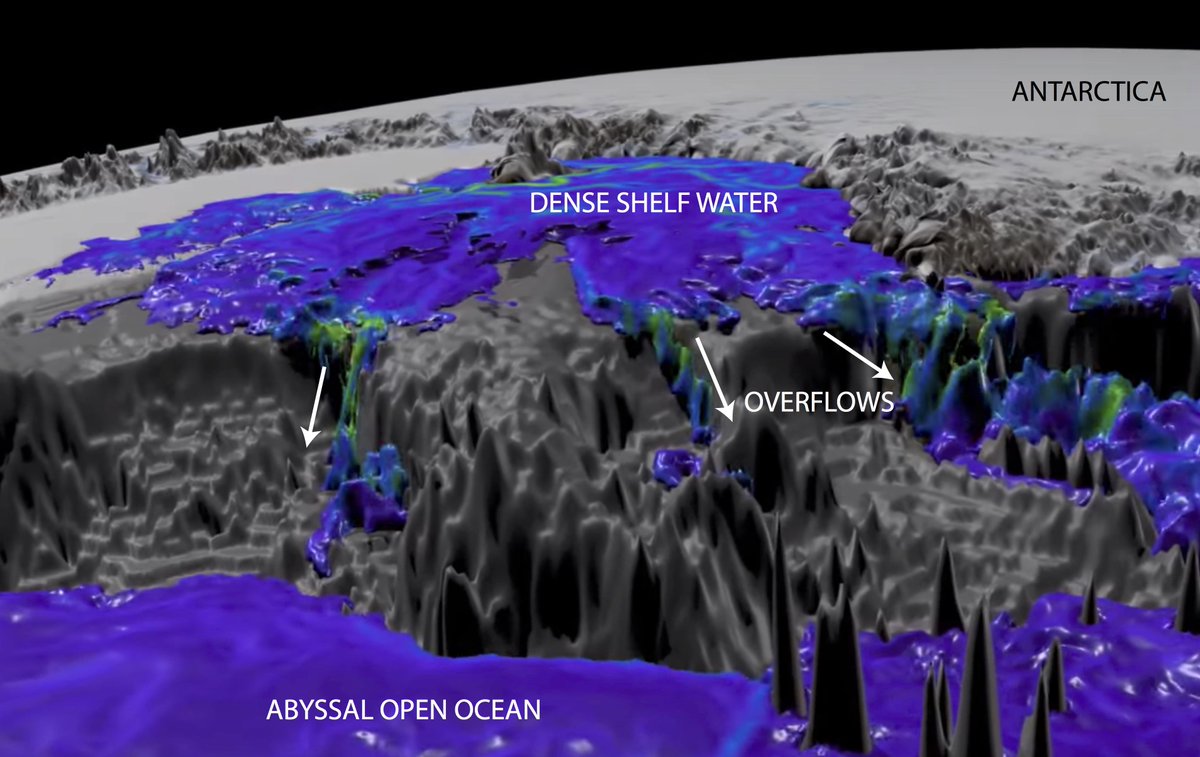
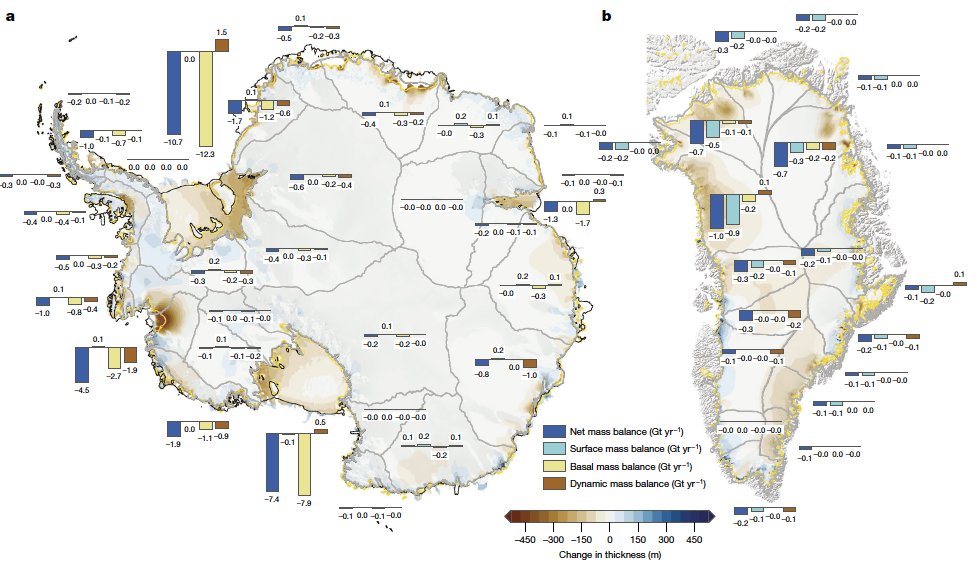
But these models are so computationally expensive we still required a year+ to run the simulations on @NCInews We focus on the forced ocean response, by incorporating CMIP6 projections of atmospheric change, and Antarctic & Greenland meltwater projections from @nick_golledge 🙏
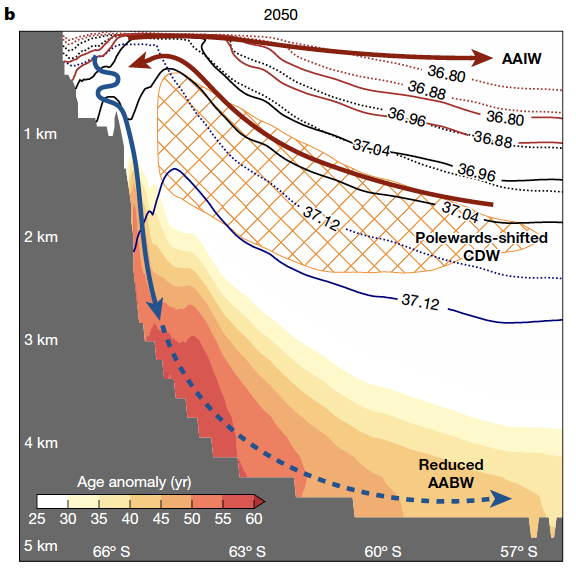
In our simulations we find that when we include upcoming meltwater changes around Antarctica, the abyssal overturning cell declines by more than 40% by 2050.
This is driven by a reduction in the density of surface water around the Antarctic margin, which in turn sees greater intrusion of warm Circumpolar Deep Water onto the shelf.
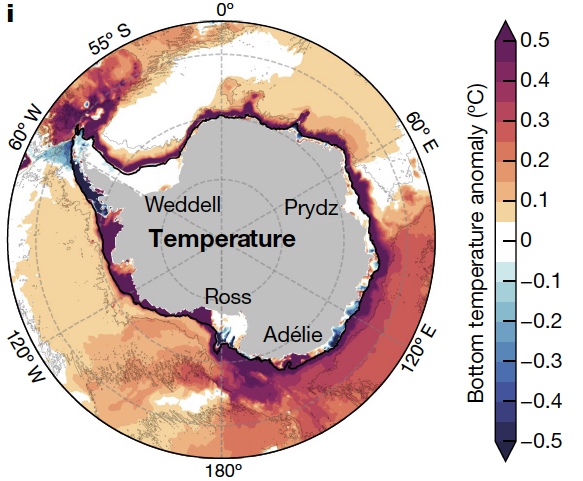
The resulting subsurface warming in the Amundsen - Bellingshausen Seas is particularly concerning. This would lead to an amplifying feedback with further ice shelf melt and sea-level rise, in a region that we know from paleo records is vulnerable to ice sheet collapse.
This also leads to a distinctive pattern of warming of the abyssal ocean and reduced upwelling of well-ventilated nutrient-rich bottom water.
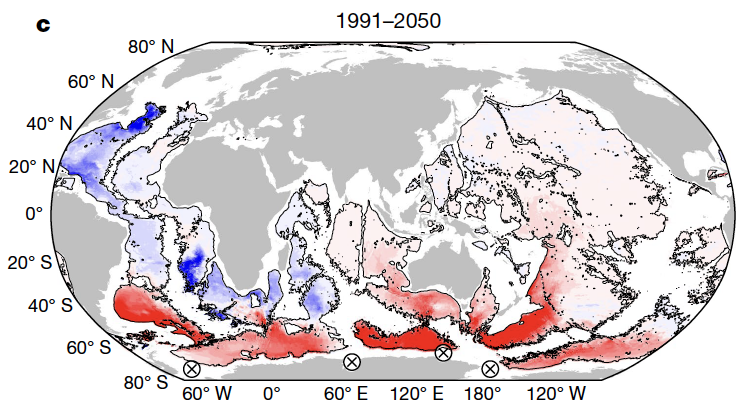
This pattern of bottom water warming is already apparent in observations of change in the ocean's abyssal layers, as estimated by @SarahPurkey and @climate_haiku , although OBS are outpacing our model projections. So we are likely already 'mid slowdown' today.
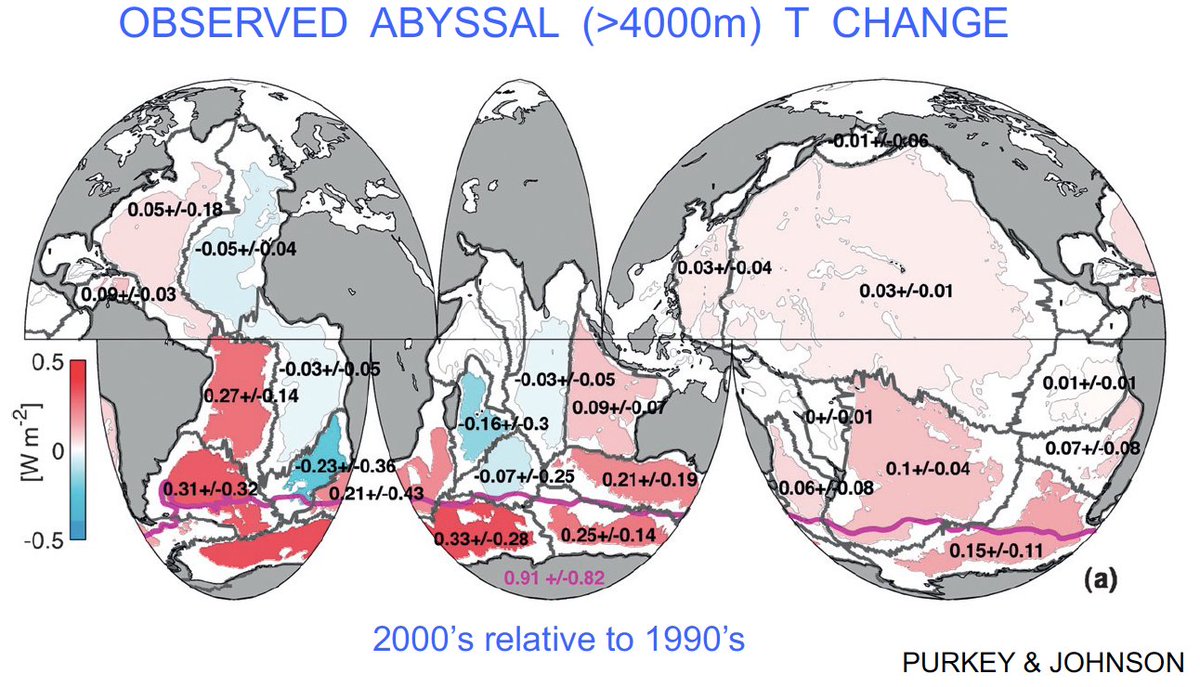
One of the big concerns is the deep warming that results at the West Antarctic margin, which threatens further ice melt, but we do not include ice-shelf feedbacks. That is next, needing a coordinated model development effort across @AntarcticSciAus @ACCESS_NRI +our int'l partners
Another concern is that as the Antarctic overturning slows, nutrient-rich water is left to accumulate on the seafloor, instead of being returned to the surface to feed marine ecosystems. nature.com/articles/s4155…
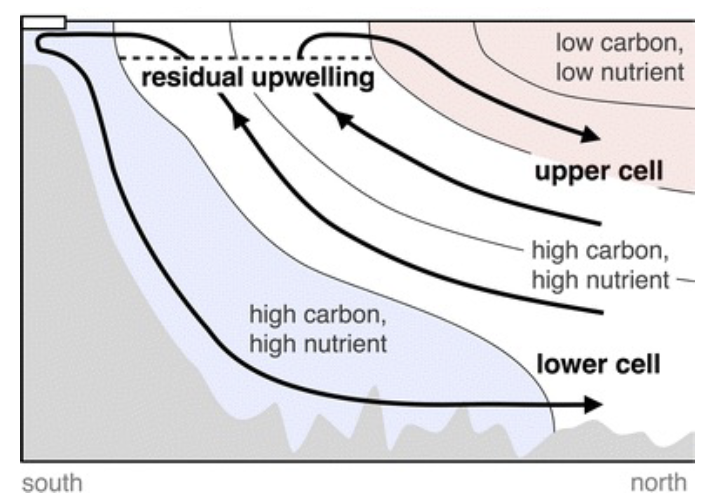
A reduction in the ocean uptake of carbon dioxide has also been documented in this same study. Another amplifying feedback. nature.com/articles/s4155…
Final important point: our projections were run under a 'business as usual' scenario. Deep and urgent emissions reductions will give us a chance of avoiding an ocean overturning collapse. But the time is running out fast. And 2050 is just 26 years, 9 months and 2 days away.
Work undertaken with a wonderful group of collaborators! Including @_Qian_Li_ who spent too many late nights cranking through simulations and analyses, @hogg_andy @dr_akmorrison and the Twitter-less but wonderful Steve Rintoul
• • •
Missing some Tweet in this thread? You can try to
force a refresh