The entire Zoomer outlook on life boils down to not taking anything seriously.
To be serious is to be 'cringe', to be in love is to be a 'simp', and to be ambitious is to be a 'try-hard'.
THREAD 🧵
To be serious is to be 'cringe', to be in love is to be a 'simp', and to be ambitious is to be a 'try-hard'.
THREAD 🧵
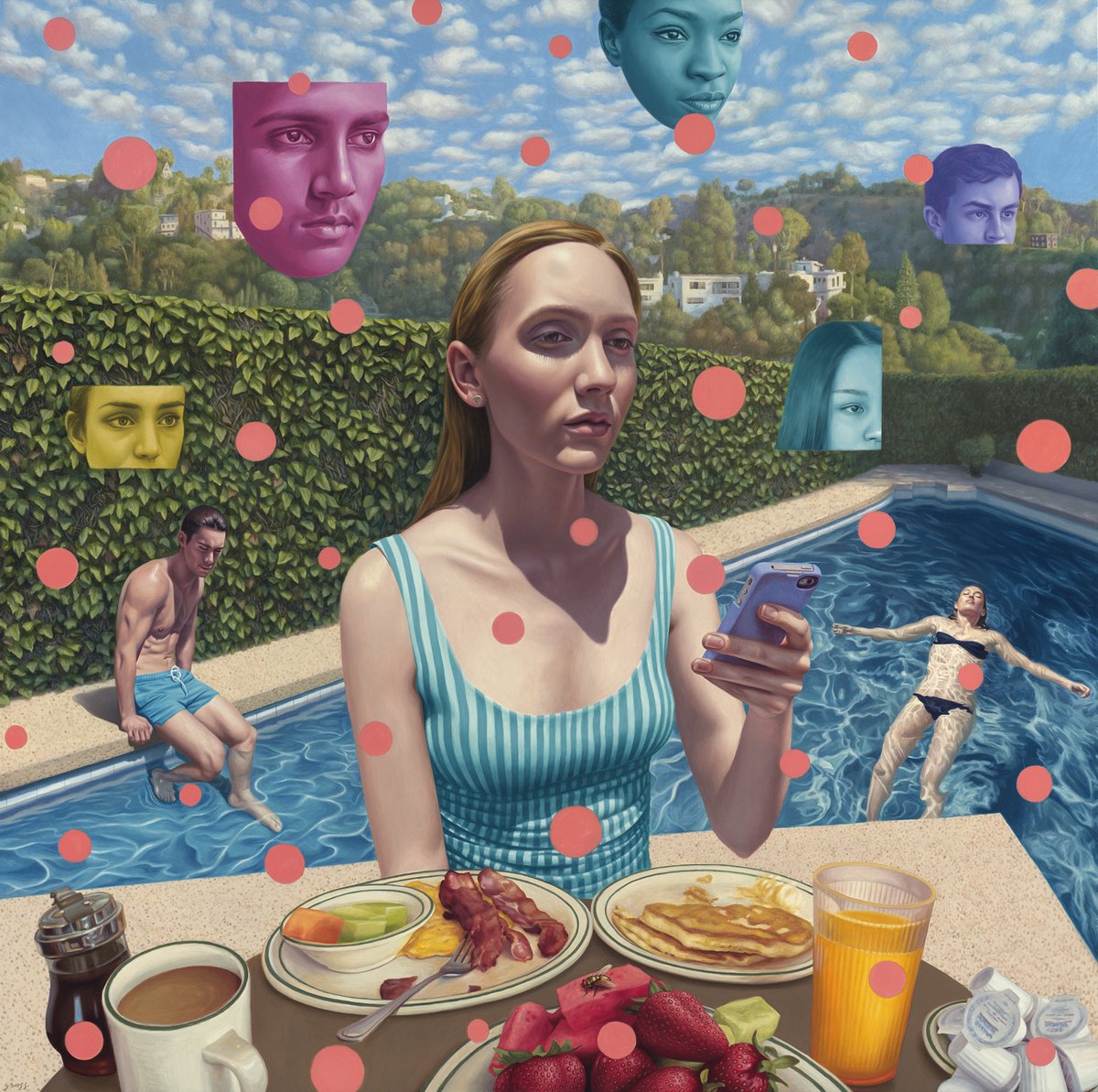
In order to come across as cool, a zoomer must adopt a live-and-let-live attitude and remain blasé at all times.
The only time anything can be taken seriously is when a black man is killed by a cop or when a zoomer loses a 'human right'.
Otherwise, nothing else matters.
The only time anything can be taken seriously is when a black man is killed by a cop or when a zoomer loses a 'human right'.
Otherwise, nothing else matters.


As Lisa Wade writes:
“To be chill, NYU alum Alana Massey explains, is to have 'a laid-back attitude, an absence of neurosis,' and no discernible passion about anything or anyone. Whatever you do, she says about the aftermath of a hookup, “Do not make anything a thing.”
“To be chill, NYU alum Alana Massey explains, is to have 'a laid-back attitude, an absence of neurosis,' and no discernible passion about anything or anyone. Whatever you do, she says about the aftermath of a hookup, “Do not make anything a thing.”

In @lisawade's book, American Hookup, she shows that the ability to attract partners in the hookup scene was mostly related to players’ having the right affective dispositions.
Zoomers must not care about having relationships IN ORDER to find a partner now.
Zoomers must not care about having relationships IN ORDER to find a partner now.

If a girl wants a committed relationship, she is 'clingy' or 'desperate'.
If a guy wants a traditional wife and children, he is an 'incel' or a 'simp'.
In other words, to take relationships seriously is to be 'low status'
Girl bosses and Casanovas get all the spoils.
If a guy wants a traditional wife and children, he is an 'incel' or a 'simp'.
In other words, to take relationships seriously is to be 'low status'
Girl bosses and Casanovas get all the spoils.


Today, all women must be strong, independent, and in control of their emotions and feelings
This is exhausting because for most woman feelings can't be put on a leash.
Hence why so many are experiencing the desire to let loose, to 'go dark'.
This is exhausting because for most woman feelings can't be put on a leash.
Hence why so many are experiencing the desire to let loose, to 'go dark'.
https://twitter.com/EdenicJesus/status/1639048752534020096?s=20
Requesting promises and commitment from another person is conceived as "exerting pressure".
The goal with dating, therefore, is to put up a facade of unseriousness.
One must hide behind multiple layers of irony and speak indirectly about all things.
The goal with dating, therefore, is to put up a facade of unseriousness.
One must hide behind multiple layers of irony and speak indirectly about all things.

Since the zoomer can't express his true self, nor his emotions, he must remain conscious of himself at all times, like a larp.
He is compelled to constantly question himself in order to root out any thoughts and feelings that other's might not like.
He is compelled to constantly question himself in order to root out any thoughts and feelings that other's might not like.
https://twitter.com/Heliotrophy/status/1485154641121886215?s=20
Zoomers aren't nihilists in the sense that they "believe in nothing".
Rather, they believe that "nothing matters" besides pursuing pleasure and avoiding pain.
When it comes to relationships, they hedge their emotional bets and choose safety over passion
Rather, they believe that "nothing matters" besides pursuing pleasure and avoiding pain.
When it comes to relationships, they hedge their emotional bets and choose safety over passion
https://twitter.com/NovemXI/status/1635308445476995073?s=20
In order to believe life is meaningful, we must spend our time doing something that's worth mentioning.
The problem is that zoomers aren't doing anything worth mentioning; they are dating less, spending less time with friends, taking no risks, etc.
The problem is that zoomers aren't doing anything worth mentioning; they are dating less, spending less time with friends, taking no risks, etc.
https://twitter.com/SteveStuWill/status/1639178132036149248?s=20
As @EsmeLKPartridge writes in her article on Goblin-mode, there is a "deeper ideology lurking in the minds of younger millennials & Gen Z: the rejection of idealism in all its forms."
The greatest sin is to set high standards for oneself, to passionately strive toward greatness.
The greatest sin is to set high standards for oneself, to passionately strive toward greatness.

I remember in high school anytime I would say something deep & from the heart, other students would often laugh at me or give me the infamous 'fluoride stare'.
No expression encapsulates the inner world of the zoomer more than that lifeless, contemptuous gaze.
No expression encapsulates the inner world of the zoomer more than that lifeless, contemptuous gaze.


Anytime somebody expresses genuine emotion over social media, zoomers are there at the ready to mock and make fun of them.
One need only go through the comments of this Jordon Peterson clip to recognize how contempuous zoomer's are of authentic emotion.
One need only go through the comments of this Jordon Peterson clip to recognize how contempuous zoomer's are of authentic emotion.
https://twitter.com/docnoir_/status/1638400398414303232?s=20
Deep down zoomers want to express passionate emotions like sorrow and love, but since it is considered cringe and weird to be human, they must repress everything.
If they don't repress these powerful emotions, they might never find recognition from others or a romantic partner.
If they don't repress these powerful emotions, they might never find recognition from others or a romantic partner.

Gen'z higher likelihood to engage in self-harm points to a crisis of gratification in modern society.
They are hiding all these powerful emotions, and can't express them, lest they be ostracized.
So they must cry out for help behind closed doors by hurting themselves.
They are hiding all these powerful emotions, and can't express them, lest they be ostracized.
So they must cry out for help behind closed doors by hurting themselves.

To escape the torturous emptiness that so many zoomers find themselves in today, one reaches either for the razorblade or the smartphone.
Either they gobble down SSRIs, self-harm, or vainly attempt to produce a self by taking endless selfies and videos.
Either they gobble down SSRIs, self-harm, or vainly attempt to produce a self by taking endless selfies and videos.


The Zoomer's obsession with 'mental health' and with 'normalizing' certain behaviors is a byproduct of their unstable self-image.
They don't know how to make sense of their emotions, so they outsource the task of understanding themselves to a therapist or to social media.
They don't know how to make sense of their emotions, so they outsource the task of understanding themselves to a therapist or to social media.

Gen Z is the generation of nihilism.
Zoomer's are incapable of doing something rather than nothing.
They are like Zombies, too dead to live and too alive to die.
Don't abide by their standards.
Pursue greatness, live passionately, and do so unapologetically.
END
Zoomer's are incapable of doing something rather than nothing.
They are like Zombies, too dead to live and too alive to die.
Don't abide by their standards.
Pursue greatness, live passionately, and do so unapologetically.
END

• • •
Missing some Tweet in this thread? You can try to
force a refresh