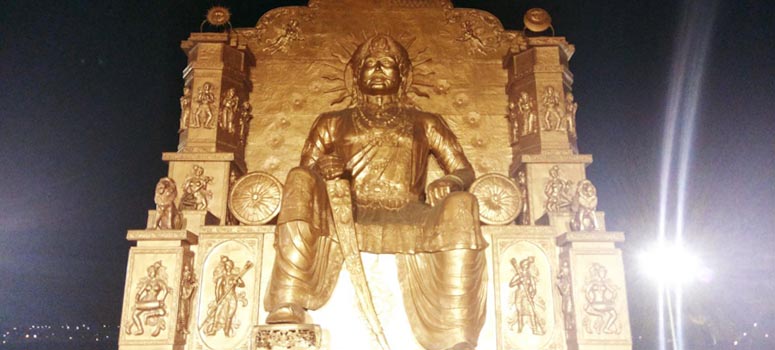
Chakravarti Samrat King Vikramditya ( 77 BCE - 15 CE )
(Not Chandragupta Vikramditya) was the first Chakravarti emperor of India, the empire spread to Arabia, Europe, Rome.
Jayatu Sanatan 🚩🙏🏼
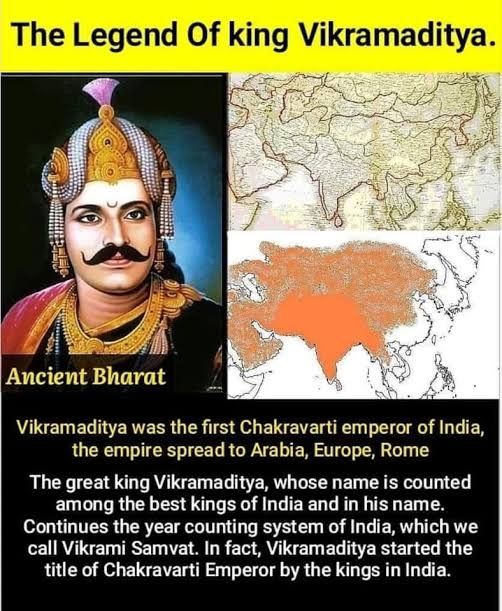
The great king Vikramaditya, whose name is counted among the best kings of India, and in his name Continues the year counting system of India, which we call 'Vikrami Samvat'.
In fact, Vikramaditya started the title of Chakravarti Emperor by the kings in India.
Vikramaditya's empire stretched from present-day India to Africa and Rome.
Vikramaditya was the first king to hoist victory over the entire Arab world of the present day.
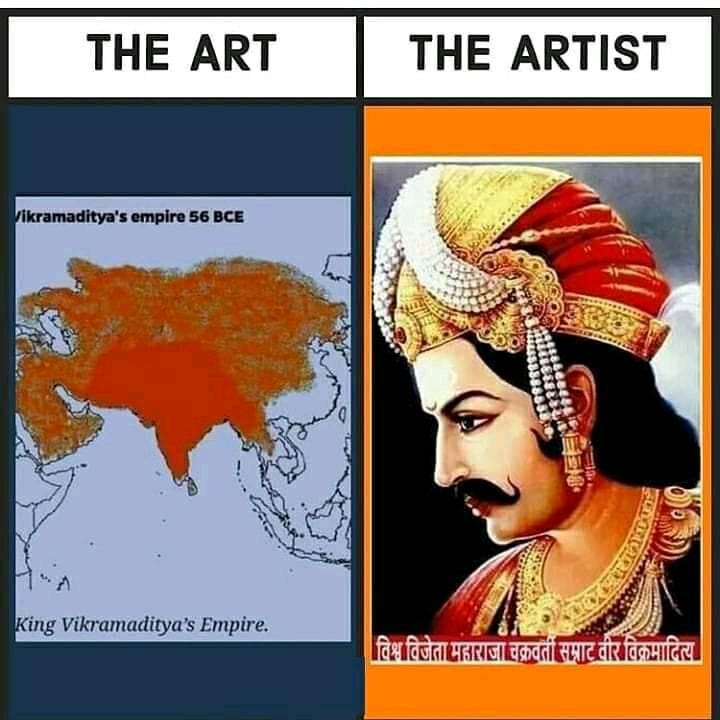
King Vikramaditya comes from the few great kings of this era who became the emperors of the "Chakravarti" after performing the Ashwamedha Yagya.
"Chakravarti Samrat" means a king who rules in all four directions and no one dares to challenge him.
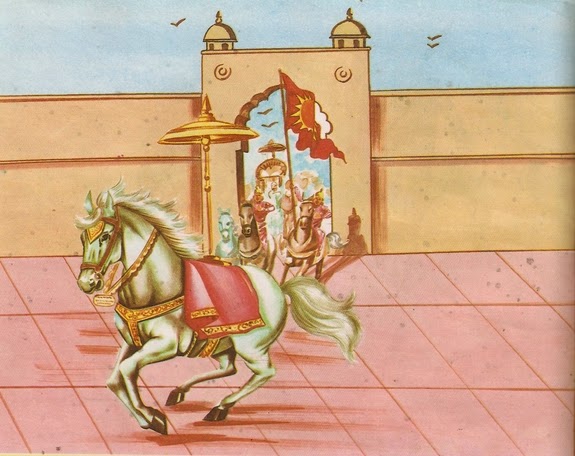
The one who rules over his subjects ethically and benevolently and is a conqueror of the entire world. Literal meaning of the word Samrat is "whose wheel are moving" in that sense "whose chariot is rolling everywhere without obstruction".
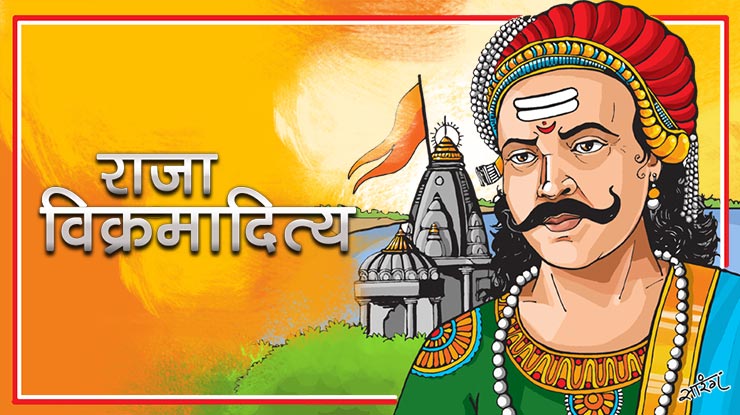
Not only did Emperor Vikramaditva trample the Arabs and Europe,but he also defeated Rome's King Julius Caesar in battle King Vikramaditya made Ujjain his capital
At the age of 20,Vikramaditya had repulsed the forces not only from the borders of India but also from all over Asia
It may be known that at that time India's borders extended to present-day Arab Europe and East Asia.
After liberating India and Asia, Vikramaditya did not sit on the throne himself but made his elder brother Bhrithari as king,
but the deception of his wife made the brother-in-law a monk and after that, the sons of Bhirthari also refused to sit on the throne.
Then King Vikramaditya had to sit on the throne. Raja Vikram's coronation took place on the day of Diwali.
He conquered Shakas and founded "the world's first calendar Vikram Samvat".
The Akbar has tried to copied concept of Nav-Ratrna (9-Gems) from King Vikramditya, as the Nav-Ratna concept of Samrat Vikramaditya not Akbar.
Jayatu Sanatan..
• • •
Missing some Tweet in this thread? You can try to
force a refresh

"India didn’t just invent zero…
it built the LOGIC behind computing".
🧵#Thread A deep dive into Chandas Shastra.👇
1. Long before:
Computers
AI
Data science
There existed a Sanskrit text…
Chandas Shastra (Pingala, ~200 BCE) 2. On the surface?
It’s about poetic meters.
In reality?
A system of binary logic, combinatorics & algorithms
Hidden in Sanskrit.
3. Core Idea
Vedic poetry uses:
Laghu (short syllable)
Guru (long syllable)
Pingala encoded them like:
0 and 1
Yes… binary before binary. 4. Prastarah = Binary Expansion
This method lists all possible combinations of laghu-guru patterns.
Example:
For 3 syllables →
000, 001, 010, 011, 100, 101, 110, 111
Exactly like modern binary counting.
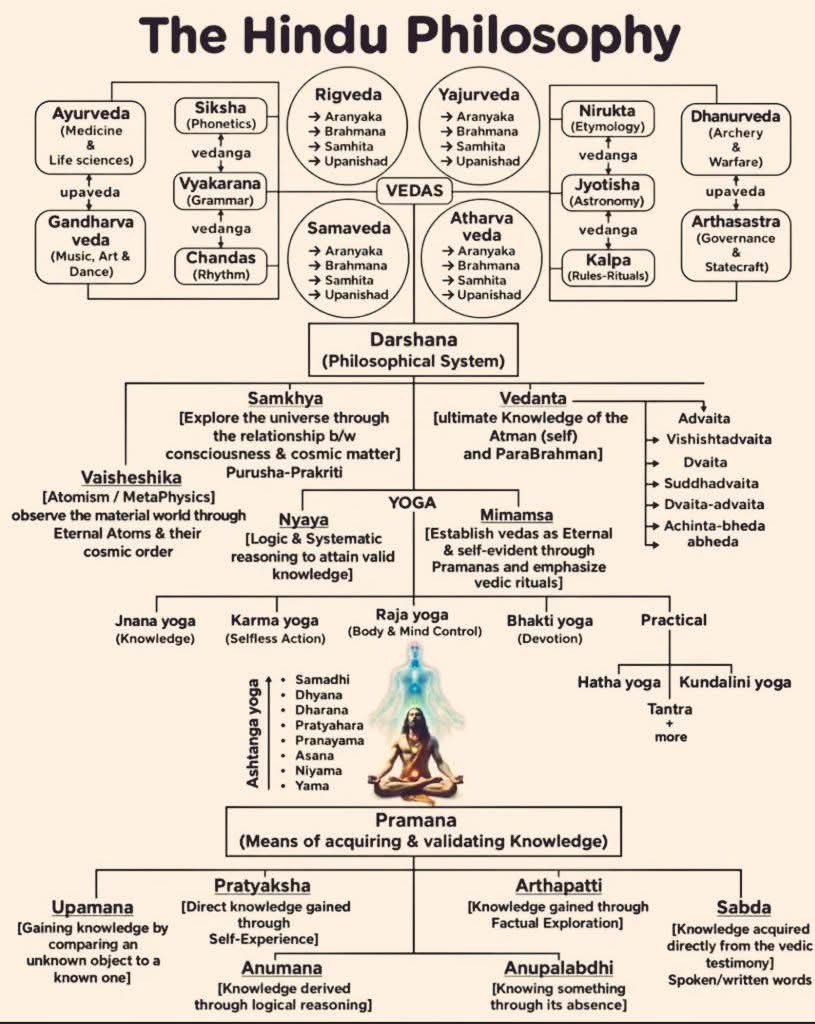
Hindu Philosophy isn’t just belief… it’s a complete knowledge system.
From logic to meditation - everything was already mapped.
🧵#Thread Let’s break it down 👇
1. The Foundation = Vedas
• Rigveda
• Yajurveda
• Samaveda
• Atharvaveda
Not just religious texts-They include science, rituals, music & deep philosophy.
2. Supporting Knowledge (Vedangas)
To understand the Vedas, ancient scholars built tools:
• Grammar (Vyakarana)
• Phonetics (Siksha)
• Astronomy (Jyotisha)
• Rituals (Kalpa)
A complete academic framework.
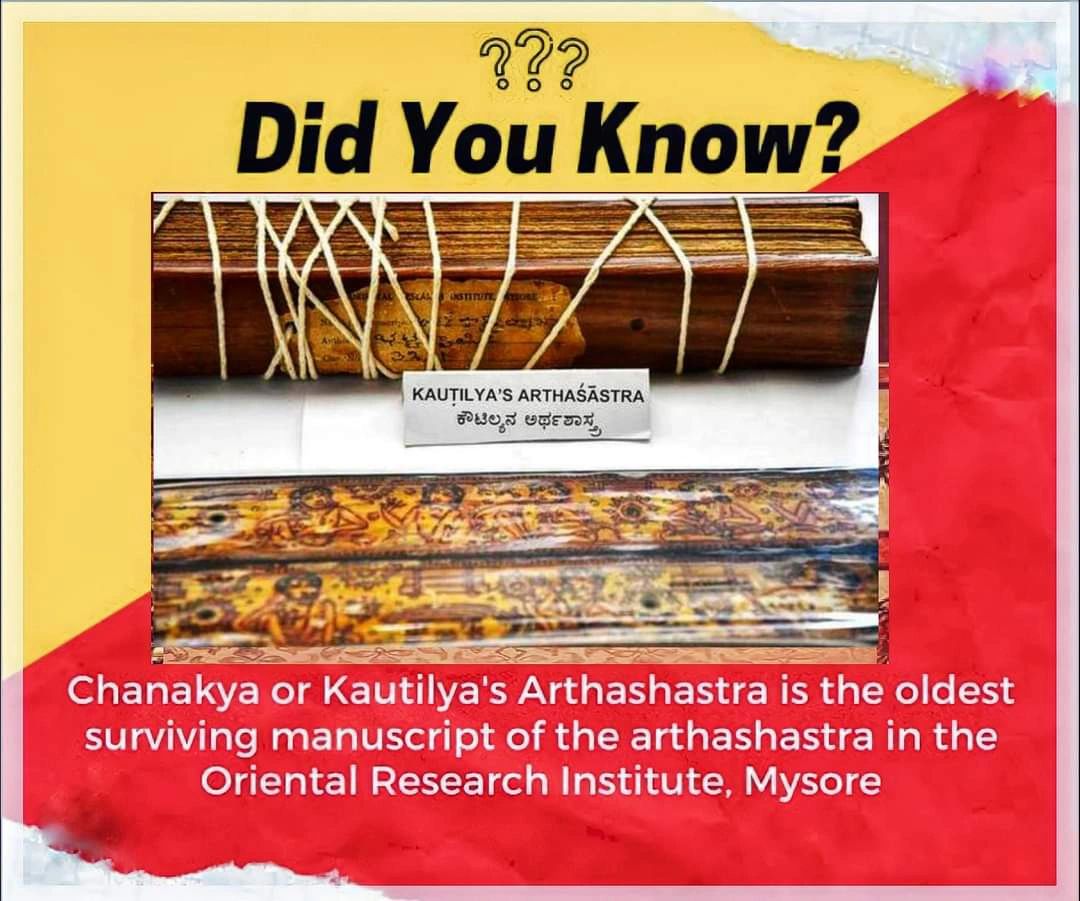
🧵 #Thread: The Ancient Book That Reveals India’s 2300-Year-Old Political Intelligence System.
Most people think political science began in Europe.
But India had already written one of the world’s most advanced statecraft manuals over 2,300 years ago.
It’s called Arthashastra.
Let’s uncover its story 👇
1. The Mastermind Behind It
The book was written by Chanakya, also known as Kautilya.
He was the brilliant strategist who mentored Chandragupta Maurya and helped build the Mauryan Empire.
Many historians consider him the Indian equivalent of Machiavelli- but he lived nearly 1800 years earlier.
2. What Exactly Is the Arthashastra?
It is not just a political book.
It is a complete guide to running a nation, covering:
• Politics
• Economics
• Military strategy
• Espionage
• Taxation
• Diplomacy
• Law & governance
In simple words:
It is an ancient manual on how to build and protect a powerful state.
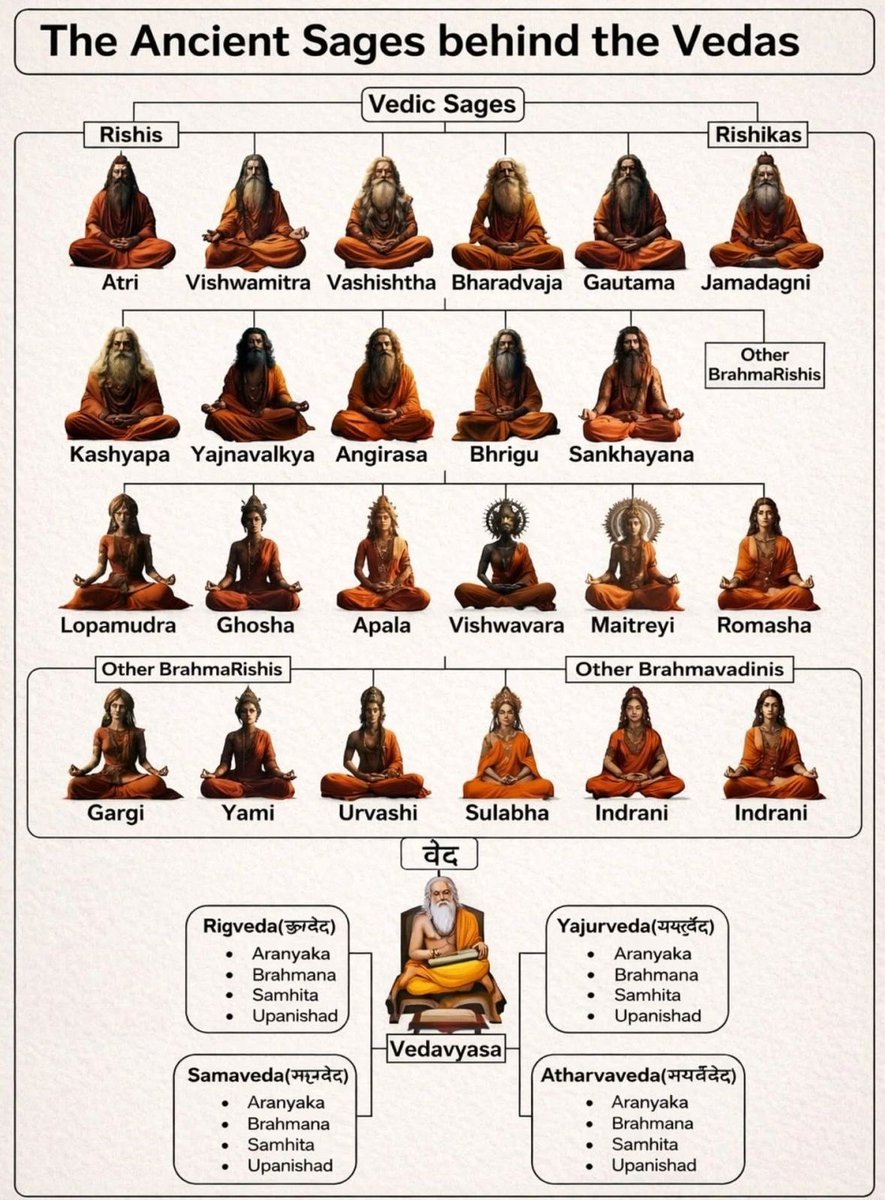
🧵 #Thread: The Ancient Sages Behind the Vedas- The Minds Who Built India’s Oldest Knowledge System.
Most people know about the Vedas.
But very few know about the great sages who revealed them.
These rishis and brahmavadinis shaped the spiritual and intellectual foundation of ancient India.
Let’s explore them.👇
1. The Vedas: The Oldest Knowledge Tradition
The Vedas are among the oldest surviving scriptures in human civilization, composed thousands of years ago.
They are divided into four main Vedas:
• Rigveda
• Yajurveda
• Samaveda
• Atharvaveda
Each contains four layers of knowledge:
• Samhita – hymns & mantras
• Brahmana – rituals and explanations
• Aranyaka – philosophical interpretation
• Upanishad – deep spiritual wisdom
2. The Great Vedic Rishis
The Vedic hymns were revealed to powerful sages called Rishis.
Among the most famous were:
• Atri
• Vishwamitra
• Vashishtha
• Bharadvaja
• Gautama
• Jamadagni
These sages were visionaries who experienced divine knowledge through meditation.
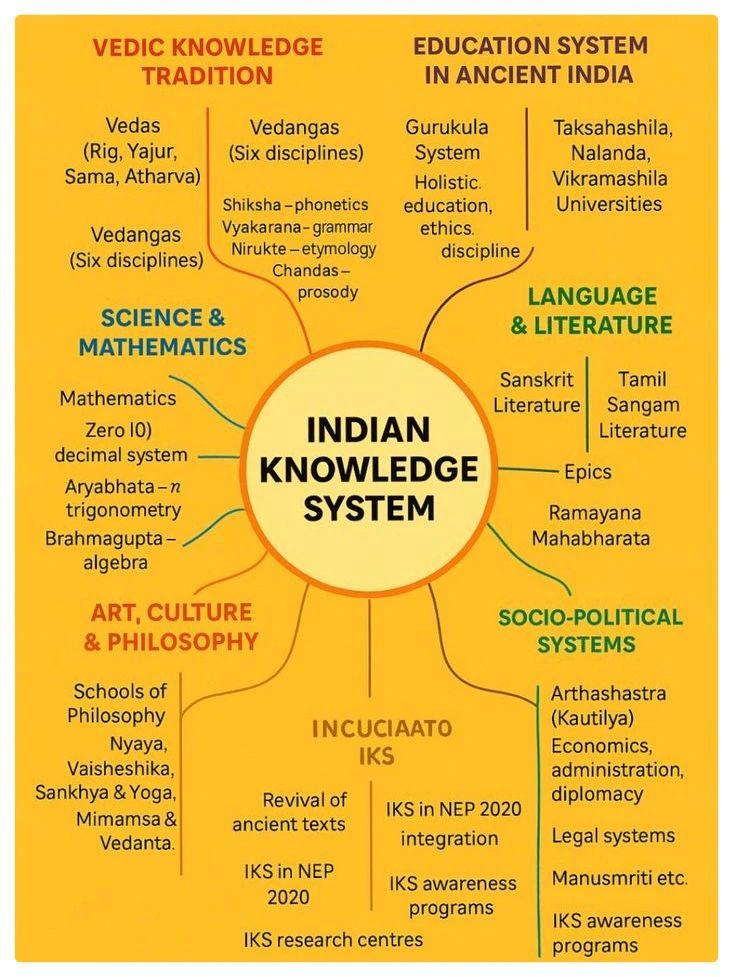
The Indian Knowledge System: The World’s Oldest, Deepest & Most Advanced Civilization Framework .
Most people think ancient India was only about spirituality.
But the truth?
It was a complete ecosystem of science, education, governance, philosophy, and innovation.
🧵#Thread Let’s explore the genius of Bharat.👇
1. Vedas – The Foundation of Knowledge
The Vedas are not just religious texts.
They are the earliest records of human inquiry into nature, consciousness, sound, and existence.
Rig, Yajur, Sama, and Atharva form a knowledge system that explored:
* Cosmology
* Medicine
* Ecology
* Ethics
* Human psychology
They were designed to guide both inner and outer life.
2. Vedangas – The Scientific Tools of Learning
To preserve accuracy, ancient India developed six disciplines:
* Phonetics
* Grammar
* Etymology
* Prosody
* Astronomy
* Ritual science
This ensured knowledge transmission for thousands of years without distortion.
No other civilization built such precision in oral traditions.
#Thread: Be An Unapologetic Sanatani.
Your culture is your identity.
Your roots are your strength.
In a world trying to dilute traditions, standing firm with Dharma is the real rebellion.
Be proud. Be rooted. Be Sanatani.
2. Strengthen your body.
A strong mind lives in a strong body.
Our ancestors practiced discipline, yoga, dhyan not trends, but timeless science.
Build yourself. Dharam needs warriors, not spectators.
3. Wear your identity.
A simple Kalawa, Tilak, Rudraksha…
These aren’t “symbols”, they’re signatures of pride.
Never hide who you are. Sanatan is honour, not decoration.