Read on Twitter
A short thread on Army Medical Corps on its 259th raising day.
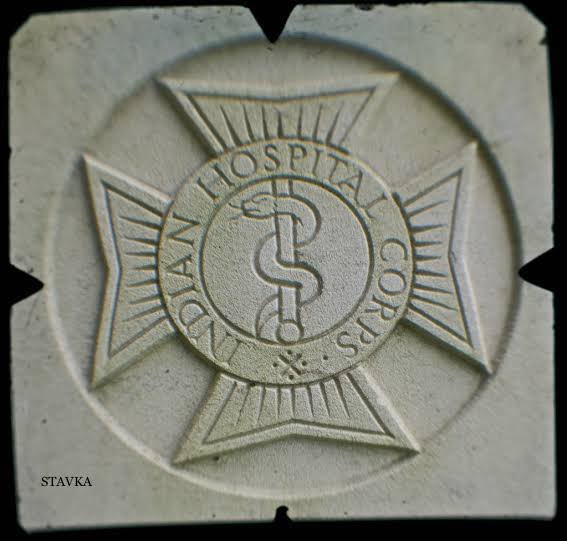
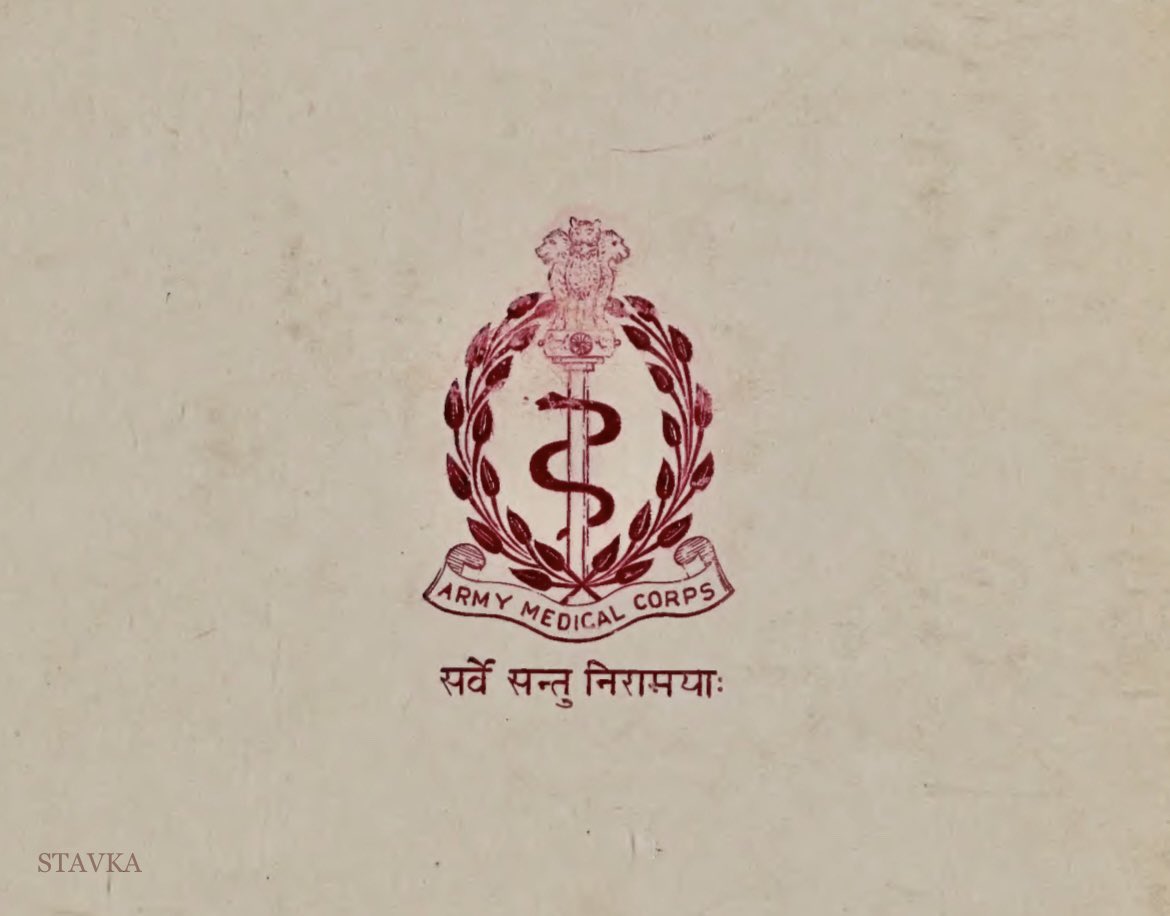
Within a Lotus wreath surmounted by the State Emblem, the rod of Aesculapius with a serpent intertwined the whole surmounting a scroll containing the words “ARMY MEDICAL CORPS”.+
Within a Lotus wreath surmounted by the State Emblem, the rod of Aesculapius with a serpent intertwined the whole surmounting a scroll containing the words “ARMY MEDICAL CORPS”.+

The Bengal, Madras and Bombay Medical Services (IMS) were constituted in 1764 to include all the surgeons employed by the East India Company. For the short periods in 1766 and 1796, the Civil and Military Branches were organised into separate services, but on each occasion+
were speedily reunited. The presidency establishments were amalgamated as the Indian Medical Services on 6th March 1896.+

The Indian Army Medical Corps was formed on 3 April 1943 by the amalgamation of the IMS; IMD; and IHC in accordance with AI 114 of 1943. As from 26 January 1950, the Prefix “Indian’’ was discontinued, vide AO 6/S/50 and the Corps redesignated ‘ARMY MEDICAL CORPS”.

“I do not seek kingdom nor do I want heaven, not even rebirth!
I only seek to be bear the strength to assuage the pain of suffering creatures.
May all sentient beings be at peace,
may no one suffer from illness.”+
I only seek to be bear the strength to assuage the pain of suffering creatures.
May all sentient beings be at peace,
may no one suffer from illness.”+

Every successful Commander seemed to have paid great attention to the medical care of his soldiers. He appreciated that his success depended on the fitness of his men and their morale. He tried to ensure that the medical care and the assurance in the minds of his men that they+
would receive immediate and adequate attention if sick or wounded was vital to his success. This basic principle is as old as human history. Doctors are reported to have marched with the forces of Pandavas (C 1400 B.C. Udvogaparva 151).+
Surgeons used to tend the wounds of gallant Knights (Bhismaparva 120, 53). Bhisma in Santiparva recommends that ‘‘a King must have in a fort four kinds of physicians including one who had specialised in the extraction of arrow-heads”’.+
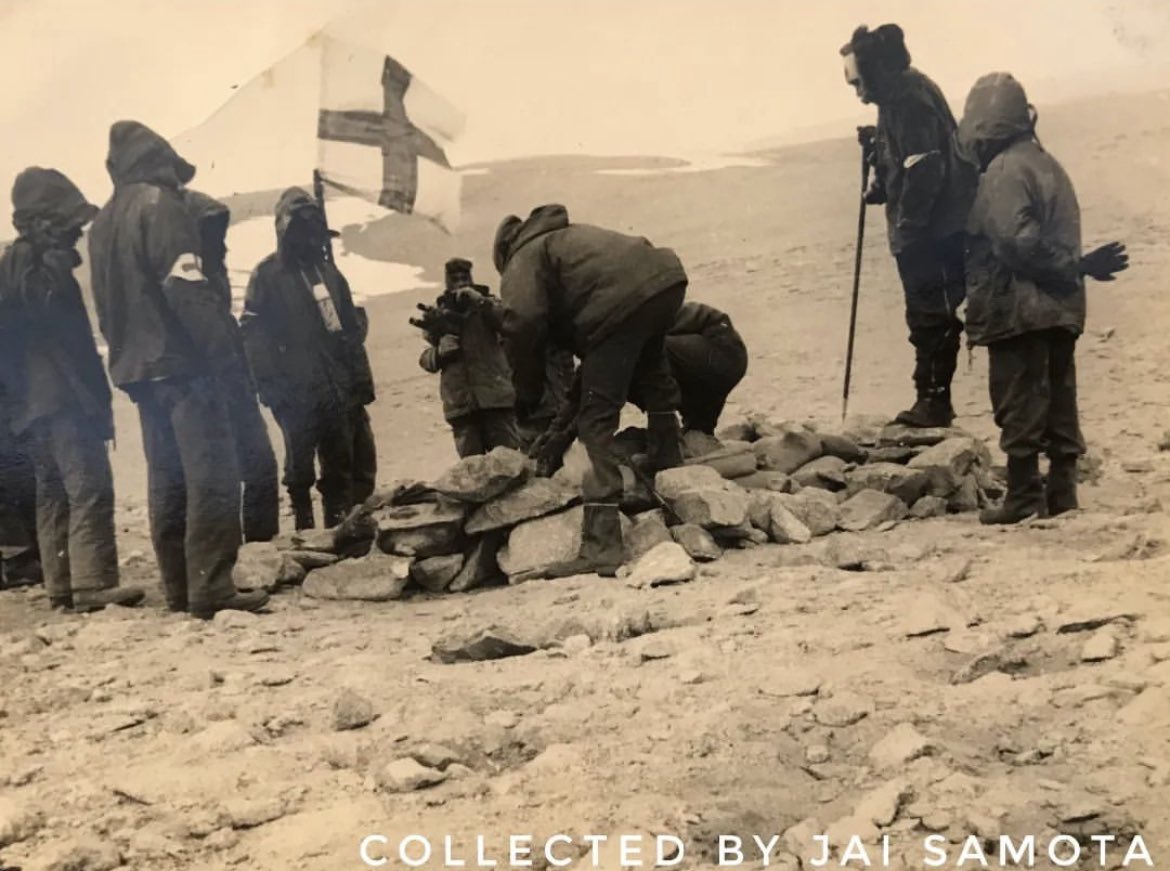
Doctors seemed to have been given an honoured place and a distinctive flag as far back as 800 B.C. Susruta (C. 800 B.C.) observes that the doctor’s camp in the field should be next to the King’s camp and he should fly a flag, so that all+
those afflicted with poison, wounds and diseases can readily come to him (Sutrasthanum). Kautilya (C. 300 B. C.) in Arthasatra urges that physicians with surgical instruments, remedial oils and cloth in their hands and women (presumably nurses) with prepared food and beverages+
should stand behind uttering encouraging words to fighting men.”
Military medicine is a part of the historical development of human society and is conditioned by the development of medical and warfare concepts of the time.+
Military medicine is a part of the historical development of human society and is conditioned by the development of medical and warfare concepts of the time.+
Army Medical Corps today is inevitably a product of such a development. Its simple beginning in its different components (Indian Medical Service, Indian Medical Department and Indian Hospital Corps) and their work when woven together reveals an interesting story of remarkable+

achievements.
For appreciating fully the development of Army Medical Corps, the organisation of Medical Service in India which from the middle of 18th century grew steadily in size and complexity may be briefly recalled.+
For appreciating fully the development of Army Medical Corps, the organisation of Medical Service in India which from the middle of 18th century grew steadily in size and complexity may be briefly recalled.+

INDIAN HOSPITAL CORPS
Little is known about the medical organisation that served the Indian sepoys, even in the later part of the nineteenth century. In the days of East India Company, each unit had its own little dispensary with few drugs and dressings.+
Little is known about the medical organisation that served the Indian sepoys, even in the later part of the nineteenth century. In the days of East India Company, each unit had its own little dispensary with few drugs and dressings.+
Gradually these dispensaries developed into tiny regimental hospitals. These ‘Line Hospitals’ were non-dieted and ill equipped and whatever was needed came as a gift from the quartermaster as they were not authorised any bedding or linen.+
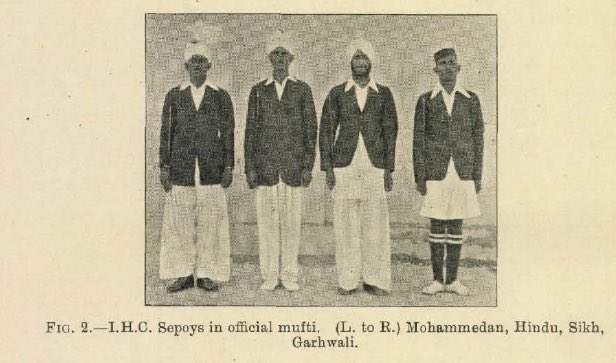
In 1881, station hospitals for British troops were started by the Bengal Army. The original staff was mainly recruited from the personnel of the disbanded regimental Hospitals. Thus Army Hospital Native Corps (A.H.N.C.) was formed consisting of compounders, dressers, barbers,+
ward and shop servants, cooks, bhistees and sweepers. They were classified as hospital attendants with pay varing from Rs 4 to Rs 9 per month according to calling and the grade. Rations were free only when they were employed on field service.+
In 1895 the Presidency Armies were abolished and the same system of administration was enforced for whole of India. In 1898, A.H.N.C. was reorganised as Army Hospital Corps (A.H.C.) with ten companies, each under a Divisional Principal Medical Officer.+



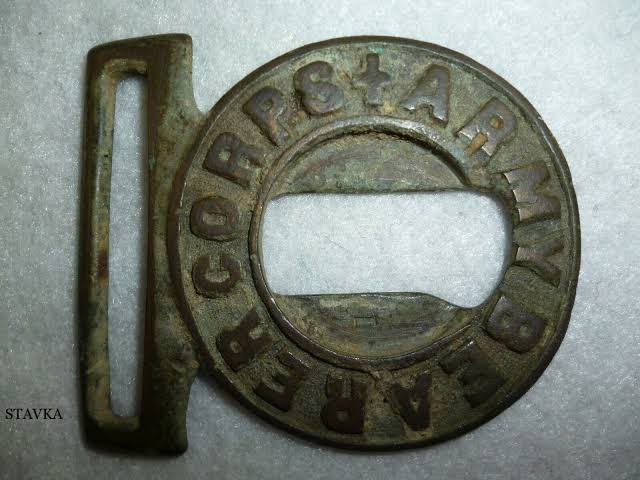
The Commissariat (Supply and Transport Corps) recruited Dooly bearers to carry casualties. The Frontier Force Regiments were authorised Kahars locally engaged through the regimental bania. In 1901 the Army Bearer Corps (A.B.C.) with 32 companies was formed and the Dooly bearers+

and Kahars were enlisted in it. Each company had sirdars, mates and bearers under the command of a assistant surgeon. In October, 1903 the A.B.C. was reorganised to form ten Divisional Companies including 15 sirdars, 9 bearer clerks, 45 mates and 1431 bearers.+
Two pay NCOs (a Havildar and Naik) were provided for each company from a local regiment. The duties of these divisional companies in war were to carry stretchers & doolies; in peace they were employed on general duties in hospital and divisional headquarters.+
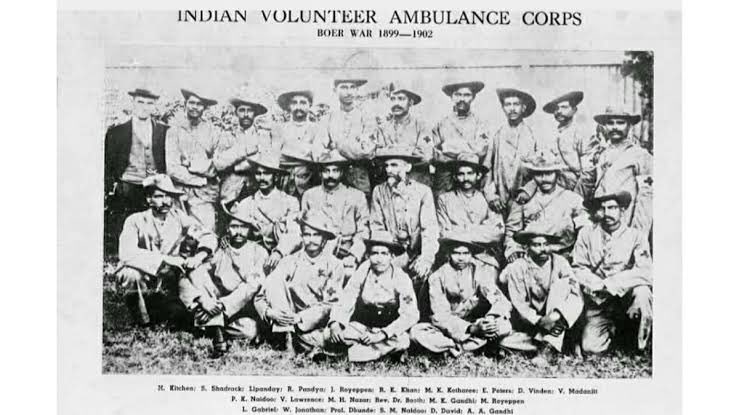
(Find M.K. Gandhi)
(Find M.K. Gandhi)
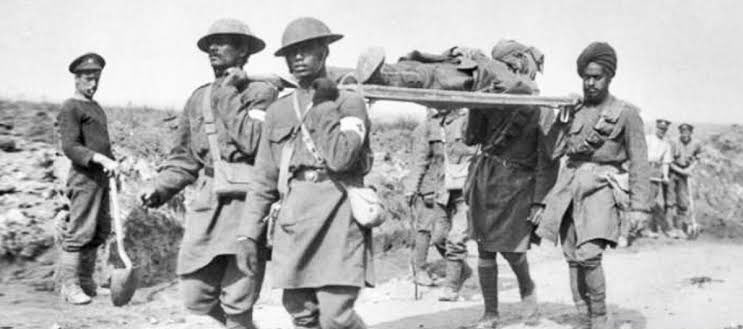
At the outbreak of World War I, the rank of Havildar, Lance Havildar, Naik, Lance Naik and Bearer were introduced. Their pay was also increased to Rs 18, 14, 12, 11 and 9 per month respectively. They were entitled to good conduct pay, followers scale of clothing+
and after 1917 free rations at the followers scale. In October 1918 station hospitals for Indian Troops were authorised. The ward orderlies and followers were then locally employed by medical authorities. Even then there was no provision for clerks or store-keepers+
for the Indian hospitals. The organisation for providing personnel for Indian and British hospitals was complex. Both were provided with bearers by the A.B C. and the followers for the British Hospital by A.H.C., and the Hospital storekeepers and their assistants+
by the Supply and Transport Corps. Hospital writers, clerks, store keepers were all civilians. This multiplicity in the agencies of recruitment was not conducive to efficiency.+
On 1 June 1920, the Army Hospital Corps, the Army Bearer Corps and the subordinate personnel of the Indian Station Hospital were combined and Indian Hospital Corps (I.H.C.) was formed consisting of 10 Divisional companies corresponding to military divisions in India and Burma+
one each at Peshawar, Rawalpindi, Lahore, Quetta, Mhow, Poona, Meerut, Lucknow, Secunderabad and Rangoon. In May 1929 IHC was reorganised in five companies on command basis located at Rawalpindi, Lucknow, Secunderabad (later Poona), Quetta and Rangoon.+
The IHC reserve of 1400 men was formed in 1925. The Corps included clerical, store, Nursing, Ambulance and General Sections. To centralise records IHC Depot was formed at Kirkee on 3 September, 1935. On 20 January 1937 IHC Depot Poona and Kirkee were formed with Hq Records and+
accounts Section, Training Wing and recruits and reinforcement and Training Companies at Rawalpindi and Lucknow were formed. On 1 April 1943 the strength of IHC was 86,268 (an increase of 74,202 since its formation in 1920).+
INDIAN MEDICAL DEPARTMENT
Early in the nineteenth century a scheme for training boys from the upper and lower orphan schools and from the free schools as compounders and dressers and ultimately as sub-assistant surgeon was started in Bengal.+
Early in the nineteenth century a scheme for training boys from the upper and lower orphan schools and from the free schools as compounders and dressers and ultimately as sub-assistant surgeon was started in Bengal.+
Similar schemes were organised in Madras and Bombay. In 1827 there were two departments apothecaries and dressers. In 1827, dressers were designated as hospital assistants. On 12 March, 1894 the title apothecary was changed to assistant surgeon.+
This branch consisted of Europeans and Anglo Indians.
In 1868, Indian hospital assistants were employed. They were originally educated at government expense and were taken from all classes of Indians between the ages of 16-20 years.+
In 1868, Indian hospital assistants were employed. They were originally educated at government expense and were taken from all classes of Indians between the ages of 16-20 years.+
(In 1932 the training at Government expense was discontinued.)
In 1900, the senior hospital assistants were granted Viceroys Commissioned ranks of Subedars and Jemadars. In April 1910, hospital assistants were redesignated as sub-assistant surgeons.+
In 1900, the senior hospital assistants were granted Viceroys Commissioned ranks of Subedars and Jemadars. In April 1910, hospital assistants were redesignated as sub-assistant surgeons.+
INDIAN MEDICAL SERVICE
The Bengal Medical Service was formed on 1 January 1764, The Madras and Bombay Medical Services were constituted in 1767 and 1779 respectively. In 1864, officers of the I.M.S. also received Royal Commission.+
The Bengal Medical Service was formed on 1 January 1764, The Madras and Bombay Medical Services were constituted in 1767 and 1779 respectively. In 1864, officers of the I.M.S. also received Royal Commission.+
In April 1896, the three Presidency medical services were combined into one Indian Medical Service. But it was not till 1906 that officers of the three Presidency cadres were entered in one list according to seniority. The I.M.S. was primarily a military service and its officers+

were responsible for the medical care of the Indian Army. The Members of the service seem to have been eligible for all posts for which any kind of scientific knowledge was required. Medical Officers were regularly posted to appointment of Assay Department & in Botanical Garden+
and frequently went still further outside the ordinary line of their profession among those extra professionally employed, the commission of 1865 on the IMS recorded a post master, a cotton agent, a superintendent of school of arts, a naturalist, a political agent,+
a commissioner, and a conservator of forest. The officers seconded to civil services staffed the whole of the superior civil medical appointment. The service provided medical aid through out the country, the direction of public health and administration of jails.+
Thus inspite of its essentially military nature I.M.S. was in fact predominantly civilian in character. The secondment to the civil service took place after the officers had learnt their military duties & only if there was an excess over the peace time requirements of the Army.+
Officers thus seconded to the civil organisation were liable to recall to military service on the outbreak of war. Military medicine involves no new basic concepts but the rapid development of the organisation and technique, the speed with which the preventive and curative+
measure have to be taken demands flexibility of plans, improvisation, vigilant outlook and urgency not met with in civil life. Thus to the civil they brought experience of organization and administration learnt through rigid discipline and skill to deal with problems+
expeditiously, and on return to the Army varied experience gained in different parts of the country during their civil career.
The service virtually laid the foundation of secular-scientific medicine, public health services and research in the country.+
The service virtually laid the foundation of secular-scientific medicine, public health services and research in the country.+
In the field of research, many of their efforts benefited people far beyond the borders of India. No medical service can possibly claim to have made such outstanding contribution to their country as I.M.S.+
Indian Medical Service was required to be large enough to permit the efficient discharge of all peace time duties and to posses a reserve including the civil to meet small emergencies without dislocation of normal military and civil work.+
An over inflated cadre in military employee was considered not only detrimental to the interest of the service but also a cause of increased expenditure.
It was considered essential to provide terms and conditions of service to attract capable young men.+
It was considered essential to provide terms and conditions of service to attract capable young men.+
The reorganisation of the I.M.S., its civil and military cadres, its Indian and British components and terms of service were frequently discussed, e.g., the Commission of 1879, the Crawford Cunningham Scheme 1881, Lord Morly’s proposals of 1907, Virney Lovet Committee 1919+
Burtcheall Scheme, Lee Commission 1924, Indian Round Table Conference/1931, the Warren Fisher Report 1933 and Oglive Report 1933.+
(Captain Hormusji Manekshaw, father of Field Marshal S.H.F.J. Manekshaw, signed up for the I.M.S. during WWI and served in Mesopotamia and Egypt.)
(Captain Hormusji Manekshaw, father of Field Marshal S.H.F.J. Manekshaw, signed up for the I.M.S. during WWI and served in Mesopotamia and Egypt.)

INDIAN ARMY MEDICAL CORPS
World War II created a difficult situation for Army medical authorities in India. They were ill equipped to meet the requirements of army whose size and rate of expansion had not been clearly envisaged.+
World War II created a difficult situation for Army medical authorities in India. They were ill equipped to meet the requirements of army whose size and rate of expansion had not been clearly envisaged.+
Despite the most unfavourable circumstances a very efficient organisation was built up. It was, however felt that the shortage of doctors and nurses and training of the personnel of I.H.C. may lead to a serious situation.+
In 1943, the Medical Personnel (Army in India) Mission recommended that a homogenous Indian Army Medical Corps should be formed and early in 1943 the Forbes Committee also drew up a comprehensive scheme for the formation of the Corps.+
Finally Government orders to form the Indian Army Medical Corps I.A.M.C. with effect from 3 April, 1943 were issued. Thus the different elements of the medical services (I.M.S., I.M.D., and I.H.C.) were combined in a single Corps+
with its own officers and men and grew rapidly as a well knit and well trained Corps.
After Independence I.A.M.C. was redesignated as Army Medical Corps (A.M.C.). It may be recalled that during two World Wars, despite the shortage of almost everything required for success their+
After Independence I.A.M.C. was redesignated as Army Medical Corps (A.M.C.). It may be recalled that during two World Wars, despite the shortage of almost everything required for success their+
final triumph has been a major factor in the success of Allied arms.
India maintained a relatively large military medical service in India and wherever Indian troops were engaged. During World War I (August 1914 to October 1918) 53,270 hospital beds were provided in India and+
India maintained a relatively large military medical service in India and wherever Indian troops were engaged. During World War I (August 1914 to October 1918) 53,270 hospital beds were provided in India and+
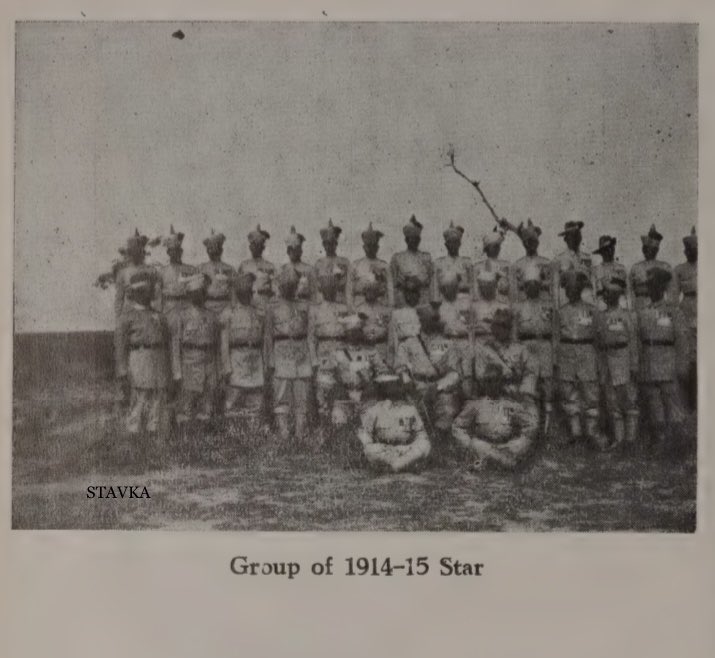
and 34,603 persons served in the medical services including 1,069 I.M.S., 2,142 I.M.D. (1200 nursing sisters) 2,674 I.0. Rs. and 26,179 followers.
Of the 249 field medical units raised, 201 were despatched overseas and served in Aden, Africa, Black sea region, China, Egypt+
Of the 249 field medical units raised, 201 were despatched overseas and served in Aden, Africa, Black sea region, China, Egypt+
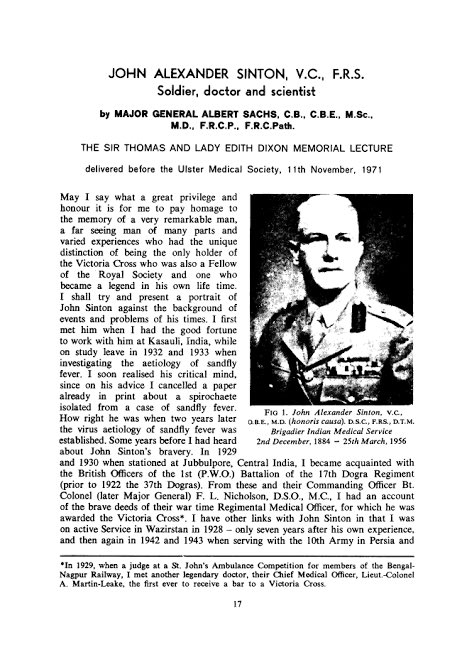
France and Flanders, Gallipoli, Mesopotamia Persia, Palestine and Solonika. An Officer of the I.M.S. Captain John Alexandar Sinton received the award of Victoria Cross.+
The first lady was commissioned in I.M.S. (EC) in April 1942 and ladies have been in the Service since then. History was made on 1 Nov 1958 when 3 ladies were given Permanent Regular Commission for the first time in the Army Medical Corps.+

During World War II, over 1000 field medical units were raised. By the end of 1945 the strength of the I.A.M.C., I.M.N.S., A.N.S. (I) and I.A.D.C. was about 1,74,740 (including 7,513 officers), 654, 1677 and 131 respectively.+
Besides 759 civil medical practitioners were also employed in the Army. To accommodate the casualties 1,72,000 beds were provided in hospitals and convalescent depots. This is a notable figure as the total number of beds in civil hospitals in India at the time was estimated to+
be 75,000 only. Various research teams carried out investigations which had far reaching results.
The medical units operated wherever the Indian soldier went whether it was in the rocky mountains of Cassino, burning desert of Africa, or steamy tropical jungle of Burma and+
The medical units operated wherever the Indian soldier went whether it was in the rocky mountains of Cassino, burning desert of Africa, or steamy tropical jungle of Burma and+
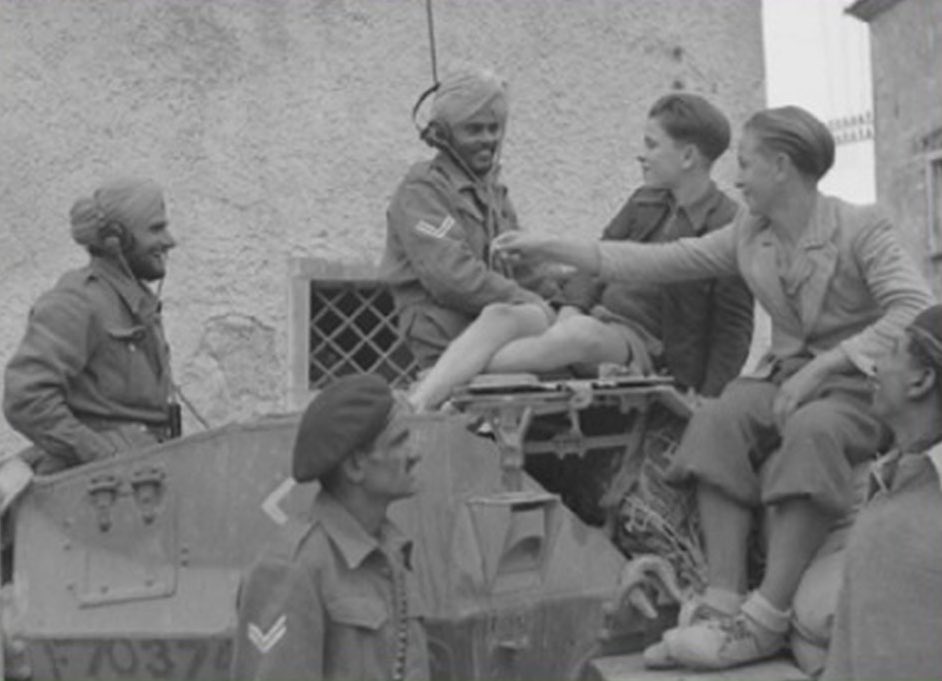
South East Asia. The menace of Malaria was so serious at one time that admission to hospitals in the Fourteenth Army corresponded to about one Division per month. In 1942, the troops in Burma and Eastern Army suffered 1850 sickness casualties per 1000 i.e., virtually every+

soldier was more than once in
hospital. The results of preventive measures especially against malaria are reflected in the reduction of ratio of battle and non-battle casualties in Burma and SEAC from 1:204 in 1942 to 1:13 in 1945.+
hospital. The results of preventive measures especially against malaria are reflected in the reduction of ratio of battle and non-battle casualties in Burma and SEAC from 1:204 in 1942 to 1:13 in 1945.+
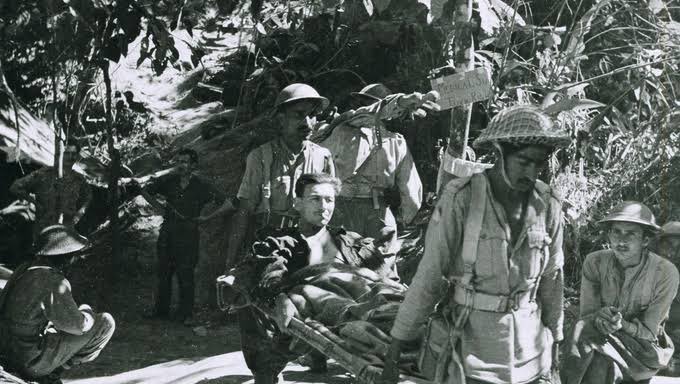
Admission into hospitals (rate per 1000) of malaria, dysentry and diarrhoea during 1942—1945 dropped from 418.33 to 45.63, 49.42 to 12.35 and 25.27 to 12.16 respectively. The aid given by them to the civilians in Bengal during the famine is too well known.+
The advances in medical organisation and medical science, especially the employment of surgical, neurosurgical and transfusion units in the forward areas and the air evacuation of casualties were harnessed and the care of the Indian soldier was revolutionised.+
The medical services won laurels during the operations in Kashmir (1948), where the fight against the elements was collosal. Troops were kept in fighting fit condition despite heavy odds. Expert surgical and medical attention was provided right in the front line.+
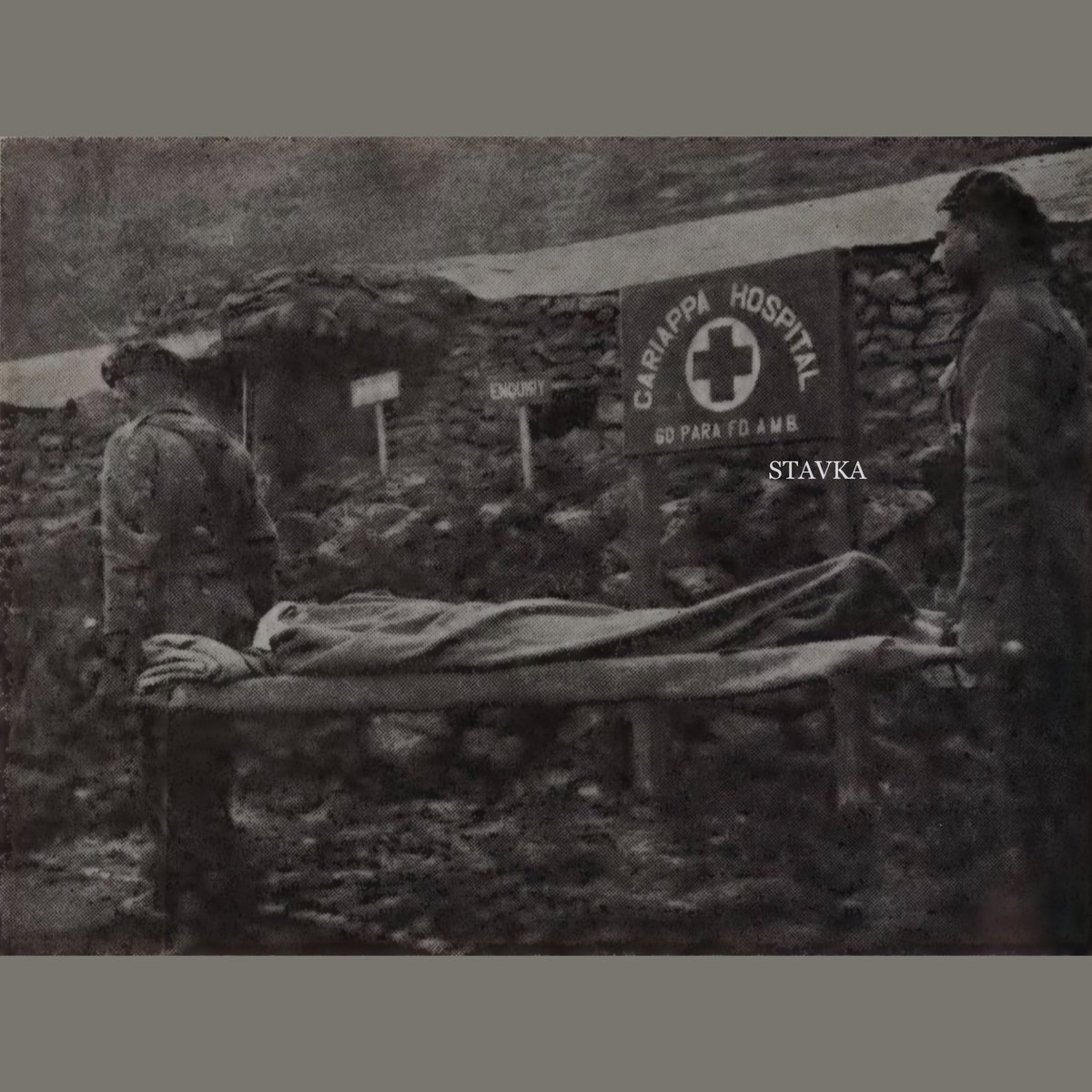
Medical research teams worked hard unravelling obscure problems. The medical services wherever they were, did their utmost to render medical aid to civilians during emergencies.
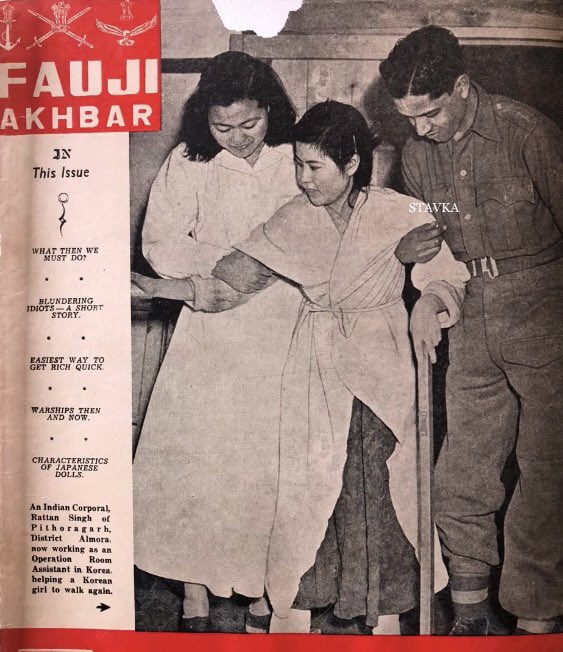
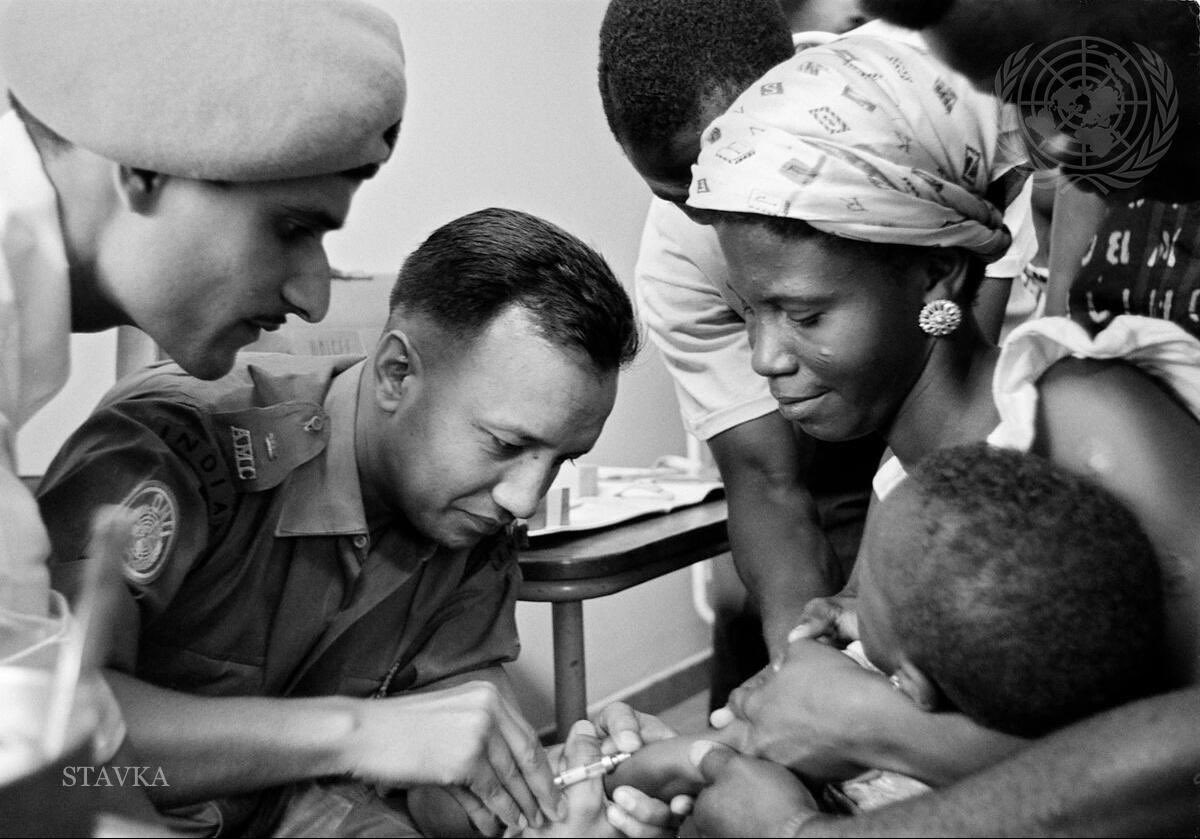
In response to the call of the United Nations, India sent personnel of A.M.C. to many countries,+
In response to the call of the United Nations, India sent personnel of A.M.C. to many countries,+
to name a few: Korea, Indochina, Suez, Lebanon and Congo. Their work has been universally praised.
Army medical services have always meritoriously fulfilled their obligation to their comrades in the Army and the country in peace and war.+
Army medical services have always meritoriously fulfilled their obligation to their comrades in the Army and the country in peace and war.+
There is no doubt they will continue to serve meritoriously and have the necessary experience and potential to meet any emergency whenever the call is made on them.
Their life is epitomised by the motto सर्वे सन्तु निरामयाः
Their life is epitomised by the motto सर्वे सन्तु निरामयाः
(Sources: Official History of the Indian Armed Forces in the Second World War, 1939-45 Medical services (multiple volumes); Lt Col B.L. Raina, Army Medical Corps; Souvenir Brochure March 1959)
• • •
Missing some Tweet in this thread? You can try to
force a refresh