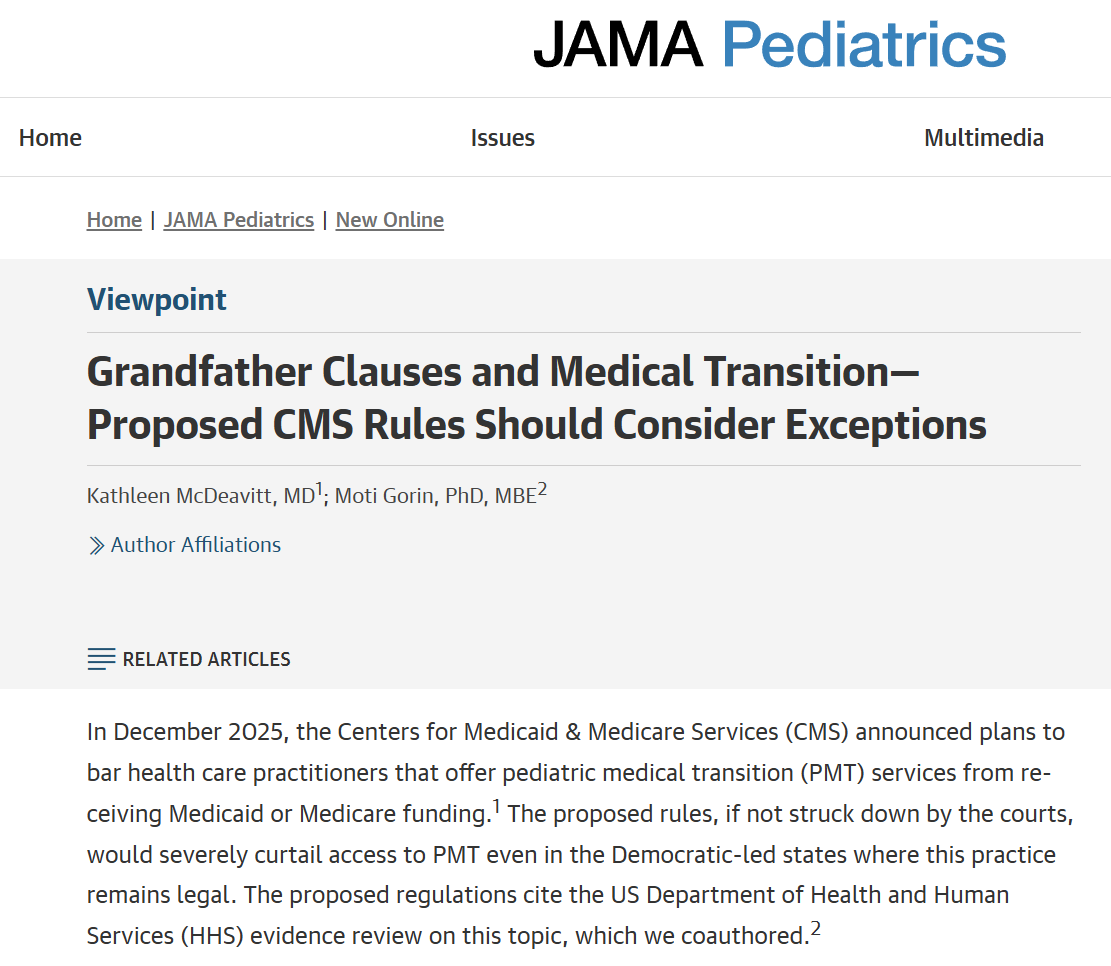
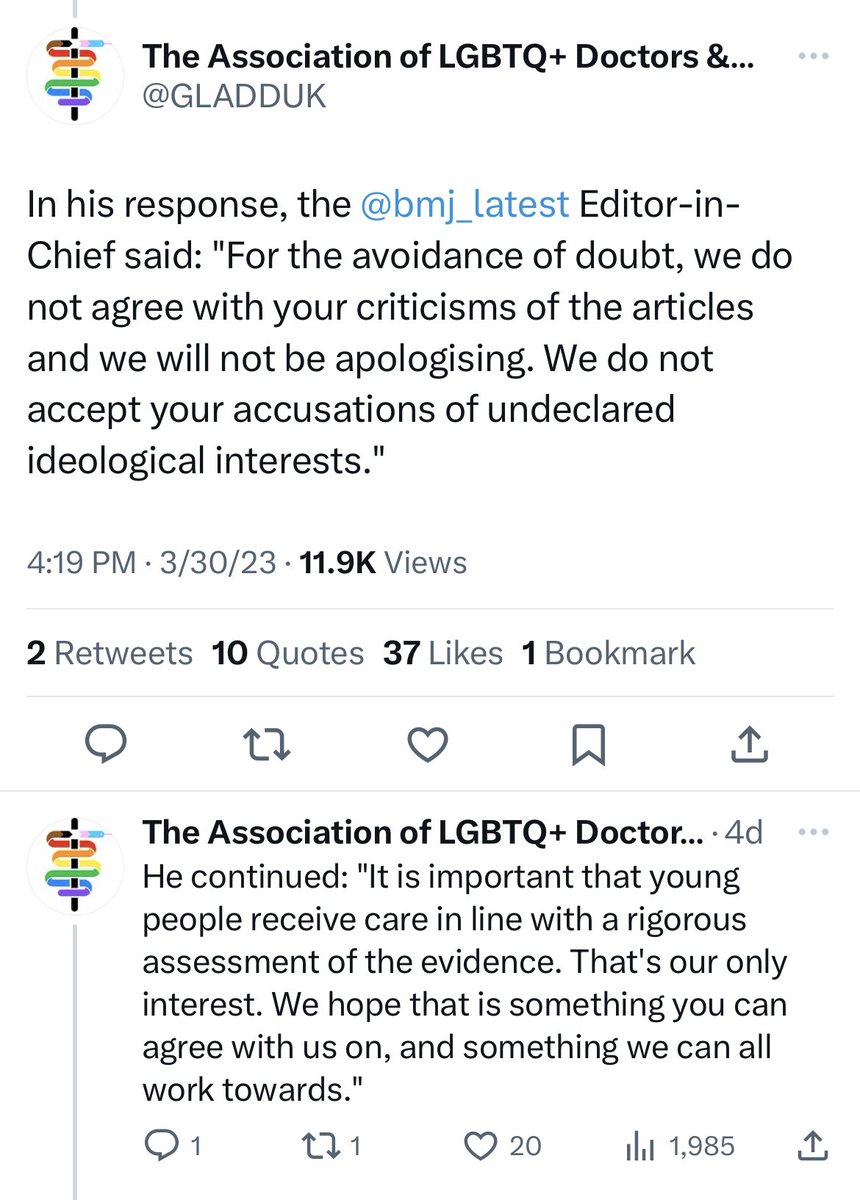
Two groups representing LGBTQ+ medical professionals (@GLADDUK and @prism_surgery) submitted a letter of complaint to the prestigious British Medical Journal (@bmj_latest).
The BMJ’s crime: pointing out problems in the “gender affirming care is science-based” narrative. GAC is consensus-based (that is, if you ignore doctors, medical groups, and European health authorities who disagree), but not evidence-based.
Since “the science is settled” on this issue and any questioning of that science is clear evidence of bigotry, the letter demanded an apology.
The two groups also demanded that the BMJ disclose whether the author or the editor harbor “gender critical” beliefs (read: beliefs that question the activist-approved narrative on pediatric gender medicine).
“Gender critical” beliefs, you see, are strictly verboten and those who adhere to them must confess and atone.
BMJ’s editor in chief politely declined the requests, telling the two orgs to fu… I mean, to rediscover their commitment to the scientific process.
Let’s hope American medical journals get inspired.
• • •
Missing some Tweet in this thread? You can try to
force a refresh

I'm often asked: “What makes pediatric gender doctors do what they do?"
Good question.
Here are 9 overlooked factors, to add to the obvious one: ideological agreement with the “gender-affirming” outlook.
These are unsystematic observations, so take with a grain of salt. 🧵
1. Lack of experience. Early-career doctors lack clinical experience, a critical corrective mechanism to the abstractions they absorb in the classroom. Also, being young, they typically don’t have kids themselves and therefore have not experienced the ways of developmentally typical children and teens. If a young clinician lacks these experiences but constantly sees trans-identified patients, it's easy to see how s/he would have a skewed understanding of human sexual development.
2. Action bias. Medicine—and, some would argue, most of healing—often consists of not doing anything, counting on the body’s natural tendency to heal itself while watchfully waiting to see if/when intervention is needed. For adolescents in the throes of puberty, time and experience typically build resilience and mitigate distress. It’s tempting for inexperienced healers to want to “do something” and to equate inaction with not helping or even harming.
Even liberal commentators now realize that the Southern Poverty Law Center is little more than a smear machine.
But it's more than that. It's a vital component in the left-wing policy network encompassing epistemic institutions, media, and parts of the Democratic Party. 🧵
Pediatric gender medicine is an example. A 2023 SPLC report claimed to find that the Society for Evidence-Based Gender Medicine (SEGM), an organization focused on scrutinizing the evidence base for pediatric transition, is a "hate group" and the "hub" of misinformation.
Dig into the report and you'll find that the basis of this allegation is the fact that SEGM disagrees with purported medical authorities claiming that "gender-affirming care" is backed by good evidence. (SEGM's position is confirmed by every systematic review to date.)
BREAKING: The New York Times (@nytimes) has just called out the Chair of the Board of the American Medical Association (@AmerMedicalAssn), Dr. David Aizuss (@lasereyedoc), for misrepresenting his organization's recent media statements on pediatric gender medicine.
Here's what happened🧵
On February 3, the American Society of Plastic Surgeons (@ASPS_News) published its policy statement acknowledging the low quality of evidence for hormones and surgeries in <19 and recommending that surgeries be deferred to age 19+.
The following day, the American Medical Association told National Review (@NRO) and the New York Times (@nytimes) that it agreed with ASPS on surgeries.
Here is what the AMA's communications officer, Joshua Zembik, told the NYT:
Two articles came out today on pediatric gender medicine and its current political context.
Both are worth reading🧵
In @TheAtlantic, @benappel writes about the difficulties growing up as an effeminate boy. He would later discover that so-called "progressives" were now nudging effeminate boys to interpret their feelings of difference as evidence that they are really girls.
Appel calls for an honest conversation among liberals of how a regressive outlook, now fueling a medical practice, has managed to pass itself off as progressive. And he calls for greater tolerance for gender nonconformity in boys from liberals and conservatives.
NEW: “I’ve been covering this controversy for about a decade from a left-of-center perspective, and I’ve found that anyone who questions these treatments, even mildly, is invariably accused of bigotry.”
🧵on @jessesingal’s important new piece in the New York Times this morning.
For years, LGBT organizations insisted that the science of youth gender medicine was settled, citing an apparent consensus of medical associations.
Now that the American Society of Plastic Surgeons has backed away from gender surgeries in <19, with the American Medical Association endorsing the move, there is no longer a consensus. The ASPS also acknowledged the lack of supportive evidence for hormones.
🚨A group of 106 members of Congress wrote a letter to Secretary of HHS RJK, Jr., criticizing the Department's efforts to roll back what they call "medically necessary, evidence-based care" in the form of puberty blockers and cross-sex hormones (but not surgeries). 🧵
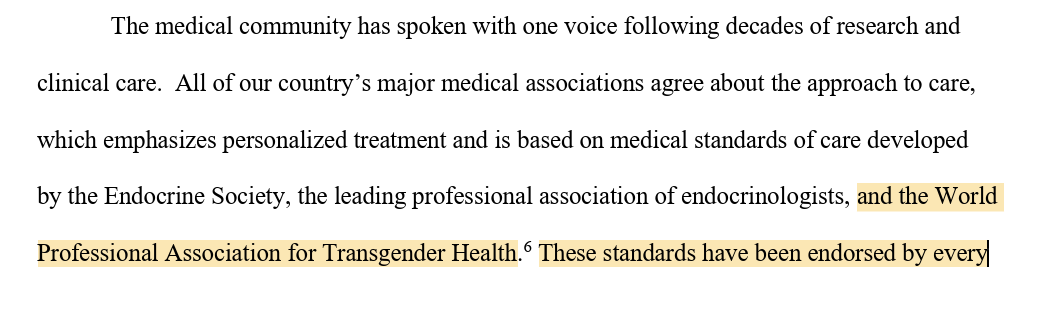
With surgeries unmentioned, the authors say that endocrine interventions are supported by "every major medical and mental health association in the U.S."
Astoundingly, they claim that "numerous studies and systematic reviews... have confirmed the safety, efficacy, and benefits" of these interventions.
Their only citation is the Utah report, which is not a systematic review.