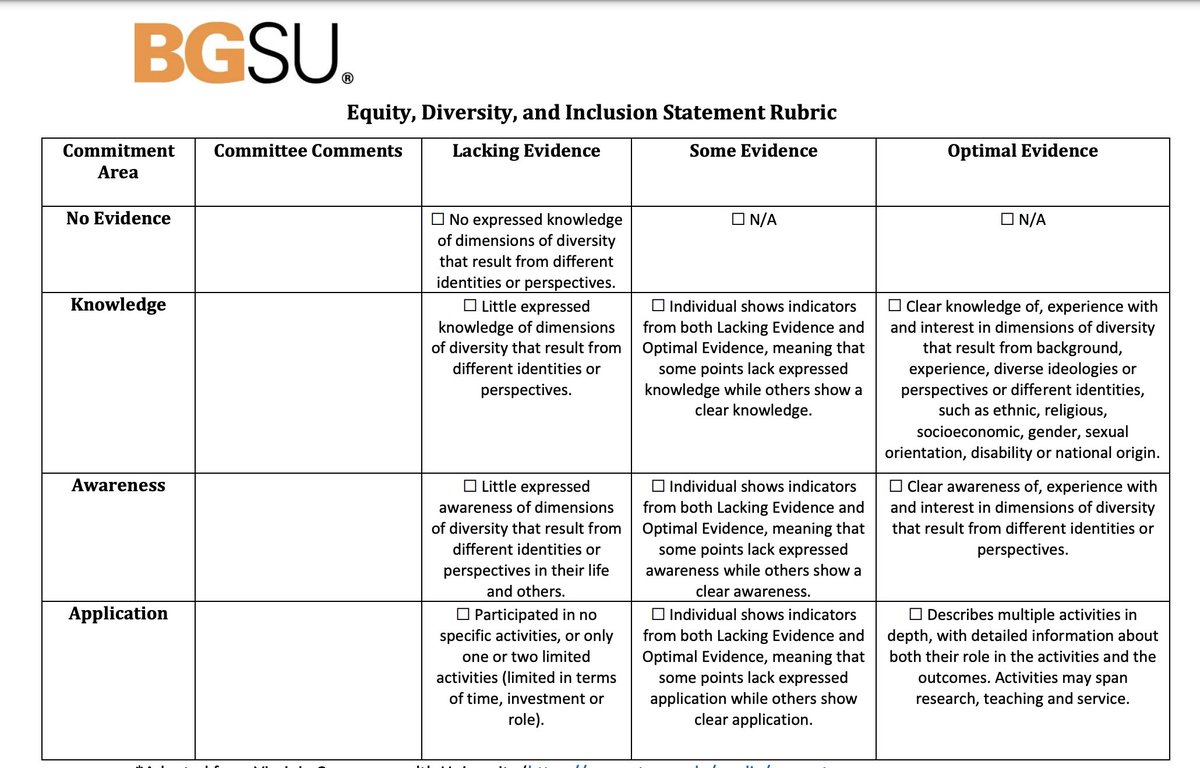
This is Bowling Green's diversity statement rubric.
Notice the conspicuous attempt to acknowledge viewpoint diversity ("diverse ideologies or perspectives").
Unconvincing. As with any DEI statement requirement, the door for ideological policing is wide open.
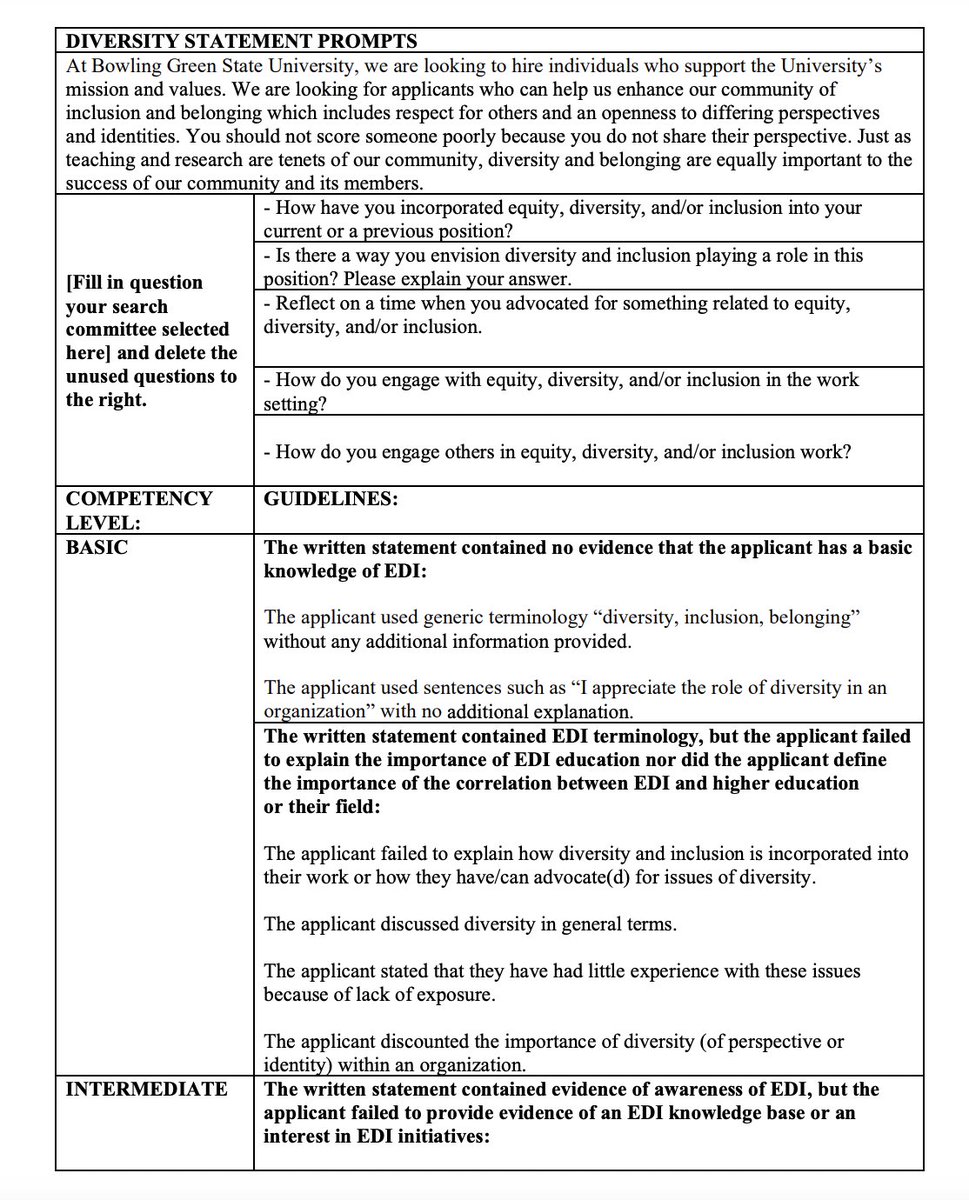
Another BGSU rubric reminds search committees not to "score someone poorly because [they] do not share their perspective."
Then it calls for a low score for candidates who fail "to explain the importance of EDI in education" or who "discount the importance of diversity."
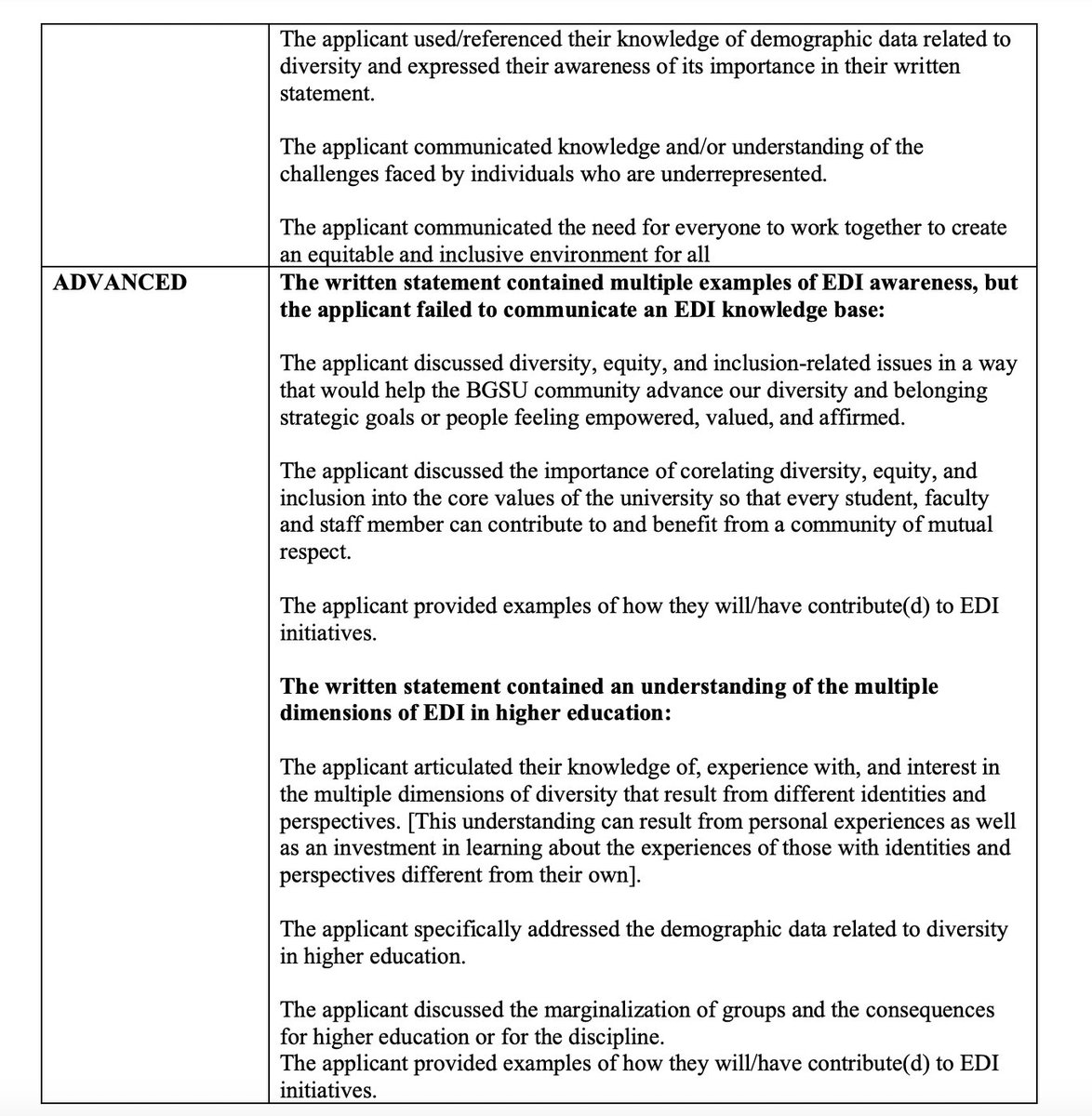
That rubric gives a high score to candidates who discuss "the importance of corelating [?] diversity, equity, and inclusion into the core values of the university."
Excluding candidates who oppose DEI. Turns out, there's at least one punishable perspective.
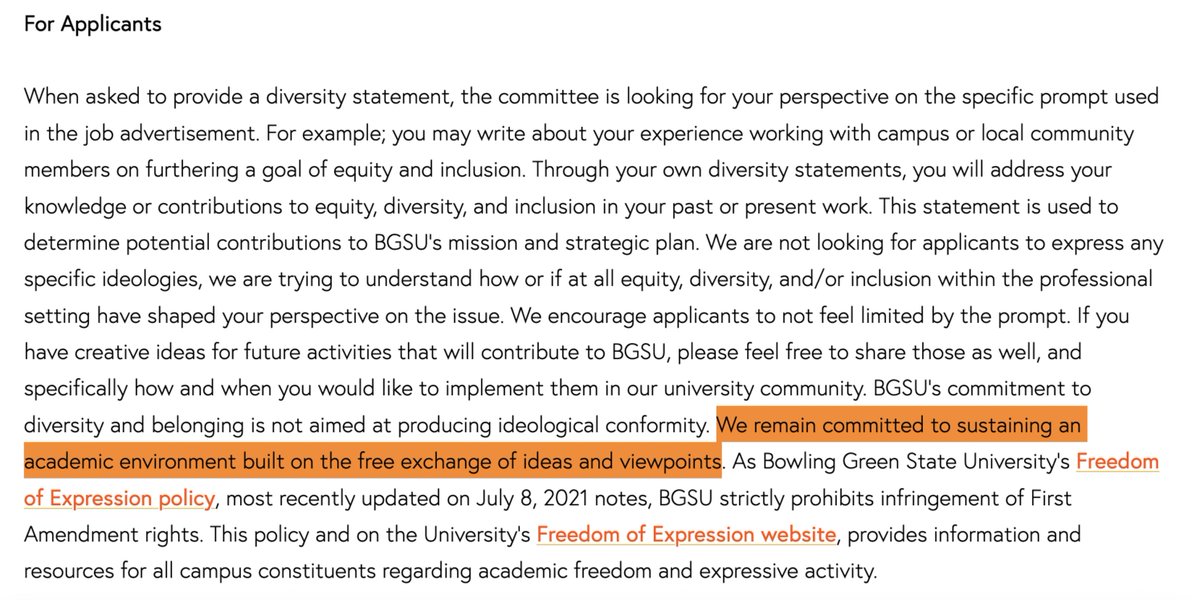
While explaining the diversity statement requirement, BGSU's website makes reference to its Freedom of Expression policy, noting "BGSU strictly prohibits infringement of First Amendment rights."
If so, they should obviously simply prohibit DEI statements.
• • •
Missing some Tweet in this thread? You can try to
force a refresh

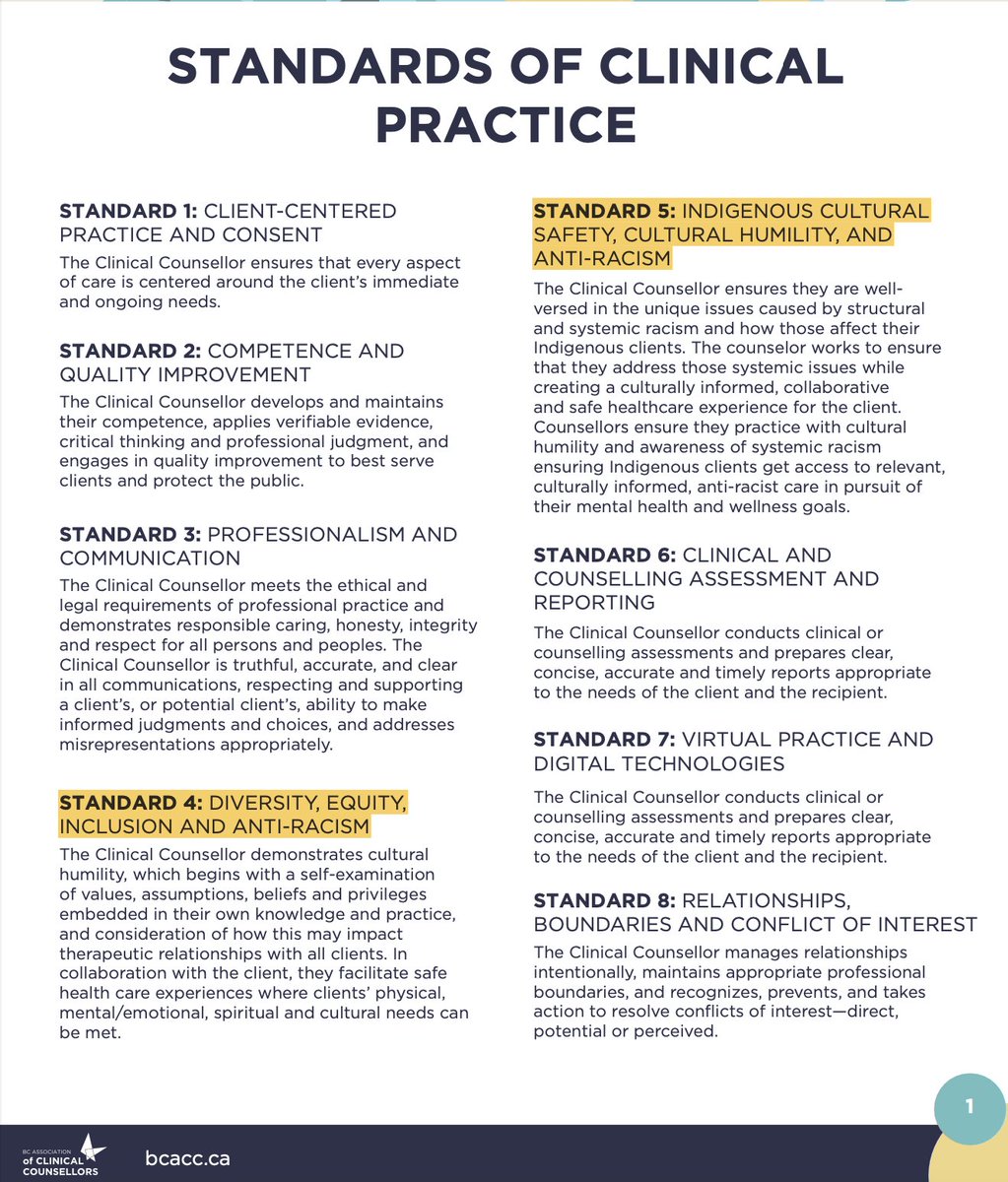
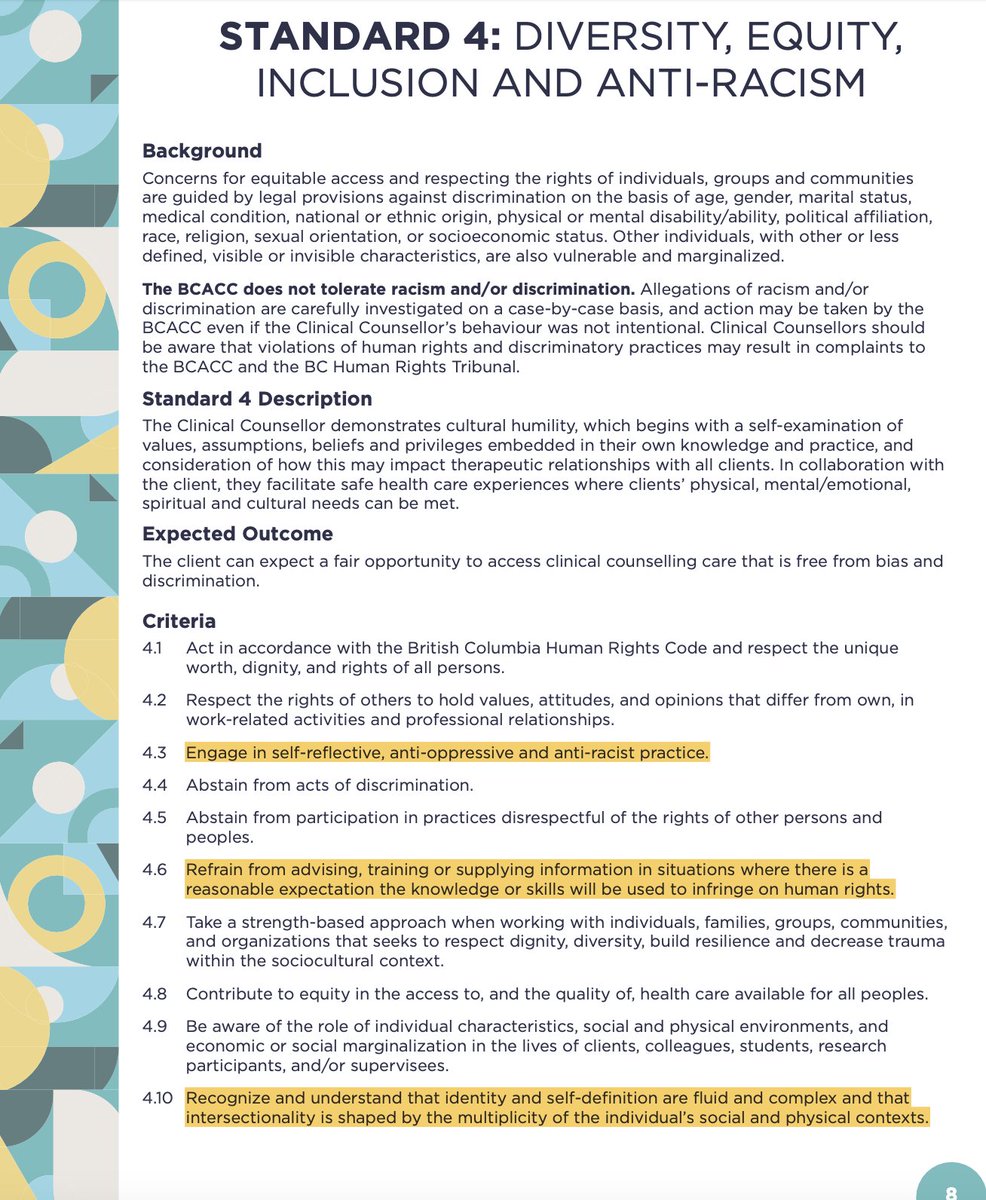
The British Columbia Association of Clinical Counsellors has released draft standards for its certified counselors.
The draft includes standards on both "Diversity, Equity, Inclusion and Anti-Racism" and "Indigenous Cultural Safety, Cultural Humility, and Anti-Racism."
The standards would require counselors to "Engage in self-reflective, anti-oppressive and anti-racist practice."
Counselors must also understand "intersectionality" and "recognize and understand that identity and self-definition are fluid."
The standard on diversity, equity, inclusion, and anti-racism is "foundational to all other standards," intended to be incorporated into "all aspects" of a counselors "work and relationships."
NEW: The University of Missouri System will no longer use diversity statements in faculty hiring.
In an email on Friday, President Mun Choi also said that the Mizzou would no longer use its "diversity faculty hiring rubric."
In his letter, Choi specifically cites “media reports" criticizing Mizzou's use of DEI statements.
In February, I acquired Mizzou's "Inclusion, Diversity, and Equity Evaluation Tool" through a records request, which I published on @MindingCampus. Here's the rubric:
@MindingCampus Still, questions remain. Universities can still solicit "commitment statements," a possible loophole.
The language is far better than any "diversity statement" prompt, specifically alluding to the value of intellectual pluralism.
DOCUMENTS: In late 2021, the UNC Department of Allied Health Sciences created a report from its “Task Force to Integrate Social Justice into the Allied Health Curricula.”
Through a records request, I’ve acquired the report, along with eye-opening emails on its implementation.
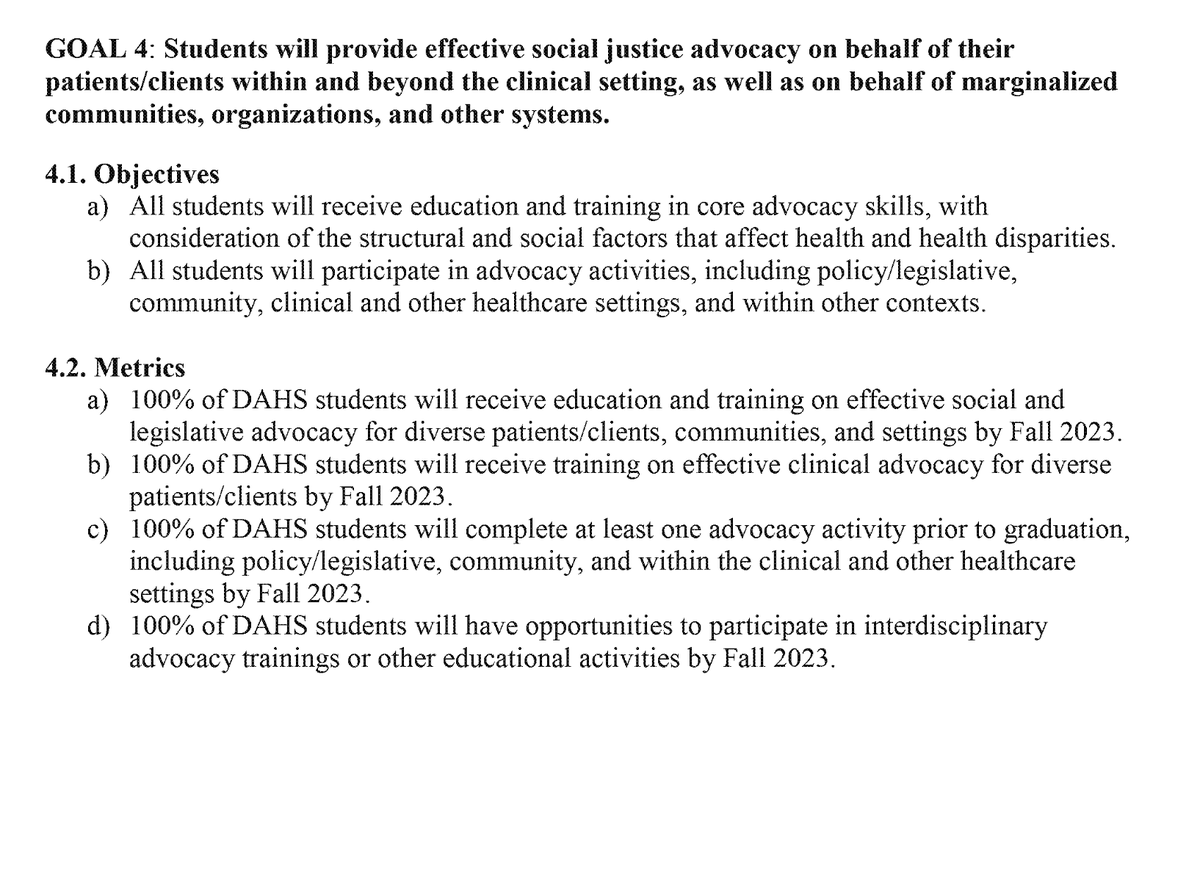
The UNC Allied Health Sciences social justice report reads like a laundry list of DEI policies.
Perhaps most notably, it calls for mandatory student social justice advocacy.
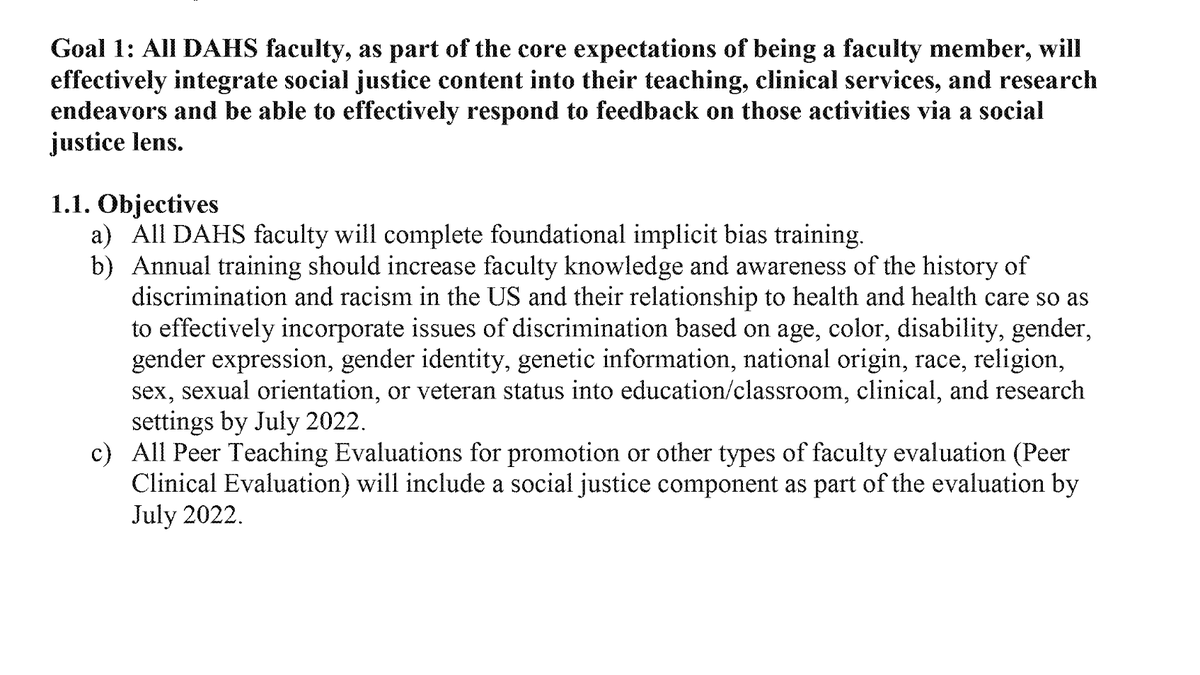
The UNC health sciences social justice report likewise proposes making the use of “social justice content” a “core expectation” for all faculty members.
DOCUMENTS: The Ohio State University’s College of Engineering requires diversity statements for jobs in computer engineering, architecture, and even nuclear engineering.
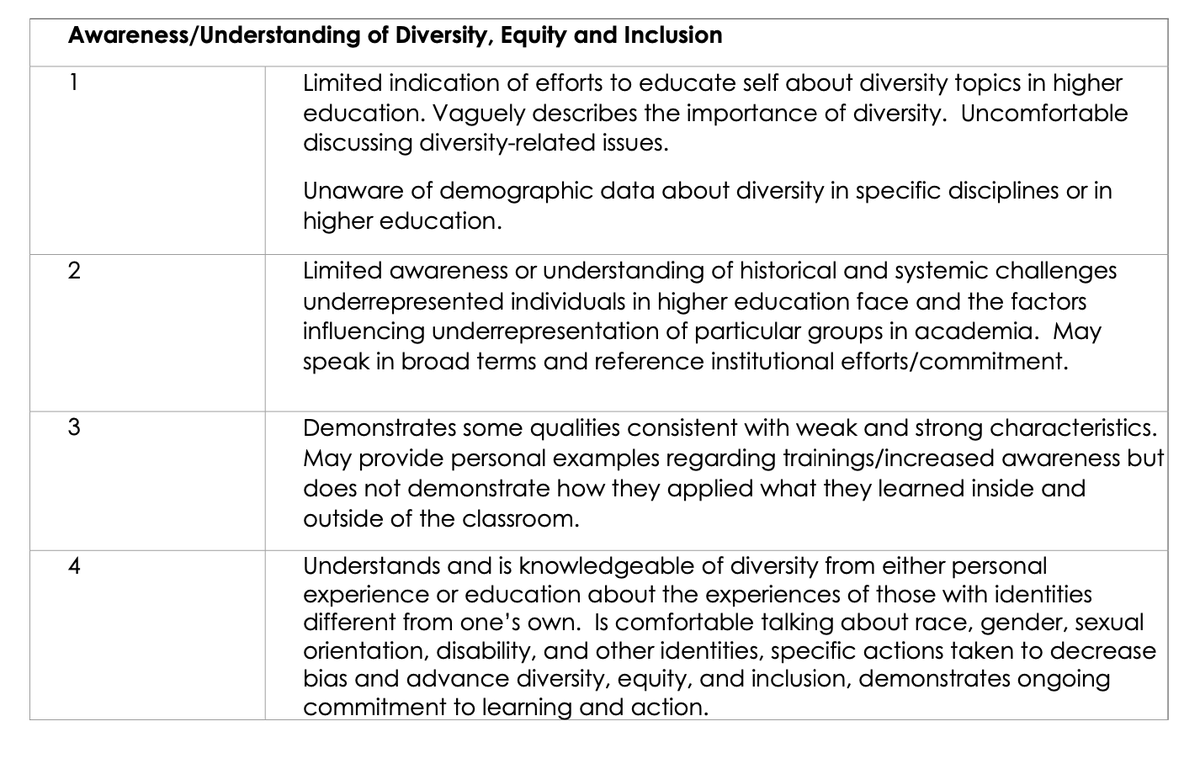
Conveniently, it lists a rubric for evaluating these statements right on its website.
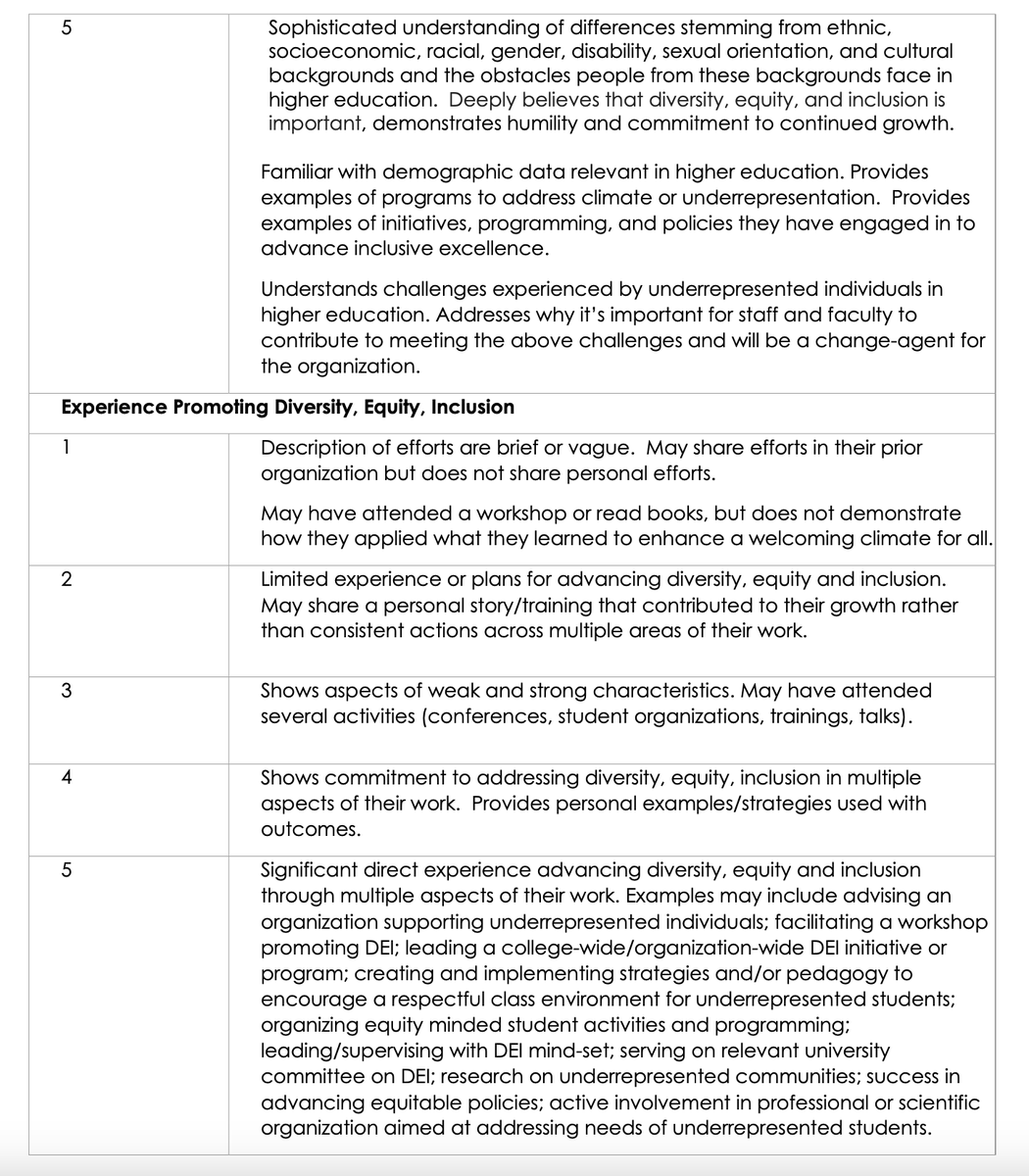
The rubric gives a high score to candidates who display a sophisticated understanding of demographic identity. Or who show “humility and commitment to continued growth.”
A low score if their “Description of [DEI] efforts are brief or vague.”
Likewise it calls for a low score (2 out of 5) for candidates who “May have participated peripherally in efforts promoting equity diversity, equity and inclusion” or show “enthusiasm but limited knowledge/demonstrated prior actions.”
In 2020, the NIH created a program designed to give 12 institutions $241 million for DEI-focused faculty hiring.
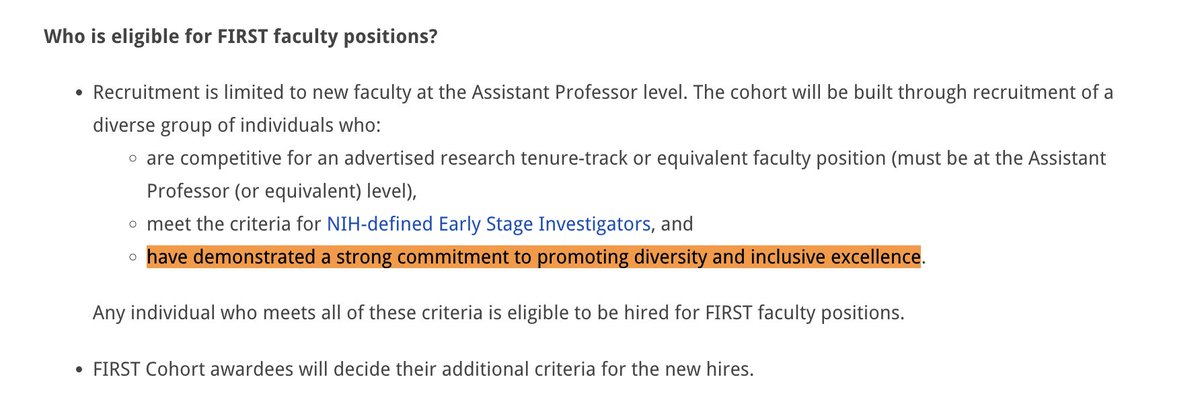
To be hired through the program, candidates must submit a diversity statement and demonstrate “a strong commitment to promoting diversity and inclusive excellence.”
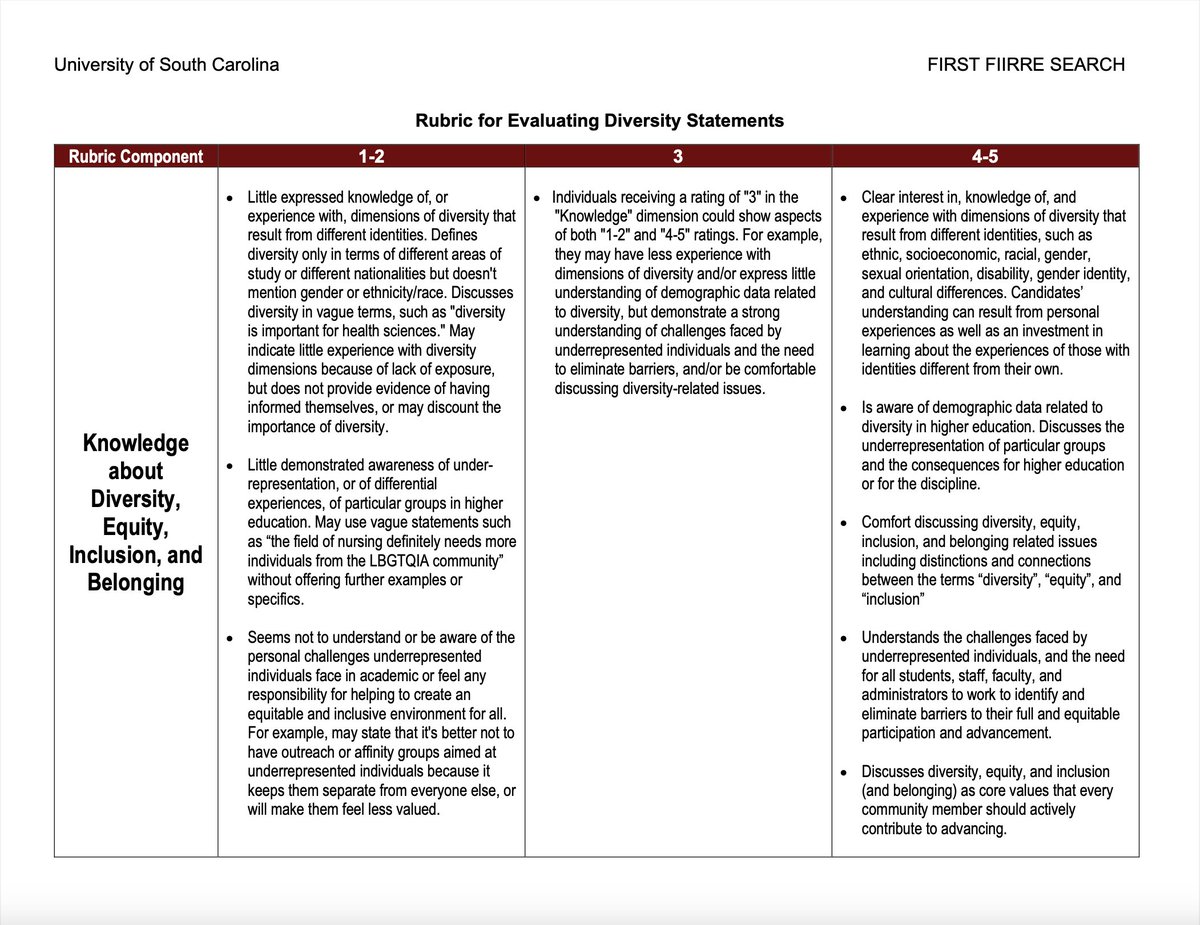
Through records requests, I have acquired the rubrics for evaluating diversity statements used by the NIH-funded programs at the University of South Carolina and the University of New Mexico.
The rubrics are nearly identical. Here's the beginning of South Carolina's.
@tabletmag UCSF—one of the top medical research institutions in the country—recently created a separate Task Force On Equity and Anti-Racism in Research.
The report makes dozens of recommendations aimed at injecting DEI into UCSF's research priorities.
@tabletmag The UCSF task force builds on layers of prior DEI bureaucratic expansion, spanning nearly a decade.
The “Anti-Racism Initiative,” for example, established dozens of new policies, such as “evaluating contributions to diversity statements in faculty advancement portfolios.”