Beautiful buildings don't just appear.
Like McEwan Hall, where the University of Edinburgh holds graduation ceremonies. It was paid for by a local businessman...
Like McEwan Hall, where the University of Edinburgh holds graduation ceremonies. It was paid for by a local businessman...

Despite being founded in 1582, the University of Edinburgh never had a graduation hall.
Why? There weren't enough students to warrant one. Any of the university's many other buildings sufficed for over three hundred years as a venue for the ceremony.
Why? There weren't enough students to warrant one. Any of the university's many other buildings sufficed for over three hundred years as a venue for the ceremony.

Until the Universities Act 1858, when things changed. The university had more control over its own affairs, previously managed by the city council, and it started admitting more students.
So they had to use space at the Church of Scotland's Assembly Hall for graduations:
So they had to use space at the Church of Scotland's Assembly Hall for graduations:
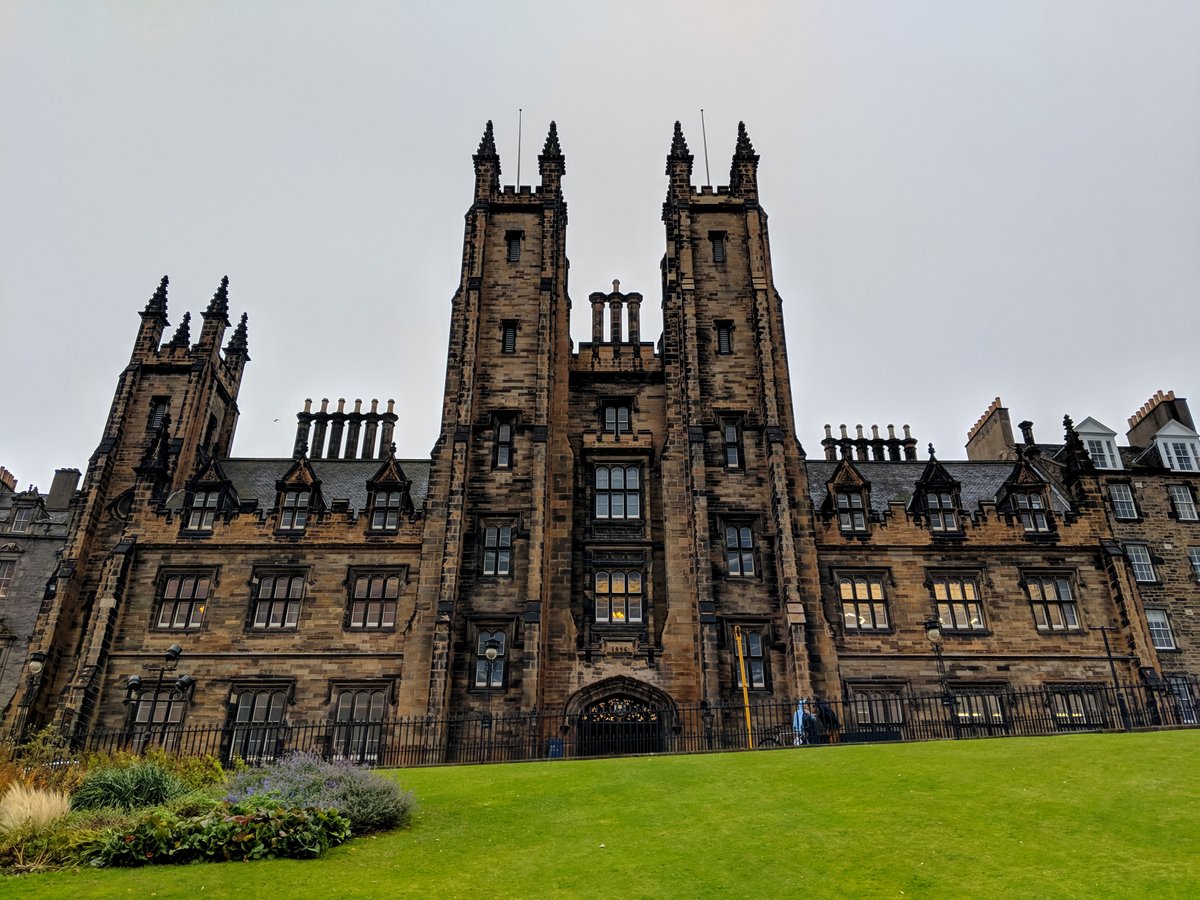
But the university wanted their own purpose-built hall for an occasion as important and momentous as graduation.
In 1874 they were raising money for a new Medical School, and had already received £80,000 from the public, plus the same amount from the government.
In 1874 they were raising money for a new Medical School, and had already received £80,000 from the public, plus the same amount from the government.
But this wouldn't cover the cost of a new Medical School *and* a graduation hall... there was simply not enough money for the dream to be realised.
Enter William McEwan, a local Member of Parliament who had founded an immensely successful brewery in the 1850s.
Enter William McEwan, a local Member of Parliament who had founded an immensely successful brewery in the 1850s.

McEwan offered to pay for the graduation hall, with some minor contributions from the university and the government to buy the land itself.
A plan for the new hall was drawn up by the architect Robert Rowand Anderson and, with funding secured, construction duly commenced.
A plan for the new hall was drawn up by the architect Robert Rowand Anderson and, with funding secured, construction duly commenced.

With its flanking towers and broad dome the hall is a striking, rather monumental place.
And in keeping with the Neoclassical architecture that dominates Edinburgh, Anderson's design drew on the style of the High Renaissance - especially Michelangelo - albeit rather creatively.
And in keeping with the Neoclassical architecture that dominates Edinburgh, Anderson's design drew on the style of the High Renaissance - especially Michelangelo - albeit rather creatively.

The interior, true to the spirit of the Italian Renaissance, was decorated with large Corinthian columns and extensive murals, painstakingly painted over the course of three years by William Mainwaring Palin.

And the murals have meaning. Beneath the dome are allegories for subjects like jurisprudence, medicine, music, fine arts, anatomy, history, oratory, philosophy, and theology.
It was a place dedicated to the ideal of education; a temple of scholarship.
It was a place dedicated to the ideal of education; a temple of scholarship.

Indeed, in the tympanum over the main entrance is a sculpture in relief portraying the building's very purpose - a student in the moment of graduation.

And this is what the students see as they look up during the ceremony - surely one of the finest graduation halls anywhere in the world.
A place which not only inspires young people but, perhaps, also imbues a sense of belonging and of duty.
A place which not only inspires young people but, perhaps, also imbues a sense of belonging and of duty.

So the University of Edinburgh got what they wanted: a splendid venue for important and joyful occasions.
And in 1897 it was officially presented by the man who had paid for it, and in whose honour the university had decided to name it, William McEwan.
And in 1897 it was officially presented by the man who had paid for it, and in whose honour the university had decided to name it, William McEwan.
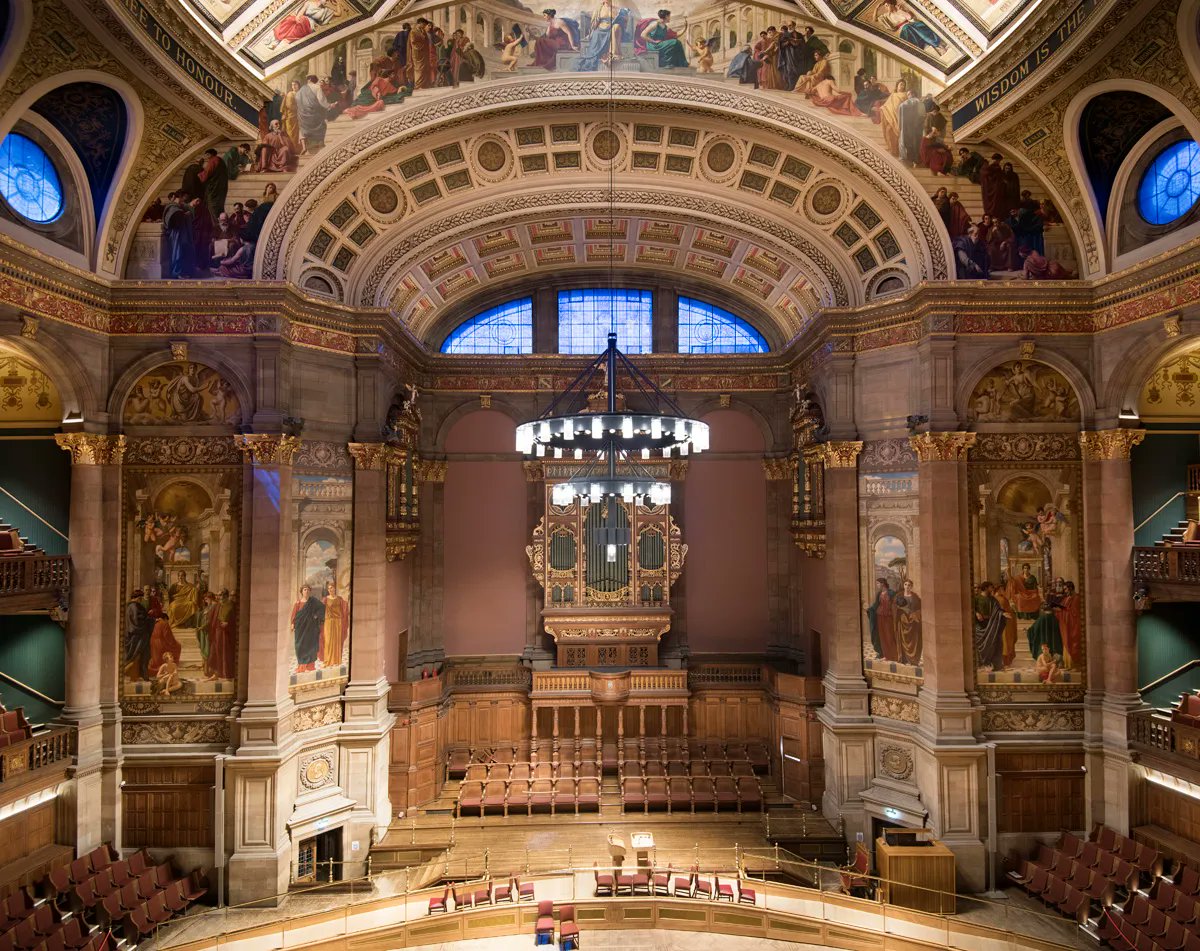
He was also included in one of the murals, though far less ostentatiously than might have been the case.
He is the old man with the long grey beard and folded arms, second from the right.
He is the old man with the long grey beard and folded arms, second from the right.

McEwan Hall is a wonderful building, but that's not all.
It's a reminder that such buildings don't simply appear. They require collaboration (the university's ambition, Anderson's design, council approval, McEwan's patronage) and a shared intention to create something wonderful.
It's a reminder that such buildings don't simply appear. They require collaboration (the university's ambition, Anderson's design, council approval, McEwan's patronage) and a shared intention to create something wonderful.

• • •
Missing some Tweet in this thread? You can try to
force a refresh