If you believe that a 15-minute long chokehold on the NYC subway (that’s 900 seconds of asphyxiation) is a justified use of deadly force, you really need to read up on NY Penal Law 35.15.👇
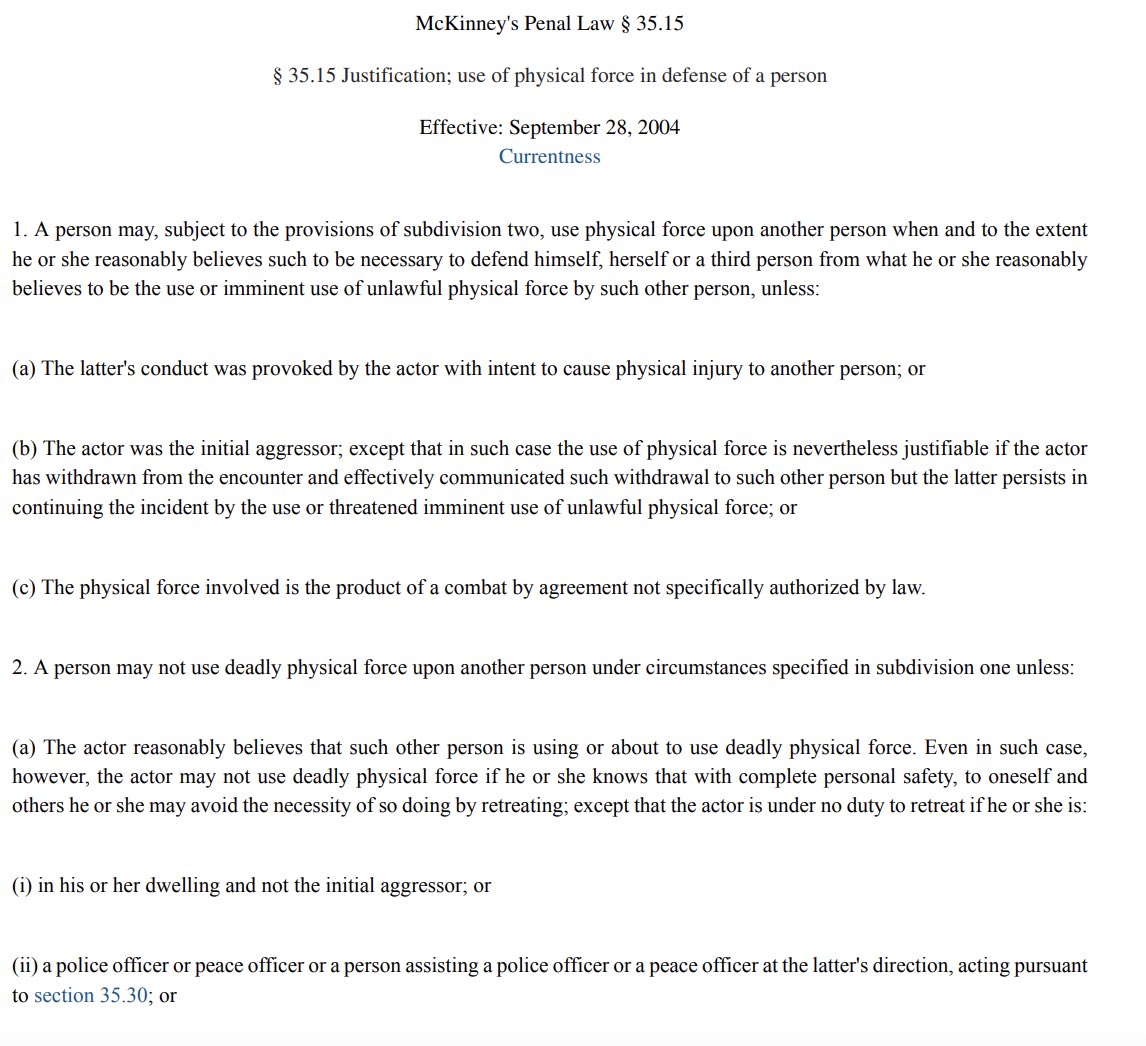
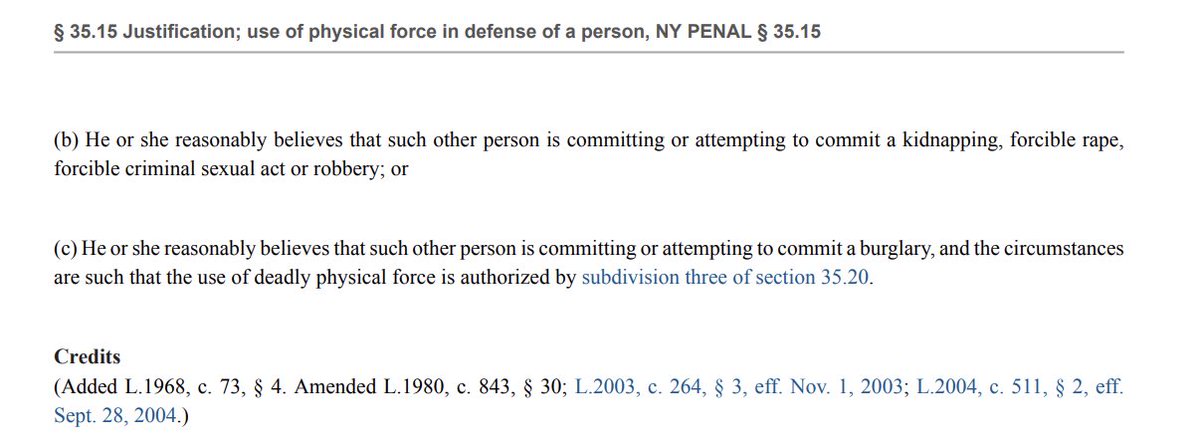
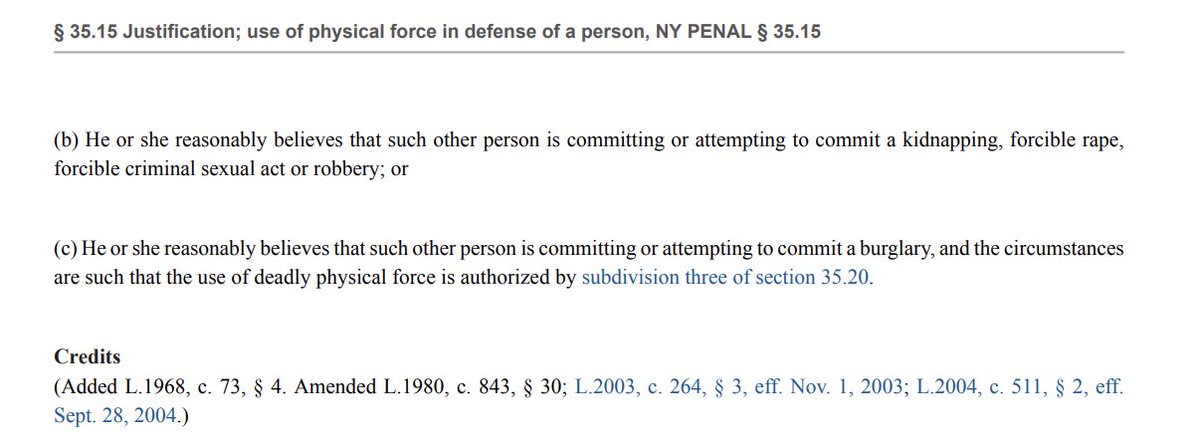
Section 35.15 provides, in pertinent part, that a person may not use deadly physical force unless he “reasonably believes” that another person “is using or about to use deadly physical force” and that its use is “imminent.”
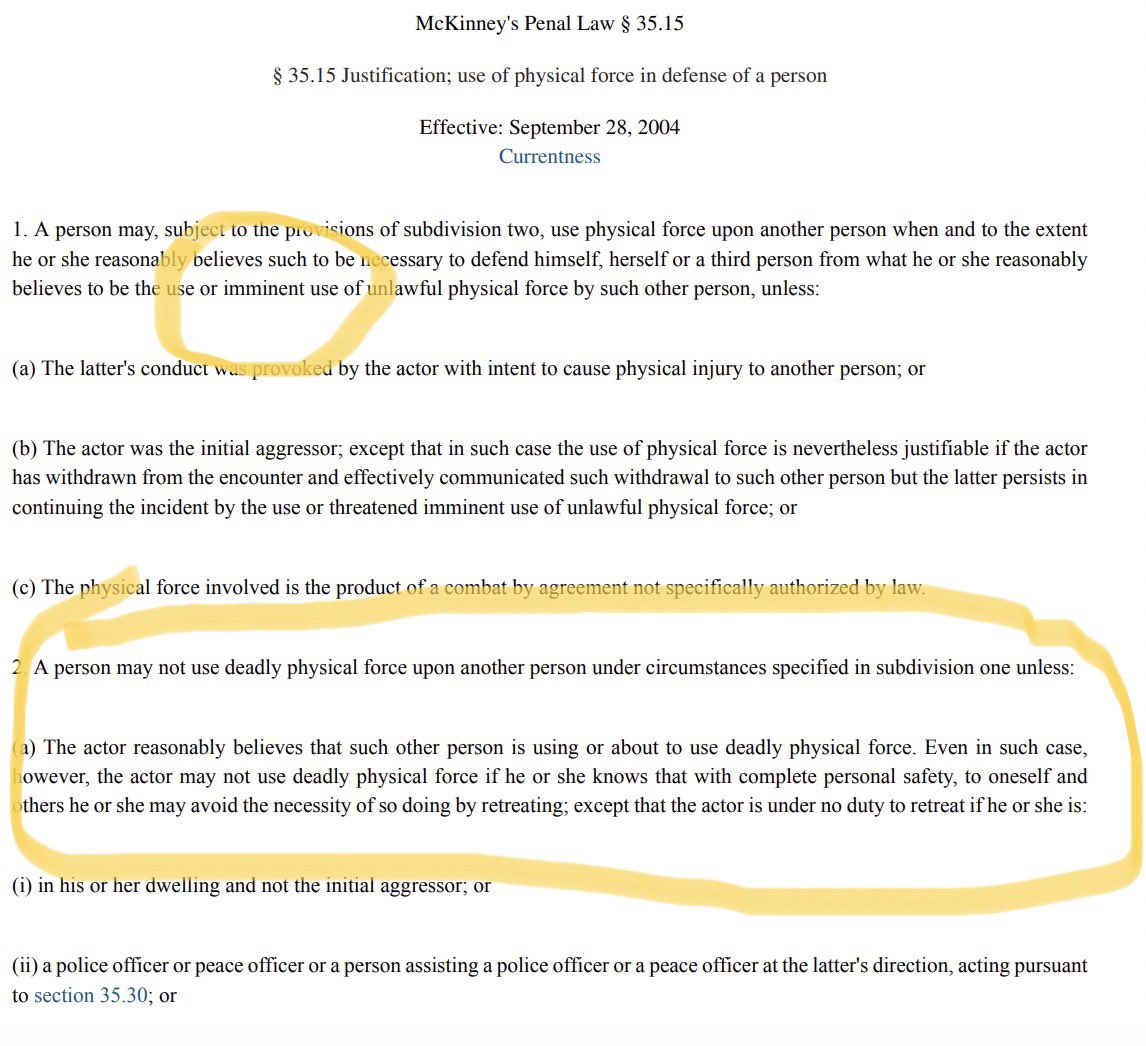
Further, deadly physical force may not be used if the individual, with complete safety as to himself and others, can avoid the necessity of such force by retreating. So there is a duty of retreat.
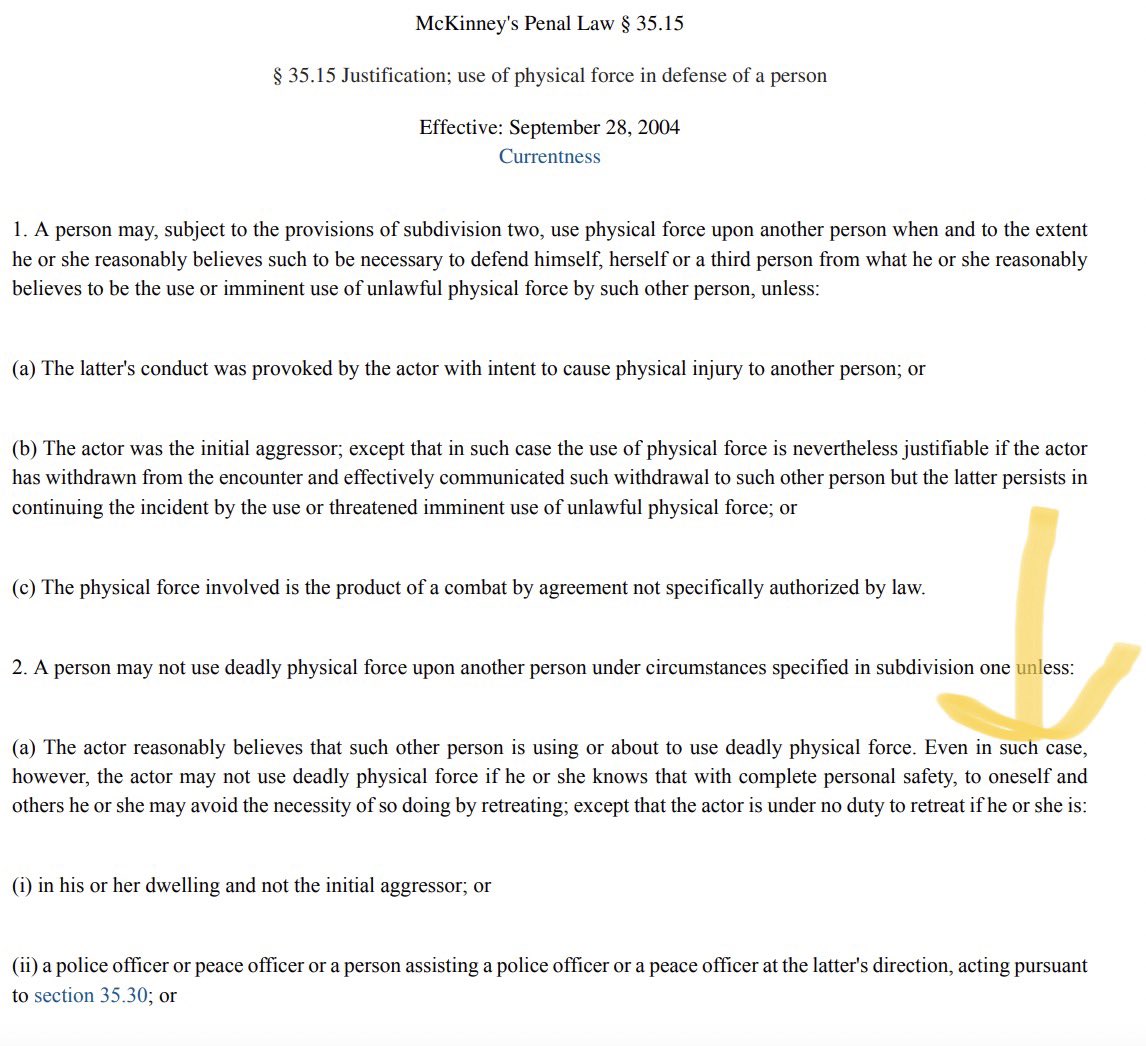
Finally, Jordan Neely’s past criminal history cannot serve as a post-hoc justification of the use of deadly physical force unless Daniel Penny was actually aware of Mr. Neely’s criminal record at the time he made the decision to place him in a deadly chokehold.
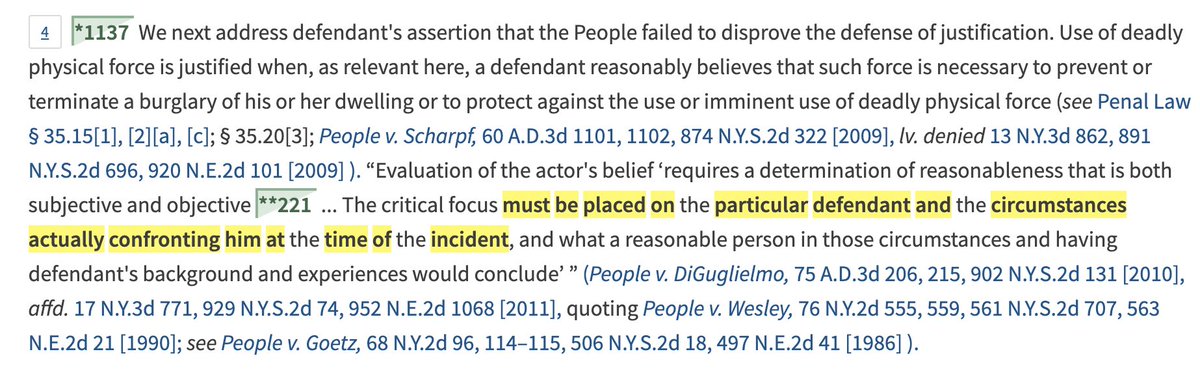
Per New York case law, the “critical focus” of the reasonableness inquiry under NY Penal Law s. 35.15 “must be placed on the particular defendant and the circumstances actually confronting him at the time of the incident . . .”
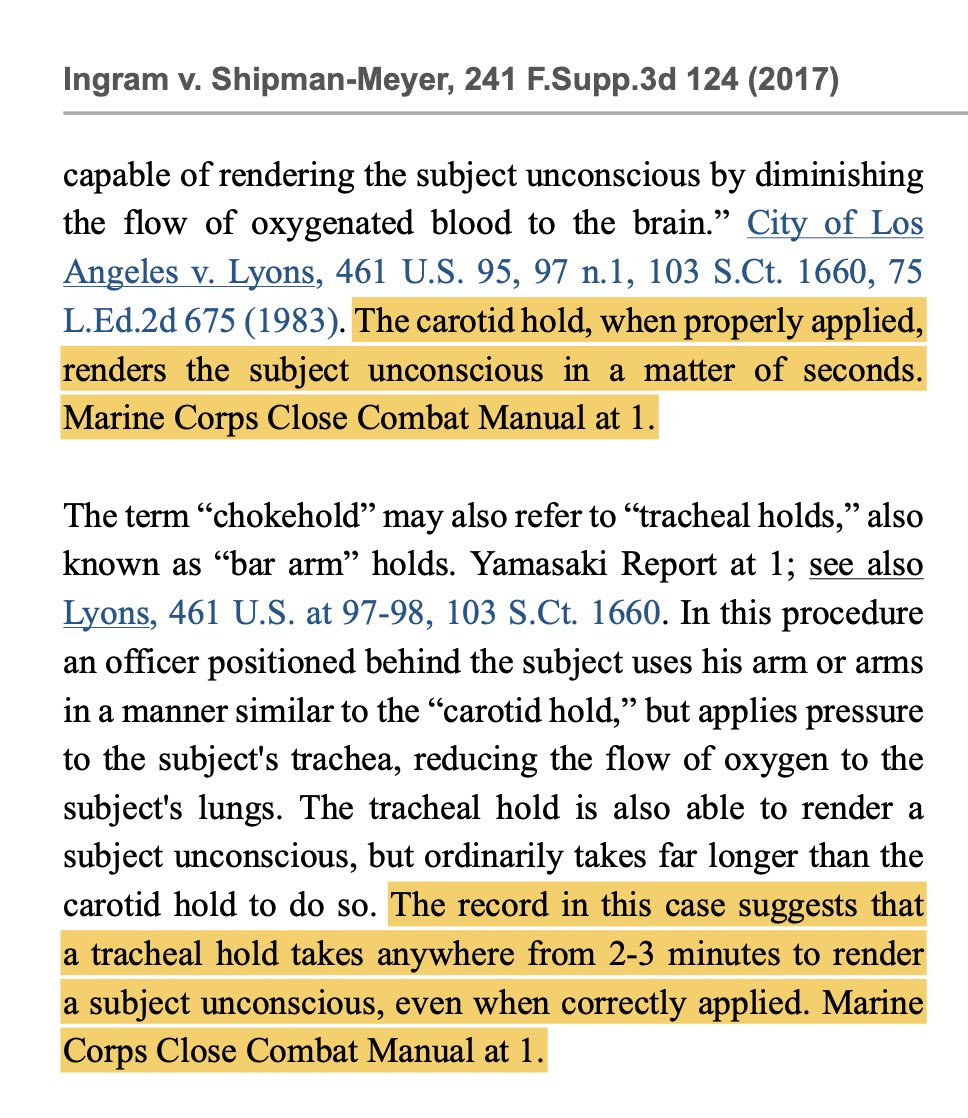
Marine Corps Close Combat Manual:
"The carotid hold, when properly applied, renders the subject unconscious in a matter of seconds. A tracheal hold takes anywhere from 2-3 minutes to render a subject unconscious.”
Penny, a former Marine sergeant, kept the chokehold for 15 mins.
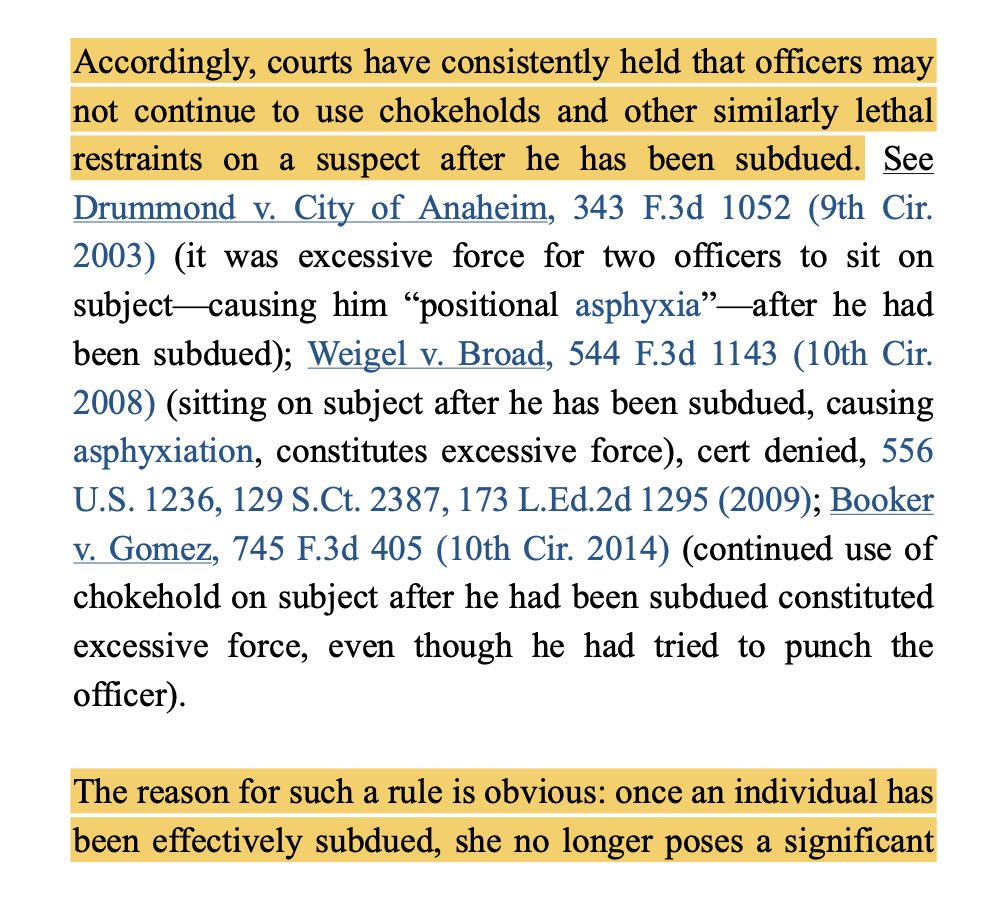
“Courts have consistently held that chokeholds may not be continued once a suspect has been subdued. The reason for such a rule is obvious: once an individual has been effectively subdued, she no longer poses a significant threat, and therefore the need to use force has ended.”
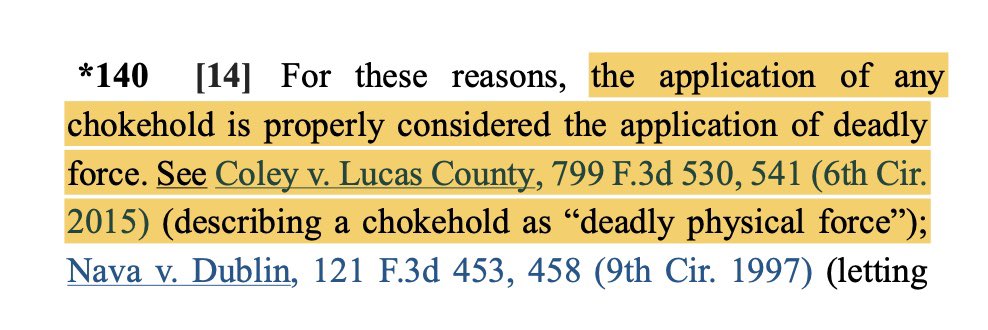
"The application of any chokehold is properly considered the application of deadly force." See Coley v. Lucas County, 799 F.3d 530, 541 (6th Cir. 2015) (describing a chokehold as “deadly physical force”); Ingram v. Shipman-Meyer, 241 F. Supp. 3d 124, 140 (D.D.C. 2017).
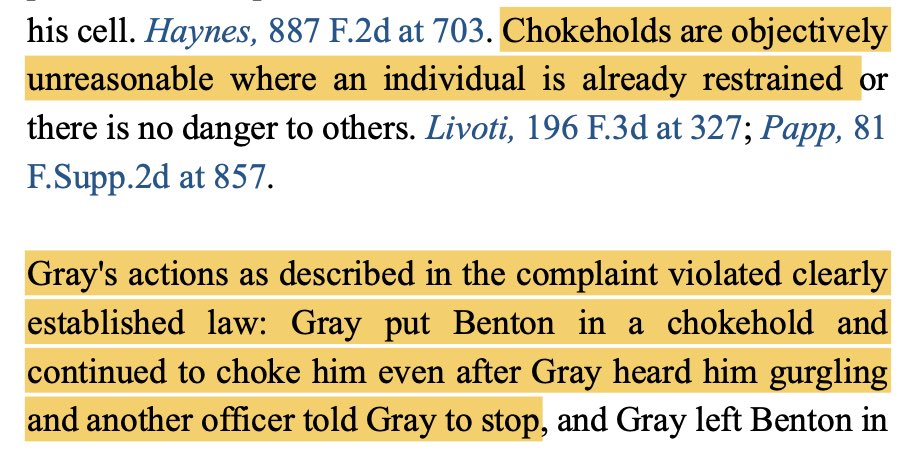
6th Circuit: "Chokeholds are objectively unreasonable where an individual is already restrained. Gray's actions as described in the complaint violated clearly established law: Gray put Benton in a chokehold and continued to choke him even after Gray heard him gurgling and another… twitter.com/i/web/status/1…
• • •
Missing some Tweet in this thread? You can try to
force a refresh

NEW: A California resident has sued sweepstakes casino operator VGW in Riverside County Superior Court, alleging that "Chumba Casino" is an "illegal gambling website." Plaintiff seeks a public injunction to force VGW to discontinue operations in CA.
The opening paragraph:
"Defendants are members of an offshore criminal enterprise that collectively owns and operates the website."
"In California, it is illegal to operate and offer online gambling casinos, including websites that offer slot machines, blackjack, roulette, and poker. Cal. Penal Code §§ 330 et seq. In this regard, California has a fundamental and deep-rooted public policy against gambling."
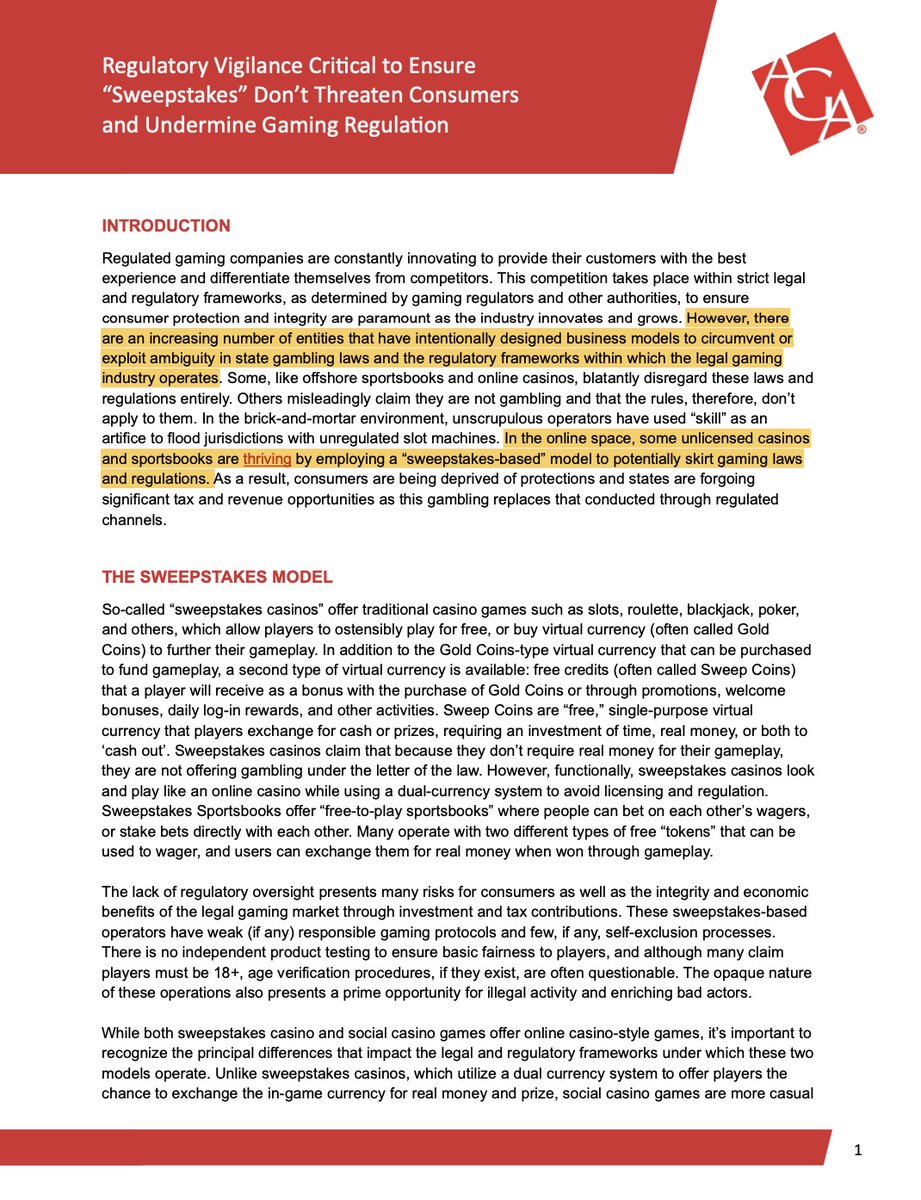
.@AmericanGaming has called for a crackdown on sweepstakes casinos, asking State AGs and regulators to investigate these online platforms to determine whether they violate state gambling laws. I researched this issue in-depth, starting with California. It’s not a close call. 🧵
California is the most vulnerable state for sweepstakes casinos.
1) Bad case law on consideration
2) A ban on “gambling-themed” sweepstakes
3) A constitutionally enshrined public policy against casino gambling
4) Broad reach of gambling statutes
5) Payment processor exposure
So bad in fact that California should automatically be listed as the first “excluded state” in the T&Cs of every dual-currency sweepstakes casino and sportsbook operator. It’s that clear-cut.
NEW: West Flagler has filed its reply brief in the Florida Supreme Court case challenging the state's online sports betting law on constitutional grounds. The brief highlights admissions made by the proponents of Amendment 3 that "casino gambling" includes sports betting.
West Flagler: During oral argument in the 2018 Florida Supreme Court case challenging the ballot language used in Amendment 3, "both proponents and opponents raised sports betting as an example of what 'casino gambling' captured":
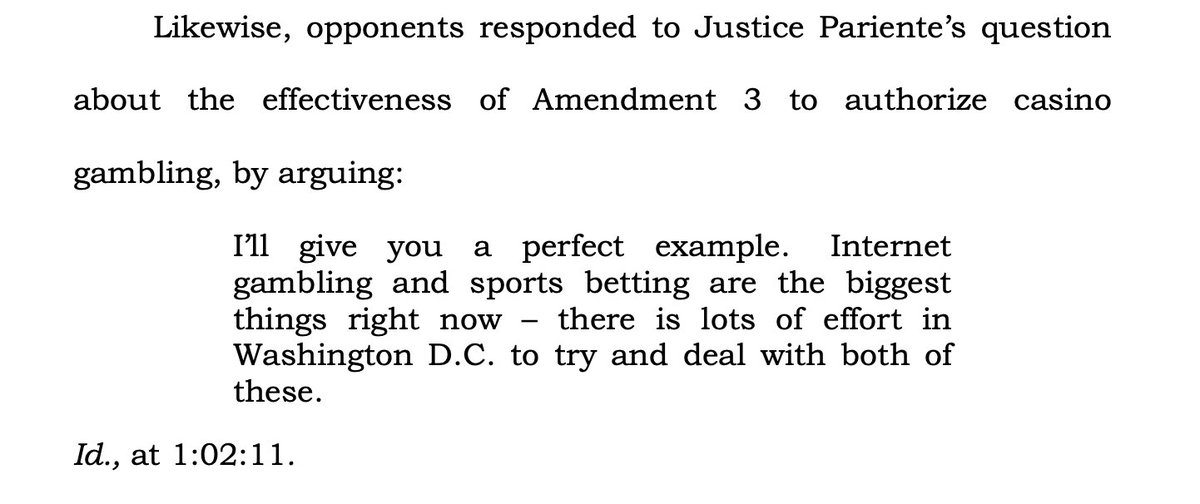
West Flagler: "Likewise, opponents responded to Justice Pariente’s question about the effectiveness of Amendment 3 to authorize casino gambling, by arguing" that "sports betting" and "Internet gambling" are "perfect examples" of the types of games that are covered by Amendment 3:
BREAKING: DC Circuit vacates the opinion of the district court in the Florida sports betting case and directs the district court to enter judgment in favor of the US Secretary of the Interior.
DC Circuit: “We see the case differently. IGRA “regulate[s] gaming on Indian lands, and nowhere else.” Michigan v. Bay Mills Indian Cmty., 572 U.S. 782, 795 (2014). Thus, to be sure, an IGRA gaming compact can legally authorize a tribe to conduct gaming only on its own lands. But… twitter.com/i/web/status/1…
DC Circuit: “The District Court erred by reading into the Compact a legal effect it does not (and cannot) have, namely, independently authorizing betting by patrons located outside of the Tribe’s lands. Rather, the Compact itself authorizes only the betting that occurs on the… twitter.com/i/web/status/1…
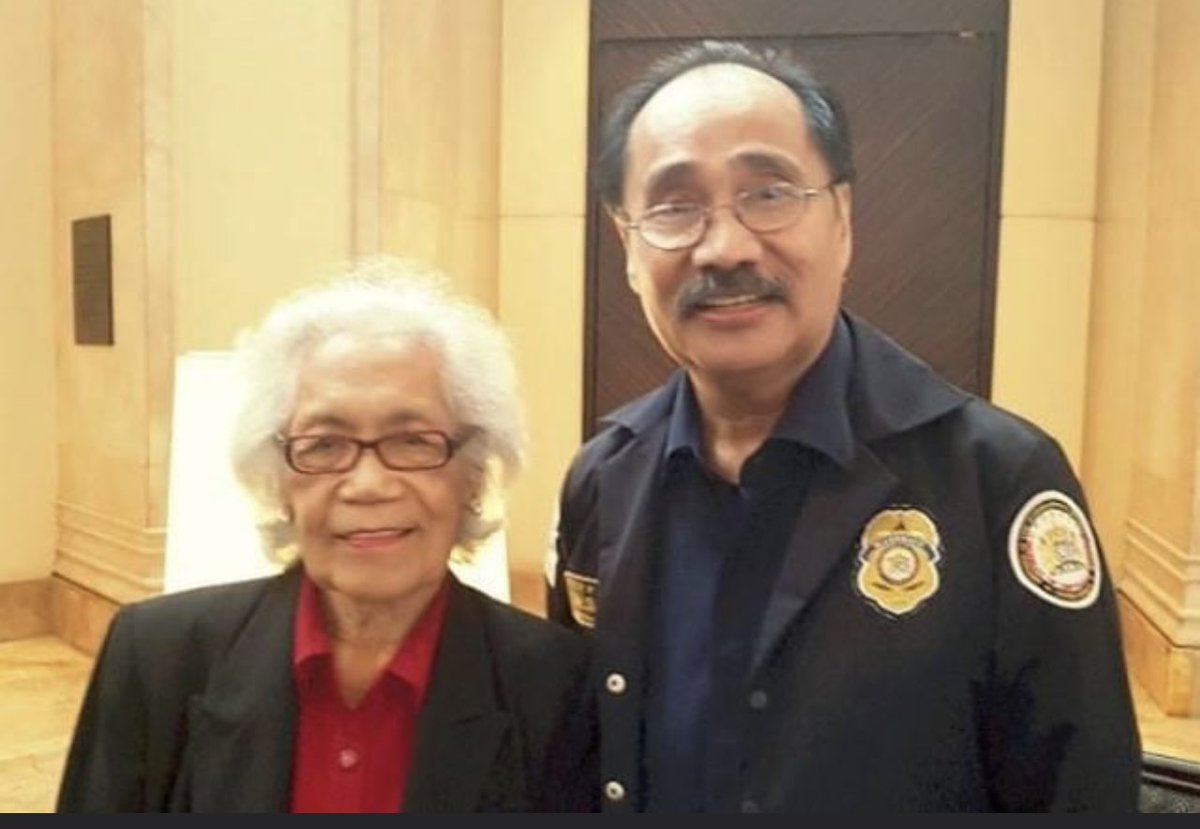
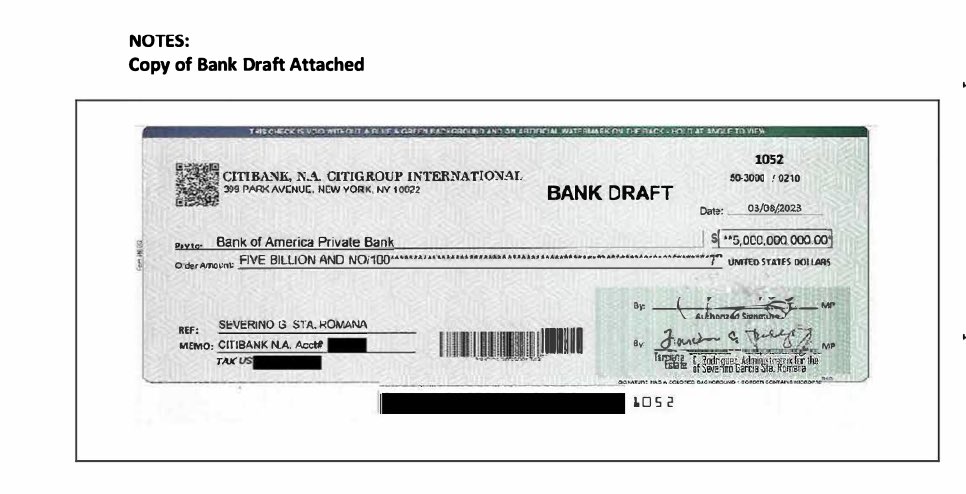
Meet Tarciana C. Rodriguez, the administratrix of the Estate of Severino Garcia Santa Romana. She signed the bank drafts totaling $5.1 billion that Brian Davis (per his lawsuit) delivered to Bank of America for deposit in Urban Echo’s bank account: bit.ly/3orL3Mr
The funding source for Brian Davis’ $7.1B Commanders bid?
The Estate of Severino Garcia Santa Romana.
That’s the issuer of the $5.1B bank drafts presented to BOA.
So, who is Mr. Santa Romana?
And why is his estate so interested in football?
I tried to piece it together.🧵
Who was Severino G. Santa Romana ?
— A Filipino-American commando who fought in the Philippines in World War II.
— He was also a CIA operative.
— He reportedly witnessed Imperial Japanese forces burying stolen war loot (gold) in caves and tunnels in the Philippines.
— The Japanese government intended to use that stolen loot to finance Japan’s war effort.
— The stolen gold was referred to as “Yamashita’s Gold,” named after Japanese general Tomoyuki Yamashita.
— Santa Romana allegedly tortured Yamashita’s driver Major Kojima Kashmiri to obtain the probable locations of the loot.
— Santa Romana recovered said gold and deposited it in Citibank.
— He then made the mistake of hiring a young Ferdinand Marcos (who later became President of the Philippines) to act as his attorney.
— Marcos, in his capacity as Santa Romania’s lawyer and chief trustee, used his limited power to attorney to gain control over Santa Romania’s gold and other assets.
— Nonetheless, large quantities of the gold held by Citibank remained in the account names of Severino Garcia Santa Romana and Jose Antonio Diaz de la Pas (the latter being an alias of Santa Romana).
— Santa Romana’s widow’s name is Liz Santa Romano. She was the primary heir as well as the original executor of the Estate of Severino Garcia Santa Romana.
— At the time of her death, the accounts allegedly contained 1.3 trillion dollars in gold and cash.
Bohannon could face federal criminal conspiracy charges under the Sports Bribery Act of 1964 (18 USC 2264) if he received anything of value to influence, or attempt to influence, “in any way” the outcome of any sporting contest.
The penalty for conspiracy to commit sports bribery and for unlawful use of interstate facilities is imprisonment for not more than five (5) years and/or a $250,000.00 fine.