Read on Twitter
By 2025, ChatGPT will destabilize hundreds of millions of white-collar jobs.
It could mean mass job loss for the highly educated.
Here's what you need to know:
It could mean mass job loss for the highly educated.
Here's what you need to know:
Historically, automation negatively impacted lower paid workers.
From robots to phone-answering systems, technology simply replaced factory workers, receptionists, and others.
But ChatGPT and other generative AI will disrupt knowledge workers and creatives.
From robots to phone-answering systems, technology simply replaced factory workers, receptionists, and others.
But ChatGPT and other generative AI will disrupt knowledge workers and creatives.

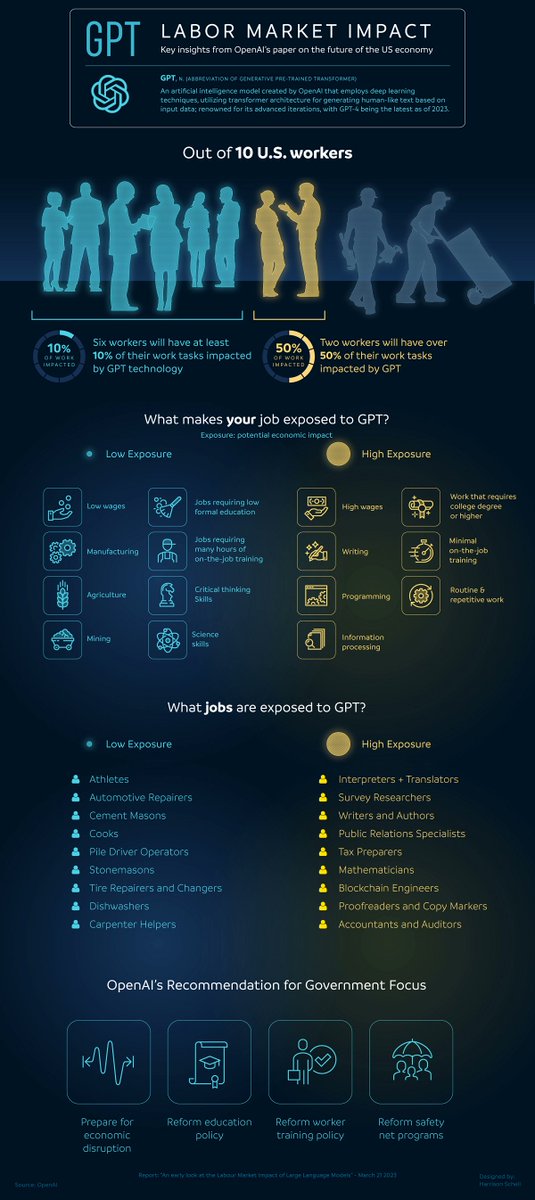
According to a study by OpenAI, OpenResearch, & UPenn -
The jobs most impacted will be:
- high wage
- writing
- programming
- information processing
- requires college degree or higher
- routine & repetitive work
arxiv.org/pdf/2303.10130…
The jobs most impacted will be:
- high wage
- writing
- programming
- information processing
- requires college degree or higher
- routine & repetitive work
arxiv.org/pdf/2303.10130…
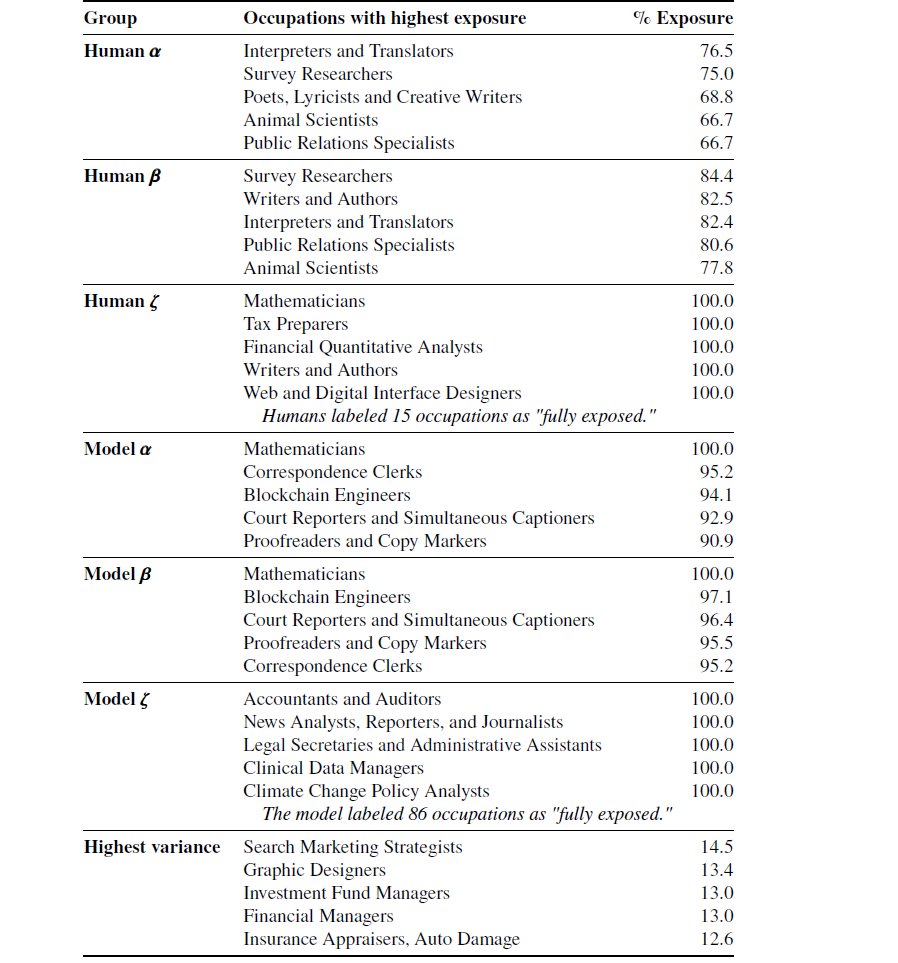
Individuals with Bachelor’s, Master’s, and professional degrees are more
exposed.
Including:
Mathematicians
Writers / Authors
Web & Digital Interface Designers
Accountants & Auditors
Reporters & Journalists
Legal Secretaries & Administrative Assistants
exposed.
Including:
Mathematicians
Writers / Authors
Web & Digital Interface Designers
Accountants & Auditors
Reporters & Journalists
Legal Secretaries & Administrative Assistants
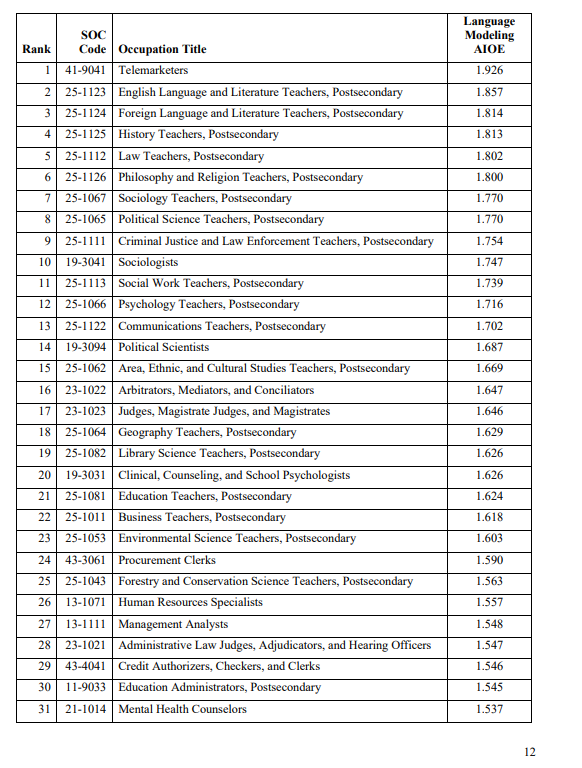
Another study identifies the occupations most exposed to advances in generative AI, both language and image models.
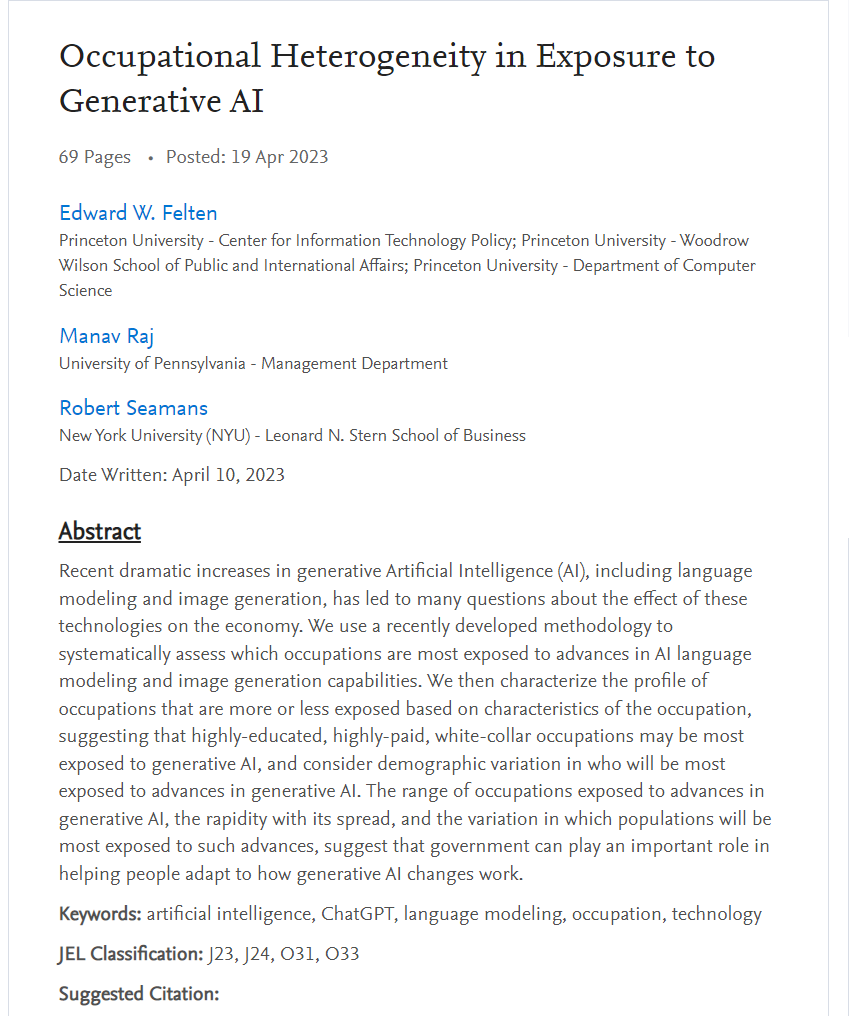
Top occupations most exposed to AI’s language modeling skills include:
• Postsecondary teachers
• Sociologists
• Political scientists
• Human resources specialists
• Arbitrators, mediators, and conciliators
• Postsecondary teachers
• Sociologists
• Political scientists
• Human resources specialists
• Arbitrators, mediators, and conciliators
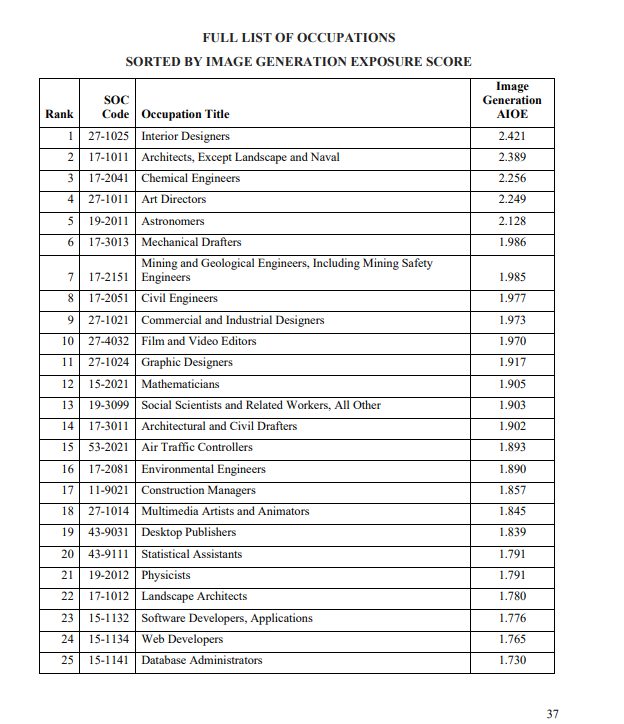
Top occupations most exposed to AI’s image generation skills:
• Interior designers
• Architects
• Chemical engineers
• Art directors
• Film and video editors
• Interior designers
• Architects
• Chemical engineers
• Art directors
• Film and video editors
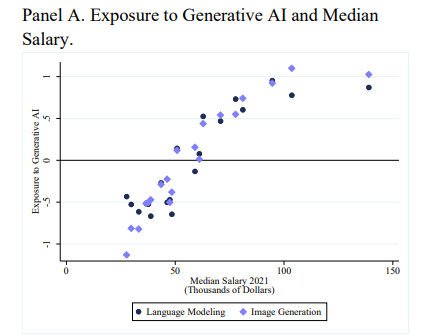
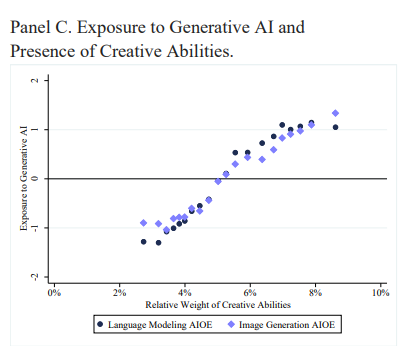
Exposure to generative AI is highest for salaries above $75K.
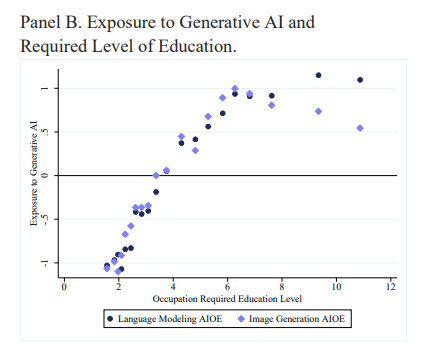
Exposure to language models is highest for occupations that require higher levels of education.
Exposure to image and language models is highest for the more creative occupations.
[Want to know how your job is impacted?
Get the results for nearly 800 occupations here:
papers.ssrn.com/sol3/papers.cf…]
Get the results for nearly 800 occupations here:
papers.ssrn.com/sol3/papers.cf…]
Some influential thinkers suggest that LLMs will take years to impact real jobs.
https://twitter.com/benedictevans/status/1653416007308804097
But LLMs are already impacting the hiring decisions of big companies.
AI-powered tools and workflows will slow or stop future growth in head count.
Per Business Insider, tech giants aren't just cutting thousands of jobs — they're making them extinct.
businessinsider.com/tech-jobs-aren…
AI-powered tools and workflows will slow or stop future growth in head count.
Per Business Insider, tech giants aren't just cutting thousands of jobs — they're making them extinct.
businessinsider.com/tech-jobs-aren…
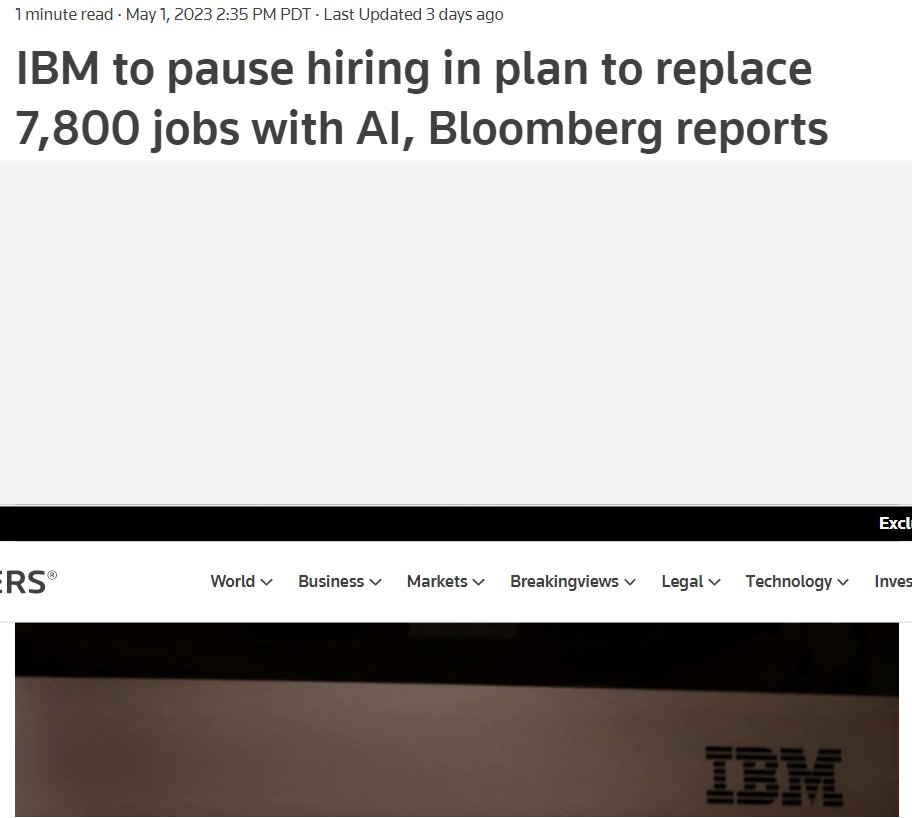
According to Reuters, IBM is pausing hiring in a plan to replace 7,800 jobs with AI.
CEO Arvind Krishna said 30% of non-customer-facing roles could be replaced by AI and automations in five years.
CEO Arvind Krishna said 30% of non-customer-facing roles could be replaced by AI and automations in five years.
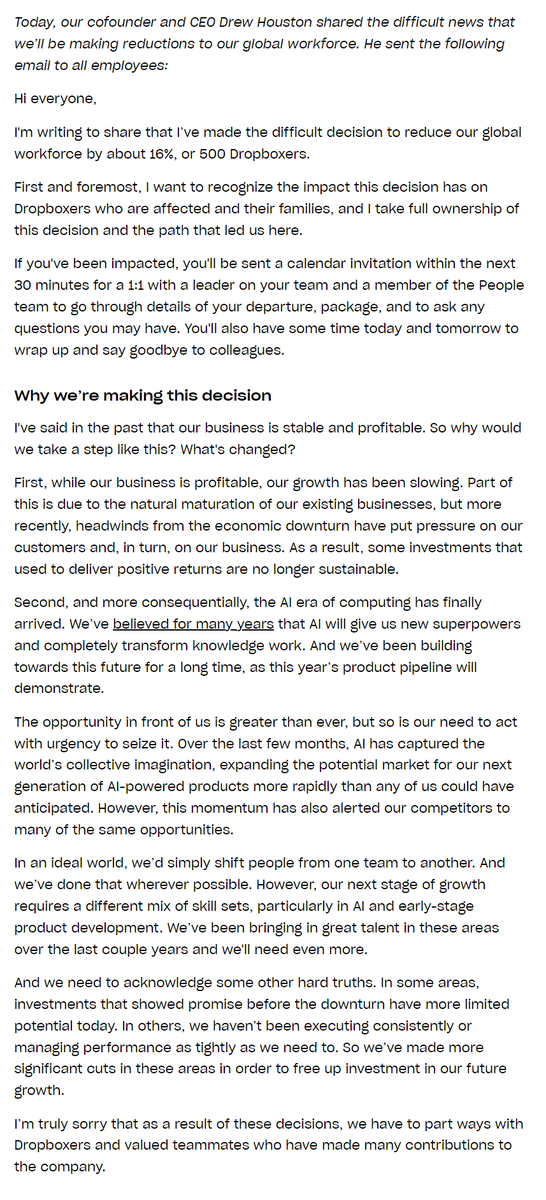
Dropbox is laying off around 500 employees, about 16% of the company’s entire workforce.
In a memo to employees Dropbox CEO Drew Houston wrote:
Our next stage of growth requires a different mix of skill sets, particularly in AI and early-stage product development.
In a memo to employees Dropbox CEO Drew Houston wrote:
Our next stage of growth requires a different mix of skill sets, particularly in AI and early-stage product development.
BuzzFeed is also making major AI-driven changes.
In January, CEO Jonah Peretti told employees in a memo that they can expect “AI inspired content” to “move from an R&D stage to part of our core business.”
theverge.com/2023/1/26/2357…
In January, CEO Jonah Peretti told employees in a memo that they can expect “AI inspired content” to “move from an R&D stage to part of our core business.”
theverge.com/2023/1/26/2357…
China's Bluefocus is replacing external copywriters and graphic designers with generative AI.
According to an internal memo: To embrace the new wave of AI-generated content, we've decided to halt all spending on third-party copywriters and designers.
techspot.com/news/98314-com…
According to an internal memo: To embrace the new wave of AI-generated content, we've decided to halt all spending on third-party copywriters and designers.
techspot.com/news/98314-com…
A team at Amazon found ChatGPT to be "very good job" at AWS customer support questions.
And it could "create training documents and handle corporate strategy questions."
businessinsider.com/chatgpt-amazon…
And it could "create training documents and handle corporate strategy questions."
businessinsider.com/chatgpt-amazon…
The next steps are obvious.
When companies can substitute machines for people, they will.
When companies can substitute machines for people, they will.
Other experts say you should not worry about AI causing mass unemployment:
https://twitter.com/ylecun/status/1654869781734883331
But some believe the impact will be severe.
"ChatGPT & the tidal wave of generative AI tech will wipe out not just jobs, but entire sectors.
This gargantuan disruption will affect the self-declared “best and brightest” among us." ~ @didou
cmswire.com/digital-experi…
"ChatGPT & the tidal wave of generative AI tech will wipe out not just jobs, but entire sectors.
This gargantuan disruption will affect the self-declared “best and brightest” among us." ~ @didou
cmswire.com/digital-experi…
Here are 13 tips for how to respond to career disrupting AI:
1. stay relevant by innovating
2. reflect, learn, adapt fast
3. be strategic
4. learn as much as possible about it
5. be creative and train AI
6. build effective relationships
1. stay relevant by innovating
2. reflect, learn, adapt fast
3. be strategic
4. learn as much as possible about it
5. be creative and train AI
6. build effective relationships
7. develop yourself, not your position
8. be on top of it
9. find creative ways to incorporate it
10. develop deep emotional intelligence
11. be flexible
12. focus on human-to-human interaction
13. don't fight it, befriend it
forbes.com/sites/forbesco…
8. be on top of it
9. find creative ways to incorporate it
10. develop deep emotional intelligence
11. be flexible
12. focus on human-to-human interaction
13. don't fight it, befriend it
forbes.com/sites/forbesco…
Sources:
How ChatGPT Will Destabilize White-Collar Work - The Atlantic theatlantic.com/ideas/archive/…
How ChatGPT Will Destabilize White-Collar Work - The Atlantic theatlantic.com/ideas/archive/…
Generative AI Could Affect 300 Million Full-Time Jobs, Goldman Sachs (businessinsider.com) businessinsider.com/generative-ai-…
That's all for today, folks.
If you enjoyed this, please share by retweeting the first tweet.
I write about the technologies that are changing the world.
Follow me
@mishadavinci
for more.
If you enjoyed this, please share by retweeting the first tweet.
I write about the technologies that are changing the world.
Follow me
@mishadavinci
for more.
https://twitter.com/mishadavinci/status/1655210987677687809
Every week I write a newsletter that helps you adapt to exponential technologies and get ahead of the future.
Join thousands of subscribers here👇
open.substack.com/pub/mishadavin…
Join thousands of subscribers here👇
open.substack.com/pub/mishadavin…
• • •
Missing some Tweet in this thread? You can try to
force a refresh