
 Read on Twitter
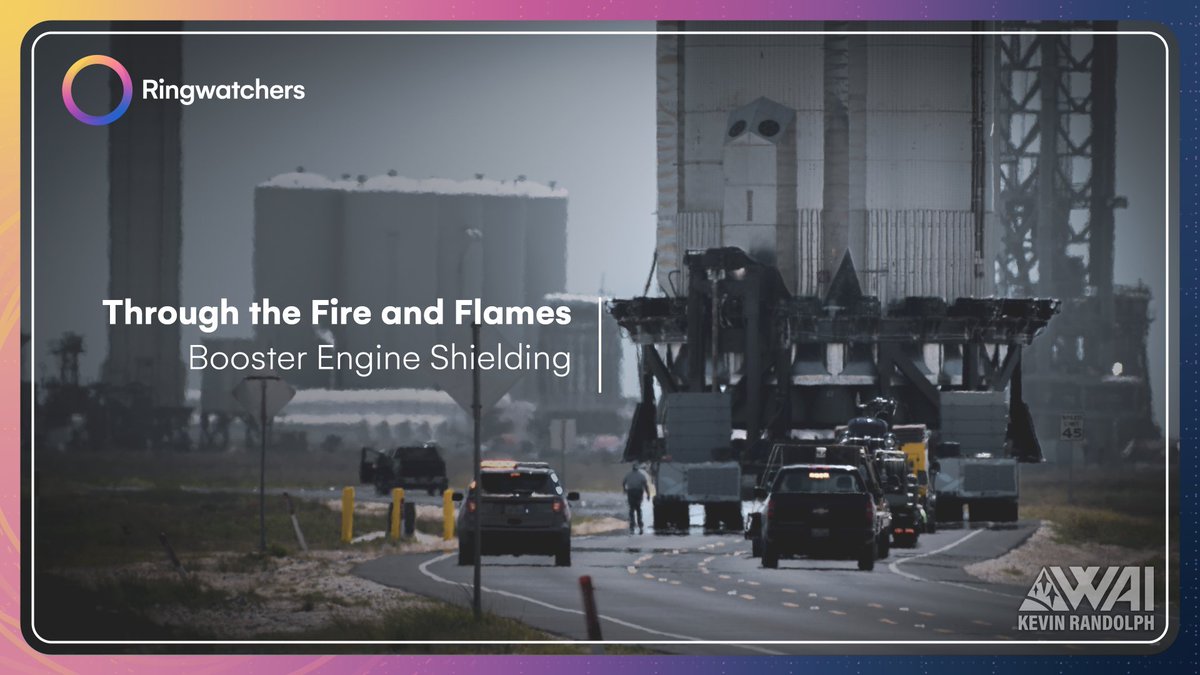
Super Heavy’s engine shielding is quite an impressive system, and Elon Musk has been talking a lot about this with Booster 9. Let’s take a closer look at how SpaceX isolates and protects all 33 engines on the Booster. (1/14)
📸 @CosmicalChief
Animations provided by @ChameleonCir
📸 @CosmicalChief
Animations provided by @ChameleonCir
@CosmicalChief @ChameleonCir Getting right into it, the covers are unsurprisingly made of stainless steel, and many areas beneath the vehicle are covered in this black material, which could be related to the extra heating in that area. (2/14)
📸 @SpaceX @RGVaerialphotos
📸 @SpaceX @RGVaerialphotos
@CosmicalChief @ChameleonCir @SpaceX @RGVaerialphotos These 13 circular pieces surrounding the center engine mounts get added to the aft section in the tents before stacking. SpaceX is always working towards reducing the number of tasks to be completed after final stacking. (3/14)
📸 @LabPadre @NASASpaceflight @SpaceX
📸 @LabPadre @NASASpaceflight @SpaceX
@CosmicalChief @ChameleonCir @SpaceX @RGVaerialphotos @LabPadre @NASASpaceflight Moving to the outer ring of 20 engines. These panels that go between each engine get installed. They have a dividing wall mounted perpendicular to the interior face, protecting each engine from the engine next to it in case of a… high-energy event. (4/14)
📸 @CosmicalChief
📸 @CosmicalChief
@CosmicalChief @ChameleonCir @SpaceX @RGVaerialphotos @LabPadre @NASASpaceflight The outer 20 engines are prepared for installation, and 2 halves are joined around the top of the bell of each engine before integration. Once again, SpaceX is trying to do as much as possible before integrating components. (5/14)
📸 @CosmicalChief
📸 @CosmicalChief
@CosmicalChief @ChameleonCir @SpaceX @RGVaerialphotos @LabPadre @NASASpaceflight For this thread, we’ll ignore the normal engine installation order and put all 20 fixed outer engines in now. On the exterior side, curved panels cover the engine after the installation is complete. (6/14)
📸 @RGVaerialphotos @NASASpaceflight
📸 @RGVaerialphotos @NASASpaceflight
@CosmicalChief @ChameleonCir @SpaceX @RGVaerialphotos @LabPadre @NASASpaceflight On the interior, curved panels close each isolated chamber. We have seen how the dividing walls split off in 2 directions, allowing these panels to be bolted into them and have also seen matching curved parts on the preinstalled shielding. (7/14)
📸 @SpaceX @CosmicalChief
📸 @SpaceX @CosmicalChief
@CosmicalChief @ChameleonCir @SpaceX @RGVaerialphotos @LabPadre @NASASpaceflight Now we’ll move to the center engines. Just like the outer 20, all 13 have a part of their shielding pre-installed before they move over to the vehicle. (8/14)
📸 @CosmicalChief
📸 @CosmicalChief
@CosmicalChief @ChameleonCir @SpaceX @RGVaerialphotos @LabPadre @NASASpaceflight For ease of visibility, we’ll only install one for now. When the engine is completely plumbed and wired in, 2 halves of a curved component get added to the top, and 2 halves of a cylinder close out the remaining exposed area. (9/14)
📸 @LabPadre
📸 @LabPadre
@CosmicalChief @ChameleonCir @SpaceX @RGVaerialphotos @LabPadre @NASASpaceflight That curved component interfaces with the 13 circular portions that we mentioned earlier and uses a similar concept to a swivelling ball joint. You can see how we believe this works in the animation below. (10/14)
@CosmicalChief @ChameleonCir @SpaceX @RGVaerialphotos @LabPadre @NASASpaceflight Essentially every open surface will have plates placed over, also featuring that black material layer, which creates what could be called a false-ceiling. This false-ceiling is used to protect the pipes, wires, and more. (11/14)
📸 @SpaceX
📸 @SpaceX
@CosmicalChief @ChameleonCir @SpaceX @RGVaerialphotos @LabPadre @NASASpaceflight Now we’ll just quickly put the remaining 12 center engines in place, and you now have all 33 engines in their own isolated enclosures. Flight 1 showed that Raptor still isn’t perfect, so having this kind of protection really is important. (12/14)
📸 @SpaceX
📸 @SpaceX
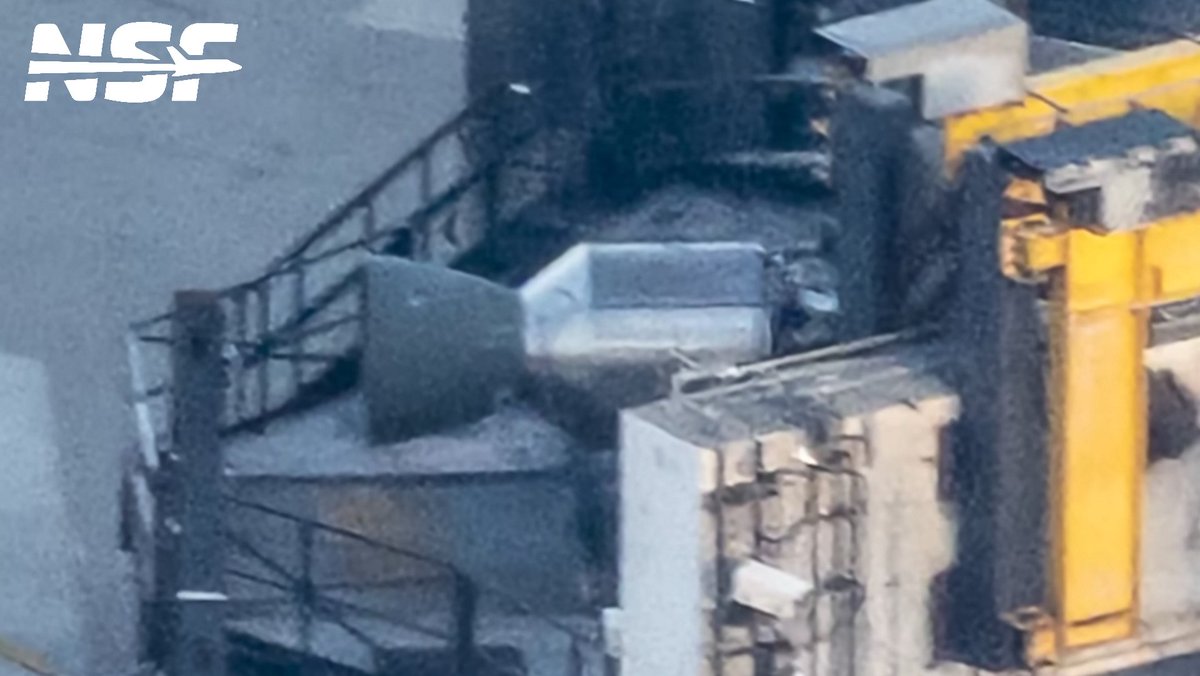
@CosmicalChief @ChameleonCir @SpaceX @RGVaerialphotos @LabPadre @NASASpaceflight SpaceX has even tested some of its engines at the McGregor testing facility with the shielding installed. You can see an engine here with the same style covers as the center engines, just without the black material overtop. (13/14)
📸 @NASASpaceflight
📸 @NASASpaceflight
@CosmicalChief @ChameleonCir @SpaceX @RGVaerialphotos @LabPadre @NASASpaceflight Hopefully, you’ve learned at least something new about the engine enclosures on the Super Heavy Booster, and how it’s a lot more than it may appear to be. Like the Booster, the Ship also has its own unique shielding, but maybe that could be a topic for another day. (14/14)
• • •
Missing some Tweet in this thread? You can try to
force a refresh






