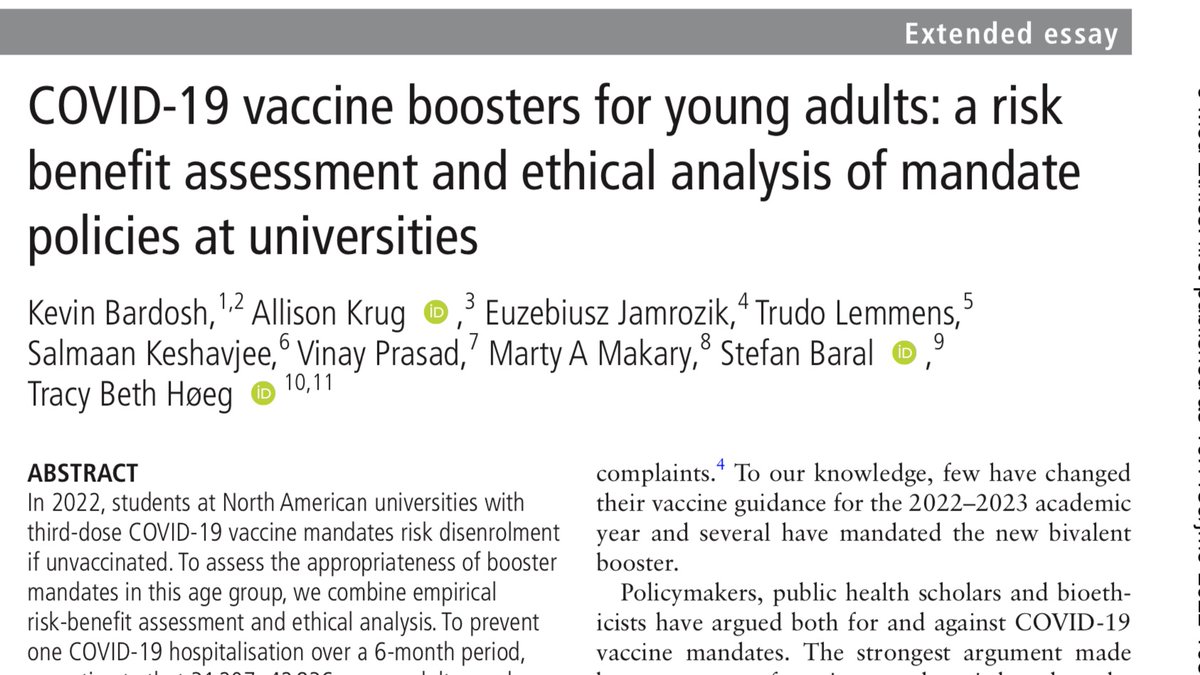
Read on Twitter
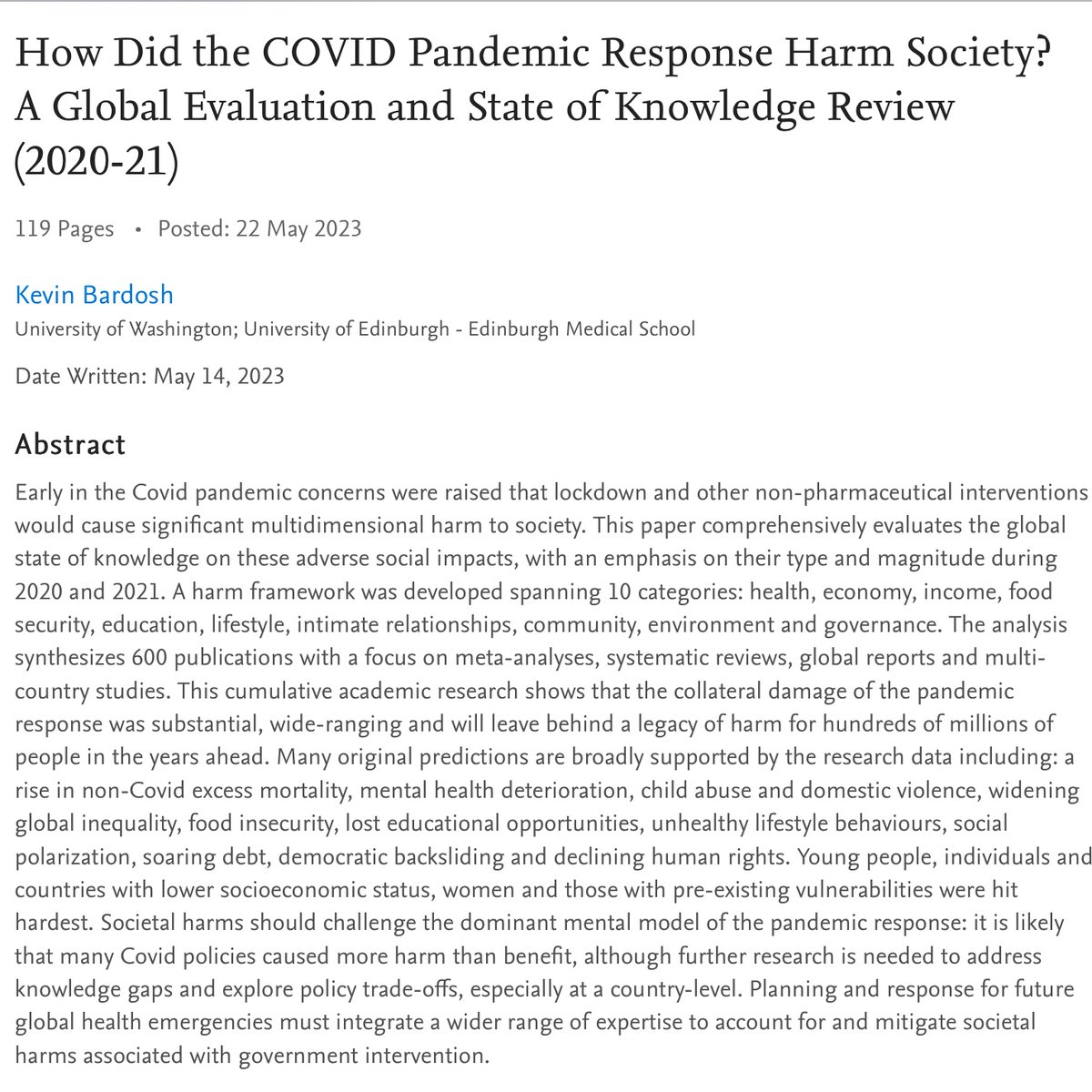
📢How did the Covid response harm society?
Read my new comprehensive evaluation of this important,complex topic
"Research shows collateral damage was substantial, wide-ranging & will leave behind legacy of harm for 100s of millions in yrs ahead"
👇1/12
papers.ssrn.com/sol3/papers.cf…
Read my new comprehensive evaluation of this important,complex topic
"Research shows collateral damage was substantial, wide-ranging & will leave behind legacy of harm for 100s of millions in yrs ahead"
👇1/12
papers.ssrn.com/sol3/papers.cf…
Covid was the most disruptive global crisis since WW2
& the use of NPIs, including lockdown, the most consequential set of policies in modern public health history
Early on, many voiced concern that NPIs would cause widespread social harm, esp for vulnerable/poorer pls.
2/12
& the use of NPIs, including lockdown, the most consequential set of policies in modern public health history
Early on, many voiced concern that NPIs would cause widespread social harm, esp for vulnerable/poorer pls.
2/12
Now, a few yrs in future we can evaluate concerns with wisdom of hindsight & based on ALOT of research evidence
That was my goal:
1) What types of adverse societal impacts occurred worldwide 2020-2021?
2) What does current research tell us about the magnitude of impacts?
3/12
That was my goal:
1) What types of adverse societal impacts occurred worldwide 2020-2021?
2) What does current research tell us about the magnitude of impacts?
3/12
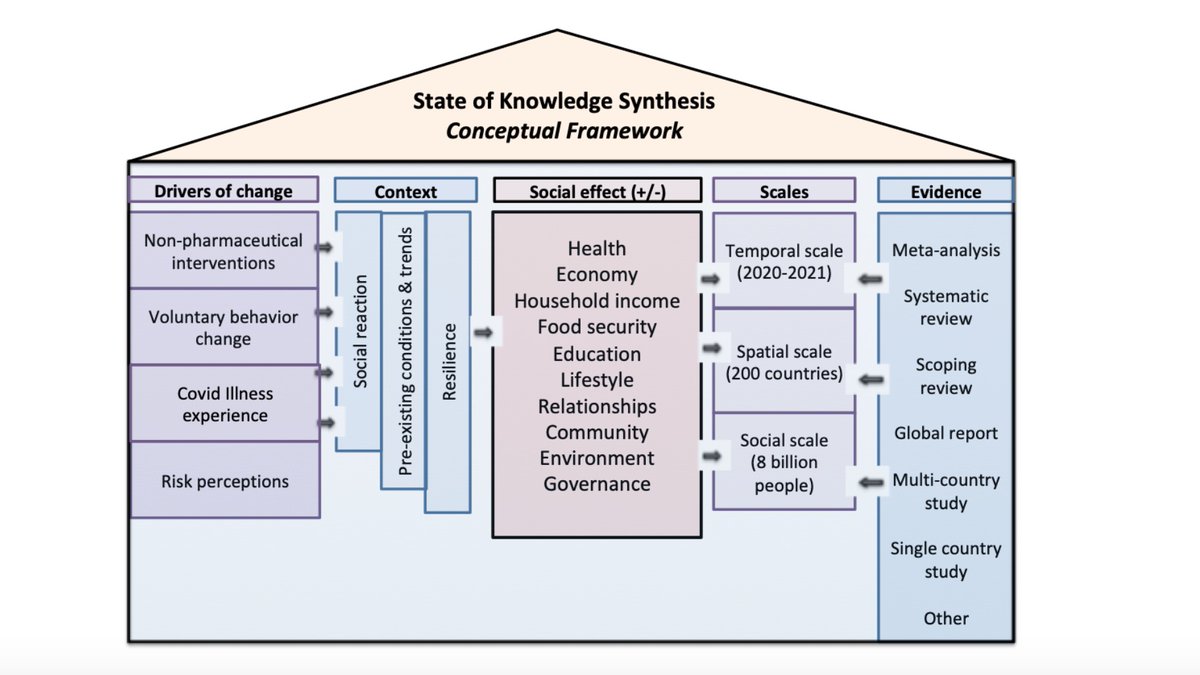
I developed a framework to guide this global state of knowledge review. My goal was to be objective & evidence-based, & rely on the cumulative research data in each field.
My final analysis includes >600 research publications
4/12
My final analysis includes >600 research publications
4/12
So, what did I find?
Read the full report!!
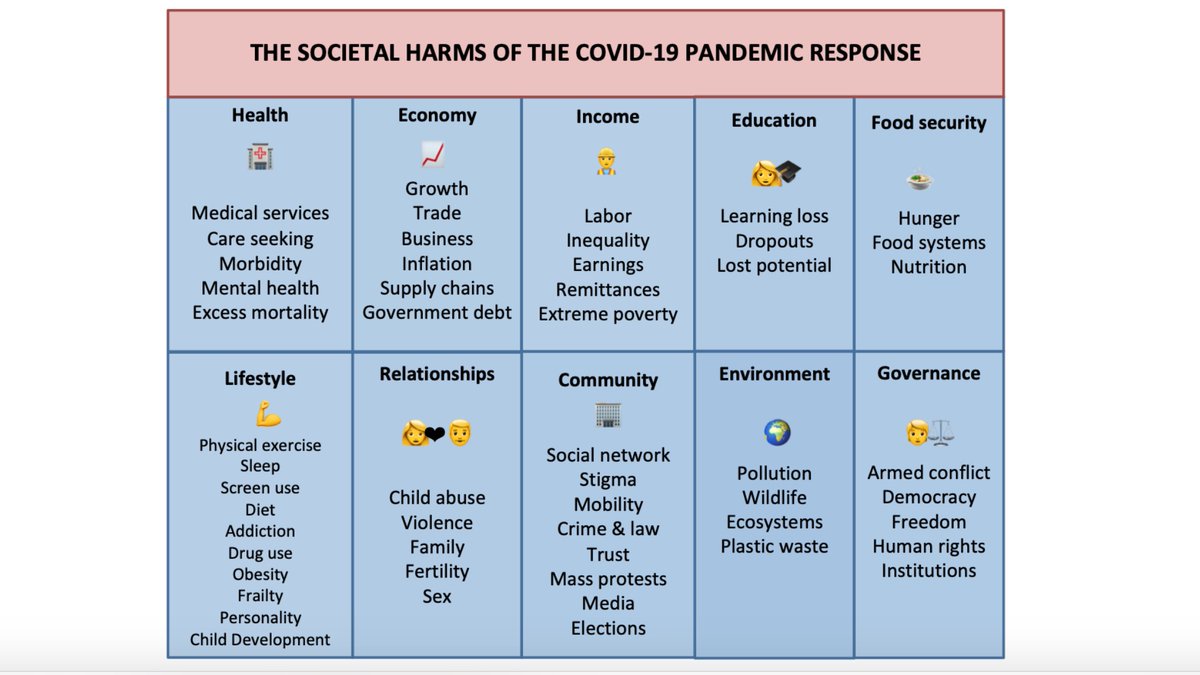
In it, I discuss the state of knowledge across 10 areas of harm (2020-21) & over 50 sub-areas👇
Young people, individuals/countries with lower socioeconomic status, women & pls with pre-existing vulnerabilities were hit hardest
5/12
Read the full report!!
In it, I discuss the state of knowledge across 10 areas of harm (2020-21) & over 50 sub-areas👇
Young people, individuals/countries with lower socioeconomic status, women & pls with pre-existing vulnerabilities were hit hardest
5/12
A few high-level findings:
- 14-18 million excess deaths, of which 5-6 million are reported Covid deaths;
- Tens-of-millions of new mental health disorders, especially among young people
- Long-term economic & business damage, including soaring government & private debt
6/12
- 14-18 million excess deaths, of which 5-6 million are reported Covid deaths;
- Tens-of-millions of new mental health disorders, especially among young people
- Long-term economic & business damage, including soaring government & private debt
6/12
- $6 trillion of lost income for workers worldwide, and an uneven recovery in 2022
- 200-400 million more people pushed into poverty in 2022 (compared to 2019)
- 350 million more people pushed into food insecurity from 2019 to 2021;
7/12
- 200-400 million more people pushed into poverty in 2022 (compared to 2019)
- 350 million more people pushed into food insecurity from 2019 to 2021;
7/12
- A 13% increase in the rate of global learning poverty between 2019 and 2022, erasing all gains in the education sector since 2000. Large dropout rates. An estimated $21 trillion may be lost in earnings for the current generation of students.
8/12
8/12
- An increase in negative lifestyle behaviors such as obesity, screen use, insomnia, physical and social impairments in children, frailty among the elderly, addiction, and poor diet.
- Increased child abuse, domestic violence, crime and gender inequality.
9/12
- Increased child abuse, domestic violence, crime and gender inequality.
9/12
- Declining trust, social cohesion, press freedom, respect for basic human rights, and support for democratic attitudes.
& MUCH MORE.
10/12
& MUCH MORE.
10/12
In the discussion, I outline the implications of this analysis for the future of global public health and emergency response.
I discuss limitations, knowledge gaps, future research needs, lessons, etc.
11/12
I discuss limitations, knowledge gaps, future research needs, lessons, etc.
11/12
In conclusion
"Societal harms challenge the dominant mental model of the pandemic response.
Planning & response for future global health emergencies must integrate a wider range of expertise to account for and mitigate societal harms associated w government intervention."
End
"Societal harms challenge the dominant mental model of the pandemic response.
Planning & response for future global health emergencies must integrate a wider range of expertise to account for and mitigate societal harms associated w government intervention."
End
• • •
Missing some Tweet in this thread? You can try to
force a refresh