Last month I was invited to give a talk on civil rights law to the Yale Federalist Society. There was a huge turnout, and the crowd embraced the message. This will be the next gen of conservative clerks, judges, and gov officials. Here's what I told them. richardhanania.com/p/speech-to-th…
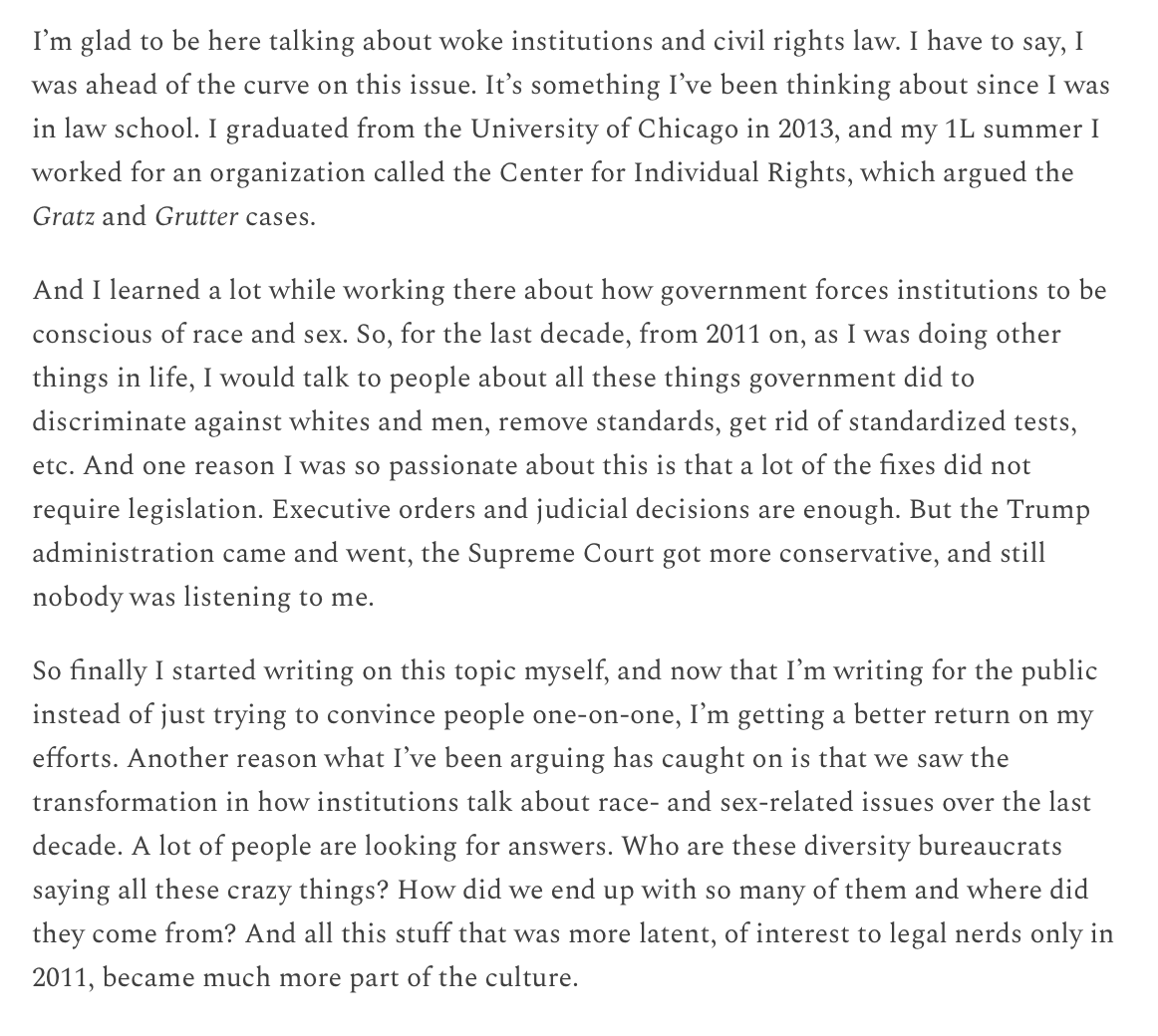
I started with a bit of bragging. I saw the problem with civil rights law and how it deformed institutions over a decade ago. But I could never get anyone to pay attention. So I had to go out and start writing about the topic myself.
What's frustrating about this is that you don't need legislation to change most things. This is a question of executive orders, court decisions, etc. There is tons of low hanging fruit
It took the Great Awokening for people to eventually come around and start looking for answers
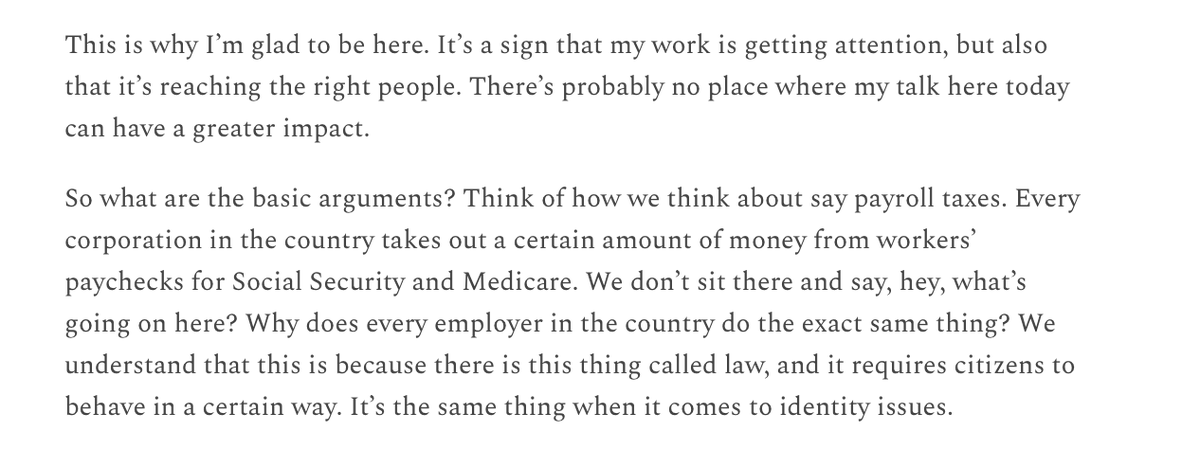
Conservatives have made a mistake in seeing each wokeness controversy as an isolated event. It's like trying to understand payroll taxes and how they work through understanding individual firms and their motivations. In reality, there's a superstructure to the entire system.
So what of specifics? They'll all be laid out in my forthcoming book. But for now, we can start with affirmative action in government contracting.
@VivekGRamaswamy is already promising to repeal or amend EO 11246. Others should follow him.
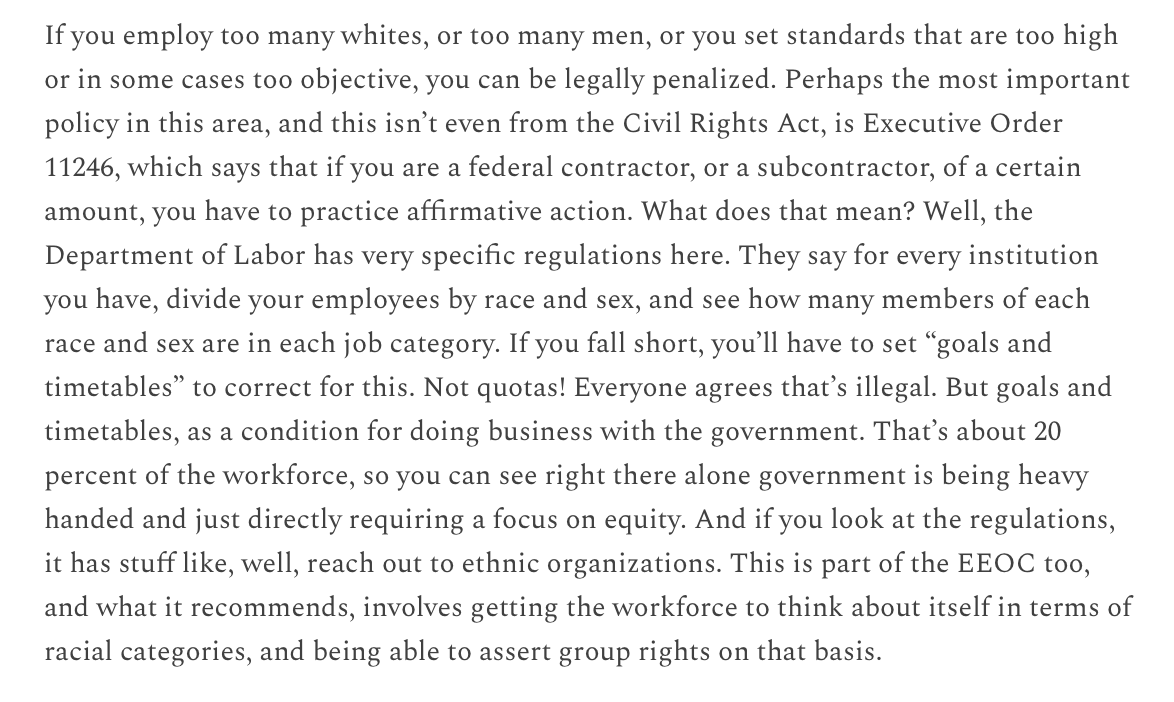
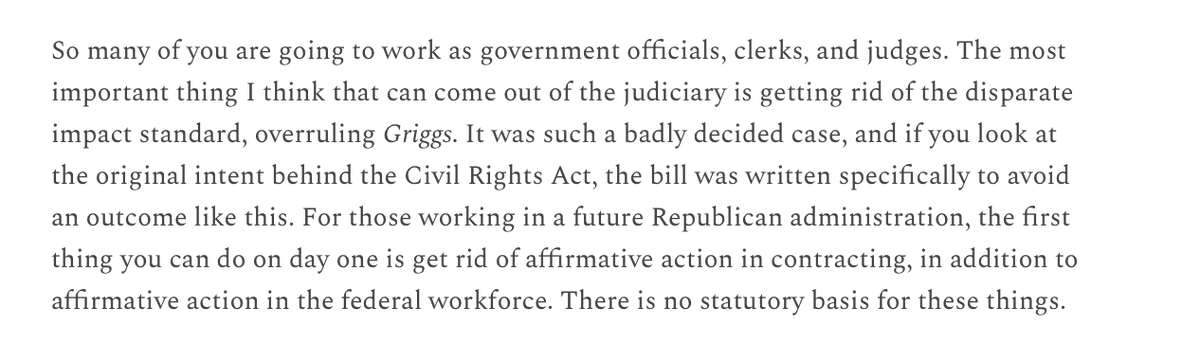
Second, overturn Griggs! This decision is behind everything. Standardized tests? Racist. Fitness standards? Sexist. Enforcing the law? racist. It's the skeleton key of the left. And it's been ignored by the conservative legal movement. But no longer, I hope.
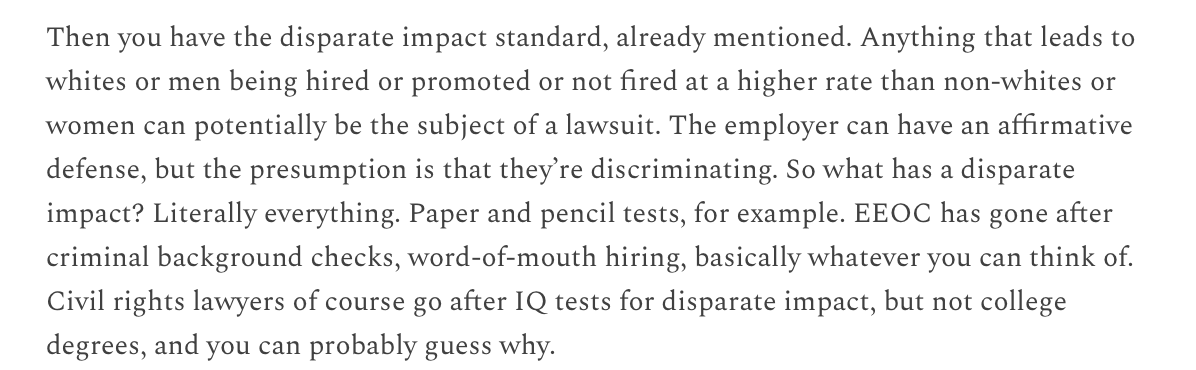
Finally, people act as if the war on free speech is a new thing. In reality, the workplace was sanitized decades ago by harassment law. Gov gives detailed instructions about what jokes you can tell, etc. Firms are required to affirm the identities of employees. That must end.
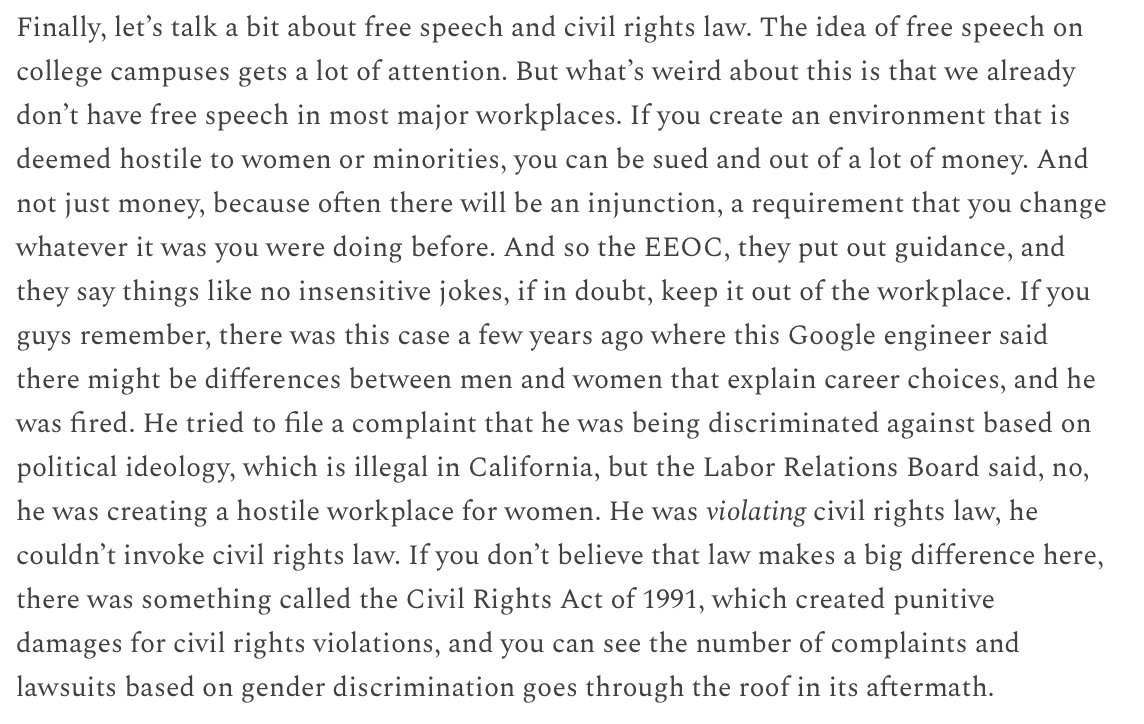
I closed by explaining what I hope doesn't happen in SFFA v. Harvard. See my previous article about the potential of a halfway decision to make things worse. richardhanania.com/p/scotus-must-…
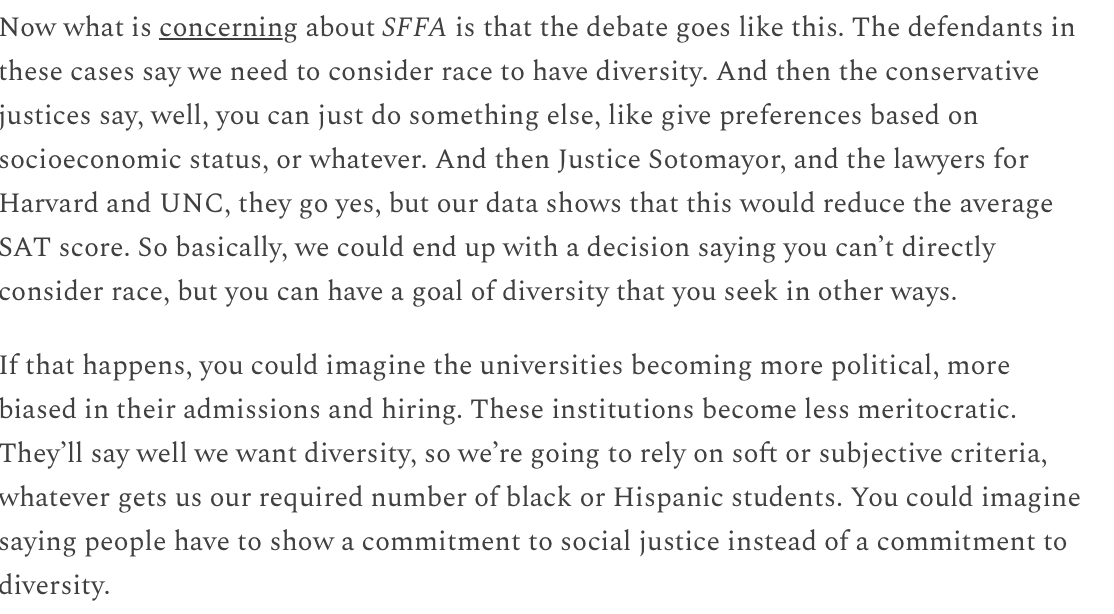
I was glad to see how receptive everyone was to these ideas. They aren't controversial within the conservative movement. No conservative thinks, for example, that Griggs was a good decision. It's simply a matter of setting priorities and focusing people on civil rights law.
Anyway, it's really funny how conservatives are turning against civil rights law and liberals who cover every corner of right-wing "extremism" can't bother to be interested in it.
Because this stuff is boring! It's why it flew under the radar, and why it can be changed.
• • •
Missing some Tweet in this thread? You can try to
force a refresh

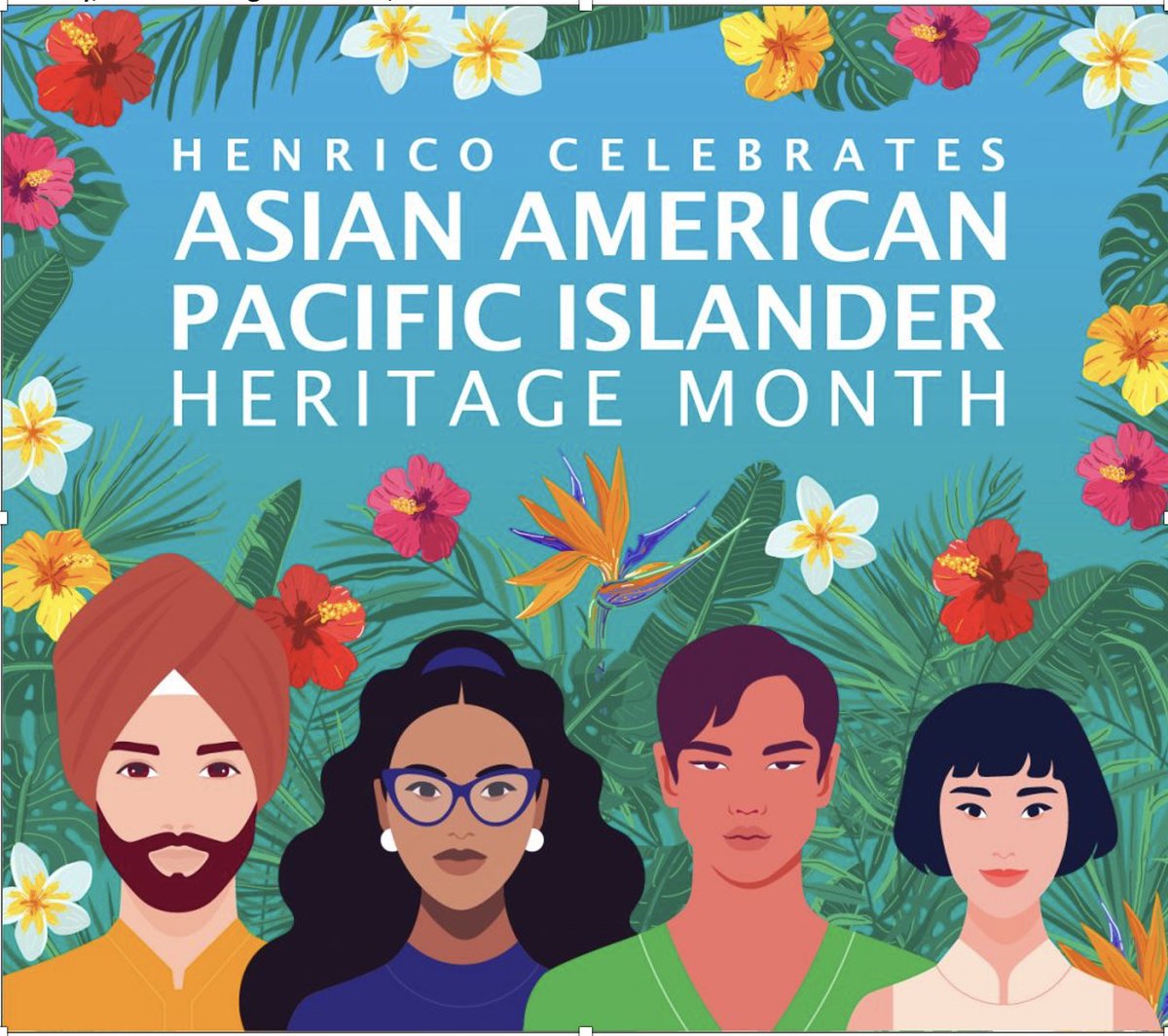
The term Asian American Pacific Islander seems to be everywhere. Where did this bizarre concept come from? How did Samoans, Koreans, and Indians all become the same "race"? Let me explain, and also show you what it tells us about the construction of identity and human nature.🧵
Already in the 1960s, Chinese and Japanese Americans had higher incomes than the US average. While the federal government started to enact programs to help blacks, there was no push to recognize Asians as a group that had suffered discrimination and needed government help.
In 1959, Hawaii was admitted to the union. The congressional delegation of the state lobbied for an “Oriental” category to be counted in government forms. Not much thought was given to the topic at the time, since the Asian population of the US was so small.
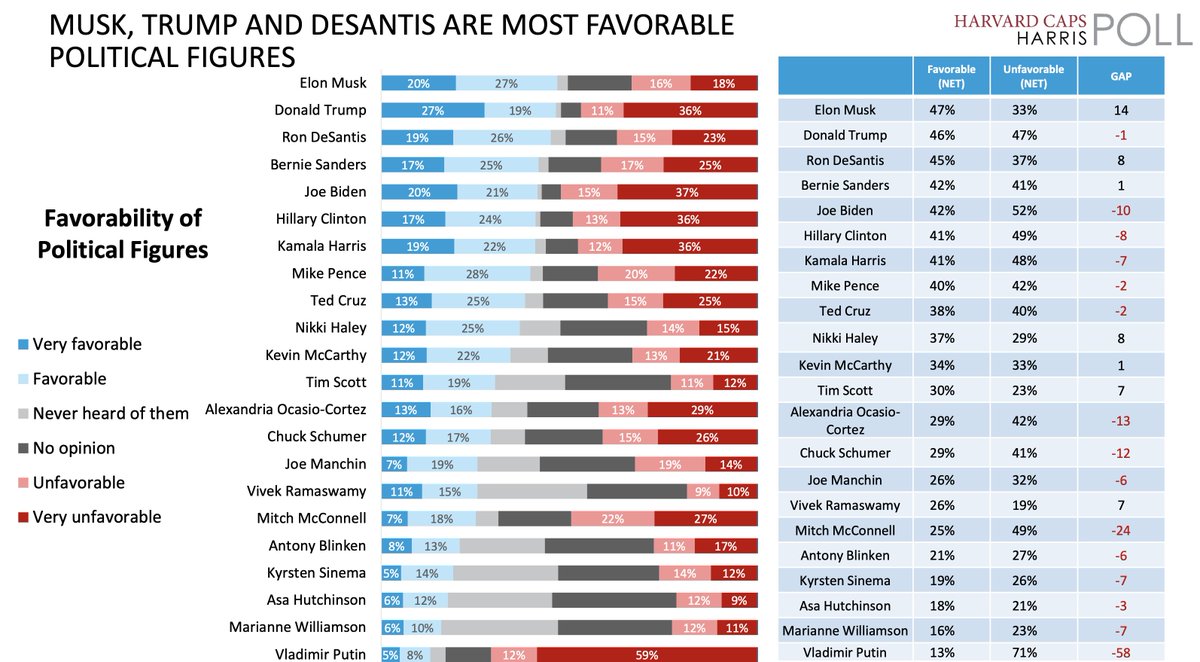
Amazon +65
US military +65
Google +59
The Police +46
Ukraine +28
Least popular
BLM +2
Tiktok -8
Antifa -35
China -49
Russia -49
Winning message is pro-tech, hawkish foreign policy, and pro-police. In other words, normie GOP minus populist weirdness.
Massive opposition to all forms of race preferences
77% oppose going easier on non-white criminals
74% oppose race as a factor in college admissions (66% of Dems)
76% oppose AA in medical schools
84% oppose AA in hiring (77% Dems)
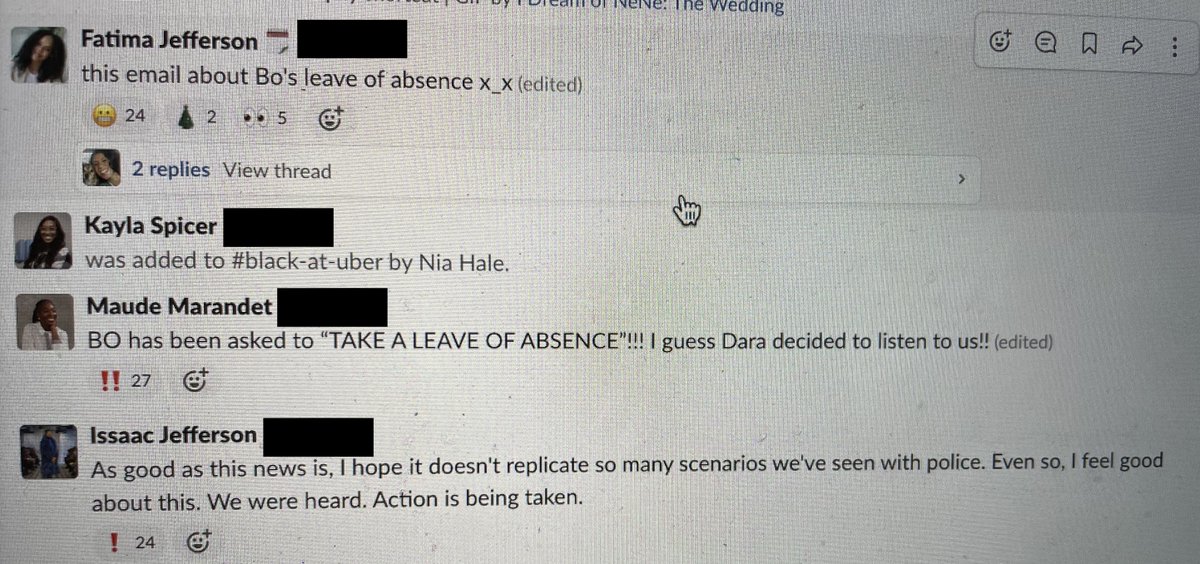
EXCLUSIVE: Uber has put its chief DEI officer Bo Young Lee on a leave of absence after a series of complaints.
This was after a DEI session called Moving Forward: Don't Call Me Karen
An employee organization called "Black at Uber" is celebrating.
It doesn't appear that many men are involved here.
Below are the advertisements for the session, and the email announcing the leave of absence.
This appears to be a classic case of women’s tears. The “Karen” slur upset white women, Asian women in DEI tried to show some sympathy, black women are angry and got the head Asian woman put on leave.
Can discrimination explain why some groups are richer than others? It's a question that clearly divides the right and left. The clear answer is, in a capitalist economy, no. People are too selfish. A 2000 paper called “Prejudice is Free, Discrimination Has Costs” explains why.🧵
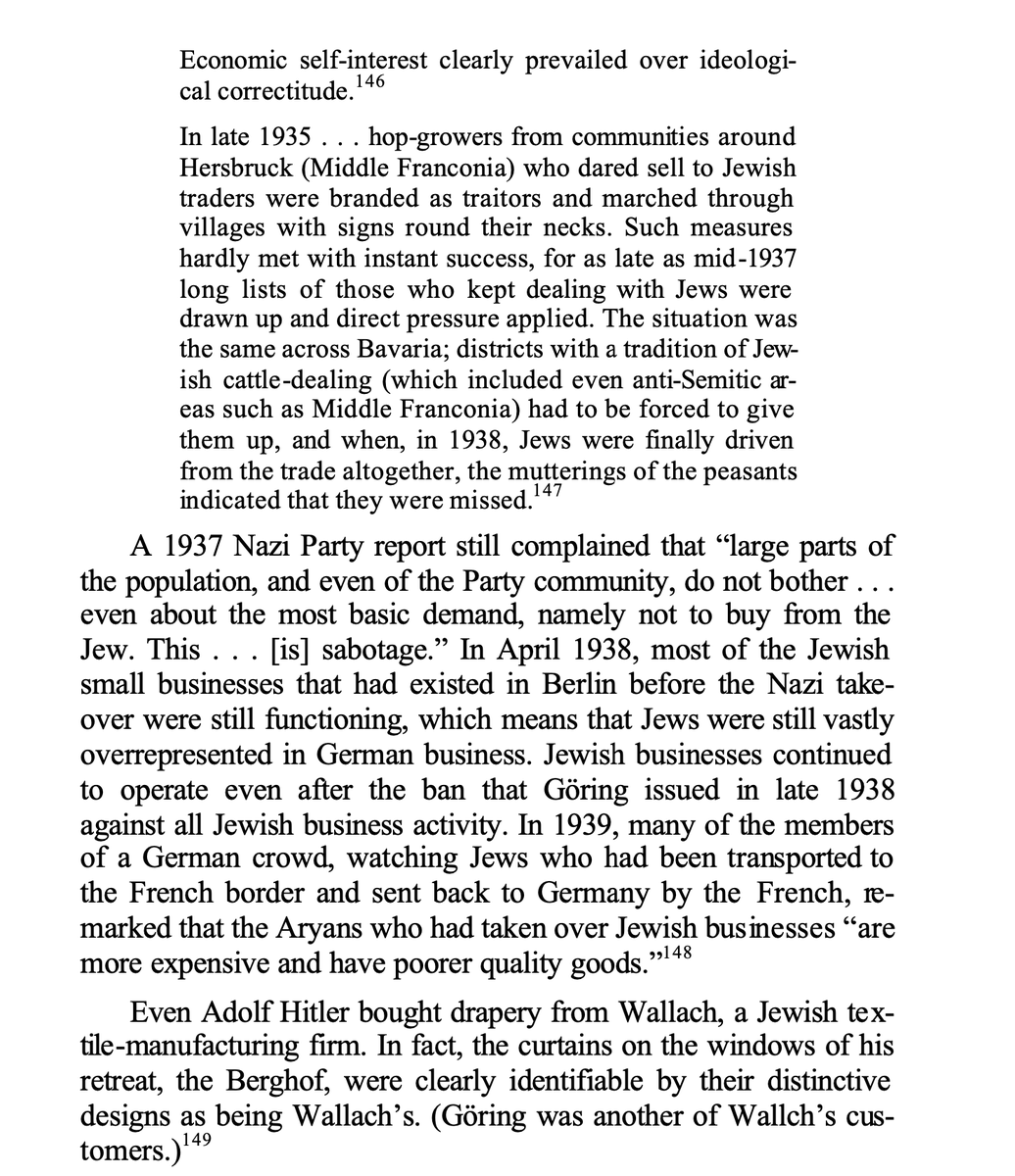
The author uses historical examples and shows that even under the most racist systems, an ethnic group that is talented and productive cannot be held down because people will seek out the goods and services they provide.
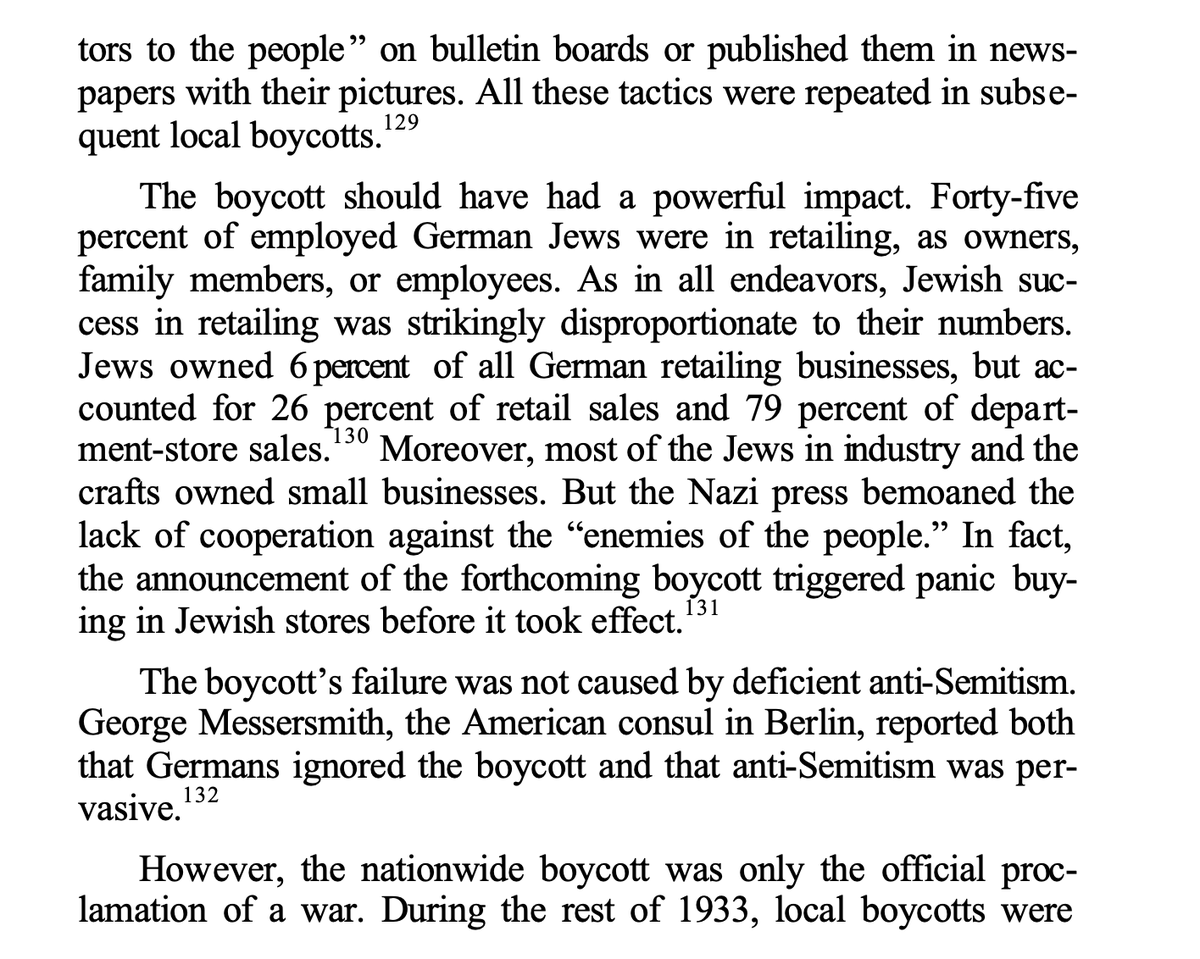
My favorite example: literal Nazis. They couldn’t even get Nazi party members to stop shopping at Jewish department stores. When the Nazis tried to organize boycotts, it set off panic buying. Jews continued to dominate retail, and even Hitler bought drapery from a Jewish store.
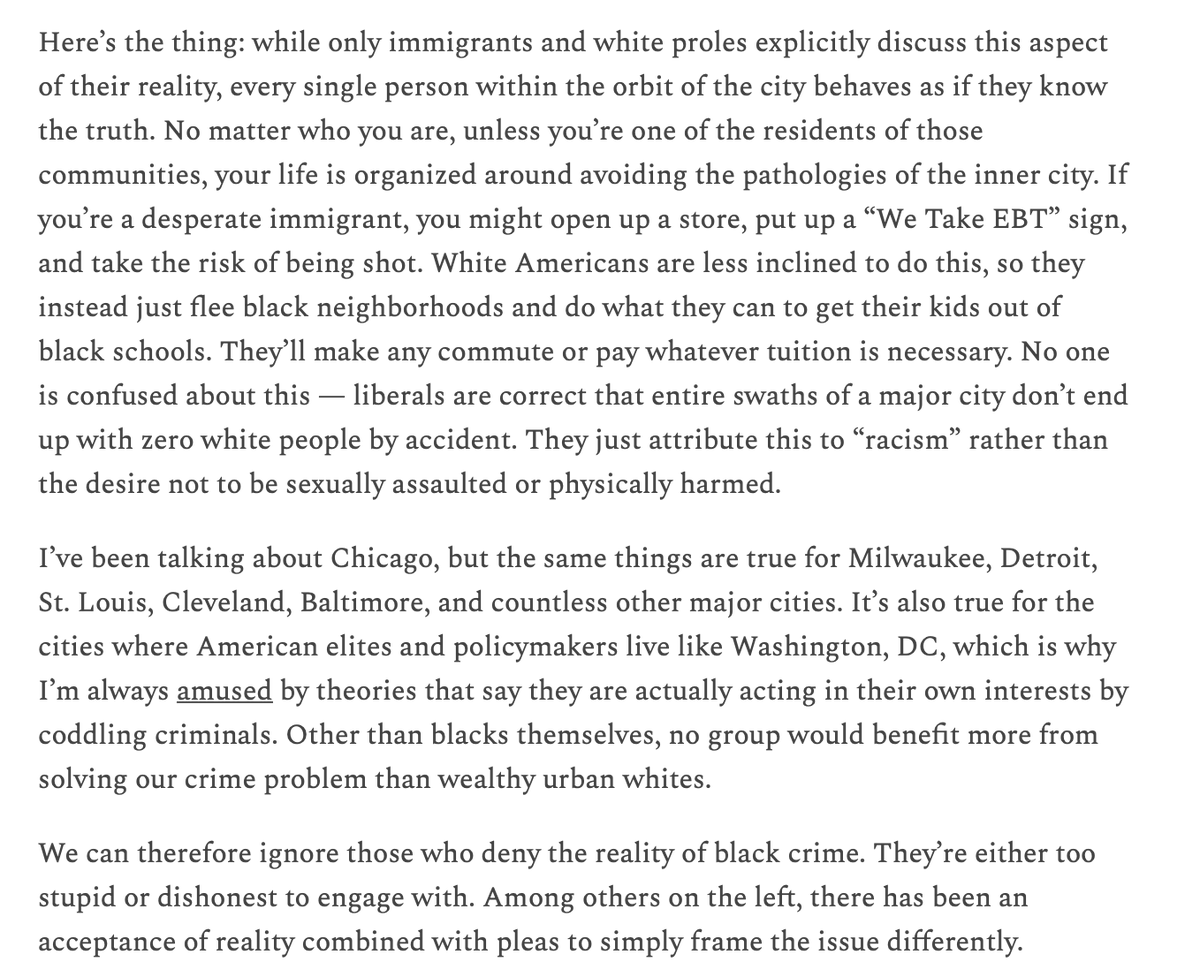
Everything having to do with race in this country is lies on top of lies. A few groups like immigrants and proles will tell the truth, but everyone in the country arranges their life around avoiding the pathologies of the inner city. Can we start being honest about that?
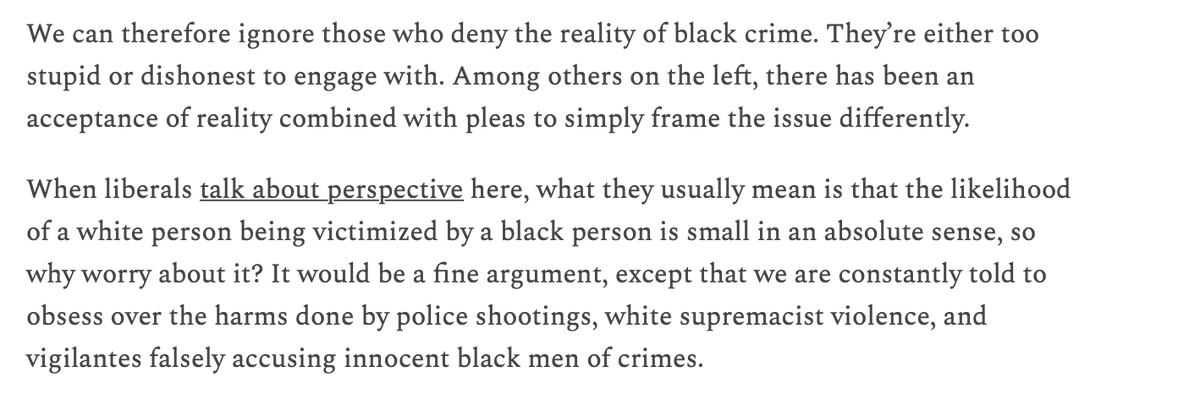
Is black-on-white crime a big issue in the grand scheme of things? Well, compared to cancer or heart attacks, no.
But compared to the lies liberals tell us about police shootings or white supremacist violence being major problems, then yes, it's at least much bigger than that.
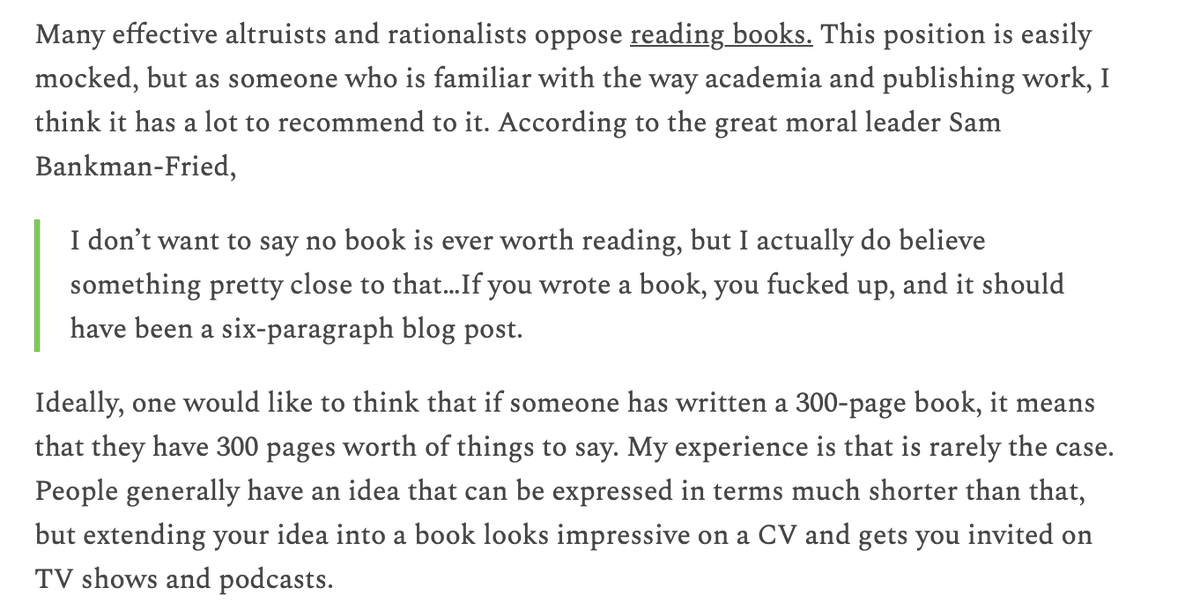
Social desirability bias says you should read a lot of books. No one wants to give advice that makes them seem lazy. But I'm here to tell you that books are mostly an inefficient way to gather information about the world. Thread. richardhanania.com/p/the-case-aga…
One has to understand something about the reason why people write books. Often, they'll have an idea that can be communicated through one academic paper or even a blog post. But there is an incentive to stretch things out to a book for a line on a CV or to get on TV.
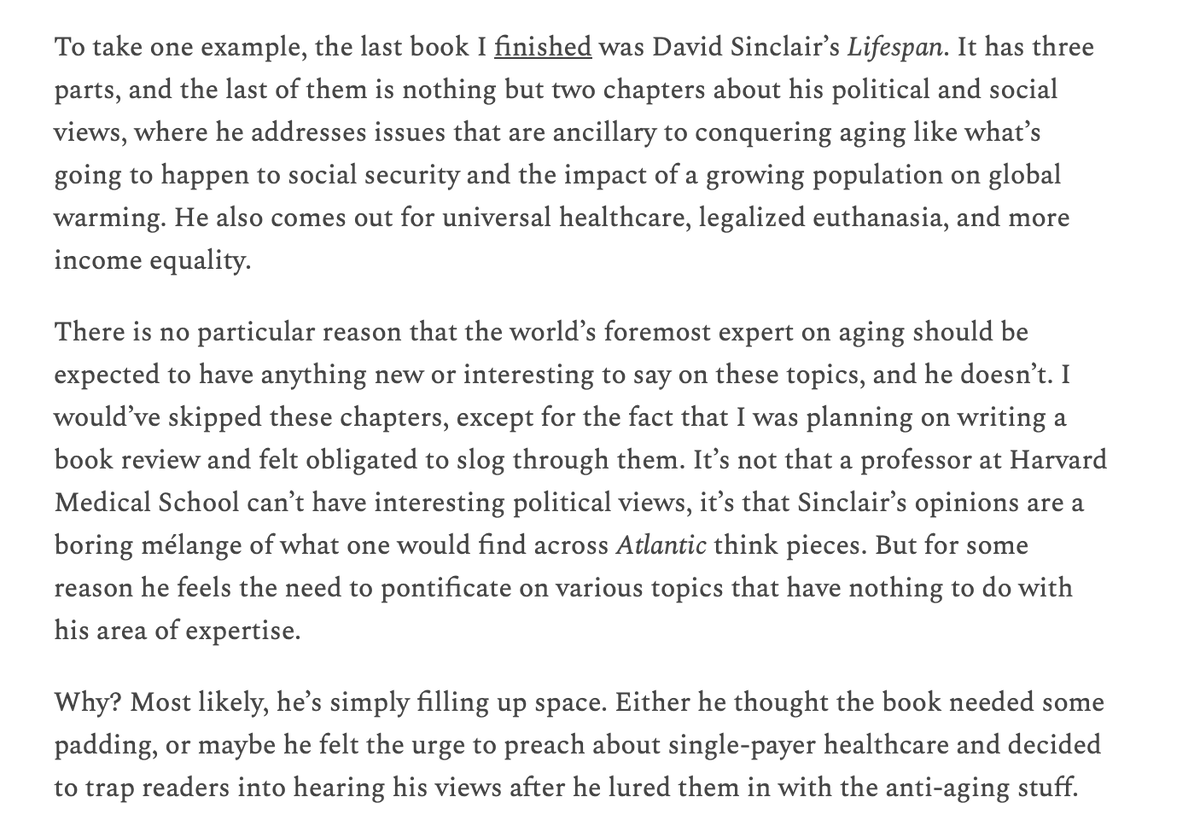
An example from the last book I read: David Sinclair's Lifespan. The author is an expert on anti-aging research, and spends around a third of the book on his political opinions that have nothing to do with his area of expertise or why anyone bought the book.