Why, you might be wondering, are illegal raiders going to the extraordinary lengths of stealing metal from old WWII wreckages, war graves at that?
Are they after gold? Silver? Stolen artworks?
The answer, it turns out, is far more interesting: a very, very rare form of steel
This is not the first time HMS Repulse and HMS Prince of Wales, both sunk in the South China Sea in 1941, have been raided for metals. This kind of thing has been happening for years. Pirates scavenging war graves for pieces of metal, cannons and artillery. For the steel.
That might sound a little odd, given steel is hardly rare or indeed valuable. It's one of the cheapest types of metal (an alloy technically) but the type of steel we're talking about is one of the rarest substances in the world. It's called "low background steel"
Low background steel doesn't contain radionuclides, traces of radiation such as cobalt-60. These trace amounts don't matter for most uses but when you're making products highly sensitive to radiation - eg special scientific equipment or Geiger counters - you need this steel
And here's the thing: ALL steel made since 1945 contains radionuclides. To see why it helps to recall that since the era of Henry Bessemer, we have made steel by blasting molten iron with air or, more recently, oxygen. A primer on steel manufacture here 👇
In other words, steel contains atoms which come from the atmosphere at the time it's made. And on 16 July 1945 the atmosphere all around the world began to change forever. That was the date of the Trinity nuclear test, the first ever. Many tests followed. The atmosphere changed
And so too did every tonne of steel produced after that time. It had and, as far as I can tell still has, v faint traces of radiation (tho amounts are diminishing). Nothing harmful to humans. But not good if you're a super sensitive radiation detection device.
And with a finite supply of pre-1945 steel, old wreckages have become a lucrative source of this metal. Battleships, subs, guns. Sadly this latest episode is only one of many. Pirates have been scavenging these sites for years. It's shameful. But there's a market for this stuff.

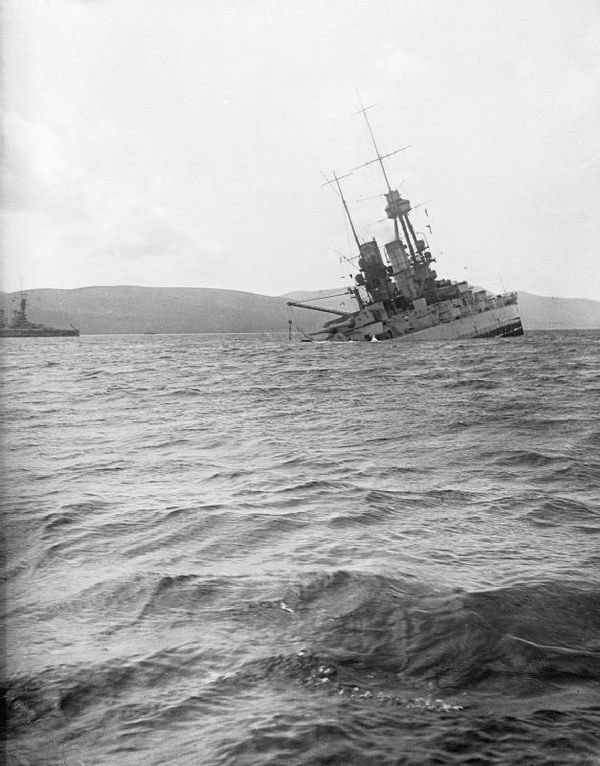
And it's not just pirates. Steel from some of the German fleet scuttled at Scapa Flow in the Orkneys in WWII was salvaged and used in the manufacture of medical equipment. Lives were saved thanks to these warships, which had a secret second life as a trove of low background steel
Nor is it just pre-1945 steel which is sought after for special uses. So too is lead - much more on this in this excellent thread 👇
The strange tale of low background steel is just one of the stories contained in MATERIAL WORLD, my book on the underbelly of the modern world, the materials we use to help us build civilisation. Out v soon. Order here: lnk.to/MaterialWorld
Oops Scapa Flow scuttling was of course WWI (actually just afterwards in 1919)
Oof
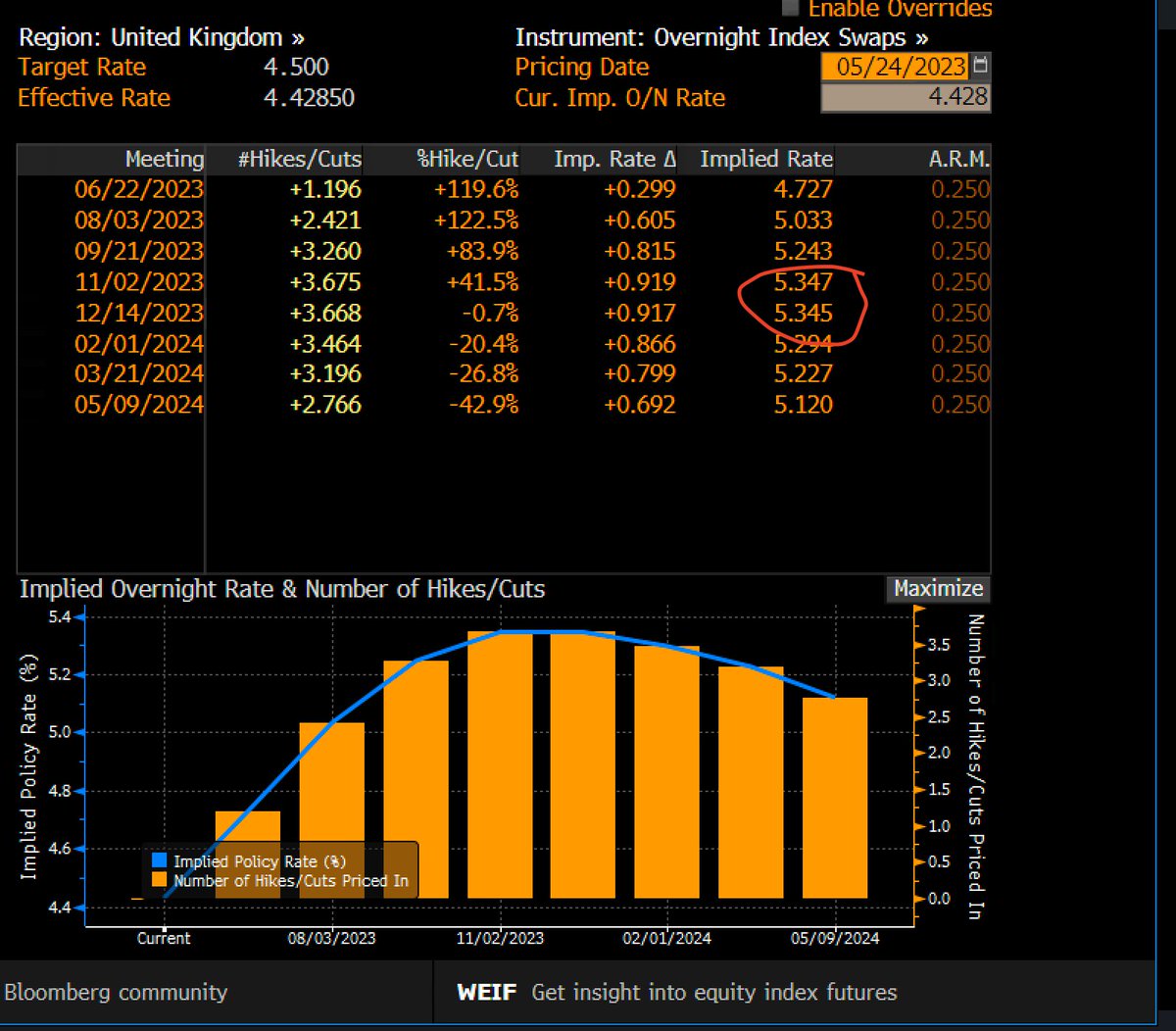
After today’s higher-than-expected inflation, traders in financial markets are now betting that UK interest rates will rise well above 5% later this year, perhaps close to 5.5%.
Not long ago they thought they’d peak BELOW 5%.
👀
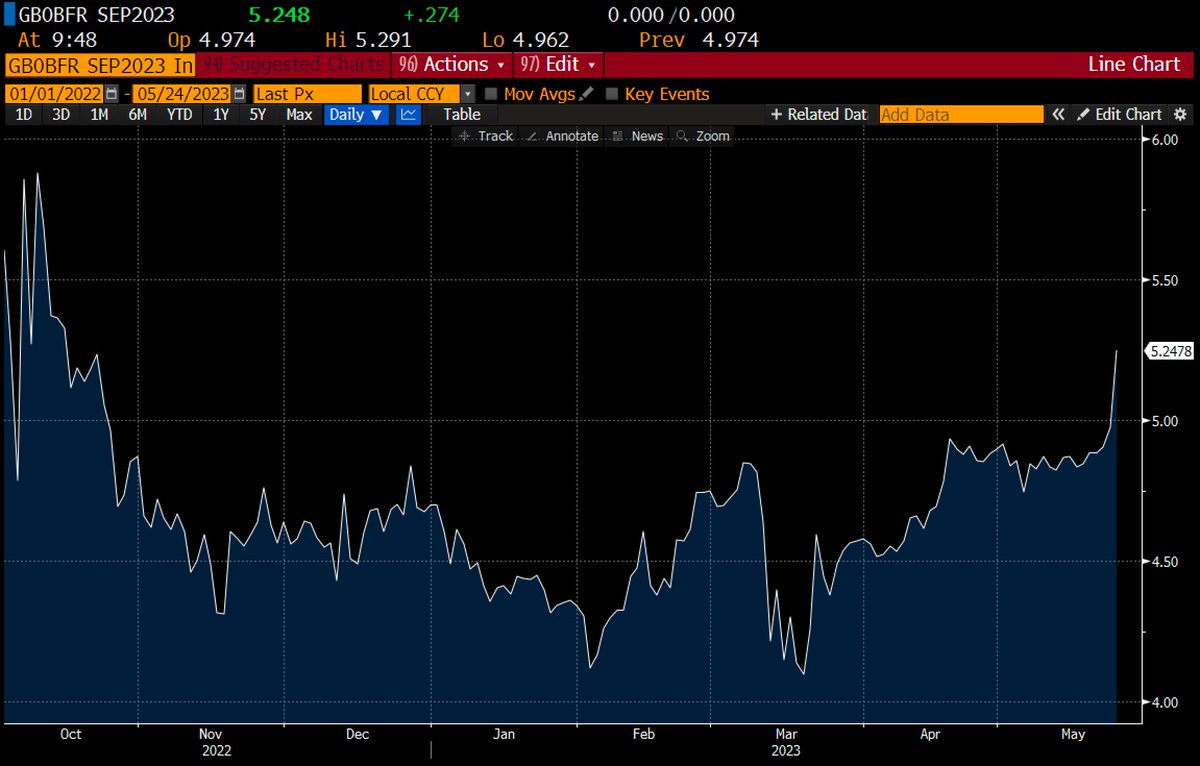
The market trajectory for future UK interest rates just jumped to the highest since the aftermath of the mini-budget last year.
This chart shows you market expectations for where UK rates will be in September of this year.
Look how much they just rose after today’s CPI data👇
If at this stage you’re thinking: well, 5.5% interest rates doesn’t sound THAT high.
Not in relation to 4.5% (where they are now)
Certainly not vs the double digits levels they hit in the 1980s.
Here’s a thread from last Sept (pre mini-budget) on why those comparisons don’t work:
🚨EXCLUSIVE🚨
In first interview since the firm’s collapse, Britishvolt founder Orral Nadjari tells @SkyNews that the govt, specifically @RishiSunak, must take a large part of the blame for its implosion.
Says UK has “lost that window of opportunity” to build a battery industry
Britishvolt was feted as the jewel in the UK’s manufacturing crown: an ambitious project to build one of the world’s biggest factories to make batteries for electric vehicles in Blyth, Northumberland.
Govt agreed in principle to provide financial support. The then PM was mad keen
Following that tweet, Mr Nadjari told me, Govt began dragging its heels. The approval process took months longer than exp.
Even after the paperwork was all done, it sat on the then Chancellor’s desk for months (govt argues only two months). The Chancellor in question? @RishiSunak
One important thing to note re this story, which hasn’t been very obvious from a lot of the coverage:
These changes to trade rules, the ones that kick in next year, ALSO affect EU carmakers sending cars TO the UK.
It’s not just UK exports. news.sky.com/story/vauxhall…
So: it’s not just UK carmakers who’ll have to pay 10% tariffs on EVs sent to the EU.
It’s EU carmakers sending their cars to the UK too.
It’s a symmetrical problem.
And it’s not just UK carmakers complaining about it. So too are EU carmakers.
Of course, for EU carmakers, the UK is not a massive % of exports, so it’s a smaller issue for them than the UK. But they still don’t like it at all. They’re lobbying against it. And it would be rather amazing if this deadline wasn’t put off or fiddled with at the last minute.
Not only does Stian have a point here, you could argue it doesn’t just apply to the UK. In some respects most of the developed world has been following what you might call “degrowth” policies since the 1970s. The UK just went all-in faster than everyone else.
The 70s was when we began to prioritise energy efficiency over total energy output. The oil crises and then the gradual dawning realisation about the link between carbon emissions and climate change caused a seismic change in the way we ran our economies. Everything changed.
Once, much of what constituted innovation involved ever greater per capita energy usage to allow us to go faster, do & consume more. Along the way, the unit cost of energy went down and down. It looked as if energy would become “too cheap to meter”
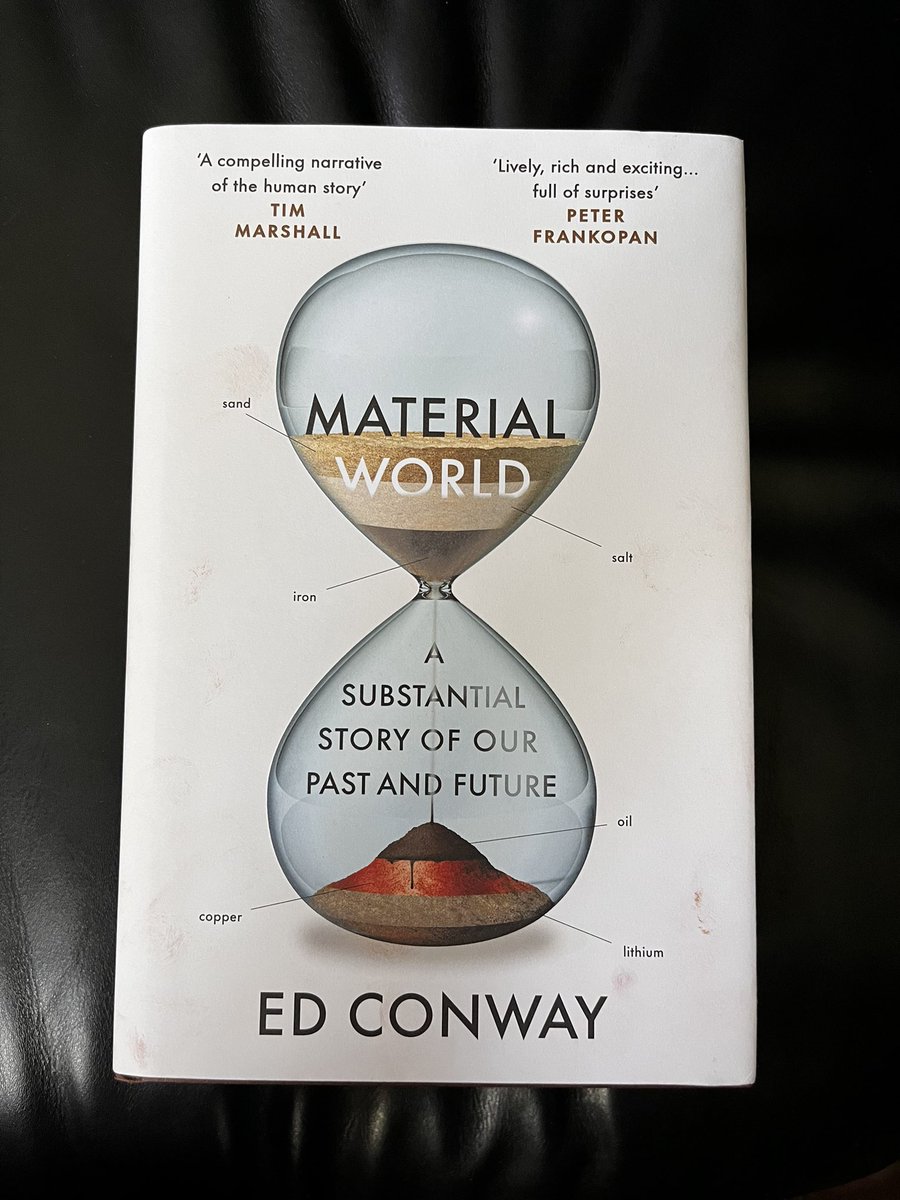
It's real!
Finally got my hands on a physical edition of Material World and it's GORGEOUS. Only problem is I instantly smeared the cover with rust dust from a lump of iron ore I was playing with.
Appropriate, I guess.
Anyway. Out next month. Preorder here: lnk.to/MaterialWorld
This tweet replaces a previous deleted one suggesting I had more than one head
GREEDFLATION
It’s the latest buzzword in economics. The idea is that businesses are using the cost of living crisis as an opportunity to generate excess profits. You’ve probably seen the stories and commentary about it.
For instance this by @RBReichtheguardian.com/commentisfree/…
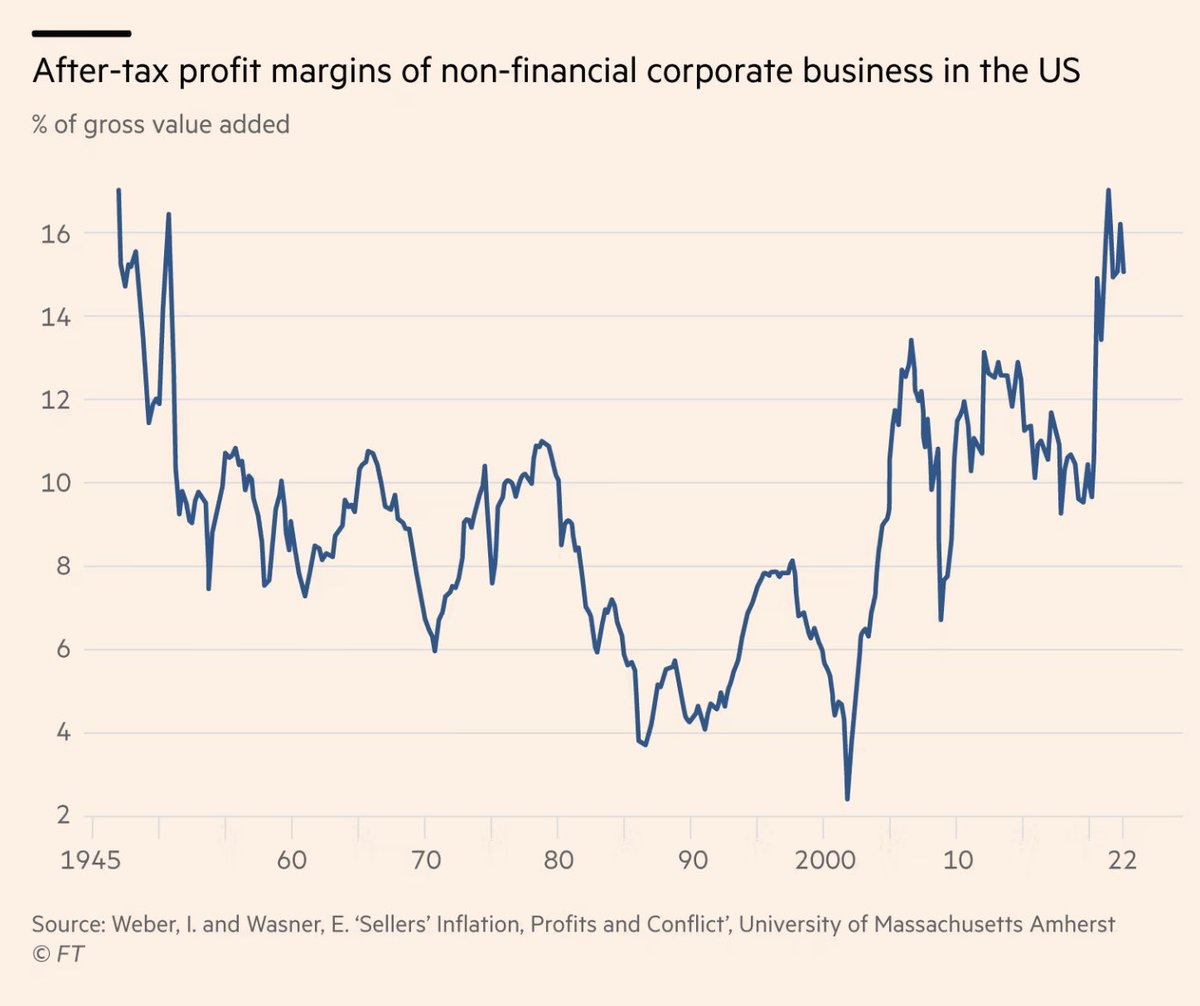
There was this @FT story about central bankers urging companies not to use this crisis to fatten their profit margins. Including this terrifying looking chart from @IsabellaMWeberft.com/content/a35d1d…
But perhaps most striking of all, because it gave some real statistical heft to the greedflation idea, was this blog/working paper from the @ecb, in which the authors actually broke down a key price metric, the GDP deflator ecb.europa.eu/press/blog/dat…