According to 665.081 of the Texas Government Code, an officer in the state may not be removed from office for an act the officer may have committed before the officer’s election to office.
Also, not ONE WITNESS was ever examined by the Paxton impeachment committee. It was all… twitter.com/i/web/status/1…
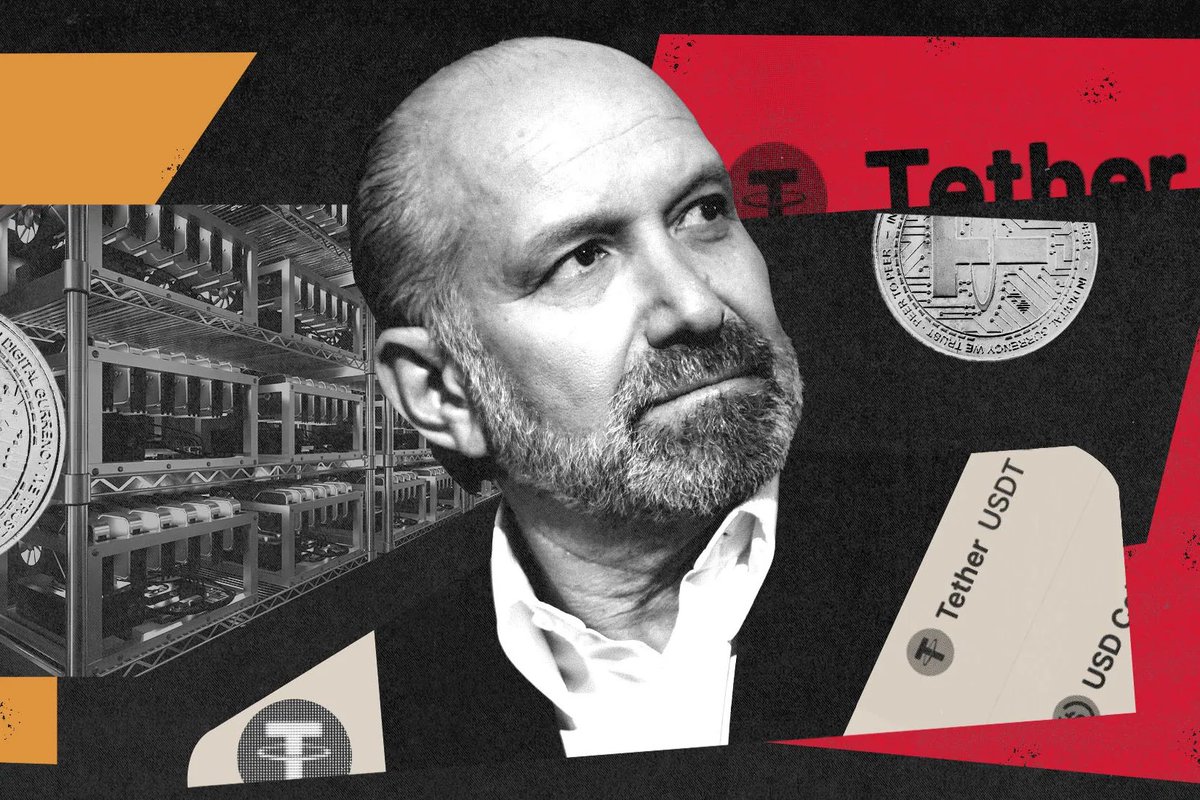
Cantor Fitzgerald & Tether: A Wall Street + Crypto Powerhouse Connection
- Custodian Role: Cantor has been Tether's primary custodian for U.S. Treasuries (majority of reserves) since ~2021. Brandon Lutnick personally verified reserves early on, boosting credibility amid past doubts.
- Equity Stake: Cantor acquired ~5% of Tether Holdings (via convertible debt/investment ~$600M). If Tether hits ambitious $500B valuation targets (discussed in 2025–2026 fundraising), Cantor's stake could be worth billions (up to $25B in some estimates).
- Leadership Ties: Howard Lutnick (ex-CEO, now U.S. Commerce Secretary) long vocal Tether supporter. Son Brandon Lutnick (current Chairman/CEO of Cantor) has praised Tether publicly, calling it the "mainstay of the global digital dollar" with $180B+ in tokens.
- Major Ventures: In 2025, Cantor (via Cantor Equity Partners), Tether, SoftBank, Bitfinex, & Jack Mallers launched Twenty One — a Bitcoin-native company starting with 42K+ BTC, aiming to rival MicroStrategy in Bitcoin accumulation/exposure.
- Ongoing Collabs: Cantor advised on Tether deals, explored Bitcoin lending (up to $2B program), and supported Tether's U.S.-focused moves like the 2026 launch of USA₮ (GENIUS-compliant stablecoin for U.S. markets/remittances).
These ties have helped legitimize Tether's massive reserves (tens of billions in Treasuries) while giving Cantor fees, upside, and a front-row seat in crypto's growth. Amid scrutiny (Senate hearings, conflicts concerns), it's one of the strongest TradFi-crypto bridges out there.
Brock Pierce, former child actor (Mighty Ducks era), is a co-founder of Tether (USDT) – the dominant stablecoin with $180B+ in circulation today.
- Role in Tether: Helped launch it in 2014 with Reeve Collins & Craig Sellars as the first major USD-pegged stablecoin for crypto trading (tied to Bitfinex). Pierce was key in early vision but left active involvement around 2015. No current role, ownership, or ops in Tether Holdings (now led by Paolo Ardoino).
- Crypto Legacy: Co-founder Blockchain Capital (early VC), Block.one (EOS, massive ICO), Mastercoin (first ICO), Bitcoin Foundation chair. Early Bitcoin/Ethereum investor. Now focuses on other blockchain/AI/DePIN projects (e.g., backed Bit Digital's ETH treasury shift in 2025–2026).
The big resurfaced story? 2026 DOJ Epstein file releases (millions of pages dropped early Feb 2026) show Pierce's long personal/professional ties to Jeffrey Epstein (2011–2018+, post-2008 conviction):
- Pierce brokered Epstein's $3M investment in Coinbase's 2014 Series C (via Blockchain Capital; Epstein invested independently, later sold half back for ~$15M profit in 2018).
- Extensive emails: Crypto discussions (Bitcoin demos at Epstein's mansion w/ Larry Summers, potential intros to Winklevoss twins, Mt. Gox plans), business networking, and disturbing personal elements (invitations involving travel/"girls," photos of women, "boat in Antigua full of Ukraine's finest" references, assignations).
- Pierce's name appears 1,800+ times in files; he advised Epstein on crypto investments (also Blockstream ~$500K).
- there is no evidence Epstein directly funded Tether's launch, reserves, or operations – ties are via Pierce's network, not corporate. (One 2014 email mentions wanting Summers for "Noble Markets and Tether" for legitimacy, but no follow-through shown.)
This has fueled speculation in crypto circles tether has been called the Trojan horse for CBDCs, money laundering claims, etc. especially with Tether's separate criticisms (reserve transparency, illicit use allegations). But it's guilt-by-association via an early co-founder who exited long ago – no proven link to Tether's current $180B+ Treasury-backed reserves or day-to-day.
- Senate Commerce Committee Hearing (Jan 29, 2025): Senator Maria Cantwell grilled Lutnick on potential conflicts of interest, Tether's alleged use in illicit finance (money laundering, sanctions evasion), and reserve transparency. Lutnick confirmed Cantor owns a "convertible bond with Tether" but stressed "no equity" stake and pledged full divestment upon confirmation (he stepped down from Cantor roles shortly after). He defended stablecoins broadly, saying criminals use USD cash too, and pushed AI to track illicit flows in crypto.
- Senate Banking Committee Elizabeth Warren sent a pointed letter calling Tether the "outlaws' favorite cryptocurrency" due to its history of opacity, illicit activity allegations (e.g., terror financing, North Korea hacks), and demanded details on due diligence, AML/KYC compliance, and any Trump admin talks about Tether. Lutnick faced questions on his prior public endorsements (e.g., claiming Tether reserves were "fully backed" and liquid).
- Senate Appropriations, Feb 20263 Sen. Jack Reed pressed Lutnick on why Tether hasn't undergone a full independent audit despite Cantor's custodial role since ~2021. Lutnick agreed "generally speaking" that Tether "should be audited," emphasized he was "completely divested," and distanced himself from ongoing ops. This came amid renewed scrutiny (e.g., Epstein file releases tying indirect networks) and Tether's push into compliant products like USA₮ under the GENIUS Act.
Lutnick softened some earlier bullish claims during questioning—e.g., no longer asserting continuous diligence on Tether's statements but saying prior comments were accurate at the time. He highlighted Cantor's role as stabilizing Tether's credibility (via Treasury custody) and argued for regulated stablecoins to curb risks.
These sessions fueled crypto community debates: critics see red flags in conflicts and Tether's past (illicit use estimates in billions), while supporters view Lutnick's involvement as a bridge to legitimize the sector. No major fallout blocked his confirmation, but it highlighted ongoing stablecoin regulatory tensions.
Did you know a medium data center uses about 300,000 gallons of water daily for cooling, while large ones like Google's can use up to 550k gallons/day, with total U.S. data center water consumption reaching 449 million gallons daily in ‘21
Currently there are hundreds in Texas
A ‘24 report from the Lawrence Berkeley National Laboratory estimated that in 2023, U.S. data centers consumed 17 BILLION gallons of water directly through cooling, and projects that by 2028, those figures could double – or even quadruple.
The same report estimated that in 2023, U.S. data centers consumed an additional 211 billion gallons of water indirectly through the electricity that powers them. But this is just an estimate in a fast-changing industry.
The Stargate Project in Abilene, Texas, is a $500 billion AI infrastructure initiative led by OpenAI, Oracle, SoftBank, and MGX, aimed at building one of the world’s largest data center campuses on an 875-acre site. Launched in January 2025, the project involves constructing eight buildings with a total power capacity of 1.2 gigawatts, designed to support up to 400,000 Nvidia Blackwell GPUs for advanced AI computing. The Abilene site, already under construction since 2022, is expected to create thousands of construction jobs and 357 permanent roles, boosting the local economy through increased investment and tax revenue. Environmental concerns have been raised due to the project’s reliance on a 360.5-megawatt natural gas plant, though developers are exploring renewable energy options like solar and wind to mitigate impacts.
Hi @LinaHidalgoTX, could you clarify how the three commissioners, particularly @TomSRamsey2, have voted over the past two years, contributing to the county's $200 million deficit?
Are you sure you want me to dig into the voting records? I’ve got a sharp memory for details!
It appears that the Texas Democratic lawmakers who left the state were funded through numerous donations via ActBlue to Powered by People, which are linked to P.O. boxes.
“Patterning” in the context of MKUltra refers to the systematic application of stimuli (e.g., trauma, drugs, or sensory manipulation) to create predictable behavioral responses, often resembling classical conditioning principles like those developed by Ivan Pavlov. The described cycle of inducing trauma, embedding triggers, gaslighting, and offering temporary relief mirrors documented MKUltra techniques, particularly those associated with trauma-based mind control and de-patterning. Here’s how these elements connect: 1. Extracting and Reapplying Trauma:
• MKUltra Context: MKUltra experiments, particularly those led by Dr. Ewen Cameron at McGill University, used “de-patterning” to dismantle a subject’s mental framework. This involved inducing extreme trauma through electroshock, sensory deprivation, and high doses of LSD to erase memories and personality structures, creating a “blank slate.” Cameron’s experiments forced patients to relive traumatic memories via taped loops while under the influence of drugs, aiming to reprogram their psyche and make them more malleable for control.
• Mechanism: Repeated trauma disrupts the brain’s ability to process experiences normally, weakening resistance and increasing suggestibility. The amygdala’s heightened fear response and the prefrontal cortex’s impaired regulation reinforce dependency on the manipulator. 2. Introducing Triggers (Pavlovian Conditioning):
• MKUltra Context: MKUltra explored creating conditioned responses by pairing stimuli (e.g., sounds, words, or images) with traumatic experiences. For example, subproject 54 (“Perfect Concussion”) investigated sub-aural frequency blasts to trigger memory loss or behavioral changes. This involved associating a word or sensory input with pain or fear, so the trigger alone could later control the subject’s behavior without further trauma.
• Pavlovian Parallel: Like Pavlov’s dogs salivating at the sound of a bell, MKUltra aimed to condition subjects to respond automatically to triggers, potentially for interrogation, assassination, or compliance, as seen in experiments aiming to create “programmed assassins” who could act without conscious memory. 3. Gaslighting to Blur Reality:
• MKUltra Context: Gaslighting, though not explicitly named in MKUltra documents, was implicit in experiments designed to destabilize a subject’s sense of reality. For instance, covertly administering LSD to unwitting subjects (e.g., in Operation Midnight Climax) caused confusion, paranoia, and self-doubt, making them question their perceptions. This used drugs, hypnosis, and psychological manipulation to create cognitive dissonance, weakening subjects’ trust in their own judgment and increasing reliance on the experimenter’s narrative.
• Mechanism: By inducing altered mental states and then denying or distorting the subject’s experience, manipulators could control the victim’s reality, a tactic also seen in broader psychological abuse patterns. 4. Cyclical Relief and Resumption of Trauma:
• MKUltra Context: Some MKUltra experiments alternated extreme distress with periods of relief to deepen dependency. For example, Cameron’s “psychic driving” followed de-patterning with positive reinforcement (e.g., soothing messages) to implant new behaviors, though this was largely unsuccessful. The relief phase could prevent complete psychological breakdown, preserving subjects for further manipulation by temporarily halting drug administration or providing comfort before resuming trauma.
• Pavlovian Parallel: Relief serves as a “reward” in conditioning, strengthening the victim’s attachment to the manipulator, much like Pavlov’s dogs linking the bell to food. This cycle makes the victim crave relief, enhancing compliance.
5. Connection to Dissociation and Mind Control:
• MKUltra Context: A primary objective was to induce dissociative states through trauma, aiming to create “alters” (alternate personalities) that could be programmed for specific behaviors or tasks.
• Mechanism: Trauma-induced dissociation, as explored in MKUltra, leverages the brain’s response to overwhelming stress, creating mental compartments that can be exploited. This approach drew inspiration from earlier experiments by Nazi and Japanese researchers, which MKUltra adapted.
Prepare. For. Prison.
Trauma tactics involve deliberately causing emotional, psychological, or physical distress to weaken a person’s defenses, making them more vulnerable to control.
For example, they give the impression that the “victim is safe” then they deploy someone from their group to harass victim cryptically that they “will be stabbed” within hours of making the victim feel safe.
This can include gaslighting, intimidation, or creating chaotic environments to destabilize the target. Imitation tactics, often called mirroring or mimicking, involve the manipulator copying the behaviors, emotions, or traits of the target or their loved ones to build trust, lower defenses, or confuse. By appearing familiar or empathetic, the manipulator gains influence, exploiting the target’s emotional bonds or sense of identity