
Imagine ChatGPT but for research papers.
SciSpace is an AI-powered personal research assistant that will help you do hours worth of reading in minutes.
& it's completely FREE!
SciSpace is an AI-powered personal research assistant that will help you do hours worth of reading in minutes.
& it's completely FREE!
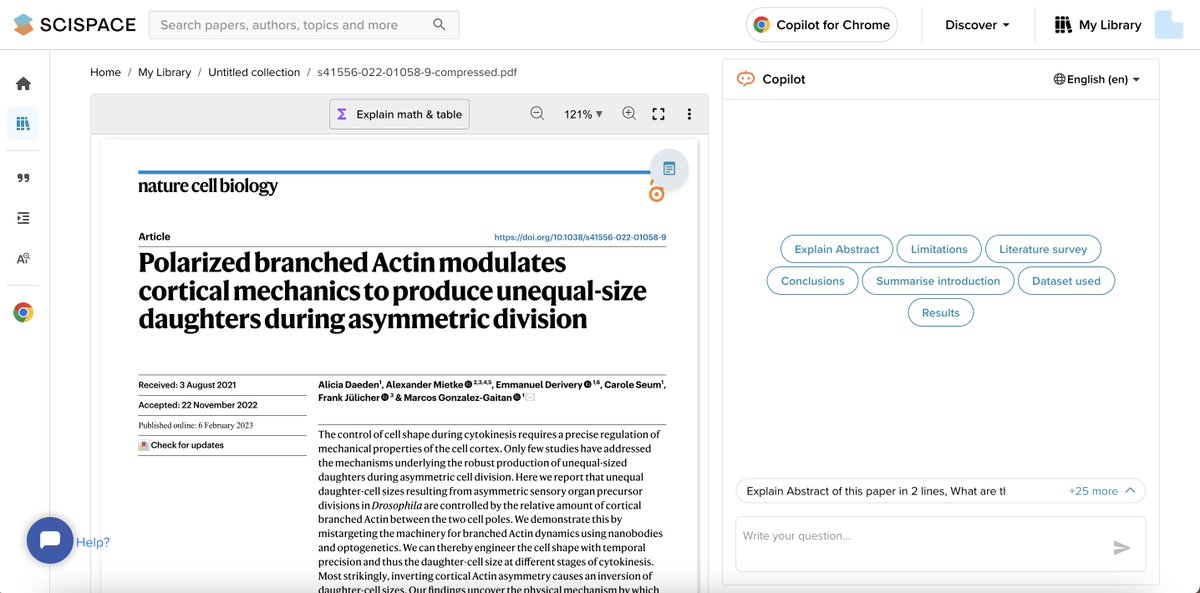
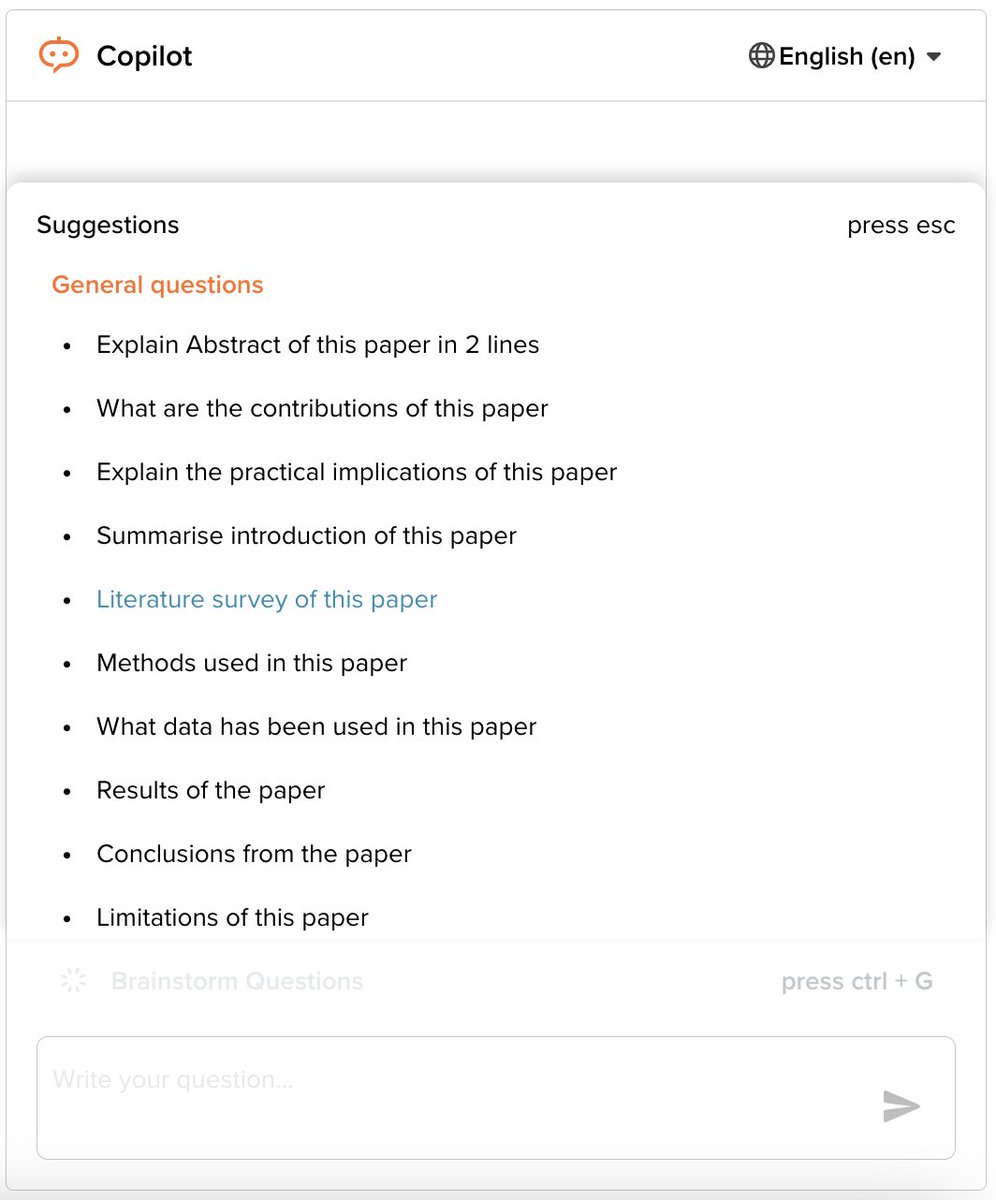
The copilot assistant can provide you with a set of general questions and a list of suggested questions that are specific to the research paper.
These specific questions can be good preparation questions for a PhD viva.
These specific questions can be good preparation questions for a PhD viva.

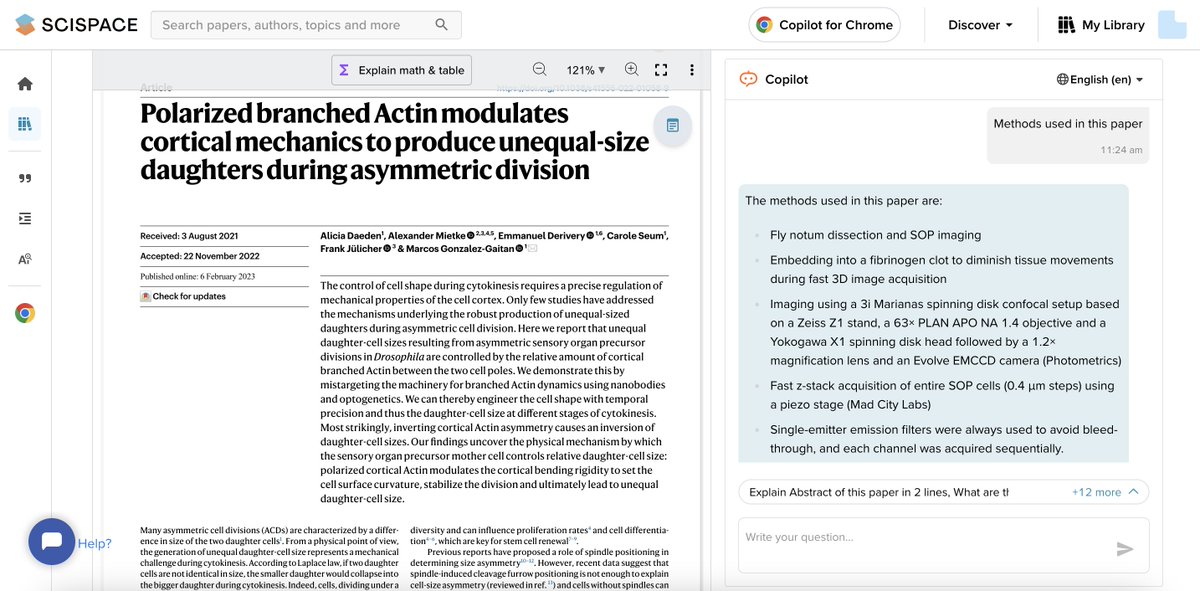
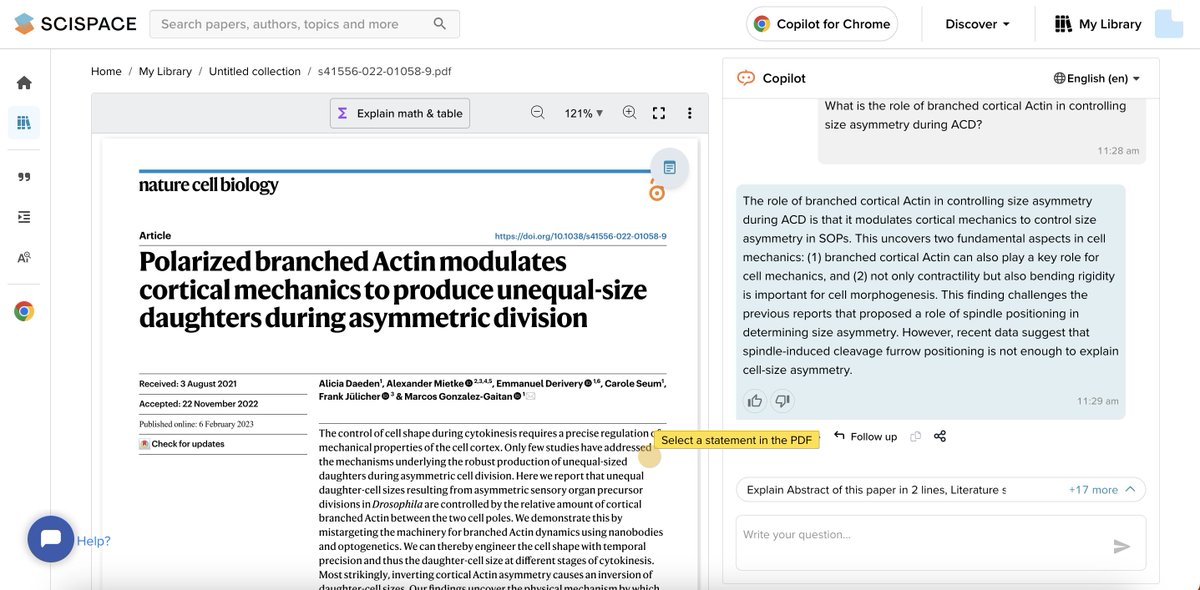
I asked a few questions and I was provided with a good summary to begin understanding the research that was presented within the PDF.
Definitely a strong starting point.
Definitely a strong starting point.
There are a specific few tools that add a further level to the understanding.
(1) Select at least 50 words and request an explanation:
(1) Select at least 50 words and request an explanation:
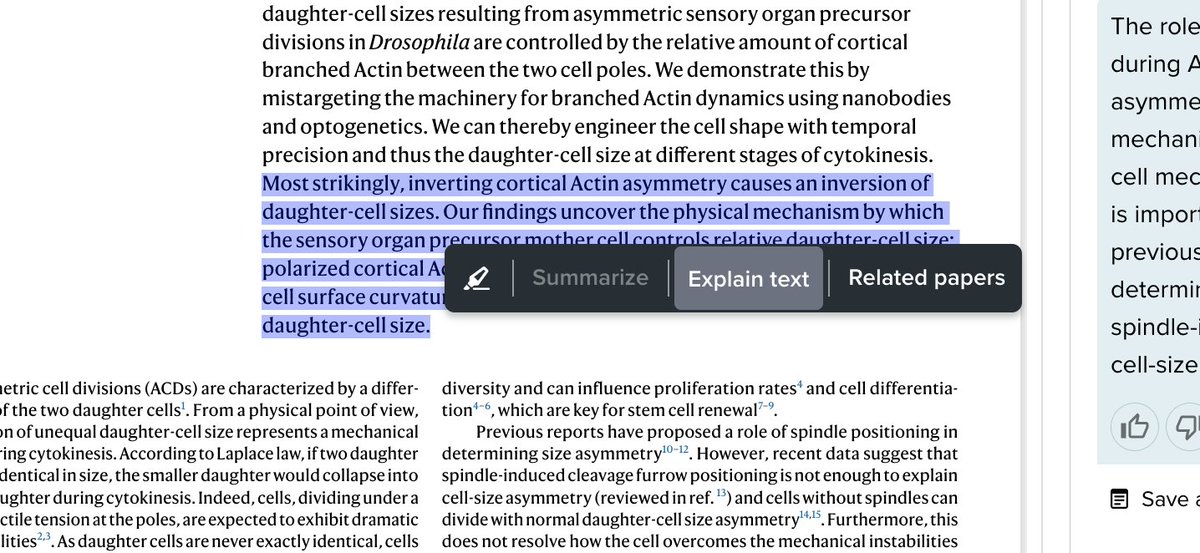
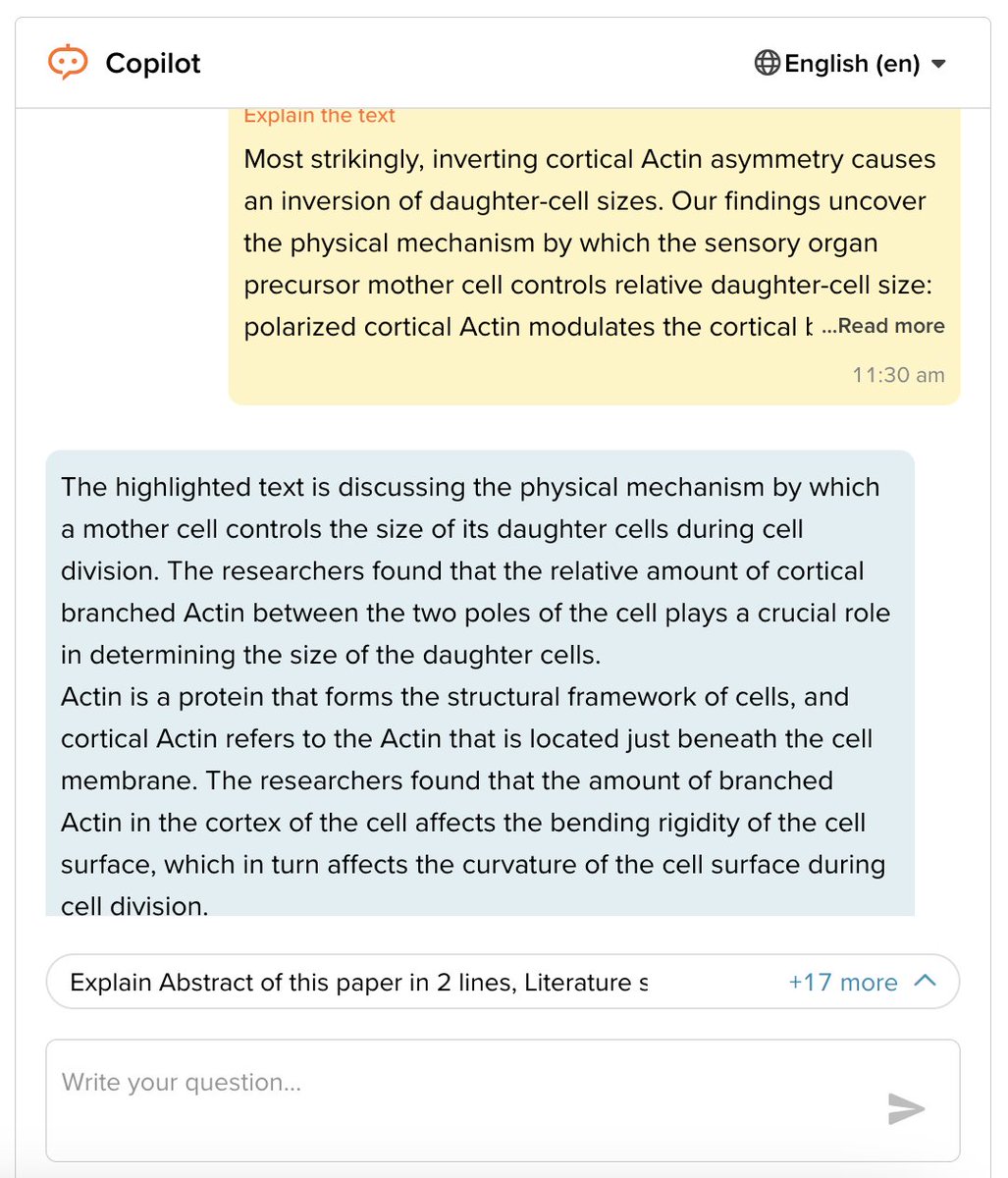
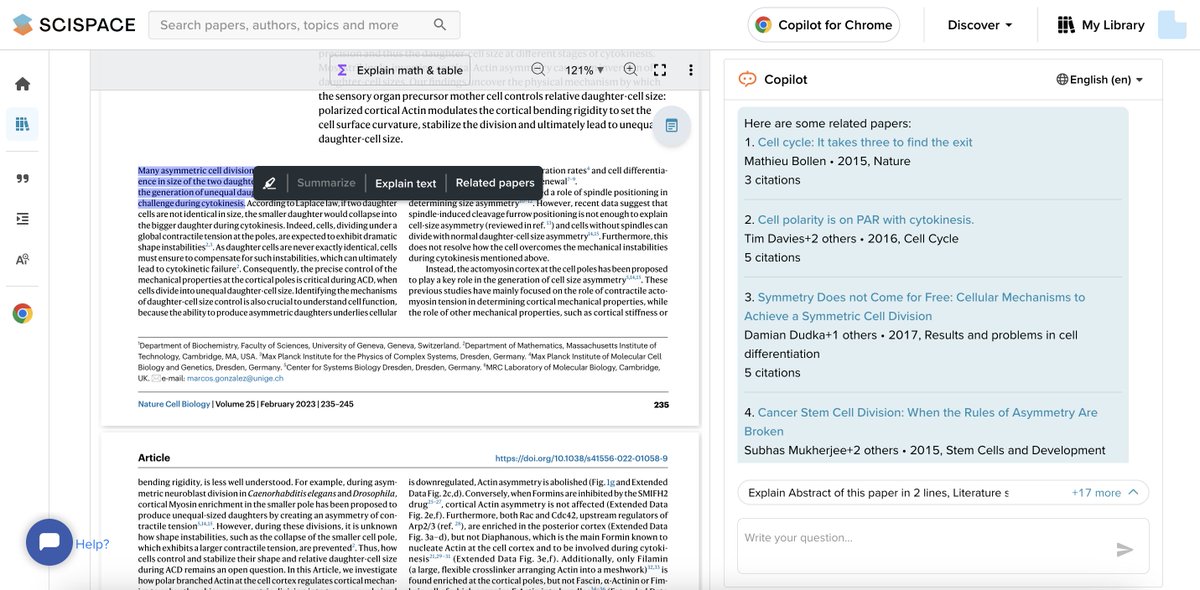
(2) Select a part of the text and ask for related papers:
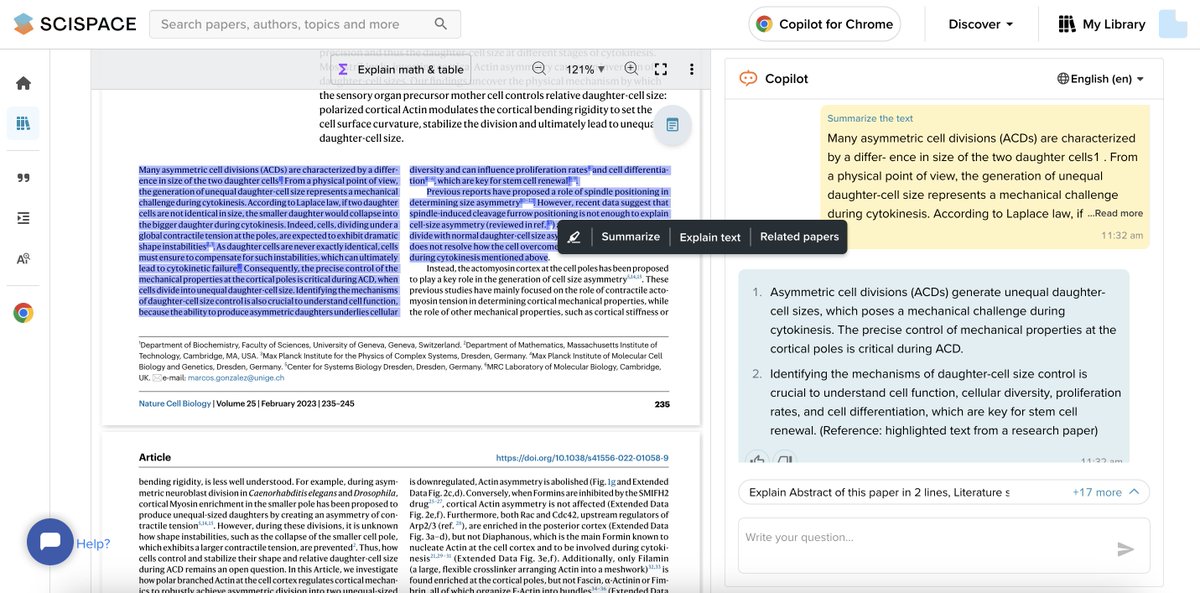
(3) Select a part of the text and ask for a summary:
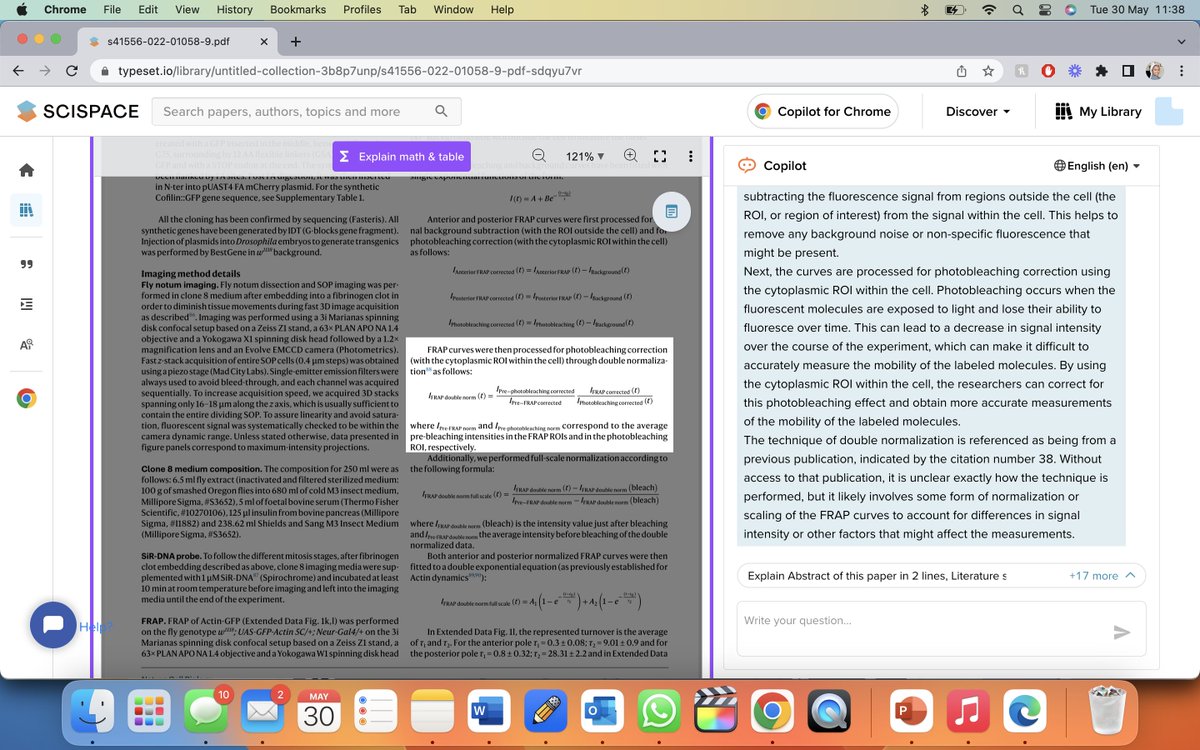
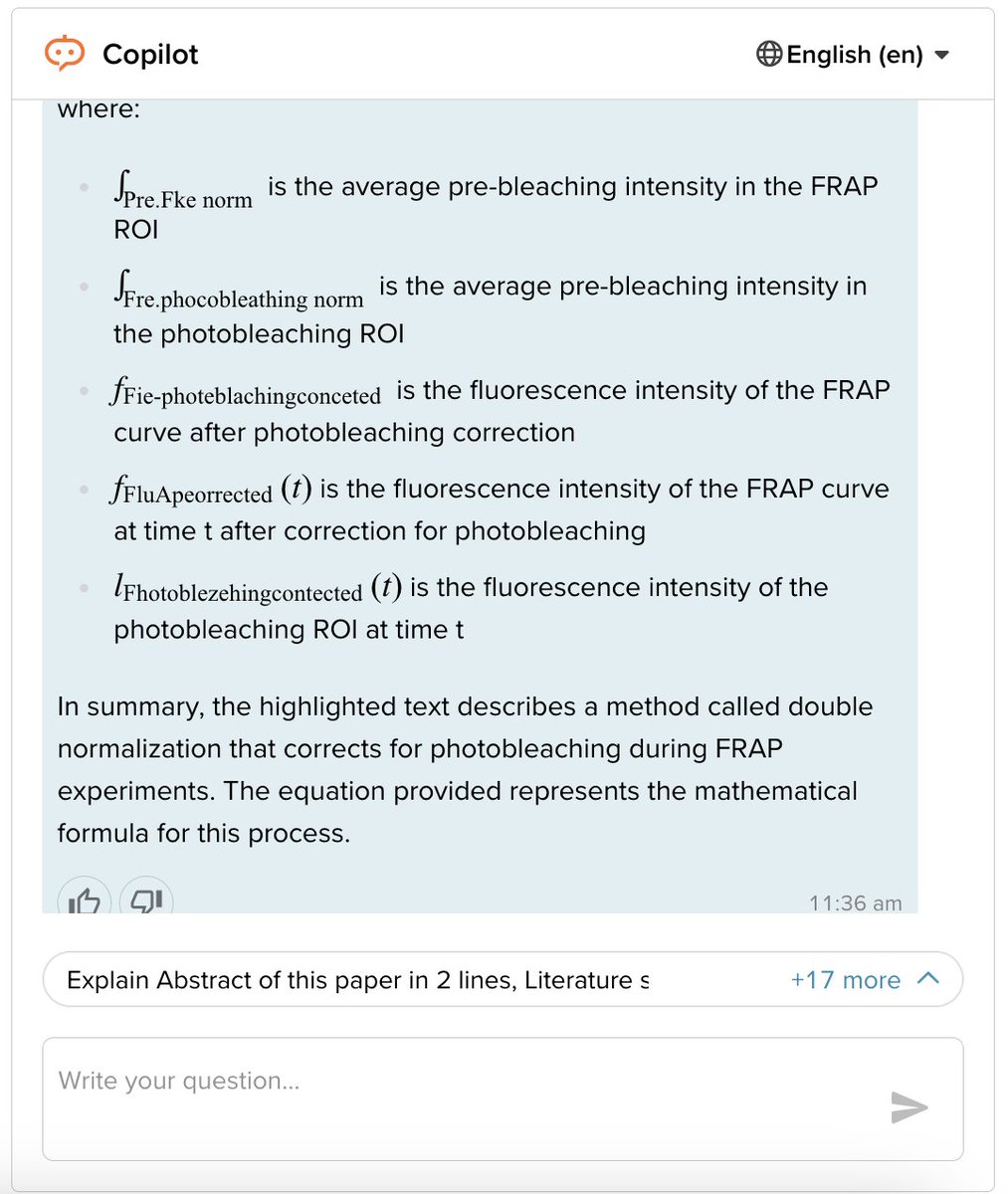
There's a snip tool that allows you to highlight an equation or table and request an explanation.
Excellent for those who struggle with stats/mathematical analysis!
Excellent for those who struggle with stats/mathematical analysis!

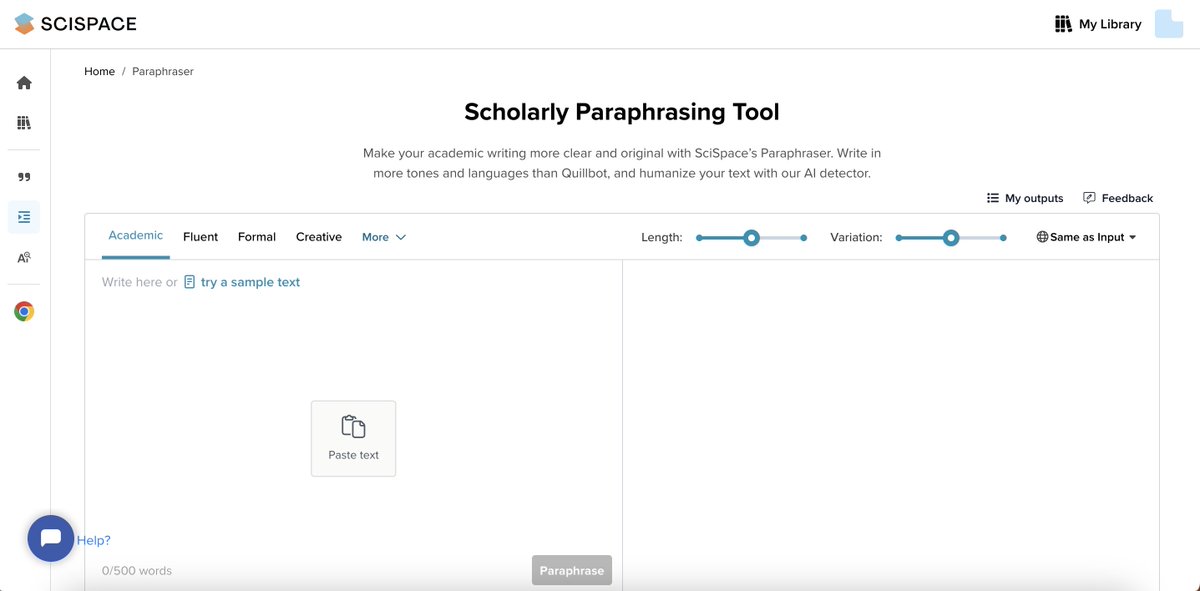
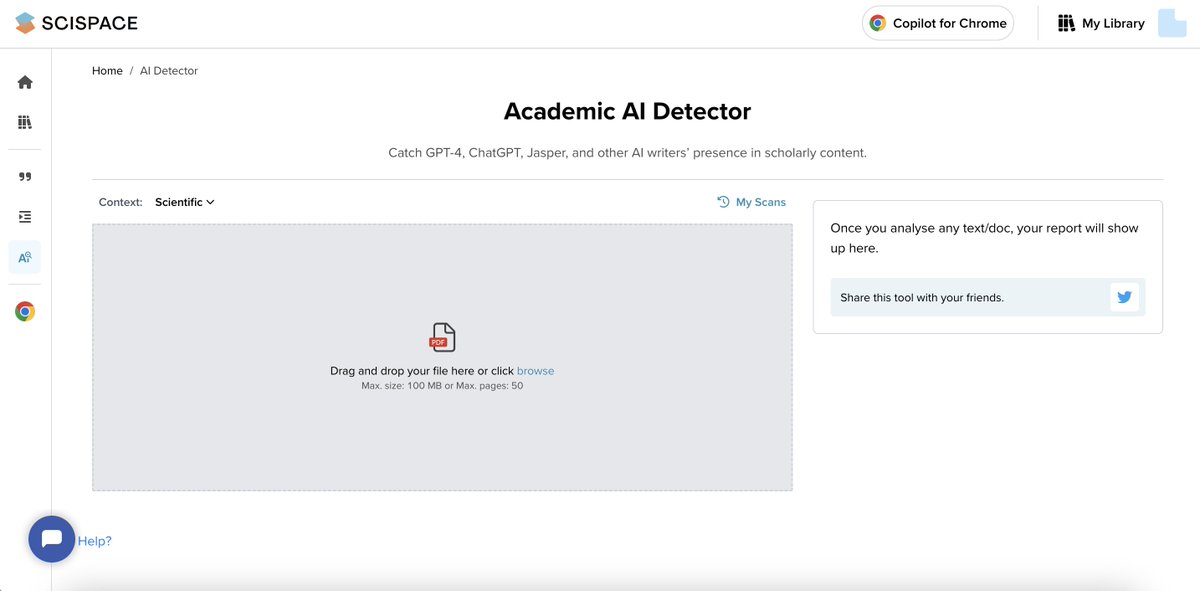
And lastly, SciSpace also has an AI-detector, paraphrasing tool and citation generator.
A whole host of tools and capabilities jam packed into this AI-tool.
A whole host of tools and capabilities jam packed into this AI-tool.

If you liked this thread:
1. Follow me @DrAminaYonis for more academic writing content
2. RT the tweet below to share this thread
1. Follow me @DrAminaYonis for more academic writing content
2. RT the tweet below to share this thread
https://twitter.com/709386673541484545/status/1663863977305047042
• • •
Missing some Tweet in this thread? You can try to
force a refresh






