According to research, doing a PhD puts you at a greater risk of being anxious or depressed compared to other occupations.
Shockingly, almost 50% of doctoral students met the clinical criteria for depression (UC, Berkeley).
Here's what I did to avoid burn out during my PhD:
1 - When visiting a research group, ask the current PhD students/post-docs how many days off they take, if they work weekends and what the self-care culture looks like in their group.
This can give you an indication of the work ethic in the group and any red flags.
2 - Schedule regular breaks, even if you're not travelling.
Take days off to just do nothing - holidays and travelling can be quite mentally taxing so taking time off to just relax at home is more beneficial.
There's nothing more humbling than trying to learn a new language. The fear of sounding silly and the inability to fully express yourself in a new language is really something.
I've been teaching myself how to understand Arabic and whewww, it has been a process!
I've spent the last 12 months focusing on trying to expose myself to the language as much as possible. Thankfully, I can now have an extremely broken conversation and my vocabulary is decent.
I am now at the stage where I just need 3-6 months fully immersed in an Arabic-only speaking area and I would 100% come back fluent. I'm so tempted.
I've graduated from 4 high-ranking universities, King's College London (BSc), Imperial College London (MRes), University College London (PhD) and Roehampton University (PGCE).
Here's what I learnt by being surrounded by high achievers:
1 ) Being 'book smart' isn't something you're born with.
It takes genuine hard work, consistently showing up and a growth mindset to succeed academically.
It may not be obvious how hard high-achievers are working, but behind the scenes, they are making short-term sacrifices.
2) Network as part of your everyday activities.
Have organic conversations with the people around you; your tutors, lecturers, professors and demonstrators. You never know what you'll learn and the doors it may open.
I wrote my PhD thesis in just 90 days. I saved months of stress.
How? By using a thesis template as my starting point.
Here's the exact template I used:
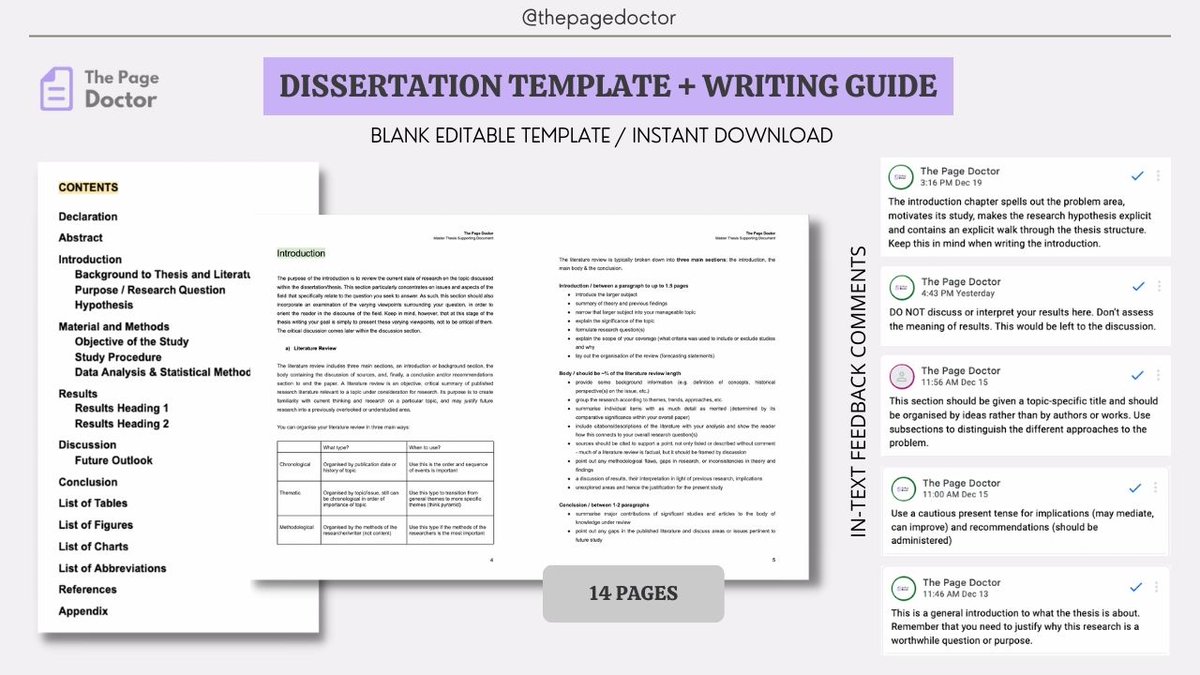
I've poured a decade of experience writing academic literature and marking dissertations, to create the perfect template that guides you through the structure of a research-based dissertation.
This is the perfect dissertation template, complete with hyperlinked chapters and all the required sections included. This template comes with feedback notes on the side, as you write, to remind you of what to include and what tense to write in.
My PhD viva lasted almost 4 hours and I was told 'congratulations Dr Yonis' before I had even left the room.
How? By carefully preparing and covering certain parts of the thesis.
This is how I prepared in just 1 week:
Frame of mind first! You are the expert in your field - they are not testing you, they are simply engaging in an academic discussion with you, about your work.
1. Prepare your thesis - print it out, have it physically accessible and start to re-read and annotate.
Whilst reading (first read), look out for:
- recurring literature
- key methods
- important keywords
- justifications for (methods, approaches)
- statistical analysis
My thesis examiners passed my PhD thesis with ZERO corrections. One of their comments was that 'it was extremely well written'.
How? By following a strict consistent structure throughout.
This is exactly how you should structure your results chapter:
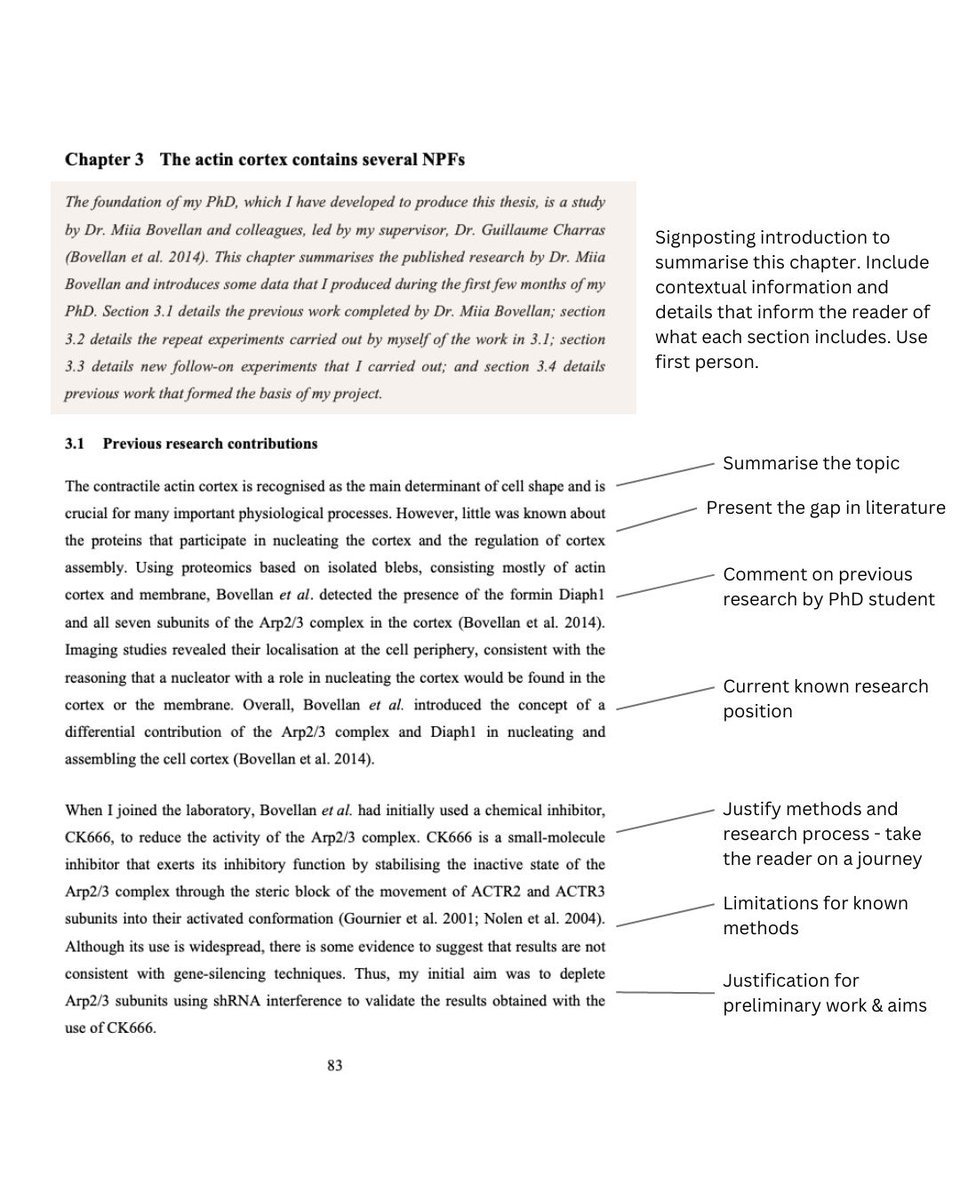
Researchers tend to forget that the PhD thesis is a conversation. You need to regularly signpost and take the reader on an academic learning journey.
You have spent 3-5 years iterating this research process - there are many gaps that you need to fill to communicate the story.
To begin your results chapter, you need to start with a mini-introduction. This can include any collaborations, research hypothesis, method justifications and signposting. Write this in first person to sound like a conversation.