
 Read on Twitter
Retinoids are the ONLY 'miracle' skincare ingredient.
They treat acne, pigmentation, scarring, fine lines/ wrinkles, and even have anti-cancer effect. But most people use them wrong, end up with irritated skin, and stop. Here's the RIGHT way to use them in your routine... 👇 1/
They treat acne, pigmentation, scarring, fine lines/ wrinkles, and even have anti-cancer effect. But most people use them wrong, end up with irritated skin, and stop. Here's the RIGHT way to use them in your routine... 👇 1/
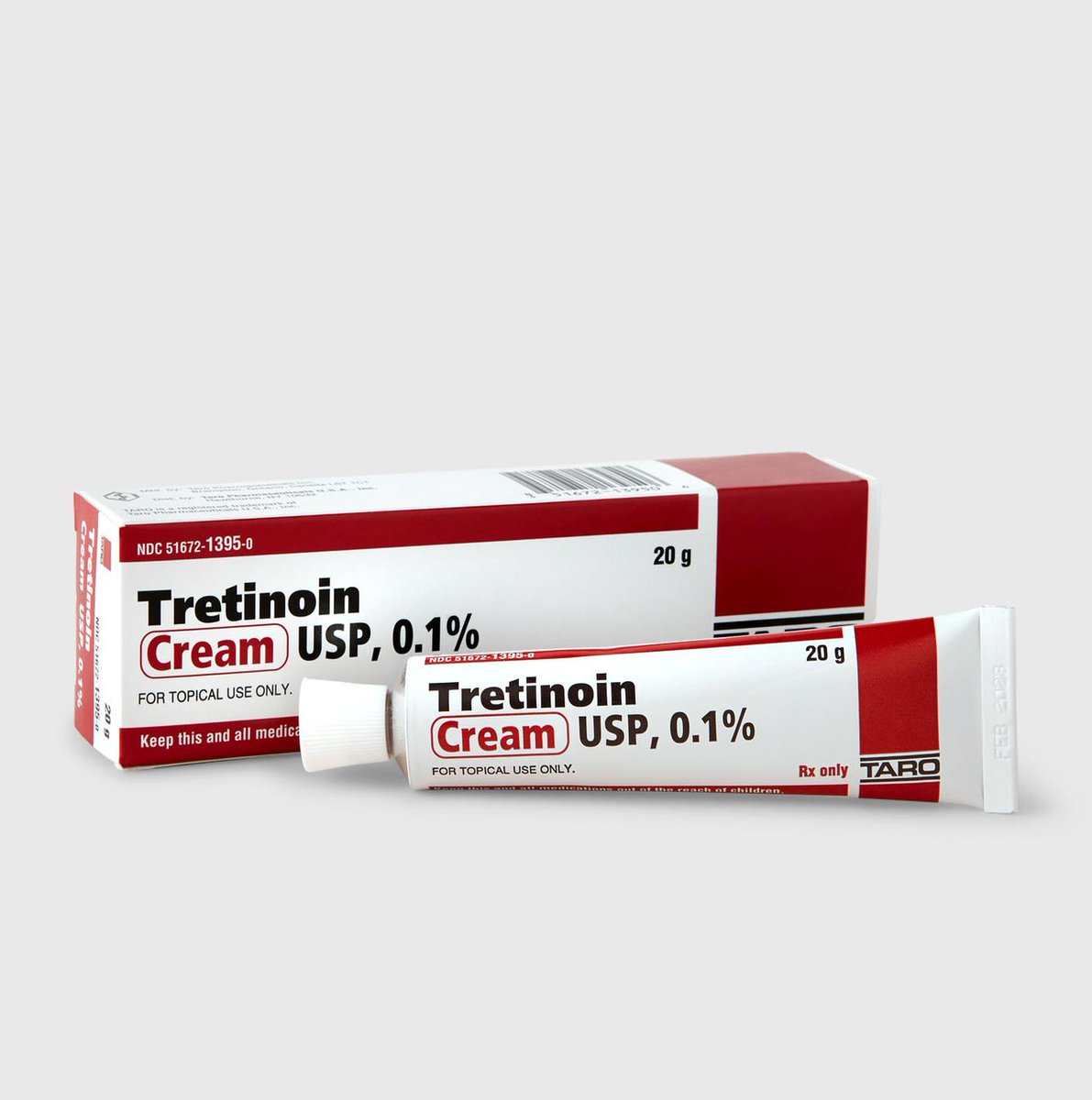
START LOW: topical retinoids are available in both over the counter and prescription strengths. Here's the order of strength:
OTC: retinol < retinal/retinaldehyde < adapalene 0.1%
Prescription: tretinoin 0.025% < tretinoin 0.05% < tretinoin 0.1% < tazarotene 0.1%
OTC: retinol < retinal/retinaldehyde < adapalene 0.1%
Prescription: tretinoin 0.025% < tretinoin 0.05% < tretinoin 0.1% < tazarotene 0.1%
Start with lower strength and OTC options first. If you go straight to high concentration tretinoin or tazarotene, you'll wake up the next day with intense burning/peeling of your skin. And this leads me to the next point...
TINY AMOUNTS: use only a 'pea-sized amount' of the topical retinoid for your ENTIRE face. That's going to feel like nothing, and you're going to want to do more. DON'T ❌. Use 'microdots' from this pea sized amount across different areas, and then blend.
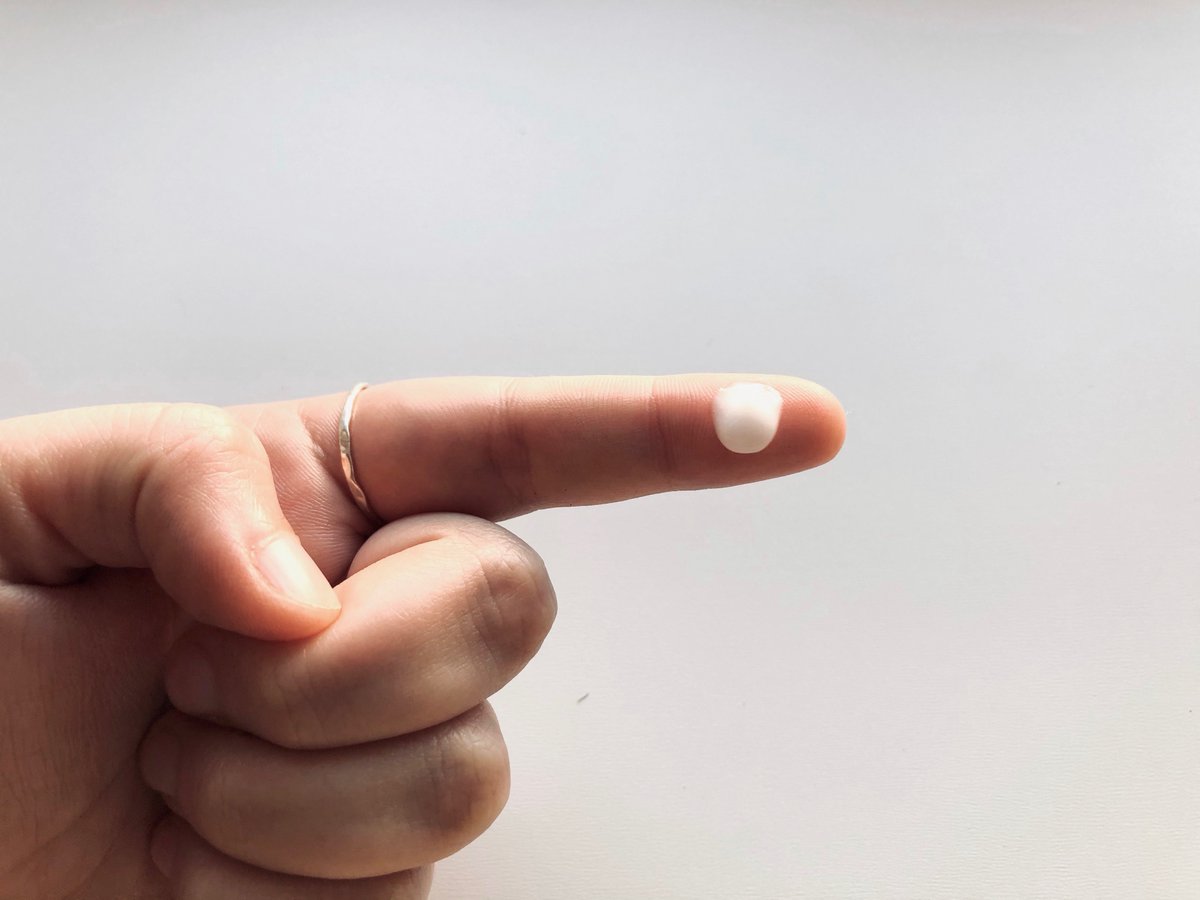
MOISTURIZE: even with tiny amounts, retinoids can still cause skin irritation for the first few weeks until your skin adapts to them. So moisturizing extra is the key to getting through this early period. You can apply moisturizer before, after, or even mixed with retinoid.
VASELINE: the corners next to your nose and your under-eyes are especially prone to retinoid irritation, so in these specific areas applying a small layer of vaseline BEFORE retinoid application can help to minimize their side effects there.
EVERY OTHER NIGHT: the ultimate goal with topical retinoids is to use them every night. However, when you're starting out, it's a good idea to do every other night while your skin is adjusting to the new ingredient. This is fine! The key thing is getting into the routine.
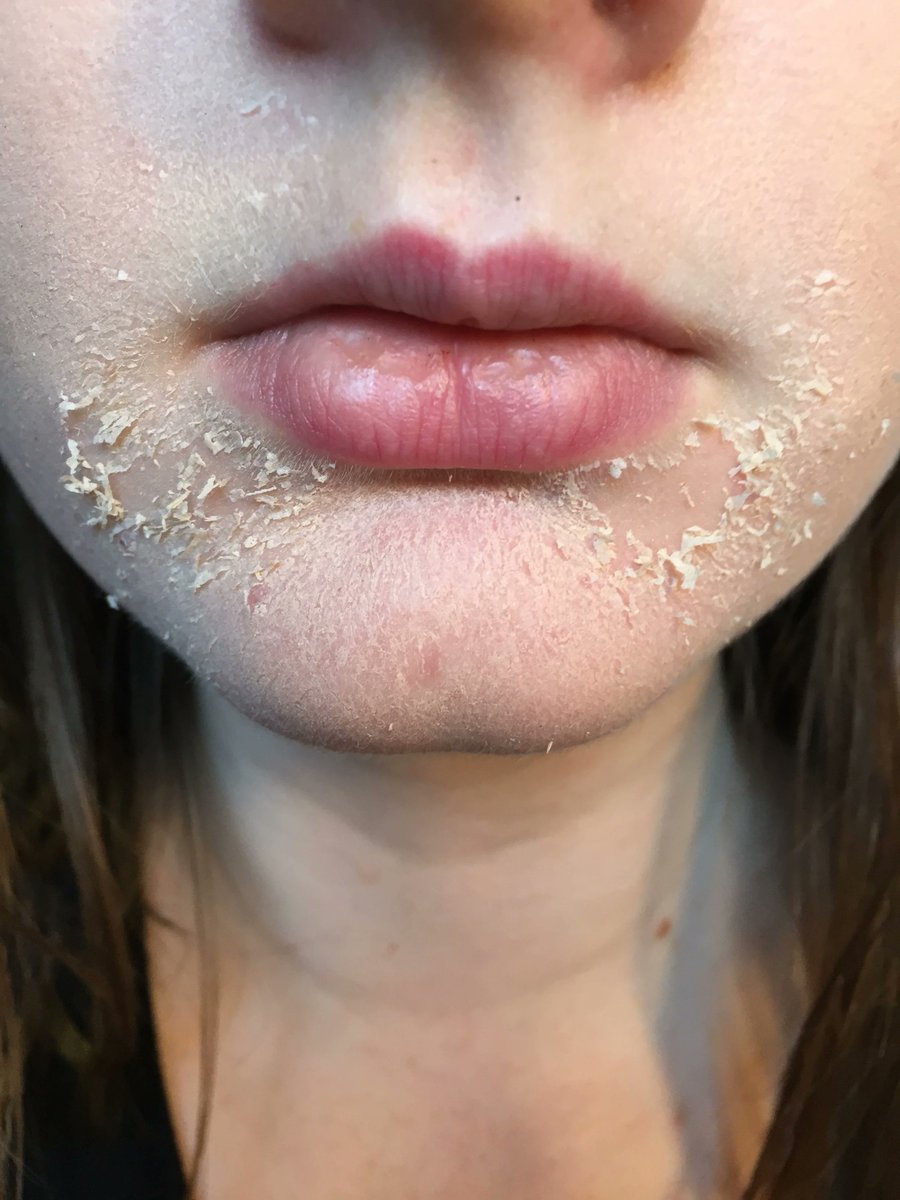
OVERDOSING: if despite these efforts you STILL wake up looking like this, that means you've overdosed for YOUR skin. We all have different baseline skin types, so you should use EVEN LESS next time, mix EVEN MORE moisturizer, and USE TWICE A WEEK only until you adjust.
BONUS TIPS:
☀️retinoids increase sun sensitivity in the first few weeks of use, so wear extra sunscreen.
🧪retinoids are temperamental ingredients (need the right pH to work), so DON'T use other actives alongside them at night e.g. vit C, benzoyl peroxide.
☀️retinoids increase sun sensitivity in the first few weeks of use, so wear extra sunscreen.
🧪retinoids are temperamental ingredients (need the right pH to work), so DON'T use other actives alongside them at night e.g. vit C, benzoyl peroxide.
All the usual caveats: speak to your own dermatologists, not medical advice etc.
If you want more threads like this about evidence-based skincare, drop me a follow!
If you want more threads like this about evidence-based skincare, drop me a follow!
• • •
Missing some Tweet in this thread? You can try to
force a refresh




