Contemporary Islamic architecture is redefining perceptions of tradition in a modern global world.
Here are 15 contemporary examples of Mosques from around the world, that highlight innovative uses of forms & materials through context and locality
A thread…
Here are 15 contemporary examples of Mosques from around the world, that highlight innovative uses of forms & materials through context and locality
A thread…

1/ Cologne Central Mosque, Germany
The largest & grandest mosque in Germany. Cologne mosque is now regarded as a symbol of integration & symbol of the birth of German mosque architecture. The futuristic mosque is mainly characterized by the large dome.
The largest & grandest mosque in Germany. Cologne mosque is now regarded as a symbol of integration & symbol of the birth of German mosque architecture. The futuristic mosque is mainly characterized by the large dome.

1.1/ Cologne Central Mosque, Germany
Completed in 2017, it can accommodate 1200 worshippers. It is the largest mosque in Germany. The main prayer hall is as striking harmonious blend of modern and tradition
Completed in 2017, it can accommodate 1200 worshippers. It is the largest mosque in Germany. The main prayer hall is as striking harmonious blend of modern and tradition

2/ Education City Mosque, part of the Hamad-Bin-Khalifa University in Doha, Qatar
The mosque rests on 5 main structural columns, representing the 5 pillars of Islam. 4 streams of water flow in from the surrounding gardens, representing wine, milk, honey & water
The mosque rests on 5 main structural columns, representing the 5 pillars of Islam. 4 streams of water flow in from the surrounding gardens, representing wine, milk, honey & water
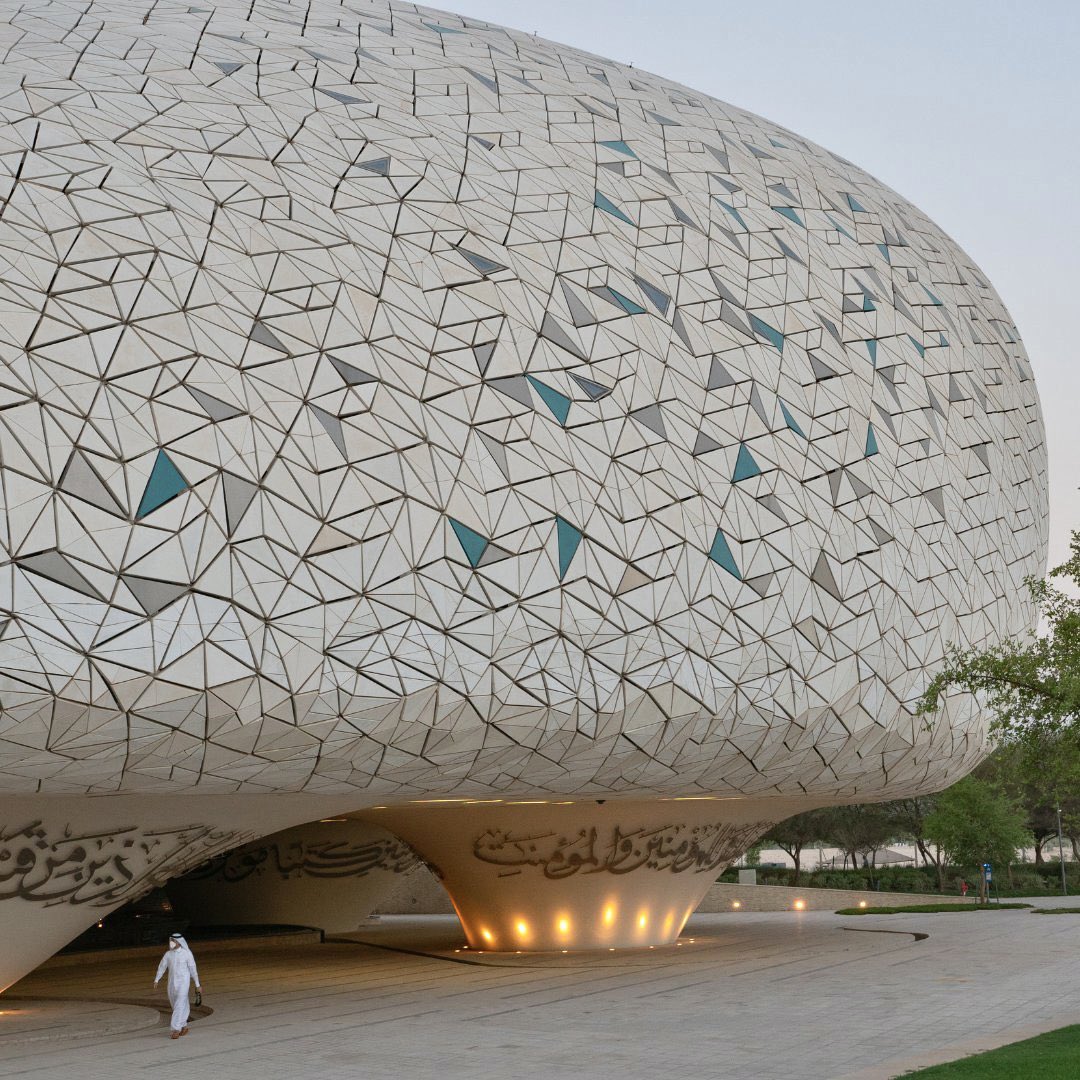
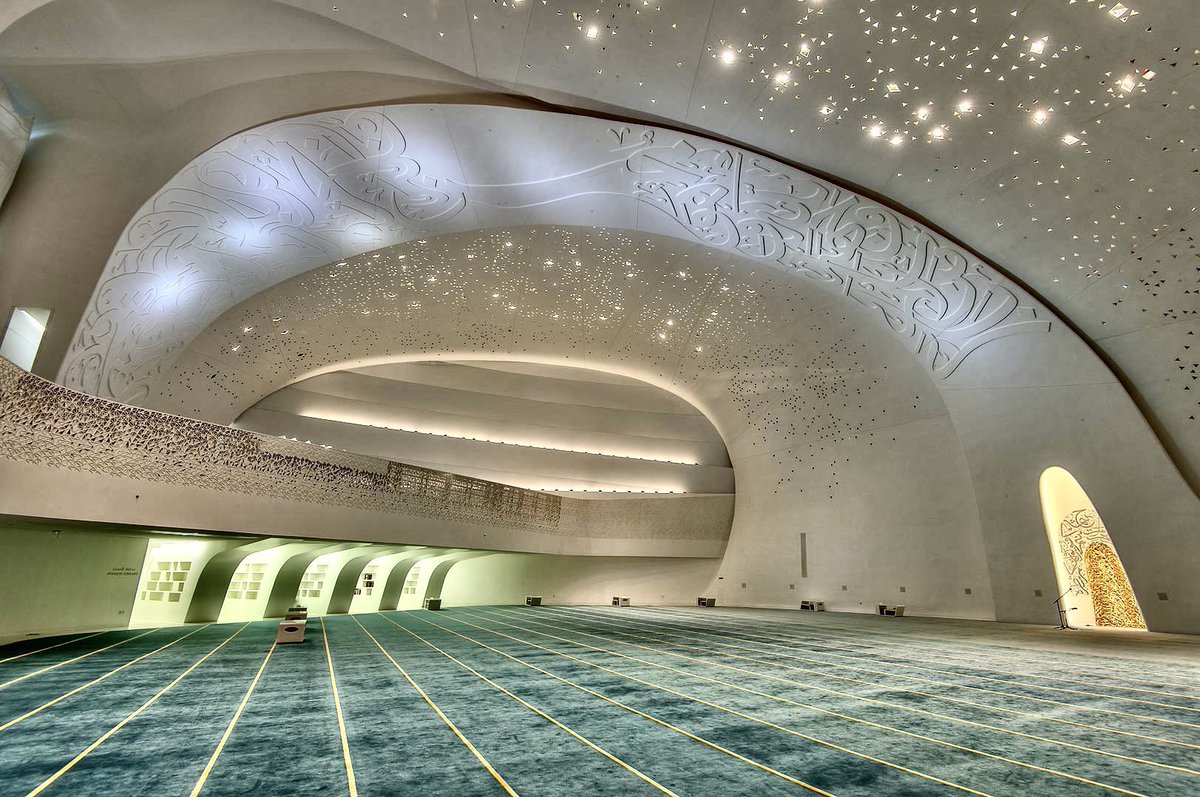
2.1/ Education City Mosque, part of the Hamad-Bin-Khalifa University in Doha, Qatar
The interior of the mosque is minimalistic, yet mesmerising.
The interior of the mosque is minimalistic, yet mesmerising.
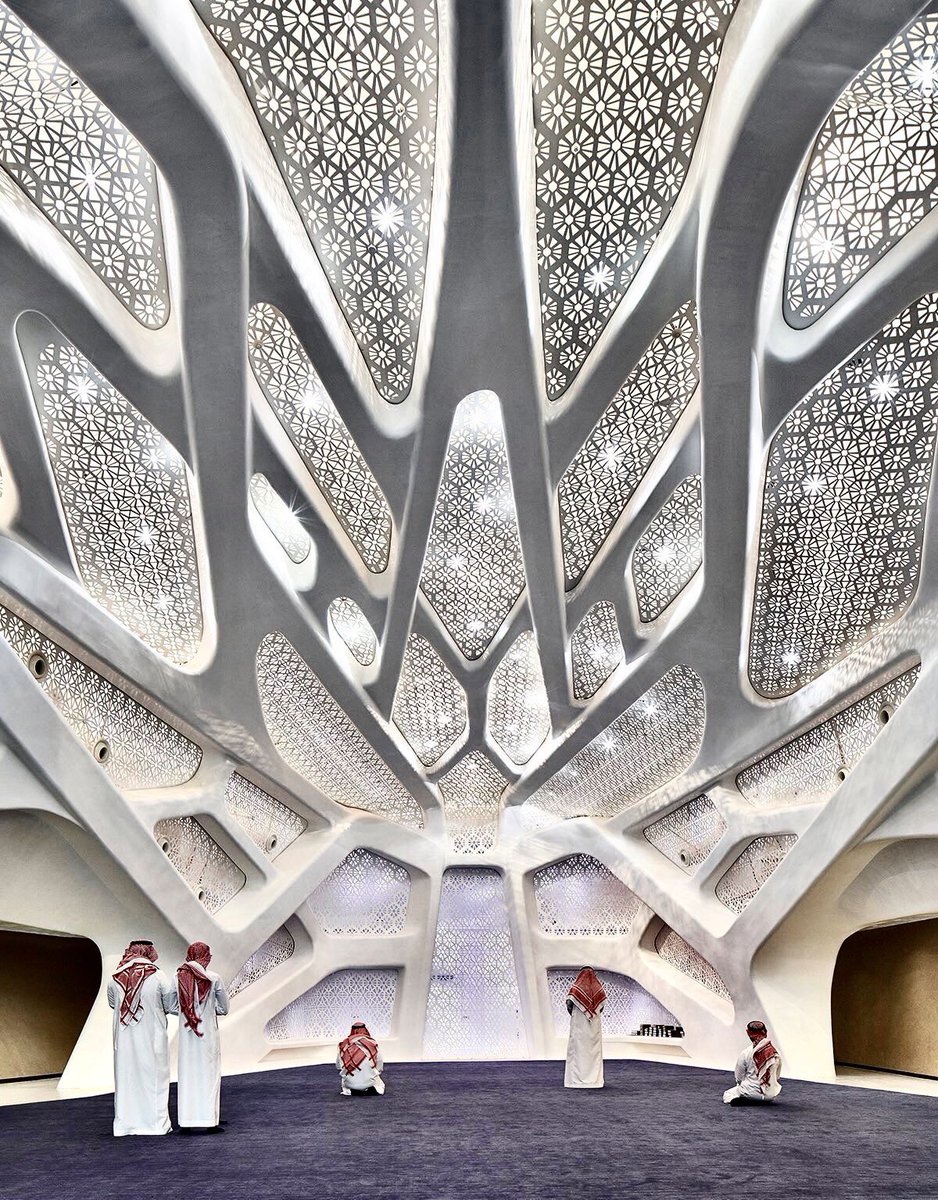
3/ KAPSARC Residential Community Mosque, Saudi Arabia
In the main prayer hall, wrapping its walls and ceiling is a modern interpretation of an Arabic screen wall (mashrabiya) that glows with natural light from windows and skylights to brighten the modern space
In the main prayer hall, wrapping its walls and ceiling is a modern interpretation of an Arabic screen wall (mashrabiya) that glows with natural light from windows and skylights to brighten the modern space
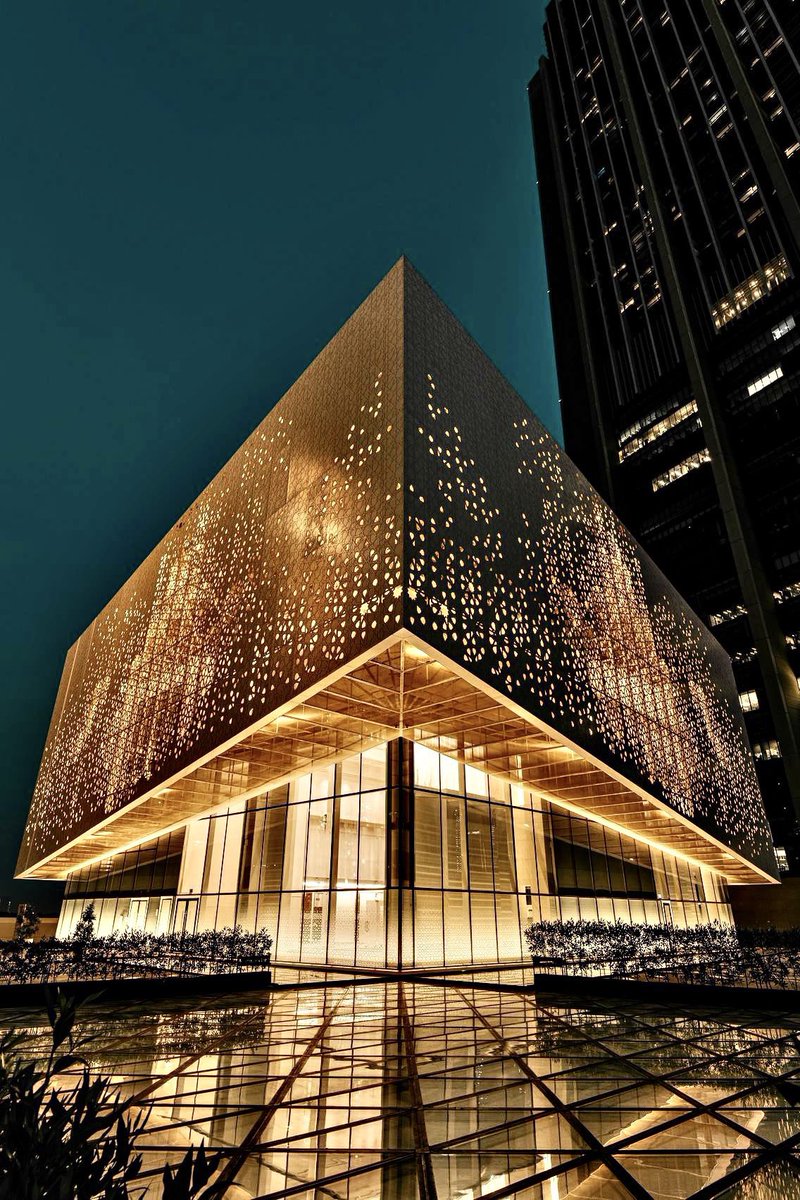
4/ The Grand Mosque of the Dubai International Financial Centre, UAE
This mosque, designed by the RMJM architectural firm combines traditional elements of Islamic architecture, with a contemporary style. The mosque sits harmoniously into cities populated by glass towers
This mosque, designed by the RMJM architectural firm combines traditional elements of Islamic architecture, with a contemporary style. The mosque sits harmoniously into cities populated by glass towers
5/ Al Dana Mosque, Abu Dhabi
While the leaning domes of the structure are meant to evoke shifting sand dunes, the mosque transforms into a lantern at night, as the light from the interior emits outward
While the leaning domes of the structure are meant to evoke shifting sand dunes, the mosque transforms into a lantern at night, as the light from the interior emits outward
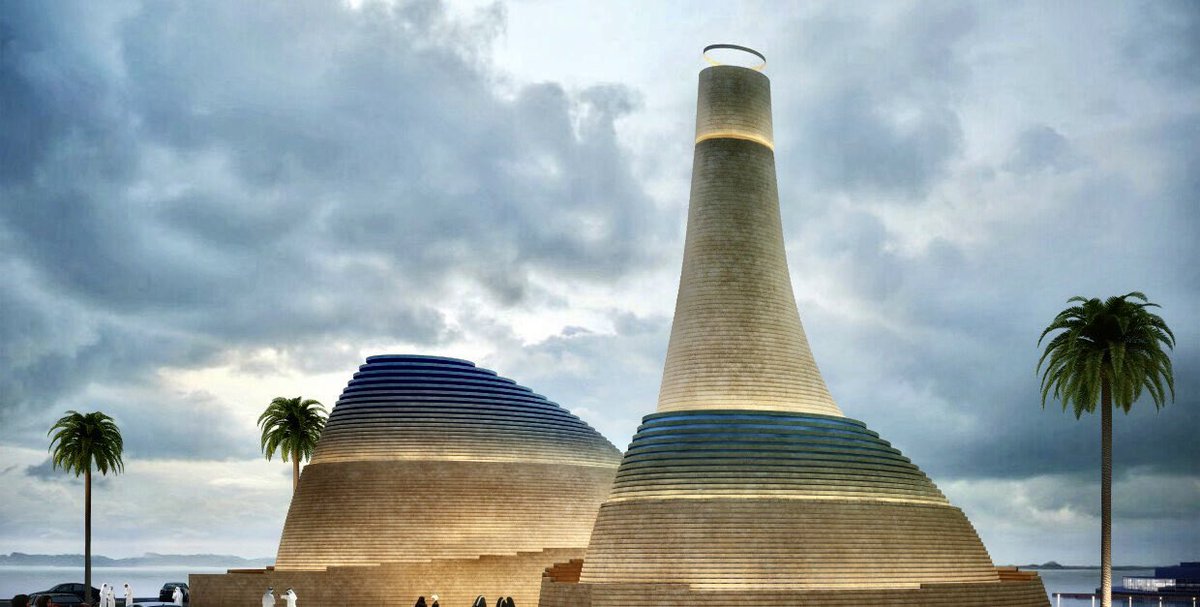
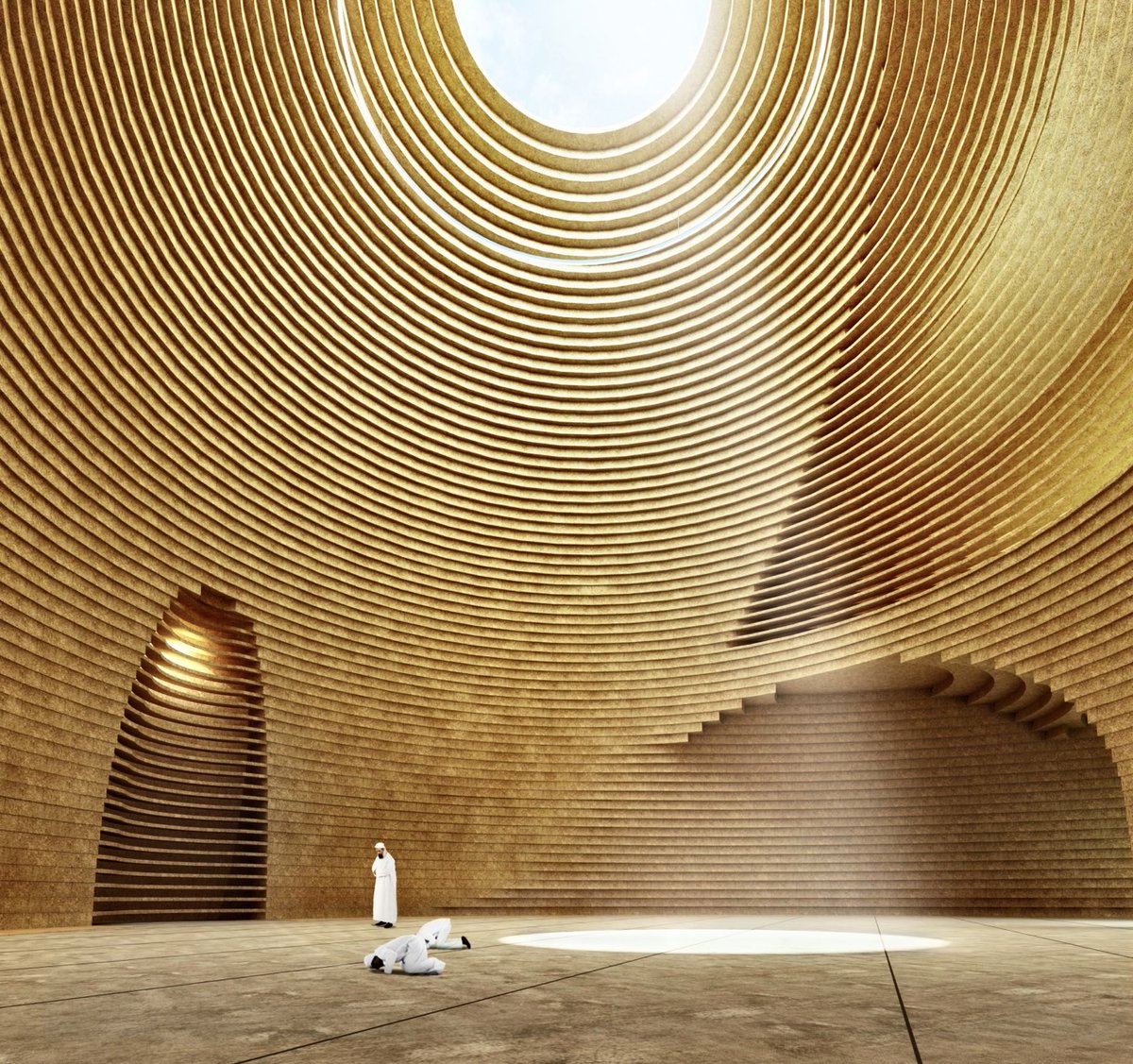
5.1/ Al Dana Mosque, Abu Dhabi
During the day, the high oculus brings daylight into the space, which are spotlighted across the interior’s floor depending on the time of day, forming a spiritual connection between the “earthy interior and the heavenly skies”
During the day, the high oculus brings daylight into the space, which are spotlighted across the interior’s floor depending on the time of day, forming a spiritual connection between the “earthy interior and the heavenly skies”
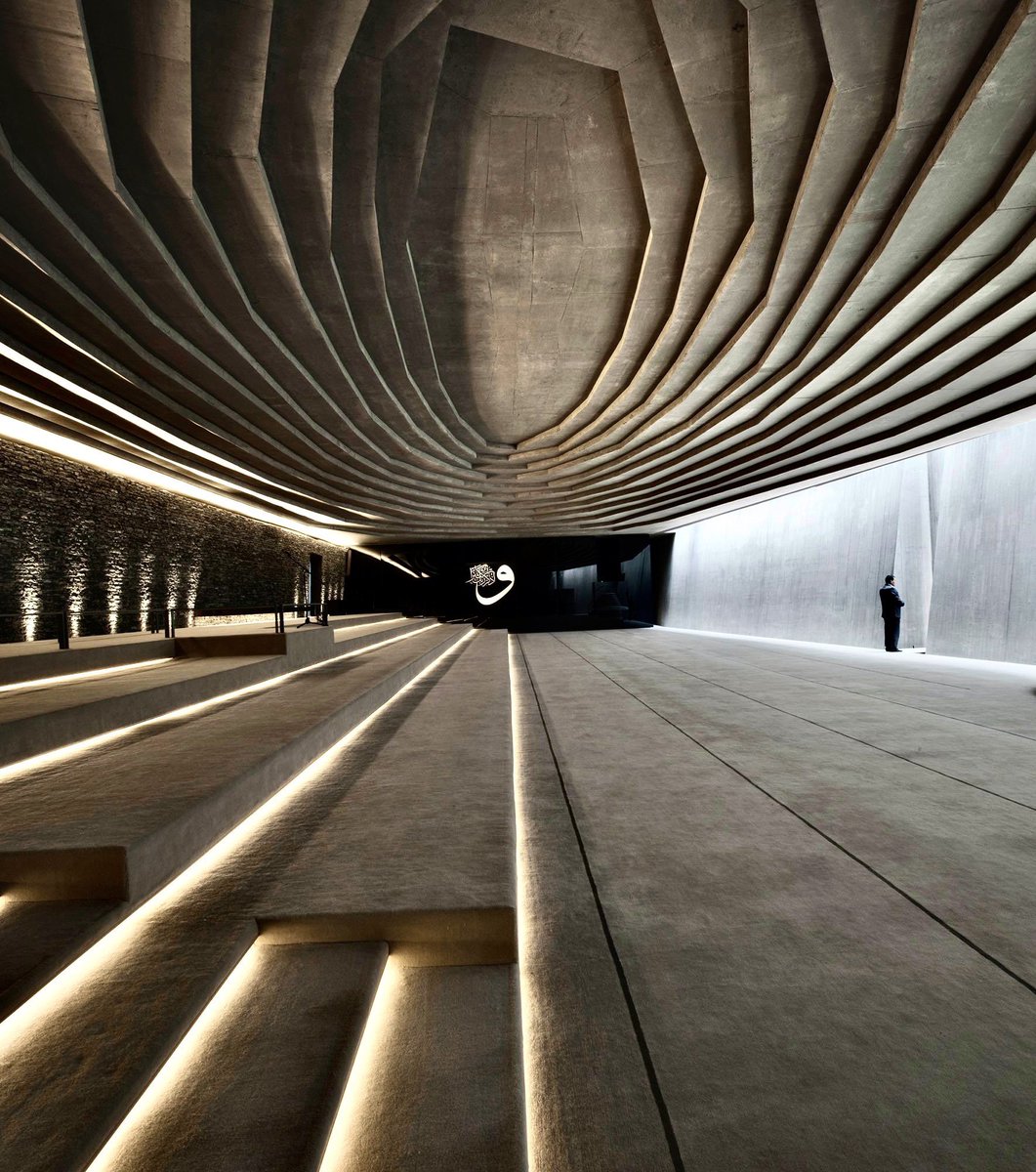
6/ Sancaklar Mosque, Büyükçekmece, Istanbul
Built by architect Emre Arolat. Finished in 2012, it was awarded the Religious Building of the Year Award for 2015 by ArchDaily. The prayer area is truly beautiful
Built by architect Emre Arolat. Finished in 2012, it was awarded the Religious Building of the Year Award for 2015 by ArchDaily. The prayer area is truly beautiful
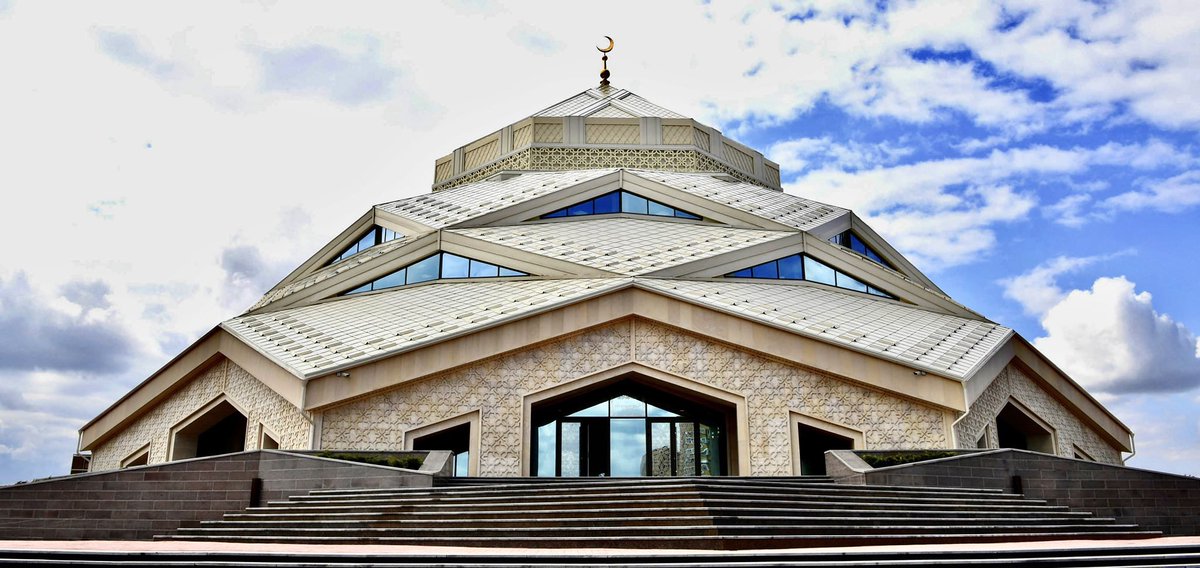
7/ The Flower of Allah Mosque, Kazakhstan
Postmodernism & national motifs influenced the futuristic look of the building. The mosque has the shape of a hemisphere, and the general appearance of the building resembles flowers & diamonds
Postmodernism & national motifs influenced the futuristic look of the building. The mosque has the shape of a hemisphere, and the general appearance of the building resembles flowers & diamonds
7.1/ The Flower of Allah Mosque, Kazakhstan
In addition to the interesting design there are alternative energy sources on the roof, such as solar panels & specialized ventilation equipment. Thanks to it the mosque has become an object with zero energy consumption (interior view)
In addition to the interesting design there are alternative energy sources on the roof, such as solar panels & specialized ventilation equipment. Thanks to it the mosque has become an object with zero energy consumption (interior view)
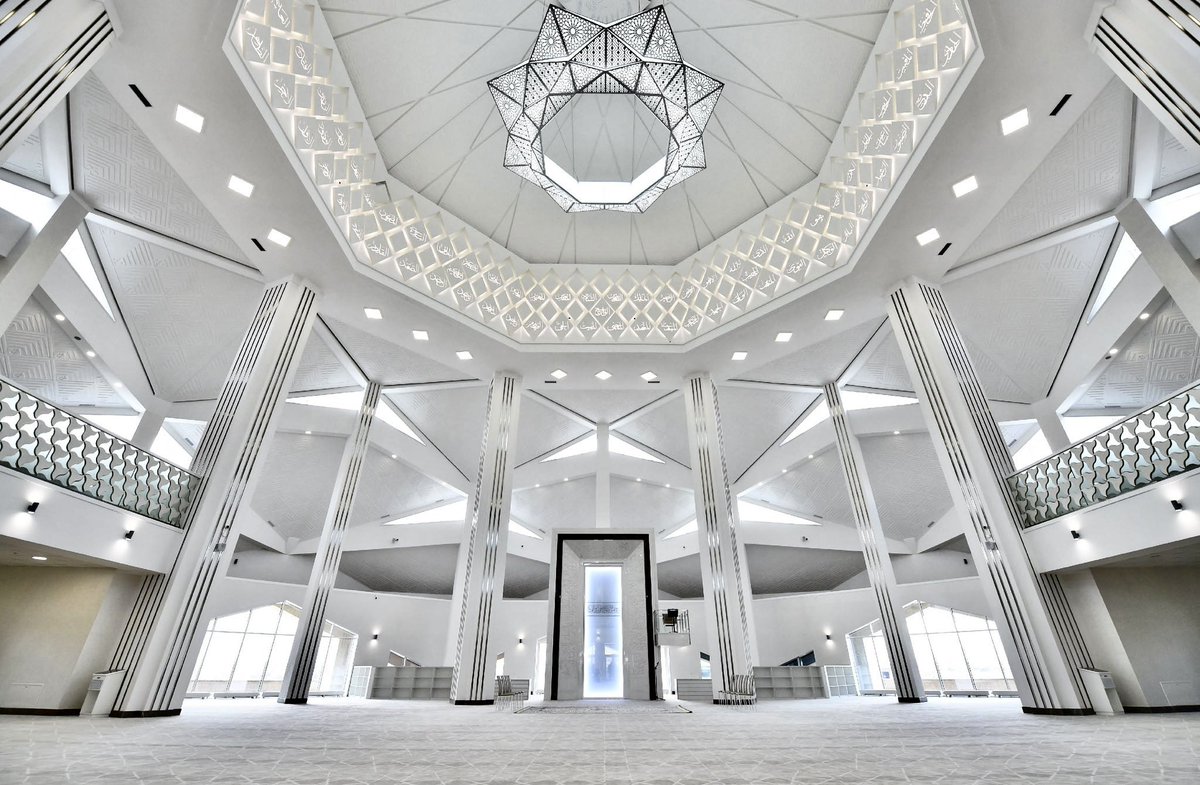
8/ Punchbowl Mosque, Australia
The mosque provides space for 300 men & women worshippers to congregate. It distinguishes a central worship space with a concrete honeycomb structure, which takes visual cues from the aesthetics of Islamic architecture.
The mosque provides space for 300 men & women worshippers to congregate. It distinguishes a central worship space with a concrete honeycomb structure, which takes visual cues from the aesthetics of Islamic architecture.

8.1/ Punchbowl Mosque, Australia
Streams of daylight extrude through a 30-millimetre hole in the centre of each of the concrete muqarnas. These are designed to illuminate the space throughout the day for the five prayers.
Streams of daylight extrude through a 30-millimetre hole in the centre of each of the concrete muqarnas. These are designed to illuminate the space throughout the day for the five prayers.
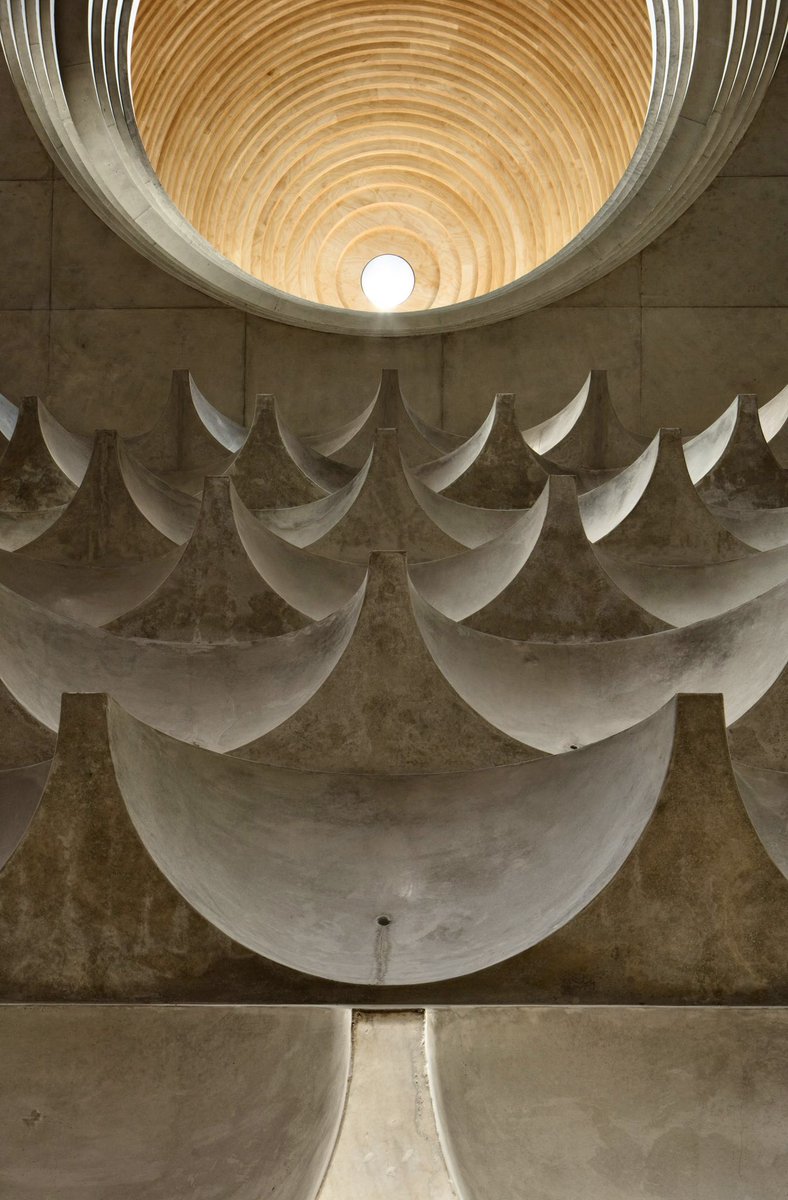
9/ The Astana Grand Mosque, Astana, Kazakhstan
It is the largest mosque in Central Asia and one of the largest in the world. The main dome of the mosque is the largest of its kind in the world.
Video by mamutkhan_t on IG
It is the largest mosque in Central Asia and one of the largest in the world. The main dome of the mosque is the largest of its kind in the world.
Video by mamutkhan_t on IG
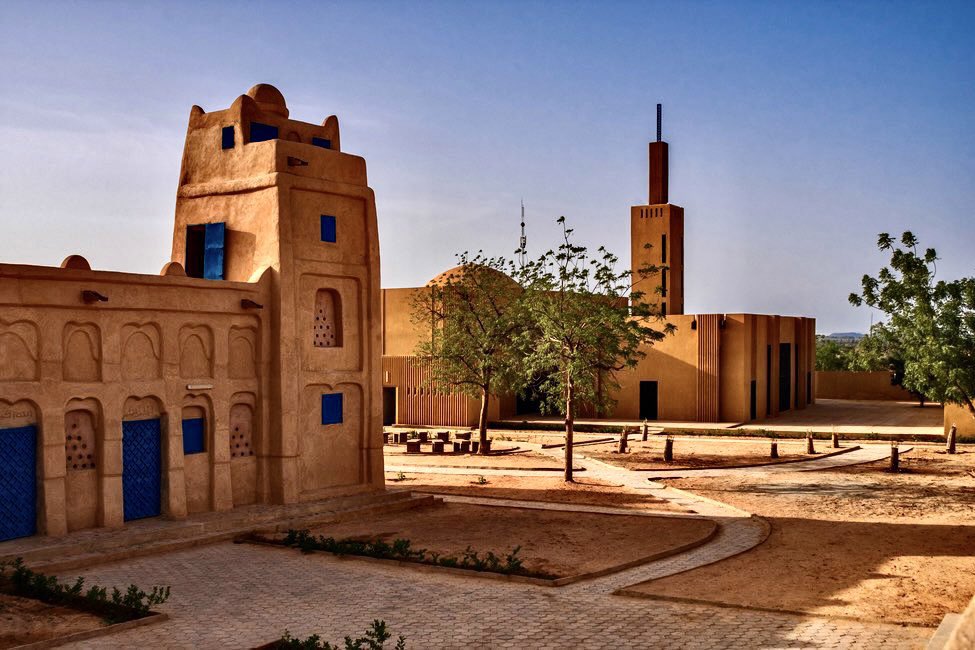
10/ Dandaji Mosque, Niger
Designed by Atlelier Masomi it sits opposite an old mosque which the architects repurposed into a library to save the building from demolition. The new mosque has been designed to interact with the library, creating a sense of natural movement
Designed by Atlelier Masomi it sits opposite an old mosque which the architects repurposed into a library to save the building from demolition. The new mosque has been designed to interact with the library, creating a sense of natural movement

10.1/ Dandaji Mosque, Niger
Mechanised ventilation has also been limited in the new mosque with the use of openings that create natural ventilation & regulate indoor temperatures. An irrigation system has also been set up on the site of the mosque to create a cooling effect
Mechanised ventilation has also been limited in the new mosque with the use of openings that create natural ventilation & regulate indoor temperatures. An irrigation system has also been set up on the site of the mosque to create a cooling effect
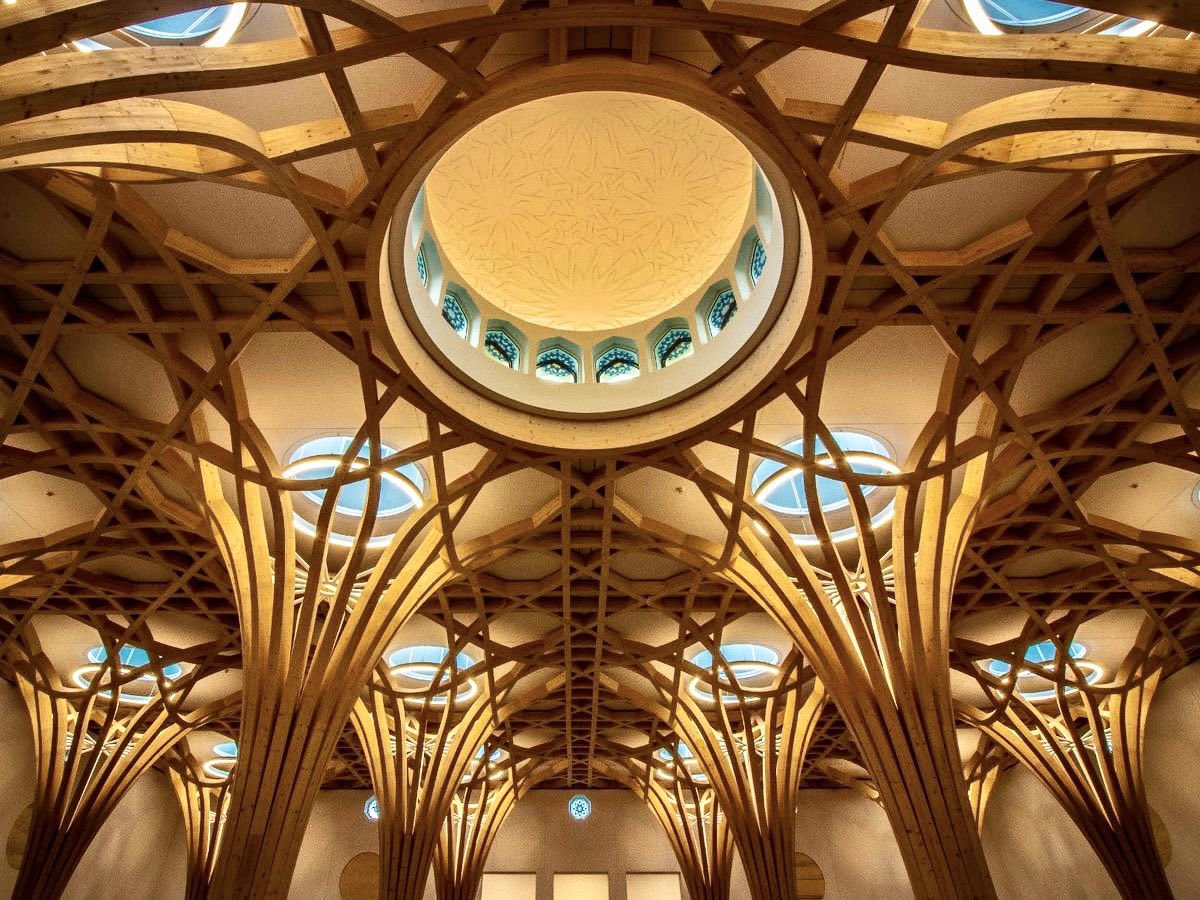
11/ Cambridge Central Mosque, Cambridge, England
Completed in 2019. Europe’s first eco-sustainable mosque, its design incorporates local architecture, Islamic motifs & the use of timber to create interwoven pillars, an interior view
Completed in 2019. Europe’s first eco-sustainable mosque, its design incorporates local architecture, Islamic motifs & the use of timber to create interwoven pillars, an interior view
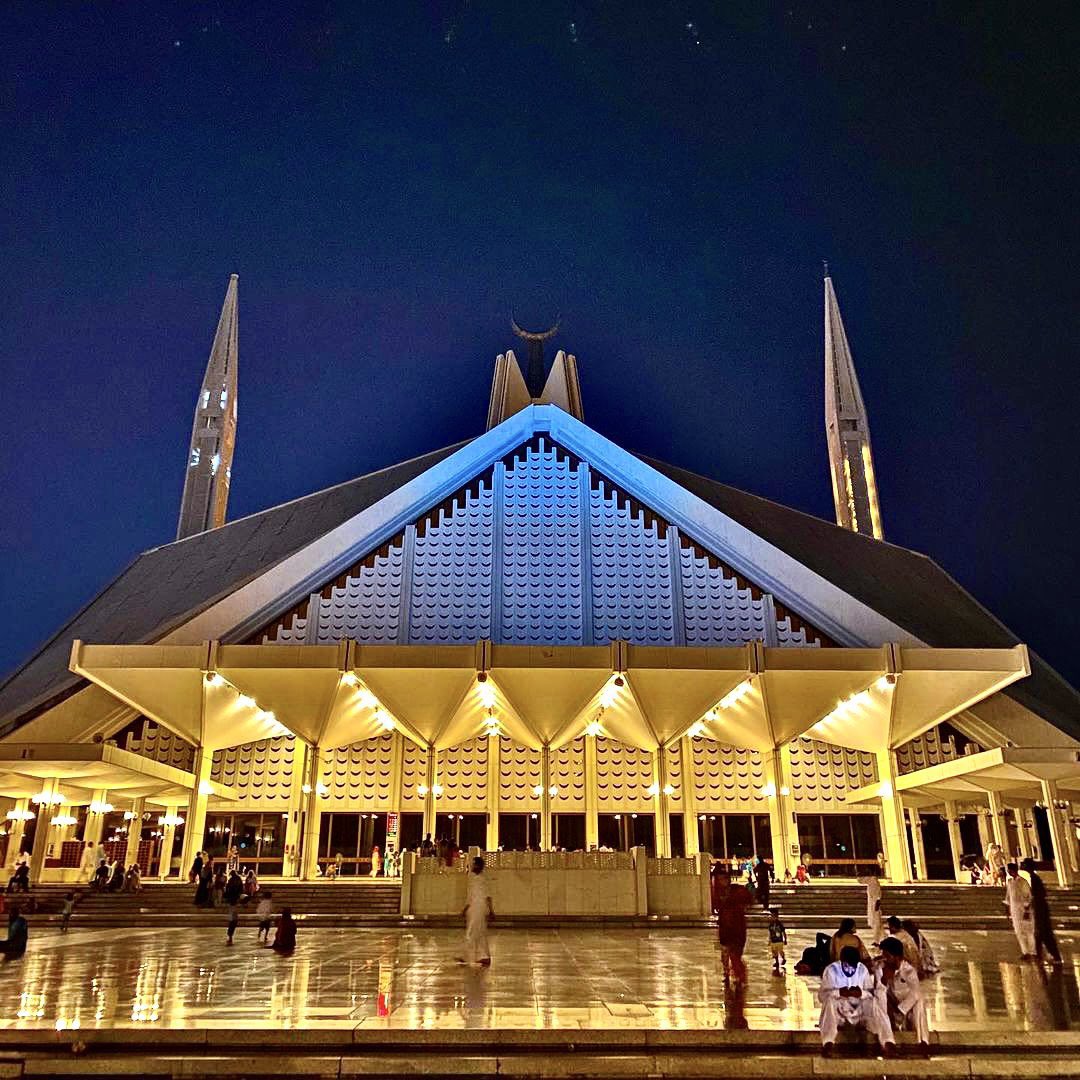
12/ The Faisal Mosque Islamabad, Pakistan
It is the sixth-largest mosque in the world & the largest within South Asia. The mosque features a contemporary design consisting of eight sides of concrete shell and is inspired by the design of a typical Bedouin tent
It is the sixth-largest mosque in the world & the largest within South Asia. The mosque features a contemporary design consisting of eight sides of concrete shell and is inspired by the design of a typical Bedouin tent
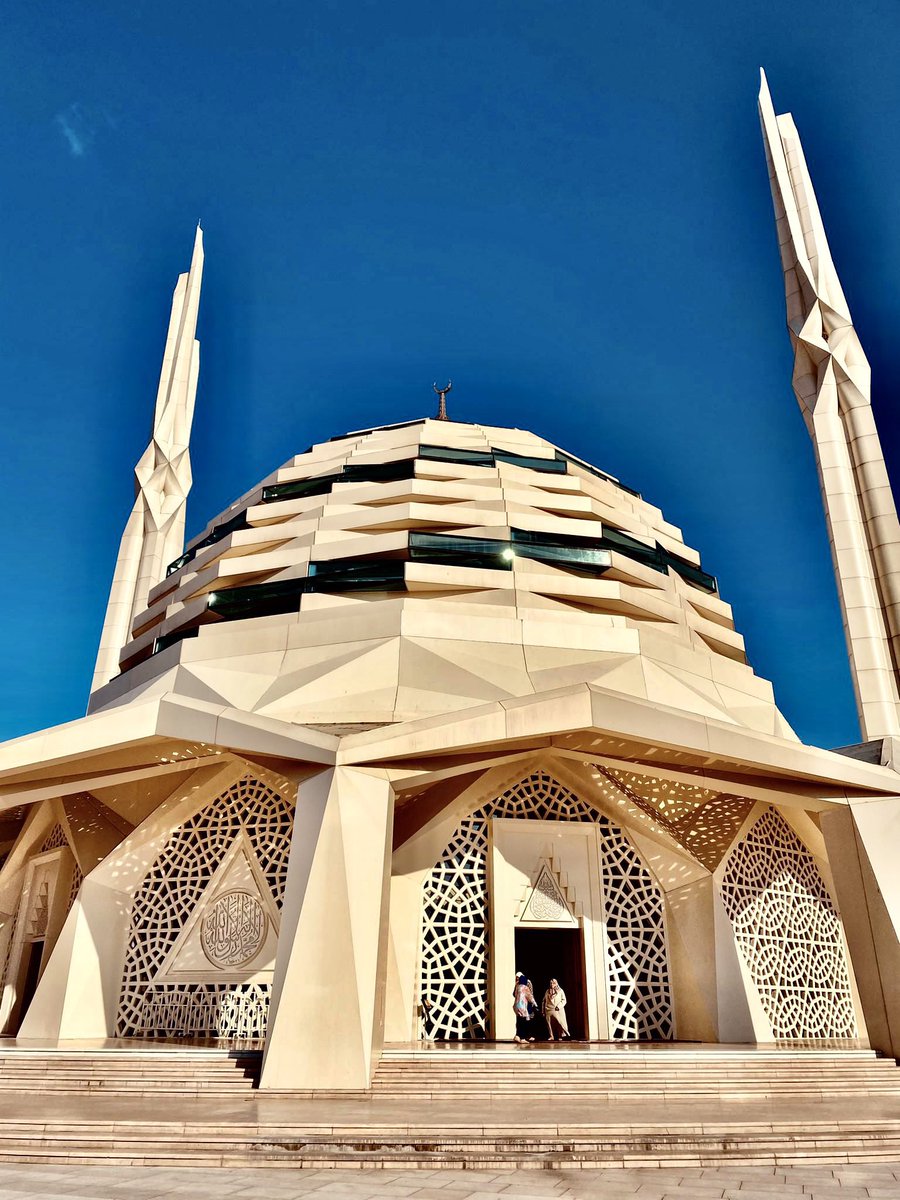
13/ Marmara University Faculty of Theology, Mosque and Culture Centre
Marmara Üniversitesi Fakültesi Ilhayat Camii, was built for the Marmara University Faculty of Theology as a mosque and culture centre by Muharrem Hilmi Şenalp of Hassa Architecture in Istanbul
Marmara Üniversitesi Fakültesi Ilhayat Camii, was built for the Marmara University Faculty of Theology as a mosque and culture centre by Muharrem Hilmi Şenalp of Hassa Architecture in Istanbul
14/ Al Safar Mosque in West Java, Indonesia.
The contemporary mosque design was inspired by the irregular shapes of nature and Japanese origami. It can accommodate 1,200 worshippers.
The contemporary mosque design was inspired by the irregular shapes of nature and Japanese origami. It can accommodate 1,200 worshippers.

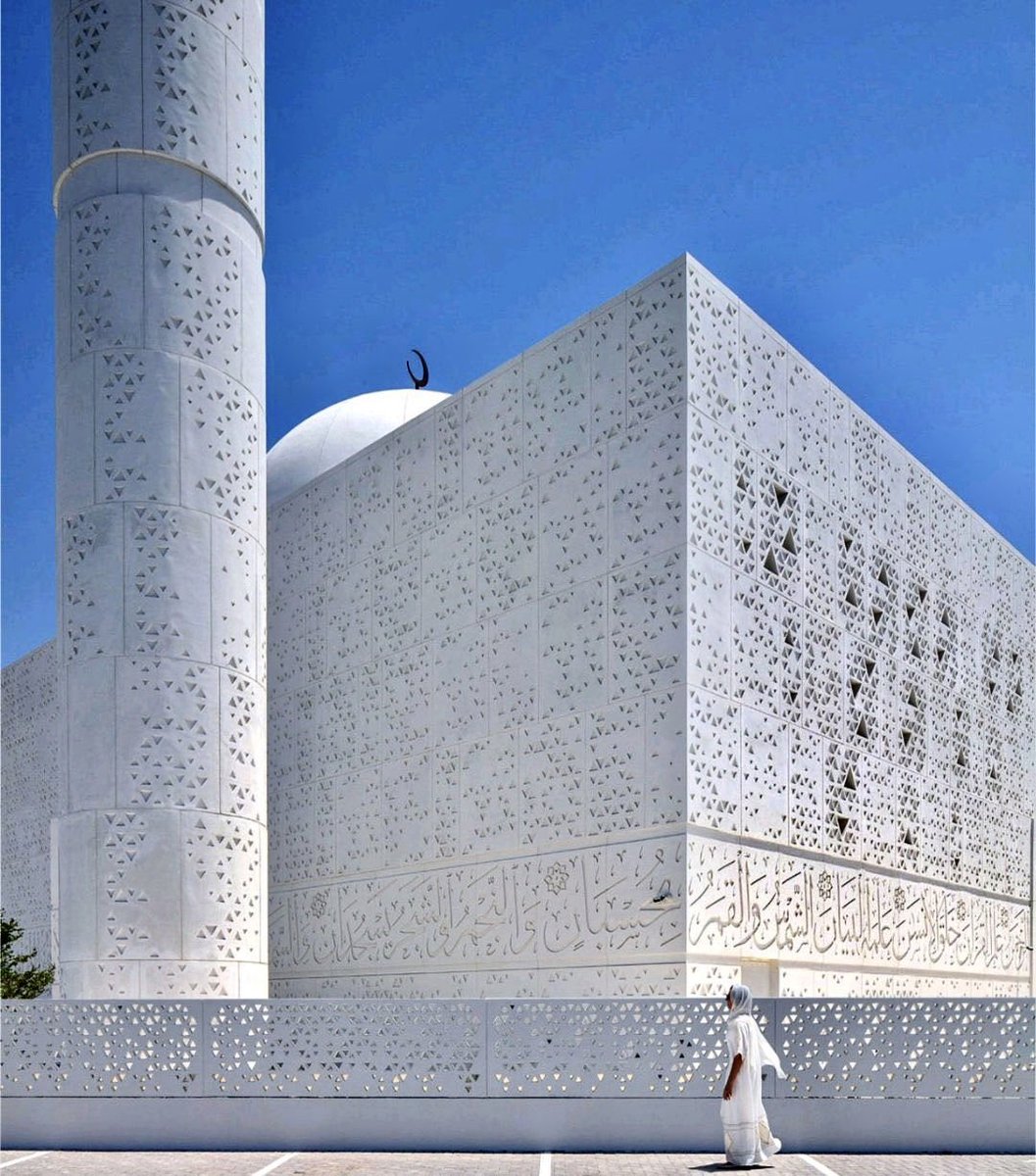
15/ Mosque of Light' in Al Quoz, Dubai
This beautiful contemporary mosque was designed by Dabbagh Architects founder @sumayadxb making it one of the first mosques in the UAE to be designed by a woman architect.
Triangle-shaped windows puncture the walls of the mosque, and… twitter.com/i/web/status/1…
This beautiful contemporary mosque was designed by Dabbagh Architects founder @sumayadxb making it one of the first mosques in the UAE to be designed by a woman architect.
Triangle-shaped windows puncture the walls of the mosque, and… twitter.com/i/web/status/1…
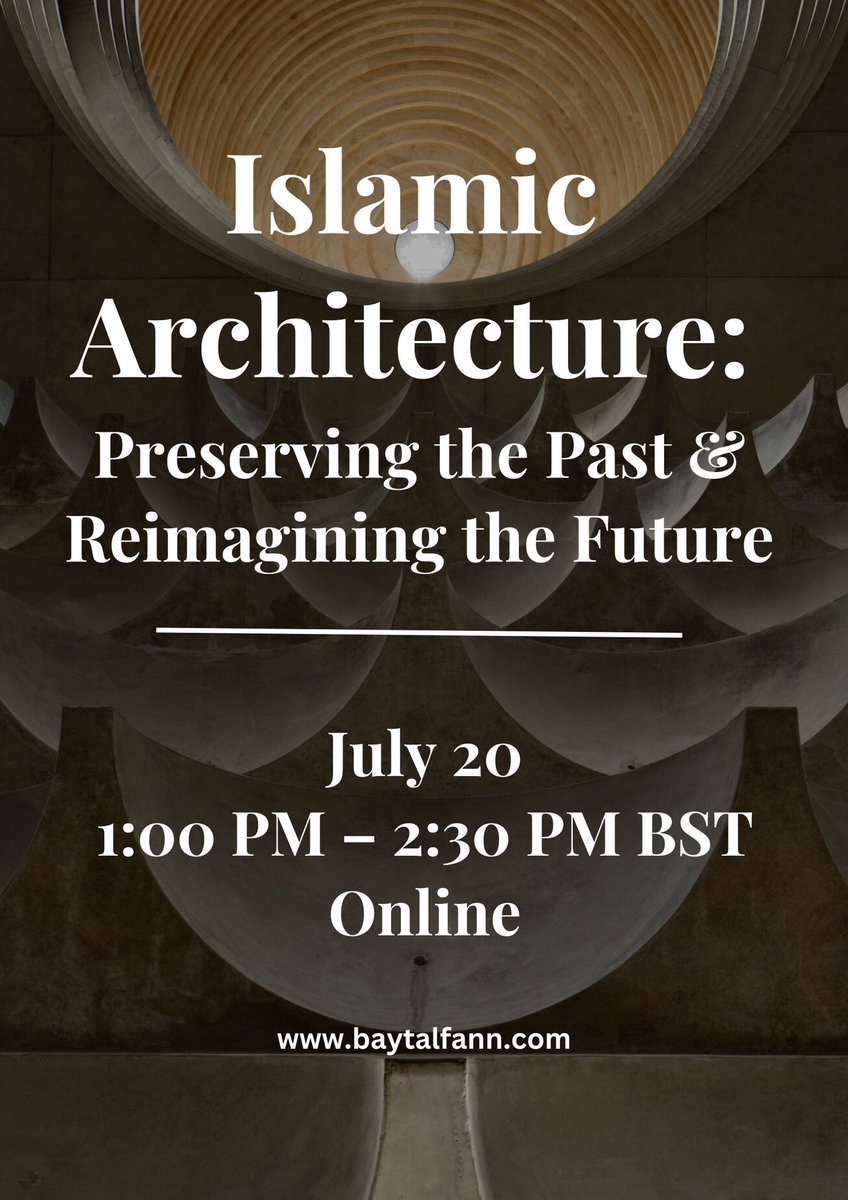
Want to know more about Islamic architecture?
Join us for a fascinating online event exploring the past, present, and future of Islamic architecture.
Thursday 20 July
1:00pm - 2:30pm BST
If you can’t attend live don’t worry, everyone registered will receive a recording of the… twitter.com/i/web/status/1…
Join us for a fascinating online event exploring the past, present, and future of Islamic architecture.
Thursday 20 July
1:00pm - 2:30pm BST
If you can’t attend live don’t worry, everyone registered will receive a recording of the… twitter.com/i/web/status/1…
• • •
Missing some Tweet in this thread? You can try to
force a refresh