
 Read on Twitter
Kufic script is one of the oldest forms of Arabic calligraphy, developed between the 7th & 10th centuries. Derived from the Iraqi town of Al-Kufa, it was a preferred script for writing the Qur’an & is still used by artists today.
A thread on the art & heritage of Kufic script…
A thread on the art & heritage of Kufic script…

1/ Kufic script is one of the most recognisable & exquisite scripts of Arabic calligraphy. It is so revered & foundational that medieval Egyptian encyclopedist Al-Qalqashandi declared “The Arabic script is the one which is now known as Kufic. From it evolved all the present pens”

2/ Kufic script was developed around the 7th century CE, where it was extensively used to copy the Qur’an by the orders of the Caliph, Uthman ibn Affan
Folio from the Tashkent Qur'an
late 8th–early 9th century
From one of the oldest Qur'an manuscripts in existence
@LACMA
Folio from the Tashkent Qur'an
late 8th–early 9th century
From one of the oldest Qur'an manuscripts in existence
@LACMA

3/ According to scholars, the name Kufic is derived from the southern Iraqi town of Al-Kufa — a powerhouse of Arab scholarship and cultural learning in the medieval era — where this script was created
Qurʾan, twenty-one leaves
Iraq, before 911
@MorganLibrary
Qurʾan, twenty-one leaves
Iraq, before 911
@MorganLibrary
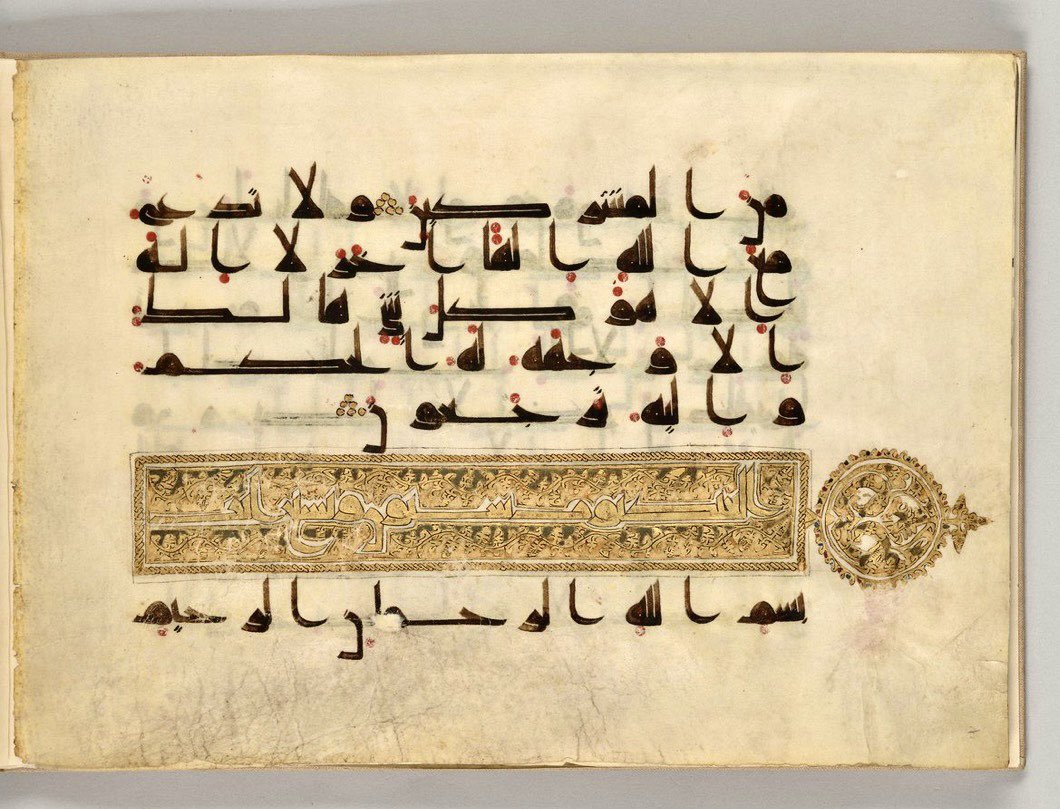
4/ For a long time, the Kufic script was used for writing Qur’anic manuscripts. Its leaves would have been initially produced from calves’ and goats’ skin, also known as parchment
Page from a large Qur’an in Kufic script
Syria
late 8th - early 9th century AD
@AshmoleanMuseum
Page from a large Qur’an in Kufic script
Syria
late 8th - early 9th century AD
@AshmoleanMuseum
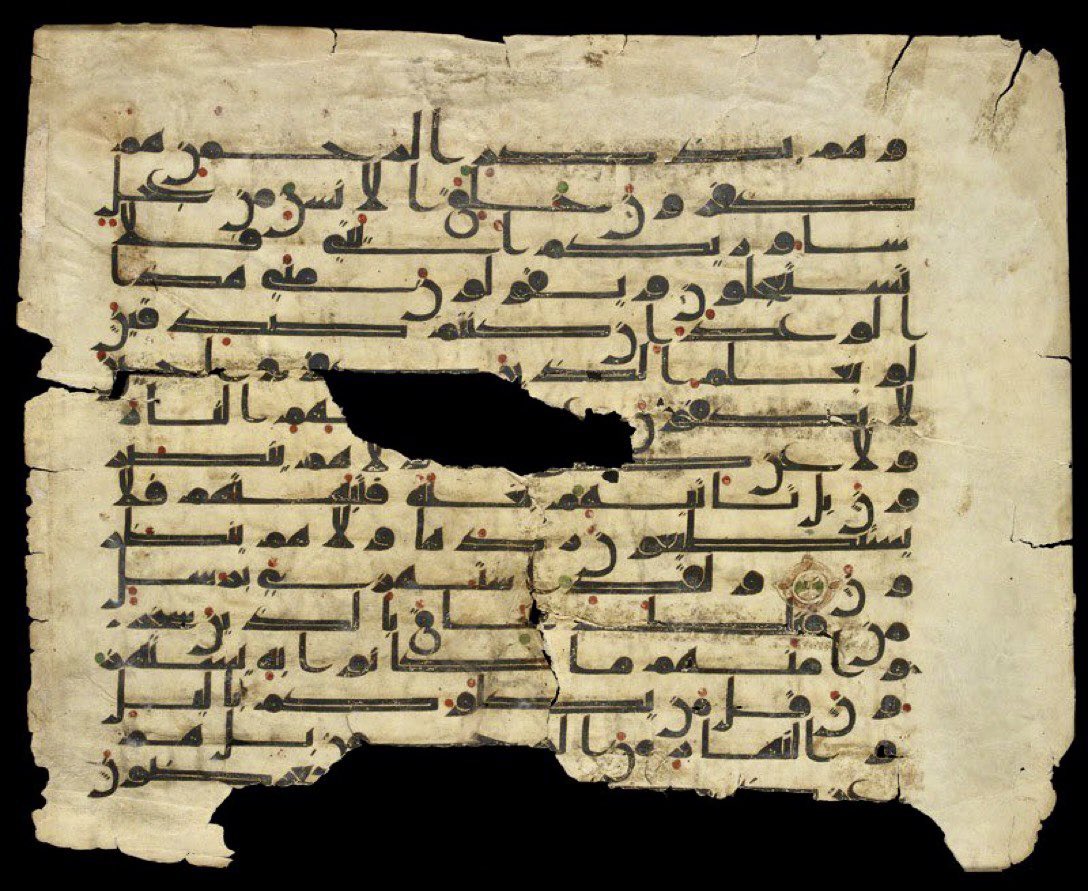
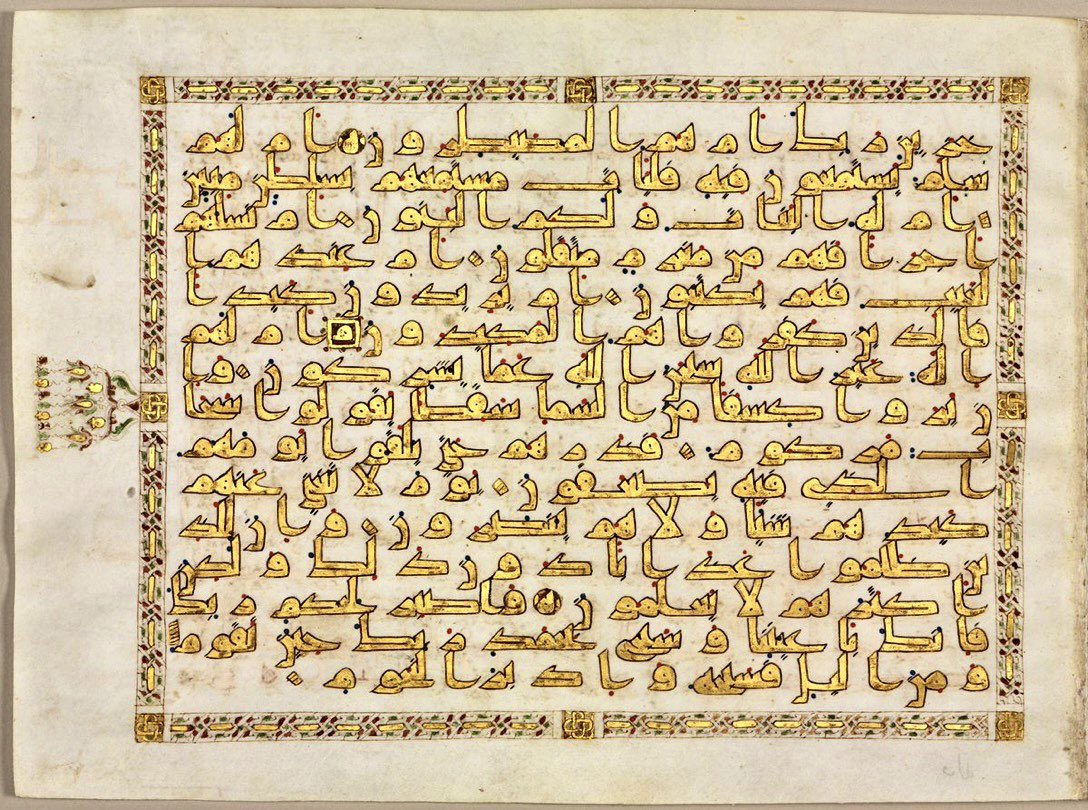
5/ Stylistically this bold angular form of calligraphy is characterized by short vertical & elongated horizontal strokes. A famous example of Kufic script in its classical sense is the Blue Qur’an a 9th c manuscript probably produced in Tunisia
Folio from Blue Qur'an
@CBL_Dublin
Folio from Blue Qur'an
@CBL_Dublin
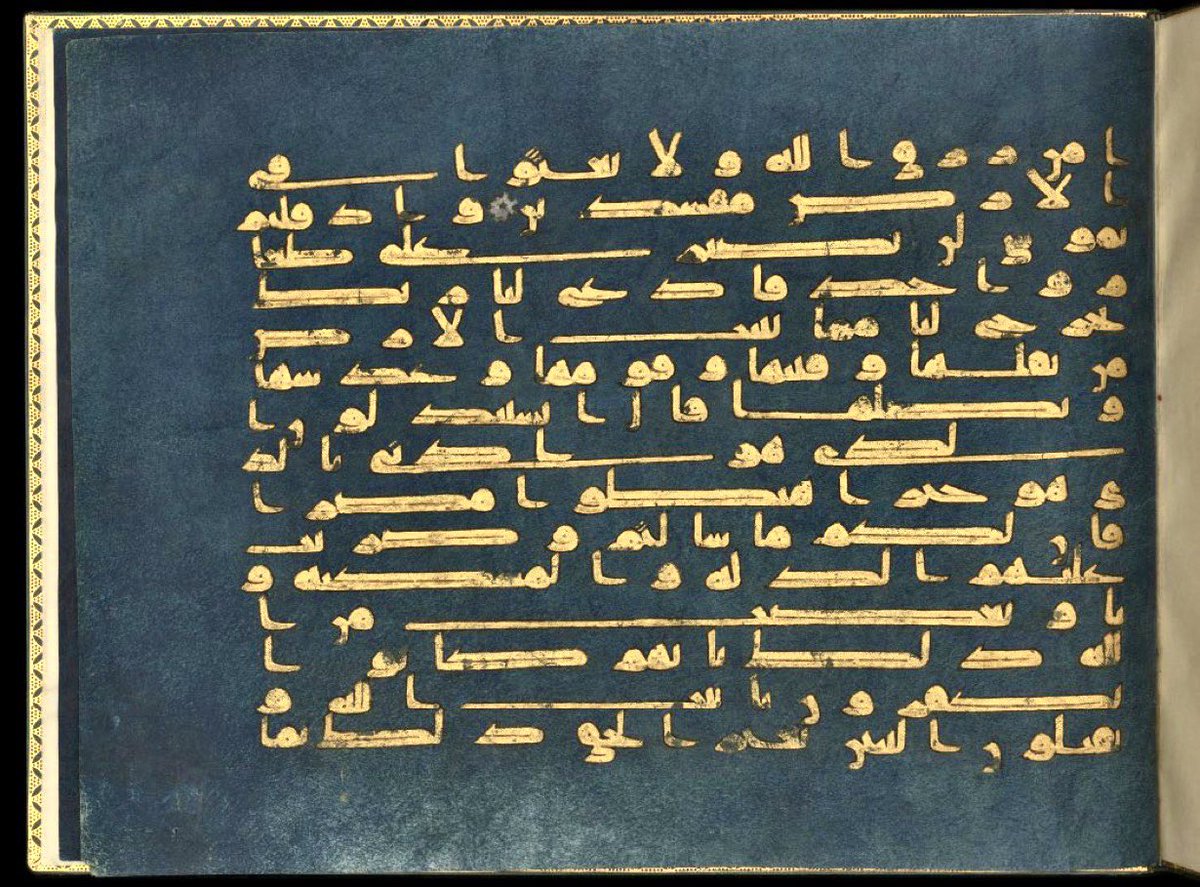
6/ Historically, calligraphers used the reed (or kamish) pen as a key writing utensil, dipped in black or red ink.
Qur'an leaf in Eastern Kufic script
Iran, Date 11th century (1001–1100)
@artinstitutechi
Qur'an leaf in Eastern Kufic script
Iran, Date 11th century (1001–1100)
@artinstitutechi
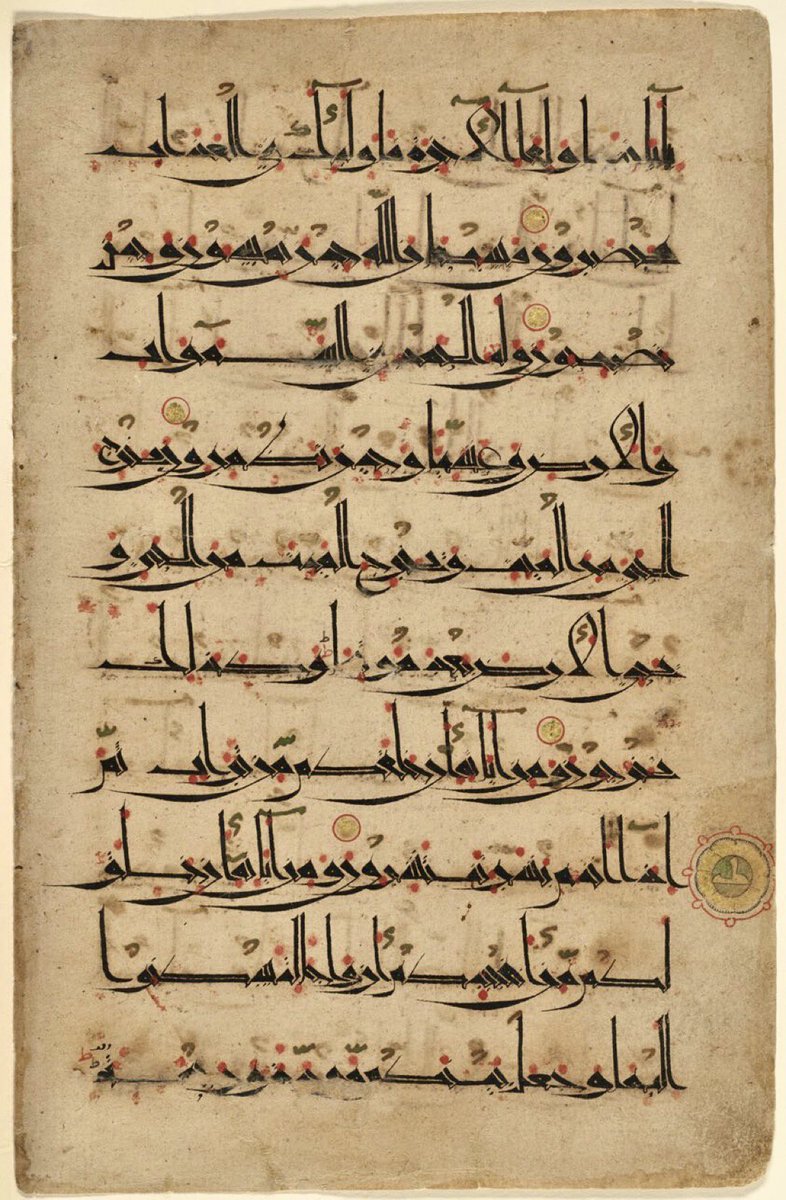
7/ The Mahgribi Kufic script is a slight modification, and features a significant amount of curves and loops as opposed to the original Arabic Kufic script
Qur'an Manuscript Folio 800s
North Africa, Aghlabid or Abbasid, 9th century
@ClevelandArt
Qur'an Manuscript Folio 800s
North Africa, Aghlabid or Abbasid, 9th century
@ClevelandArt
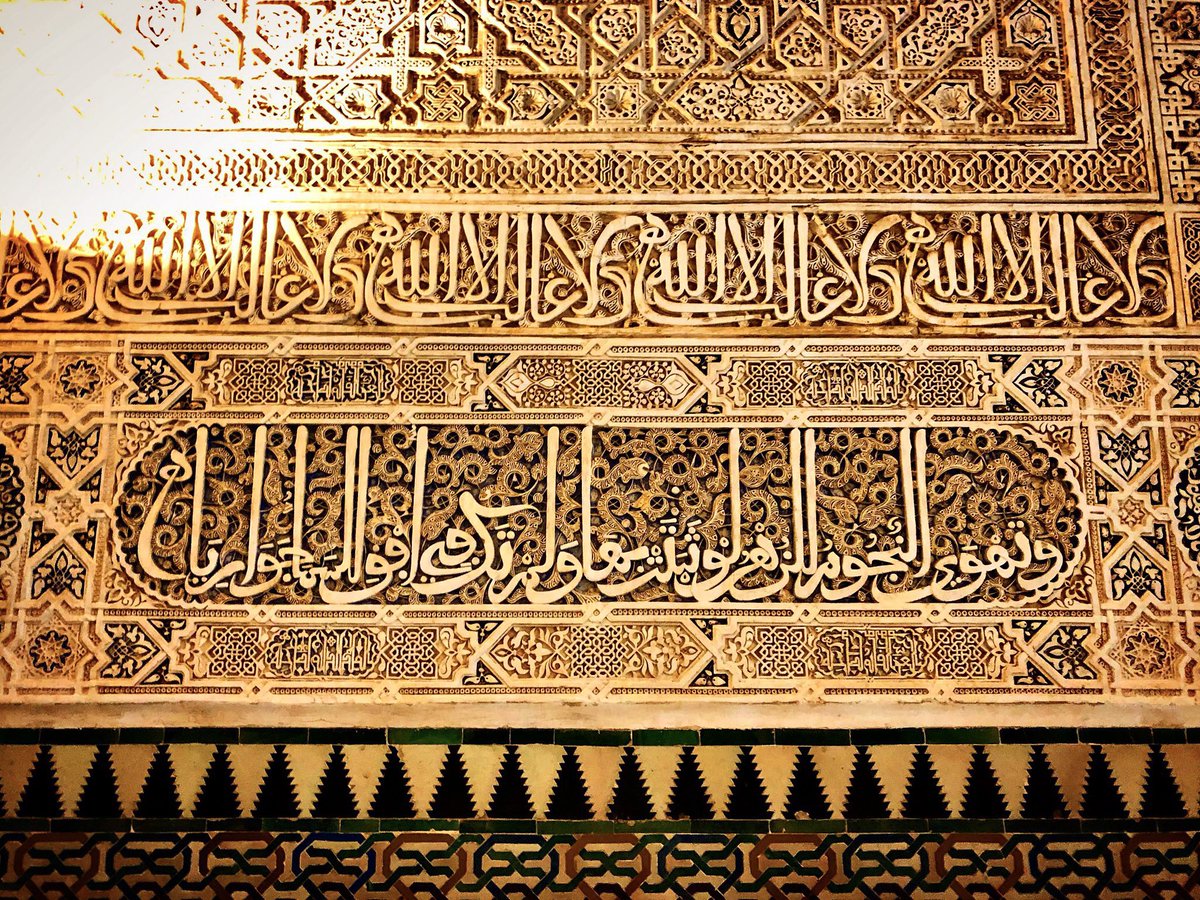
8/ As well as used as the script for Qur’an copying, it was also used for monuments & decoration of buildings, because of the rigidity of the script & its ease for execution as carving on stones, tiles or bricks.
Carving from Alhambra Palace, Spain
Carving from Alhambra Palace, Spain
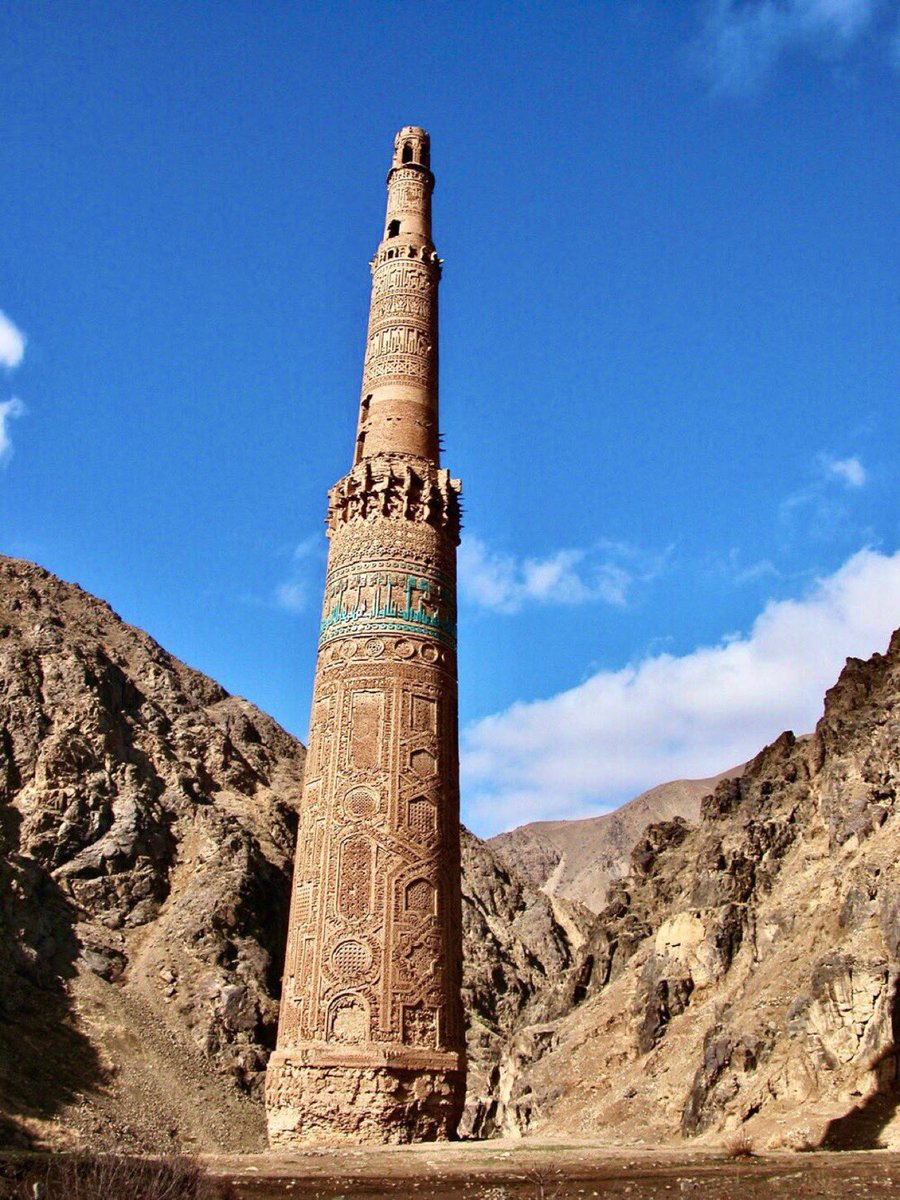
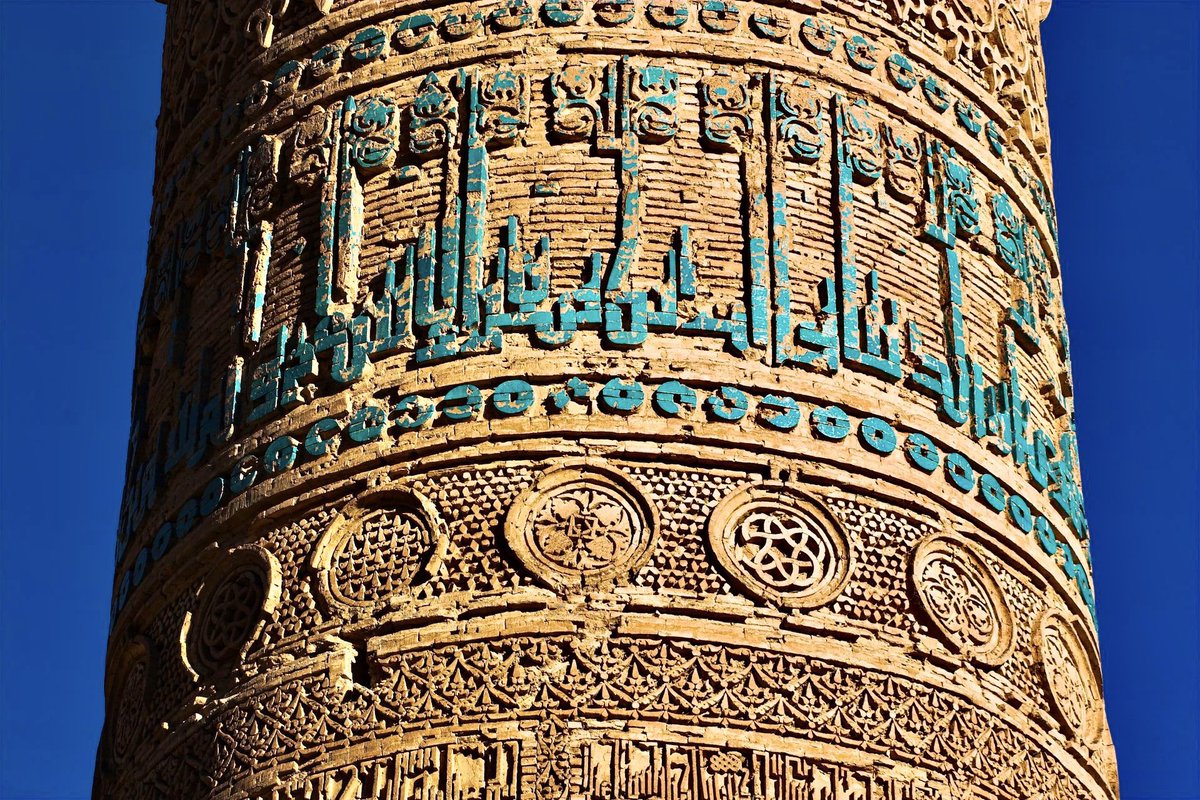
9/ The Minaret of Jam is a UNESCO world heritage site in western Ghor province of Afghanistan. Built in 12th century, the decoration of this 62m tall minaret consists of alternating bands of kufic and naskhi calligraphy, geometric patterns, and verses from the Qur'an
10/ Due to the arrival of more cursive Arabic scripts, use of the Kufic script declined in the 12th century. But it never lost its visual appeal. Here are contemporary artists redefining Kufic script today...
Kufic calligraphy by contemporary artist Nokta Sannat
Kufic calligraphy by contemporary artist Nokta Sannat
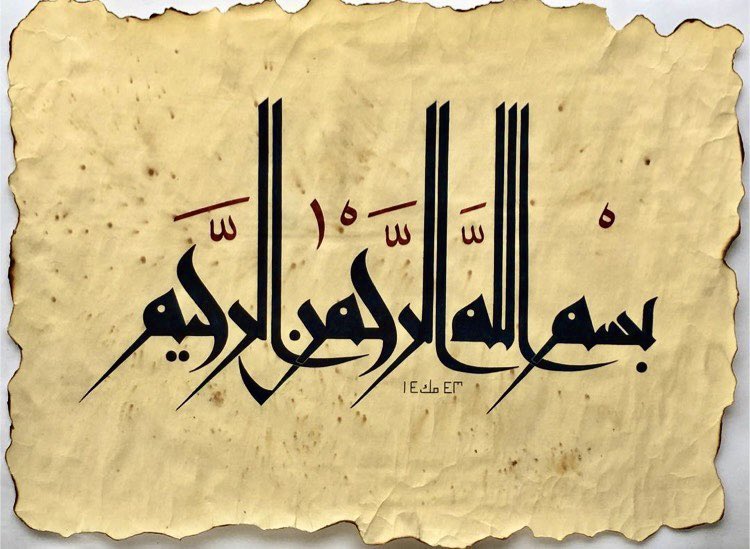
11/ Turkish artist Sarina Ghazaei is an expert in traditional Kufic script. She is redefining this artform, making it relevant today
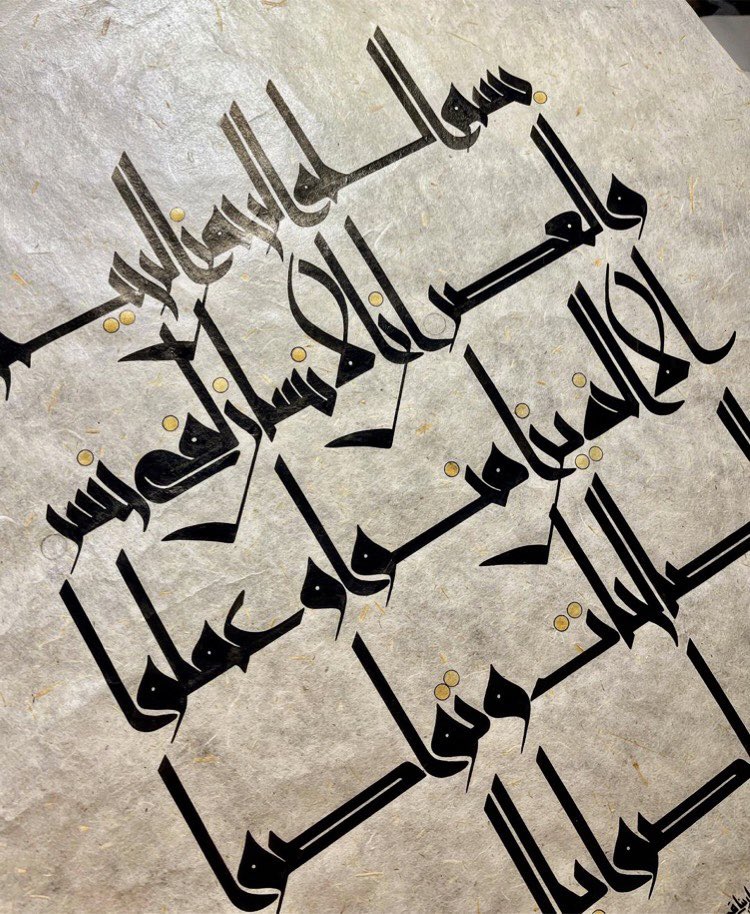
12/ Iranian artist Asie Raeiszade is redefining the traditional Kufic script with bold colours and pattern
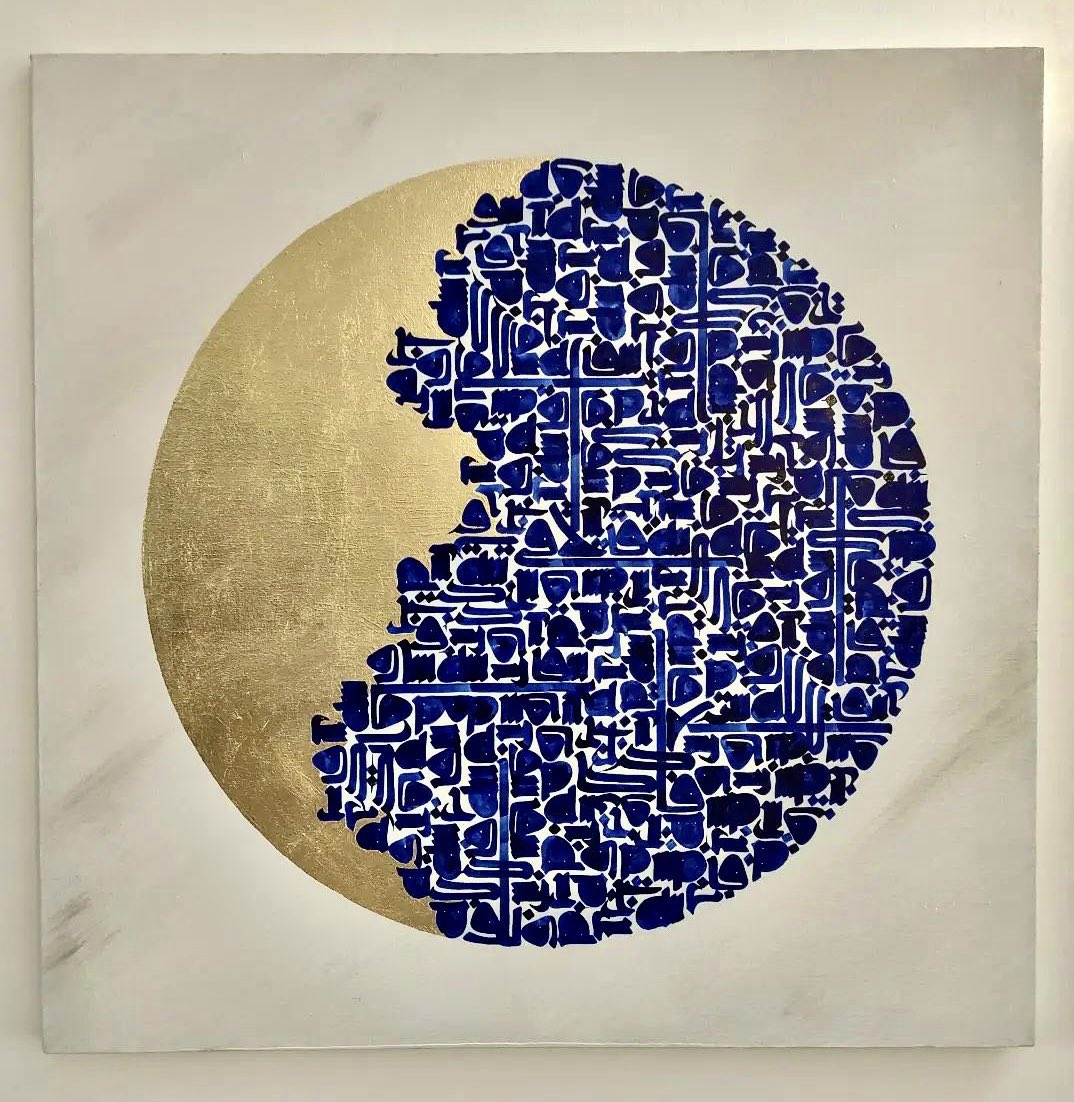
13/ Turkish artist Merve Akpinar Toku is trained in the traditional art of Kufic script, creating a new bold distinctive style for today

14/ Born in Tehran, @snasernia turns Arabic letters into an abstract language, creating a new concept called Crazy Kufik & deconstructs the rules of Arabic & Persian writing

15/ Pakistani artist Shamail specialises in Kufic Arabic script. He is passionate about expressing the beauty of the written word, making the artform relevant to contemporary styles
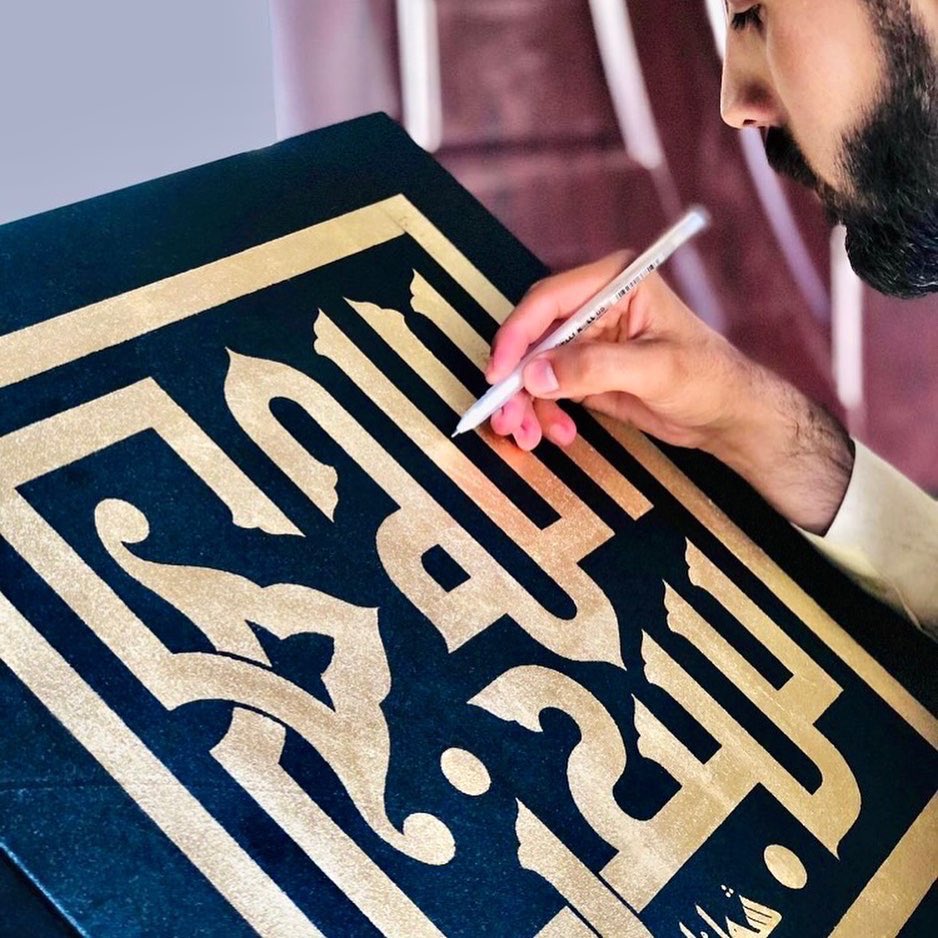
16/ Turkish artist Sanaz Alborzi is a specialist in traditional Kufic script. She has redefined this artform on her own terms creating beautiful works that combine traditional skill with contemporary style

17/ Turkish artist Erman Yordam is a mosque interior designer as well as Islamic calligraphy specialist. He has an eye for detail, creating bold shapes out of the distinctive Kufic script

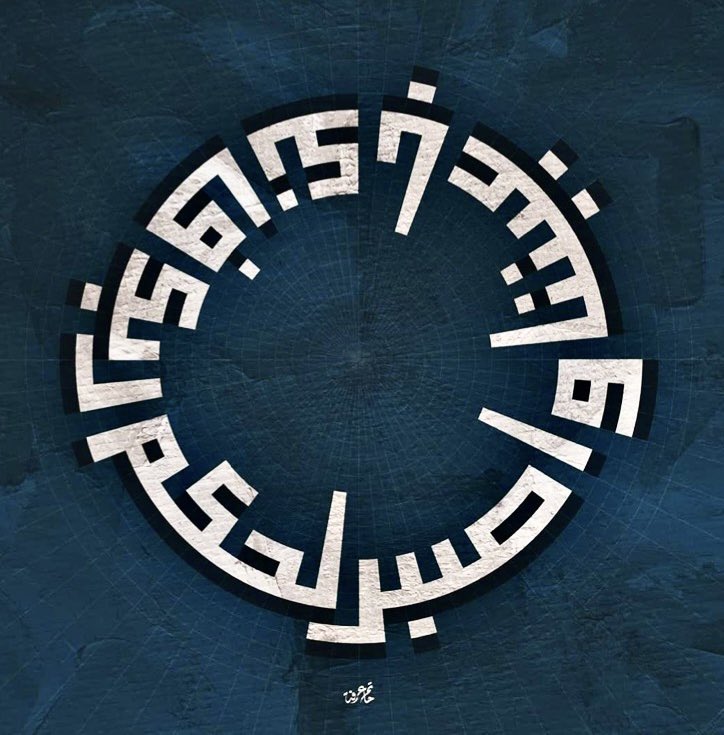
18/ Artist @Hatem_Arafa_ redefines Kufic script with his original style
•
تجربة كوفية.. "وَاصْبِرْ لِحُكْمِ رَبِّكَ فَإِنَّكَ بِأَعْيُنِنَا"
الطور - 48 "And be patient, [O Muhammad], for the decision of your Lord, for indeed, you are in Our eyes"
Surah At-Tur - 48
•
تجربة كوفية.. "وَاصْبِرْ لِحُكْمِ رَبِّكَ فَإِنَّكَ بِأَعْيُنِنَا"
الطور - 48 "And be patient, [O Muhammad], for the decision of your Lord, for indeed, you are in Our eyes"
Surah At-Tur - 48
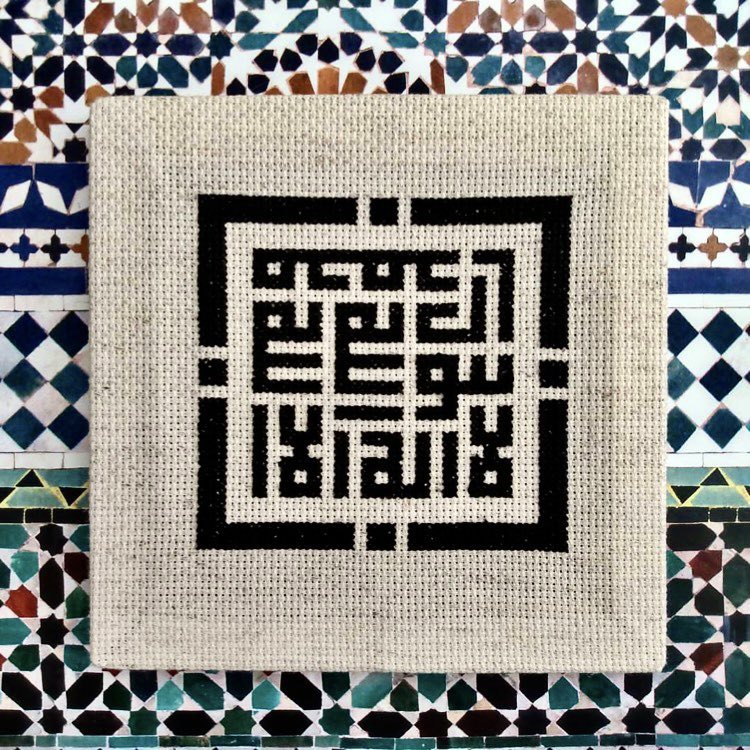
19/ Artist Aisha H Mason is redefining Kufic through stitch. She is interested in the stories found in textiles and explores this through words in the form of Kufic calligraphy
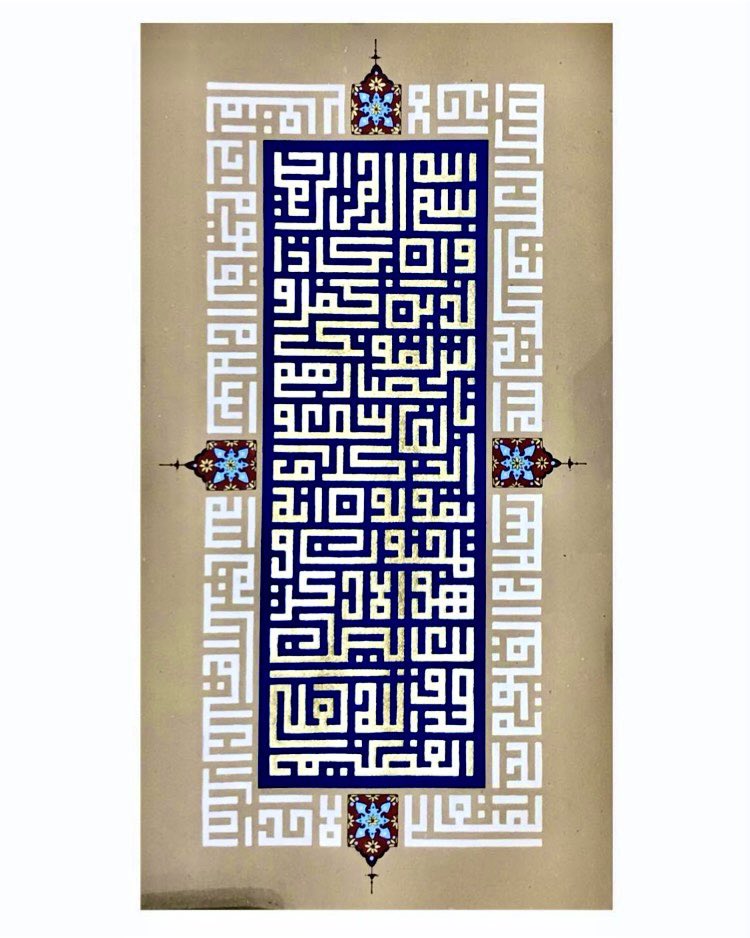
20/ Iranian artist Mahdieh Sharifi honours the art of Kufic script, alongside her passion and skill for her unique take on Persian and Arabic calligraphy
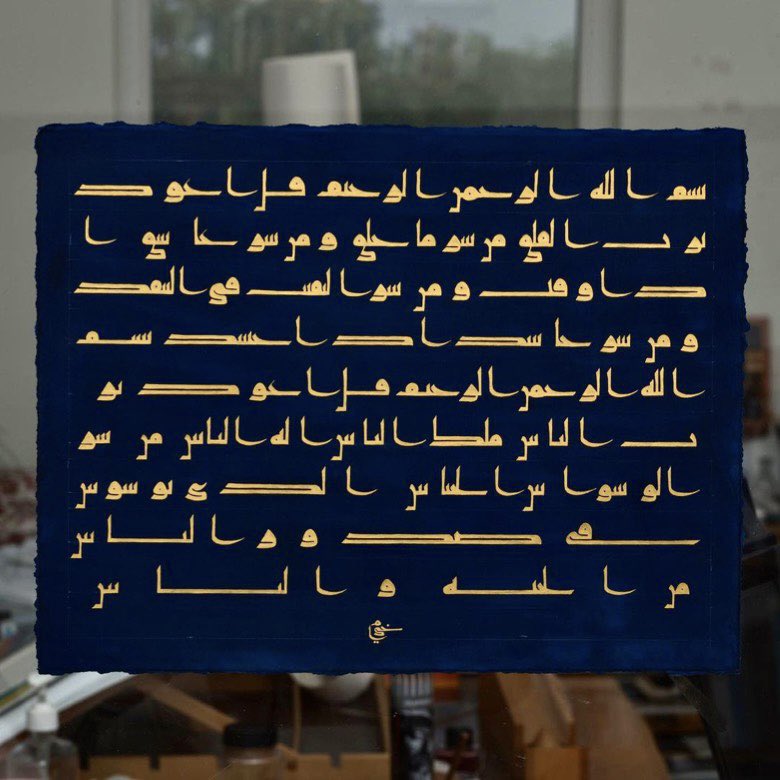
21/ Artist S.M.Khayyam was born in Quetta but currently lives and works in Lahore. He takes an experimental approach to his work using diverse mediums. He recreates Kufic calligraphy from the past, putting it in a contemporary context
22/ Discover more about the art, history and heritage of Kufic Script…
baytalfann.com/post/the-art-h…
baytalfann.com/post/the-art-h…
• • •
Missing some Tweet in this thread? You can try to
force a refresh






