Huzaifa Profile picture
Jun 5 13 tweets 4 min read Twitter logo Read on Twitter
The Shalwar Kameez is Pakistan’s national attire and a dress now worn throughout the country.

But it only became this popular in the past century.

So what did our ancestors wear before the Shalwar Kameez?

A collection of unique attires. (🧵) Image
The fashion of loose trousers combined with tunic like shirts arrived in our region in continuous waves from Central Asia starting with the Kushans two millennia ago

Over the course of time small local variants of this combination arose in various parts of today’s Pakistan. Image
A Yousafzai Pashtun in his traditional clothing - 1815. Image
Two punjabis, a man from Rawalpindi and a Bania from elsewhere. - Punjab 1860 Image
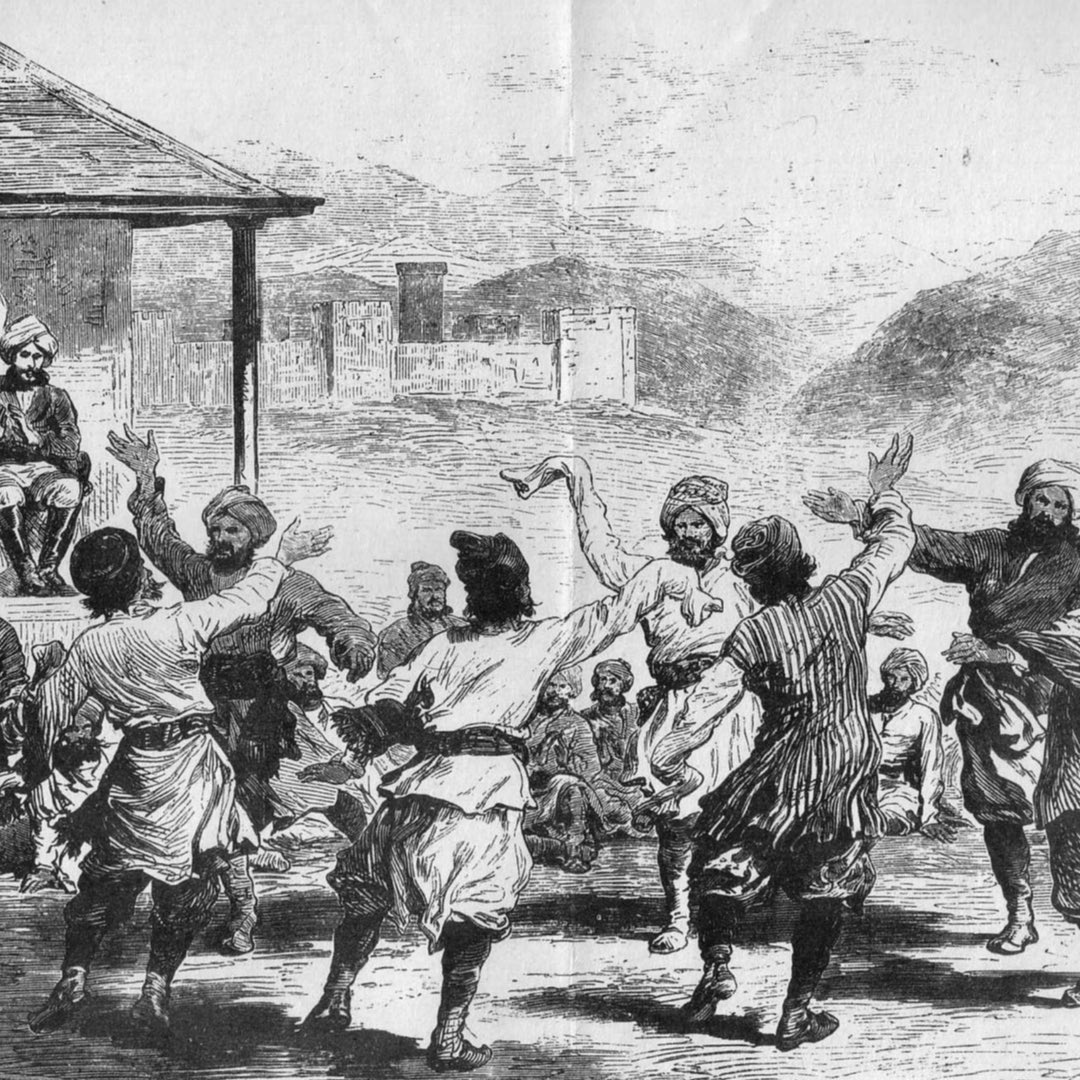
Baloch men looking upon followers of the Zikri sect as they engage in a ritual dance. - 1891 Image
A soldier (possibly Baloch) in Sindhi attire serving in the Talpur army of Sindh - early 19th century. Image
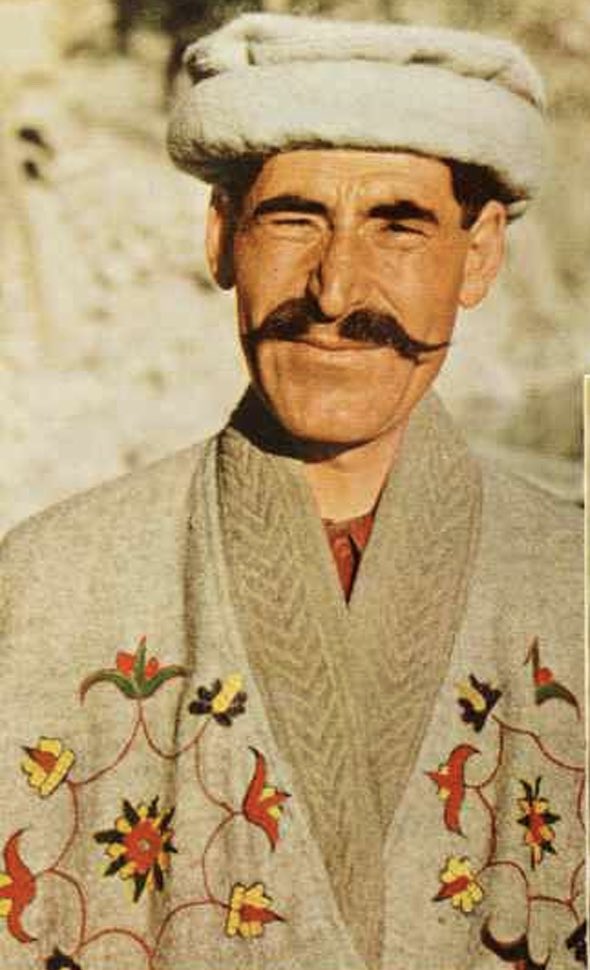
An inhabitant of Kashgar - could be perhaps a mistake with Kashkar (Chitral’s old name derived from Kashgar) owing to the Chitrali cap and attire of the man.

Even if not a mistake, the dress is near identical to the old attire of Chitral. Image
A native of the walled city of Peshawar (known as the Peshawaris) in the traditional winter dress of Peshawar - 1815 Image
A group of dancing Gilgitis - 1866. Image
Balti soldiers in the army of the Maharaja of Kashmir - 1883. Image
Men from Ladakh and soldier of the Maharaja - mid to late 19th century.

The dress of the two men is close to what people from the northwestern portions of J&K wore and perhaps also of the central vale. Image
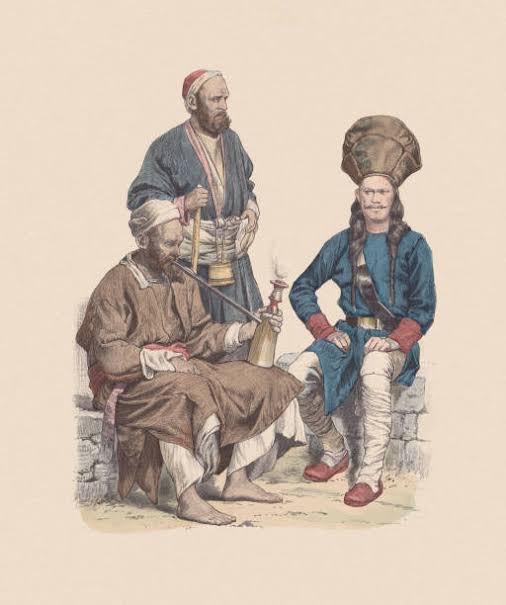
Dress of the males within the tribes of Nuristan from before their Islamization.

This thick fur clothing was seen in some photos of Nuristani refugees in Chitral in the early 20th century. Image
Tanolis of the Hazara region of today’s Khyber Pukhtunkhwa province - early 20th century Image

• • •

Missing some Tweet in this thread? You can try to force a refresh

 

Keep Current with Huzaifa

Huzaifa Profile picture

Stay in touch and get notified when new unrolls are available from this author!

Read all threads

This Thread may be Removed Anytime!

PDF

Twitter may remove this content at anytime! Save it as PDF for later use!

Try unrolling a thread yourself!

how to unroll video
  1. Follow @ThreadReaderApp to mention us!

  2. From a Twitter thread mention us with a keyword "unroll"
@threadreaderapp unroll

Practice here first or read more on our help page!

More from @MHuzaifaNizam

Feb 28
In early 1915 a group of Afridi soldiers fighting on the western front defected to the German side.

Their exit was the cause of much talk, gossips, and questions all of which culminated with the spreading of the ultimate rumour:

Kaiser Wilhelm II had accepted Islam. (🧵)
Mir Dast Afridi was a sepoy in the British Indian army posted in France. His quick thinking and courage during the 2nd battle of Ypres won him much fame and a Victoria cross from the empire.

Only Mir Dast had a brother in the same army. Who took a very different route.
Mir Dast’s brother - named Mir Mast - was also posted in France. Soon it dawned upon him that he was on the battlefield against the allies of the Ottomans who controlled the Holy Lands.

His faith in the Union Jack collapsed and he soon found himself crossing over to the Germans.
Read 8 tweets
Jan 18
It is quite surprising how Pakistan is the only country that doesn’t recognise Armenia as a state yet Armenians have had a vast presence in our regions for hundreds of years. Armenians travelled, traded, and settled across South Asia.

Old Lahore had an entire Armenian quarter.
Armenian merchants must’ve started arriving in South Asia earlier but it was around the beginning of the 17th century where we learn of a thriving Armenian quarter in Lahore and of Armenians openly practicing their faith in the city, most probably owing to Akbar’s policies.
The importance and size of the Armenian settlers can be estimated by how around 1711 there was a resident Armenian Bishop in Lahore, indicating both the existence of a church and the need of a bishop to regulate matters for the community in the city.
Read 6 tweets
Dec 15, 2022
When the ancient Greeks ruled over much of what is today Pakistan, their states functioned on a currency of silver coins known as the ‘Drachmas’.

Thousands of years later in Pakistan’s extreme northwest the word for silver in the Khowar language is still ‘Drokhum’.
The Greeks initially entered the Indus Basin through Alexander the Great’s expeditions along the Indus in 327 CE. Alexander left behind various provinces and governors almost all of whom were swiftly removed by the locals as Alexander exited and Greek authority was challenged.
After a Mauryan interlude came the Greeks from Bactria who created a state known now as the ‘Indo-Greek kingdom’ with its capital near today’s Sialkot. They imparted Greek influences to the region which were strong enough to survive the extinction of the Greek kingdom itself.
Read 6 tweets
Dec 12, 2022
In the early 50s an American couple trekking in Chinese Turkestan accidentally arrived to the rather untouched region of Hunza in the Karakoram mountains.

The couple couldn’t help but feel like they had accidentally discovered the lost fabled Himalayan kingdom of Shangri-La.
The interesting thing is that the region is, after all, slightly connected to the tale. The origin of the Shangri-La tale comes from a 1933 Novel about a group of people in British India who are sent to Peshawar to be evacuated as a revolution grips the British colony.
Their plane is instead hijacked and crashes over Tibet. The people then discover they’re in Shangri-La - an oasis of wisdom and purity in the Himalayan mountains which is more or less free from the natural laws which dictate the mortal world.
Read 6 tweets
Nov 19, 2022
Perching on a small hill in Mardan district is one of the most magnificent archaeological sites of Pakistan.

One of the regions largest ancient Buddhist monasterial complex, allow me to take you to Takht-i-Bahi - The Throne of the Water Spring. (🧵)
Takht-i-Bahi is a Gandhāran monasterial complex that first began construction around 1 CE, during the reign of king Gondophares of the Indo-Parthian kingdom.

The king, ever famous due to his connection to St. Thomas, oversaw various Buddhist constructions in his era.
The entire complex has various portions. The monastery, the 3 stupa courts, and the area referred to as a hostel where ‘students’ used to lodge. All created over a period of 700 years!

And to enter all of these one has to climb a set of 260 or so stairs surrounded by trees.
Read 19 tweets
Nov 12, 2022
It was the year 1946. Matters had never been as grave in British India as this. Congress, one of the two major parties, ruled in most provinces including the unruly NWFP.

Its leader, Jawaharlal Nehru, decided to visit the province but a disaster awaited him in the frontier. (🧵)
The years leading up to independence were extremely volatile and anxious. In the ‘46 elections congress won most seats in various provinces which included NWFP owing to the popularity of congress’ ally Bacha Khan - The frontier Gandhi and his brother Dr. Khan Sahib.
It was in times like these a surprising news arrived to the governor of NWFP: Nehru wanted to visit the province and go to the tribal areas which were arguably only nominally under British control. The tribes were proud, unruly, and seldom looked at foreign leaders kindly.
Read 15 tweets

Did Thread Reader help you today?

Support us! We are indie developers!


This site is made by just two indie developers on a laptop doing marketing, support and development! Read more about the story.

Become a Premium Member ($3/month or $30/year) and get exclusive features!

Become Premium

Don't want to be a Premium member but still want to support us?

Make a small donation by buying us coffee ($5) or help with server cost ($10)

Donate via Paypal

Or Donate anonymously using crypto!

Ethereum

0xfe58350B80634f60Fa6Dc149a72b4DFbc17D341E copy

Bitcoin

3ATGMxNzCUFzxpMCHL5sWSt4DVtS8UqXpi copy

Thank you for your support!

Follow Us on Twitter!

:(