You've probably seen this gentleman before... but who was he?
It's Dr Johnson, maybe the most important English writer since Shakespeare...
It's Dr Johnson, maybe the most important English writer since Shakespeare...

Samuel Johnson, born to a family of modest booksellers in Staffordshire in 1709, was perhaps the dominant cultural figure of 18th century England.
But this future critic, essayist, poet, scholar, lexicographer, and celebrity was a sickly child who very nearly died in his youth.
But this future critic, essayist, poet, scholar, lexicographer, and celebrity was a sickly child who very nearly died in his youth.

He survived these illnesses, albeit scarred for life and nearly blind in one eye, and grew up to be a huge man: tall, strong, burly, and rather intimidating.
Combined with his noticeable tics, vicious wit, eccentric habits, and irascible temper, Johnson was a unique character.
Combined with his noticeable tics, vicious wit, eccentric habits, and irascible temper, Johnson was a unique character.

But his career wasn't straightforward.
Johnson had to leave the University of Oxford because he couldn't afford to keep studying there, and inherited very little from his father.
So he worked as a teacher, married a widow 20 years his elder, and starting writing...
Johnson had to leave the University of Oxford because he couldn't afford to keep studying there, and inherited very little from his father.
So he worked as a teacher, married a widow 20 years his elder, and starting writing...
And by the 1750s he was an established, prolific, respected writer for whom nothing was out of reach.
Alongside poetry and satires Johnson wrote essays (for magazines or simply on his own) about pretty much everything: literature, politics, philosophy, timekeeping, fashion...
Alongside poetry and satires Johnson wrote essays (for magazines or simply on his own) about pretty much everything: literature, politics, philosophy, timekeeping, fashion...
It was through a mixture of sheer will, natural intelligence, astonishingly hard work, and a colossal personality that Samuel Johnson had risen from obscurity.
His friends included all the leading politicians, writers, and artists of 18th century England.
His friends included all the leading politicians, writers, and artists of 18th century England.
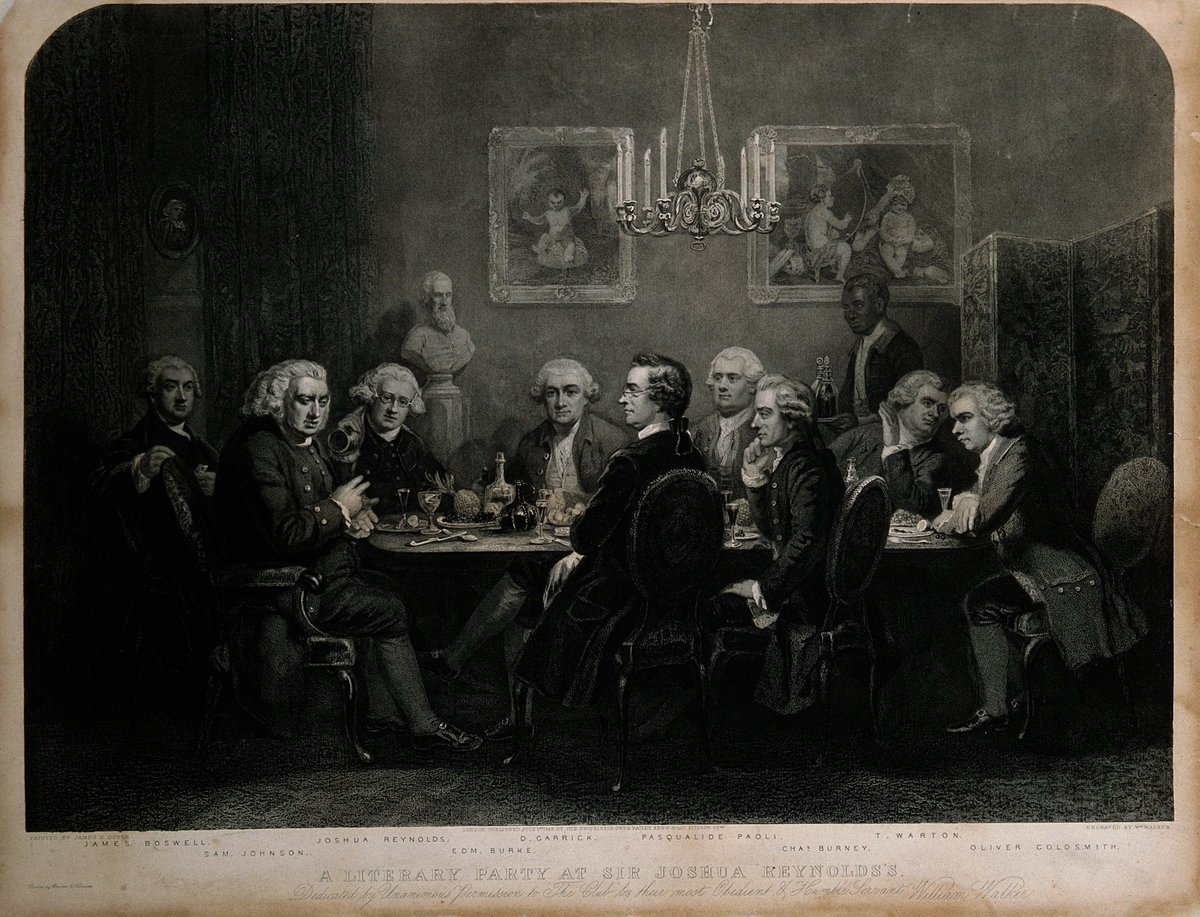
And so Samuel Johnson became a celebrity. Everybody he met was enthralled by this bizarre but brilliant man: eccentric, dangerously witty, frighteningly intelligent.
He was, as much as anything else, a brilliant conversationalist, and everybody wanted to talk to him.
He was, as much as anything else, a brilliant conversationalist, and everybody wanted to talk to him.
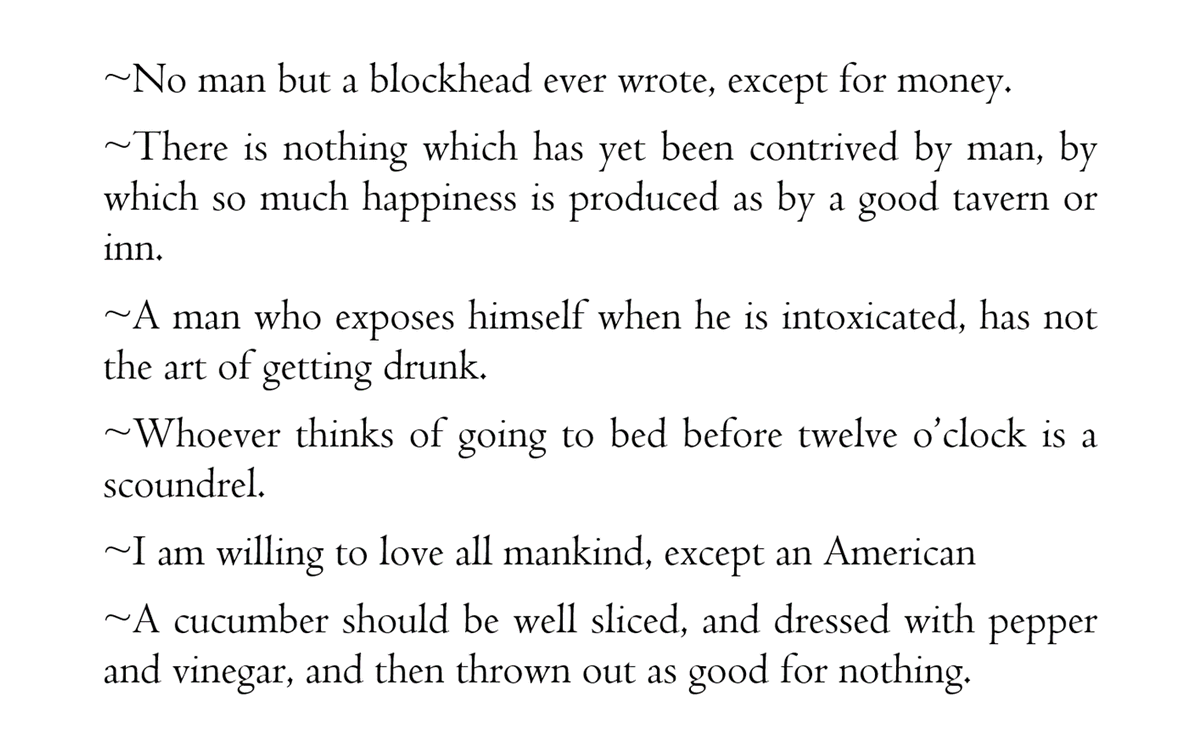
Samuel Johnson is one the most quotable people of all time, not only because of his extensive published works but from what he was reported to have said in conversation, whether wise or simply outrageous.
These are just a few examples; there are thousands more.
These are just a few examples; there are thousands more.
But Johnson was not merely a socialite writer; he was a very serious scholar.
In the 18th century there was no definitive English dictionary, so in 1746 he was commissioned by a group of publishers to produce one.
In 1755 it was published — he'd done everything on his own.
In the 18th century there was no definitive English dictionary, so in 1746 he was commissioned by a group of publishers to produce one.
In 1755 it was published — he'd done everything on his own.
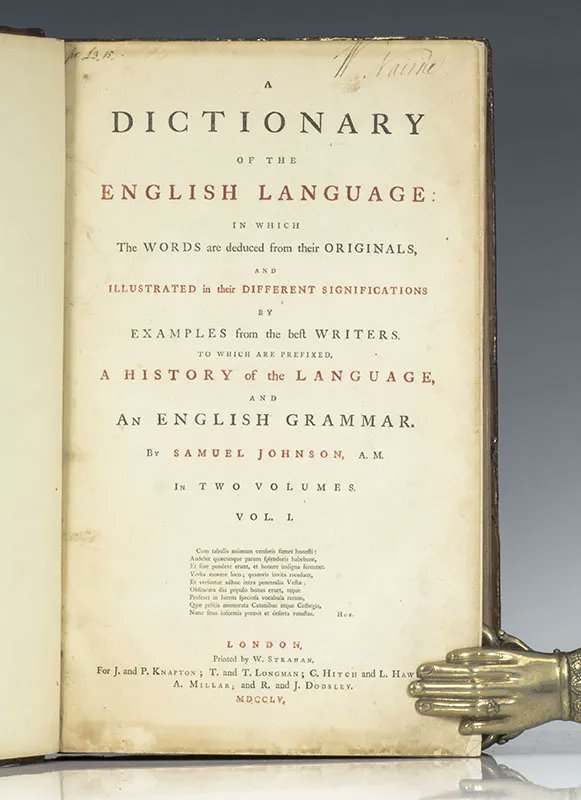
Johnson's Dictionary is partially responsible for some of the strange spelling in English, since his sometimes odd and archaic choices helped codify how words were (and still are) spelled.
As for his definitions, they're not what we're used to in modern dictionaries:
As for his definitions, they're not what we're used to in modern dictionaries:
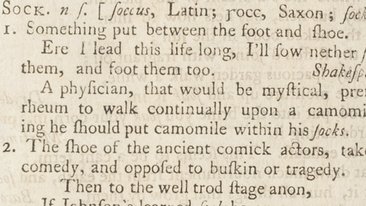
Others include...
Tarantula: An insect whose bite is only cured by music.
Oats: A grain, which in England is generally given to horses, but in Scotland supports the people.
Trolmydames: I know not what this word means.
Monsieur: A term of reproach for a Frenchman.
Tarantula: An insect whose bite is only cured by music.
Oats: A grain, which in England is generally given to horses, but in Scotland supports the people.
Trolmydames: I know not what this word means.
Monsieur: A term of reproach for a Frenchman.

Still, this shouldn't detract from his monumental achievement, which was immediately recognised as a cultural and literary landmark, and one that has shaped the English language as we know it today.
In some sense, Johnson singlehandedly defined the words everyone else was using.
In some sense, Johnson singlehandedly defined the words everyone else was using.
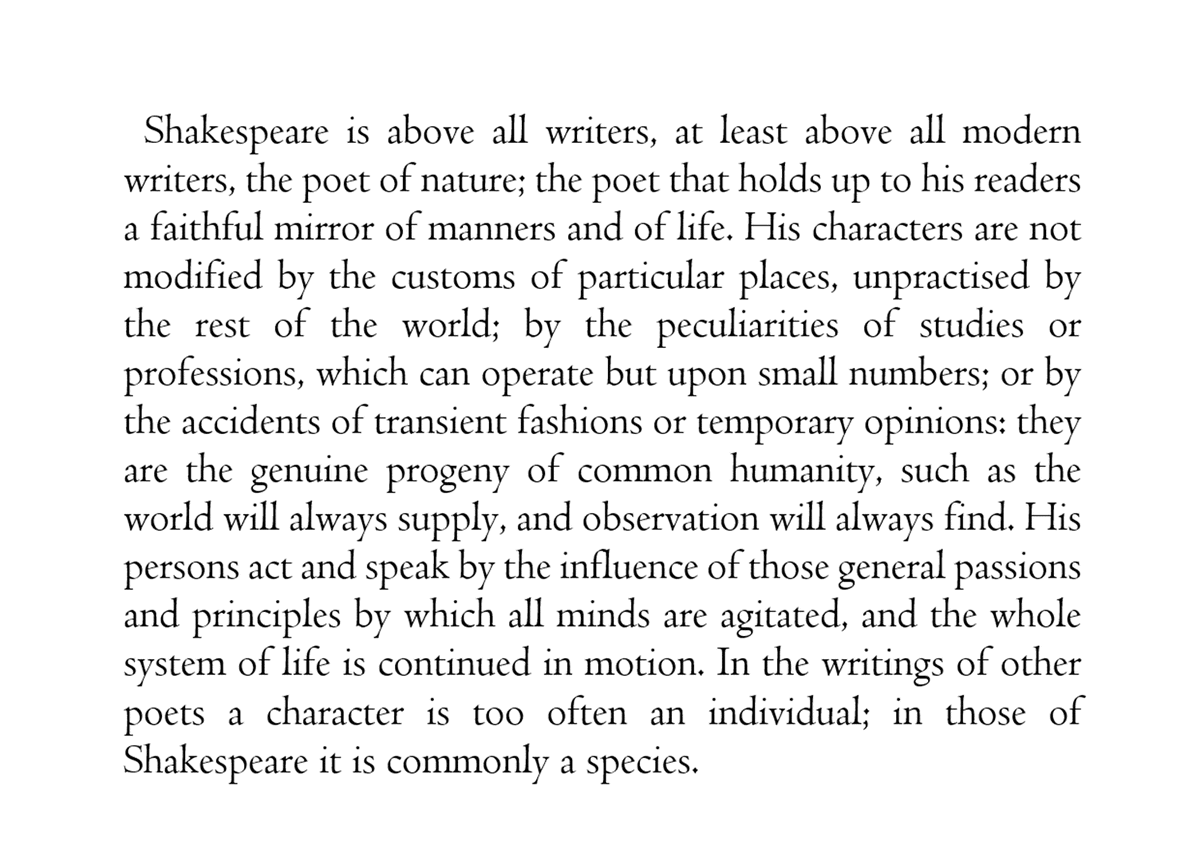
And though it is for his quips and quotes and dictionary that Johnson is now most well-known, this belies a powerful essayist and inspired writer, often regarded as the greatest ever English-language literary critic.
Here is his summary of Shakespeare's genius:
Here is his summary of Shakespeare's genius:
It was in 1763 that Johnson met a young Scot called James Boswell; it was this Boswell who would write and publish The Life of Doctor Johnson in 1791, seven years after his death.
It is usually called the first modern biography, and considered by many the greatest ever written.
It is usually called the first modern biography, and considered by many the greatest ever written.

It was based on the many years Boswell had spent with Johnson, the many things they'd done, and the thousands of conversations they'd had; Boswell kept detailed notebooks of everything.
He was a great biographer and he had as his subject the greatest personality of the age.
He was a great biographer and he had as his subject the greatest personality of the age.
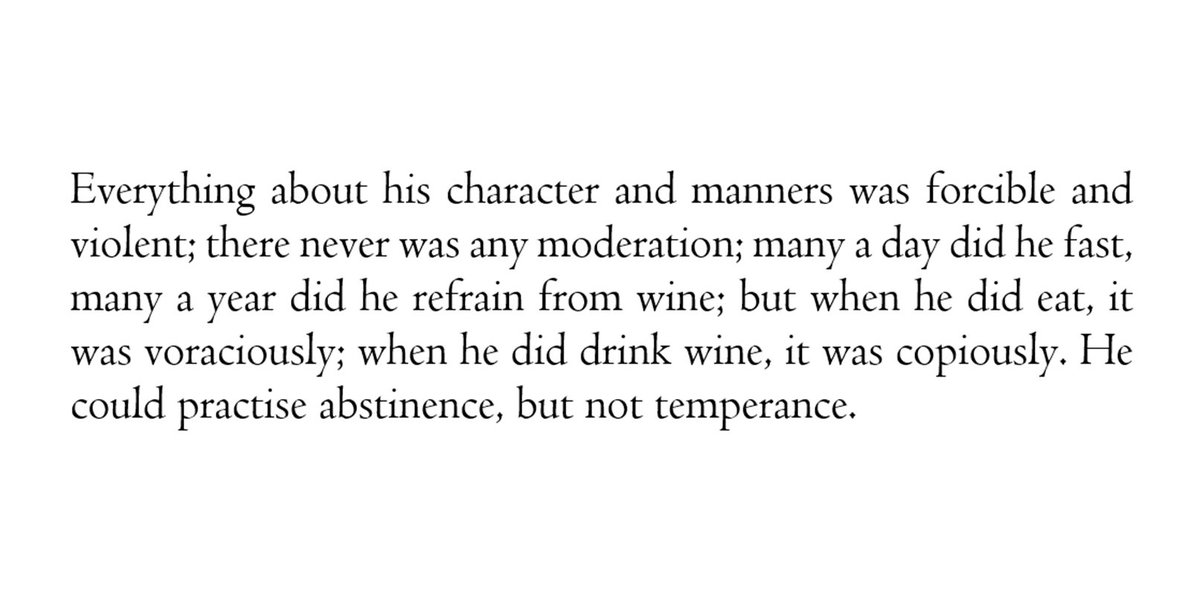
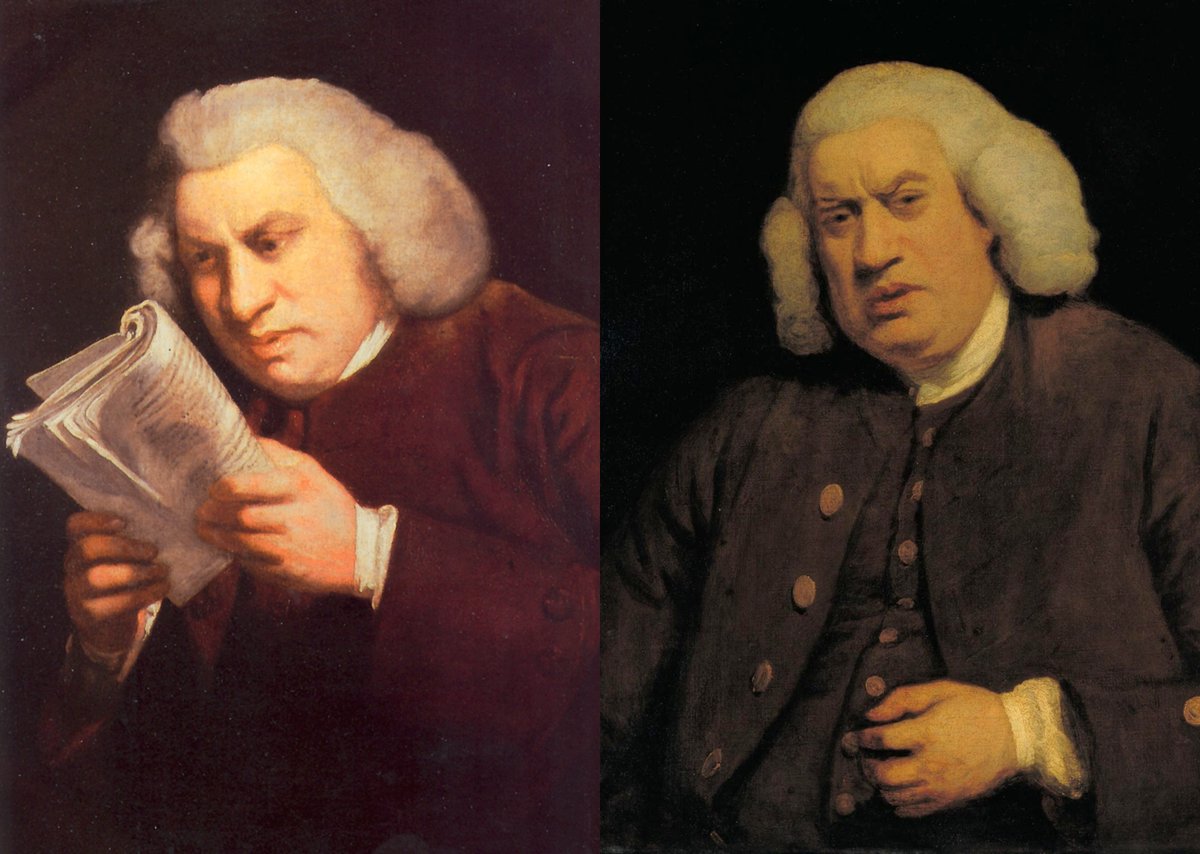
A personality which is revealed, first and foremost, through Johnson's writing itself, then through Boswell's legendary biography, and — of course — through portraits done by Joshua Reynolds, Johnson's friend and the leading British artist of the age.
Quite the character.
Quite the character.
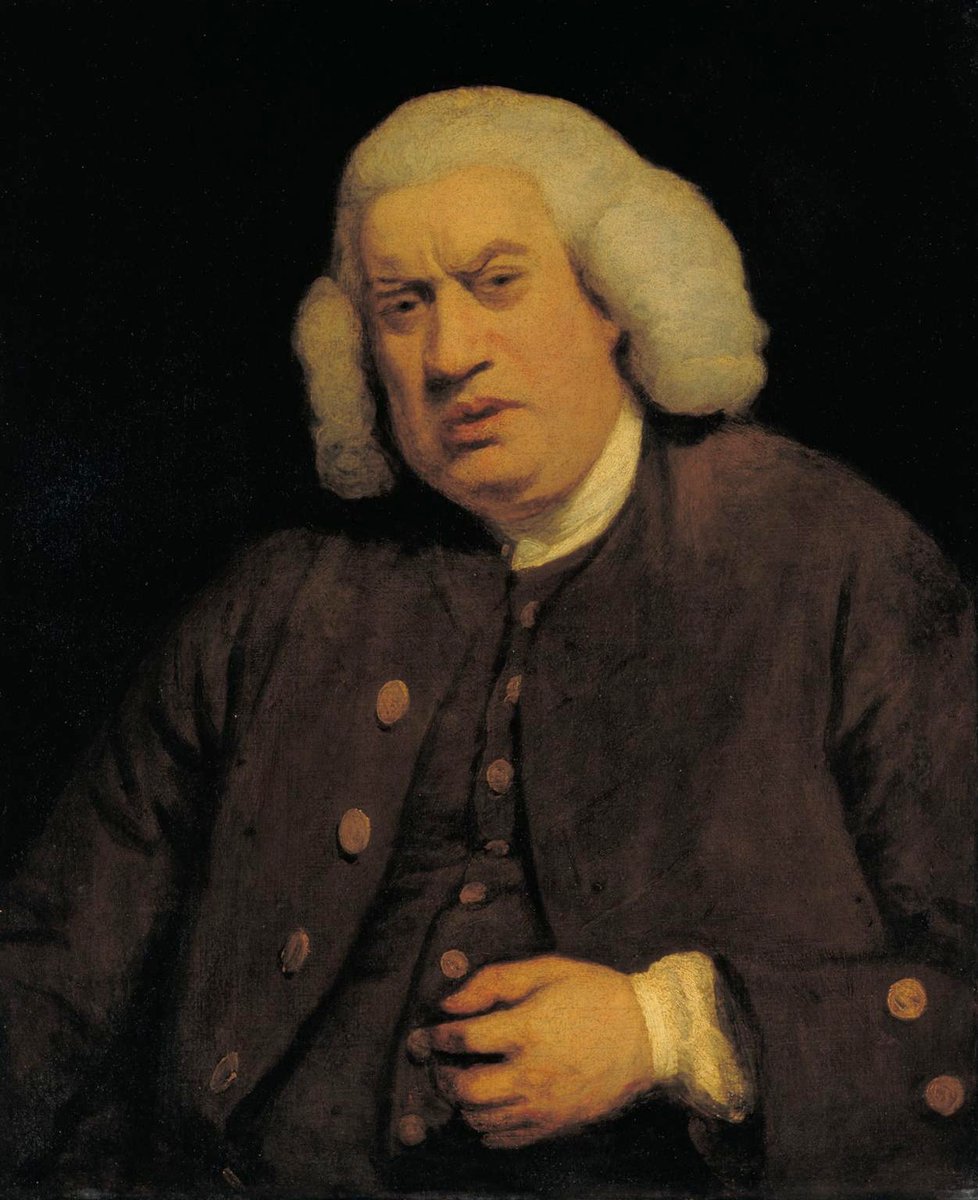
It is testament to Reynolds' abilities as a portraitist that his two paintings of Dr Johnson have become so iconic, even out of context.
The fierce critical eye of the brilliant Samuel Johnson lives on, then, still unimpressed with bad writing over two centuries after he lived.
The fierce critical eye of the brilliant Samuel Johnson lives on, then, still unimpressed with bad writing over two centuries after he lived.
• • •
Missing some Tweet in this thread? You can try to
force a refresh