Anglican mystical theology of the East.
"For as the lightnyng commeth out of the east, and appeareth into the West, so shall the commyng of the sonne of man be."
-Matthew 24:27
A 🧵.
"For as the lightnyng commeth out of the east, and appeareth into the West, so shall the commyng of the sonne of man be."
-Matthew 24:27
A 🧵.

Richard Smith, A brief treatyse settynge forth diuers truthes (1547)
-“We pray toward the east, not by chance but because God is light that may be understood and the sun of righteousness, & Christ is called ‘oriens’. The east must be dedicated to him for worshipping of him”
-“We pray toward the east, not by chance but because God is light that may be understood and the sun of righteousness, & Christ is called ‘oriens’. The east must be dedicated to him for worshipping of him”

1559 Elizabethan Injunctions
-“the holy table in every church be decently made, and set in the place where the altar stood, and there commonly covered, as thereto belongs”
-“the holy table in every church be decently made, and set in the place where the altar stood, and there commonly covered, as thereto belongs”

John Jewel, Apology (1563)
-“the Ancient Christians our Forefathers, were wont to turn their Faces to the East when they offered up their Prayers to God [Tertullian, Apologia c.16.]”
-“the Ancient Christians our Forefathers, were wont to turn their Faces to the East when they offered up their Prayers to God [Tertullian, Apologia c.16.]”

Matthew Parker, Book of Advertisements (1566)
-“they shall decently cover with carpet, silk, or other decent covering, and with a fair linen cloth (at the time of the ministration) the Communion Table, and to set the Ten Commandments upon the east wall over the said table.”
-“they shall decently cover with carpet, silk, or other decent covering, and with a fair linen cloth (at the time of the ministration) the Communion Table, and to set the Ten Commandments upon the east wall over the said table.”
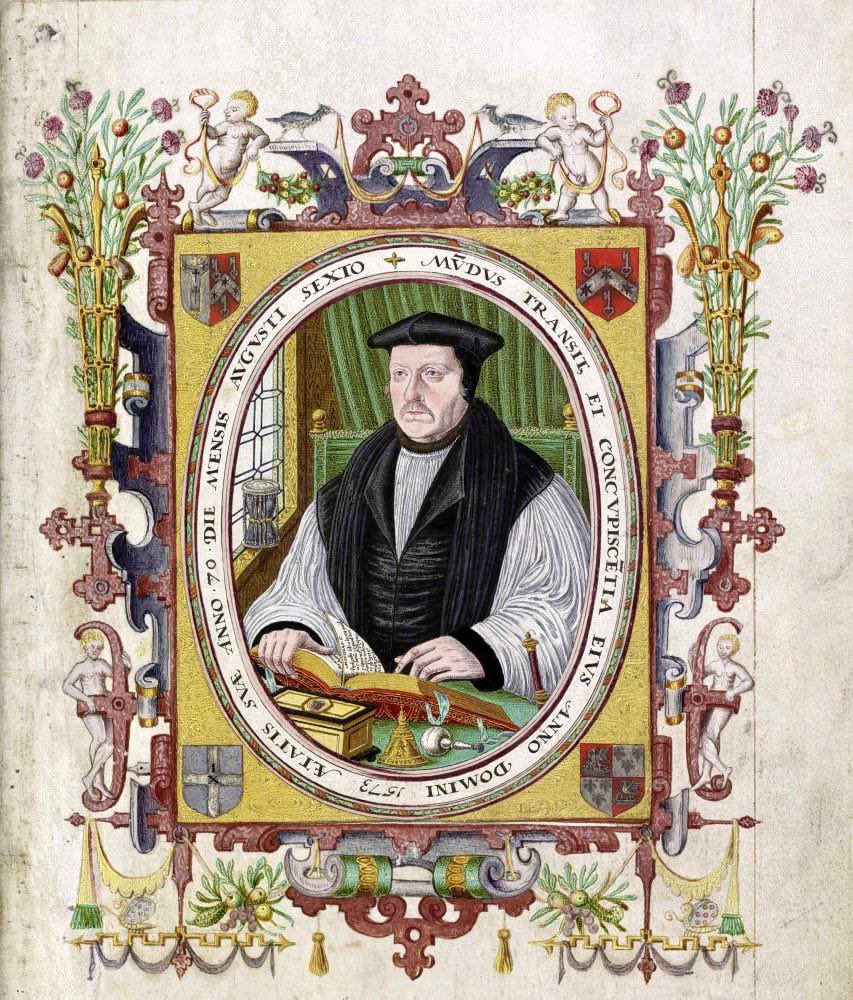
Thomas Bridges, A defence of the ecclesiastical gouernment (1587)
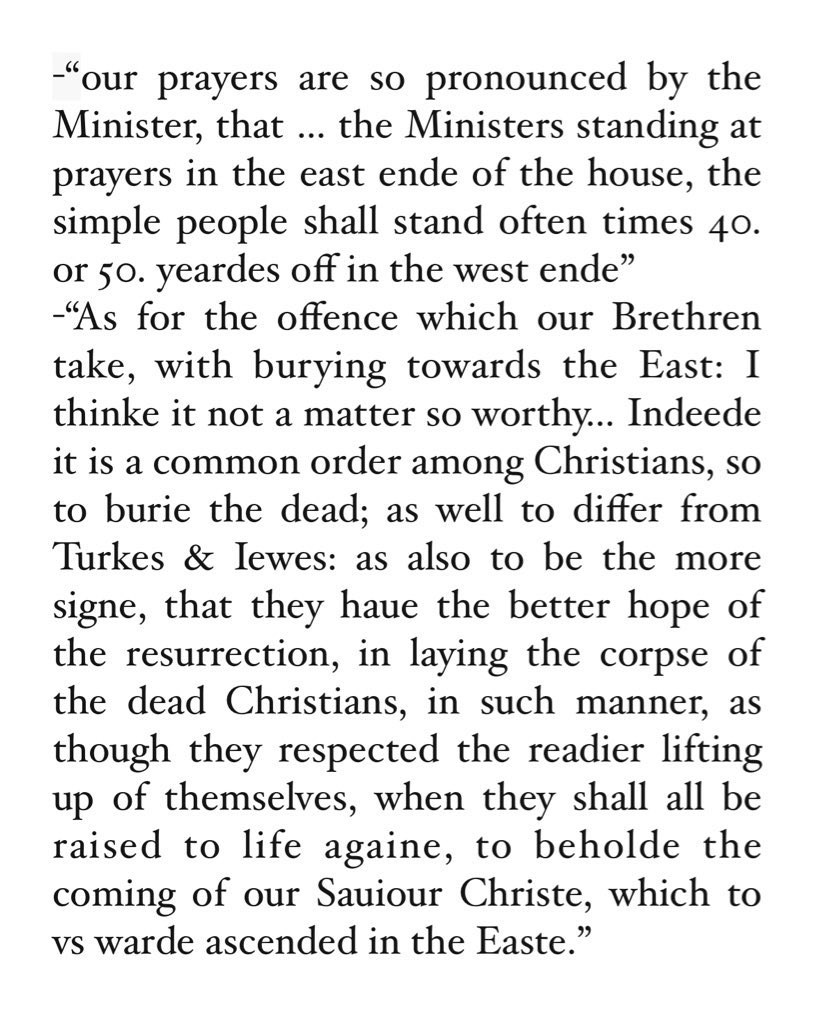
John King, Lectures upon Jonas (1594)
-“Many religious actions we rather do towards the East, than any other point of heaven. We bury our dead commonly, … their faces laid and as it were looking Eastward. And for the most part, especially in our temples, we pray Eastward”
-“Many religious actions we rather do towards the East, than any other point of heaven. We bury our dead commonly, … their faces laid and as it were looking Eastward. And for the most part, especially in our temples, we pray Eastward”
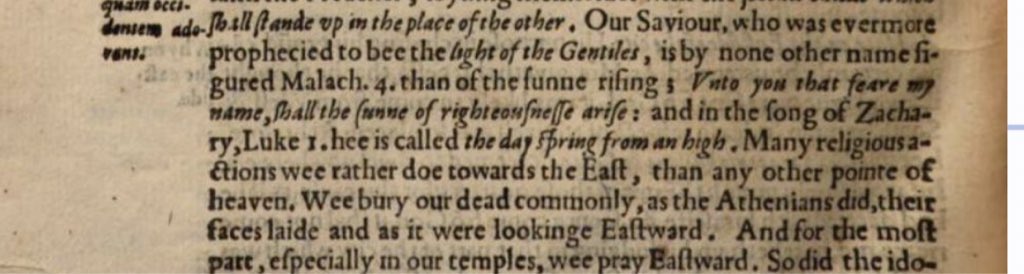
John King, Lectures upon Jonas (1594)
-“Many religious actions we rather do towards the East, than any other point of heaven. We bury our dead commonly, … their faces laid and as it were looking Eastward. And for the most part, especially in our temples, we pray Eastward”
-“Many religious actions we rather do towards the East, than any other point of heaven. We bury our dead commonly, … their faces laid and as it were looking Eastward. And for the most part, especially in our temples, we pray Eastward”
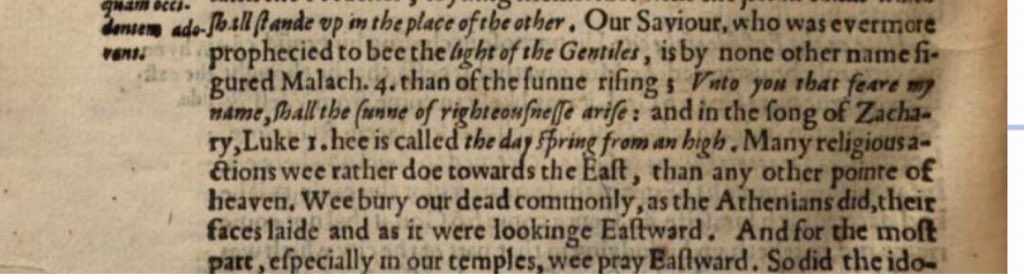
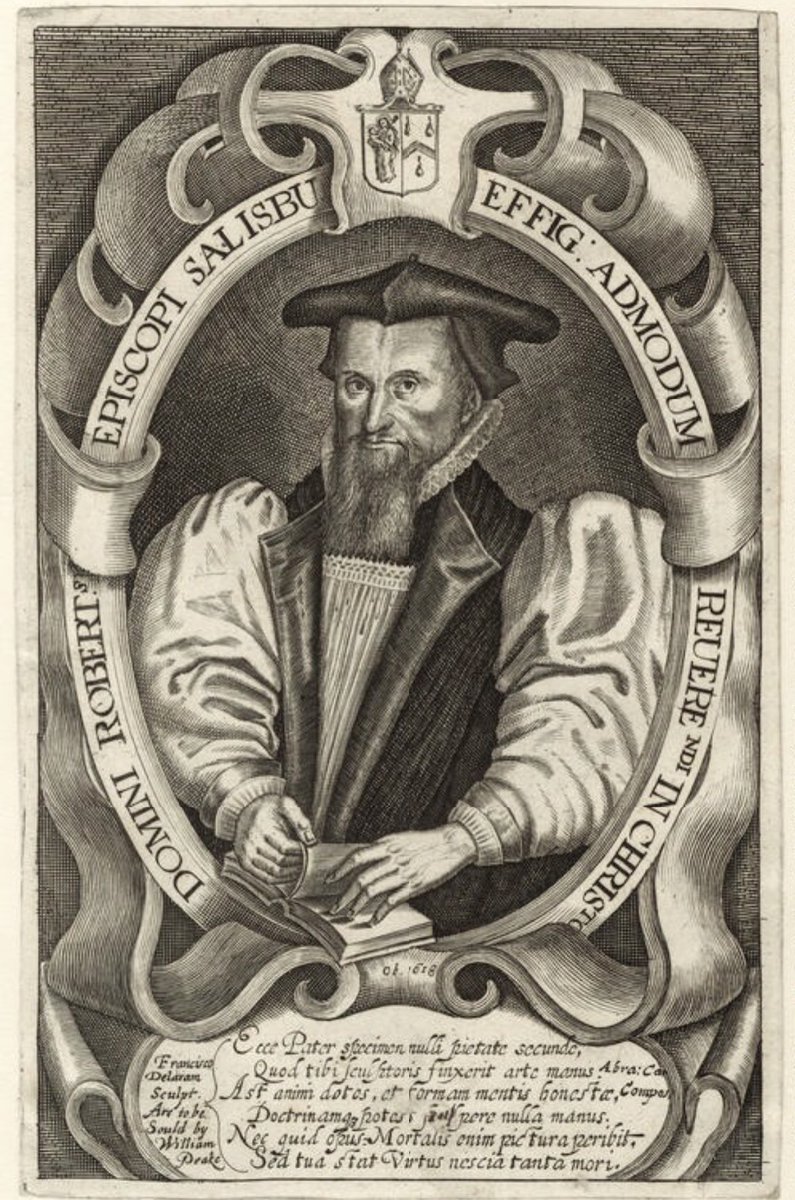
Robert Abbot, The second part of the Defence (1607)
-"as we are wont to say, to kneele to the East, that is, towards the East: or to lift vp his eyes to heauen, that is, towards heauen: so they are thereby taught to bend and direct themselues in their worship and deuotion”
-"as we are wont to say, to kneele to the East, that is, towards the East: or to lift vp his eyes to heauen, that is, towards heauen: so they are thereby taught to bend and direct themselues in their worship and deuotion”
John Boys, Exposition Of The Festivall Epistles & Gospels, Vsed in our Liturgy (1613)
-“whereas the Moors pray toward the South, and sectaries to the West: the orthodox Christians (and that from the very time of the Apostles) use to pray toward the East”
books.google.com/books?id=2u5JE…
-“whereas the Moors pray toward the South, and sectaries to the West: the orthodox Christians (and that from the very time of the Apostles) use to pray toward the East”
books.google.com/books?id=2u5JE…
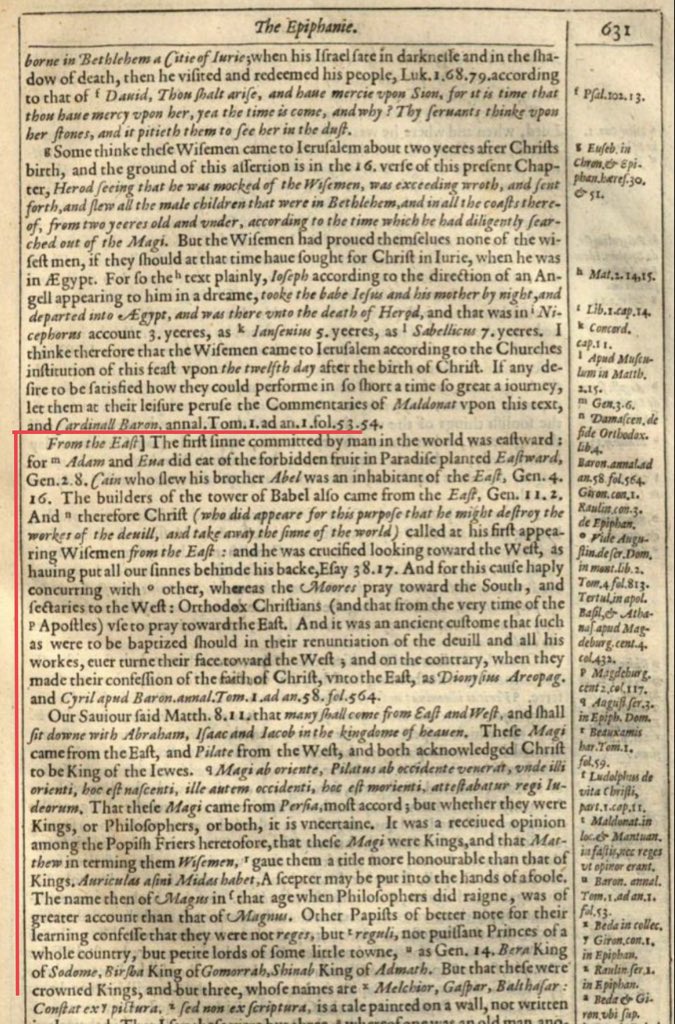
Table of Contents:
-“East. Why we pray toward the East.”
-“East. Why we pray toward the East.”

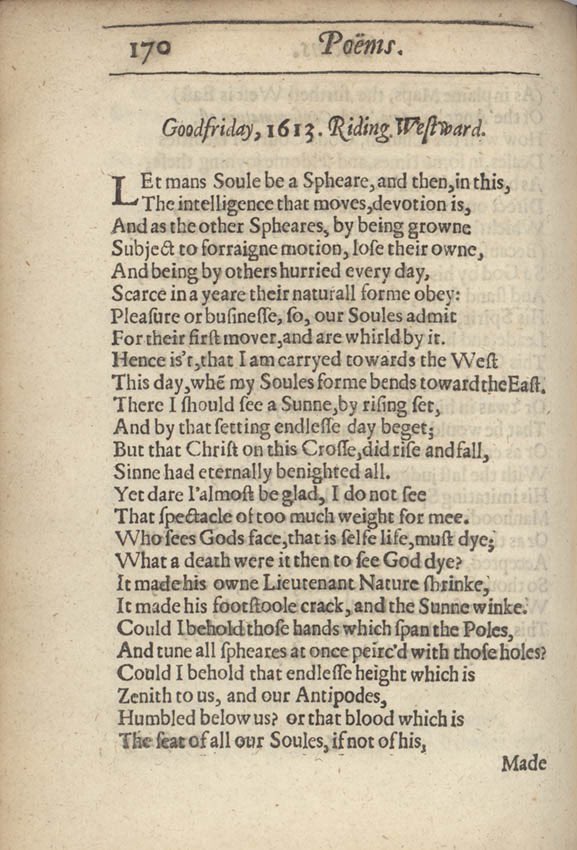
John Donne, “Goodfriday, 1613. Riding Westward”
“Hence is’t, that I am carried towards the West
This day, when my Soul’s form bends toward the East,
There I should see a Sun, by rising set,
And by that setting endless day beget”
“Hence is’t, that I am carried towards the West
This day, when my Soul’s form bends toward the East,
There I should see a Sun, by rising set,
And by that setting endless day beget”
Walter Raleigh, History of the World (1614)
-"Now because Paradise was seated by Moses toward the East, thence came the custome of praying towards the East… and therefore all our Churches are built East and West… affirming, that we alwayes pray towards the East, as looking towards Paradise, whence we were cast out"
-"Now because Paradise was seated by Moses toward the East, thence came the custome of praying towards the East… and therefore all our Churches are built East and West… affirming, that we alwayes pray towards the East, as looking towards Paradise, whence we were cast out"

“in those parts of the office which were directed to God immediately, as Prayers, Hymns, Lauds, Confessions of Faith, or Sins, he turn’d from the people ; and for that purpose in many Parish-Churches of late, the Reading-Pew had one Desk for the Bible, looking towards the people to the Body of the Church, another for the Prayer-Book looking towards the East or upper end of the Chancel”
-Anthony Sparrow, Rationale upon Common Prayer
-Anthony Sparrow, Rationale upon Common Prayer


William Austin, 𝐷𝑒𝑣𝑜𝑡𝑖𝑜𝑛𝑖𝑠 𝐴𝑢𝑔𝑢𝑠𝑡𝑖𝑛𝑖𝑎𝑛𝑎𝑒 𝑓𝑙𝑎𝑚𝑚𝑎, 𝑜𝑟, 𝐶𝑒𝑟𝑡𝑎𝑖𝑛𝑒 𝑑𝑒𝑣𝑜𝑢𝑡, 𝑔𝑜𝑑𝑙𝑦, 𝑎𝑛𝑑 𝑙𝑒𝑎𝑟𝑛𝑒𝑑 𝑚𝑒𝑑𝑖𝑡𝑎𝑡𝑖𝑜𝑛𝑠 (1635)
-“in all our churches, by ancient custome, derived from the apostles' time, we turn our faces into the east, when we adore and make our prayers unto him”quod.lib.umich.edu/e/eebo/A23279.…
-“in all our churches, by ancient custome, derived from the apostles' time, we turn our faces into the east, when we adore and make our prayers unto him”quod.lib.umich.edu/e/eebo/A23279.…

Charles Wheatley, 𝐴 𝑅𝑎𝑡𝑖𝑜𝑛𝑎𝑙 𝐼𝑙𝑙𝑢𝑠𝑡𝑟𝑎𝑡𝑖𝑜𝑛 𝑜𝑓 𝑡ℎ𝑒 𝐵𝑜𝑜𝑘 𝑜𝑓 𝐶𝑜𝑚𝑚𝑜𝑛 𝑃𝑟𝑎𝑦𝑒𝑟 𝑜𝑓 𝑡ℎ𝑒 𝐶ℎ𝑢𝑟𝑐ℎ 𝑜𝑓 𝐸𝑛𝑔𝑙𝑎𝑛𝑑 (1710)
-“[The church building] was always divided into two principal parts, viz. the nave or body of the church, and the sacrarium, since called chancel, from its being divided from the body of the church by neat rails, called in Latin 𝑐𝑎𝑛𝑐𝑒𝑙𝑙𝑖. The nave was common to all the people, and represented the visible world; the chancel was peculiar to the priests and sacred persons, and typified heaven: for which reason they always stood at the east end of the church, towards which part of the world they paid a more than ordinary reverence in their worship…”
-“[The church building] was always divided into two principal parts, viz. the nave or body of the church, and the sacrarium, since called chancel, from its being divided from the body of the church by neat rails, called in Latin 𝑐𝑎𝑛𝑐𝑒𝑙𝑙𝑖. The nave was common to all the people, and represented the visible world; the chancel was peculiar to the priests and sacred persons, and typified heaven: for which reason they always stood at the east end of the church, towards which part of the world they paid a more than ordinary reverence in their worship…”
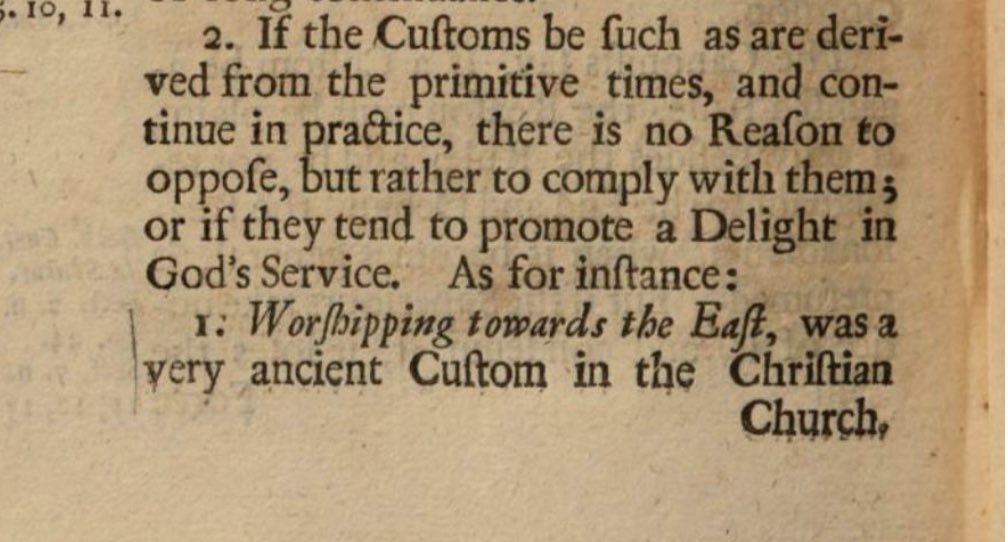
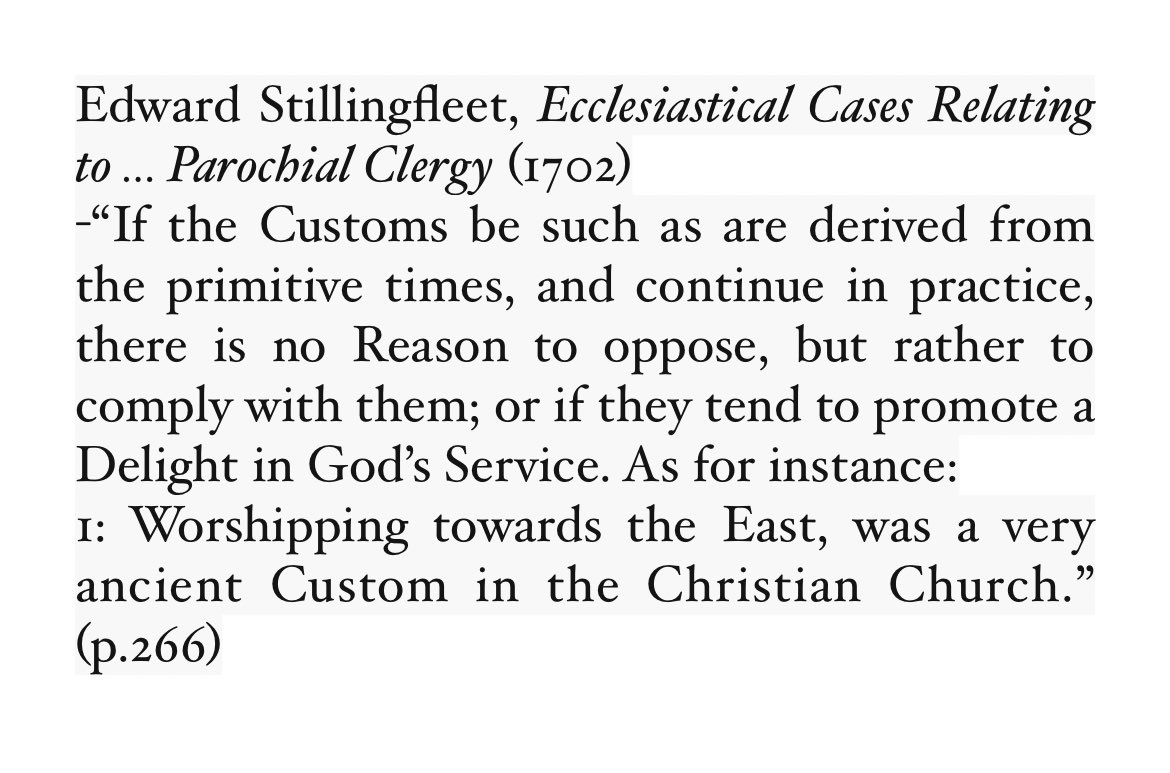
“If the Customs be such as are derived from the primitive times, and continue in practice, there is no Reason to oppose, but rather to comply with them; or if they tend to promote a Delight in God’s Service. As for instance:
1: Worshipping towards the East, was a very ancient Custom in the Christian
Church.”
-Bishop Edward Stillingfleet, 𝐸𝑐𝑐𝑙𝑒𝑠𝑖𝑎𝑠𝑡𝑖𝑐𝑎𝑙 𝐶𝑎𝑠𝑒𝑠 𝑅𝑒𝑙𝑎𝑡𝑖𝑛𝑔 𝑡𝑜 … 𝑃𝑎𝑟𝑜𝑐ℎ𝑖𝑎𝑙 𝐶𝑙𝑒𝑟𝑔𝑦 (1702)
-books.google.com/books?id=3nVjA…
1: Worshipping towards the East, was a very ancient Custom in the Christian
Church.”
-Bishop Edward Stillingfleet, 𝐸𝑐𝑐𝑙𝑒𝑠𝑖𝑎𝑠𝑡𝑖𝑐𝑎𝑙 𝐶𝑎𝑠𝑒𝑠 𝑅𝑒𝑙𝑎𝑡𝑖𝑛𝑔 𝑡𝑜 … 𝑃𝑎𝑟𝑜𝑐ℎ𝑖𝑎𝑙 𝐶𝑙𝑒𝑟𝑔𝑦 (1702)
-books.google.com/books?id=3nVjA…
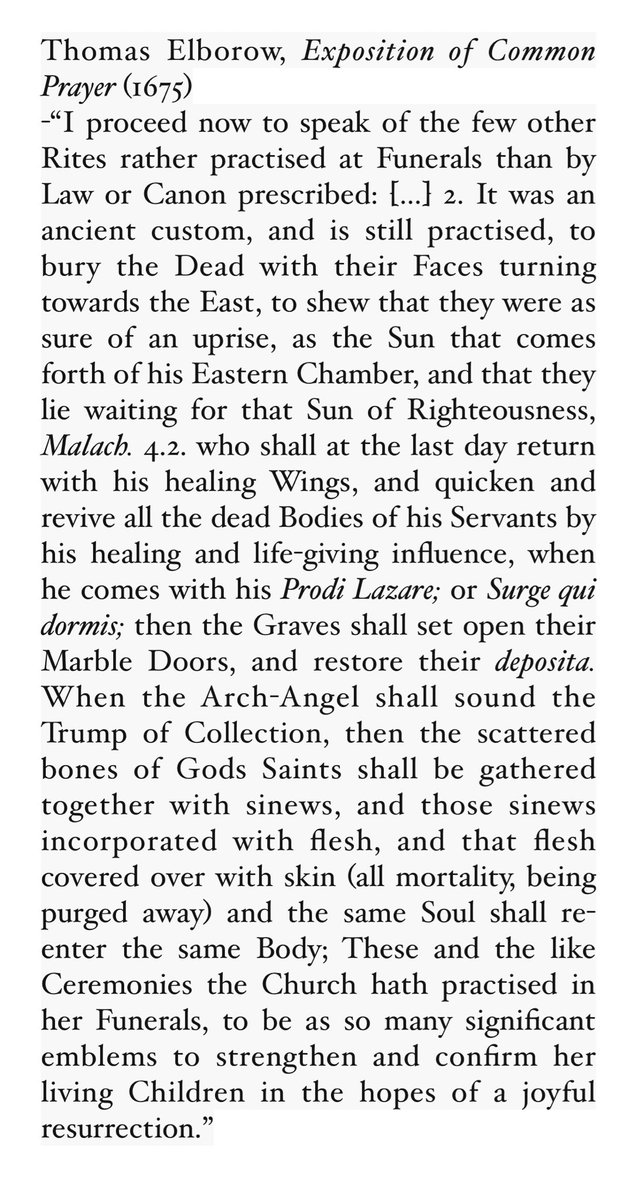
“It was an ancient custom, and is still practised, to bury the Dead with their Faces turning towards the East, to shew that they were as sure of an uprise, as the Sun that comes forth of his Eastern Chamber, and that they lie waiting for that Sun of Righteousness, Malach. 4.2. who shall at the last day return… These and the like Ceremonies the Church hath practised in her Funerals, to be as so many significant emblems to strengthen and confirm her living Children in the hopes of a joyful resurrection.”
Edward Stillingfleet, “Ecclesiastical Cases Relating to … Parochial Clergy” (1702)
books.google.com/books?id=3nVjA…
books.google.com/books?id=3nVjA…
Charles Wheatley, “Rational Illustration of the Book of Common Prayer” (1710)
• • •
Missing some Tweet in this thread? You can try to
force a refresh