Read on Twitter
I agree with Anthony Seldon about the damage Boris Johnson has done and his unfitness for public office.
But there's a question he doesn't address here, which needs more attention.
It troubled me about his book, too. So let me try to explain... 🧵
thetimes.co.uk/article/boris-…
But there's a question he doesn't address here, which needs more attention.
It troubled me about his book, too. So let me try to explain... 🧵
thetimes.co.uk/article/boris-…
1. If Johnson was so manifestly unsuited to office - if his "deep character flaws" were formed so early - how did he rise to power?
What does that say about our democracy, or the qualities we reward in potential leaders?
And what was the role of the commentariat?
What does that say about our democracy, or the qualities we reward in potential leaders?
And what was the role of the commentariat?

2. Unlike many of Johnson's chroniclers, Seldon was not always a critic.
In many respects, that strengthens his case. He didn't set out to write a hatchet job. He followed where the evidence led.
But his earlier writing tells us something important about Johnson's rise to power
In many respects, that strengthens his case. He didn't set out to write a hatchet job. He followed where the evidence led.
But his earlier writing tells us something important about Johnson's rise to power
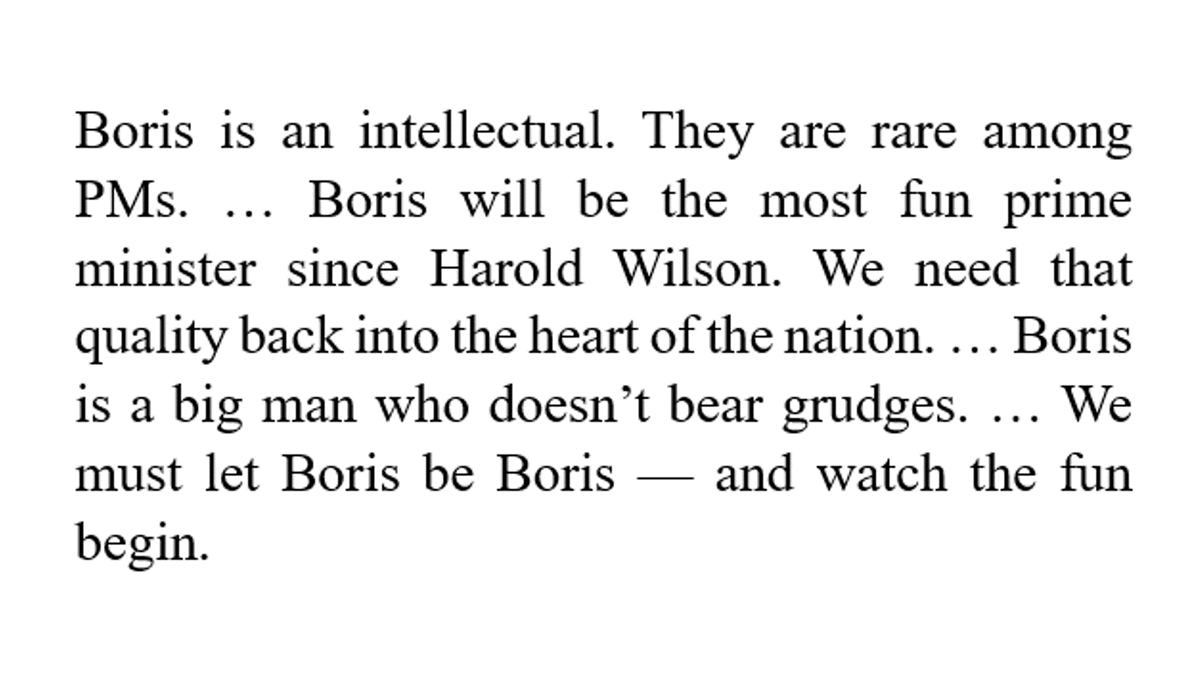
3. When Johnson became Tory leader in 2019, Seldon wrote an enthusiastic piece for the Standard.
"Boris is an intellectual".
"the most fun prime minister since Harold Wilson".
"let Boris be Boris — and watch the fun begin"!
standard.co.uk/evening-standa…
"Boris is an intellectual".
"the most fun prime minister since Harold Wilson".
"let Boris be Boris — and watch the fun begin"!
standard.co.uk/evening-standa…
4. When Johnson tried to suspend Parliament, Seldon compared him to Churchill.
Like the "superlative wartime leader", Johnson was a "risk-taker" and a "gambler", with "the immutable self-confidence to believe that he can also be a man who ‘made history’".
dailymail.co.uk/news/article-7…
Like the "superlative wartime leader", Johnson was a "risk-taker" and a "gambler", with "the immutable self-confidence to believe that he can also be a man who ‘made history’".
dailymail.co.uk/news/article-7…
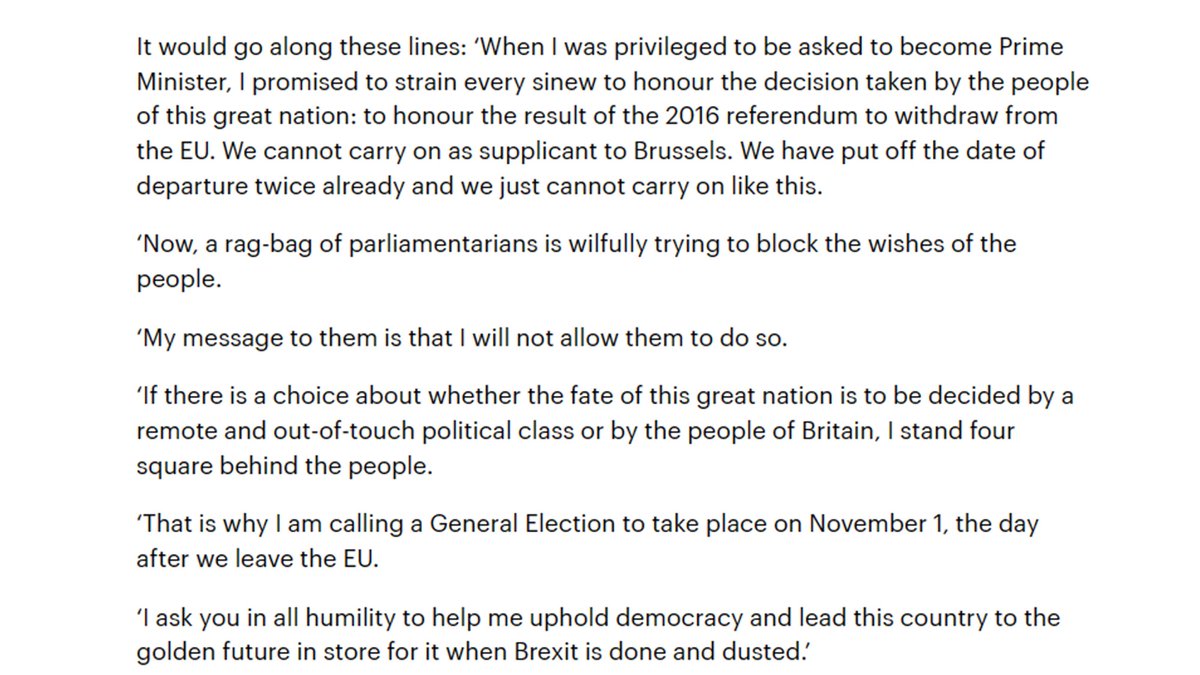
5. He even sketched out a speech Johnson could give to the nation, promising to "uphold democracy" against "a rag-bag of parliamentarians ... trying to block the wishes of the people".
6. But what of the charge that, by suspending Parliament, Johnson was "trampling on the constitution and breaking with every convention"?
Johnson, wrote Seldon, "can truthfully counter that the normal rules no longer apply".
(We'd hear a lot of that in the Johnson premiership).
Johnson, wrote Seldon, "can truthfully counter that the normal rules no longer apply".
(We'd hear a lot of that in the Johnson premiership).
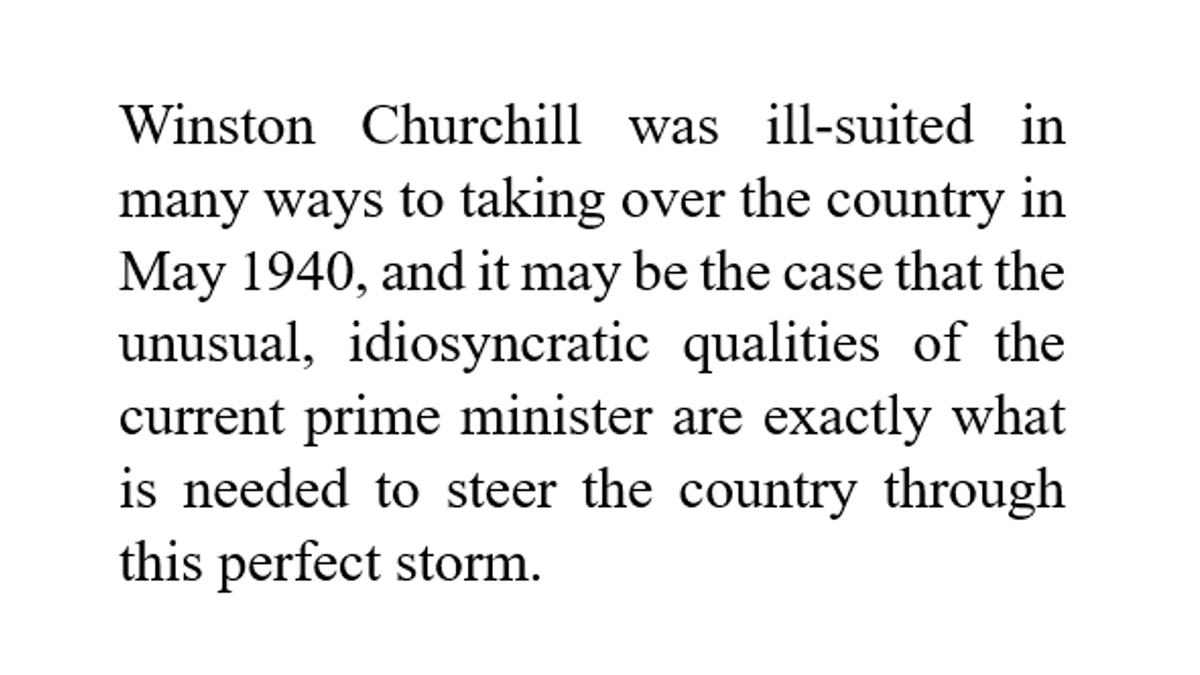
7. When Covid erupted, Seldon again drew comparisons with Churchill.
Johnson's "unusual, idiosyncratic qualities", he suggested, might be "exactly what is needed to steer the country through this perfect storm". thetimes.co.uk/article/what-w…
Johnson's "unusual, idiosyncratic qualities", he suggested, might be "exactly what is needed to steer the country through this perfect storm". thetimes.co.uk/article/what-w…
8. This is not meant to be a "gotcha" or a hatchet-job.
In my teaching and research, I've benefitted greatly from Seldon's work. And people are entitled to change their minds.
But it helps to explain how a Johnson premiership was possible.
In my teaching and research, I've benefitted greatly from Seldon's work. And people are entitled to change their minds.
But it helps to explain how a Johnson premiership was possible.
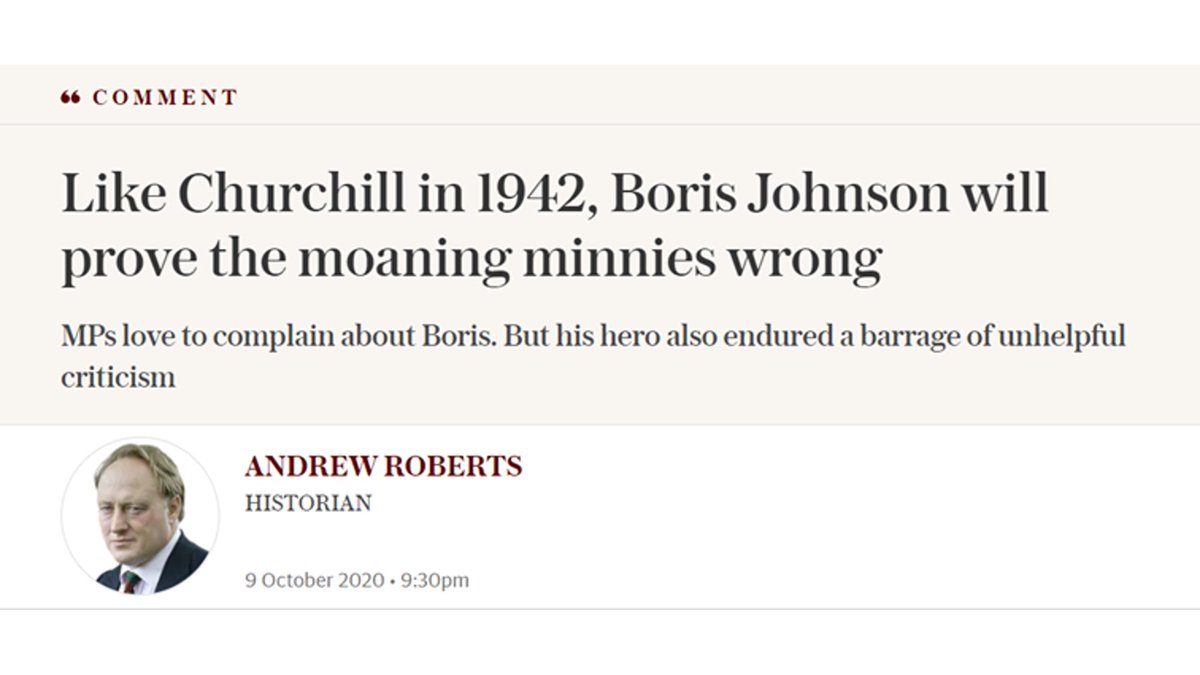
9. There were the bizarre analogies with Churchill, to avoid confronting Johnson's own record.
Johnson's critics pointed to the things he'd done. His admirers pointed to the things someone else had done.
The effect was to wipe Johnson's own history & replace it with Churchill's
Johnson's critics pointed to the things he'd done. His admirers pointed to the things someone else had done.
The effect was to wipe Johnson's own history & replace it with Churchill's
10. Second: the willingness to ignore, or even celebrate, rule-breaking, when commentators approved the cause.
Throughout his career, Johnson has been surrounded by people telling him "that the normal rules no longer apply".
Is it so surprising that he believed them?
Throughout his career, Johnson has been surrounded by people telling him "that the normal rules no longer apply".
Is it so surprising that he believed them?
11. Third, the extraordinary abilities attributed to Johnson, in defiance of concrete evidence.
He was "an intellectual" (Seldon); "the most intellectually capable prime minister Britain has seen" (Dale).
What was the basis for any of this?
He was "an intellectual" (Seldon); "the most intellectually capable prime minister Britain has seen" (Dale).
What was the basis for any of this?
12. Johnson is undoubtedly clever. Many people are.
But where was the deep thought or intellectual seriousness?
Can anyone find an original idea in his writing?
We knew he was lazy, chaotic & bored by detail.
That was ignored, seemingly because he could quote poetry in Latin.
But where was the deep thought or intellectual seriousness?
Can anyone find an original idea in his writing?
We knew he was lazy, chaotic & bored by detail.
That was ignored, seemingly because he could quote poetry in Latin.
13. Commentary on the Johnson era focuses too much on Johnson himself: a man who rarely hid his flaws from the public.
The bigger question is why so many cheered his rise - not *despite* those flaws, but *because* of them.
That makes Johnson a symptom of something larger.
The bigger question is why so many cheered his rise - not *despite* those flaws, but *because* of them.
That makes Johnson a symptom of something larger.
14. We can't complain that leaders lack seriousness, if we reward them for being "fun".
We can't be surprised at rule-breaking, when we tell our leaders that the rules don't apply.
We can't protest at government by fantasists, if we indulge their historical fantasies.
We can't be surprised at rule-breaking, when we tell our leaders that the rules don't apply.
We can't protest at government by fantasists, if we indulge their historical fantasies.
15. Johnson's rise tells us much that is troubling about British political culture.
If we pretend this is just about him, we'll learn nothing of value from his premiership.
And others will exploit the same weaknesses in future. [ENDS]
If we pretend this is just about him, we'll learn nothing of value from his premiership.
And others will exploit the same weaknesses in future. [ENDS]
• • •
Missing some Tweet in this thread? You can try to
force a refresh