There are innumerable channels and blogs which review/discuss fantasy works, most of whom I'll confess to hold in no high esteem, but it is quite remarkable how efficient a litmus test (their opinion of) the works of Tolkien are.
Tells you everything you need to know every time
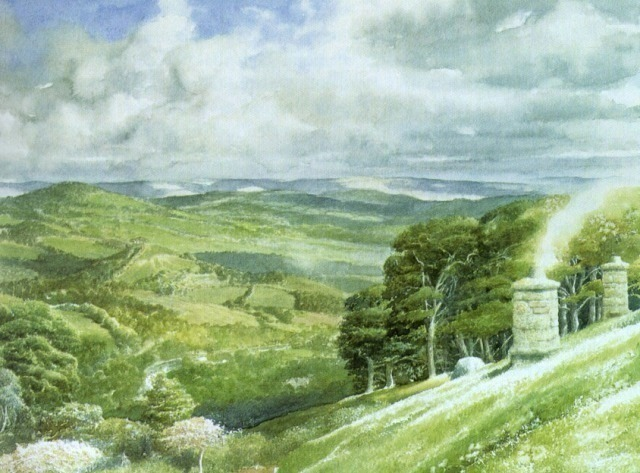
I'll defend my opinion that anyone whose top 10 favourite books were all written in the last 20 years probably has a rather immature literary pallet. More than anything, I suspect it speaks to an attention-deficit, and perhaps an unhealthy demand for "gritty-ness" in fiction
(I obviously don't require everyone to like Tolkien to have "good taste" - I'd respect a man who preferred Wolfe or Lewis. If, however, their preferred reading consists entirely of latter-year grimdark, perhaps with some Moorcock sprinkled in... that would strike a sour note)
And again, the issue is not Moorcock himself, who is fine as things go - yet he does have a distinct tendency to serve as "older fantasy for people who don't like older fantasy" (he generally didn't either)
• • •
Missing some Tweet in this thread? You can try to
force a refresh

Reading/watching some commentary & reviews of Eggers' The Northman again, & striking is how often reviewers label the film as "exaggerated", "polemical", "juiced up", as if it were some amped-up Viking fantasy.
Well, no. It's actually the most realistic portrayal put to film.
Last year close to the film's release, I did a thread discussing how it captured Norse honour-culture, and how many critics fundamentally misunderstood the ethics and motives of the characters. This, however, is somewhat distinct
Most of the critics & commentators labelling the film "fantastical" are, to put it bluntly, no authorities at all on Norse history. So whence this consistent judgement?
It seems almost instinctive. Many people just *can't believe* it really could have been like this.
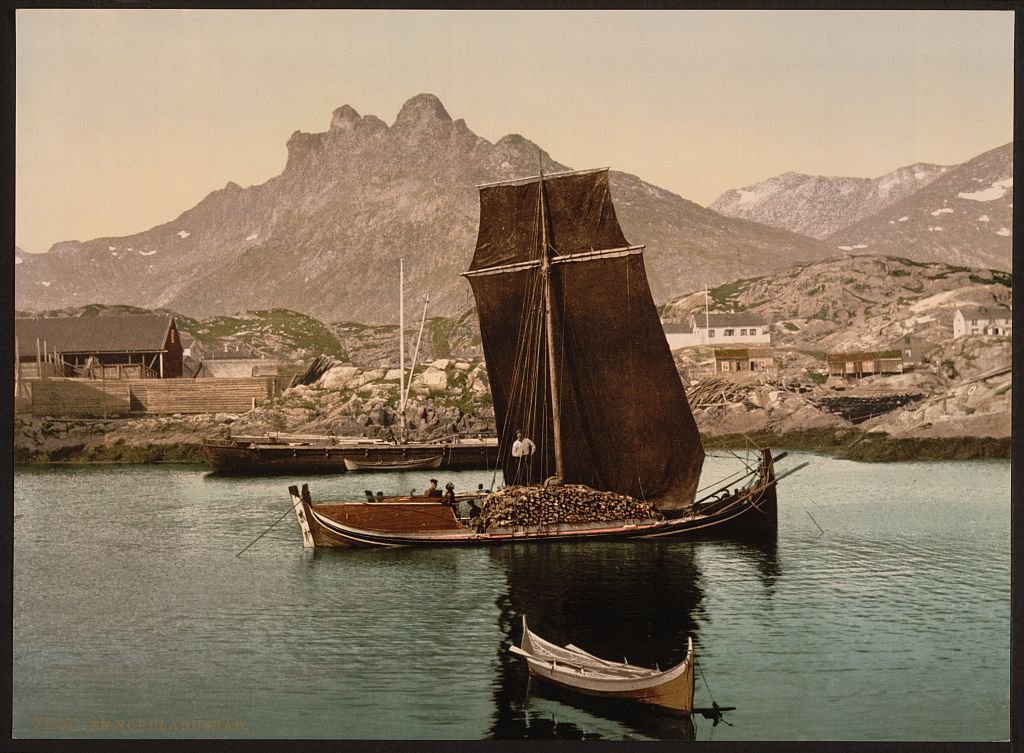
THREAD - the Origin and Survival of the Norse Longship
(1) Few symbols are as archetypically associated with the ancient Vikings as the longship - dragon-prowed galleys, spreading dread & fire across the shores of Europe. But where did they originate, & where end?
(2) First, about the longship. Norse vessels were clinker-hulled, a style also known as the lapstrake, wherein the planks of the hull were arranged such that they overlapped with each other, forming the characteristic "striped" appearance of the Viking-ship.
(3) This was distinct from the style employed in the south, which was a 'mortise and tenon' technique called the Phoenician joint, wherein interlocking joints formed the cohesive, water-tight hull.
Invented by the titular Phoenicians, it was later adopted by the Greeks & Romans
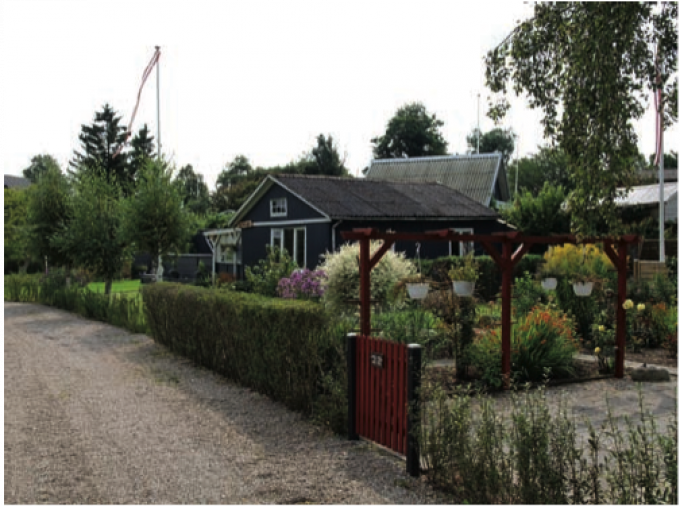
Called "kolonihaver" - "colony gardens". Often very charming & sometimes used as a sort of inland summerhouse by ppl, though staying in them permanently isn't legal.
Never owned one myself tho, on account of having an actual garden.
I wonder about the sommerhuse-phenomenon in Denmark - is this common elsewhere?
It is extremely normal in DK for middle-class & up families to own a sommerhouse elsewhere in the country, which always look like this
It seems an odd, and paradoxically strangely nativist, notion that something cannot be authentically local because it constitutes an innovation of some originally foreign import.
Little in life is invented whole-cloth - all creativity is inspired iteration.
Take this Danish church as an example - there is, if analysed with a scalpel, little uniquely Danish about it. Dedicated to an imported religion using imported architectural techniques full of statues and art in imported styles.

And yet, this building is inimitably Danish.
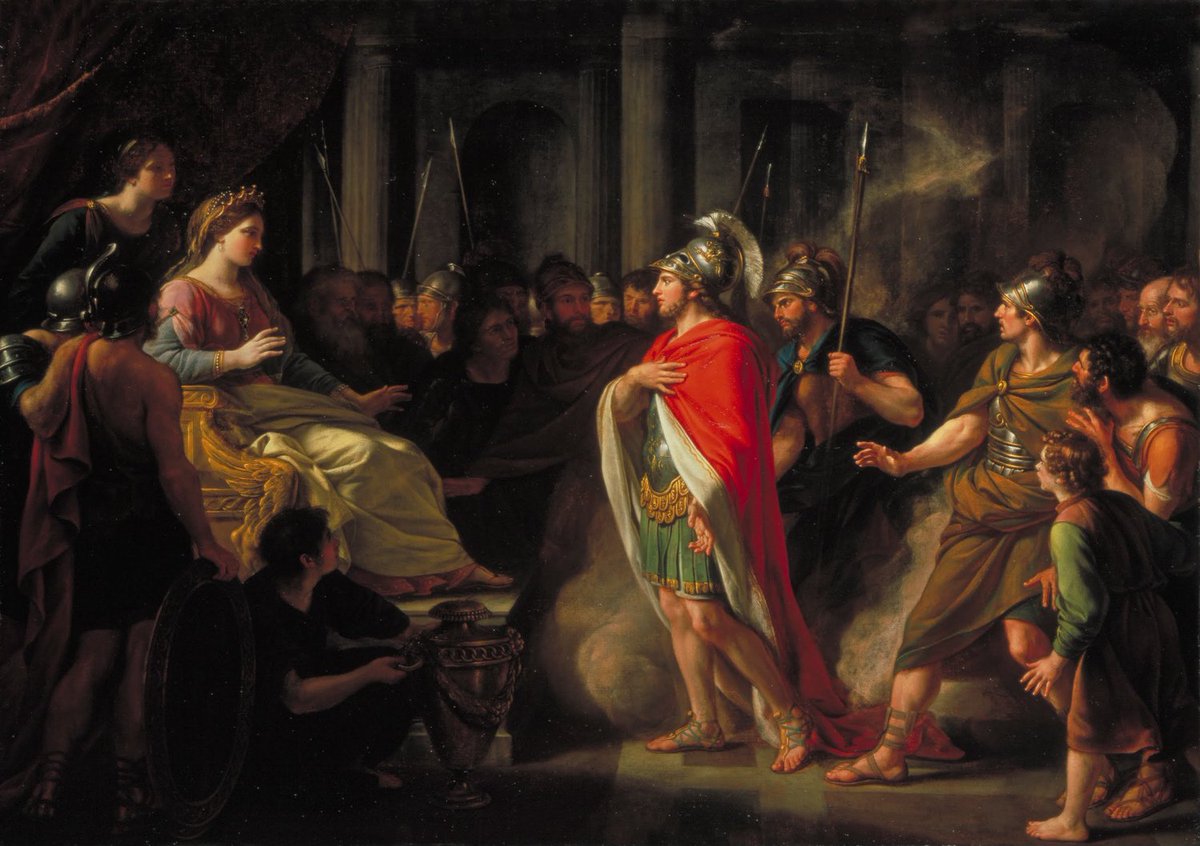
Is the Aneid not an authentically "Roman" work because it centres on Trojan characters & was inspired by the style and matter of Homeric Greek poetry?
Well, without the Greeks, no Aneid, it is true - but all the same, it was not a Greek but a Latin poet who put pen to page.
Increasingly convinced the current state of cinema - its total malaise, bordering on an Eliadean eternal recurrence of existing IPs - is actually uncureable at this point.
Cinema is stuck in a vicious cycle of market-economics, stifling innovation whilst punishing repetition.
Many of these endless remakes, re-imaginings & sequels have hit diminishing returns at this point, actively burning up the goodwill & reputation of the franchises they recycle, yet they STILL make more reliable money than new IPs, making innovation a "poor investment"
Underlying it all - it's hard to tell chicken from egg here - is the sense that our general culture has simply lost the ability & frankly will to generate new stories & artistic ideas.
Seeking some escape from this rut, people escape into nostalgia for more creative periods.
It is somewhat crazy to me that the Kenyan Swahili Coast has what may be some of the most beautiful architecture in the world, and yet the country has essentially done... nothing with it.
No attempt to utilise it for new, inland developments
Kenya is a country of beautiful nature and people, but the built environment is frankly quite hideous. I do not believe this is due to limitations of funds - it seems more broadly a lack of skilled labour, proper utilisation of resources, and perhaps of vision
I also have to wonder whether part of the reason for this architectural neglect is that the Swahili style of building is view by inland Kenyans (overwhelmingly Christian) as "intrinsically Islamic".
I know for a fact such notions have obstructed projects here in the past