Read on Twitter
icymi
"Self-representation in African art: the wall paintings of medieval Nubia. (ca. 700-1400)"
an African portrait of an African society... africanhistoryextra.com/p/self-represe……
"Self-representation in African art: the wall paintings of medieval Nubia. (ca. 700-1400)"
an African portrait of an African society... africanhistoryextra.com/p/self-represe……


Local artists in the kingdom of Makuria created one of Africa's largest corpus of wall paintings.
This unique collection of African self-representation provides us with an internal perspective of how Africans perceived their own society
africanhistoryextra.com/p/self-represe…
This unique collection of African self-representation provides us with an internal perspective of how Africans perceived their own society
africanhistoryextra.com/p/self-represe…
The art of Nubia was a product of its cosmopolitan culture that linked north-east Africa with the eastern meditteranean
initially influenced by Byzantine models, it later acquired its own local character as Nubian artists created their own styles
africanhistoryextra.com/p/self-represe…
initially influenced by Byzantine models, it later acquired its own local character as Nubian artists created their own styles
africanhistoryextra.com/p/self-represe…

From the 8th century, the spread of Christianity across Makuria was done by the Nubian church, its priests and the royals.
local architects constructed monumental churches whose walls are painted by local artists with various saintly and political figures
africanhistoryextra.com/p/self-represe…
local architects constructed monumental churches whose walls are painted by local artists with various saintly and political figures
africanhistoryextra.com/p/self-represe…
The most common self-representations in Nubian art are paintings of Royals, the clergy & Nubian subjects
Nubian artists depicted people (both nubian & non-nubian) with a dark-brown complexion, but saints are drawn "colorless" following byzantine models
africanhistoryextra.com/p/self-represe…
Nubian artists depicted people (both nubian & non-nubian) with a dark-brown complexion, but saints are drawn "colorless" following byzantine models
africanhistoryextra.com/p/self-represe…

Paintings of royals figures are the most commonly attested among Nubian self-representations, followed by depictions of the church elite.
Both Nubian figures and non-Nubian biblical figures are shown with a dark-brown complexion, but saints are colorless
africanhistoryextra.com/p/self-represe…
Both Nubian figures and non-Nubian biblical figures are shown with a dark-brown complexion, but saints are colorless
africanhistoryextra.com/p/self-represe…
Nubian royals were most commonly depicted in "protection scenes" where they are shown underneath or standing next to a divine figure
Royal protection scenes were a distinctly Nubian innovation
africanhistoryextra.com/p/self-represe…
Royal protection scenes were a distinctly Nubian innovation
africanhistoryextra.com/p/self-represe…
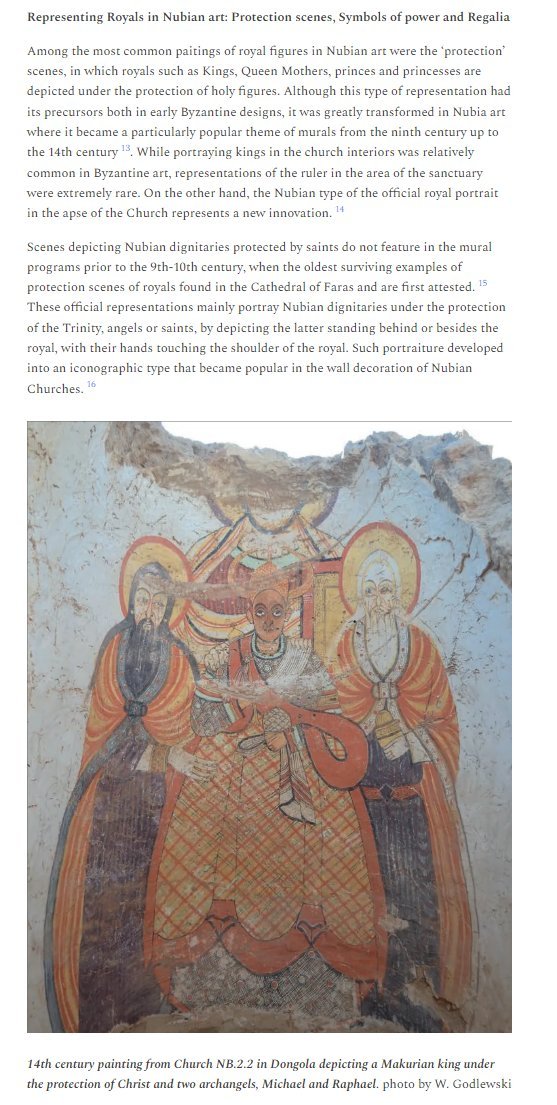

Royal protection scenes played an important role in the expression of royal ideology in the iconographic program of the churches.
the Nubian ruler shown with divine beings becomes the main figure of the composition under heavenly protection
africanhistoryextra.com/p/self-represe…
the Nubian ruler shown with divine beings becomes the main figure of the composition under heavenly protection
africanhistoryextra.com/p/self-represe…
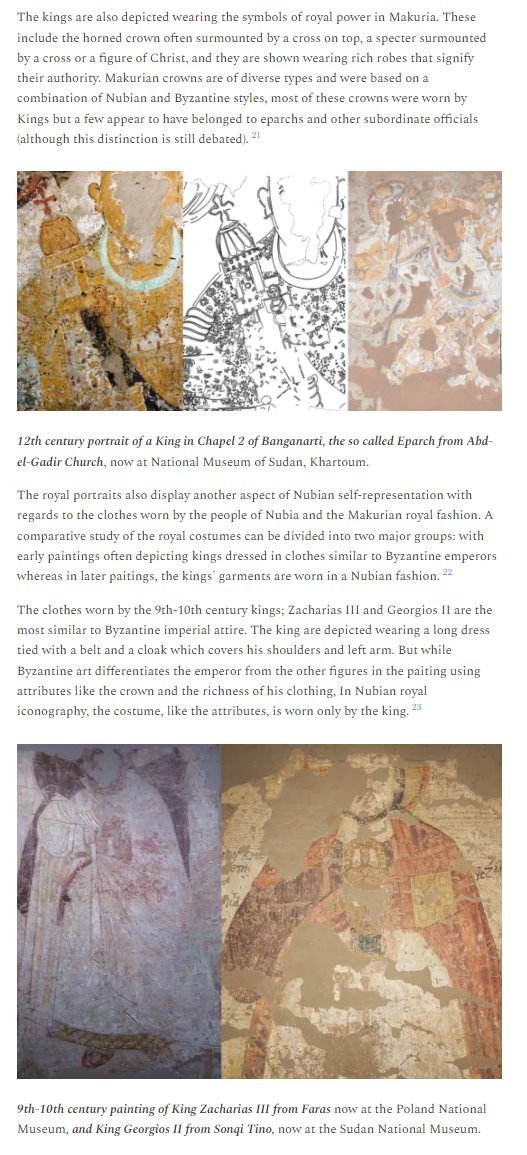
representations of Nubian royals include symbols of power and Nubian regalia.
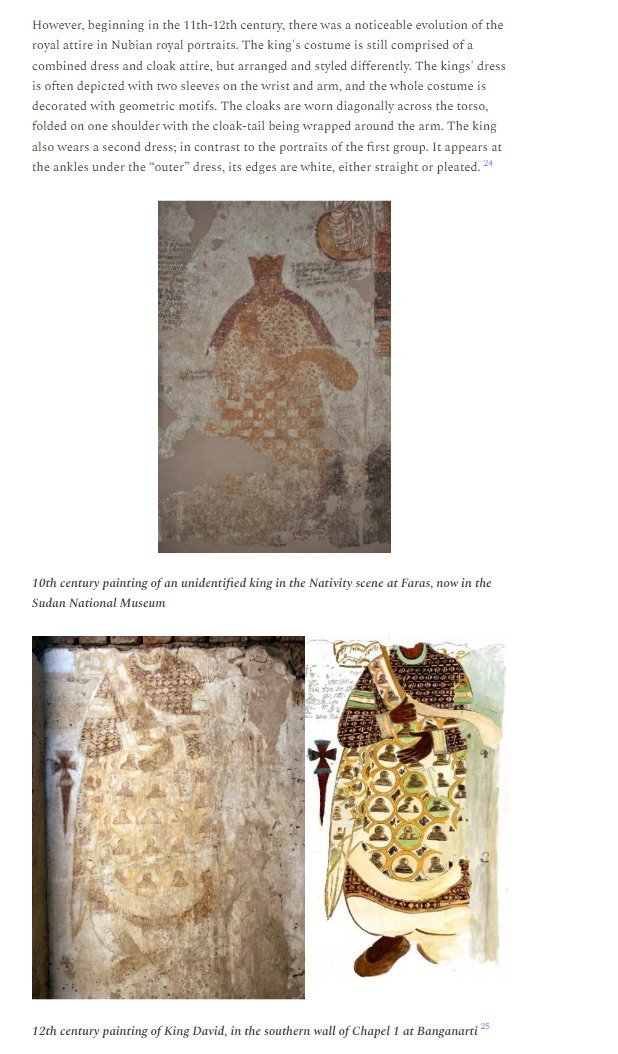
The kings wear horned crowns with crosses, and are shown holding scepters. Their robes are richly decorated and were made in Nubian and Byzantine fashions
africanhistoryextra.com/p/self-represe…
The kings wear horned crowns with crosses, and are shown holding scepters. Their robes are richly decorated and were made in Nubian and Byzantine fashions
africanhistoryextra.com/p/self-represe…
There are a few paintings of high ranking royal figures in Nubian art. most of them are shown without the symbols of royal authority
africanhistoryextra.com/p/self-represe…
africanhistoryextra.com/p/self-represe…
Nubian women enjoyed a relatively high social and economic status
This is reflected in the Nubian paintings depicting high ranking women such as Queen mothers and princesses under the protection of divine figures
africanhistoryextra.com/p/self-represe…
This is reflected in the Nubian paintings depicting high ranking women such as Queen mothers and princesses under the protection of divine figures
africanhistoryextra.com/p/self-represe…
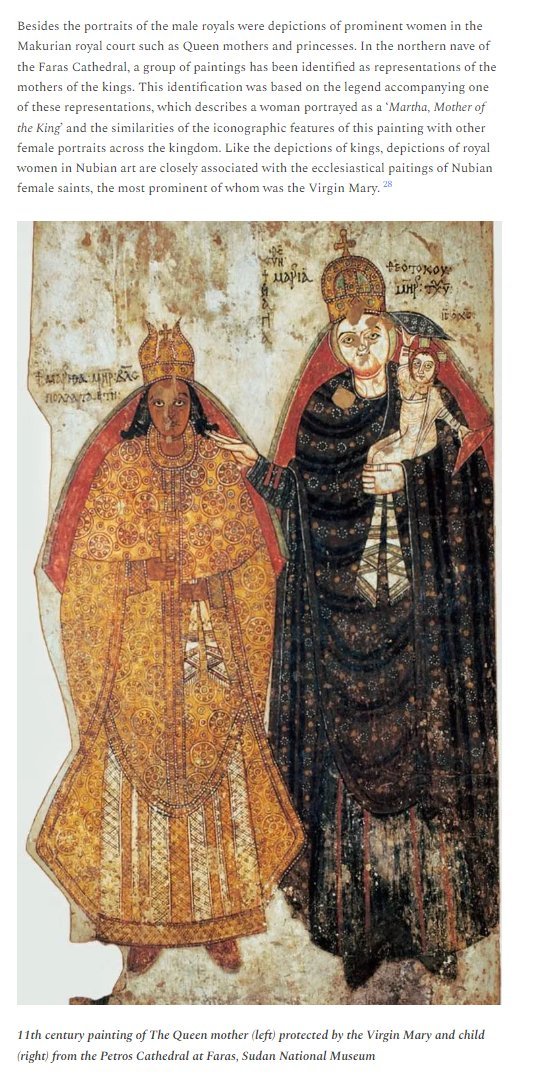

the special role of the king and his mother in the mural decoration of Nubian churches mirrored a specific social reality in Makuria
africanhistoryextra.com/p/self-represe…
africanhistoryextra.com/p/self-represe…
The Nubian clergy are the second most commonly attested figures in Nubian self-representation
The Nubian church was closely associated with the royal court, and like the royals, some Nubian bishops were also shown under the protection of divine figures
africanhistoryextra.com/p/self-represe…
The Nubian church was closely associated with the royal court, and like the royals, some Nubian bishops were also shown under the protection of divine figures
africanhistoryextra.com/p/self-represe…

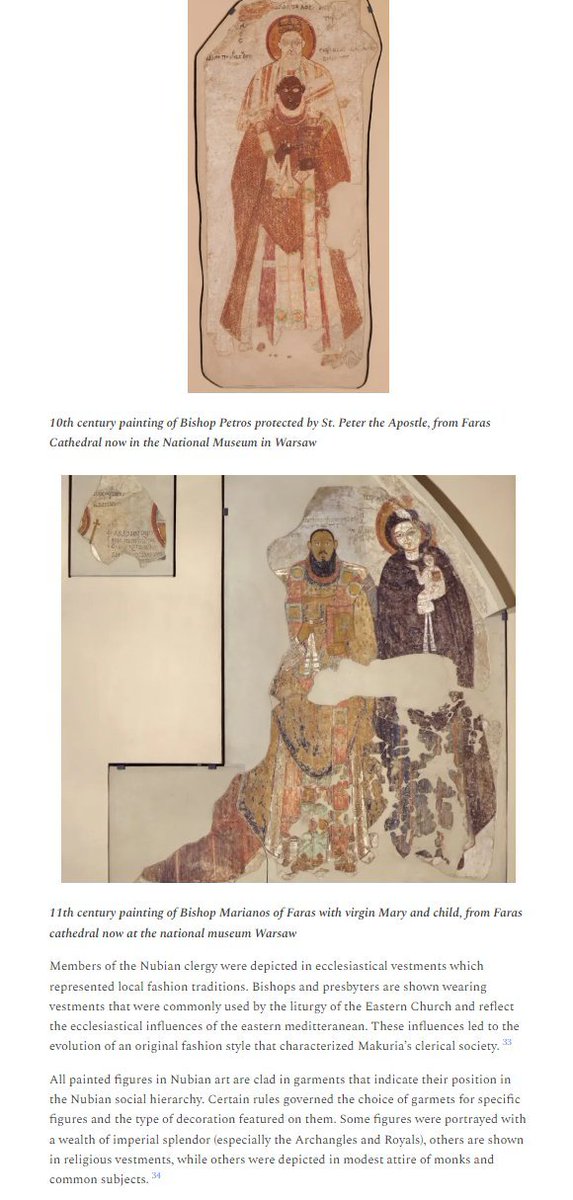
Nubian bishops are shown holding items that indicate their office such as headdresses with crosses, long staffs terminating in a cross, gospel books, and censers.
They wear vestments adopted from the eastern churches, and are clad according to their rank
africanhistoryextra.com/p/self-represe…
They wear vestments adopted from the eastern churches, and are clad according to their rank
africanhistoryextra.com/p/self-represe…
The common subjects of Nubia only rarely appear in wall paintings. Some of these include donors who commission the paintings, and other are characters in wider scenes
depictions of Nubian subjects represent Makuria's cosmopolitan society
africanhistoryextra.com/p/self-represe…
depictions of Nubian subjects represent Makuria's cosmopolitan society
africanhistoryextra.com/p/self-represe…

portraits of donors include those commisioned by women, who may have been members of the clergy or were related to high ranking men
africanhistoryextra.com/p/self-represe…
africanhistoryextra.com/p/self-represe…
Atleast two exceptional paintings include representations of Nubian subjects
the most dynamic of these is a dance scene that shows men clad in African and 'Islamic' costumes, reflecting the gradual increase in Islamic influences during the 12th/13th cent
africanhistoryextra.com/p/self-represe…
the most dynamic of these is a dance scene that shows men clad in African and 'Islamic' costumes, reflecting the gradual increase in Islamic influences during the 12th/13th cent
africanhistoryextra.com/p/self-represe…
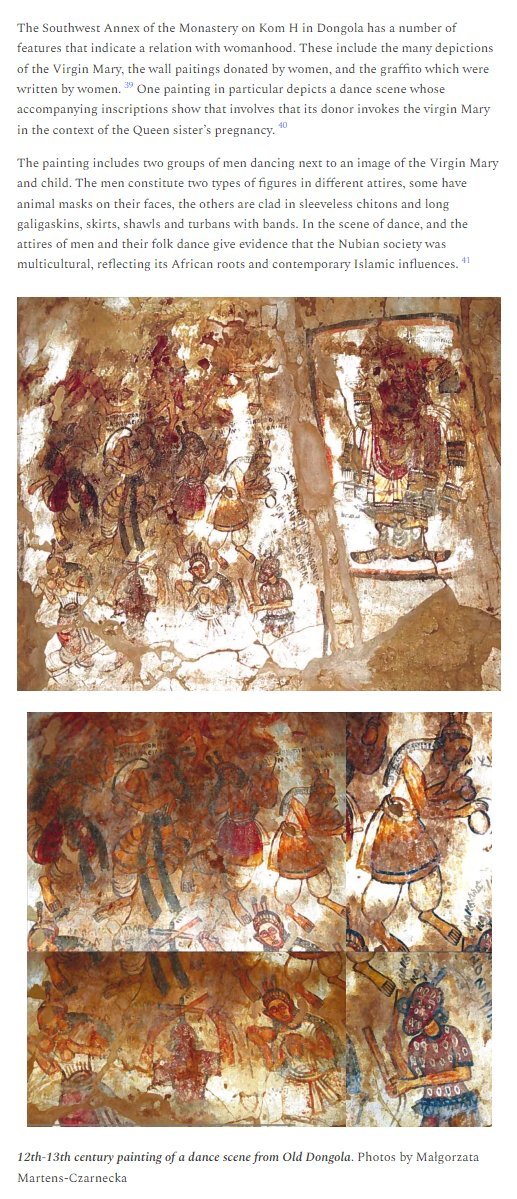
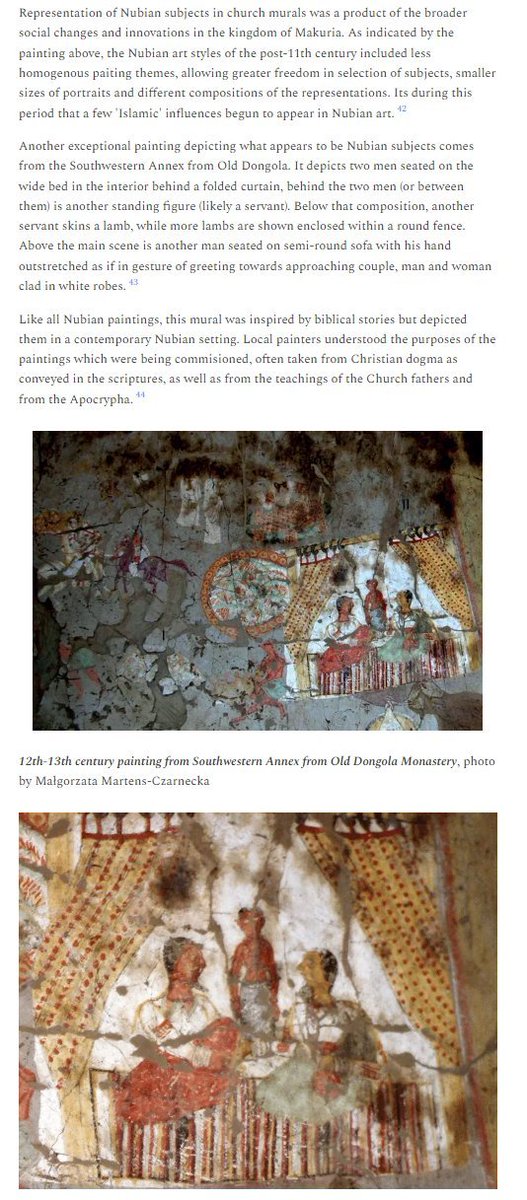
Another painting depicts the biblical story of Tobias in the ‘Book of Tobit’
but the characters are drawn as Nubians wearing clothes which reflect some contemporary Islamic influences and engaging in financial transactions using gold coins
africanhistoryextra.com/p/self-represe…
but the characters are drawn as Nubians wearing clothes which reflect some contemporary Islamic influences and engaging in financial transactions using gold coins
africanhistoryextra.com/p/self-represe…
The painting depicts a Nubian rendering of biblical figures but in contemporary fashion, reflecting the gradual increase in Islamic influences of 13th century Makuria
Its a portrait of a society that was undergoing a cultural transformation
africanhistoryextra.com/p/self-represe…
Its a portrait of a society that was undergoing a cultural transformation
africanhistoryextra.com/p/self-represe…
icymi 👇🏾
The first Guns and European slave-soldiers in West Africa: musketeers of the Bornu empire
patreon.com/posts/first-gu…
The first Guns and European slave-soldiers in West Africa: musketeers of the Bornu empire
patreon.com/posts/first-gu…

• • •
Missing some Tweet in this thread? You can try to
force a refresh