WHO FRAMED ROGER RABBIT was released 35 years ago today. A groundbreaking blend of live action and animation, the behind the scenes story is a fascinating one…
A THREAD
1/39

A THREAD
1/39


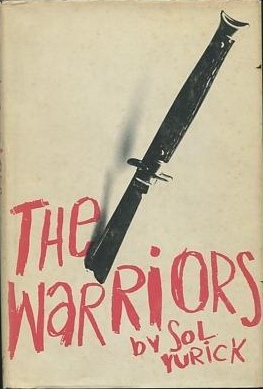
Who Censored Roger Rabbit? Was published in 1981. A fantasy mystery novel written by Gary K. Wolf, Disney snapped up the rights immediately, thinking it perfect for a film adaptation, and hired Jeffrey Price and Peter S. Seaman to write a script.
2/39
2/39


In 1982, Robert Zemeckis put himself forward as director but, with no hits under his belt, Disney weren’t interested. They approached Terry Gilliam but he declined. Gilliam later said “it was too much work, pure laziness on my part”.
3/39
3/39


The script gathered until Michael Eisner became Disney CEO. He showed the script to Steven Spielberg. Spielberg didn’t want to direct but said his company Amblin Entertainment would produce. He recommended Zemeckis as director who by now had made Back to the Future.
4/39
4/39


Spielberg’s cache in 1980s Hollywood was so huge he struck deals with Disney and Warner Bros to license their most famous cartoon characters. The WB stipulation was that they had to share equal screen time which is why Mickey Mouse and Bugs Bunny share a scene, below.
5/39
5/39
There were big names considered to play Eddie Valiant. Harrison Ford was too expensive. Joe Pantoliano screen tested. Tom Hanks was seriously considered, and Eddie Murphy turned the role down.
6/39
6/39


Zemeckis decided Bill Murray was perfect for the part. When Disney tried to contact him though, he nor his agent didn’t pick up the phone for days. As such, Zemeckis moved on and went to his next choice – Bob Hoskins.
7/39
7/39


Hoskins told a story that after shooting wrapped his son didn’t speak to him for 2 weeks. Hoskins wasn’t sure why but found out his son was furious that his dad didn’t introduce him to Bugs Bunny.
8/39
8/39


Title character Roger Rabbit was a melting pot of characters. The design was intended to convey the calibre of Disney, the character design of Looney Tunes and the sense of humour of Tex Avery. His face resembles a Looney Tunes character and his torso a Disney one.
9/39
9/39


In early development, Paul Ruebens (Pee Wee Herman) was the voice of Roger. When the film was picked back up, Charles Fleischer was first choice. Fleischer said “I’m a stand-up comedian so I related more to Roger than any human characters I’ve ever played.”
10/39
10/39


During filming, Fleischer would dress in full rabbit costume off camera and act the scene out with Hoskins. Hoskins called Fleischer “completely nuts.”
11/39
11/39


Disney allowed 81 of their characters to make an appearance and Warners gave up 19 of their characters for the film. They did it for the very low fee of $5,00 dollars per character, reportedly so as not to sour their relationships with Spielberg.
12/39
12/39


Jessica Rabbit was voiced by an uncredited Kathleen Turner. Amy Irving, though, was responsible for Jessica’s singing voice. Irving was married to Spielberg at the time, and sang Why Don’t You Do Right.
13/39
13/39


Jessica Rabbit was inspired by classic 1943 Tex Avery cartoon Red Hot Riding Hood, along with film stars of the era like Lauren Bacall, Rita Heyworth and Veronica Lake.
14/39
14/39


When they were filming, Jessica hadn’t yet been designed by the animators, so Hoskins didn’t know what she would look like. Zemeckis said “Imagine your ideal sexual fantasy.” And Hoskins later said “what I imagined was less risque than what Jessica ended up looking like.”
15/39
15/39
Known for her alluring figure, Jessica’s bosom was designed to be gravity defying. It was animated to bounce in reverse to make Jessica’s appearance more striking.
16/39
16/39


In casting the villain of the piece Judge Doom, Tim Curry was considered but deemed too scary. Christopher Lee turned the role down. And, reportedly, John Cleese and Sting were also in the frame at one point!
17/39
17/39


Having just worked with him in Back to the Future, Zemeckis turned to Christopher Lloyd. Lloyd said he channelled his Star Trek character, Commander Kruge, and made the decision not to blink when on screen.
18/39
18/39


Raoul J Raoul, the director of the Something’s Cookin’ cartoon, is played by Hollywood producer Joel Silver. He was given the gig by Zemeckis as a prank on Michael Eisner. Eisner and Silver worked at Paramount in the early 80s and couldn’t stand each other.
19/39
19/39
Betty Boop appears and is voiced by the original voice actress, Mae Questel, the last time she voiced Betty. She was 80 years old at the time.
20/39
20/39


There are appearances from other original voice artists too. Wayne Allwine (Mickey Mouse), Tony Anselmo (Donald Duck), and Mel Blanc (Bugs Bunny, Daffy Duck) all appear.
21/39
21/39


There was friction over how the Looney Tunes characters should look. WB wanted to use the 1988 versions, but Zemeckis wanted to use classics from the 40s. Zemeckis sent footage with the 80s designs, WB approved the footage, and Zemeckis used the 1940s versions anyway.
22/39
22/39
The scene below is one of the film’s most popular. Zemeckis didn’t storyboard it, Chuck Jones did. Jones directed many Looney Tunes cartoons in the 30s and 40s and Zemeckis felt having his input would lend authenticity to the scene.
23/39
23/39
Disney wanted Looney Tunes and Disney animator Darrell Van Citters to be hired to supervise the animations. Zemeckis though, hired Richard Williams as he had worked during the ‘golden age’ of 40s and 50s cartoons that Zemeckis was inspired by.
24/39
24/39


Williams had 3 rules:
- The camera had to move a lot so the toons don’t look like they’ve been pasted on a background.
- Shadows and lighting were to be used to a level never done before.
- The toons were to interact with real world objects as much as possible.
25/39
- The camera had to move a lot so the toons don’t look like they’ve been pasted on a background.
- Shadows and lighting were to be used to a level never done before.
- The toons were to interact with real world objects as much as possible.
25/39
The toon movement was pre-planned and puppets stood in for the toons so Hoskins had something to work with. These stand ins were filtered out of the image and the animation superimposed over the top.
26/39
26/39
The majority of Hoskins’ scenes were shot against a blue screen as he was performing with animations. He said “I had to learn to hallucinate to do it. After 6 months, 16 hours a day, I lost control of it, and had weasels and rabbits popping out of the wall at me."
27/39
27/39
326 animators worked in the film and Richard Williams said that easily over one million illustrations were hand drawn for the movie.
28/39
28/39


The animators got their moment in the limelight, too. Richard Williams does the voice of Droopy. And before the end credits when the toon are singing “Smile, Darn Ya, Smile” - that was mostly the animation team singing the song.
29/39
29/39
Filming the octopus waiter, they had 8 puppeteers on set all operating and moving the glasses in the way they needed to, and then the octopus was drawn in afterwards. He’s on screen for about 7 seconds, but to create him took weeks.
30/39
30/39
An example of the attention to detail is the scene below. As the lamp swings, the shadow matches it. Painstaking animation work which most people wouldn’t even notice. So, in the industry, the term “Bumping the lamp” now means to go above and beyond what’s expected.
31/39
31/39
Initially, there were meant to be seven weasels, as a nod the 7 dwarves but they settled on 5. The leader is called Smartass and the others are called Psycho, Greasy, Wheezy, and Stupid.
32/39
32/39

The ingredients of ‘The Dip’ are turpentine, acetone and benzene which are paint thinners, commonly used to erase animation cells. And the whimpers of the shoe were voiced by Nancy Cartwright, who would become the voice of Bart Simpson.
33/39
33/39
There were some big changes from the book. In the book:
- The toons were stars of comic strips not movies
- It was set present day
- Roger is the one bumped off in the book but creates his own doppleganger
- Jessica is a former porn star
34/39
- The toons were stars of comic strips not movies
- It was set present day
- Roger is the one bumped off in the book but creates his own doppleganger
- Jessica is a former porn star
34/39


The script went through a lot of versions. At different times:
- Jessica was the villain
- Baby Herman was the villain
- Doom was revealed as the hunter who killed Bambi’s mother
- In one draft, Roger died
35/39
- Jessica was the villain
- Baby Herman was the villain
- Doom was revealed as the hunter who killed Bambi’s mother
- In one draft, Roger died
35/39


In the film Doom has a plan to get rid of the Red Car trolleys. This is based on reality as In the US in the 1940s, corporations got together to buy out public transport companies to increase demand for cars.
36/39
36/39


The title was originally ‘Who Framed Roger Rabbit?’ but Disney removed the question mark. They believed film’s with question marks in titles always bombed and it was a kiss of death.
37/39
37/39

With a cast and crew of over 800 names, Who Framed Roger Rabbit had the longest ever closing credits on original release at just over 10 minutes. Largely down to the huge animation terms of course.
38/39
38/39
That’s all, folks. To finish, Roger at his hilarious cartoonish best in Eddie Valiant’s office…
39/39
39/39
If you liked this thread, please RT the opening tweet...
https://twitter.com/ATRightMovies/status/1671810340202467329?s=20
Our latest podcast is on RETURN OF THE JEDI. Full of big laughs and opinions, please check it out 😀
alltherightmovies.com/podcast/return…
alltherightmovies.com/podcast/return…
• • •
Missing some Tweet in this thread? You can try to
force a refresh