
Eden Marco Profile picture
Jun 23 13 tweets 4 min read Twitter logo Read on Twitter
0/12 📢🧵Unpopular Opinion thread - Vectorstores are here to stay! 🔐🚀

I've noticed a lot of tweets lately discussing how #LLM s with larger context windows will make vector-databases obsolete. However, I respectfully disagree. Here's why:
1/12 @LangChainAI 🦜🔗 @pinecone 🌲 @weaviate_io @elastic @Redisinc @milvusio let me know what you think😎 I think you will like this.
2/12: Too much context hurts performance. As the context window expands, #LLM s can "forget" information from the beginning of the prompt. With contexts larger than ~50k tokens, this becomes a challenge.
3/12: LLMs are statistical creatures, "guessing" the next word. When we provide massive context, the number of possible guesses dramatically increases, including bad ones. This raises the odds of hallucinating wrong words.
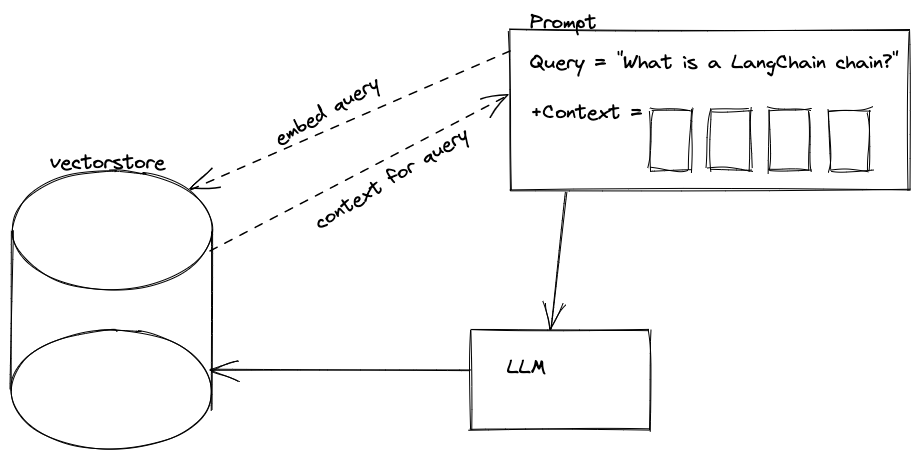
4/12: In-context learning or RAG, powered by vectorstores, is incredibly powerful. It allows us to build advanced systems that rely on finding relevant context. Relevant context is key to addressing the task at hand.
5/12: Example: Claud by @AnthropicAI can digest 100k tokens, indicating the trend of models moving toward increasingly larger context. In the future, large context will become the standard
6/12: From my experience, sending "enough" context, precise and laser-focused, yields better results than flooding the model with unnecessary "junk" context. Quality over quantity.

7/12: Just like in caching, a bigger cache doesn't always mean better performance. There can be a knee graph, and we might reach a point where adding more context doesn't significantly improve results. We could plateau.
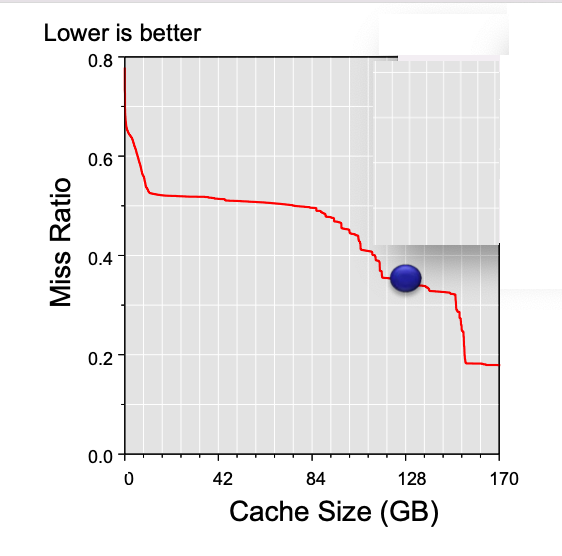
8/12: IMO, a limit of around 20-30k tokens will be the max and offer the sweet spot. If we exceed the common 8k token limit, we have elegant techniques like map reduce, reranking, refinement, summarization —all supported by @LangChainAI 🦜 🔗doing the heavy lifting for us
10/12: It's also important to consider the cost factor. Since we pay per token, minimizing the number of tokens used becomes crucial. Optimal context selection helps optimize costs while maintaining quality. 💰💡
11/12: Vectorstores are invaluable tools for similarity and hybrid search. They assist us in finding the most relevant context which can also be filtered by metadata, empowering us to build complex apps effectively.
12/12 :I teach @LangChainAI 🦜🔗 elaborately and LLM application development in my @udemy course with 5k+ students and 700+ reviews


Twitter only limited discount: TWITTER9DCC71C67A9AAudemy.com/course/langcha…
13/12 @jeffreyhuber giving an honorable mention for Chroma DB open source
https://t.co/CnzbEWu2TAtrychroma.com

• • •

Missing some Tweet in this thread? You can try to force a refresh

 

Keep Current with Eden Marco

Eden Marco Profile picture

Stay in touch and get notified when new unrolls are available from this author!

Read all threads

This Thread may be Removed Anytime!

PDF

Twitter may remove this content at anytime! Save it as PDF for later use!

Try unrolling a thread yourself!

how to unroll video
  1. Follow @ThreadReaderApp to mention us!

  2. From a Twitter thread mention us with a keyword "unroll"
@threadreaderapp unroll

Practice here first or read more on our help page!

More from @EdenEmarco177

Jun 17
1/14🧵Real world CHUNKING best practices thread:
🔍 A common question I get is: "How should I chunk my data and what's the best chunk size?" Here's my opinion based on my experience with @LangChainAI 🦜🔗and building production grade GenAI applications.
2/14 Chunking is the process of splitting long pieces of text into smaller, hopefully semantically meaningful chunks. It's essential when dealing with large text inputs, as LLMs often have limitations on the amount of tokens that can be processed at once. (4k,8k,16k,100k) Image
3/14 Eventually, we store all chunks in a vectorstore like @pinecone🌲 and perform similarity search on them then using the results as context to the LLM.
Read 15 tweets
Jun 10
1/13 🧵💡 Ever wondered how to handle token limitations of LLMs? Here's one strategy of the "map-reduce" technique implemented in @LangChainAI 🦜🔗
Let's deep dive! @hwchase17 's your PR is under review again😎
2/13 MapReduce is not new. Famously introduced by @Google , it's a programming model that allows for the processing and generation of large data sets with a parallel, distributed algorithm.
3/13 In essence, it divides work into small parts that can be done simultaneously (the “mapping”) and then merge the intermediate results back to a one final result (“reducing”). Image
Read 13 tweets
Jun 8
1/8 🚀 Let's go step by step on "Chat with your Repo" assistant powered by @LangChainAI🦜🔗 and @pinecone🌲all running smoothly on @googlecloud☁️ Run- this was demoed at yesterday's HUGE @googlecloud @pinecone event in Tel Aviv 🇮🇱

@hwchase17 counting on you for next time😎
2/8 Step 1? Vectorize your repository files. With using @googlecloud VertexAI embeddings and a couple of lines of @LangChainAI you simply ingest these vectors into @pinecone vectorstore. Image
3/8 Now, we use @googlecloud VertexAI embeddings along with context retrieved from @pinecone to augment the user's original prompt to @googlecloud PaLM 2 LLM. This enables is also called in context learning. With @LangChainAI again is just a couple of lines of code Image
Read 9 tweets
Jun 5
1/6🌐💡Singularity is here? Just read this blog from @LangChainAI 🦜🔗 featuring @itstimconnors on multi-agent simulation. IMO its amazing to witness how a few "hacks" such as a memory system + some prompt engineering can stimulate human-like behavior 🤖 Image
2/6 inspired by @Stanford 's "Generative Agents" paper-
Every agent in a GPTeam simulation has its unique personality, memories, and directives, creating human-like behavior👥 Image
3/6 📚💬 "The appearance of an agentic human-like entity is an illusion. Created by a memory system and a fe of distinct Language Model prompts."- from GPTeam blog. This ad-hoc human behaviour is mind blowing🤯🤯🤯
Read 6 tweets
Jun 3
🧵We all spend too much time scouring LinkedIn/ Twitter before meeting someone new🕵🏽
So, here comes Ice Breaker LLM agent app. Just input a name, it fetches social media to provide a concise summary, interesting facts and a fun icebreaker!
Build on @LangChainAI🦜 & @pinecone🌲 twitter.com/i/web/status/1…
1/7 In just one weekend, this journey I created, shared on @udemy , has blown up in ways I didn’t expect🤖🚀

Teaching how easy it is creating cool & powerful LLM apps with @LangChainAI 🦜 🔗 + @pinecone 🌲, has gone viral 🚀 Image
2/7 Thousands of students, 450+ reviews⭐ , a @udemy best seller tag, and an inbox full of developers from leading companies now equipped and building GenAI solutions 🤖
Read 9 tweets
Jun 2
1/10 🧵💡 Ever wondered how to handle token limitations of LLMs in text summarization? Here's the elegant idea of the "refine" technique in @LangChainAI 🦜🔗, inspired by the "reduce" concept in functional programming. Let's deep dive! 🚀 @hwchase17's your PR is under review 😎
2/10 "Reduce" in python🐍 or "foldl" as it's known in Haskell, is a critical element in functional programming. this is a high order function that has 3 parameters: an iterable, a reduction function, and a starting value.
3/10
"foldl" / "reduce" applies a specified binary operation to successive elements of an iterable, accumulating the result to produce a single output. "reducing the list"

Let's simplify it with an example: Image
Read 11 tweets

Did Thread Reader help you today?

Support us! We are indie developers!


This site is made by just two indie developers on a laptop doing marketing, support and development! Read more about the story.

Become a Premium Member ($3/month or $30/year) and get exclusive features!

Become Premium

Don't want to be a Premium member but still want to support us?

Make a small donation by buying us coffee ($5) or help with server cost ($10)

Donate via Paypal

Or Donate anonymously using crypto!

Ethereum

0xfe58350B80634f60Fa6Dc149a72b4DFbc17D341E copy

Bitcoin

3ATGMxNzCUFzxpMCHL5sWSt4DVtS8UqXpi copy

Thank you for your support!

Follow Us on Twitter!

:(



