Read on Twitter
What is REST? 🛠️🧵 
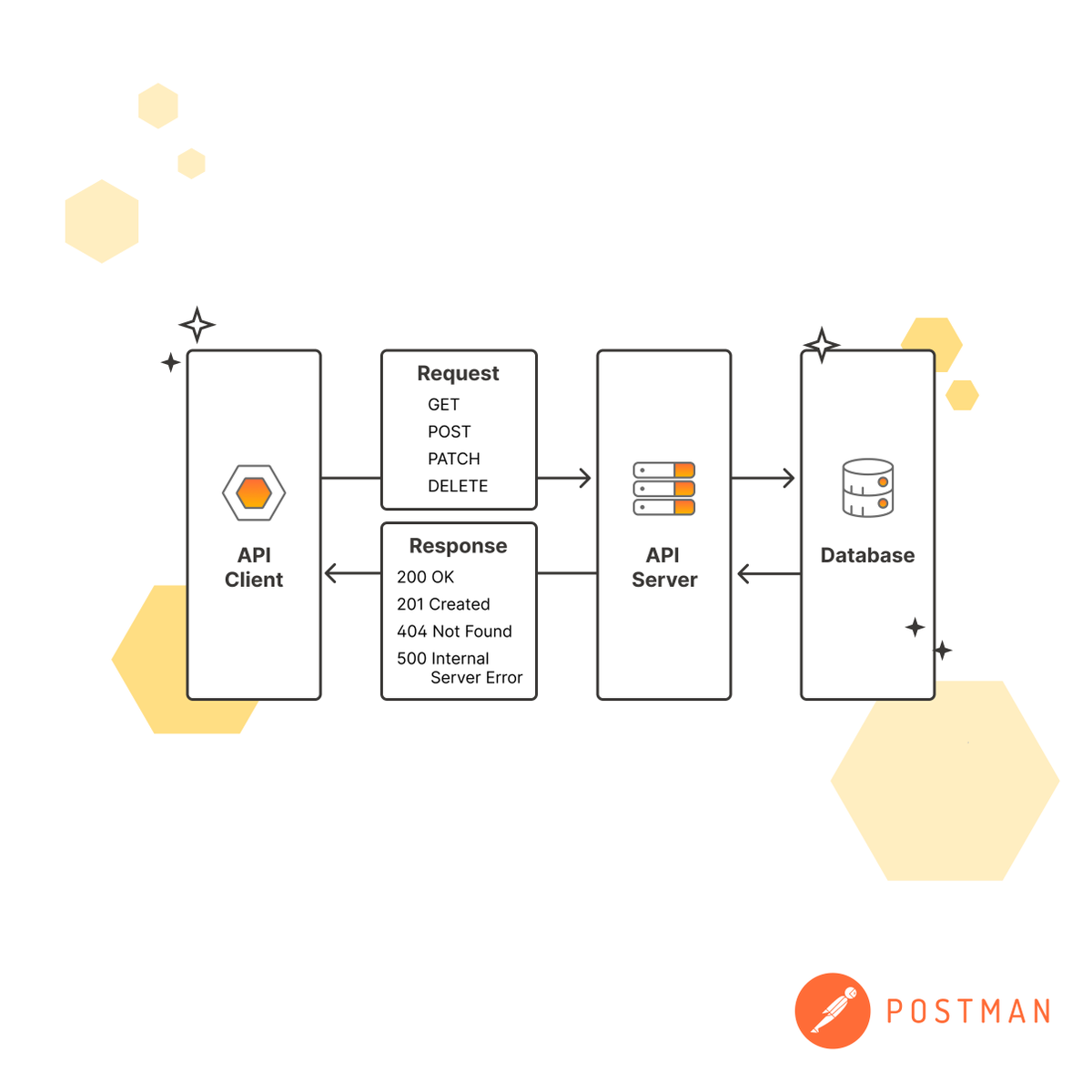
REST (Representational State Transfer) is an architectural style for building web services and APIs.
In a RESTful architecture, resources are identified by URIs (Uniform Resource Identifiers), and operations are performed on those resources using standard HTTP methods such as GET, POST, PUT, and DELETE.
The state of a resource is represented in JSON or XML, which is transferred between the client and server in the HTTP request and response bodies.
One of the key principles of REST is the separation of concerns between the client and server.
The server is responsible for managing the resources and performing the requested operations, while the client is responsible for generating requests and interpreting the responses.
The server is responsible for managing the resources and performing the requested operations, while the client is responsible for generating requests and interpreting the responses.
This allows for greater flexibility and modifiability, as changes to the server do not necessarily require changes to the client.
More REST resources here ⤵️
1.
2. https://t.co/AJZ76ummtJ
3. https://t.co/uQOn57XvhYblog.postman.com/rest-api-examp…
blog.postman.com/soap-vs-rest/
postman.com/product/rest-c…
1.
2. https://t.co/AJZ76ummtJ
3. https://t.co/uQOn57XvhYblog.postman.com/rest-api-examp…
blog.postman.com/soap-vs-rest/
postman.com/product/rest-c…
• • •
Missing some Tweet in this thread? You can try to
force a refresh