Read on Twitter
On this date in 1187 Saladin destroyed the Crusader army at Hattin, killing or capturing all but a few hundred of more than 20,000 men.
Perhaps history’s most one-sided victory, won by a middling tactician with a decidedly mixed record against the Franks. How did he do it? https://t.co/JZYbRQHXE7

Perhaps history’s most one-sided victory, won by a middling tactician with a decidedly mixed record against the Franks. How did he do it? https://t.co/JZYbRQHXE7
https://twitter.com/byzantinemporia/status/1675984737729380352
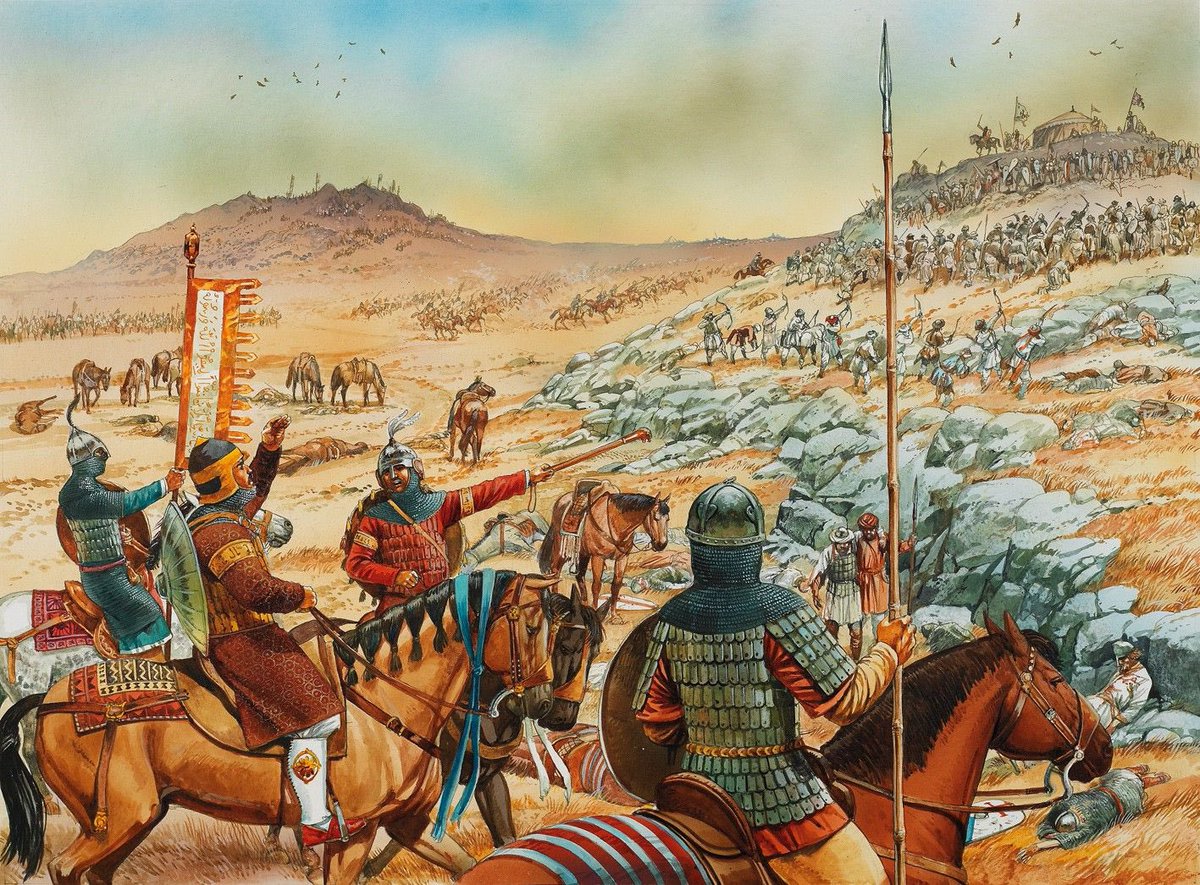
The campaign of 1187 was Saladin’s fifth major invasion of the Kingdom of Jerusalem. He had greatly outnumbered the Crusaders on each previous occasion, but these had resulted in one major defeat, a minor victory, and two stalemates.
There was a downside to Saladin’s large, cavalry-heavy armies: they required immense logistical support.
He could sustain them indefinitely while mustering in the Hauran or Golan Heights, but as soon as he crossed the Jordan the clock started ticking.
https://t.co/h7JIEVEWuK
He could sustain them indefinitely while mustering in the Hauran or Golan Heights, but as soon as he crossed the Jordan the clock started ticking.
https://t.co/h7JIEVEWuK
https://twitter.com/byzantinemporia/status/1382364377723076612

Ordinarily, he would send detachments across the land to pillage, easing his own supply burdens while devastating Frankish lands. But he had learned a serious lesson in 1177 about the danger of dispersing his army before the enemy was defeated.
1177 was the only campaign he launched from Egypt. After crossing the frontier, he bypassed the Crusader forces assembled at Gaza and Ascalon and set his men loose across the land. Detachments pillaged as far north as Ramla.
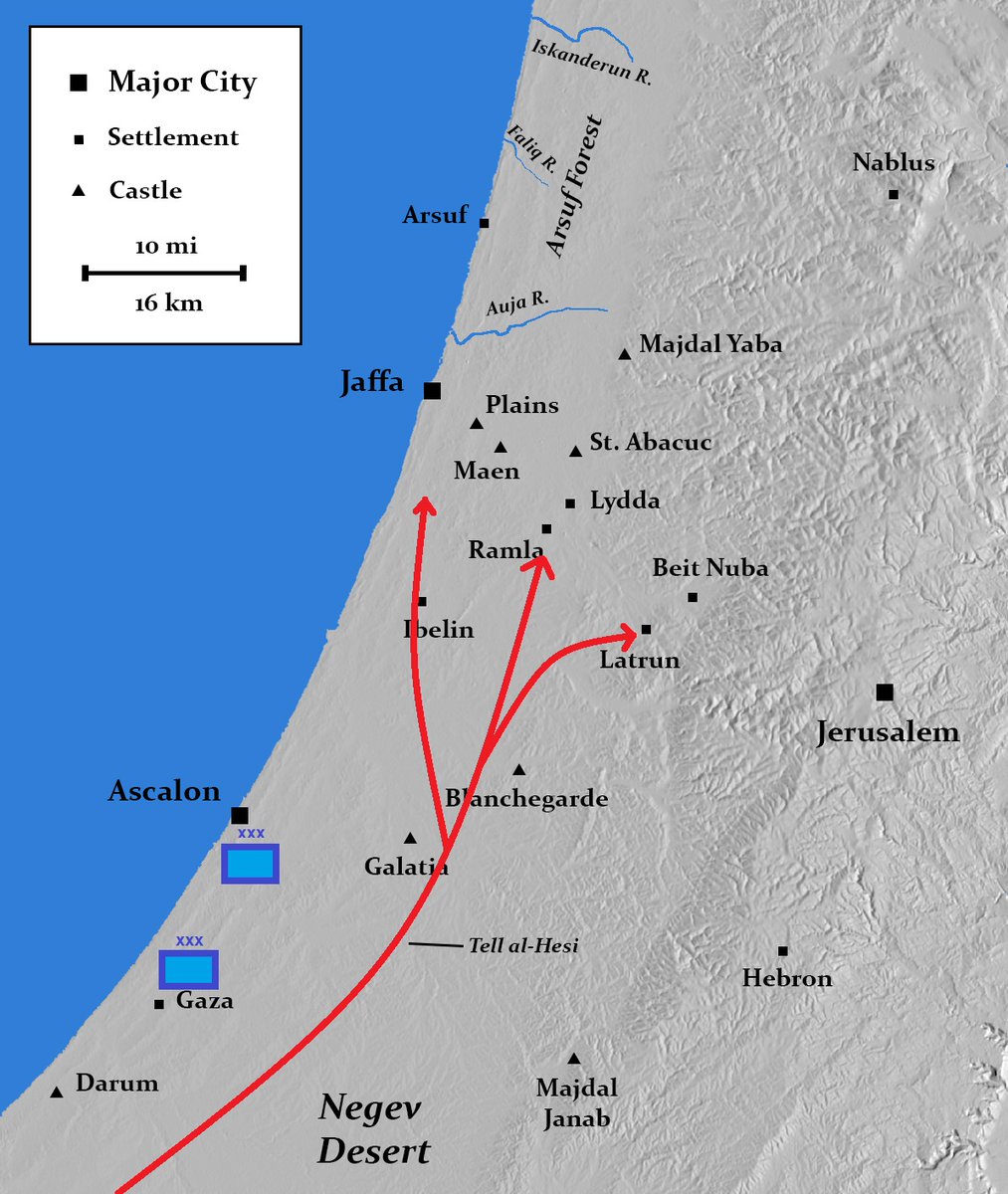
The Franks in Gaza and Ascalon gathered what other men they could and set off in pursuit, intercepting Saladin’s main body as they were crossing a stream swollen by autumn rains. They struck hard before he could recall the rest of his army, and his entire force dissolved.
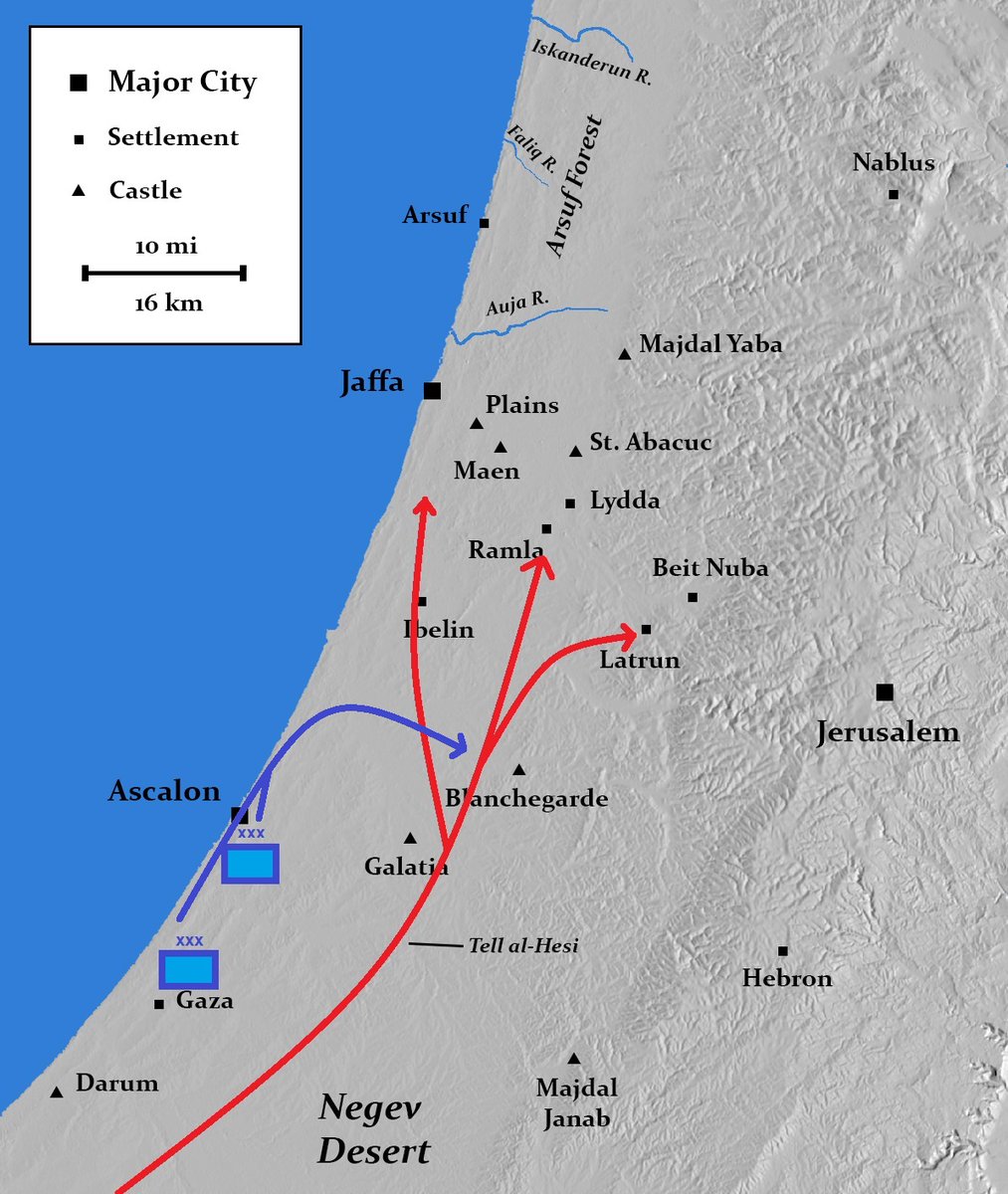
The rest of the army fled in panic when they heard the news. Even though they outnumbered the Christian soldiers, they had lost cohesion and were trapped against the desert without supplies. Many were hunted down and slaughtered.

Saladin learned his lesson during his next campaign in 1179. This time he took a much more cautious approach, setting up camp in the Golan Heights while sending raiders across the Jordan. Before long, the Crusader army set upon one of these below Castle Belfort (modern Lebanon).
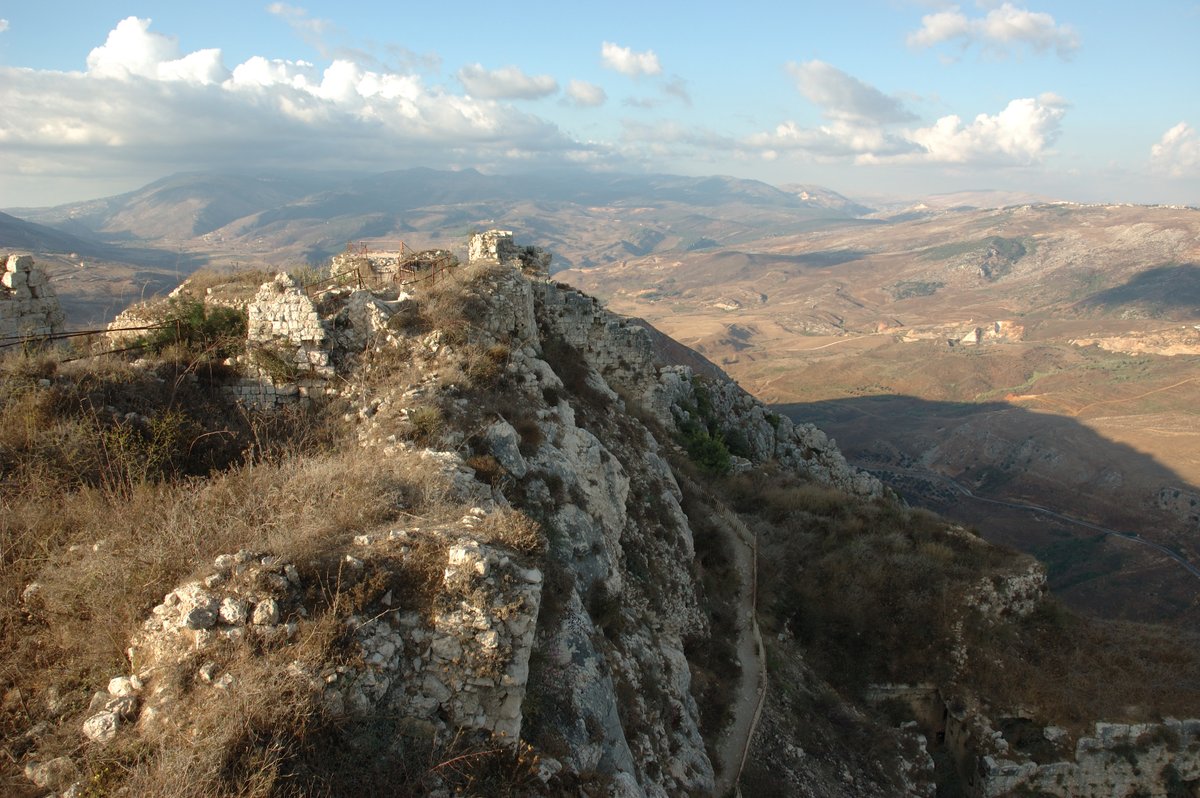
The raiders were quickly put to flight, but Saladin rode out to assist them with his main army. He surprised the knights strung out and disorganized from the pursuit, separated from their supporting infantry, and inflicted heavy losses on them.
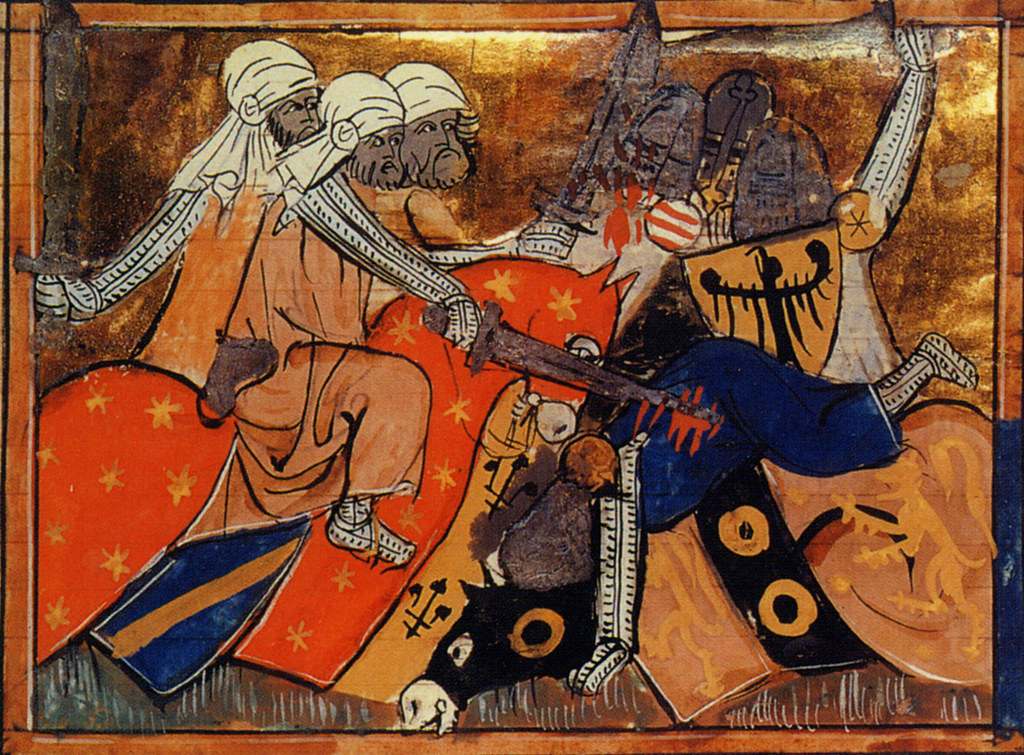
This victory gave him an opening to destroy the important border castle at Jacob’s Ford. The Franks had reconstituted their army and received reinforcements, so Saladin contented himself with this limited, but important, accomplishment for the season.
https://twitter.com/byzantinemporia/status/1525838236723122185
The Franks were getting very good at rapid mobilization, allowing them to march out and meet his incursions. By maintaining good discipline, they could deny him a decision while running out the clock.
They did this successfully in 1182…
They did this successfully in 1182…
https://twitter.com/byzantinemporia/status/1675988583977562113
…and again in 1183.
https://twitter.com/byzantinemporia/status/1675989326096740352
After each of these failures, he tried following up with a secondary objective.
In 1182 he launched a lightning raid on Beirut, a gamble whose ultimate failure brought little downside, but would have been a great coup had it succeeded.
In 1182 he launched a lightning raid on Beirut, a gamble whose ultimate failure brought little downside, but would have been a great coup had it succeeded.
https://twitter.com/byzantinemporia/status/1415668337124728832
…and after the 1183 campaign he besieged the castle of Kerak, which guarded the desert route between Syria and Egypt. This too failed when a relief army arrived, but it gave him an idea.
https://twitter.com/byzantinemporia/status/1411017267358355457
Every previous campaign had failed because he was unable to destroy the Frankish army. Their combined-arms tactics were too difficult to defeat, and they maintained discipline even in the face of enormous pressure.
But what if he could bait them onto unfavorable ground?
But what if he could bait them onto unfavorable ground?

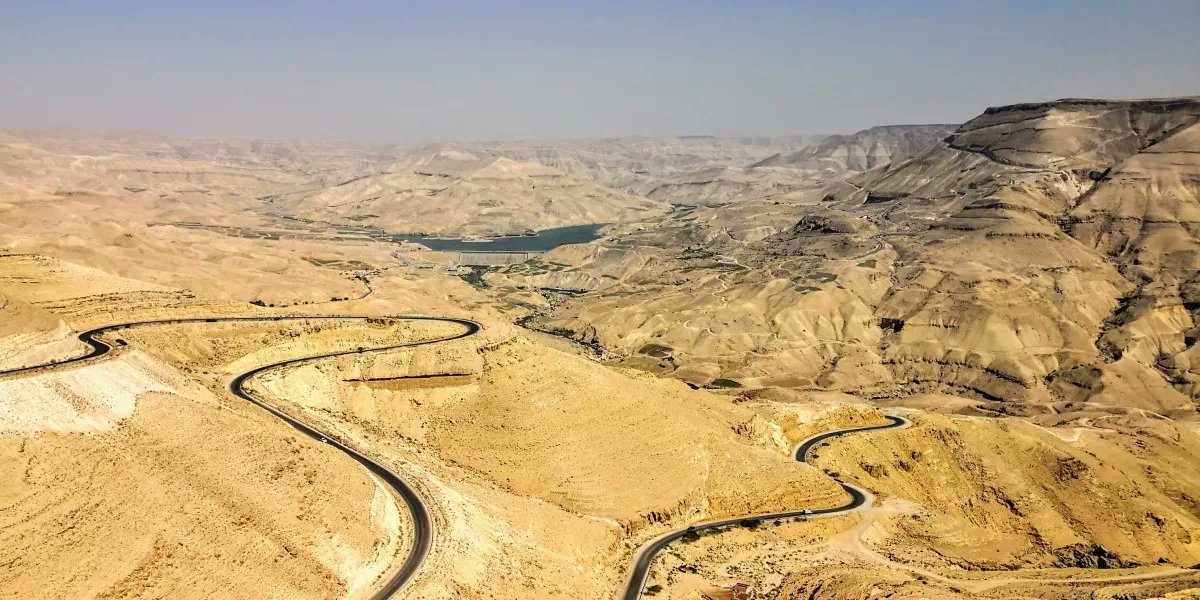
That is exactly what he tried in 1184: this time, he opened the campaign with a siege of Kerak, hoping to destroy the relief army in the open desert.
As it happened, the Franks managed to slip by him to Kerak without giving battle. But it was a sufficient proof-of-concept.
As it happened, the Franks managed to slip by him to Kerak without giving battle. But it was a sufficient proof-of-concept.
In between these campaigns, Saladin had also been fighting his Muslim neighbors to the north. He annexed Aleppo in 1183 and made Mosul a vassal in 1186, increasing the number of soldiers he could call on. In 1187 he assembled his largest army yet, some 40-45,000 strong.
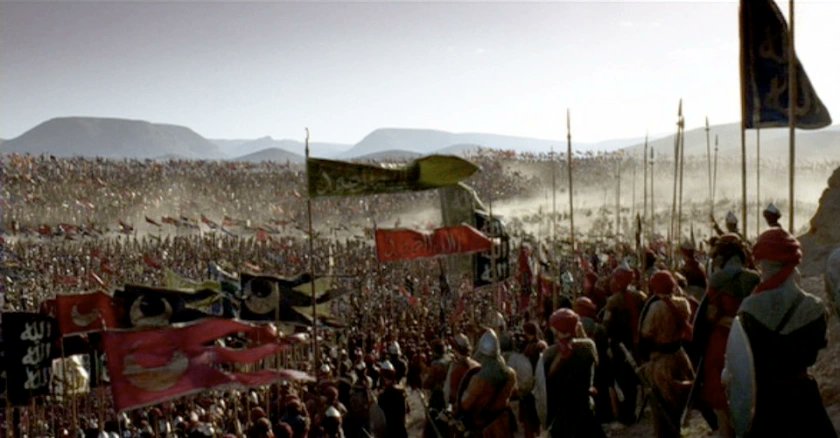
He knew that if he simply marched into Palestine with this force, the Franks would yet again refuse battle and he would soon be forced to withdraw. So this time, he opened the campaign by besieging the important frontier town of Tiberias.

Bitter internal rivalries had riven the Kingdom of Jerusalem since the previous year, which poisoned their decision-making process. King Guy gave in to the most aggressive faction and decided to march out from Sephorie to Tiberias’ relief.
https://twitter.com/byzantinemporia/status/1423680721336651777
It must be said that none of the Crusaders’ options were good. Even if they resisted the temptation to march out, they only had 20-23,000 men—about half Saladin’s number. He could easily screen their forces at Sephorie while moving on to capture other settlements in the Kingdom.
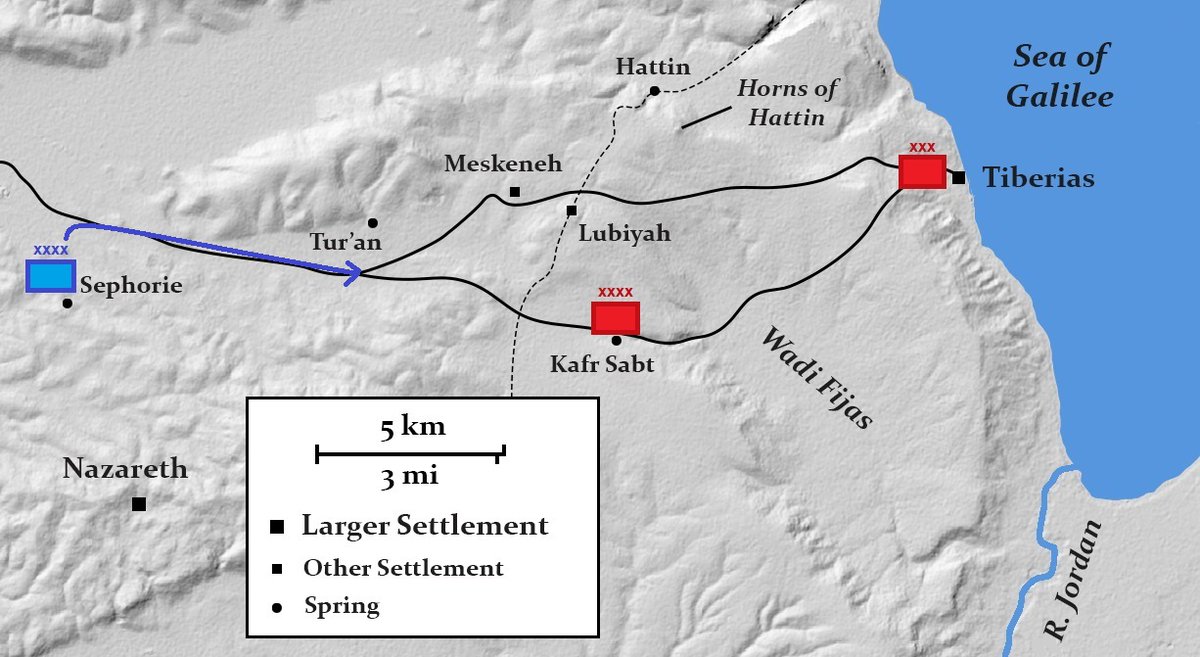
Saladin had left most of his army at Kafr Sabt while a smaller siege force invested Tiberias on 2 July. Before dawn on the 3rd, the Crusaders marched out from Sephorie.
Saladin immediately rejoined his main army and positioned them along the road.
Saladin immediately rejoined his main army and positioned them along the road.
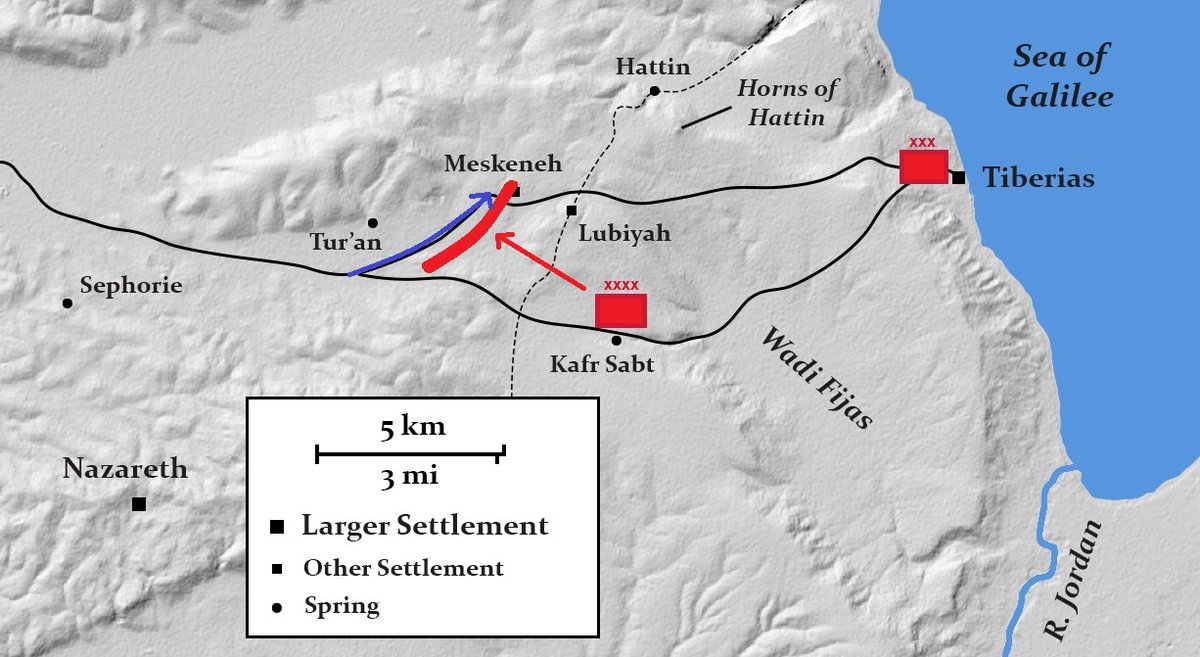
The Crusader column was divided into three corps, each in its usual march formation: spearmen forming a wall behind which archers and crossbowmen fired, protecting the cavalry which charged out when the enemy got too close.
https://twitter.com/byzantinemporia/status/1675989063025807363
Constant harassment from the Turkish horse archers slowed the army to a crawl, however, and it had to stop at the village of Lubiyah for the night.
The day had been hot and dry, but there was no relief: Saladin’s men had emptied the cisterns, and spent the night harassing them.
The day had been hot and dry, but there was no relief: Saladin’s men had emptied the cisterns, and spent the night harassing them.
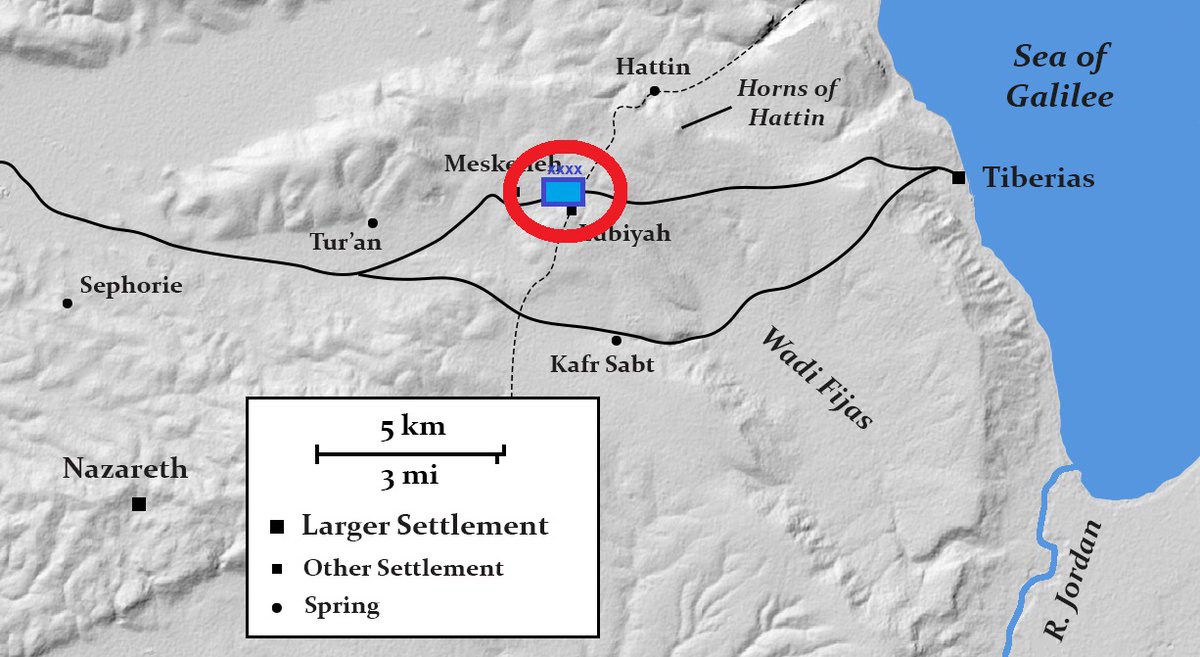
After a sleepless night, the Crusader host set off on the morning of July 4. Raymond of Tripoli in the vanguard soon realized the thirsty army would never make it Tiberias, so he took a detour over the hills on their left to the village of Hattin, which had a large spring.
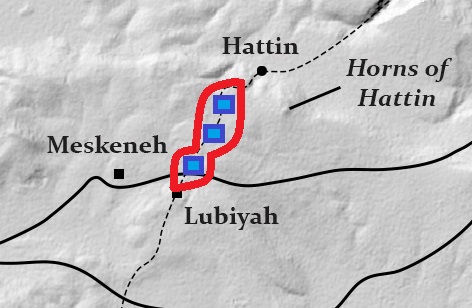
This was the best of bad options, but it didn’t work. Saladin redoubled his attacks on the rearguard, which counterattacked with charges to their rear. This forced the entire column to slow down lest a fatal gap open up and the individual parts get surrounded.
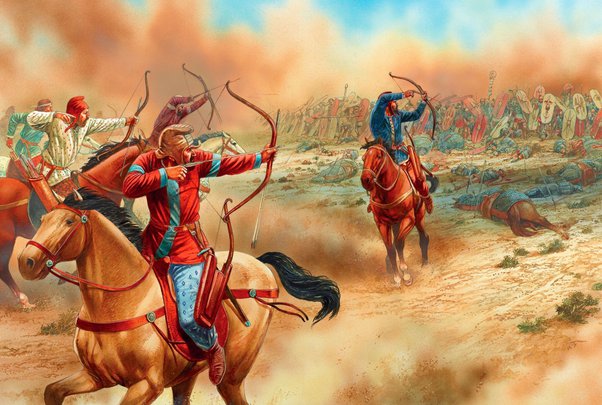
The Franks’ only hope was to break through to Hattin. Raymond led a charge through the enemy cordon in front of him, but they simply opened a gap in their ranks to let him pass, then closed up behind him.
Left isolated, he had no choice but to flee the battlefield altogether.
Left isolated, he had no choice but to flee the battlefield altogether.
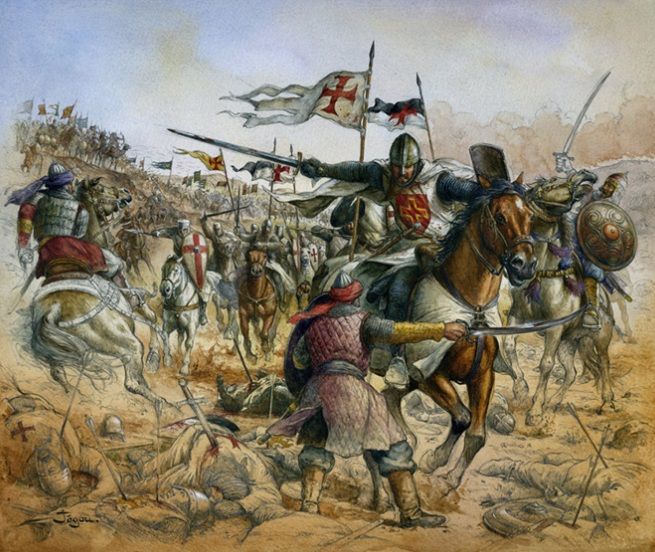
Order soon broke down in the Christian ranks. Muslim cavalry broke open the lines of infantry, resulting in a slaughter.
A few holdouts, including the king, made a last stand on the Horns of Hattin, but they too were eventually captured. All told, a few hundred at most got away.
A few holdouts, including the king, made a last stand on the Horns of Hattin, but they too were eventually captured. All told, a few hundred at most got away.
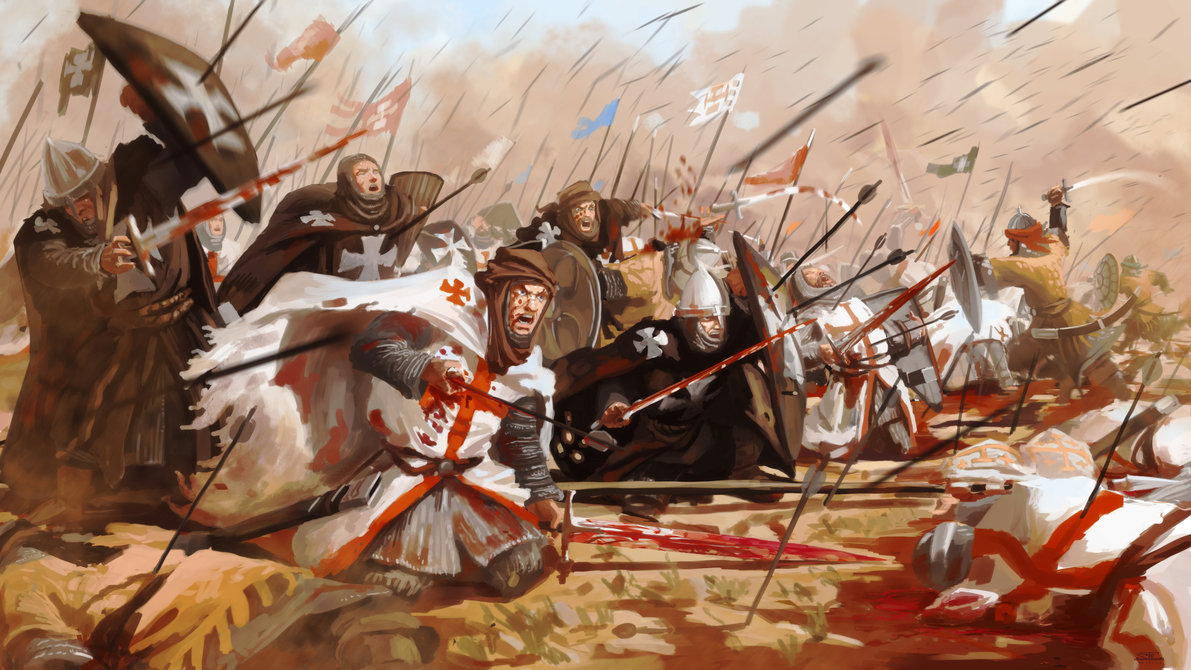

The tactics which won Saladin a resounding victory at Hattin were little different from those which had failed in 1182 and ’83, and which would fail again in ’90 and ‘91.
It was not his tactical ability that won him such a triumph, but his ability in operations and strategy.
It was not his tactical ability that won him such a triumph, but his ability in operations and strategy.

Hattin was won by a combination of factors, most of which were decided off the battlefield: he had built up a massive army and sowed discord among the Crusader leaders; his plan ensured he would either conquer towns and castles or fight on very favorable ground.
Saladin’s victory in 1187, and his qualified success in containing the counteroffensive of the Third Crusade, was the result of decades of empire-building and experimenting with campaign plans. Read 'Saladin the Strategist' for the full story: amzn.to/43e9dIF
• • •
Missing some Tweet in this thread? You can try to
force a refresh