Suspending my Twitter break for a wee 🧵 on the Mermaids v LGB Alliance decision:
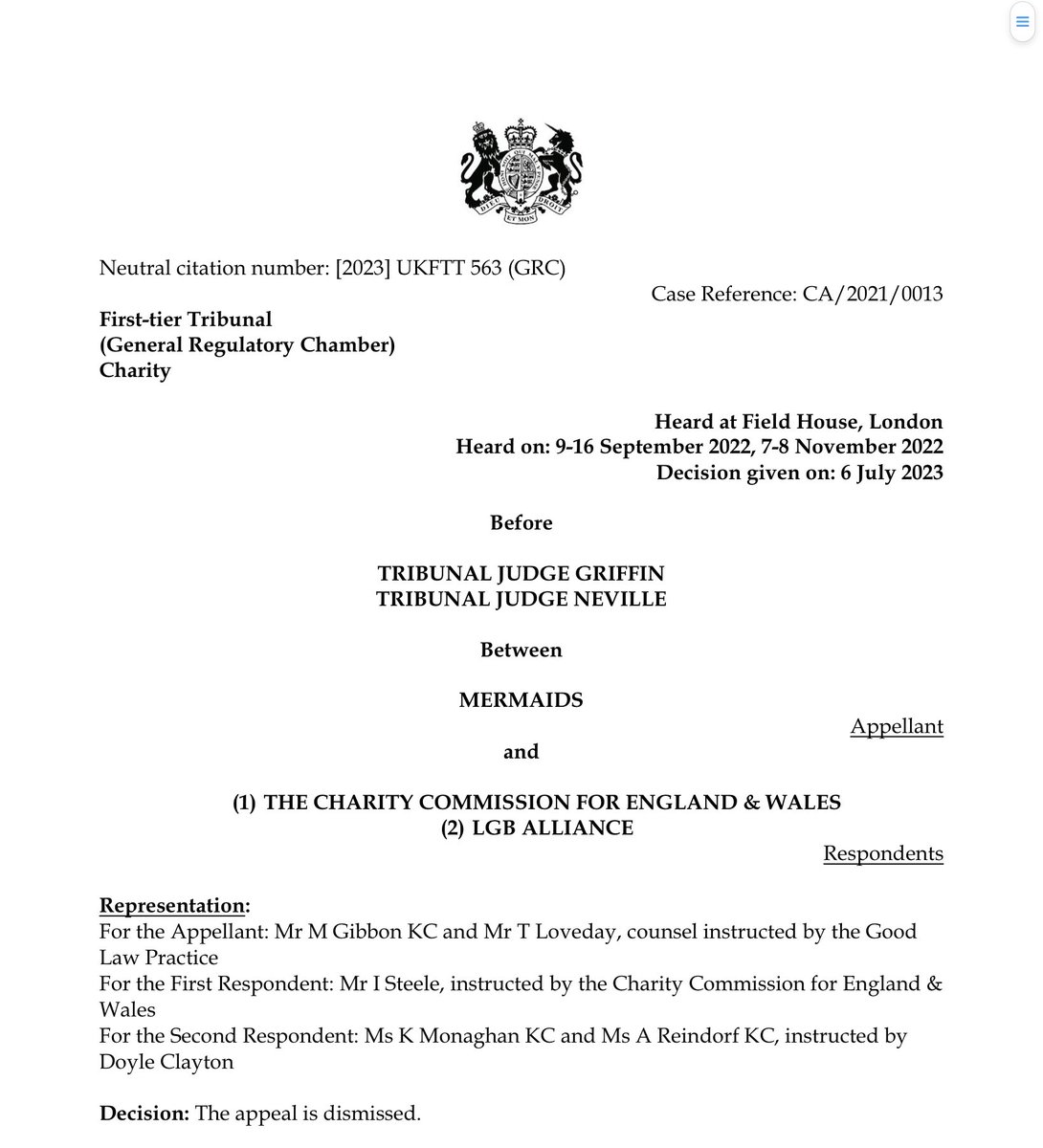
The first thing to note here is that the respondent is not principally LGB Alliance, it’s the Charity Commission for England and Wales. The core of this case is the decision of the Charity Commission to register LGB Alliance as a charity.
The Charity Commission is the expert body here and enjoys a presumption that it’s decisions are valid, lawful, and correct. But there is scope for some people to challenge a decision to register a charity IF (and only if) you have standing to do so.
If you have standing - the legal right - to challenge the decision of the Charity Commission, it will be a full merits appeal. This means that the decision will be remade by the tribunal. That’s a big thing. It’s not asking whether the decision was lawful, it’s remaking it.
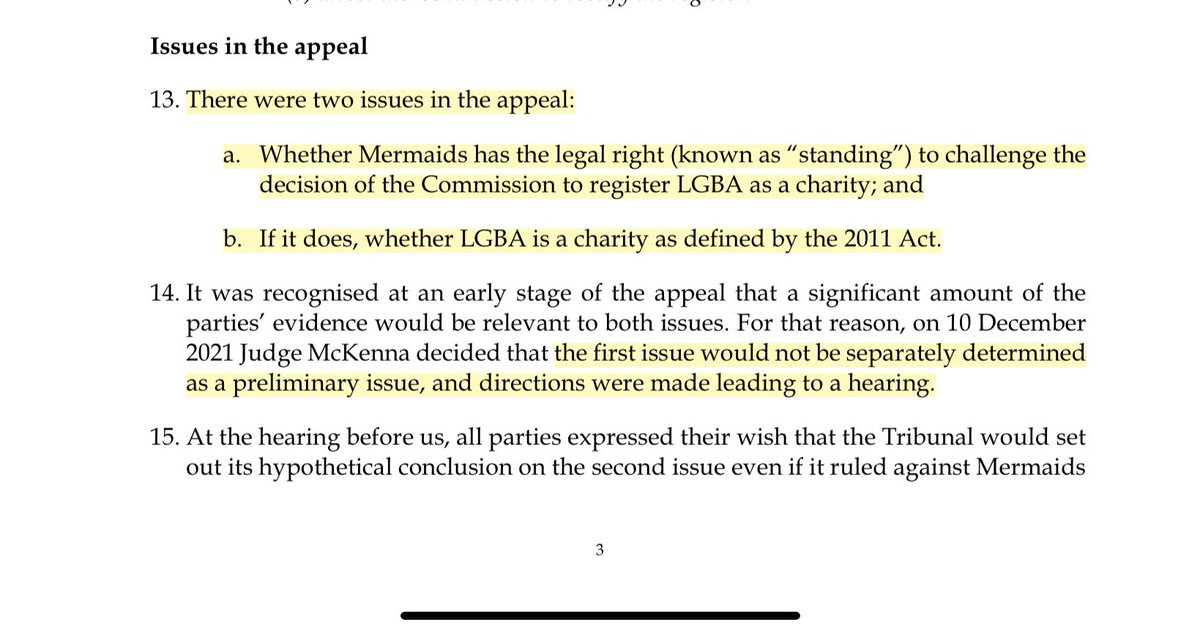
There is no general right for just anyone to do this, for obvious reasons. The presumption is that the Commission is the primary decision maker. It would be an administrative nightmare if every decision to register a charity could be appealed to the courts by anyone who disagrees
So you need to have express permission to do this. The Charities Act 2011 sets out who can bring a challenge to a decision to register a charity: the Attorney General or persons set out in schedule 6 of the Act.
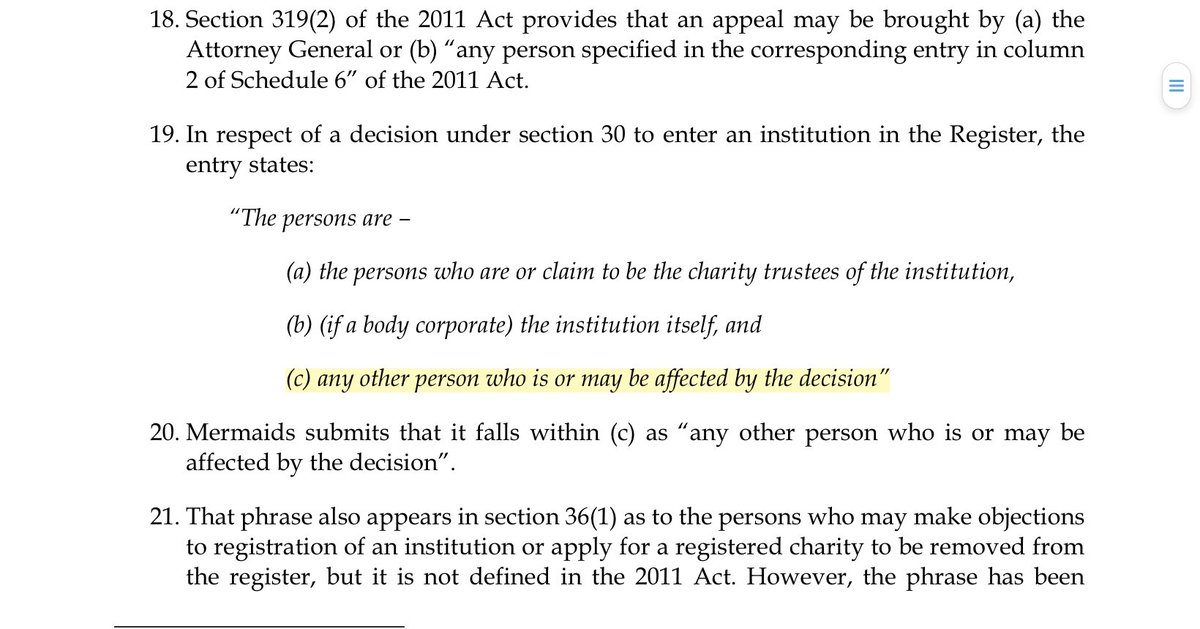
Mermaids has claimed that it has standing because it is affected or may be affected by the decision to register LGB Alliance as a charity. The tribunal in this case concluded that it does not have standing and so had no legal basis to bring this challenge.
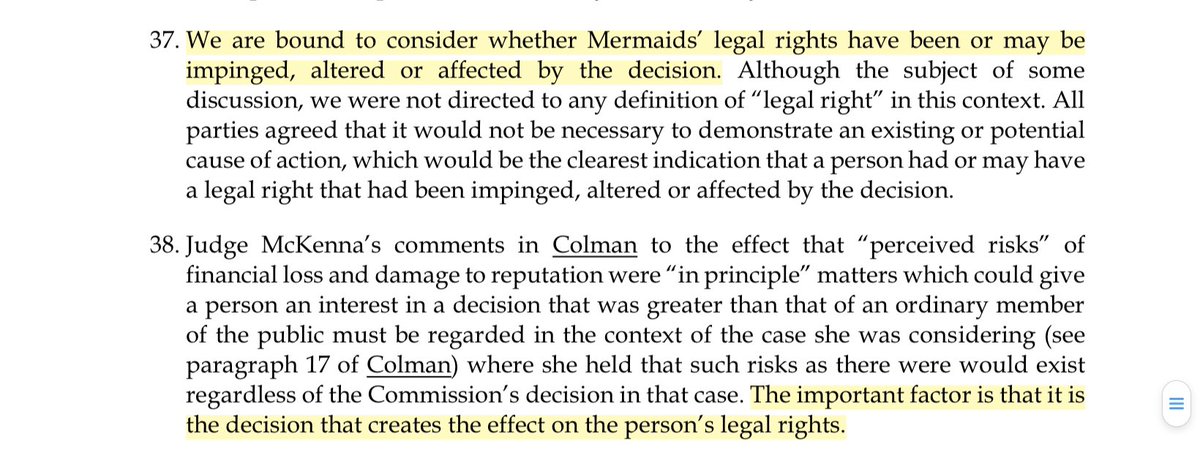
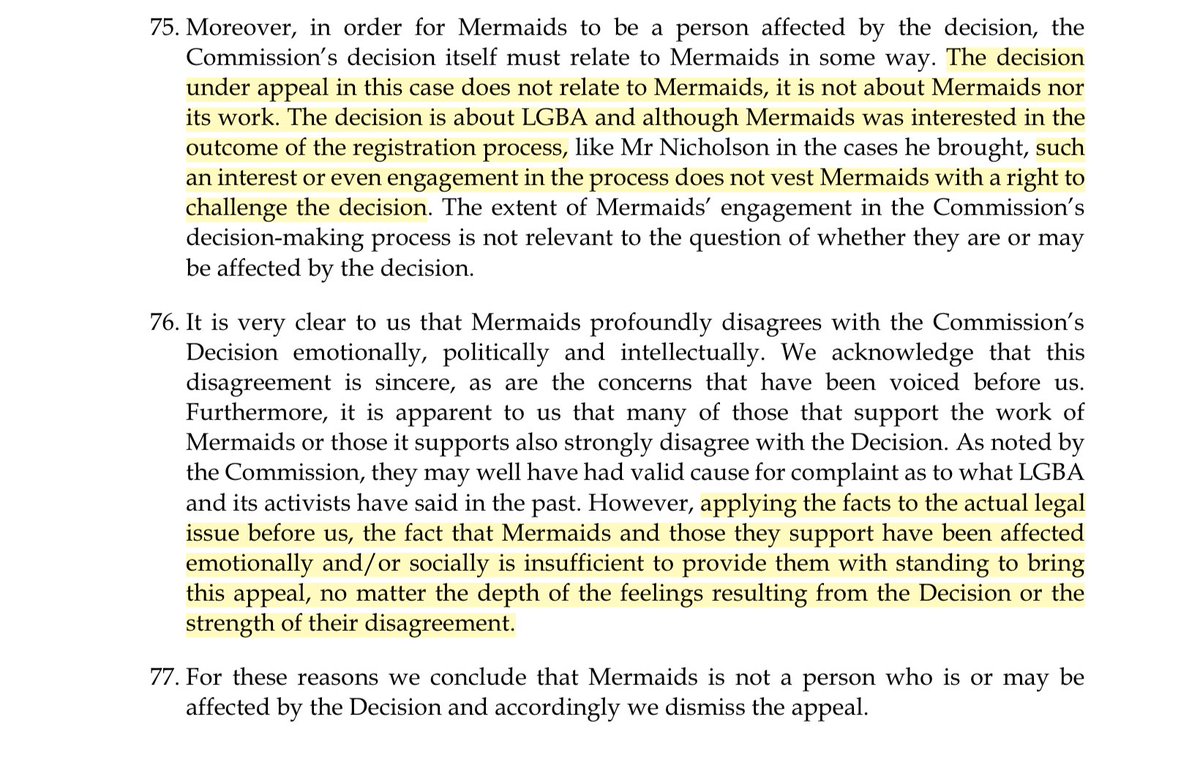
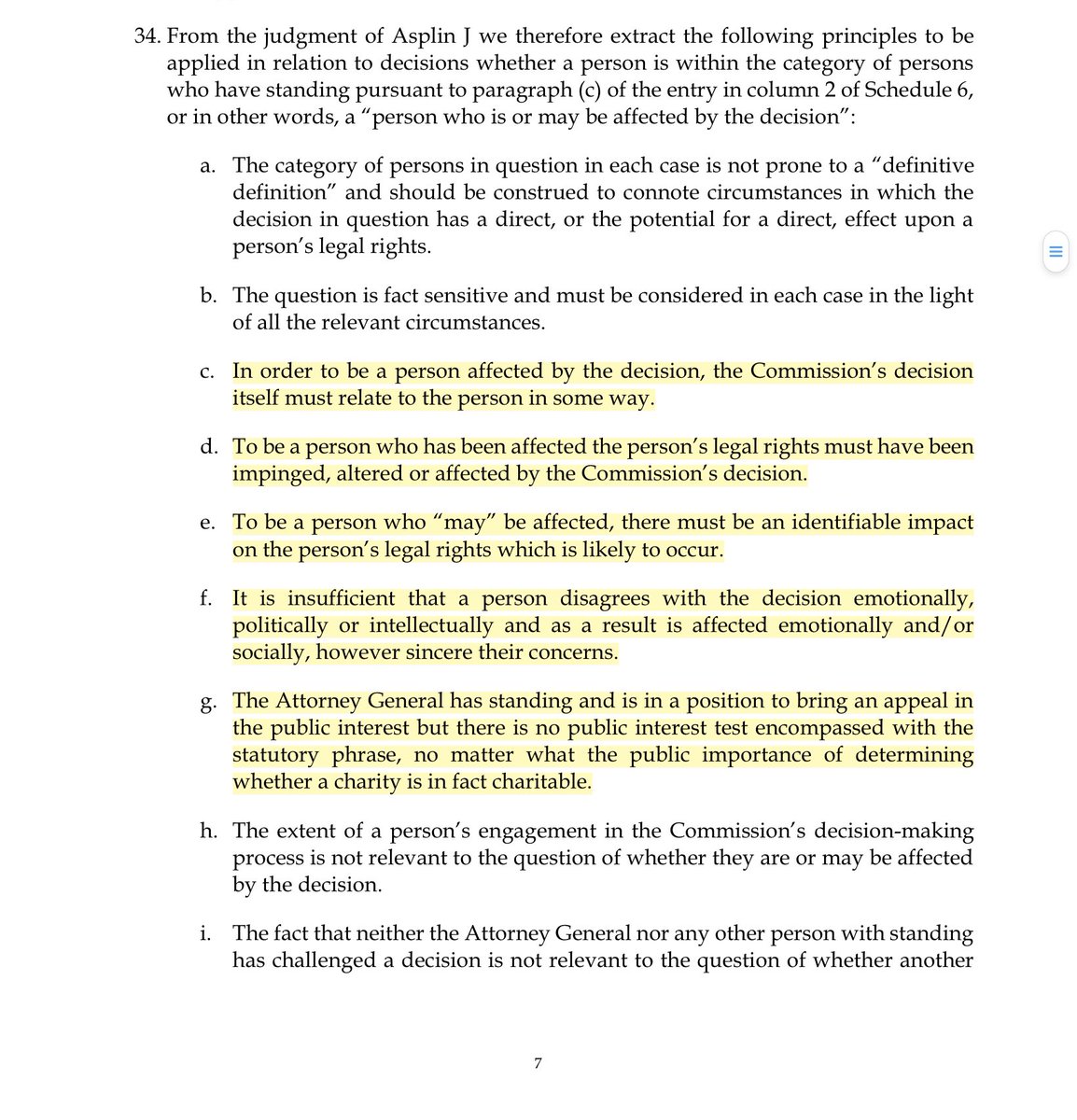
The tribunal came to this conclusion because it accepted that in order to be affected by a decision, the registration of LGB Alliance must have had an identifiable impact upon Mermaids’ legal rights:
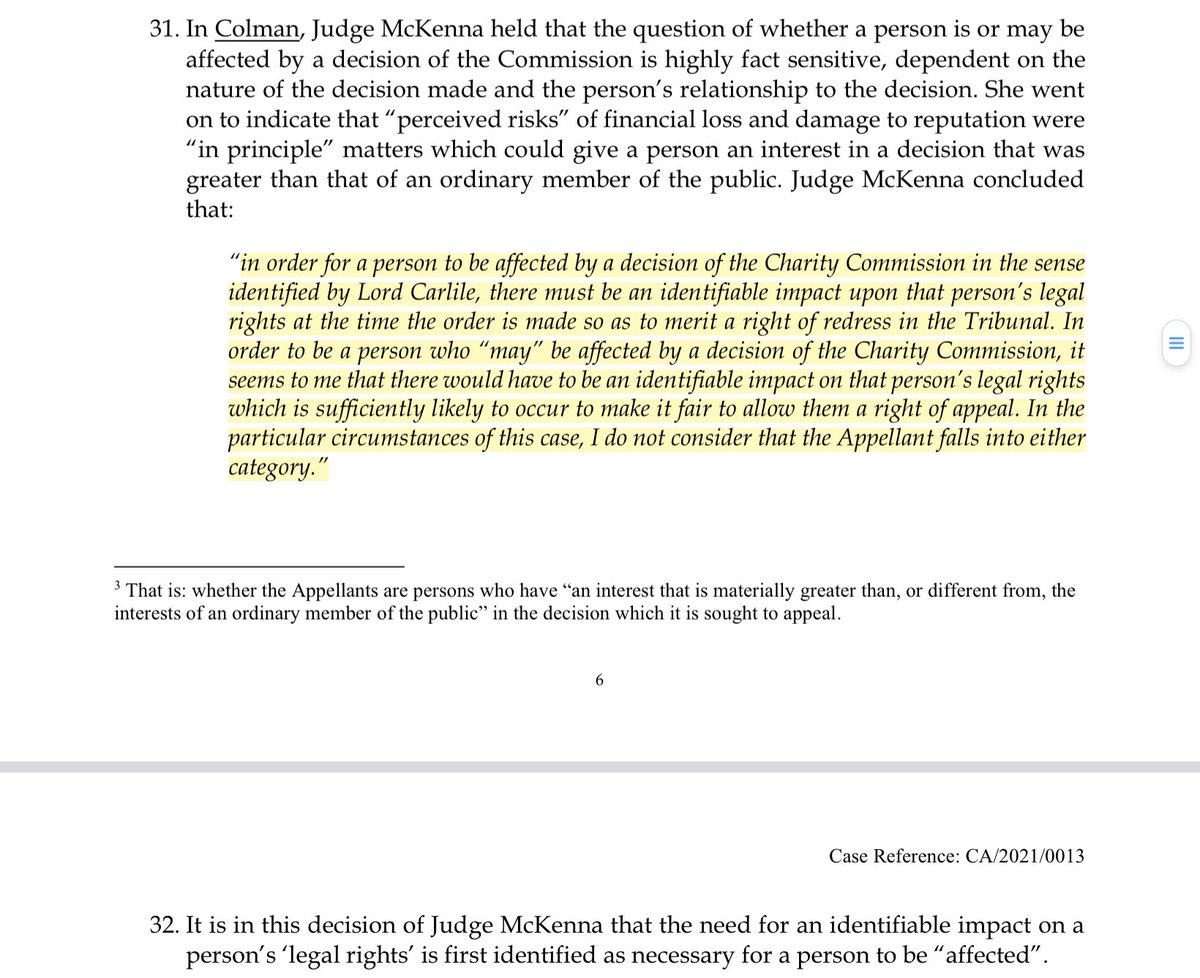
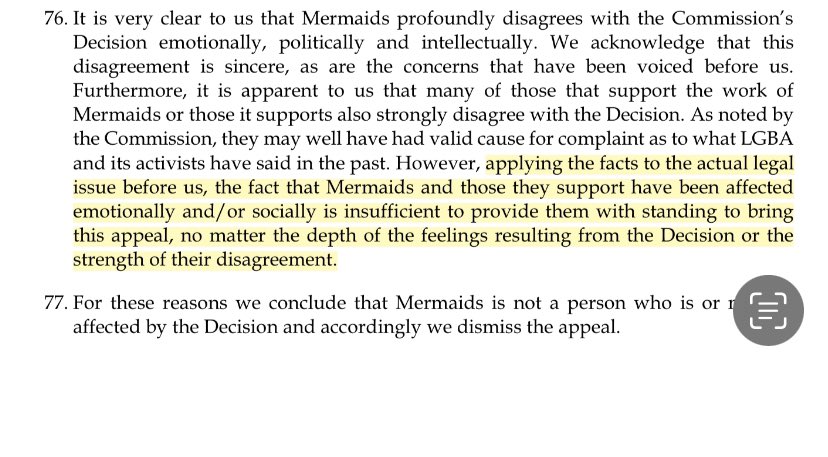
So now the onus is on Mermaids to establish that it’s legal rights were affected by this decision. The Tribunal made it clear that merely disagreeing with the decision, emotionally, politically, or intellectually is not sufficient.
Mermaids made two arguments. Firstly that making LGBA a charity will give it access to funds that will allow it to criticise Mermaids more effectively. The Tribunal concluded that Mermaids has no legal right to be free from criticism, so this isn’t an interference with its rights
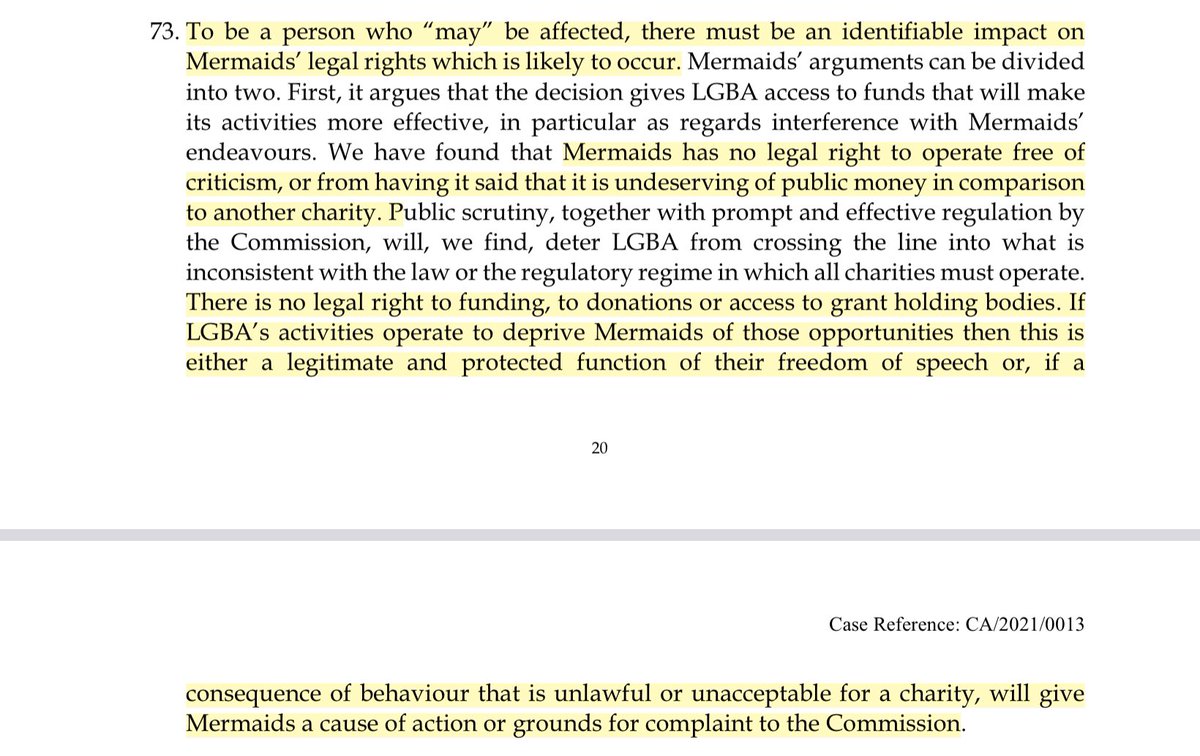
Secondly, Mermaids claimed that registering LGB Alliance as a charity will create competition with it for funding. The Tribunal dismissed this argument too. There is no legal right to have easy access to funding.
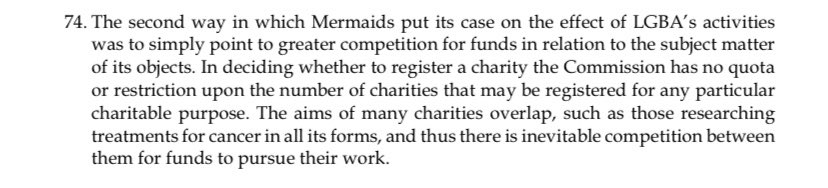
Because of this, the Tribunal concluded that Mermaids was not affected in any relevant sense by the decision to register LGB Alliance as a charity. The decision was not about Mermaids, it had nothing to do with them.
Someone affected by the decision can bring a challenge and the Attorney General has the power to do so if they think that it is in the public interest. But this is not a general right of any person who would like to get a charity deregistered.
Some have asked, if Mermaids doesn’t have standing how will anyone be able to challenge the decision to register it as a charity? The response is clear: there is no general right to get a court to retake the decisions of the Charity Commission just because you disagree with it.
• • •
Missing some Tweet in this thread? You can try to
force a refresh

From an equality law perspective there is no one way that any religion perceives any topic. Nevertheless many religious women feel a religious prohibition on being undressed or in intimate contexts with men outside of their families.
The law will include those women and their beliefs within the characteristic of religion and will take that seriously when assessing discrimination against those women or the equality impact of policies on them.
The same is true of women in general. While some women may be perfectly happy sharing intimate spaces with or undressing in front of biological males, many - probably most - will not. That will matter for any legal analysis of the equality impact of such policies.
Some thoughts on single-sex spaces and the question of whether they result in the exclusion of protected groups from public life. TLDR: this engages equality and inclusion concerns on both sides and that makes it complicated.
This picks up on some of what I've said in this thread. Basically, before you can decide who has been excluded and whether that is justified, you need to determine what the purpose of a single-sex space is in the first place.
Many people argue that confining single-sex spaces or services on the basis of biological sex rather than gender identity will exclude trans people from using spaces that correspond with their identity.
A short 🧵on the legal tests for something being a protected philosophical belief under the Equality Act.
In Grainger v Nicholson, Burton J set out the relevant tests. This was done in the context of determining that a conviction that climate change exists is protected under 'belief' in the Equality Act.
1. The belief must be genuinely held - it can't be something someone is pretending to believe or is manifest in trolly comments with the purpose of getting a rise out of people.
Aidan is taking some comments which in my view aren't protected under Forstater and it seems to me is using that to make some kind of guilt by association attack that I assume is aimed at undermining the beliefs which are protected: that sex is real, immutable and important.
I think there is heat, insult, smears, and disgusting comments on all sides of the sex/gender debate.
I think a lot of what is said by a lot of people arguing on twitter will not constitute protected manifestation of philosophical belief.
What that means is its not unlawful discrimination to be disciplined in work for calling someone a paedophile or a genocidaire or claiming (as happened to me) that someone is personally responsible for the murder of trans children.
An example of how there might be conflicts of rights here: a women-only space involving changing or intimate vulnerability can include trans women but doing so will exclude most Muslim and orthodox Jewish women. It will likely result in the self exclusion of many other women too.
There are all sorts of reasons why some women will not undress with or be in intimate vulnerable spaces with members of the opposite biological sex. Failure to account for that will often be a form of indirect discrimination.
The Equality Act allows for the setting up of single sex services and associations. Before you can decide what policy to adopt on enforcement you need to decide who that space is for and who will be excluded if you draw the line one way or another.
This question is asked in good faith and I think captures a way of thinking about sex and gender issues that many hold. It will reflect the compassionate sentiments of many, particularly when thinking about how they themselves would treat people. But it creates problems in law.
At an interpersonal level many people think the only polite, kind, compassionate, thing to do is to affirm the identities of trans people on the basis of self declaration and in many instances, particularly in friend groups, that really isn't going to matter.
But when you abstract this to the level of legal rights or social policy, there is the potential for this approach to conflict with the rights of others.