Read on Twitter
The Ḥanābilah and Tafwīḍ・🧵
In this thread, I will be presenting the position of the Ḥanābilah with regard to Tafwīḍ al-Maʿnā, by the permission of Allāh (سبحانه وتعالى).
In this thread, I will be presenting the position of the Ḥanābilah with regard to Tafwīḍ al-Maʿnā, by the permission of Allāh (سبحانه وتعالى).
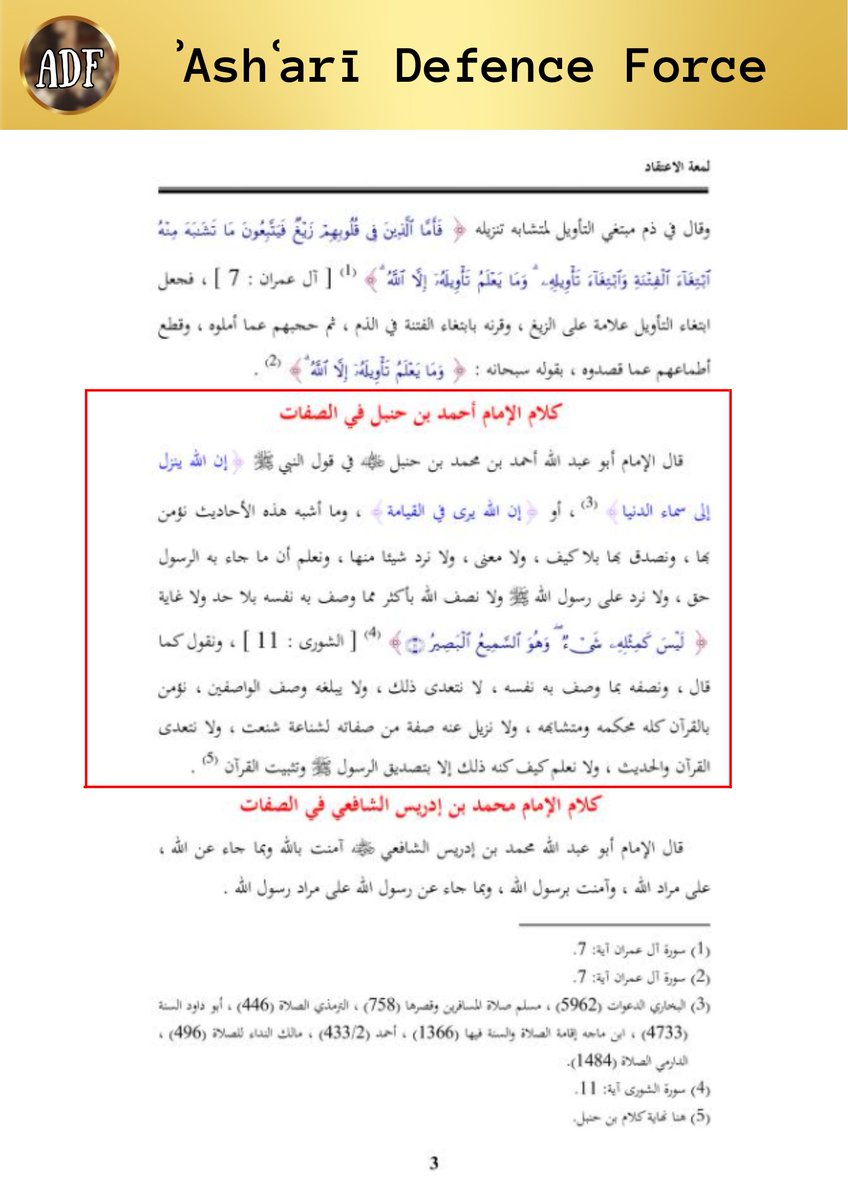
ʾImām al-Sunnah ʾAḥmad ibn Ḥanbal (رضي الله عنه) said regarding the narration of Nuzūl and other unclear narrations:
We believe in it, and we believe in it without a Kayf (modality) and no Maʿnā (meaning), and we do not reject any of it, and we know that what the-
We believe in it, and we believe in it without a Kayf (modality) and no Maʿnā (meaning), and we do not reject any of it, and we know that what the-
Messenger brought is true, and we do not reject the Messenger of Allāh, and we do not describe Allāh with more than what He has described Himself with…
╾ Lumʿat al-ʾIʿtiqād, p. 3 ╼ 📚

╾ Lumʿat al-ʾIʿtiqād, p. 3 ╼ 📚
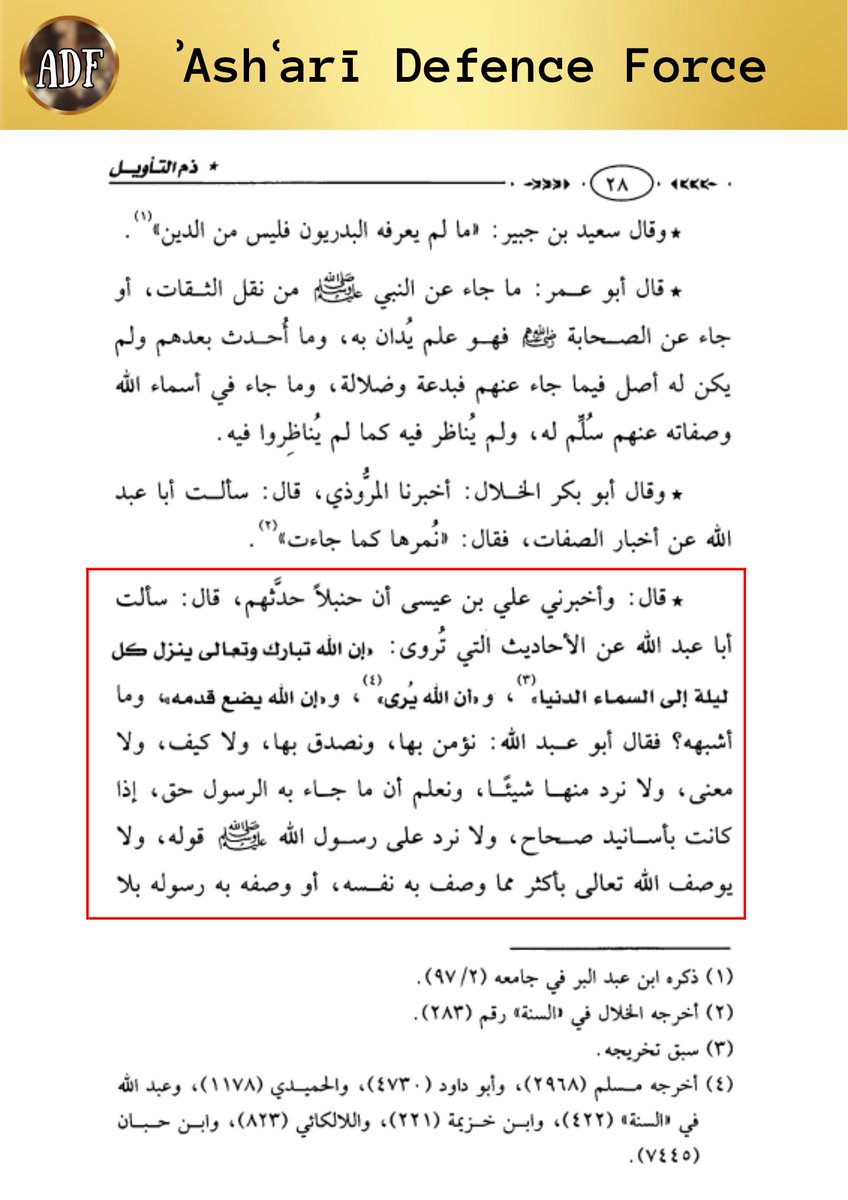
Some people claim that ʾImām ʾAḥmad (رضي الله عنه) was referring to giving them wrong meanings, and this is a far-fetched interpretation which goes against the apparent of the text of the ʾImām (رضي الله عنه).
ʾImām ʾAḥmad (رضي الله عنه) says to pass on the narrations which talk about the attributes as they came without Maʿnā (meaning) or Kayf (modality).
╾ Ḏamm al-Taʾwīl, p. 28 ╼ 📚
╾ Ḏamm al-Taʾwīl, p. 28 ╼ 📚
Shaykh al-ʾIslām Ibn Qudāmah al-Maqdisī al-Ḥanbalī (رضي الله عنه) says that the Salaf did not know the reality of the meanings of the attributes.
╾ Ḏamm al-Taʾwīl, p. 13 ╼ 📚
╾ Ḏamm al-Taʾwīl, p. 13 ╼ 📚

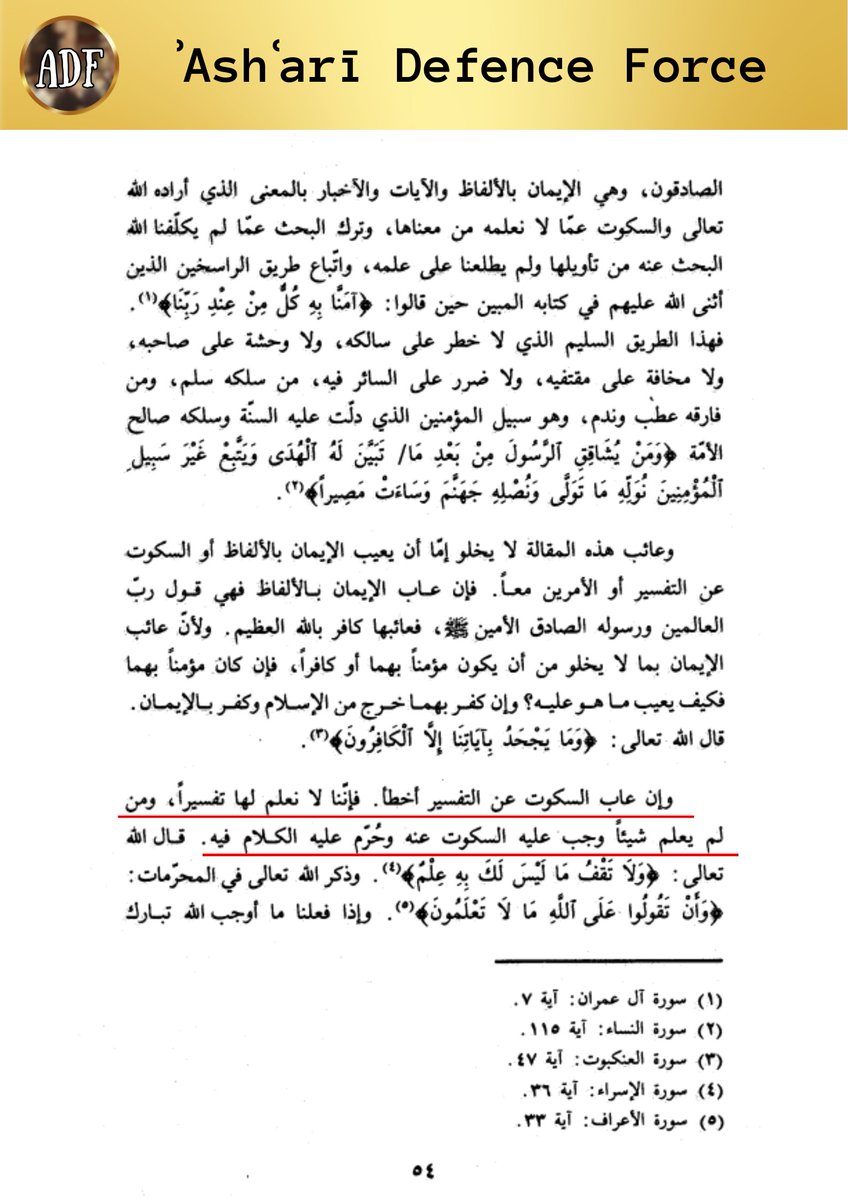
The Shaykh also mentions in another book of his that we do not know the Tafsīr (explanation) of the attributes, and that we have to stay silent regarding it, and that it is Ḥarām to speak about it.
╾ Taḥrīm al-Naẓr fī Kutub al-Kalām, p. 54 ╼ 📚
╾ Taḥrīm al-Naẓr fī Kutub al-Kalām, p. 54 ╼ 📚
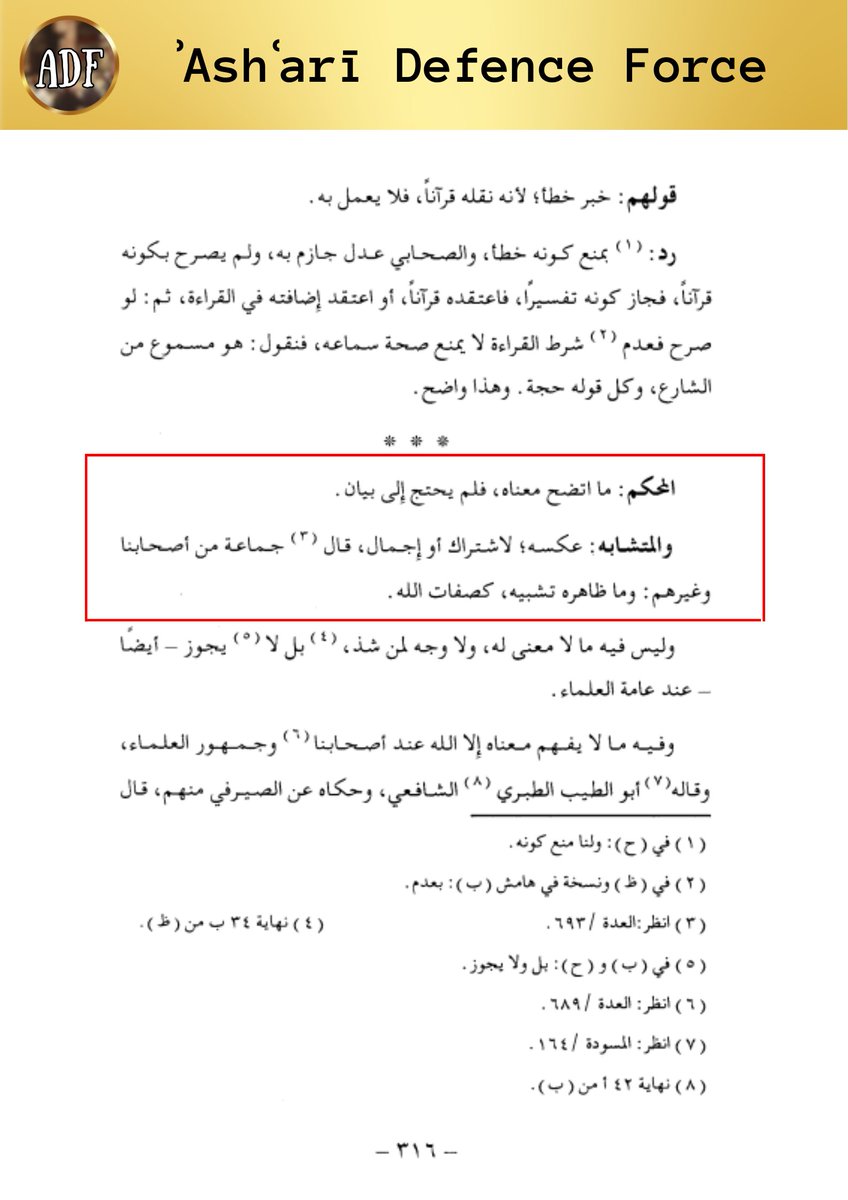
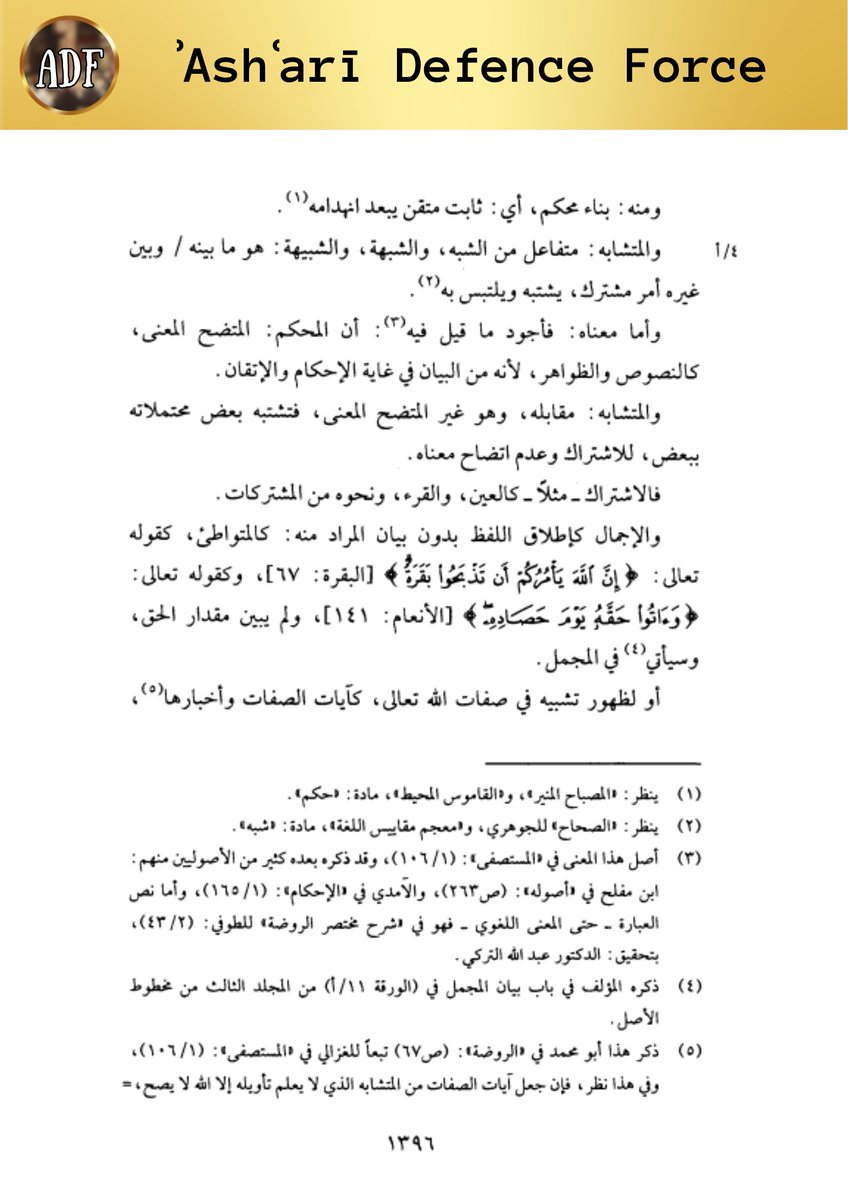
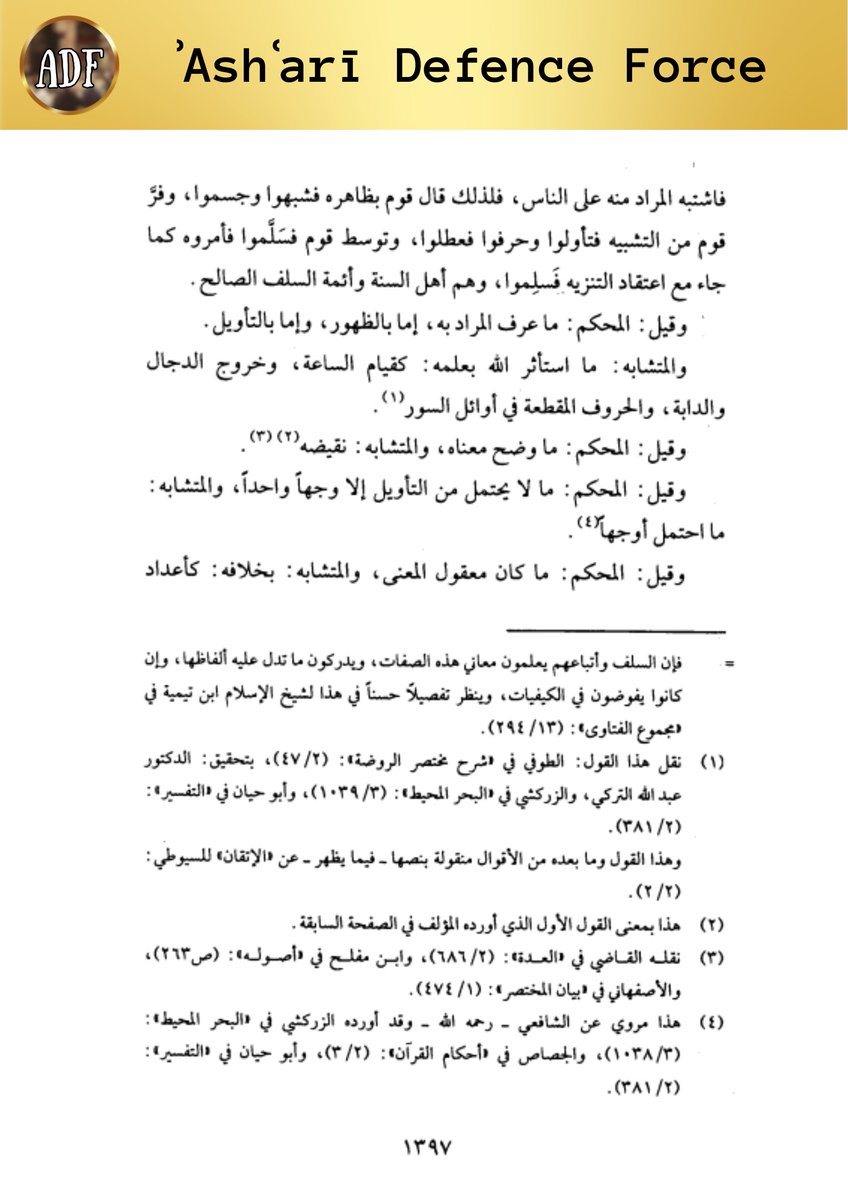
ʿAlāʾ al-Dīn al-Mardāwī al-Ḥanbalī (رضي الله عنه) said:
The correct paradigm is that the Muḥkam is that which is clear in its meaning, and the Mutashābih is its opposite, due to an association, summation, or a seeming implication-
The correct paradigm is that the Muḥkam is that which is clear in its meaning, and the Mutashābih is its opposite, due to an association, summation, or a seeming implication-
of anthropomorphism, like the attributes of Allāh... The verses of the divine attributes and their narrations, their meanings became obscure to the people, so for this reason, some people took them literally, thereby becoming likeners and among those who ascribe-
a body to Allāh, and a people fled from anthropomorphism, and deceivingly interpreted the attributes, thereby disavowing the attributes of Allāh, and some people took a middle path, so they left the meaning to Allāh and related them as they were transmitted to them, alongside-
a firm belief in incorporeality, thereby freeing themselves from blame, and they are ʾAhl al-Sunnah and the scholars of the righteous Salaf.
╾ Al-Taḥbīr Sharḥ al-Taḥrīr, 3/1395 ╼ 📚
╾ Al-Taḥbīr Sharḥ al-Taḥrīr, 3/1395 ╼ 📚

So from this, we derive that there are three types of people when it comes to the attributes according to the Ḥanābilah, and among them are two extremes. Some of the people take them literally, and thus become anthropomorphists, and others interpret them, thereby-
disavowing the attributes, and ʾAhl al-Sunnah take the middle path, so they leave the meanings to Allāh and relate the verses and narrations of the attributes as they have come, alongside a firm belief in incorporeality.
• • •
Missing some Tweet in this thread? You can try to
force a refresh