Read on Twitter
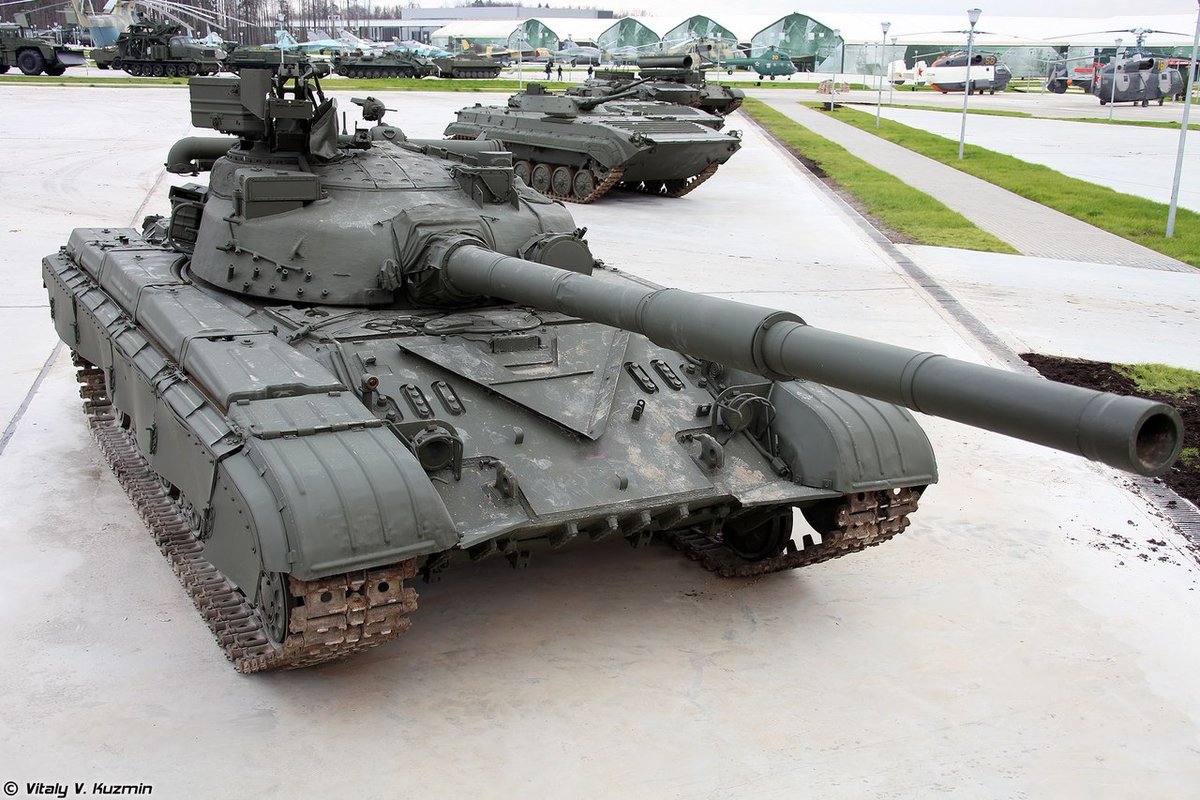
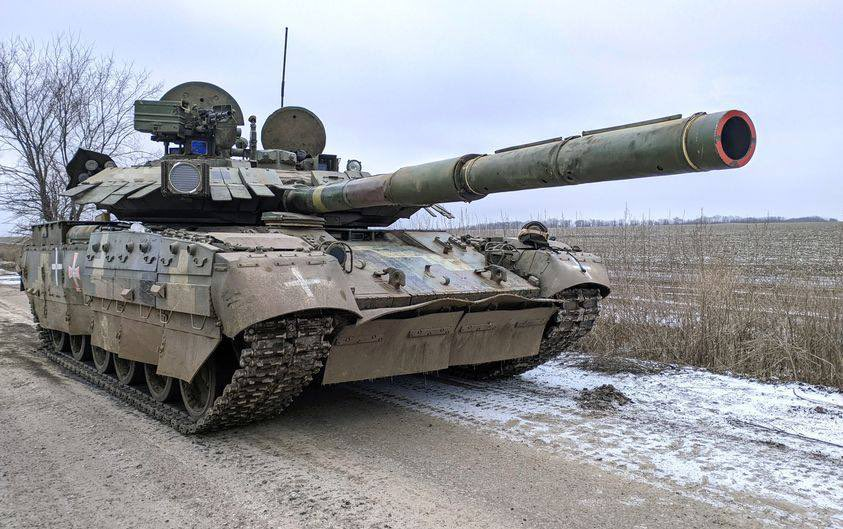
(1/24) Returning to tanks, today I'd like to talk about the Ukrainian T-72AMT. 

(2/24) Prior to 2014, Ukraine did not use T-72s in first-line ZSU units, which were equipped exclusively with T-64BVs. They did use some in training schools, like the one in Kyiv, but most were in storage or exported overseas. One of these export models was the T-72UA-1.

(3/24) The T-72UA-1 (also known as the T-72B1-1050 in some sources) had its V-84 V-12 engine replaced by the 1,050 hp 5TDFMA engine, which required modifications to the engine compartment and exhaust. It also features the Nizh shaped-charge array ERA.
https://t.co/SgMWQ643Fsbtvt-info.translate.goog/1inservice/t72…
https://t.co/SgMWQ643Fsbtvt-info.translate.goog/1inservice/t72…
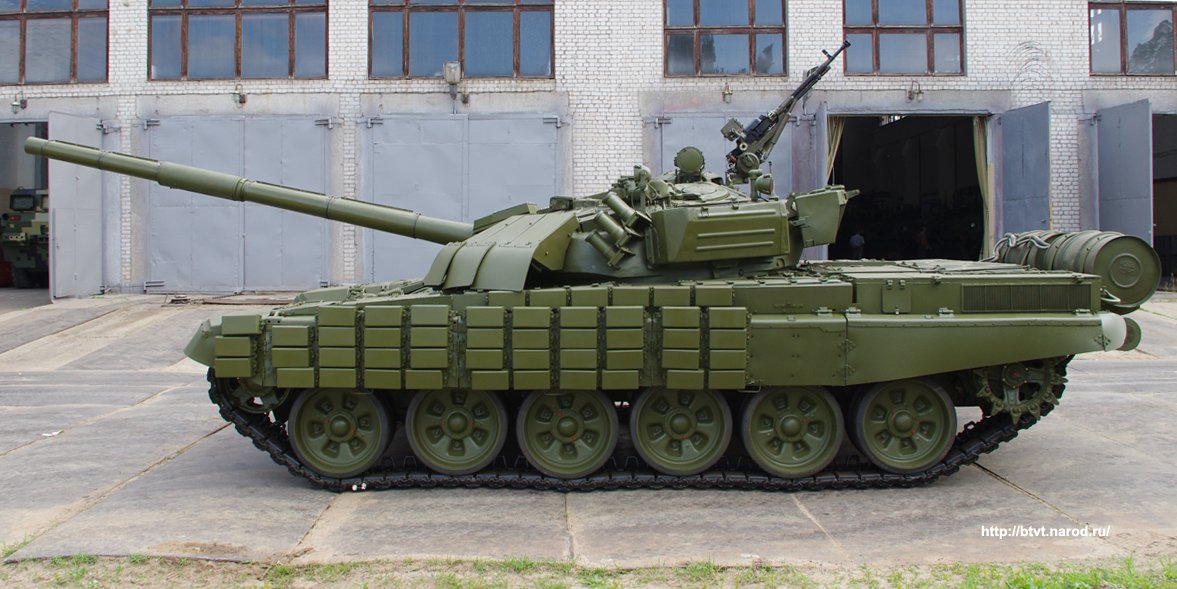


(4/24) 35 of these tanks were delivered to Ethiopia starting in 2012, who remains the only export customer of the 'UA-1.
https://t.co/b4bJiiLsgr
https://t.co/b4bJiiLsgr
https://twitter.com/imp_navigator/status/1295625848108855297
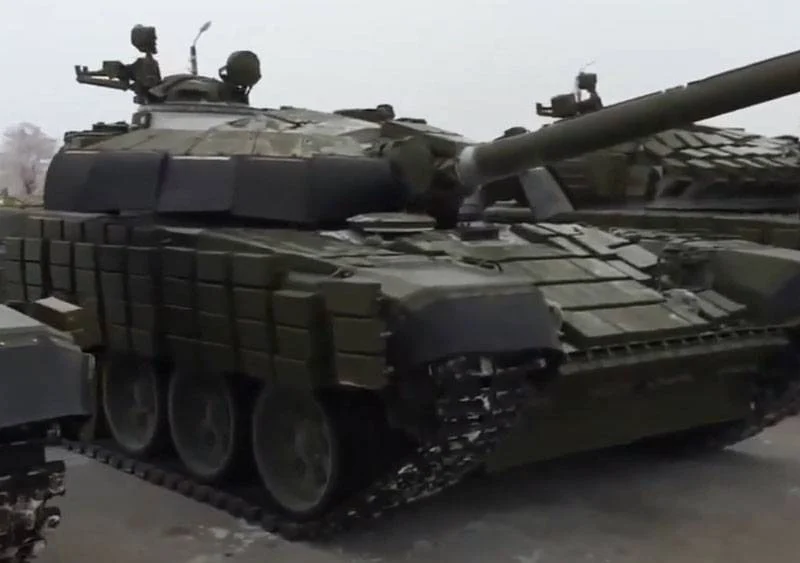

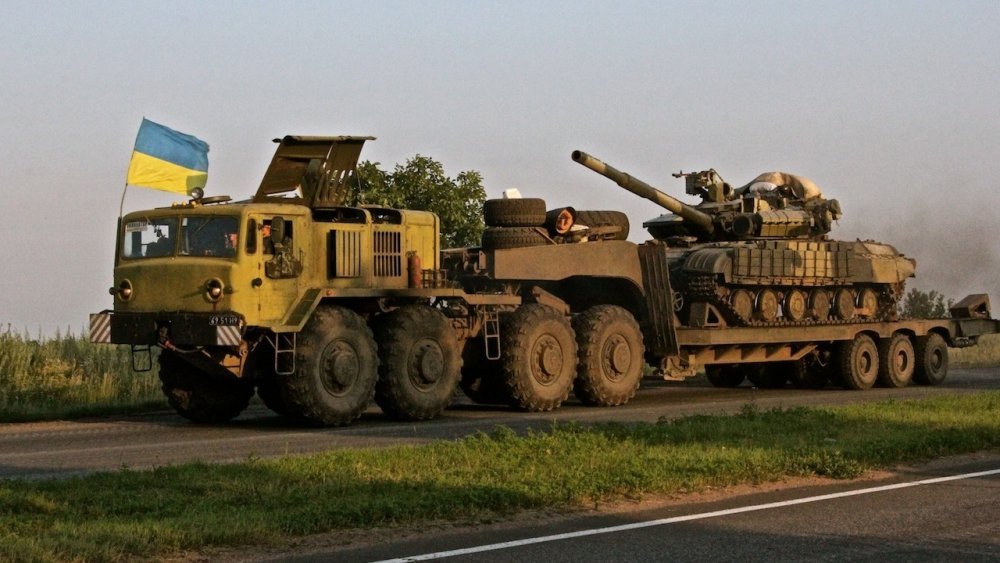
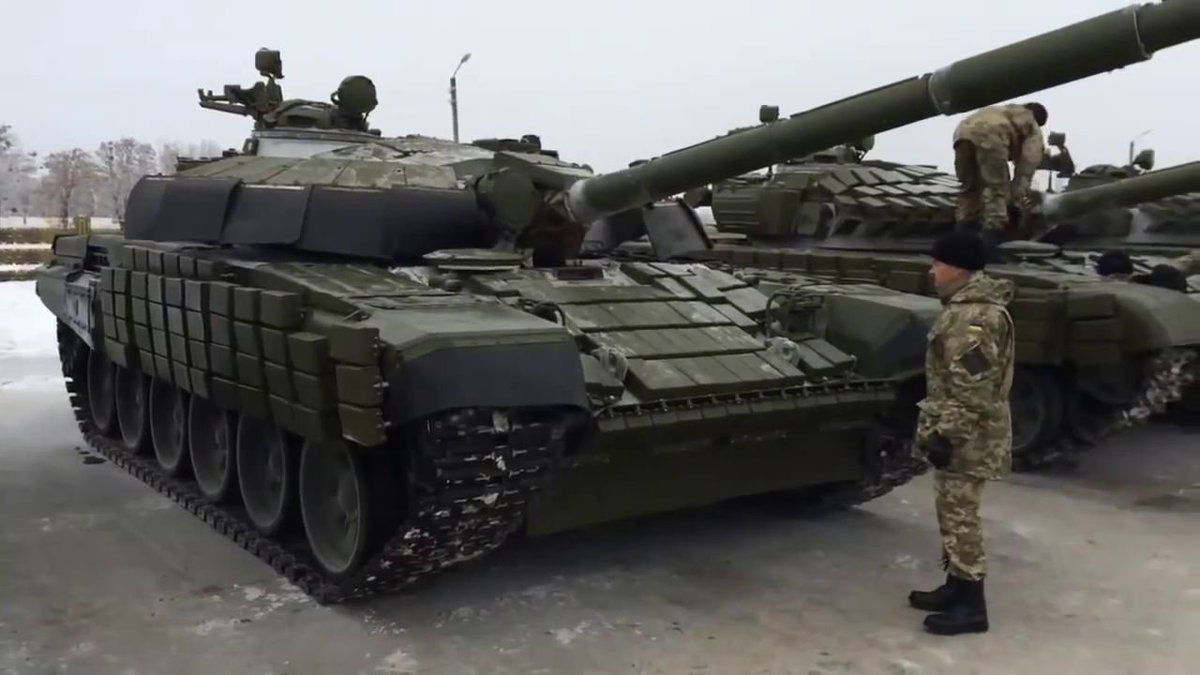
(5/24) Regardless, after 2014 it became clear that the existing T-64 stocks would not be sufficient to both replace losses and expand the Ukrainian tank force. Thus, the ZSU began receiving T-72s, including at least one T-72UA-1, in December 2014.
https://t.co/bz4b2sRvpwredpost-com-ua.translate.goog/photo/1156439-…
https://t.co/bz4b2sRvpwredpost-com-ua.translate.goog/photo/1156439-…
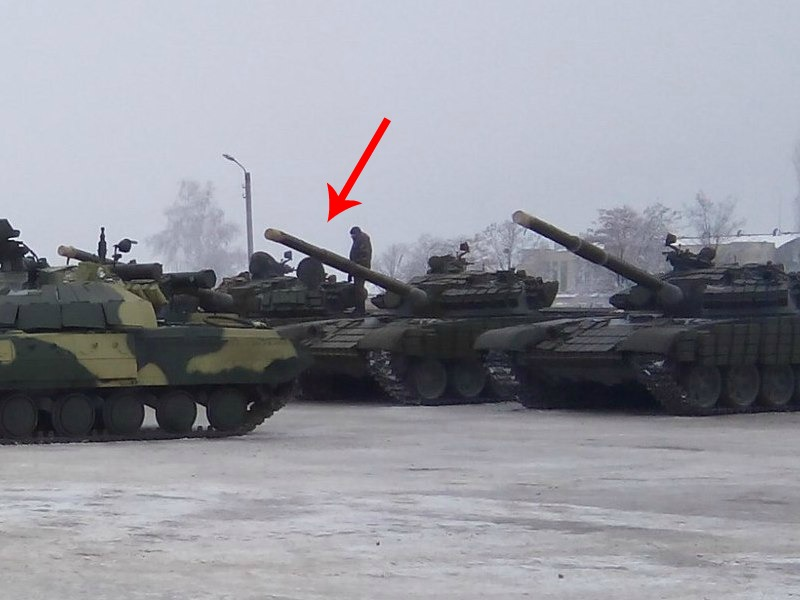
(6/24) In addition to T-72Bs, the ZSU also received older T-72AVs. I've previously talked about how Cold War vintage T-72A/Bs generally have more primitive fire control than T-64/80Bs, so this was one area where improvement was needed.
https://twitter.com/CalamineW/status/1671586693726732288
(7/24) One thing I did not mention is that the TPD-K1 / 1A40 (right) have a fixed 4x magnification setting, a disadvantage compared to the 1G42 of the Ob SUO (left), which can do 3.9–9x, especially at long ranges, as the tanker Dominikanets notes.
https://t.co/tdAiz4hCKhbtvt-info.translate.goog/3attackdefense…
https://t.co/tdAiz4hCKhbtvt-info.translate.goog/3attackdefense…
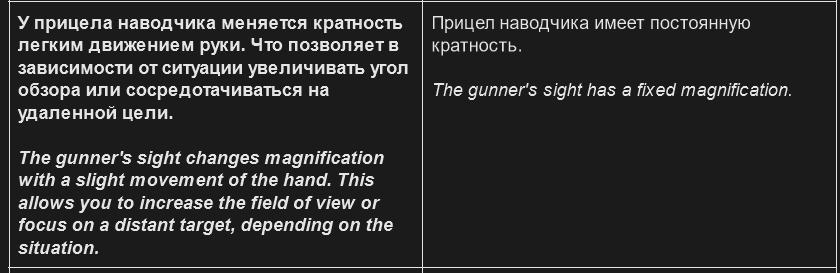

(8/24) Nevertheless, the T-72A/Bs proved quite useful and primarily equipped what were then (before 2022) reserve tank units like the 3rd Tank Brigade (3 OTBr) formed in 2016.
https://t.co/888w7dkZvImilitaryland.net/ukraine/armed-…
https://t.co/888w7dkZvImilitaryland.net/ukraine/armed-…

(9/24) In 2017, on their own private initiative, the Kyiv AFV Factory (KBTZ), the primary factory responsible for the upkeep of Ukrainian T-72s, unveiled their T-72 moderisation project, the T-72AMT.
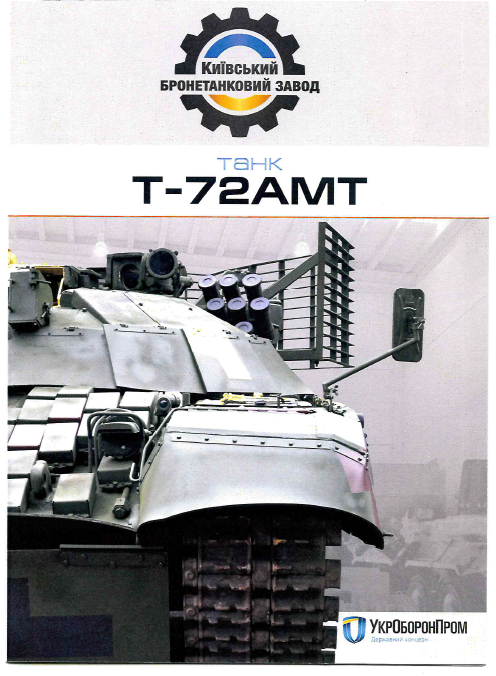
(10/24) Drawing on their experience with the T-72UA-1 (which it very clearly has some resemblance to) and other T-72 modernisation projects for export, KBTZ implemented a lot of features desired by the ZSU.

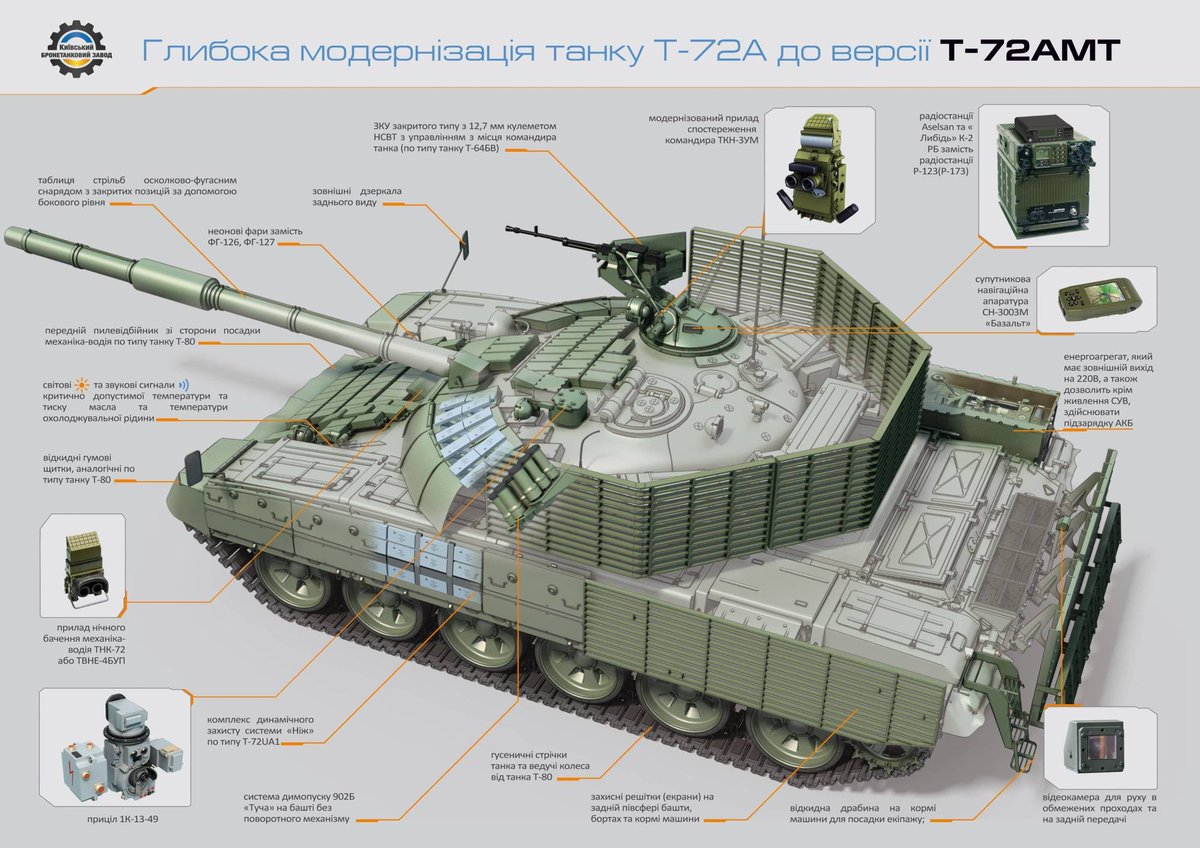
(11/) These included the T-64BV's remote controlled AAMG mounting and motorised commander cupola, replacing the virtually useless manual T-72 AAMG that required the commander to expose himself to use it...
https://twitter.com/CalamineW/status/1667074268423929857
(12/24) ...the 1K13 integrated night/missile guidance sight from the T-72B, allowing it to use the Ukrainian Kombat laser beam-riding gun-launched ATGM, thus improving its ability to fight at longer ranges...
https://t.co/NxuZt2AWJ4defence--ua-com.translate.goog/weapon_and_tec…
https://t.co/NxuZt2AWJ4defence--ua-com.translate.goog/weapon_and_tec…
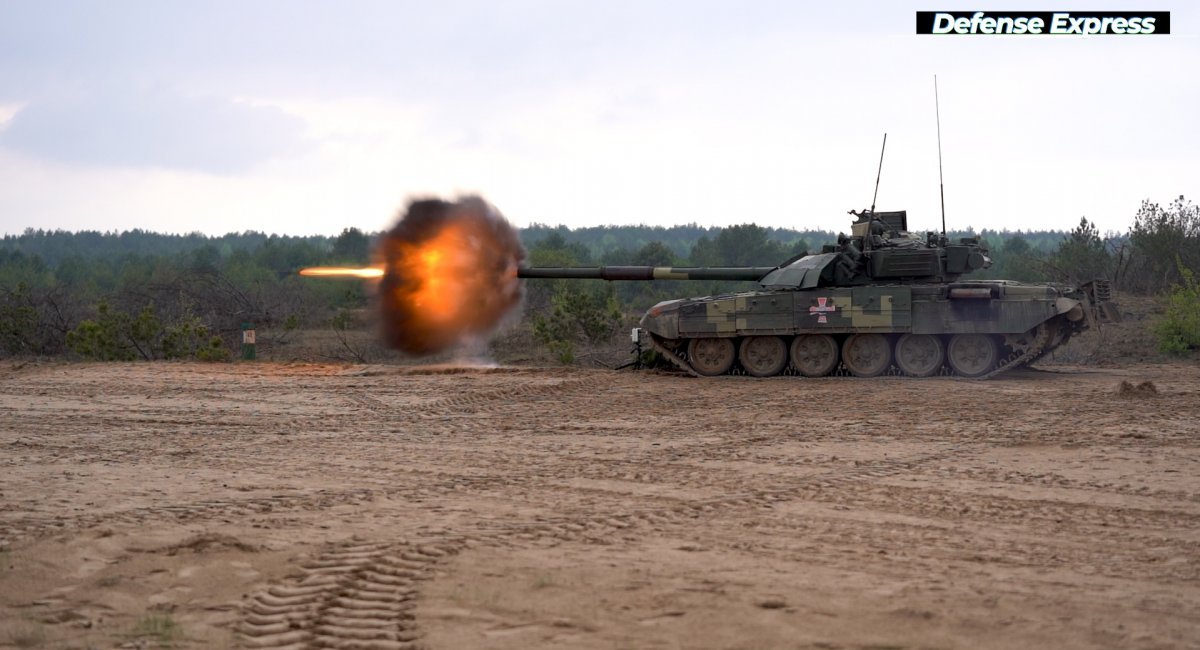
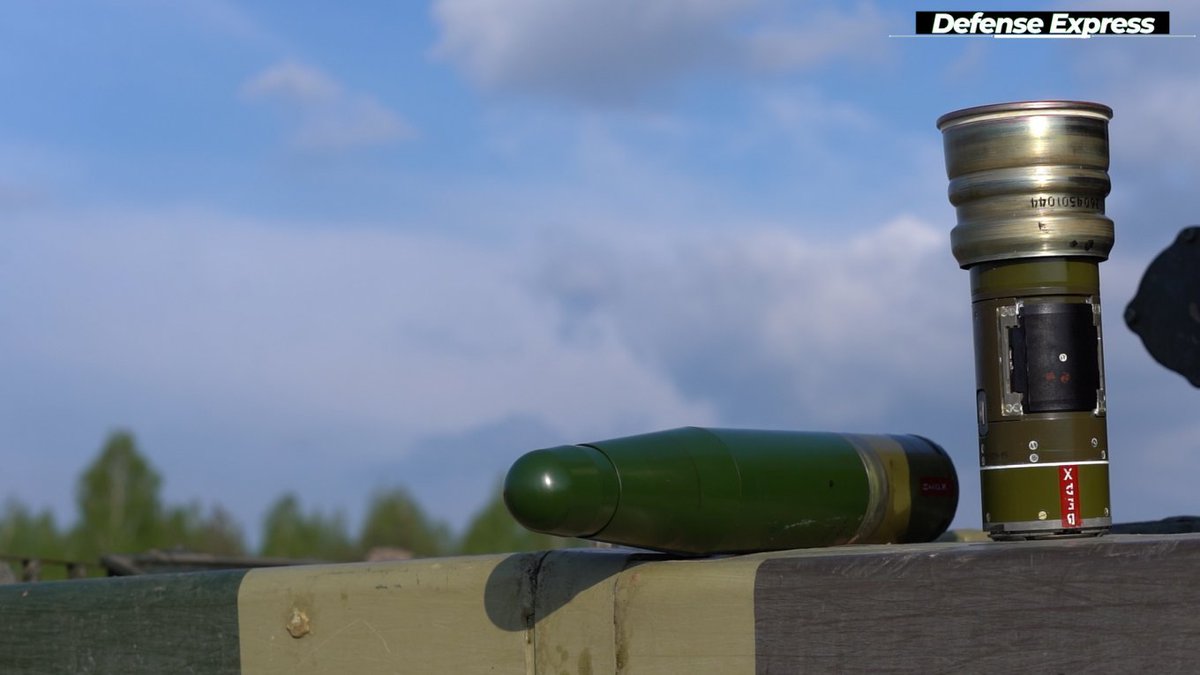
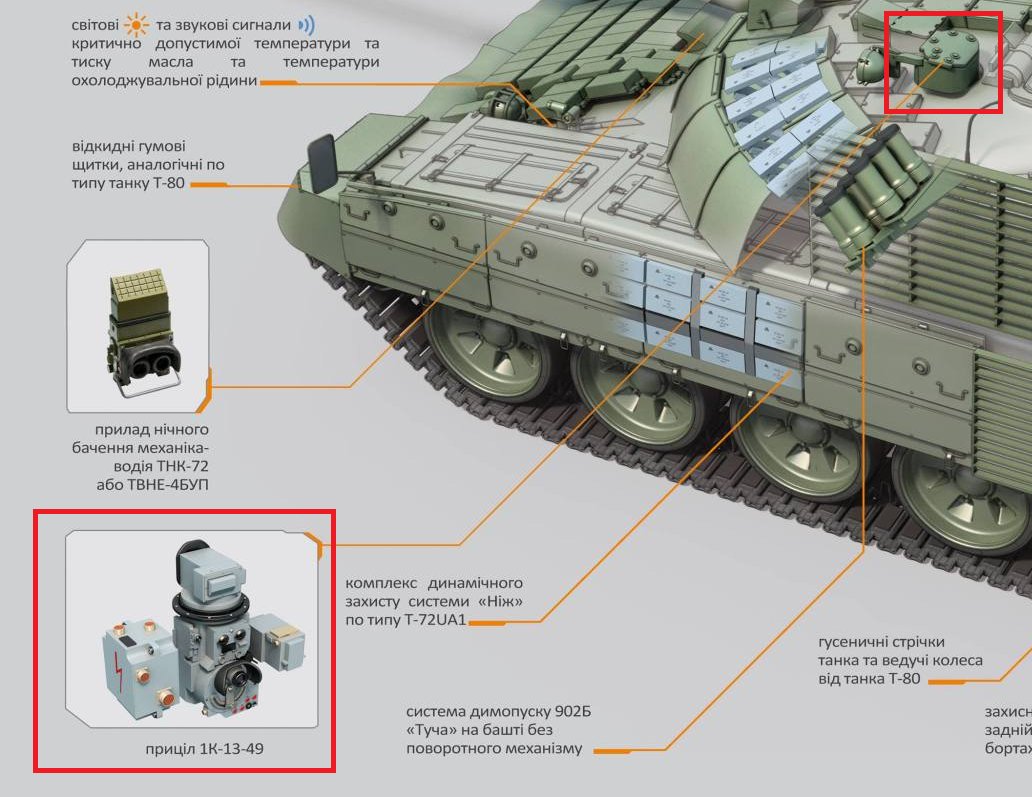
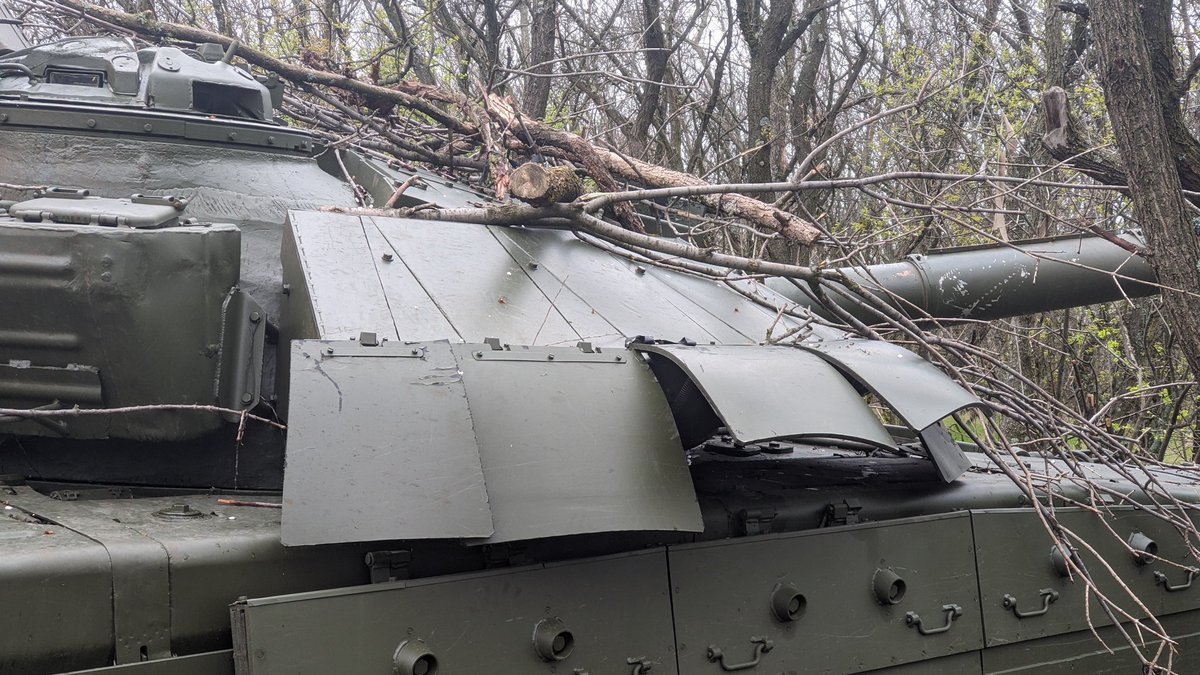
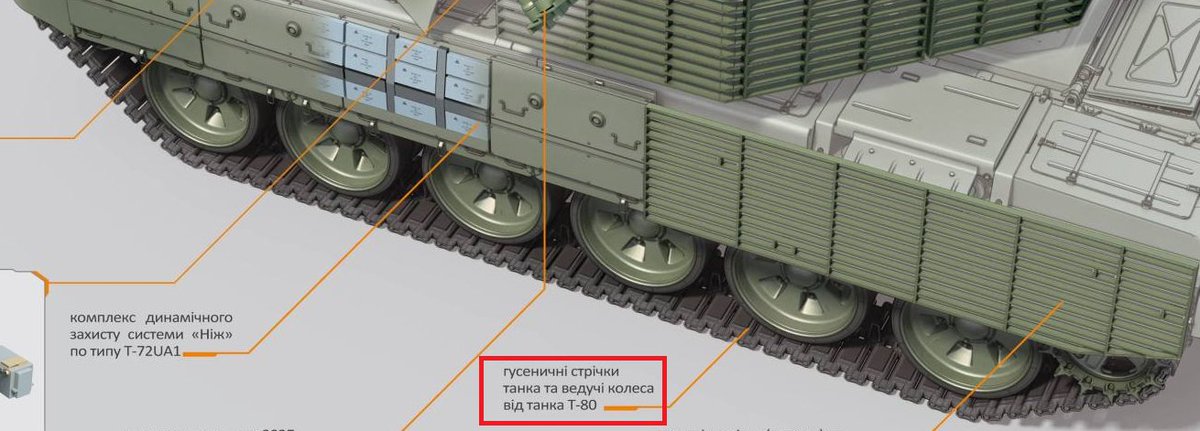
(13/24) ...Nizh ERA, as found on the T-72UA-1. However, the T-72AMT uses the Bulat's hull side panels instead of Kontakt-1 boxes like the 'UA-1.

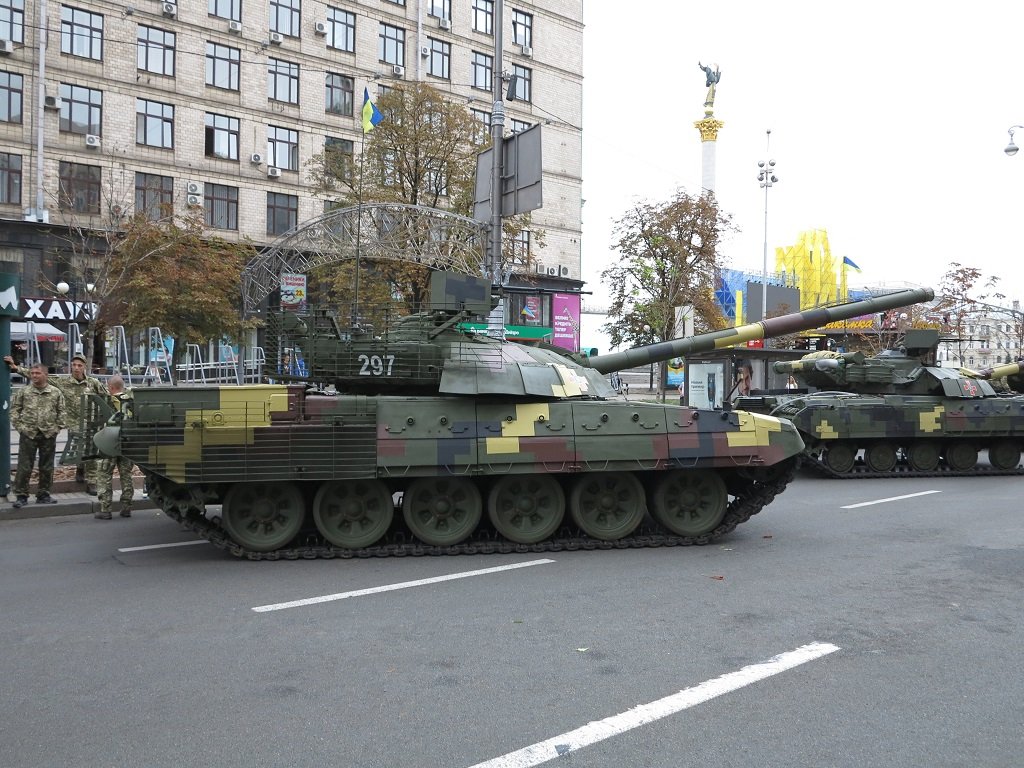
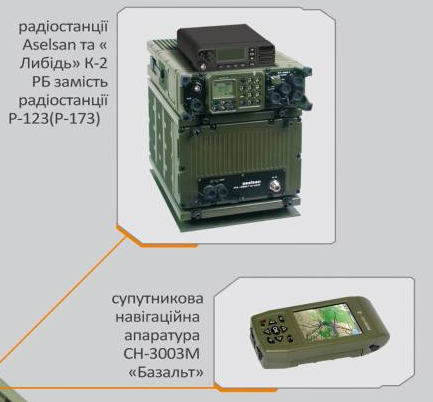
(14/24) The T-72AMT package also includes other 'invisible' but important upgrades, like the SN-3003 satnav and Turkish Aselsan or Ukrainian Lybid radios replacing the laughably obsolete Soviet R-123/173 radios, in line with the contemporary T-64 modernisation project.
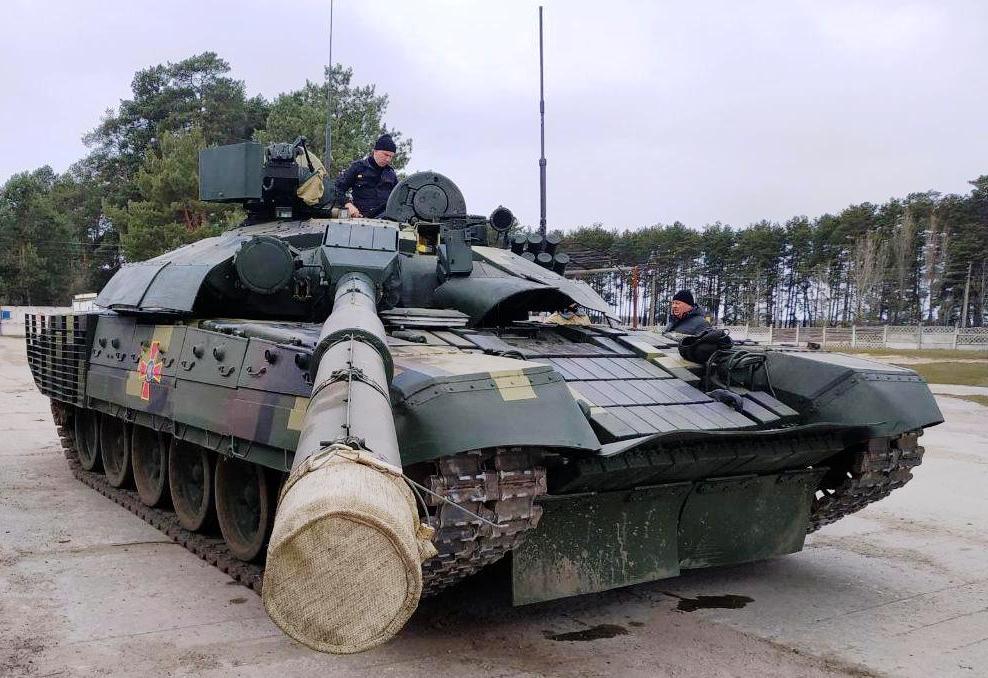
(15/24) It does not appear that a thermal sight was fitted originally, as the T-72AMT still retained the Luna IR searchlight; an unfortunate oversight, but likely because the TPN1 TPV and 1K13 were competing for the same gunner auxiliary sight port.
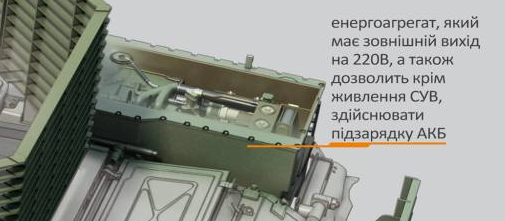
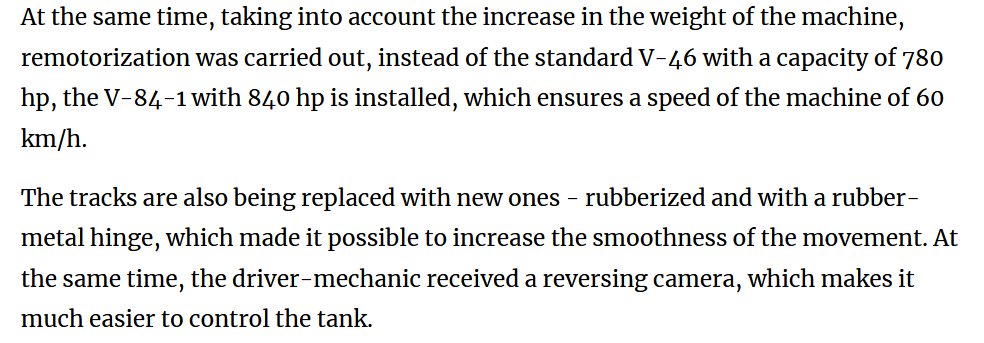
(16/24) The T-72AMT also uses the 840 hp V-84-1, replacing the T-72A's original 780 hp V-46 engine. Furthermore, an APU is provided in the full package. The single-pin tracks were also replaced with the T-80's double-pin tracks with internal rubber pads.
https://t.co/ERUOPVbyETdefence--ua-com.translate.goog/news/t_72amt_u…
https://t.co/ERUOPVbyETdefence--ua-com.translate.goog/news/t_72amt_u…
(17/24) The T-72AMT was accepted into Ukrainian service, and the first T-72AMT tank was handed over to the ZSU in December 2018.

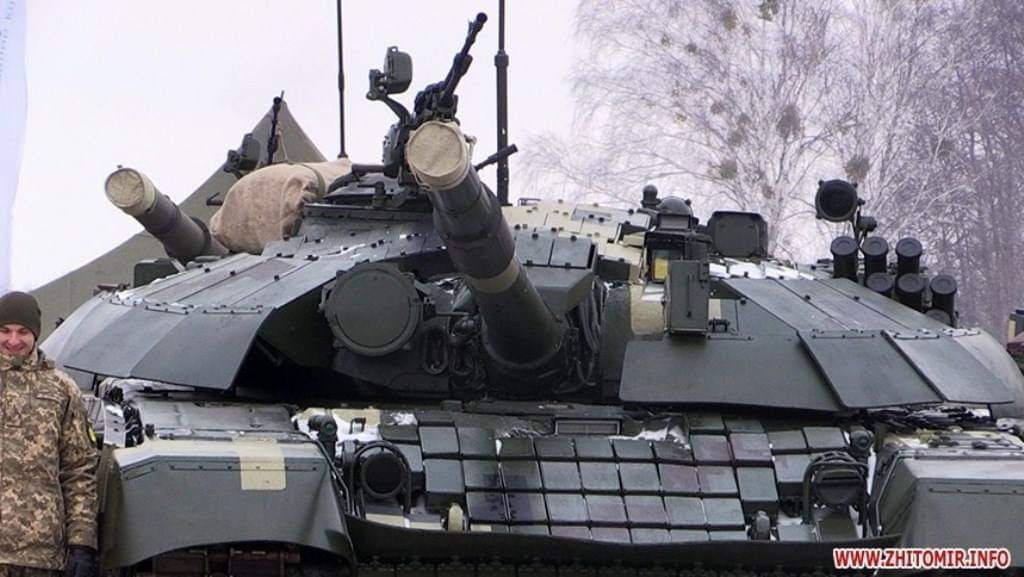
(18/24) At least 39 T-72AMTs had been delivered by April 2021, and the article from Defense Express suggests that the ZSU may have received 2 battalions' worth of the tanks (62) prior to 2022.
https://t.co/rEoSoInPHZdefence--ua-com.translate.goog/news/t_72amt_u…
https://t.co/rEoSoInPHZdefence--ua-com.translate.goog/news/t_72amt_u…
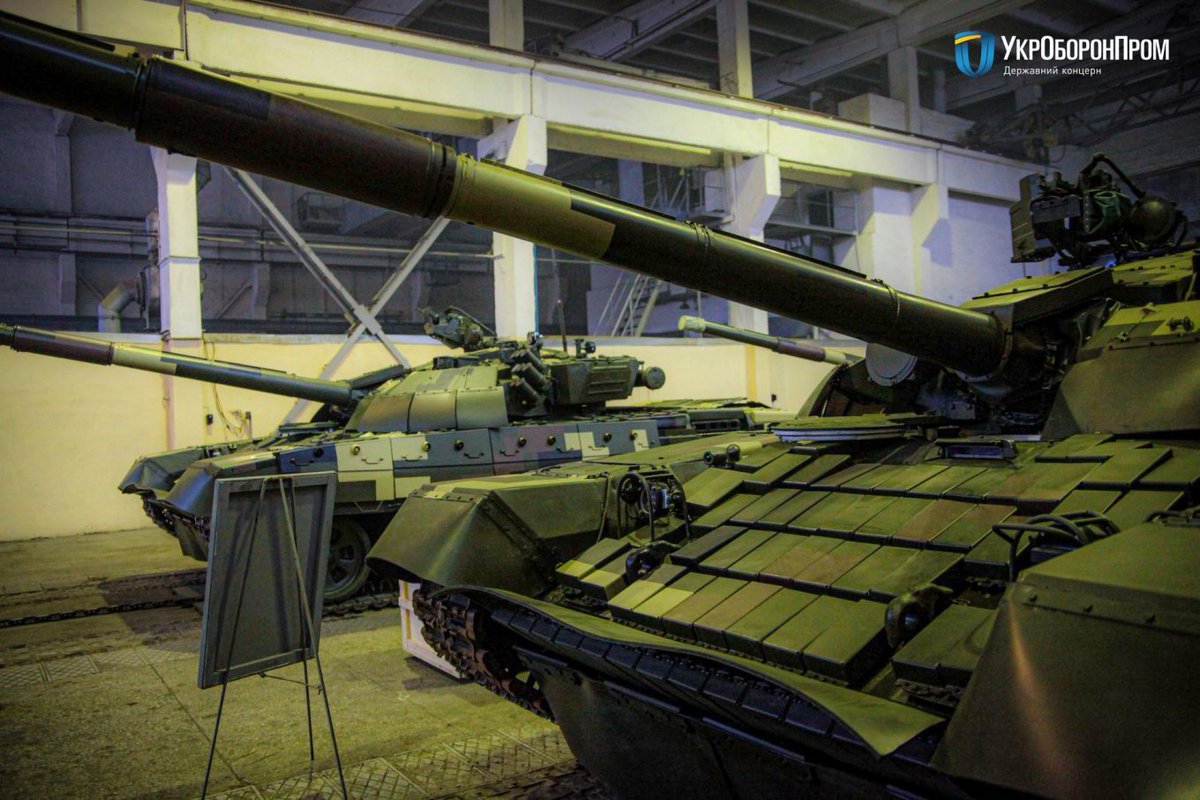
(19/24) It should be noted that not all T-72AMTs may have received the full upgrade package. For example, these T-72AMTs delivered in April 2020 retained the old T-72A cupola and AAMG.
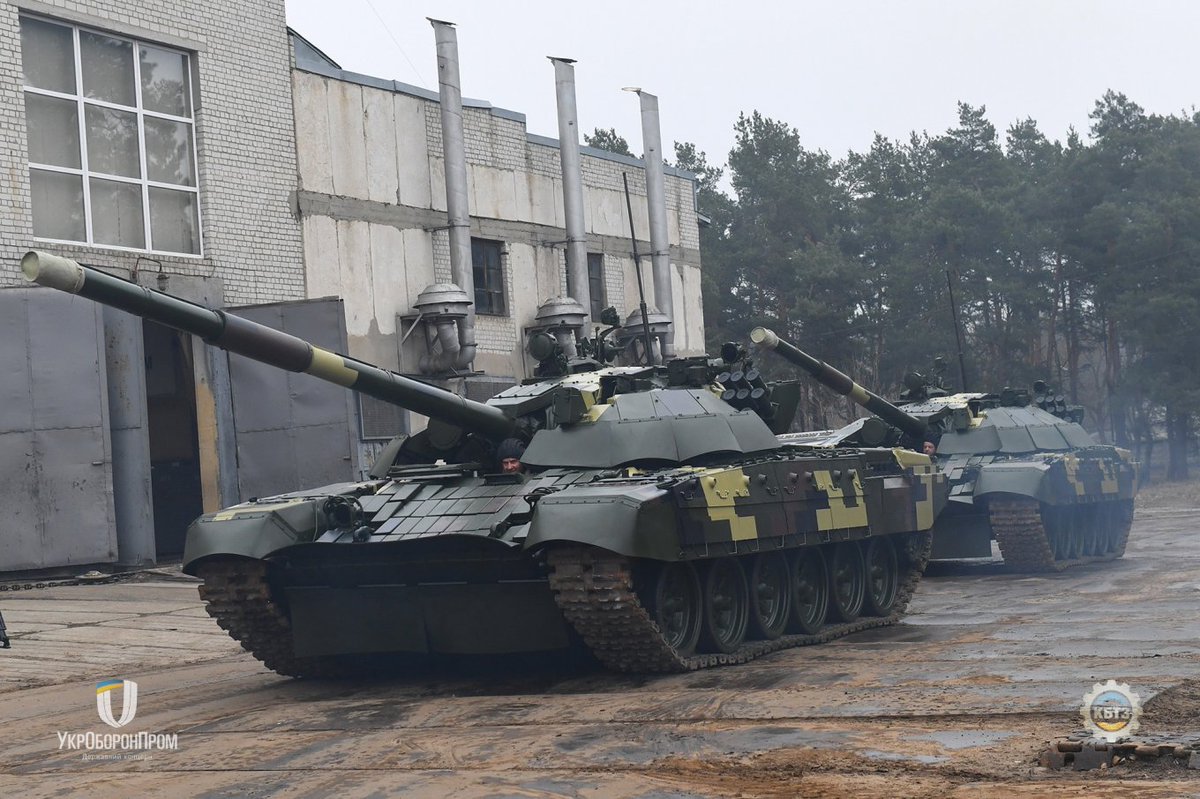
(20/24) These tanks are being used during the ongoing fighting. I do not know how they are faring in combat, but they seem to have suffered relatively few complete losses, with only 7 destroyed. 6 more have been captured, according to Oryxspioenkop.
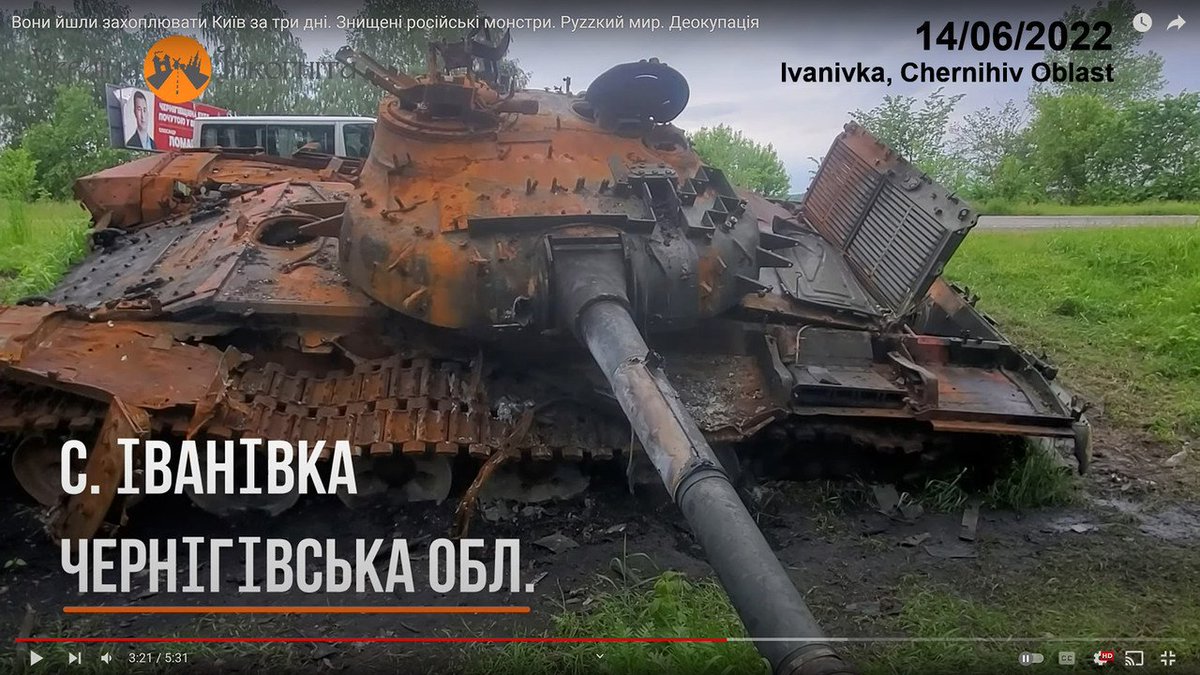
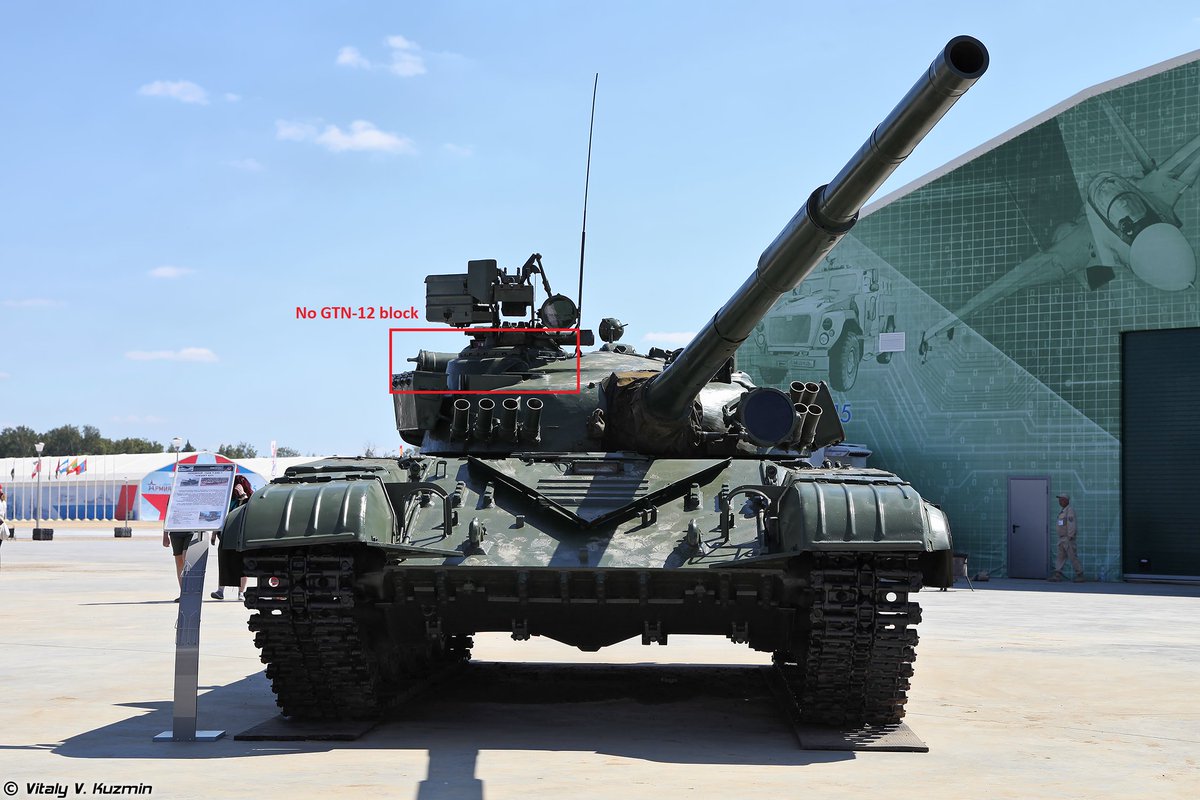
(21/24) Late in 2022, an interesting variant of the T-72AMT appeared in Ukrainian service.
(22/24) This variant has no Luna IR searchlight anymore, which suggests that it now has a thermal sight of some kind. Likely the 1K13 MBT, which Trimen is known to have developed.
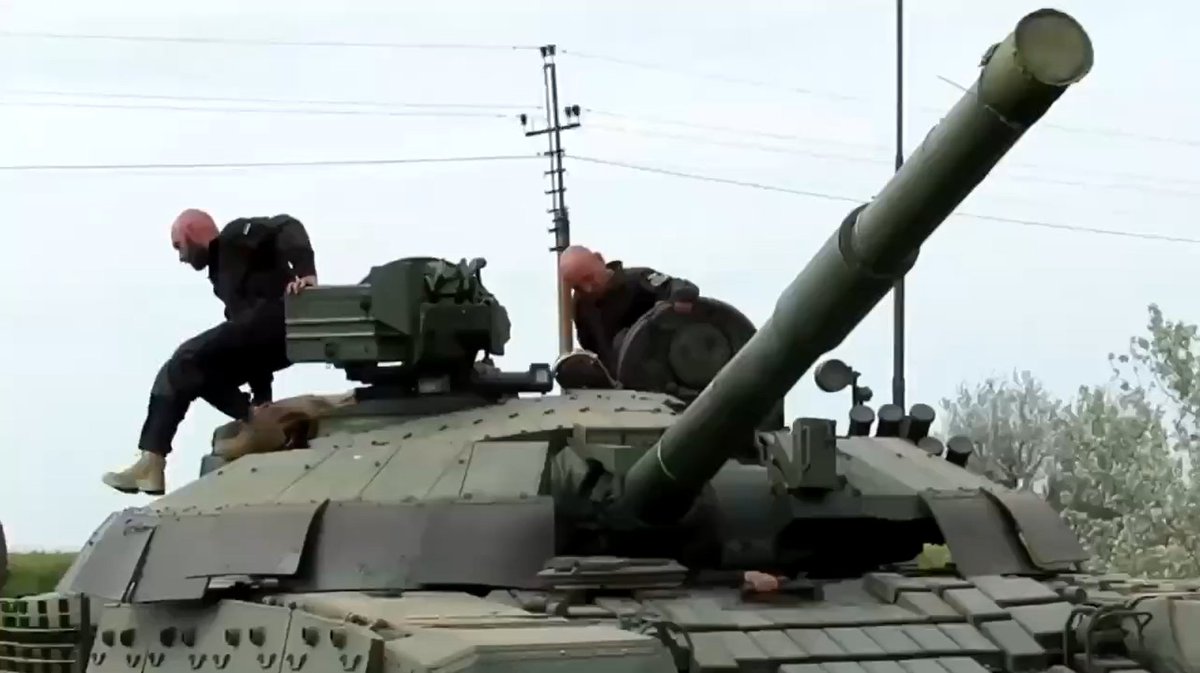


(23/24) There is also at least one other variant that retains the old T-72 commander cupola as well. I do not know how many of either variant has been completed. And the Ukrainians certainly aren't telling.
(24/24) There was a YT video I once saw that was pretty critical of the 'AMT, saying it would not be a match for Russian tanks. I think that's missing the point: you have to think about how it fits into the army's needs as a whole, and the 'AMT reflects the ZSU's priorities.
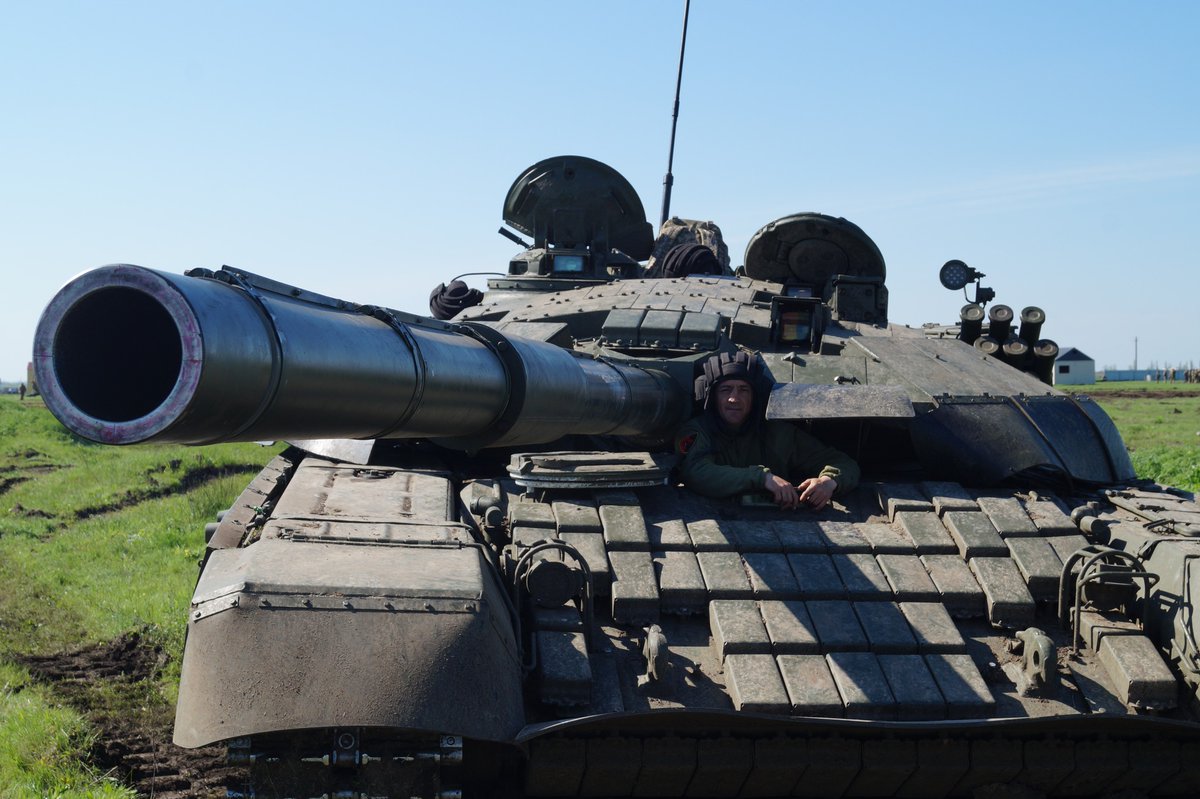
I should add that the tank was also demonstrated to a Polish delegation. Defense Express was pretty positive about it, though I think @LeszekMNowak was part of the delegation and he had a different impression.
old-defence--ua-com.translate.goog/index.php/home…
old-defence--ua-com.translate.goog/index.php/home…
CORRECTION: TPD-K1 / 1A40 (right) have a fixed 8x magnification setting, not 4x.
• • •
Missing some Tweet in this thread? You can try to
force a refresh