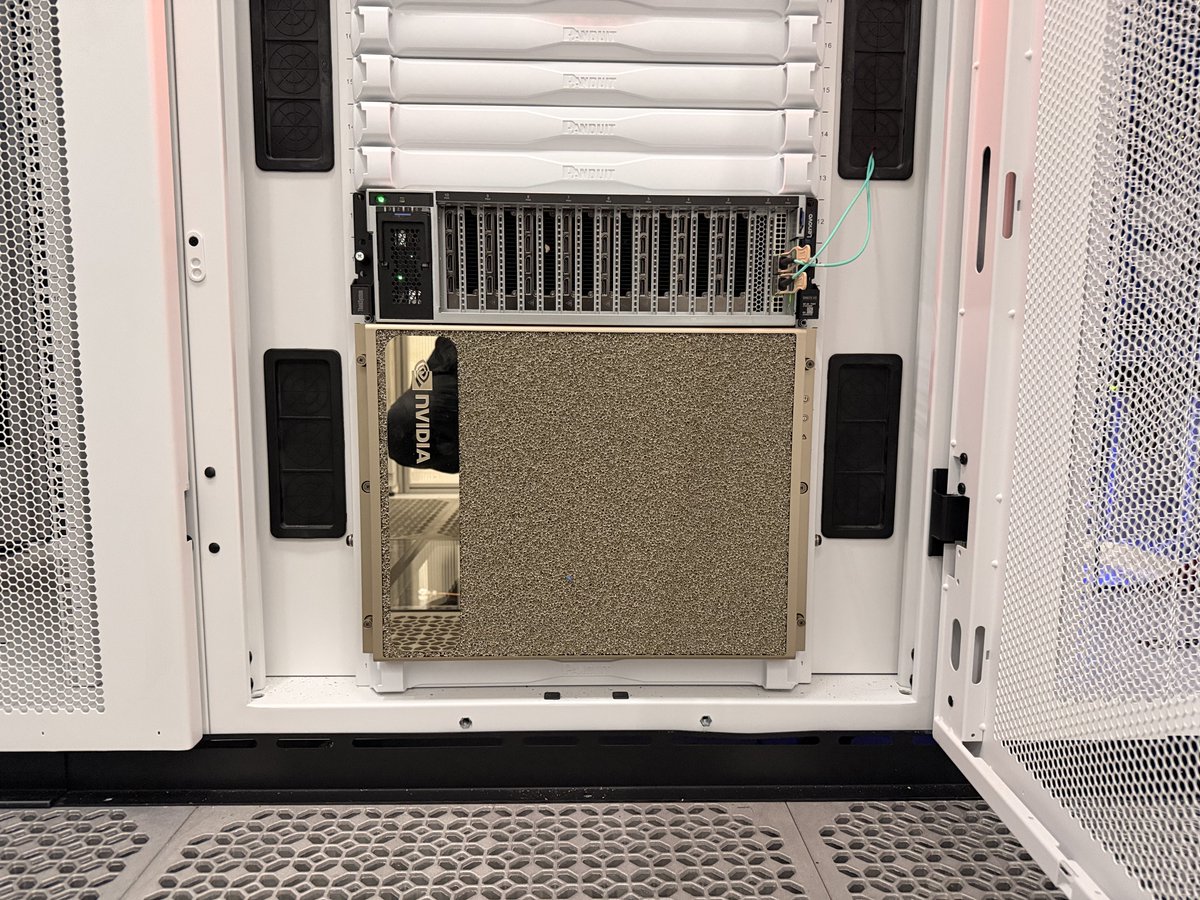
Here’s the story of an extraordinary journey, poss the most amazing journey in the world.
Through time, physics & around the globe, to produce the very thing you’re reading this on.
This story begins with a very simple question:
where does a silicon chip actually COME from?
🧵
Through time, physics & around the globe, to produce the very thing you’re reading this on.
This story begins with a very simple question:
where does a silicon chip actually COME from?
🧵
That was one of the questions I set out to answer in #materialworld.
Not just how we make semiconductors - the also-extraordinary process of imprinting and etching billions of transistors onto a slice of silicon.
Amazing as that story is, it's been told many times before.
Not just how we make semiconductors - the also-extraordinary process of imprinting and etching billions of transistors onto a slice of silicon.
Amazing as that story is, it's been told many times before.

There's a v condensed version of that story in this thread👇. & FAR more in @crmiller1’s Chip War.
But this still didn’t answer my question.
I didn’t just want to know about what we do with silicon at fabs. I wanted to know WHERE THE SILICON COMES FROM
But this still didn’t answer my question.
I didn’t just want to know about what we do with silicon at fabs. I wanted to know WHERE THE SILICON COMES FROM
https://twitter.com/edconwaysky/status/1677393114095296518?s=61&t=txy09J5xh0hvLGtOFTLHrw
But when I asked people in the semiconductor industry where in the GROUND their silicon comes from, I was mostly met with blank looks. Who cares?
Those who did answer said: well, duh. It’s from sand. Eg this from @intel:
https://t.co/mEcPHH7hTFdownload.intel.com/newsroom/kits/…
Those who did answer said: well, duh. It’s from sand. Eg this from @intel:
https://t.co/mEcPHH7hTFdownload.intel.com/newsroom/kits/…

But then that begged another question: WHICH sand? There are hundreds of different types of sand.
There's silica sands which go into glass, angular sands, construction sands, sands rich in other elements too.
So which sands did silicon chips come from?
Again, blank looks.
There's silica sands which go into glass, angular sands, construction sands, sands rich in other elements too.
So which sands did silicon chips come from?
Again, blank looks.

So I set off to find the answer.
It turned out to be a far longer, more complex journey than I expected.
Because making the silicon inside a silicon chip is NOT simple at all. In fact it's one of the most exacting processes known to humankind.
It begins in a dusty quarry 👇
It turned out to be a far longer, more complex journey than I expected.
Because making the silicon inside a silicon chip is NOT simple at all. In fact it's one of the most exacting processes known to humankind.
It begins in a dusty quarry 👇

This is a quartz quarry in North Spain (there are others, esp China).
The white rock is ground down into sand for ornamental gardens & bunkers.
But also into big fist-sized chunks high in silicon.
THIS is where silicon chips come from!
Not technically sand; we'll see why in a mo
The white rock is ground down into sand for ornamental gardens & bunkers.
But also into big fist-sized chunks high in silicon.
THIS is where silicon chips come from!
Not technically sand; we'll see why in a mo


These rock chunks are then carried away to a refinery where they're melted in an enormous arc furnace.
Coal & woodchips are added, the temperature goes up to 1800 degrees and lots of the impurities are sopped away.
What went in as a rock comes out as 99% or so pure silicon metal
Coal & woodchips are added, the temperature goes up to 1800 degrees and lots of the impurities are sopped away.
What went in as a rock comes out as 99% or so pure silicon metal
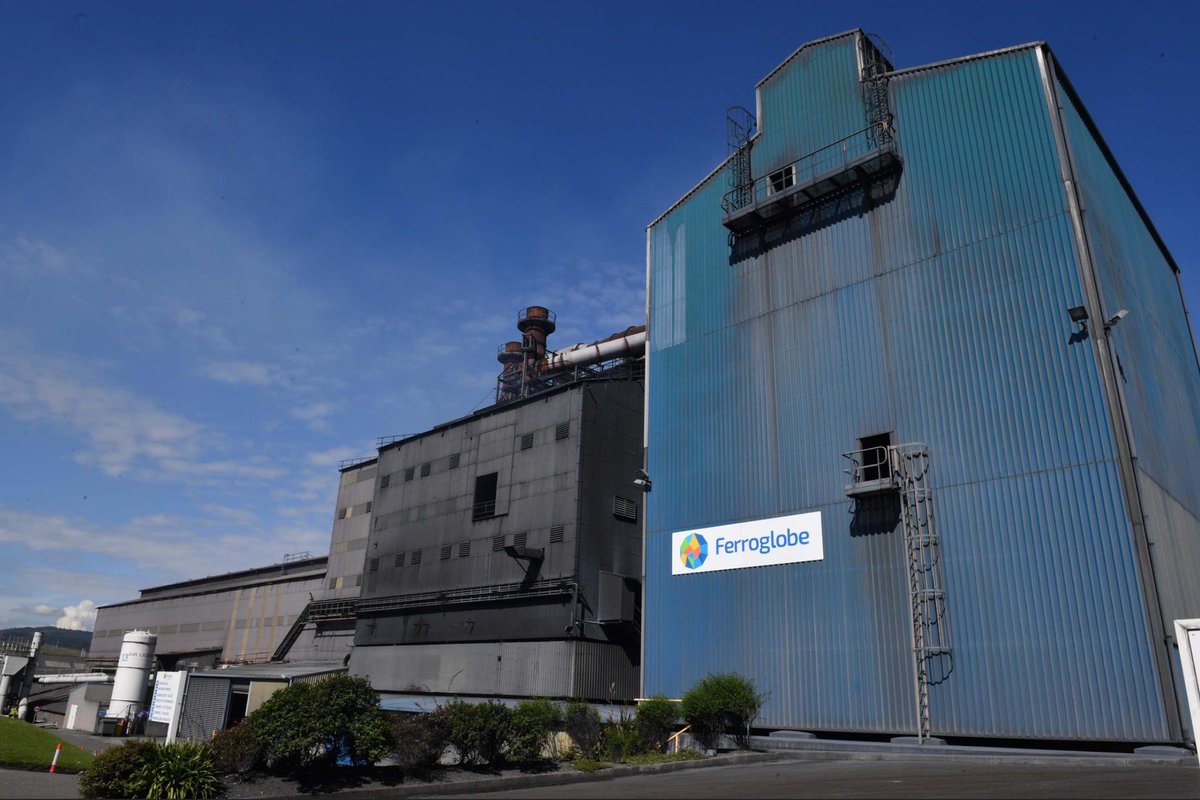
When you see these furnaces you start to understand why we don't use SAND grains to make silicon chips. The temperatures are so high in that furnace that the sand would be carried up with the convection flows and gum up the extraction fans.
You need HEAVY lumps! It's that simple!
You need HEAVY lumps! It's that simple!
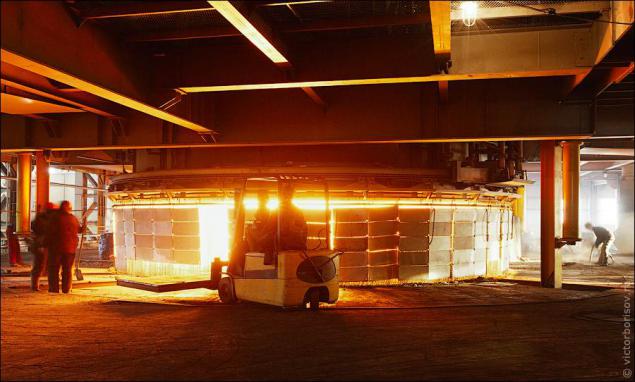
THIS is the material reality of how we make advanced technology (same process is how we make silicon substrates in solar panels).
And we’re still yet to work out a way to do this at scale without using coal or emitting carbon.
Computers/solar panels are a fossil fuel product!
And we’re still yet to work out a way to do this at scale without using coal or emitting carbon.
Computers/solar panels are a fossil fuel product!

This underlines a message that permeates #materialworld: solving climate change doesn’t just involve building more wind turbines.
It involves re-thinking processes all the way up the industrial food chain.
BIG challenge but also a big opportunity.
lnk.to/MaterialWorld
It involves re-thinking processes all the way up the industrial food chain.
BIG challenge but also a big opportunity.
lnk.to/MaterialWorld
Anyway. Our lump of rock is now a lump of silicon metal.
99% pure.
But that’s not pure enough.
If we’re going to have computer chips with billions of transistors per cm, you cannot have ANY impurities. A lone atom will disrupt the flow of electrons and ruin the chip.
So on we go.
99% pure.
But that’s not pure enough.
If we’re going to have computer chips with billions of transistors per cm, you cannot have ANY impurities. A lone atom will disrupt the flow of electrons and ruin the chip.
So on we go.

The chunks of silicon metal are transported (sometimes to the other side of the world) to a polysilicon plant.
There they undergo something called the Siemens process, where they’re effectively chemically disassembled and reassembled under heat and pressure.
It’s intense!
There they undergo something called the Siemens process, where they’re effectively chemically disassembled and reassembled under heat and pressure.
It’s intense!

It involves (yet again) MASSIVE amounts of power and heat, but the end product are these slightly odd rods. Those are now very VERY pure silicon. At this stage they call this ultra-pure stuff "polysilicon". Here's how I describe it in #materialworld:

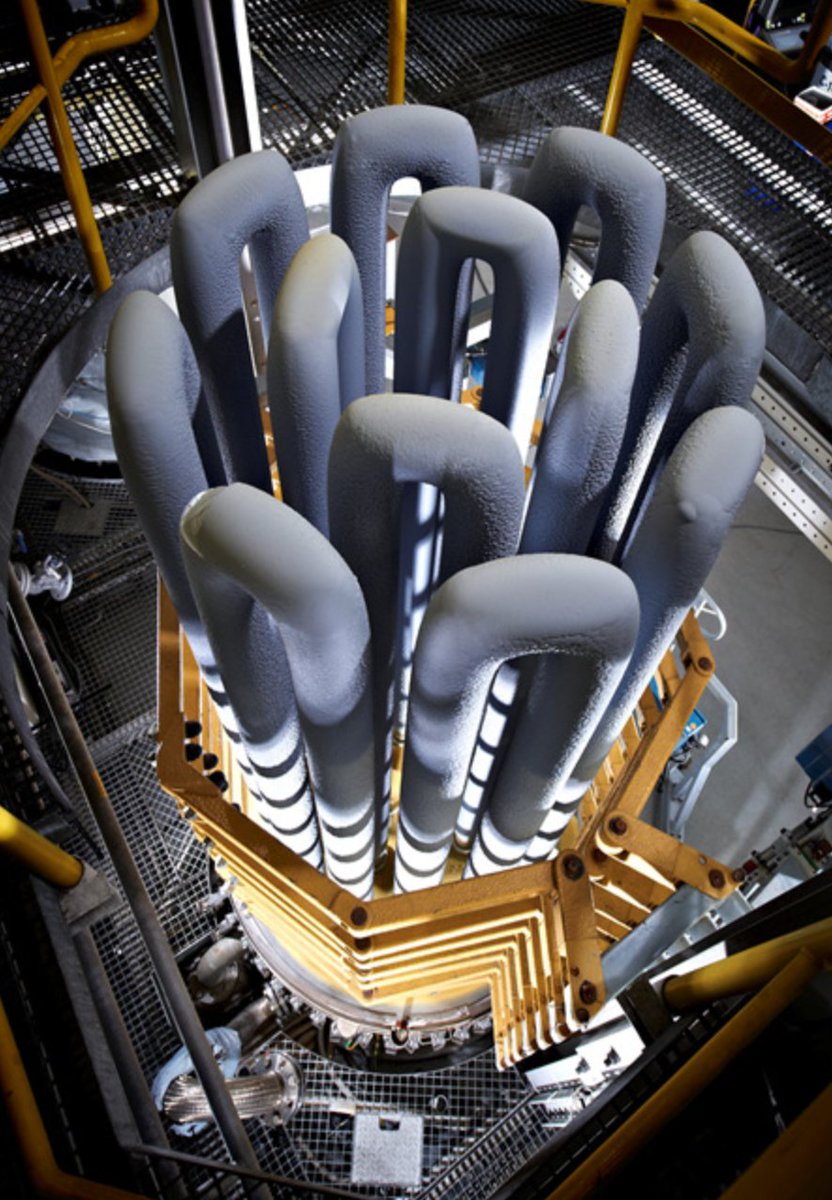
By now the silicon atom blasted out of the ground in Spain has been pummelled and smashed and heated and cooled numerous times and is part of an incredibly pure lump of silicon.
But it’s STILL nowhere near ready to get shipped off to a semiconductor plant to be turned into a chip
But it’s STILL nowhere near ready to get shipped off to a semiconductor plant to be turned into a chip
The issue is that while it's incredibly pure - one of the purest substances on the planet(!) the structure of the silicon atoms is amorphous.
That crystalline structure MATTERS.
Again, the more ORDERED the structure of atoms, the better electrons can flow.
That crystalline structure MATTERS.
Again, the more ORDERED the structure of atoms, the better electrons can flow.

Having a perfect crystalline structure is all the more important these days, now that transistors are so small they are nearly atom-scale.
Your smartphone simply wouldn’t have been possible without ultra pure, ultra ordered silicon - the stuff we’re making here.
Your smartphone simply wouldn’t have been possible without ultra pure, ultra ordered silicon - the stuff we’re making here.

So now the polysilicon produced via the Siemens process is ground up into a powder and shipped off to another plant (again, poss on the other side of the world) to undergo another transformative process: the Czochralski Process.
The tale of Jan Czochralski, the guy who came up with this process, is a whole fascinating side-story I'll cover another time. He was one of the great unsung heroes of the modern age. More than a century ago he (accidentally) worked out how to make truly perfect metal crystals.

Long story short, that ultra pure polysilicon is melted down in a crucible in a controlled environment filled with argon gas (any impurities would ruin everything!).
A seed crystal is dipped into the molten solution & is slowly pulled and rotated upwards, creating a long cylinder
A seed crystal is dipped into the molten solution & is slowly pulled and rotated upwards, creating a long cylinder

The finished product is called a silicon boule.
This odd thing is quite literally one of the most perfect things humankind has ever made.
The closest thing to perfection.
A totally ordered, totally pure crystal of silicon.
Here I am looking v happy holding the end of one. Heavy!
This odd thing is quite literally one of the most perfect things humankind has ever made.
The closest thing to perfection.
A totally ordered, totally pure crystal of silicon.
Here I am looking v happy holding the end of one. Heavy!


That perfect silicon sausage is then sliced and buffed and polished over the course of weeks or months. Doing this, by the way, is super hard. Shin-Etsu, one company I talked to about this, don’t EVER let anyone in to see this in case people steal its secrets. Especially China.
The finished product is this.
A totally pure, essentially perfect circular wafer of silicon.
This is what is shipped to TSMC and other semiconductor manufacturers, where they begin their part in the wondrous process of creating computer chips.
What began as rock is now perfect!
A totally pure, essentially perfect circular wafer of silicon.
This is what is shipped to TSMC and other semiconductor manufacturers, where they begin their part in the wondrous process of creating computer chips.
What began as rock is now perfect!

The point here is that even BEFORE the bit we’re more familiar with - the etching and deposition at a semiconductor fab - the silicon has poss been around the world a few times.
It’s been transformed again and again, in mind-bending ways.
And this is the bit we rarely hear about!
It’s been transformed again and again, in mind-bending ways.
And this is the bit we rarely hear about!

And all to provide the silicon many semiconductor experts assume began as a grain of sand.
But it didn’t.
As you now know!
That atom of silicon’s journey is, to me at least, JUST as amazing as the journey that follows, where it’s turned into that thing in your smartphone.
But it didn’t.
As you now know!
That atom of silicon’s journey is, to me at least, JUST as amazing as the journey that follows, where it’s turned into that thing in your smartphone.
It’s just one of the stories in #materialworld.
I started out asking the same thing I did re silicon:
Where the stuff we use every day actually COMES from.
What do we DO to turn it into everyday products?
If you enjoyed this👆you will def enjoy the book
lnk.to/MaterialWorld
I started out asking the same thing I did re silicon:
Where the stuff we use every day actually COMES from.
What do we DO to turn it into everyday products?
If you enjoyed this👆you will def enjoy the book
lnk.to/MaterialWorld
• • •
Missing some Tweet in this thread? You can try to
force a refresh