The Book of the Twenty-Four Philosophers is a fascinating anonymous medieval text full of neoplatonic and Pythagorean numerology. It contains 24 "definitions" of God offered up by fictional philosophers. The second definition is the earliest version of the famous "God is an… https://t.co/8cRVsH9I3htwitter.com/i/web/status/1…
Liber XXIV philosophorum I:
GOD IS A MONAD THAT GENERATES A MONAD, REFLECTING BACK ON ITSELF IN A SINGLE FLAME.
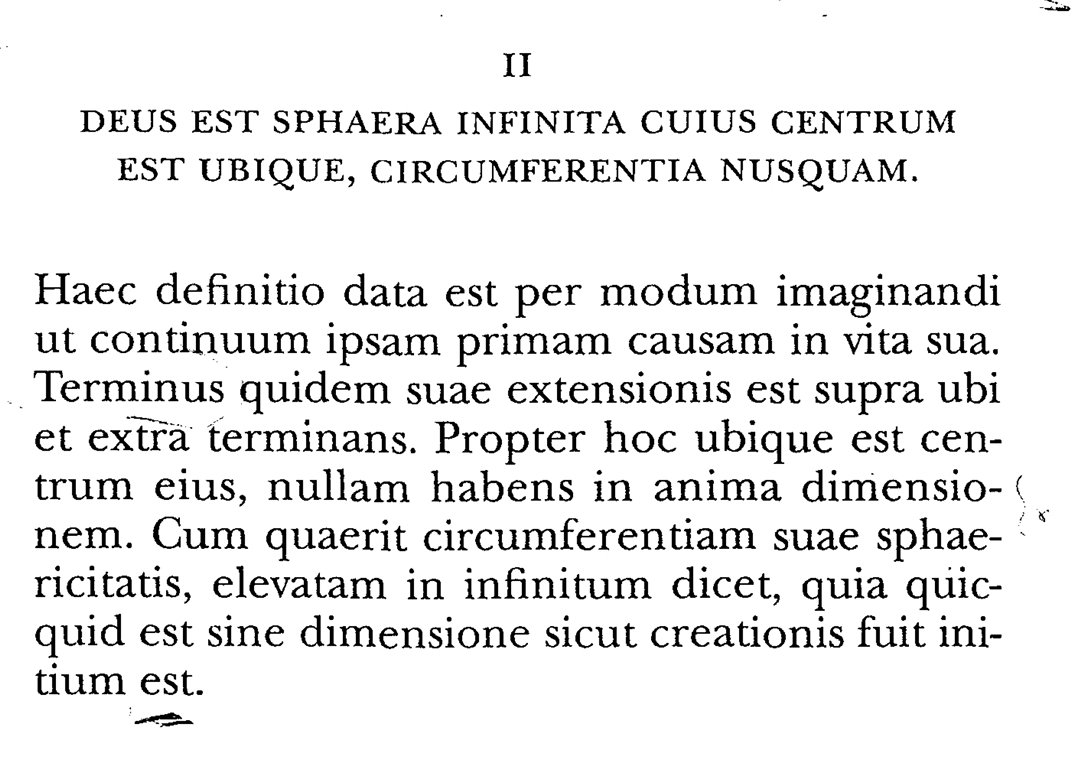
Liber XXIV philosophorum II:
GOD IS AN INFINITE SPHERE WHOSE CENTRE IS EVERYWHERE AND WHOSE CIRCUMFERENCE IS NOWHERE.
('...for that which has no dimension is as indeterminate as was the beginning of creation.')
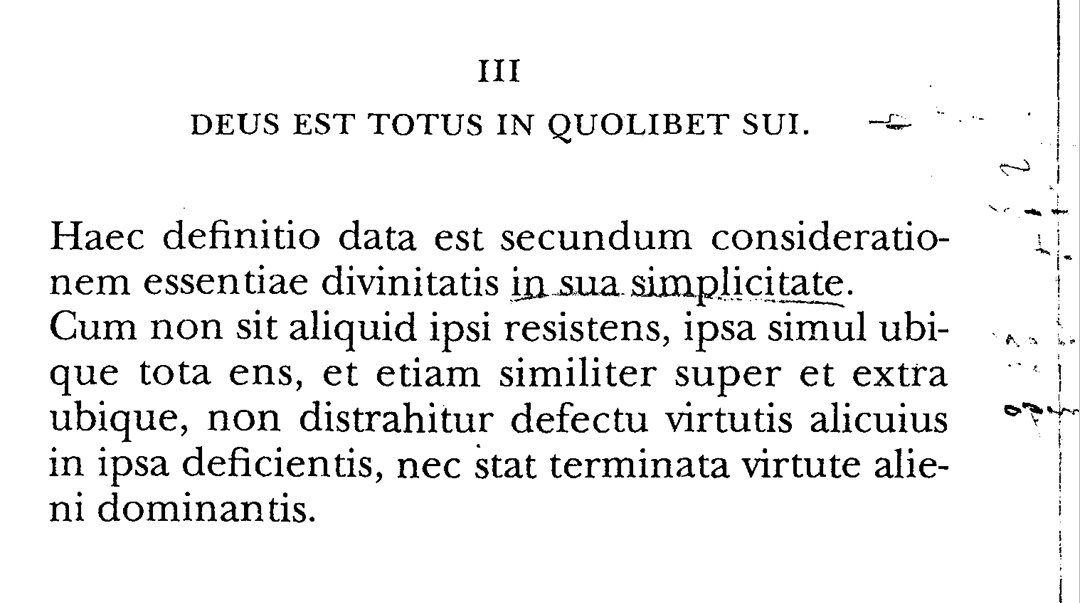
Liber XXIV philosophorum III:
GOD IS COMPLETE IN THAT WHICH HE IS
Liber XXIV philosophorum IV:
GOD IS A MIND THAT GENERATES A CONTINUOUSLY SUSTAINED SPEECH
Liber XXIV philosophorum V:
GOD IS THAT THAN WHICH NOTHING SUPERIOR CAN BE CONCEIVED
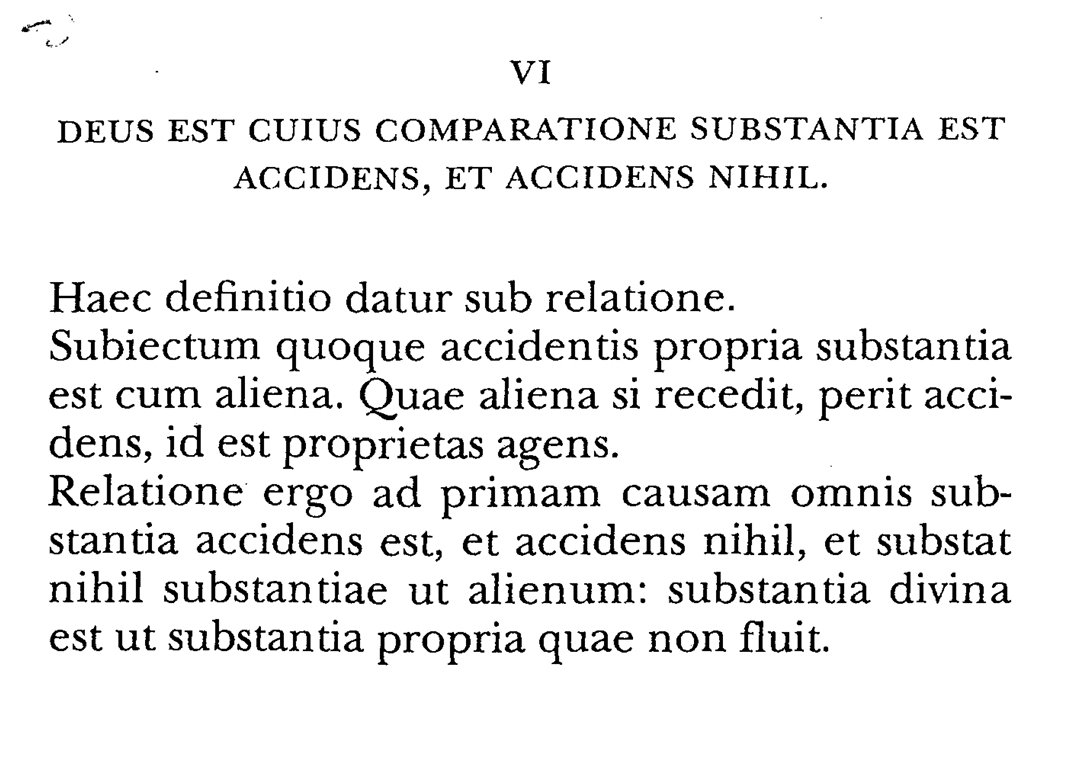
Liber XXIV philosophorum VI:
IN COMPARISON TO GOD, SUBSTANCE IS ACCIDENTAL, AND THE ACCIDENTAL IS NOTHING.
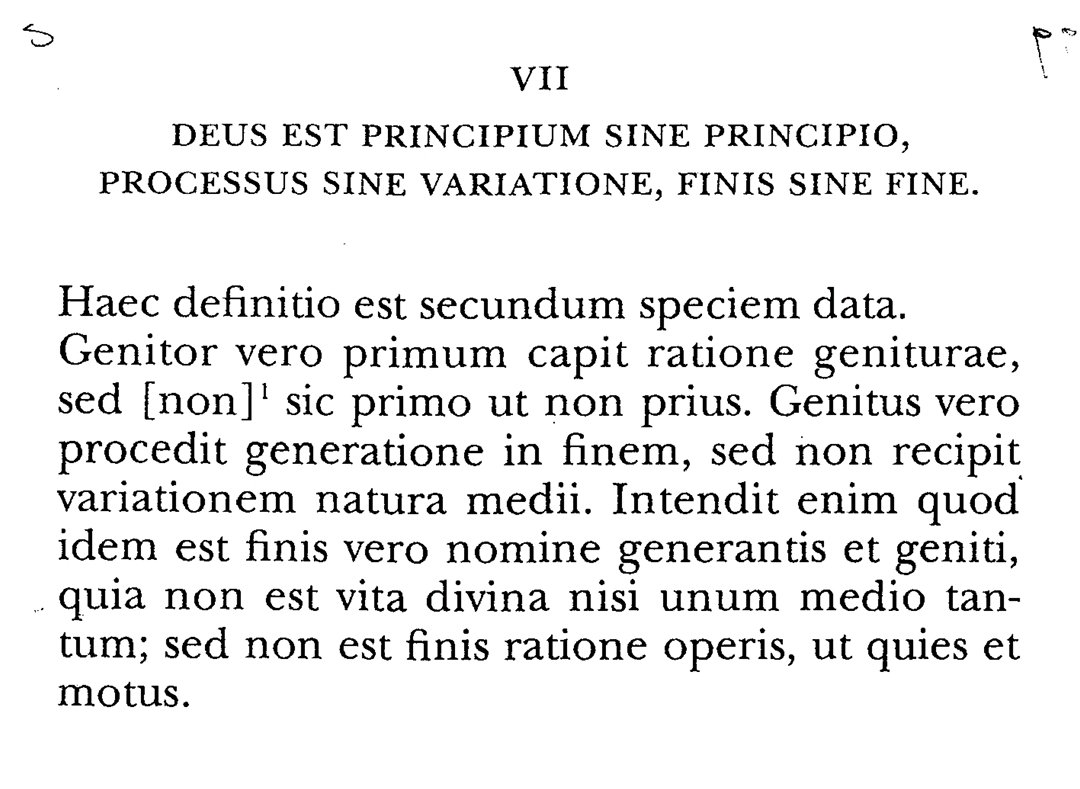
Liber XXIV philosophorum VII:
GOD IS BEGINNING WITHOUT BEGINNING, PROCESS WITHOUT VARIATION, END WITHOUT END.
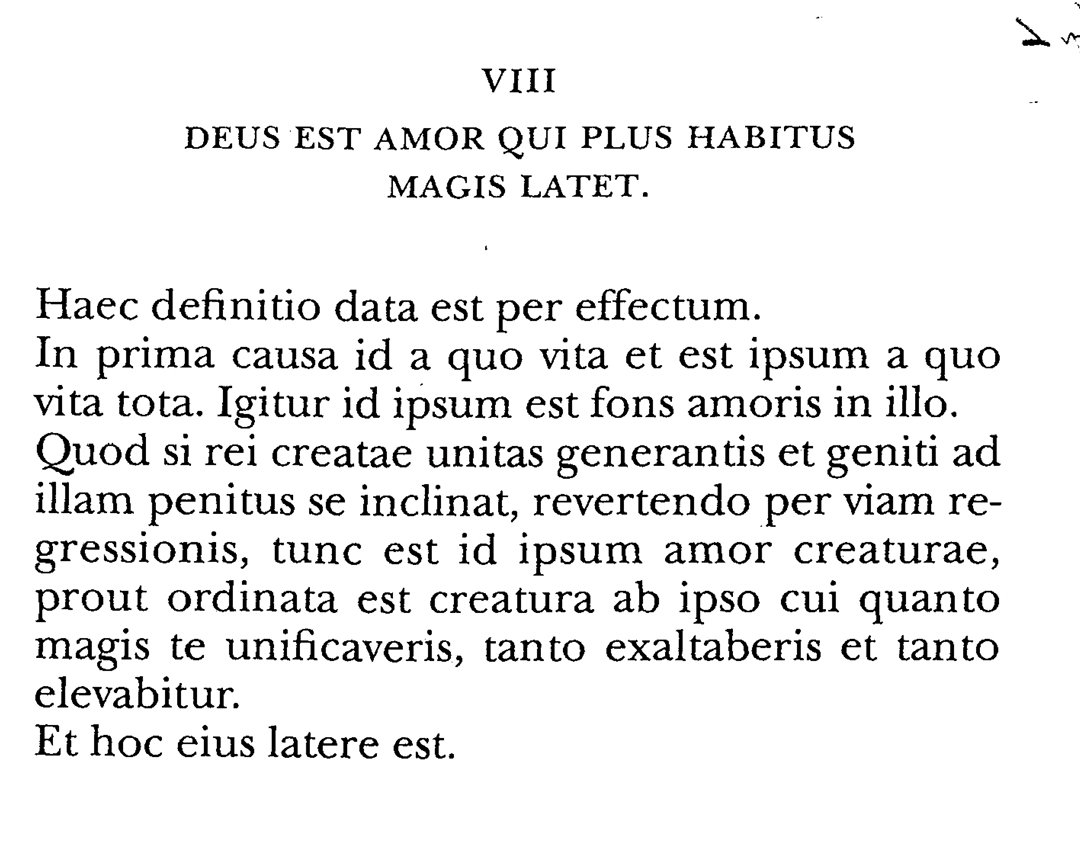
Liber XXIV philosophorum VIII:
GOD IS A LOVE THAT IS HIDDEN ALL THE MORE IT IS HELD ONTO
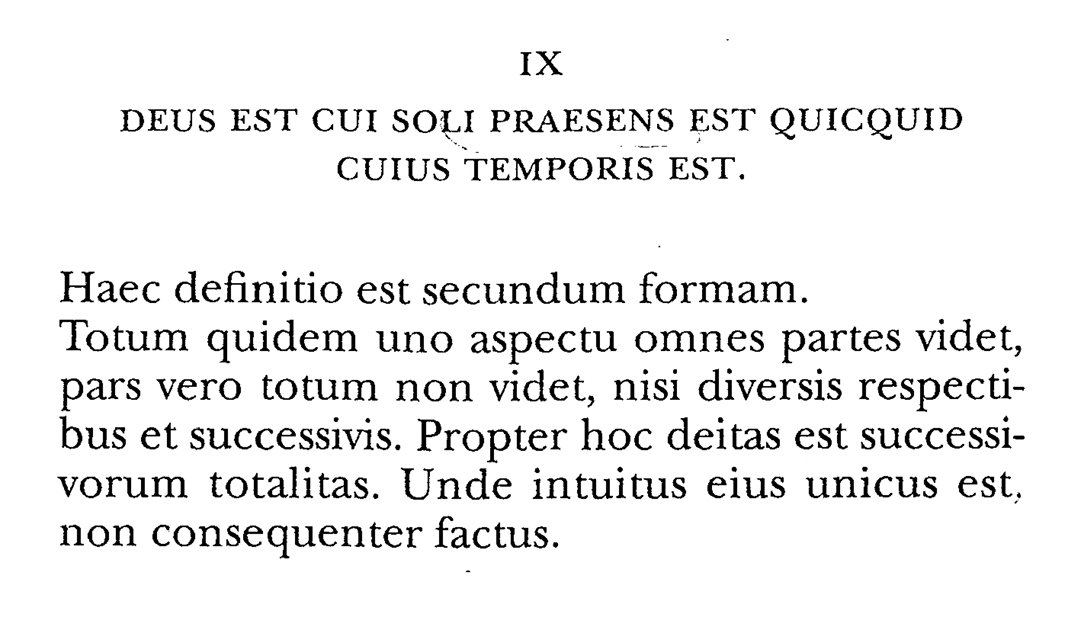
Liber XXIV philosophorum IX:
GOD IS THE ONLY ONE FOR WHOM ALL THAT IS WITHIN TIME IS PRESENT
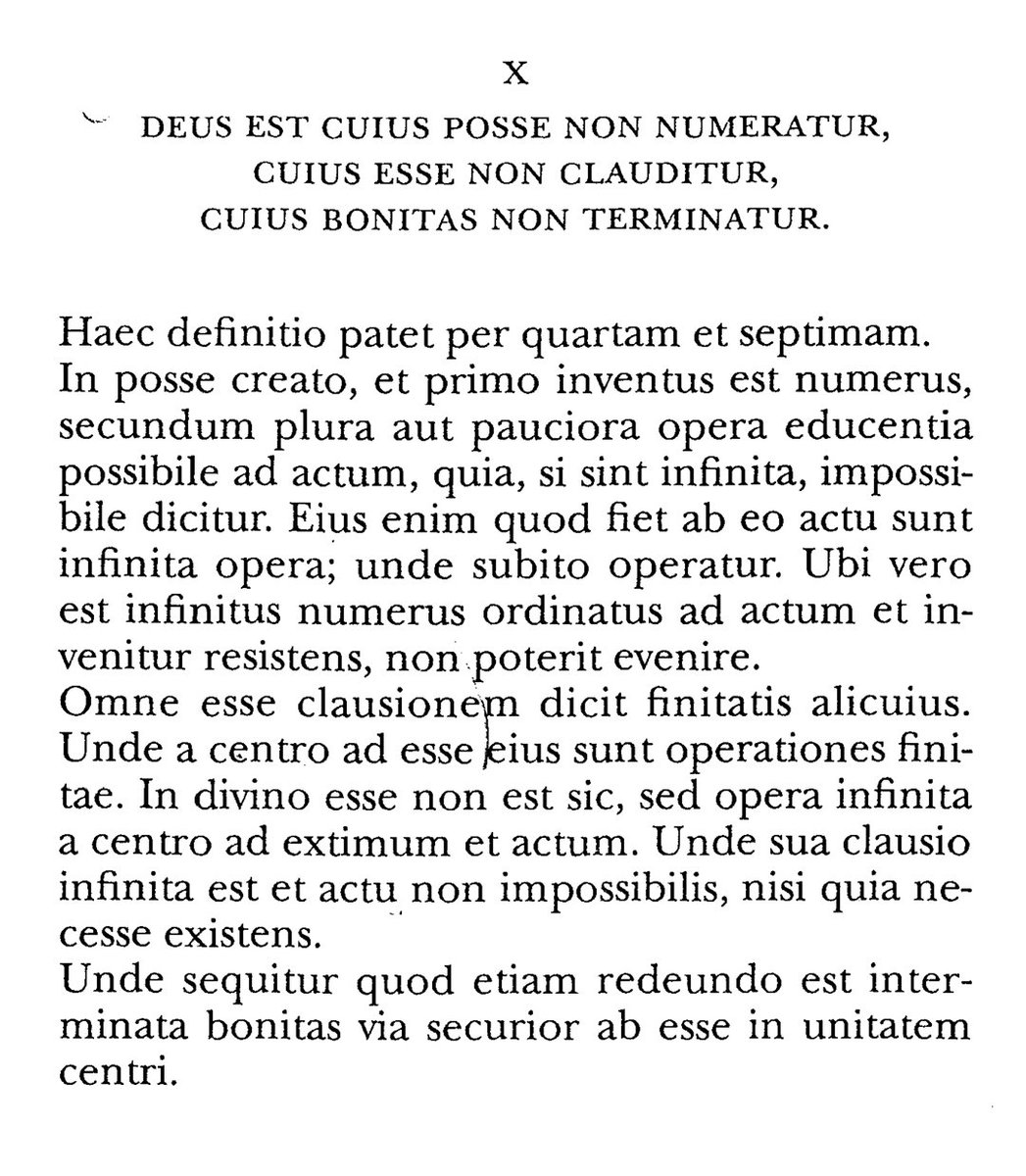
Liber XXIV philosophorum X:
GOD IS THAT WHOSE POWER CANNOT BE MEASURED, WHOSE BEING IS BOUNDLESS, WHOSE GOODNESS IS UNENDING
• • •
Missing some Tweet in this thread? You can try to
force a refresh

People broadly don't want to read prose produced by LLMs because aesthetics is the "the faculty of judging formal purposiveness": we cannot neatly ascribe purposivity to stochastic processes. It is not worth sinking costly reading time into something produced haphazardly...
If someone emails you or applies for a position at your company with LLM generated prose, they have taken less effort to produce the text than you would take reading it. Likewise their subjective contribution in the prompt is dwarfed by the output. It says nothing about them.
It is clear that it will be worthwhile researching an empirical detail in Ulysses. We know, for example, that Joyce took the pains to write to his auntie enquiring as to the height of the wall that Stephen and Bloom climb over to get back into the house.
If you understand an economy as a path-dependent evolving system then comparative analysis becomes illegitimate. There is no general theory or universally applicable model: every system is its contingent history.
Economists could not predict the outcomes of Trump's capricious tariff moves on the basis of a merely theoretical model of tariffs because there is no precedent for the degree of control the US has over the global financial infrastructure. The system history is all that matters.
There is no viable developmental teleology because the system is too complex to be reduced to a single end. The Chinese housing market has been about to collapse for a decade according to phony China Explainers attempting to employ the Procrustean bed of the American system...
The deeper root of anti-LLM developer posturing is that it's an existential threat to the more hucksterish model of SaaS—pretending simple computational tasks are complex and offering to do it for clients—upon which the industry has thrived the past couple of decades.
There was no real historical need for companies of any significant size to outsource database management and other simple internal functions to cloud companies with no, or nominal, domain expertise in their respective industries.
This happened in the same way that 90s "IT" would whip up false demand, preying upon the fact that most people didn't understand computers. People learnt about them en masse. Now, with the barriers to entry lowered, people will learn to replace these pseudo-specialisms en masse.
My current head canon for readings in the philosophy of software, will write this up on the blog eventually:
- Plato: insights on mathematics, theory of forms, theory of chora.
- Aristotle's Categories.
- The history of emanationism from the Neoplatonists onward. Lovejoy's Great Chain of Being can be taken as a starting point.
- The historical evolution of the scholastic organon (particularly proto systems thinkers like Francisco Suárez).
- Robert Fludd and Athansius Kirchner passim, for whom the representation and logical retrieval of knowledge was elevated to an art form.
- Raymond Lully and Giordano Bruno, passim.
- The mathematical theology of Nicholas Cusanus.
- Leibniz's Dissertatio de arte combinatoria, writings on organon and Monadology.
- Diderot and D'Alembert.
- Kant's discussion of the very concept of System in the Architectonic from the Critique of Pure Reason.
- Kant's "philosophy as a system" passage from a preface to the Critique of Judgement.
- Fichte and Reinhold's post-Kantian systematic philosophies (in particular Fichte's Wissenschaftslehre).
- Hegel's Wissenschaft der Logik.
- Ernst Cassirer's theory of symbolic forms.
- Various other Neo-Kantians, but certainly Emil Lask's domain category concept, which resonates strongly with modern type theory.
- Martial Gueroult's Dianoématique project, which takes up the history of philosophy as a historical problem using comparative systems analysis.
- Jules Vuillemin's development of the notion of philosophical system in What are Philosophical Systems?
- Deleuze's Différence et répétition.
- Friedrich Kittler's work on the history of "code" in general, and programming languages in particular.
The majority of these are of course not about software as such but rather the construction of epistemic systems. In so doing, these thinkers ran into the same issues you encounter in large-scale software projects.
There is a kind of metacritical problem proper to both about arriving at the boundaries of symbolic cognition, hitting cognitive complexity thresholds. It is clear, for example, that Llull and Bruno's mnemotechnical systems are designed around these thresholds...
This is also Cassirer's thesis: the Katnian antimony is rooted in the late renaissance amplification of the paradox as epistemic unit. Finnegans Wake, the highest poetic expression of the coincidence of contraries, renders the cosmological antimonies into literature.
This means we can read the mysticism of Meister Eckhart, San Juan de la Cruz, Ruysbroeck, Jakob Böhme in quite a different light. Likewise poets of the kaballah such as Isaak the Blind. The reciprocal determination of origin and end is perhaps *the* fundamental literary device...
...since it treats of how things come to be and pass away—the initial configurations and boundary conditions of places, people, motifs and worlds... What Sarduy calls the "cosmovisión" in his exploration of the discovery of simulation in the baroque elevates this theme...
Rationalism can never constitute a sufficient philosophy of mathematics because mathematical practice necessitates a coalition of the faculties, the interplay of intuition, schematism in the understanding & reason. Reason is purely connective, it "ignores magnitude" (Kant).
Reason unrestrained by the other faculties arrives at illusory images of the whole because of this over-zealous reticulation trait. It has the structure of paranoia or apophenia: 'the rationalist is the one who [presumptuously] fills in the gaps' (Deleuze).
The most barebones of mathematical models have "rational" structures in this Kantian sense—the reduction of multidimensional spatial data to nodes and edges on a graph, the reduction of complex temporal processes to relationships between variables in 2d space etc. etc.