Thread #Buryatia. #RussiaDecolonized
Welcome to the tenth thread in the series, where we delve into the future prospects of nations within Russia.
Welcome to the tenth thread in the series, where we delve into the future prospects of nations within Russia.

HISTORY
Buryats are part of the Mongolic nations and, along with Yakurs, represent one of the two largest indigenous groups in Siberia. /1
Buryats are part of the Mongolic nations and, along with Yakurs, represent one of the two largest indigenous groups in Siberia. /1
Historically, Buryats have resided in the area around Baikal lake. During the Middle Ages, the region was under the rule of the Mongol and Yuan empires. /2

Tibetan Buddhism was introduced here in the late 16th century and remains an important part of the region's culture, alongside the pre-existing shamanism. /3

Tsarist forces arrived in the region as early as the 1620s and gradually incorporated it into their country, first as territories and later as part of the state. /4

The migration of Russians to the region began in the 18th century, before which the connections between Buryats and Russians were quite limited. /5
In 1911, Outer Mongolia gained independence, which revitalized national movements in Buryatia. In 1917, the Buryat National Committee declared the state of Buryat-Mongolia. /6

During the Russian Civil War, Japanese forces entered Burytia. Local leaders saw potential in allying with Japan to establish a Buryat state. /7

With the promises of the Soviet government and the loss of Japan as an ally, Buryat leaders embraced the idea of developing their land within Soviet Russia. /8
In 1923, the Buryat-Mongol ASSR was established. However, it didn't last long before the Soviet government repressed Buddhism and executed spiritual and intellectual leaders of the Buryat nation in the 1930s. /9

In 1937, two districts with a significant Buryat population were detached from the Buryat-Mongol ASSR and incorporated into other regions. /10


In 1958 the republic adopted the name Buryat ASSR instead of Buryat-Mongol.
Besides, the second half of the 20th century saw urbanization and significant infrastructure development, including railway connections, in the region. /11
Besides, the second half of the 20th century saw urbanization and significant infrastructure development, including railway connections, in the region. /11
After the fall of the USSR, the Buryat Republic was established within Russia. In 1995, an agreement was signed with the federal government that granted some autonomous rights, but it was abolished in 2002. /12
Assimilation and Russification policies have been active in the region for centuries and continue to be so today. /13
GEOGRAPHY
The Republic of Buryatia is located in the south-central region of Siberia, nestled along the eastern shore of Lake Baikal and surrounded by mountains. In terms of size, it can be favorably compared to Germany. /14
The Republic of Buryatia is located in the south-central region of Siberia, nestled along the eastern shore of Lake Baikal and surrounded by mountains. In terms of size, it can be favorably compared to Germany. /14


The republic shares its borders with Mongolia and there is also a railway connection. /15

ECONOMY
There are several natural resources in the republic, such as uranium and gold. However, this region is economically disadvantaged. Thus, we can observe a common trend in Russia: a high representation of the local population in the army. /16
There are several natural resources in the republic, such as uranium and gold. However, this region is economically disadvantaged. Thus, we can observe a common trend in Russia: a high representation of the local population in the army. /16
This tendency is not new in Buryatia and has persisted for ages. Buryats have participated in many wars, fighting on the Russian side.
Pursuing a career in the army is one of the few options for local men to earn a decent income. /17
Pursuing a career in the army is one of the few options for local men to earn a decent income. /17

Salaries in the army are significantly higher compared to typical jobs, with a median income of around 30,000 rubles ($320), making the army a preferable choice as it offers 5-7 times higher pay than that. /18
Buryats have been accused of atrocities committed in Bucha. However, Buryat anti-war activists claim that such narratives are often spread by the Kremlin to unfairly blame national minorities. /19

Nevertheless, it remains a fact that Buryats are one of the most represented nations in the Russian military. Buryatia ranks among the top 5 federal subjects in terms of confirmed killed soldiers (absolute numbers), despite not being highly populated region. /20

POPULATION
The overall population of Buryatia is around 1 million people, with almost half (400,000) residing in its capital, Ulan-Ude. The majority of the population in the republic is Russian. /21
The overall population of Buryatia is around 1 million people, with almost half (400,000) residing in its capital, Ulan-Ude. The majority of the population in the republic is Russian. /21
The population of Buryats has been growing over the last few years, while the Russian population is decreasing. However, it is unclear how the war will affect this situation. /22

Keep in mind that Buryats also live in other areas. One such area is the former Agin-Buryat Autonomous Okrug, which was merged with Chita Oblast in 2008. I have described this process in my piece on BuyMeACoffee. Consider subscribing if interested. /23


Despite Buryatia having a distinct culture, russification processes have been relatively successful. Buryats predominantly speak their language in rural areas, but according to the UNESCO rating, the Buryat language is considered severely endangered. /24
FREEDOM MOVEMENTS
Throughout the 20th century, there have been several attempts to establish an independence, as mentioned in the History chapter.
Over the last 20 years, the Kremlin has taken various measures to prevent the emergence of political movements seeking autonomy. /25
Throughout the 20th century, there have been several attempts to establish an independence, as mentioned in the History chapter.
Over the last 20 years, the Kremlin has taken various measures to prevent the emergence of political movements seeking autonomy. /25
These steps have included dissolving Buryat national autonomies, persecuting activists, and prioritizing the Russian language. Besides, mobilization measures are particularly severe in the republic. /26

In 2015, an opposition journalist named Yevgeny Khamaganov was brutally beaten, resulting in a broken neck. He passed away in 2017 after another assault, but there was no official statement, and pro-Kremlin media spread rumors about diabetes as the cause of death. /27

There are several movements that continue to advocate against imperial Russia's control. The Free Buryatia Foundation is one such group, though they are not fighting for complete independence but rather for autonomy and decentralization within Russia. /28

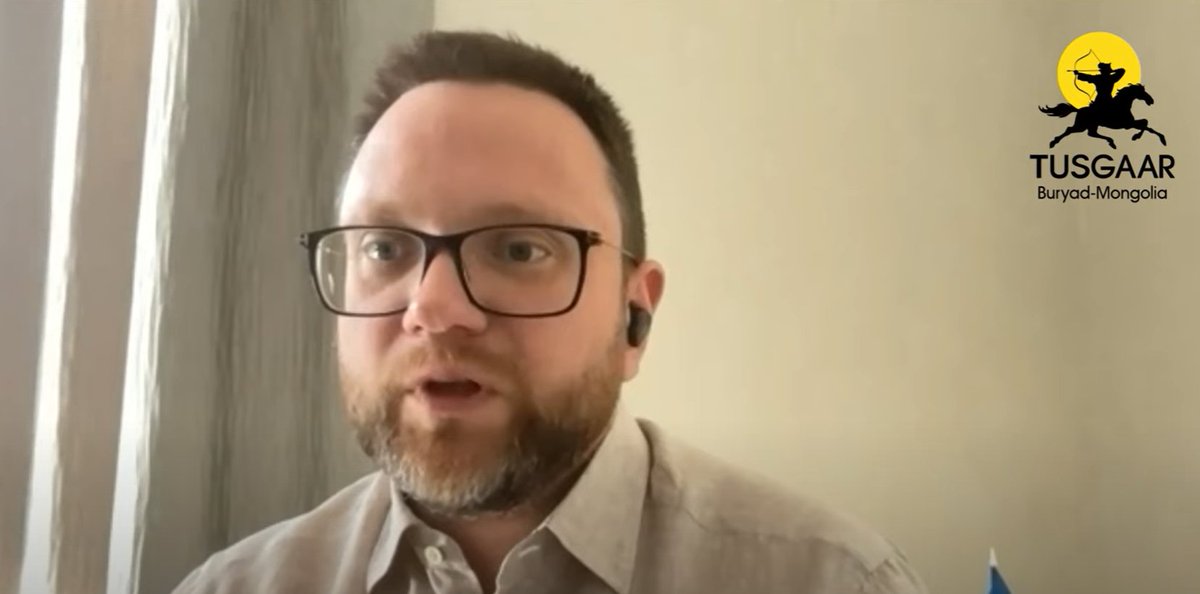
On the other hand, Tusgaar Buryad Mongolia actively fights for the full independence of Buryatia. Maryna Khanhalaeva represented this cause at the Free Nations of Post-Russia Forum in the European Parliament. /29
Recently, on June 23, a congress of Buryat political organizations took place, and notable figures like Chechen statesman Akhmed Zakayev, People's Deputy of Ukraine Oleh Dunda, and Member of the European Parliament Anna Fotyga participated in the event. /30



CONCLUSION
Buryatia shares similarities with its neighboring republic, #Tuva, which we previously studied. Both regions are economically disadvantaged, even by Russian standards, with Buryatia possibly being slightly better developed. /31
Buryatia shares similarities with its neighboring republic, #Tuva, which we previously studied. Both regions are economically disadvantaged, even by Russian standards, with Buryatia possibly being slightly better developed. /31
https://twitter.com/1082338523309633537/status/1661113329530576912
Efforts to counter Kremlin imperialism from Buryatia's diaspora exist, but they may not be enough to achieve their challenging goal. /32

Buryatia has the potential for greater development, but as long as it remains part of a fascist state, progress will be hindered. The Kremlin has shown a willingness to take brutal measures to suppress Buryat national movements. /33
To build a prosperous republic, Buryats must take action. Otherwise, the future of the Buryat people may be at risk. /34

Thank you for reading and consider to support the project by buying me a coffee. Likes, retweets, and comments are also helpful. Thank you for your support!
/35buymeacoffee.com/VTretyak
/35buymeacoffee.com/VTretyak
Please engage with and share these thread series. Even small actions like liking, commenting, and sharing can contribute to the cause of ending Russian imperialism. All the threads are available on the website:
/36russiadecolonized.com
/36russiadecolonized.com
• • •
Missing some Tweet in this thread? You can try to
force a refresh